


Are Oats and Oatmeal Good for Babies?
October 27, 2026
Jordyn Koveleski Gorman

Last Updated on October 27, 2026 by Jordyn Koveleski Gorman
This page contains affiliate links. We will receive a commission on qualifying purchases using these links.
Infant oatmeal cereal is a common first-food recommendation when starting solids, but is it the best first food for little ones? According to our team’s registered pediatric dietitian, there are better options for baby’s first food, though oats aren’t a “bad” choice.
As a speech-language pathologist and feeding specialist, hearing from parents that their child’s pediatrician recommended introducing oatmeal when starting solids often goes hand-in-hand with a different feeding concern. Often, pediatricians recommend introducing oat cereal to babies around 4 months of age, which actually goes against the American Academy of Pediatrics’ recommendation for when to start solids. (1)
So, understanding why oat cereal is often recommended when starting solids can help parents make informed decisions about which foods to offer and when. Let’s break it down through the lens of nutrition and development!
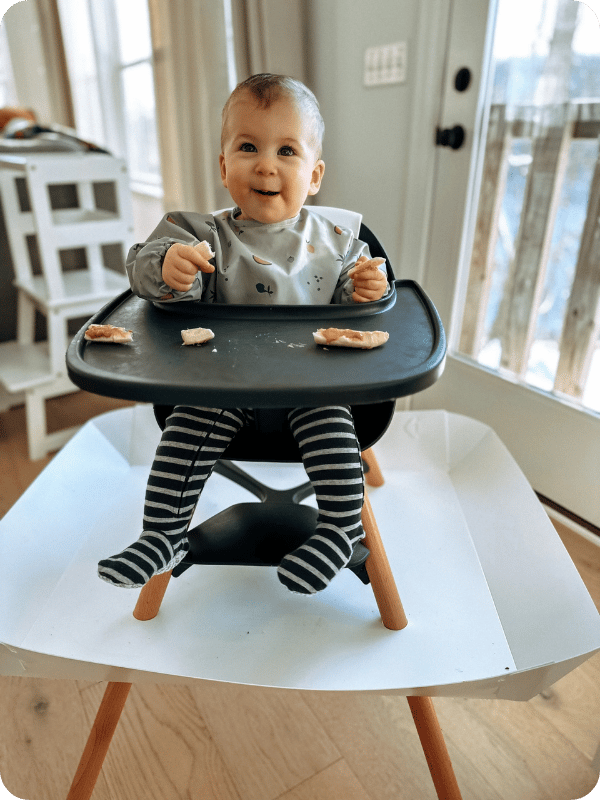
Why oats are commonly recommended for babies
First, it’s important to remember that oats and oatmeal are not “bad” or unhealthy for your little one. Oats contain many beneficial nutrients! At baseline, oats are a food rich in zinc, folate, choline, iron, magnesium, selenium, and fiber. Specifically, beta-glucan, a type of fiber, makes oatmeal a great food to serve if baby is experiencing constipation and to promote general gut wellness. (2) With all of these health benefits, parents may be surprised to find that its nutritional makeup is not actually why oat cereal is typically recommended for babies. Instead, it’s what is added to infant oatmeal.
Iron fortified infant oatmeal
Many brands of oatmeal intended for infants are fortified with iron. Since iron is one of the main nutrients infants require when starting solids, it can seem like a great idea to offer foods that have extra iron added in! But not all iron is created equal, and the iron in fortified foods is less absorbable than the iron found naturally in foods like meat, eggs, and fish. (3) When serving oats to baby, it’s best to skip over oatmeal products that are iron-fortified.
Instead, it’s recommended to include a variety of naturally iron-rich foods in their diet, especially from animal products. The amount of iron absorbed in fortified foods is negligible compared to naturally occurring iron from other sources. Going straight for plain oats in the breakfast aisle will give baby the most nutrient dense version of oats.
Learn more about the importance of iron for infants and toddlers here.
Oatmeal’s naturally soft, mushy texture is another reason it is a popular first food, especially when starting solids before 6 months of age. Developmentally, however, infants aren’t ready to start solids until closer to 6 months, and by that point, they are capable of exploring more textures than just purees. So, if iron content and texture are the only reason for choosing oats as your baby’s first food, know that there are better options to check off those boxes!
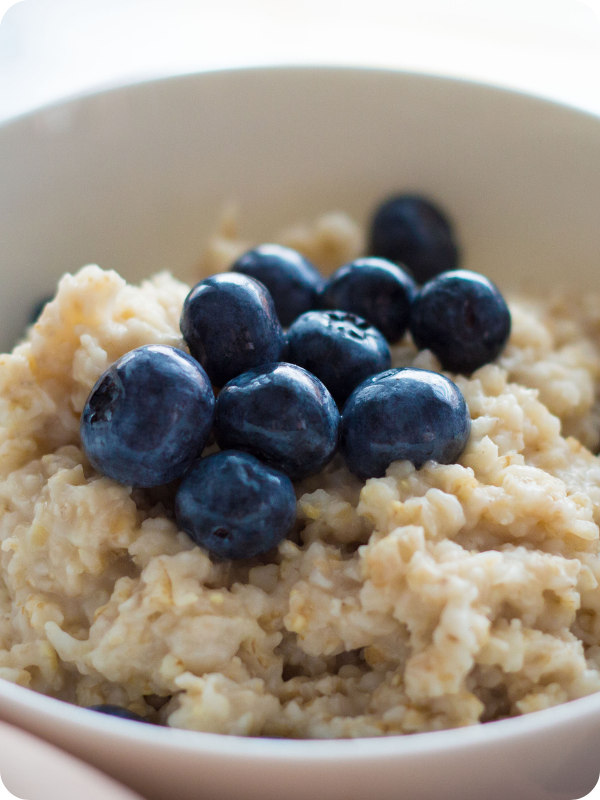
Should babies eat oats?
Absolutely! Oatmeal is included in our Baby’s First 100 Foods guide, and is a great food to offer baby early in the solids journey. Oats are a good alternative to rice cereal, which has minimal nutritional value and is naturally high in arsenic. Oatmeal is also a great food to use as a base and add other foods on top like yogurt, mashed banana, or any fruit.
Research has linked oats to health benefits in the gut, cardiovascular system, type 2 diabetes prevention, reduced obesity, and even to lowered risk of some cancers. (2) It is well-established that oats can help lower cholesterol, and some research has indicated that compounds found in oats can contribute to decreased inflammation as well. (2) Although infants generally don’t experience high cholesterol or concern for type 2 diabetes, oats are still packed with benefits for little ones.
If you plan to offer oatmeal as baby’s first food, it’s important to ensure that your little one is developmentally ready to start solids. There are several signs of readiness we look for to show that baby is prepared, such as interest in food and good head control. But the most important sign of readiness is often overlooked when parents are given the go-ahead at baby’s 4-month pediatrician visit. In order to safely eat solids, baby must be able to sit independently (without support) for several minutes. When do we expect babies to develop this skill? Around 6 months! (1)
So, if you plan to serve oats to your baby at 4 months: we recommend holding off until baby shows all the signs of readiness. Once baby is ready, you can serve oats or any number of other great first food options. Our favorite first foods are avocado, sweet potato, banana, plain yogurt, watermelon, and pear!
Check and see if your baby is ready to start solids and get our guide to the first week of food with our FREE Starting Solids Cheat Sheet!
How to serve oats to baby
Preparing oats for infants is simple and quick.
Add hot water to oats and cook on the stovetop or in the microwave, depending on the oats you have. You can also add formula or breastmilk while cooking. Cook until the oats are very mushy, and then serve once cooled. Adding a small amount of cinnamon or other spices can help increase flavor. (We recommend skipping the sugar, however.)
Oatmeal is best served in its natural mashed texture, but if you’d like to make it smoother or thinner, you can add more liquid and mash with a fork or pulse in a blender. As baby begins to chew and their feeding patterns mature, you can try adding mashed blueberries, bananas, or other soft fruits for more texture and flavor.
More infant resources
You’re well on your way to helping baby master starting solids, and you don’t have to do it alone! Our blog is full of resources to help parents through feeding questions like introducing allergens, high chair troubleshooting, and more.
For support that goes deeper, answering all your questions with research-backed guidance from our team pediatric experts, check out our Handbooks! Hundreds of pages of tips, tricks, and education give parents like you the confidence you need to ditch middle-of-the-night Google searches.
For more free educational content, check out our blog:
- More starting solids support
- Breast and bottle feeding
- Infant & toddler development
- Play activities that support your little’s skills
- Speech and language resources
Sources
- Jennifer M. Zubler, Lisa D. Wiggins, Michelle M. Macias, Toni M. Whitaker, Judith S. Shaw, Jane K. Squires, Julie A. Pajek, Rebecca B. Wolf, Karnesha S. Slaughter, Amber S. Broughton, Krysta L. Gerndt, Bethany J. Mlodoch, Paul H. Lipkin; Evidence-Informed Milestones for Developmental Surveillance Tools. Pediatrics March 2022; 149 (3): e2021052138. 10.1542/peds.2021-052138
- Paudel D, Dhungana B, Caffe M, Krishnan P. A Review of Health-Beneficial Properties of Oats. Foods. 2021 Oct 26;10(11):2591. doi: 10.3390/foods10112591. PMID: 34828872; PMCID: PMC8625765.
- Monsen ER. Iron nutrition and absorption: dietary factors which impact iron bioavailability. J Am Diet Assoc. 1988 Jul;88(7):786-90. PMID: 3290310.
Leave a Reply
OTHER POSTS YOU MAY LIKE:


MS, SLP
Founder of Eat Play Say, Speech-Language Pathologist, Feeding Specialist, Play Expert, Mom of 3
Jordyn Koveleski Gorman
SPECIALIZES IN: Infant and toddler speech-language, play, and feeding development, and curating a team that provides expert help that feels like a reassuring text from that one mom friend
EDUCATION: Jordyn received her BS in Speech-Language Pathology from Bloomsburg University and her MS in Speech-Language Pathology from Towson University
FAVE PARENTING FIRST: “The first true smile, it’s the sweetest!”

MS, CCC-SLP, CBS, IBCLC
Speech-Language Pathologist & Feeding Specialist, Certified Breastfeeding Specialist, International Board Certified Lactation Consultant
Jessica Nicholson Cocca
SPECIALIZES IN: Breast and bottle feeding, tongue ties, oral motor dysfunction, starting solids, infant and toddler speech, treating oral motor disorders
EDUCATION: Jessica received her BS in Communication Sciences and Disorders from Pennsylvania State University in 2015 and her MS in Speech-Language Pathology from Towson University in 2017
FAVE PARENTING FIRST: “Baby’s first wave! What a fun first communication gesture!”

MA, CCC-SLP, CLC
Speech-Language Pathologist, Certified Lactation Counselor
Jennifer McFarlin
SPECIALIZES IN: Breast and bottle feeding, tongue ties, starting solids, infant and toddler speech development
EDUCATION: She received her BS in Speech-Language Pathology from Ball State in 2014 and a MA in Speech-Language Pathology from Ball State in 2016.
FAVE PARENTING FIRST: “My favorite baby’s first is their first true smile that just warms your soul knowing they are smiling at you. My other favorite is their first word. I love watching their language explode!”

MS, CCC-SLP
Bilingual Speech-Language Pathologist
Nicole La Petina Kelly
SPECIALIZES IN: Bilingual development (Spanish-English), supporting multilingual families, infant and toddler speech
EDUCATION: She received her BA in Communication Sciences and Disorders and in Spanish from the University of Wisconsin-Madison in 2014 and her MS in Speech-Language Pathology with an English-Spanish Specialization from Marquette University in 2016.
FAVE PARENTING FIRST: “It’s the first slobbery kisses for me!”

RDN, LD
Licensed Registered Dietitian
Kimberly Vede
SPECIALIZES IN: Infant and pediatric nutrition including breastfeeding, formula feeding, and starting solids. She also specializes in prenatal and postpartum nutrition.
EDUCATION: She received her BSc in Biology in 2014 from Life University, and her BSc in Dietetics from Life University in 2019.
FAVE PARENTING FIRST: ”The first time they say ‘mama!’”


This checklist was created with input from a Speech-Language Pathologist, Occupational Therapist and Physical Therapist and has been downloaded over 20,000 times by parents worldwide. Learn the important milestones to pay attention to, and keep it in your digital back pocket during the baby + toddler years!
Comprehensive Milestone Checklist for gross motor, fine motor, and speech-language milestones for 0-36 months,
DOWNLOAD FOR FREE


