


How Much Iron Do Babies Need? Iron Rich Foods for Kids
November 26, 2024
Jordyn Koveleski Gorman

Last Updated on June 16, 2026 by Jordyn Koveleski Gorman
Iron is one of the most vital nutrients for littles, and it’s important to provide plenty of iron rich foods for kids as they grow. Knowing which iron rich foods pack the most benefits can be helpful as you figure out what to offer your little one!
Iron intake is something adults often don’t think about, perhaps unless they are experiencing iron deficiency anemia. But for littles, iron is one of the nutrients that parents and caregivers should pay the most attention to, as their biological need for iron is quite significant by comparison to other nutrients.
For instance, did you know that starting solids at 6 months has a lot to do with iron? It’s true!
Our team’s pediatric registered dietitian joined me to break down the science behind iron and how much kids need. Plus, we included a helpful list of iron rich foods for kids that you can keep for reference! Let’s dive in together.
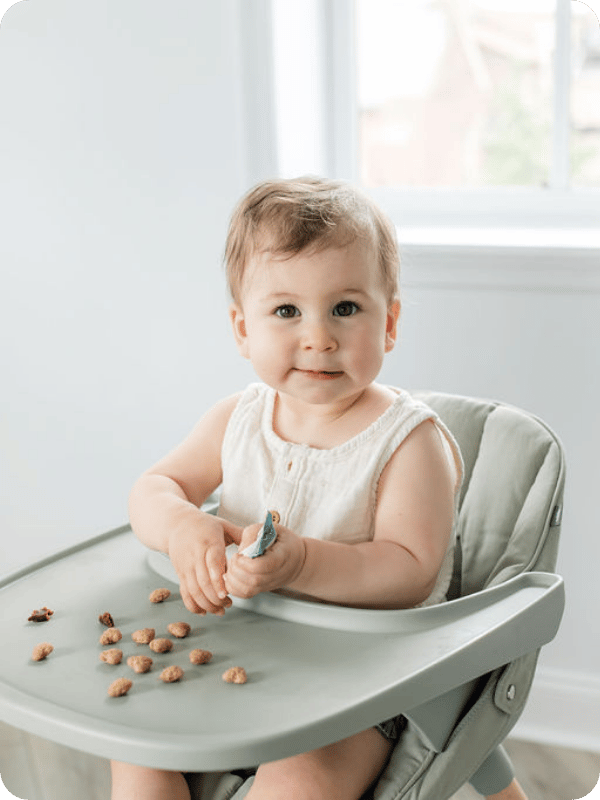
What is iron and why is it important?
Iron is a mineral essential for growth, development, and oxygenation. It’s needed for making hemoglobin and myoglobin, which carry oxygen to our tissues and muscles. Not enough iron can result in too little hemoglobin and myoglobin production, which in turn leads to anemia.
Babies are born with a storage of iron in their system, which is used up by around 6 months of age. (1) Although there are many reasons for starting solids around 6 months, this is one of the most important: babies actually need more iron than milk can provide at this point! Most babies meet the motor development prerequisites to start solids around 6 months, too, and that’s perfect timing as their iron needs are changing!
Heme vs Non-Heme Iron
There are two types of iron found in foods: heme iron and non-heme iron. Heme iron is found exclusively in animal foods. Non-heme iron is found both in animal and plant foods, but mostly in plant foods. These two types of iron are not created equal when it comes to quality or bioavailability (more on that below).
Iron deficiencies and risk factors
Iron deficiency is one of the most common nutrient deficiencies in babies and children in the United States.
It is a very serious deficiency that can impact growth, development, sleep, and a child’s overall wellbeing. Iron deficiency anemia has been associated with shorter sleep durations in the first year of life (2). Iron deficiency also affects the growth of multiple organ systems, most notably the brain, with the effects being permanent and life-altering (3).
In the United States, pediatricians do routine screening for anemia (low iron) around 12 months of age. There are some risk factors that make anemia more likely in babies, including babies who are:
- Fed non-iron fortified formula
- Born prematurely (iron stores from mom are transferred to baby at the end of pregnancy)
- Born with a low birth weight
- Fed cow or goat’s milk before age 1
- Introduced to solids after 8 months old
- Not given iron rich foods after 6 months old (3)
The most important risk factor for iron deficiency anemia in infants is the introduction of cow’s milk within the first year of life. Cow’s milk is low in iron, and the iron that it does contain is poorly absorbed. Also, the high casein and calcium content in cow’s milk decreases the absorption of iron from other dietary sources (4).
This is why cow’s milk offered alone as a drink is not recommended before age 1. Dairy products like cheese and yogurt are safe to offer baby, along with milk used in recipes. But offering cow’s milk alone to baby, especially as a main form of nutrition, should be avoided in the first year of life.
How much iron does my baby actually need?
0-6 months
Most healthy, full-term babies are born with adequate iron stores for the first 6 months of life. (1) Iron is transferred from mom to baby during the last trimester.
Delayed cord clamping can be beneficial for baby’s iron status in the first 6 months after birth because it ensures baby is able to get all the cord blood and iron inside it. A study found that the benefits of reduced anemia continued even after 6 months. Delayed cord clamping of greater than 3 minutes resulted in a reduction of anemia by 9% at 8 months and by 8% at 12 months of age. (4)
Premature and low birth weight babies may require early iron supplementation due to their higher risk of iron deficiency. Risk factors include their small size, reduced iron stores at birth, and iron losses from blood tests. A plan for supplementation should always be made with your pediatrician.
6-12 months
The recommended daily allowance (RDA) for iron in babies 6-12 months is 11 mg/day. This is a lot of iron—more than the RDA for an adult male!
To give you an idea of how much this is: 1 oz of ground beef has about 0.5 mg iron, and a typical serving size for a meal for a 6-9 month old is usually no more than 3 ounces of all foods combined (give or take). It seems that baby would need to eat a lot of ground beef to reach that recommended amount!
So why is the recommended amount so unrealistically high? It’s all about bioavailability, or the absorption rate, of iron. Plant-based iron sources, for instance, are harder for the body to absorb. This means some of the iron that you consume does not stay in the body because it can’t be processed. (5) Since some iron is lost during digestion, the recommendation for daily intake is elevated to “make up” for what is lost.
Babies who are being fed an iron-fortified formula will likely meet their iron needs through the formula alone in the first year of life depending on how much they are consuming. It is still recommended to offer iron-rich foods regularly since formula won’t be offered into toddlerhood.
Breastmilk contains small amounts of iron that is well-absorbed, but after 6 months it does not supply enough to meet the demands of baby’s rapid growth. It is especially important for breastfed babies to receive iron-rich foods regularly when starting solids.
For Toddlers 1–3 Years Of Age:
7 mg of iron per day is recommended from ages 1–3, but again, this amount was set with the assumption of a low absorption rate. If you are offering animal products high in iron, it will be much easier to reach that recommendation!
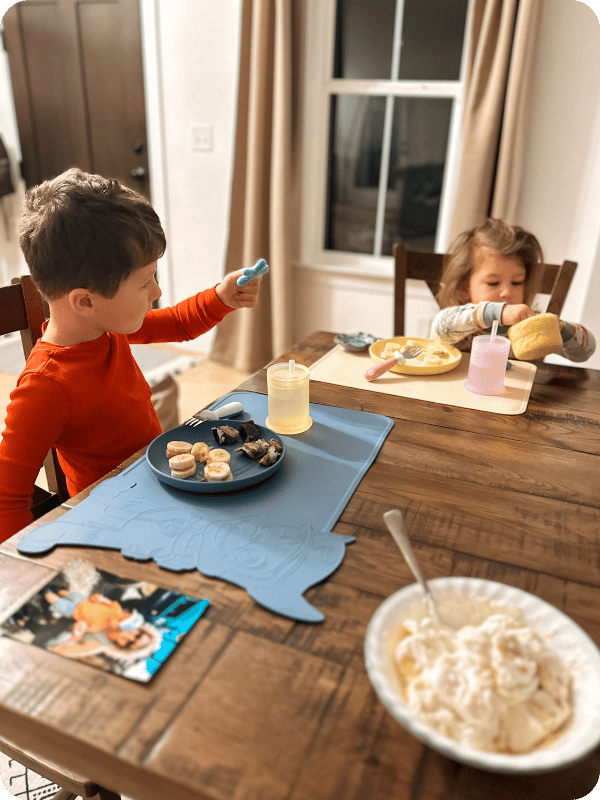
Iron rich foods for kids
Our top favorite animal foods to serve to babies that are high in iron are:
- Organ Meats (Beef Liver, Chicken Liver)
- Ground Beef
- Sardines
- Oysters and Clams
- Eggs
- Salmon
Our favorite plant foods to serve to babies that are high in iron are:
- Chickpeas (hummus)
- Lentils
- Peas
- Sweet potatoes
Aiming to offer iron-rich foods with most meals is the best way to try and meet the iron recommendations for babies and toddlers.
Iron fortification is not equivalent to iron rich foods for kids
Many processed foods for babies and children, including a popular pediatrician-recommended first food for baby—rice cereal—are fortified with iron. But it is best not to rely on these foods to meet iron needs because the iron found in fortified food is not equal to the iron found naturally in foods. A better way is to regularly offer foods rich in bioavailable iron once baby starts solids.
Iron found in fortified foods is not absorbed well (non-heme iron) and can cause gastrointestinal side effects. Also, fortified foods don’t necessarily have co-factor nutrients that help the body use iron. On the other hand, the heme iron found in animal foods is more absorbable and is naturally rich in amino acids, Vitamin A, copper, and zinc, all of which help the body utilize iron.
Iron absorption in animal foods vs plant foods
Heme iron found in animal foods has a higher absorption and utilization rate than the non-heme iron found in plant foods. This information is especially important for families following vegetarian or vegan diets. Remember, knowledge is power!
For example, babies 6–12 months are recommended to have 1.1mg of absorbable iron per day, which is 10% of the overall recommendation from above (11mg/day). Let’s break down why that is.
Heme iron found in animal foods is much more bioavailable than plant-based foods. Heme iron is absorbed at an average of 25-40%, compared to the 2-13% absorption rate of non-heme iron foods. On average, non-heme sources are absorbed at less than 5%. (6, 7)
If baby is consuming heme iron sources (animal sources), they need less total iron to reach 1.1 mg of absorbable iron per day. Assuming a 25% absorption rate, then only 4.4 mg of heme iron is needed to reach 1.1 mg of iron absorbed. By contrast, 11 mg of non-heme iron is needed to reach 1.1 mg of absorbable iron.
Generally, the volume of plant-based foods needed to match the iron absorbed from animal sources is significant and often unrealistic. These charts are helpful for comparing absorption rates of animal based foods and plant-based foods.
For example: it would take ~11 cups of broccoli to match the total iron content in 1 oz of clams. But to match the iron absorption, you would need ~57 cups of broccoli! (8)
Iron from plant foods is not well absorbed due to plant compounds that decrease iron absorption, such as fiber, oxalates, phytic acid and tannins. (6) By contrast, heme iron foods contain co-factors that help increase iron absorption.

How to increase iron absorption from foods
The same compounds that inhibit iron absorption in non-heme sources can also affect heme iron absorption. There are some strategies that can offset this, though.
Eating foods rich in vitamin C at the same time as iron-rich foods can help increase absorption of iron. A study found that consuming 100 mg of vitamin C with a meal increased non-heme iron absorption by about 3x (6).
Calcium impairs iron absorption, so if trying to maximize iron absorption, serve calcium-rich foods away from iron-rich foods.
Cooking food in cast iron pans can increase the amount of iron in foods because some of the iron from the pan leaches into the food. More acidic foods tend to leach more iron.
As your baby starts eating solid food and growing into a toddler, it is important to maximize their iron intake for their rapidly developing bodies. Overall, the iron concentration and rate of absorption from animal foods is much better than plant foods. Even though your little one can certainly benefit from eating plant foods, the most bang for your buck with iron is going to come from including iron-rich animal foods early and often.
If you’re including a good mix of iron-containing animal foods along with plant foods, then there’s no need to stress about it or try and track how much iron your little one is eating. If your family is following a vegetarian or vegan diet, it will be important to be more in tune to how much iron your little one is absorbing, and continuously talk with your pediatrician about regular iron testing or red flags for iron deficiency.
More resources for kids
Now that you’re basically a certified iron professional, you can feel confident in your approach to offering your little one iron-rich foods! For more infant and toddler resources, check out our best-selling Handbooks. With 10+ guides written by our team of child development experts, we’ve got all your most-asked questions covered!
Sources
- Ziegler EE, Nelson SE, Jeter JM. Iron stores of breastfed infants during the first year of life. Nutrients. 2014 May 21;6(5):2023-34. doi: 10.3390/nu6052023. PMID: 24853888; PMCID: PMC4042569.
- Rodrigues Junior JI, Mecenas VGF, de Oliveira Lima M, Menezes RCE, Oliveira PMB, Longo-Silva G. Association between iron deficiency anemia and sleep duration in the first year of life. Rev Paul Pediatr. 2023 Jul 24;42:e2022173. doi: 10.1590/1984-0462/2024/42/2022173. PMID: 37493672; PMCID: PMC10365549.
- McCarthy EK, Dempsey EM, Kiely ME. Iron supplementation in preterm and low-birth-weight infants: a systematic review of intervention studies. Nutr Rev. 2019 Dec 1;77(12):865-877. doi: 10.1093/nutrit/nuz051. PMID: 31532494; PMCID: PMC6888764.
- Martinez-Torres V, Torres N, Davis JA, Corrales-Medina FF. Anemia and Associated Risk Factors in Pediatric Patients. Pediatric Health Med Ther. 2023 Sep 4;14:267-280. doi: 10.2147/PHMT.S389105. PMID: 37691881; PMCID: PMC10488827.
- Monsen ER. Iron nutrition and absorption: dietary factors which impact iron bioavailability. J Am Diet Assoc. 1988 Jul;88(7):786-90. PMID: 3290310.
- Hallberg, L et al. “The role of vitamin C in iron absorption.” International journal for vitamin and nutrition research. Supplement = Internationale Zeitschrift fur Vitamin- und Ernahrungsforschung. Supplement vol. 30 (1989): 103-8.
- Piskin E, Cianciosi D, Gulec S, Tomas M, Capanoglu E. Iron Absorption: Factors, Limitations, and Improvement Methods. ACS Omega. 2022 Jun 10;7(24):20441-20456. doi: 10.1021/acsomega.2c01833. PMID: 35755397; PMCID: PMC9219084.
- Nichols, Lily. “How much iron do you actually absorb from food?” Accessed June 2026. https://lilynicholsrdn.com/iron-absorption/
OTHER POSTS YOU MAY LIKE:


MS, SLP
Founder of Eat Play Say, Speech-Language Pathologist, Feeding Specialist, Play Expert, Mom of 3
Jordyn Koveleski Gorman
SPECIALIZES IN: Infant and toddler speech-language, play, and feeding development, and curating a team that provides expert help that feels like a reassuring text from that one mom friend
EDUCATION: Jordyn received her BS in Speech-Language Pathology from Bloomsburg University and her MS in Speech-Language Pathology from Towson University
FAVE PARENTING FIRST: “The first true smile, it’s the sweetest!”

MS, CCC-SLP, CBS, IBCLC
Speech-Language Pathologist & Feeding Specialist, Certified Breastfeeding Specialist, International Board Certified Lactation Consultant
Jessica Nicholson Cocca
SPECIALIZES IN: Breast and bottle feeding, tongue ties, oral motor dysfunction, starting solids, infant and toddler speech, treating oral motor disorders
EDUCATION: Jessica received her BS in Communication Sciences and Disorders from Pennsylvania State University in 2015 and her MS in Speech-Language Pathology from Towson University in 2017
FAVE PARENTING FIRST: “Baby’s first wave! What a fun first communication gesture!”

MA, CCC-SLP, CLC
Speech-Language Pathologist, Certified Lactation Counselor
Jennifer McFarlin
SPECIALIZES IN: Breast and bottle feeding, tongue ties, starting solids, infant and toddler speech development
EDUCATION: She received her BS in Speech-Language Pathology from Ball State in 2014 and a MA in Speech-Language Pathology from Ball State in 2016.
FAVE PARENTING FIRST: “My favorite baby’s first is their first true smile that just warms your soul knowing they are smiling at you. My other favorite is their first word. I love watching their language explode!”

MS, CCC-SLP
Bilingual Speech-Language Pathologist
Nicole La Petina Kelly
SPECIALIZES IN: Bilingual development (Spanish-English), supporting multilingual families, infant and toddler speech
EDUCATION: She received her BA in Communication Sciences and Disorders and in Spanish from the University of Wisconsin-Madison in 2014 and her MS in Speech-Language Pathology with an English-Spanish Specialization from Marquette University in 2016.
FAVE PARENTING FIRST: “It’s the first slobbery kisses for me!”

RDN, LD
Licensed Registered Dietitian
Kimberly Vede
SPECIALIZES IN: Infant and pediatric nutrition including breastfeeding, formula feeding, and starting solids. She also specializes in prenatal and postpartum nutrition.
EDUCATION: She received her BSc in Biology in 2014 from Life University, and her BSc in Dietetics from Life University in 2019.
FAVE PARENTING FIRST: ”The first time they say ‘mama!’”


This checklist was created with input from a Speech-Language Pathologist, Occupational Therapist and Physical Therapist and has been downloaded over 20,000 times by parents worldwide. Learn the important milestones to pay attention to, and keep it in your digital back pocket during the baby + toddler years!
Comprehensive Milestone Checklist for gross motor, fine motor, and speech-language milestones for 0-36 months,
DOWNLOAD FOR FREE


