


Should You Give Your Baby Rice Cereal?
January 31, 2025
Jordyn Koveleski Gorman

Last Updated on June 26, 2026 by Jordyn Koveleski Gorman
This page contains affiliate links. We will receive a commission on qualifying purchases using these links.
For years, rice cereal was the top “first food” recommendation when starting solids with your baby. Its popularity mainly stemmed from the low likelihood of causing allergic reactions and that rice cereal is iron-fortified.
That said, rice cereal has fallen out of favor in the last few years. Although it has been a slow process, more and more pediatricians are moving away from recommending rice cereal as a first food for babies. Why is that? Because now we know that rice cereal is not the best option.
The good news is that there are many other wholesome, real food options that will give your baby a more bioavailable source of iron and are also unlikely to be allergenic (although research indicates we should be introducing allergenic foods early and often).
Our team’s registered dietitian joined me for this post to break down the research behind why rice cereal is no longer recommended for babies. Let’s dive in!

Baby rice cereal isn’t the best option
First of all, it’s important to note that others will seemingly always have an opinion about the choices parents make about feeding their own children. It’s almost a rite of passage that parents have to hear something like this from a different generation: “Well, I gave my babies rice cereal and they turned out okay!”
And that’s probably absolutely true. But that also doesn’t mean we have to give baby rice cereal now that we know it isn’t the best option. When we know better, we do better! Education is empowerment. Remember: you know your baby best, and you get to decide what to feed them!
Here’s what the research tells us about rice cereal.
Baby rice cereal is high in arsenic
There are a handful of foods that are naturally higher in arsenic, a toxic heavy metal, because of the way they are grown. Rice is one of those foods. Infant rice cereals in particular are high in inorganic arsenic, which is the most toxic type of arsenic.
There is no amount of arsenic that is “safe” for babies to eat, so the goal should be to reduce exposure as much as possible. Exposure to even low levels of inorganic arsenic can impact baby’s neurodevelopment. (1) The cumulative effect (the amount that builds up with repeated exposures over time) of arsenic has been linked to health concerns such as behavior problems, ADHD, a lowered IQ, and heightened risk for skin and bladder cancers. (2)
Many companies have discontinued rice cereal products because of heavy arsenic concentrations. Two major companies selling rice cereal today, Gerber and Earth’s Best, have lowered the amounts of arsenic in their cereals. According to tests done by Consumer Reports, the lowered amounts of inorganic arsenic found in these cereals is still too much. (2)
Other baby cereals that are not rice based, such as oat based cereals, are significantly lower in arsenic and are good alternative options. Learn more about the risks of heavy metals in baby food products here.
Most rice cereal is fortified with synthetic iron
You’re probably wondering why this made the list of reasons to avoid rice cereal. Isn’t it a good thing to give babies more iron? Generally, yes! However, not all iron is created equal. The type of iron your child consumes matters.
The synthetic iron that rice cereal is fortified with (usually ferrous fumarate) is quite different from the iron found in breast milk and iron-rich whole foods. Naturally occurring forms of iron, especially from animal-based products, are more easily absorbed and less likely to cause unwanted gastrointestinal symptoms like constipation.
When starting solids, it is best to prioritize iron-rich whole foods, such as meat purees or liver pate. Read more about iron rich foods for littles here.
White rice is a low-nutrient refined grain
White rice cereal is a highly processed food, with most of its nutrients removed during the refining process. This is why most rice cereal is fortified with synthetic nutrients. During processing, it becomes a nutrient-poor, refined carbohydrate with the potential to spike blood sugar when served without additional fat, protein, or fiber. (3)
Additionally, grains are difficult for babies to digest in the first year due to lower levels of the pancreatic enzyme amylase. Around the age of 1, babies begin to produce more of this enzyme and digesting grains becomes easier. (4)
Focusing on easier to digest, more nutrient dense fats and proteins in the first year and limiting grains (rice, oats, quinoa, etc.) can be beneficial to littles’ developing GI tracts. (4)
Does rice cereal in the bottle help baby sleep better or fix reflux?
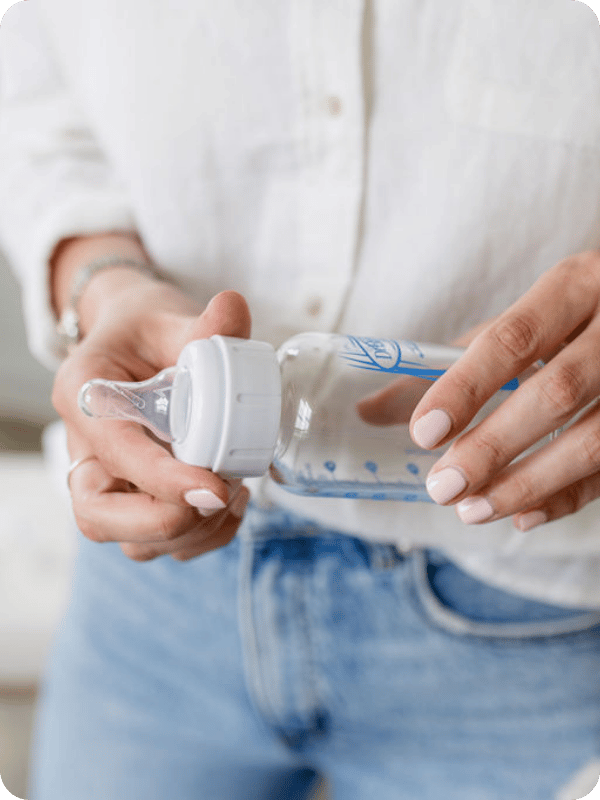
The American Academy of Pediatrics strongly recommends against adding rice cereal to bottles. (5) And yet, cultural myths about the “benefits” of adding rice cereal to bottles persist. Claims that it will help your baby sleep or even fix infant reflux are not supported by research. Instead, research indicates that rice cereal in bottles is unsafe. (5)
Infants under 6 months cannot yet properly digest rice cereal. In addition to digestive concerns, other issues associated with this practice are that it:
- Puts baby at an increased risk of choking
- Increases potential for overfeeding
- Can impair hunger self-regulation in the future
- Increases arsenic exposure from rice
- Doesn’t necessarily help with sleep since young babies are biologically wired to wake frequently
If your baby is struggling with reflux and is formula feeding, there are specialized anti-reflux formulas that you can try instead of thickening the bottle with rice cereal. HiPP Anti Reflux Formula or Enfamil Anti Regurgitation Formula are specifically formulated to support infants with reflux.
Aptamil Feed Thickener is a stand alone thickener that can be mixed with breast milk or formula, but it should be used with guidance from a lactation consultant and be discussed with your pediatrician before use. Partially hydrolyzed formulas can also be an effective option for improving reflux symptoms, such as Kendamil Comfort Milk or Bobbie Organic Gentle Infant Formula.
If you want to include baby cereal in your little one’s diet, it is safest and healthiest to skip the bottle. Instead, wait until they show all the signs of readiness for starting solids and offer it to them on a spoon.
Alternative options to baby rice cereal
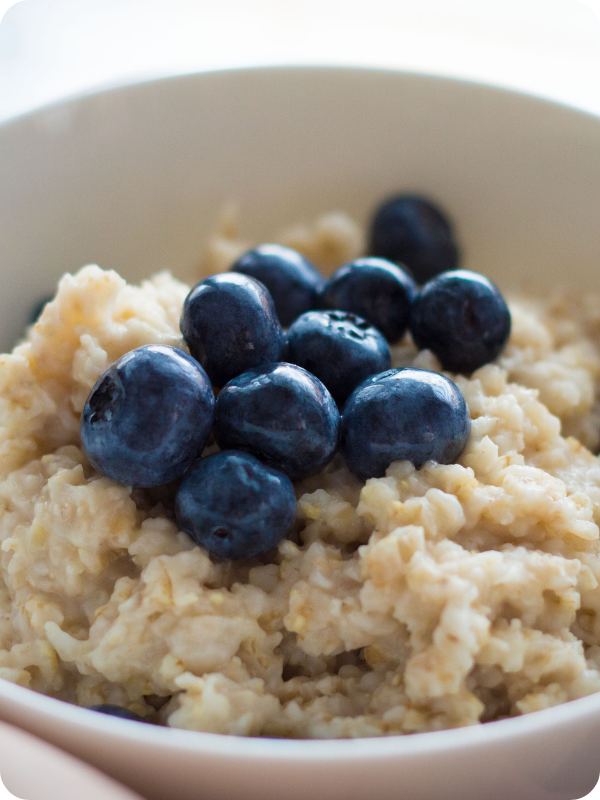
If you want to skip the rice cereal but would still like to introduce an alternative grain-based cereal to your baby, it is still recommended to wait until 6 months or older. Organic baby oatmeal would be a good alternative to rice cereal.
You may consider skipping cereals fortified with iron if you wish to avoid giving baby synthetic iron, opting instead for whole food iron sources. Adding pureed or mashed sweet potato to cereal can fortify it with natural iron. Holle Organic and Amara Organics both make organic oat cereal for babies with no added iron.
You can also make your own cereal with any grain you wish, such as oats, kamut, quinoa, or millet. To do this, put uncooked grain in a blender and blend/pulse until it is a finely uniform texture. Add ¼ cup uncooked grain + 2 cups water to a pot and bring to a boil. Simmer for 15 minutes. Adjust thickness of cereal with additional water or breastmilk/formula.
Focus on real foods
When your baby starts solids, they will likely be very excited about eating and receptive to new and different flavors. By contrast, in the toddler years, you’ll likely experience some bouts of picky eating and strong opinions. The beginning of introducing solids is an excellent window of opportunity to offer a variety of flavors and textures.
Baby cereals are best in small moderation and served as part of a varied rotation of other foods. Skipping rice cereal altogether is well-supported by research. Offering a variety of tastes and textures is the best way to raise a well-rounded eater!
For infant feeding support
Now that you have the latest on rice cereal, you might be thinking, “Great, now what do I feed my baby?” No panic necessary. We’ve got you covered!
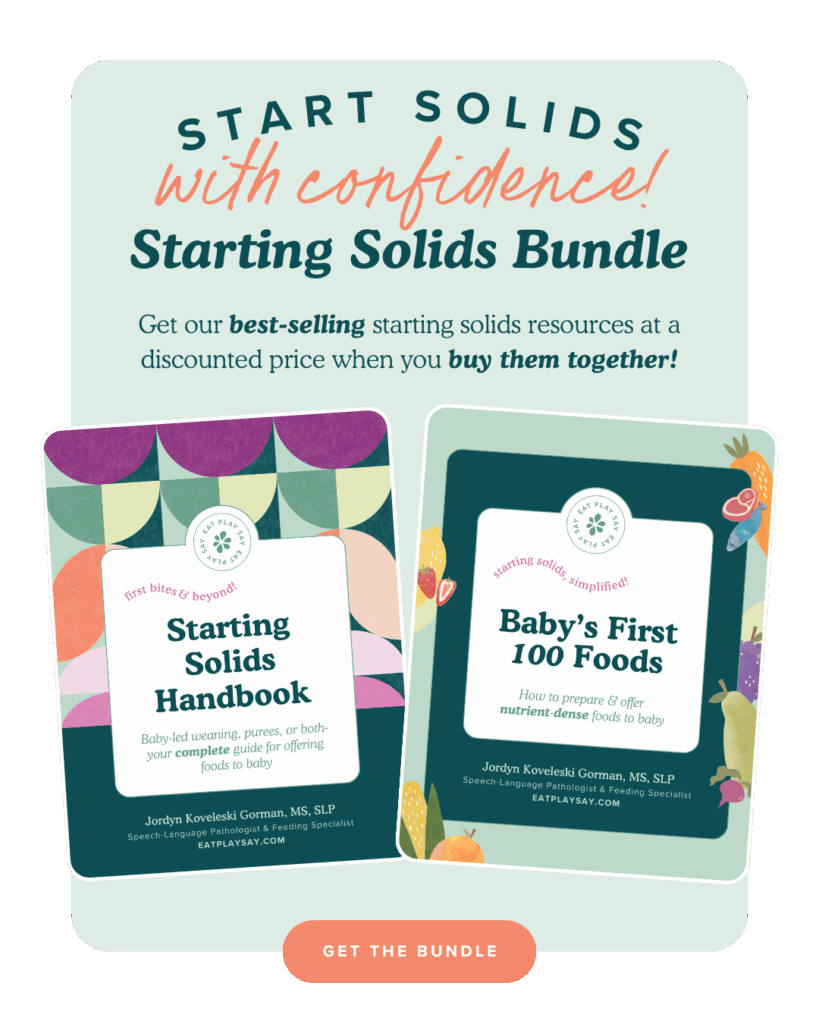
For everything you need to know about offering baby their first bites and more, check out our digital starting solids bundle! Start solids confidently by pairing our best-selling Starting Solids Handbook with our most-requested feeding resource, Baby’s First 100 Foods! With more than 200 pages of evidence-backed guidance and 100+ ways to serve foods, you’ll never run out of mealtime ideas.
Sources
- Hirsch, Jesse. Consumer Reports. Infant Rice Cereal Has Worrying Levels of Arsenic, New Study Shows. 7 December 2017. Accessed June 2026.
- Loria, Kevin. Consumer Reports. Why You Should Consider Alternatives to Infant Rice Cereal. 17 February 2022. Accessed June 2026.
- Klerks M, Bernal MJ, Roman S, Bodenstab S, Gil A, Sanchez-Siles LM. Infant Cereals: Current Status, Challenges, and Future Opportunities for Whole Grains. Nutrients. 2019 Feb 23;11(2):473. doi: 10.3390/nu11020473. PMID: 30813426; PMCID: PMC6412837.
- O’Donnell MD, Miller NJ. Plasma pancreatic and salivary-type amylase and immunoreactive trypsin concentrations: variations with age and reference ranges for children. Clin Chim Acta. 1980 Jul 1;104(3):265-73. doi: 10.1016/0009-8981(80)90384-8. PMID: 6156037.
- American Academy of Pediatrics. Cereal in a Bottle: Solid Food Shortcuts to Avoid. Updated 14 May 2015. Accessed June 2026.
OTHER POSTS YOU MAY LIKE:


MS, SLP
Founder of Eat Play Say, Speech-Language Pathologist, Feeding Specialist, Play Expert, Mom of 3
Jordyn Koveleski Gorman
SPECIALIZES IN: Infant and toddler speech-language, play, and feeding development, and curating a team that provides expert help that feels like a reassuring text from that one mom friend
EDUCATION: Jordyn received her BS in Speech-Language Pathology from Bloomsburg University and her MS in Speech-Language Pathology from Towson University
FAVE PARENTING FIRST: “The first true smile, it’s the sweetest!”

MS, CCC-SLP, CBS, IBCLC
Speech-Language Pathologist & Feeding Specialist, Certified Breastfeeding Specialist, International Board Certified Lactation Consultant
Jessica Nicholson Cocca
SPECIALIZES IN: Breast and bottle feeding, tongue ties, oral motor dysfunction, starting solids, infant and toddler speech, treating oral motor disorders
EDUCATION: Jessica received her BS in Communication Sciences and Disorders from Pennsylvania State University in 2015 and her MS in Speech-Language Pathology from Towson University in 2017
FAVE PARENTING FIRST: “Baby’s first wave! What a fun first communication gesture!”

MA, CCC-SLP, CLC
Speech-Language Pathologist, Certified Lactation Counselor
Jennifer McFarlin
SPECIALIZES IN: Breast and bottle feeding, tongue ties, starting solids, infant and toddler speech development
EDUCATION: She received her BS in Speech-Language Pathology from Ball State in 2014 and a MA in Speech-Language Pathology from Ball State in 2016.
FAVE PARENTING FIRST: “My favorite baby’s first is their first true smile that just warms your soul knowing they are smiling at you. My other favorite is their first word. I love watching their language explode!”

MS, CCC-SLP
Bilingual Speech-Language Pathologist
Nicole La Petina Kelly
SPECIALIZES IN: Bilingual development (Spanish-English), supporting multilingual families, infant and toddler speech
EDUCATION: She received her BA in Communication Sciences and Disorders and in Spanish from the University of Wisconsin-Madison in 2014 and her MS in Speech-Language Pathology with an English-Spanish Specialization from Marquette University in 2016.
FAVE PARENTING FIRST: “It’s the first slobbery kisses for me!”

RDN, LD
Licensed Registered Dietitian
Kimberly Vede
SPECIALIZES IN: Infant and pediatric nutrition including breastfeeding, formula feeding, and starting solids. She also specializes in prenatal and postpartum nutrition.
EDUCATION: She received her BSc in Biology in 2014 from Life University, and her BSc in Dietetics from Life University in 2019.
FAVE PARENTING FIRST: ”The first time they say ‘mama!’”


This checklist was created with input from a Speech-Language Pathologist, Occupational Therapist and Physical Therapist and has been downloaded over 20,000 times by parents worldwide. Learn the important milestones to pay attention to, and keep it in your digital back pocket during the baby + toddler years!
Comprehensive Milestone Checklist for gross motor, fine motor, and speech-language milestones for 0-36 months,
DOWNLOAD FOR FREE


