


Is Baby Food Safe? Heavy Metals in Baby Food
July 14, 2024
Jordyn Koveleski Gorman

Last Updated on July 2, 2026 by Jordyn Koveleski Gorman

Is baby food safe?
No one wants to have to wonder, “Is this baby food safe?” And yet, things like medical research, private studies, and even lawsuits often leave parents wondering exactly that. Heavy metals in particular are a big concern that parents face when shopping for baby food.
Unfortunately, small amounts of heavy metals are present in many baby foods, pouches, and snacks. Making the best decisions for your family can be overwhelming when information is hard to access, which is why our team’s registered dietitian joined in for this blog. Understanding heavy metals and why avoiding them matters can help you minimize your little one’s exposure. Let’s break it down!
What are heavy metals and why do they matter?
Heavy metals naturally occur on the planet and are found in water, soil, and the air. They are called “heavy” because they are dense in structure.
Five of the most problematic metals related to toxicity are lead, cadmium, mercury, arsenic, and chromium.
Their presence in contaminated water and soil can result in heavy metals leaching into foods grown with that soil and water. Root vegetables that grow directly in soil, such as potatoes, beets, cassava root, and carrots, tend to be higher in heavy metals because the metals can accumulate in a plant’s root system. Heavy metals can also get into food from pesticides, industrial processing, and storage. (1)
Although heavy metal exposure is serious for people of all ages, babies are more vulnerable to the negative health consequences. Their small size, combined with their developing brains and organ systems, makes them especially high risk to heavy metal exposure. (2)
Babies’ bodies also absorb more of the heavy metals that they ingest than adults do. According to the World Health Organization, young children absorb 4-5 times as much ingested lead as adults. (3)
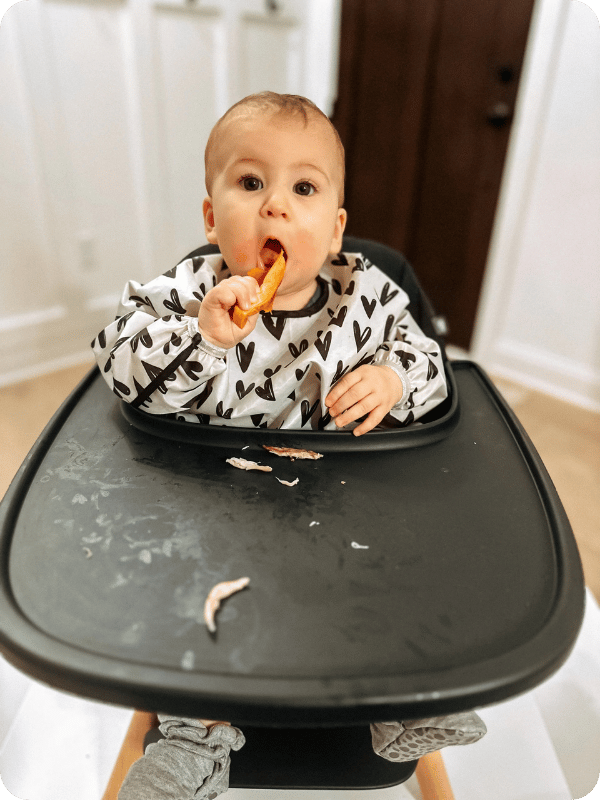
Why heavy metals are “bad” for us
Studies have shown that if a baby is raised with exposure to heavy metals, a subsequent drop in IQ points can be measured as they grow. (4)
For example, a study followed more than 500 children who grew up in the era of leaded gasoline. The study found that for each 5-microgram increase in childhood blood lead levels, a child’s IQ went down by around 1.5 points in adulthood. (5)
One Consumer Reports study on heavy metals in apple juice noted many well-documented harmful effects of exposure. Depending upon the length and severity of exposure, the report noted risk factors such as “lowered IQ, behavioral problems (such as attention deficit hyperactivity disorder), type 2 diabetes, and cancer, among other health issues.” (2)
Which foods contain the most heavy metals?
Organic vs. Non-Organic
The first thing to know is that heavy metals do not discriminate between organic and non-organic crops. Although buying organic can be beneficial for many reasons, it is not necessarily going to reduce heavy metal exposure. Reduced use of pesticides and other factors may play a role in some lower heavy metal concentrations in organic crops, though leaching is still possible due to soil and water contamination. (6)
So…is baby food safe?
As noted previously, some foods are more likely to have higher levels of heavy metals than others. Testing on popular baby foods and snacks has brought up valid concerns about whether baby food is safe or not.
One Consumer Reports study tested 14 products for heavy metals. Products made with sweet potatoes and rice scored the worst. (7) Another report found elevated levels of arsenic and lead in apple and grape juices, specifically. (2) Based on these studies and California’s maximum allowable dose level (MADL), Consumer Reports set its own daily safety standards for infants consuming baby food products.
You might be thinking, “But wait, why did Consumer Reports set its own safety standards? Aren’t there already safety standards for baby food?” We had the same question.
Is there a government mandate on “safe limits” for heavy metals in baby food?
Consumer Reports designates their own heavy metals safety threshold because there are very few limits set by the FDA in the United States for heavy metal contamination in baby food.
Consumer Reports’ levels tend to be quite conservative, with a focus on being health protective above all else. By contrast, the FDA takes into consideration the feasibility of contamination reduction without causing extreme cost or damage to the industry. (8)
FDA deems baby food safe at certain levels of contamination
The FDA has set limits for arsenic exclusively in infant rice cereal and juice. The limit for inorganic arsenic in infant rice cereal is 100 parts per billion (ppb) and 10 ppb in apple juice. (9, 10) The FDA could choose to remove a product from the market if it exceeds these levels.
In January 2025, in accordance with its Closer to Zero initiative, the FDA released guidelines for lead contamination in baby foods. Called “action levels,” these limits represent the amount of contamination required for the FDA to consider baby food adulterated, or unsafe.
The FDA guidelines for lead in baby food are:
- 10 parts per billion (ppb) for fruits, vegetables (excluding single-ingredient root vegetables), mixtures (including grain- and meat-based mixtures), yogurts, custards/puddings, and single-ingredient meats;
- 20 ppb for single-ingredient root vegetables; and
- 20 ppb for dry infant cereals. (11)
Further guidance for reduction of heavy metals in baby foods is expected from the FDA as it carries out the Closer to Zero plan.
Additionally, The Baby Food Safety Act was re-introduced in 2026 (after it failed to pass in 2024). This bill would give the FDA authority to enforce limits on heavy metals in baby and toddler food and would set standards for testing and monitoring final food products. Even more importantly, it would give the FDA authority to enforce the limits it sets by allowing them to require companies to recall foods that don’t meet the standards, in contrast to voluntary recalls that are the standard now.
That’s a lot of information. What are you supposed to do with it? Let’s talk about reducing heavy metal exposure.
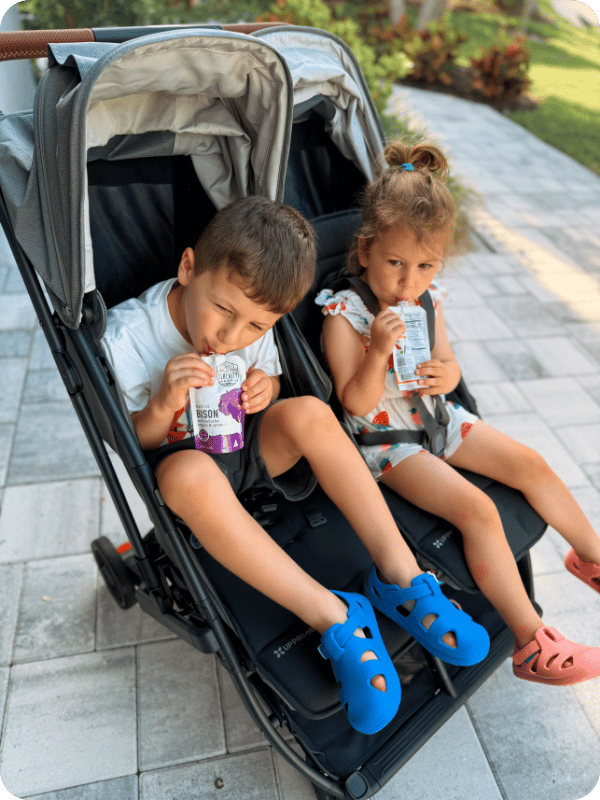
How to minimize baby’s heavy metal exposure
Research products before you buy.
Just because something is for sale does not mean it’s safe for your baby. Although popular, well-established brands may appear to have your baby’s best interest in mind, that may not be the case. The same could be true of new, fad-driven brands too. Several baby food brands have started posting the results of their third-party testing on their websites. You can look up the product and batch number and see the results for lead, arsenic, cadmium, and other heavy metals. Serenity Kids is an example of a brand that offers this on their pouches. And Little Spoon offers a QR code to see testing results on their Babyblends, too.
Feed your baby a variety of food from a variety of sources.
Prioritizing variety and rotating foods can help reduce exposure. For instance, it’s probably not the best to feed baby 3 servings of the same snack puffs or pouch from the same brand every day, just like it’s best to not serve them cubed sweet potatoes for every meal, every day knowing it naturally contains higher doses of heavy metals.
Keep prepackaged foods and snacks to a minimum and emphasize whole, fresh foods.
Save the super convenient pouches, puffs, etc. for instances when you really need to rely on them rather than making them your go-to snack.
Skip the juice.
If you’d like to incorporate juice into your little one’s diet, opt for juice in very small quantities for babies over 1 year old due to high levels of heavy metals in grape juice and juice blends. (2)
Avoid rice-based baby foods and snacks.
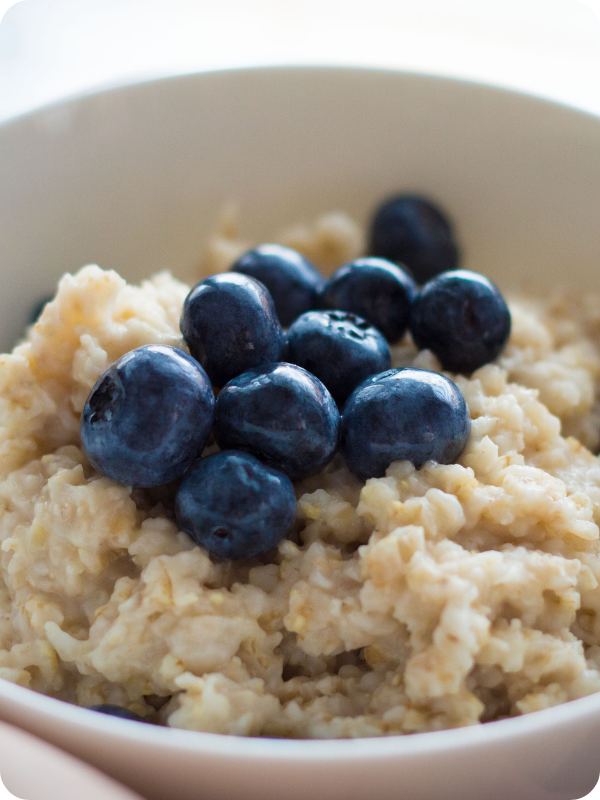
Rice tends to readily absorb arsenic, so processed baby food products that have concentrated sources of rice can have high levels of arsenic. Rice cereal is recommended by many pediatricians as a first weaning food for baby because it is fortified with iron, but there are many other ways to give your baby iron, such as a meat puree, or you can offer a different baby cereal such as oatmeal.
Minimize or avoid cassava based food products.
If you’re going to feed your baby cassava based products, make sure you stay at or below the serving size and keep these products on a rotation instead of being the “go-to” snack.
Serving size matters.
Many of these foods contain “safe” levels of heavy metals when the serving size is consumed. The problem is that “snacky” foods, such as puffs and teething biscuits, are easily overeaten. When 2 or 3 serving sizes are easily consumed at once, especially for an older toddler, risk increases.
Don’t eliminate whole foods that may contain heavy metals.
Instead, serve them in rotation alongside a variety of other foods. Root veggies, like carrots and sweet potatoes, and fresh cassava and rice are nutritious foods that provide essential vitamins and minerals for your baby. Processing these foods into baby food products tends to increase their heavy metal content.
Peel sweet potatoes and carrots.
Peeling root vegetables can lower their heavy metal content, since the skins of these foods come in contact with the ground where heavy metals exist.
Rinse rice thoroughly before cooking.
In addition to rinsing rice, you can try cooking it in more water than needed (and then drain off excess water) to reduce the amount of arsenic present. White basmati and sushi rice tend to have the lowest amounts of arsenic.
Dietary intake of heavy metals is just one source of heavy metal exposure. The health effects of heavy metal exposure are cumulative, so it is important to consider all the ways in which your family may be exposed and reduce exposure in all areas possible.
Remember what I always say: Do the best you can with the information you have! Try to take this information and use it to help you make better, more informed choices for your family. You’re doing great!
More parenting resources
Informed parents are empowered parents! For more support with raising littles, check out our resources below.
Search the blog for what you need:
- Support with starting solids
- Help feeding toddlers
- Development and milestone information
- Play activities that help littles learn
- Speech and language skills for your little one
Our most in-depth resources are our expert-written Handbooks! With hundreds of pages of research-backed guidance just like this post, we answer your most asked questions in our easy to read, yours-for-life guides!
Sources
- Lauren Zajac, MD, MPH. Heavy Metals in Foods and Fruit Juices. New York State Children’s Environmental Health Centers, PEHSU. Updated March 2022.
- Jesse Hirsch. Consumer Reports. Arsenic and Lead Are in Your Fruit Juice: What You Need to Know. Updated 30 January 2019. Accessed June 2026.
- Lead Poisoning. World Health Organization. Updated 10 June 2026. Accessed June 2026.
- Heng YY, Asad I, Coleman B, Menard L, Benki-Nugent S, Hussein Were F, Karr CJ, McHenry MS. Heavy metals and neurodevelopment of children in low and middle-income countries: A systematic review. PLoS One. 2022 Mar 31;17(3):e0265536. doi: 10.1371/journal.pone.0265536. PMID: 35358213; PMCID: PMC8970501.
- Reuben A, Caspi A, Belsky DW, et al. Association of Childhood Blood Lead Levels With Cognitive Function and Socioeconomic Status at Age 38 Years and With IQ Change and Socioeconomic Mobility Between Childhood and Adulthood. JAMA. 2017;317(12):1244–1251. doi:10.1001/jama.2017.1712
- Barański M, Srednicka-Tober D, Volakakis N, Seal C, Sanderson R, Stewart GB, Benbrook C, Biavati B, Markellou E, Giotis C, Gromadzka-Ostrowska J, Rembiałkowska E, Skwarło-Sońta K, Tahvonen R, Janovská D, Niggli U, Nicot P, Leifert C. Higher antioxidant and lower cadmium concentrations and lower incidence of pesticide residues in organically grown crops: a systematic literature review and meta-analyses. Br J Nutr. 2014 Sep 14;112(5):794-811. doi: 10.1017/S0007114514001366. Epub 2014 Jun 26. PMID: 24968103; PMCID: PMC4141693.
- Kevin Loria. Consumer Reports. Are There Still Heavy Metals in Baby Food? Updated 6 July 2023. Accessed June 2026.
- Food & Drug Administration. Closer to Zero: Reducing Childhood Exposure to Contaminants from Foods. Updated 6 January 2025. Accessed June 2026.
- Food & Drug Administration. FDA Issues Final Guidance for Industry on Action Level for Inorganic Arsenic in Infant Rice Cereals. Updated 5 August 2020. Accessed June 2026.
- Food & Drug Administration. FDA Issues Final Guidance to Industry on Action Level for Inorganic Arsenic in Apple Juice. Updated 1 June 2023. Accessed June 2026.
- Food & Drug Administration. Guidance for Industry: Action Levels for Lead in Processed Food Intended for Babies and Young Children. Updated 6 January 2025. Accessed June 2026.
OTHER POSTS YOU MAY LIKE:


MS, SLP
Founder of Eat Play Say, Speech-Language Pathologist, Feeding Specialist, Play Expert, Mom of 3
Jordyn Koveleski Gorman
SPECIALIZES IN: Infant and toddler speech-language, play, and feeding development, and curating a team that provides expert help that feels like a reassuring text from that one mom friend
EDUCATION: Jordyn received her BS in Speech-Language Pathology from Bloomsburg University and her MS in Speech-Language Pathology from Towson University
FAVE PARENTING FIRST: “The first true smile, it’s the sweetest!”

MS, CCC-SLP, CBS, IBCLC
Speech-Language Pathologist & Feeding Specialist, Certified Breastfeeding Specialist, International Board Certified Lactation Consultant
Jessica Nicholson Cocca
SPECIALIZES IN: Breast and bottle feeding, tongue ties, oral motor dysfunction, starting solids, infant and toddler speech, treating oral motor disorders
EDUCATION: Jessica received her BS in Communication Sciences and Disorders from Pennsylvania State University in 2015 and her MS in Speech-Language Pathology from Towson University in 2017
FAVE PARENTING FIRST: “Baby’s first wave! What a fun first communication gesture!”

MA, CCC-SLP, CLC
Speech-Language Pathologist, Certified Lactation Counselor
Jennifer McFarlin
SPECIALIZES IN: Breast and bottle feeding, tongue ties, starting solids, infant and toddler speech development
EDUCATION: She received her BS in Speech-Language Pathology from Ball State in 2014 and a MA in Speech-Language Pathology from Ball State in 2016.
FAVE PARENTING FIRST: “My favorite baby’s first is their first true smile that just warms your soul knowing they are smiling at you. My other favorite is their first word. I love watching their language explode!”

MS, CCC-SLP
Bilingual Speech-Language Pathologist
Nicole La Petina Kelly
SPECIALIZES IN: Bilingual development (Spanish-English), supporting multilingual families, infant and toddler speech
EDUCATION: She received her BA in Communication Sciences and Disorders and in Spanish from the University of Wisconsin-Madison in 2014 and her MS in Speech-Language Pathology with an English-Spanish Specialization from Marquette University in 2016.
FAVE PARENTING FIRST: “It’s the first slobbery kisses for me!”

RDN, LD
Licensed Registered Dietitian
Kimberly Vede
SPECIALIZES IN: Infant and pediatric nutrition including breastfeeding, formula feeding, and starting solids. She also specializes in prenatal and postpartum nutrition.
EDUCATION: She received her BSc in Biology in 2014 from Life University, and her BSc in Dietetics from Life University in 2019.
FAVE PARENTING FIRST: ”The first time they say ‘mama!’”


This checklist was created with input from a Speech-Language Pathologist, Occupational Therapist and Physical Therapist and has been downloaded over 20,000 times by parents worldwide. Learn the important milestones to pay attention to, and keep it in your digital back pocket during the baby + toddler years!
Comprehensive Milestone Checklist for gross motor, fine motor, and speech-language milestones for 0-36 months,
DOWNLOAD FOR FREE


