


Added Sugars vs. Natural Sugars for Babies
December 7, 2024
Jordyn Koveleski Gorman

Last Updated on July 13, 2026 by Jordyn Koveleski Gorman
First things first: sugar isn’t bad. In fact, sugar is necessary and essential for a healthy metabolism. But, like many things in life, balance is everything.
Common questions we get about sugar include: How much sugar is okay for littles? What about added sugars vs. natural sugars, especially for littles just starting solids? And what should parents understand about reading nutrition labels when it comes to sugar?
Our team’s pediatric registered dietitian joined me (a speech-language pathologist and feeding specialist) for this blog to break down the facts about sugar for infants, toddlers, and kids. Let’s dive in!
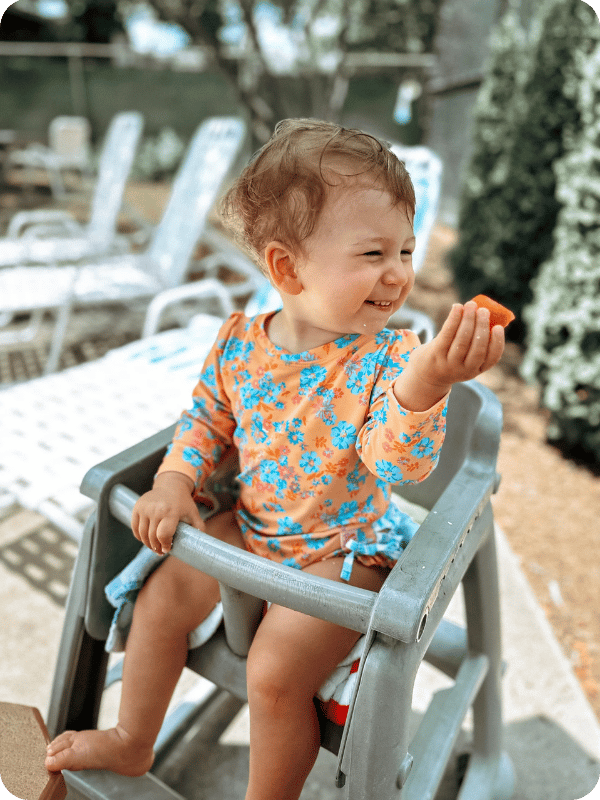
Understanding sugar and its nutritional value
Many foods and beverages intended for children in the US are marketed with phrases that imply nutritional benefits where there may not be. Studies have shown that these marketing strategies are effective, too, often convincing parents that products provide important nutrients free of less-than-ideal ingredients. (1) This marketing trap is misleading and harmful, usually more so than the ingredients themselves.
Sugar, a carbohydrate, acts as fuel for the metabolism, which is how the body produces energy in order to function. Cells need fuel to produce energy, and glucose is the body’s preferred form of fuel. If a person does not consume enough sugar, stored glucose (called glycogen) will run low, stress hormones will rise, and the body will break down its own cells and tissues (fats and proteins) in an attempt to make more glucose. (2)
However, just because sugar is important for our bodies does not mean that all sugar is created equal. Consuming the right kind of sugar and balancing the way it’s consumed matters, especially for babies and toddlers whose bodies are growing and developing.
Added sugars vs. natural sugars
The American Academy of Pediatrics recommends that added sugars should be avoided before the age of 2. (3) You might wonder if there is truly a difference between “added” sugars and “natural” sugars. And with companies using deceptive marketing practices to mislead parents, it can be difficult to decipher the two at a glance anyway. But there are some important distinctions between these sugars!
Natural sugars are those found naturally in food, including sugars found in:
- Fresh fruit and vegetables and most dried, canned, and frozen fruits and vegetables
- Dairy products
- Grains, such as rice, pasta, and flour
- Nuts and seeds
By contrast, added sugars are simply any sugars that have been added to food at any point in preparation or cooking, such as cane sugar or corn syrup. This also includes sugars commonly called free sugars. The World Health Organization defines free sugars as including “Monosaccharides and disaccharides (e.g. sucrose, fructose, glucose) added to foods and beverages by the manufacturer, cook or consumer, and sugars naturally present in honey, syrups, fruit juices and fruit juice concentrates.” (4)
Added sugars include:
- Any form of sugar that has been added to foods during cooking or processing, either at home or by the manufacturer
- Honey, maple syrup, agave nectar, etc.
- Lactose and galactose when added to food and drinks
- Natural sugars from fruits and vegetables when consumed as a juice, concentrate, powder, or manufactured puree (4)

Sugar intake for babies and toddlers
Even though natural sugars provide vital nutrition, it is possible to overdo them. Additionally, research has indicated that limiting sugar in the first 2.5–3 years of a child’s life can be associated with decreased chronic illness later on. (5)
When it comes to natural sugar, fruit is the most likely culprit for surpassing daily recommended limits. Natural sugars found in vegetables are typically not of concern.
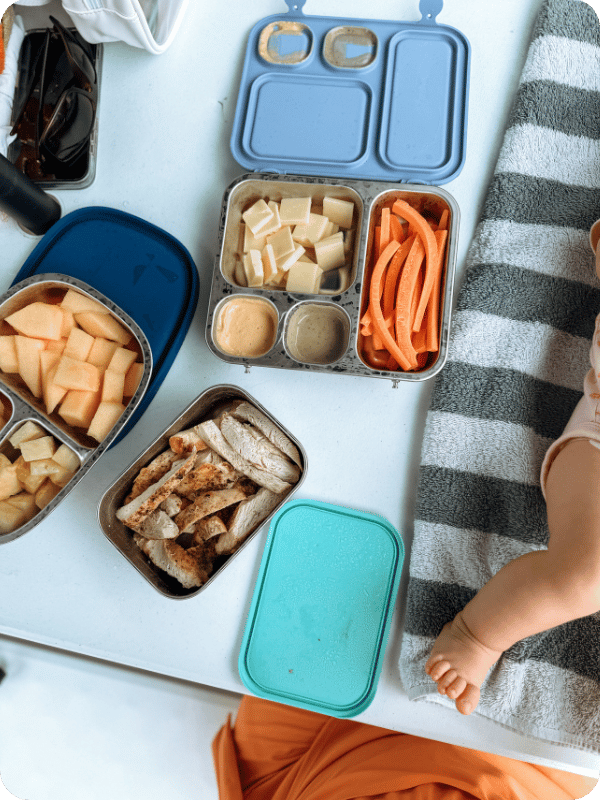
A good practice to prevent overdoing natural sugar is to provide an appropriate serving size of fruit at snacks and meals alongside protein and fat. For babies under 12 months, 2–4 tablespoons of fruit per meal is appropriate. For toddlers 1–3 years, ¼–⅓ cup of fruit per serving is normal, with 2–3 servings of fruit per day.
When eaten without protein and fat, large amounts of natural sugar can lead to blood sugar spikes and subsequent crashes. These highs and lows generally leave littles feeling unwell and can lead to tiredness and irritability. Other important nutrients may also be missed when eating a disproportionate amount of foods high in natural sugars.
Balancing fruits with other nutrient-dense foods is best, but it is also likely normal if your child prefers fruits over other foods, too. The berry phase should be studied!
Tips for serving fruit to your baby and toddler:
- Offer fruit several times a day, such as with breakfast, lunch, and dinner, or if your little one asks for a sweet snack.
- Try to pair fruit with a fat and protein source to help balance blood sugar and to provide a snack/meal that will give sustainable energy. Good combinations include: strawberries + plain whole milk yogurt; apples + cheese + a hardboiled egg; banana slices + almond butter.
- Aim to serve a variety of fruits so your little one can have exposure to the full scope of nutrients they provide. Choosing fruit that’s in season is even better!
- When introducing new foods/fruits, try to involve your little one in preparing it to increase the chances they will want to try it.
- Focus on giving your child fruit in its whole, natural form (cut to appropriate sizes for their age) instead of as a juice or a concentrate found in processed snacks.
- When at home, try to mash fruit yourself with a fork instead of giving a fruit pouch in order to maintain the benefits of whole fruits. Or, blend fruit and yogurt to make your own “pouch.”
- Don’t save fruit just for dessert or as a treat. Serve it alongside veggies and protein to avoid giving it a “special food” label.
Is juice added sugar or natural sugar?
Interestingly, fruit juice is a point of contention. According to dietary guidelines by the USDA, fruit juice does not count as an added sugar. (6) However, as noted above, the WHO and other health organizations consider fruit juice to be free sugars, which are classified as added sugars.
The differing perspectives are centered around the fact that although fruit juices may not gain additional sugar through processing, the act of processing from fruit to juice results in sugars that are “freed” from their natural form. According to our registered dietitian, fruit juices should be classified with added sugars.
One reason for this classification? Consider this: high fructose corn syrup has more fructose than regular table sugar, and apple juice has even more fructose than high fructose corn syrup. The concentration of sugar in apple juice is significant. And sugars that are high in fructose are more problematic due to how they are metabolized in the liver, especially when consumed as liquids. (6) When consumed in liquid form, like juice, the body rapidly absorbs the sugar, leading to a more rapid effect on the liver.
In contrast, when eating a whole piece of fruit, fructose is more slowly absorbed due to it being packaged with beneficial fibers and phytonutrients. The fiber slows down digestion and absorption of fructose because the fructose is more “wrapped up” in the cells. (7)
Sugar, no matter the form, impacts blood sugar and insulin response. However, the sugar in whole fruit and starchy veggies (like sweet potatoes) has a different effect on the body than the sugar in processed foods, juices, and baked goods. Fruit is also packed with vitamins, minerals, antioxidants, and phytonutrients that are protective against disease. It is worth remembering that fruit is a carbohydrate, so pairing it with the other macronutrients, protein and fat, is important for balanced nutrition.
Are fruit pouches natural or added sugars?
Pouches are not bad, and can be a really convenient way to feed your baby when necessary. However, offering fruit-based pouches often and regularly over whole fruit is not ideal.
Even though pouches are typically made from whole fruit, they can be considered to contain free sugars, just like juice, because of the extensive processing that is done to the fruit. The processing releases the sugars from their cell structures, negating the benefits of slower sugar absorption found in whole fruits. (8)
Pouches can offer many benefits in different scenarios, such as providing hydration (preventing constipation is great!) and allowing families to adapt when on-the-go. Keeping in mind that sugars in pouches aren’t quite the same as the sugar in the original whole fruit can be helpful when making decisions about which pouches to serve your child and when.
What about natural added sugars?
Food companies have definitely caught on to the notion that parents are trying to limit refined sugars, such as high fructose corn syrup, and they are proudly finding alternative ways to sweeten their products with natural sugars. And their methods are certainly convincing parents. (1)
Some common sugar swaps in processed foods and drinks are maple syrup, honey, agave nectar, coconut sugar, and date sugar. Although these sugars are more “natural” and less processed, they are still added sugars that can cause blood sugar spikes and do not add important nutrients.
It is best to limit these with children under age 2, as they are still considered added sugars. After age 2, they should still be limited, with whole fruits and vegetables being the goal for a child’s main source of natural sugar.
Sugar can be hard to avoid, as it seems that it is often hidden in foods and beverages you might never suspect. Sometimes, that deception might be intentional by food manufacturers. You aren’t alone in feeling confused or overwhelmed by it! Research has shown that parents are frustrated and upset about these marketing practices. (1) The best tool to combat this is education. The more you learn, the better you can feel about feeding your little one(s)!
More infant and toddler support
Looking for more parenting resources? We’ve got you covered!
Learn more about starting solids, feeding toddlers, and infant & toddler development on our blog. (We even have blogs about our favorite play activities for every age!)
For late night deep dives and answers to your most-asked questions, check out our Handbooks! With hundreds of pages of research-backed education and practical, hands-on tips and tricks, you can take on every era of parenting littles with confidence.
Sources
- Fleming-Milici F, Phaneuf L, Harris JL. Marketing of sugar-sweetened children’s drinks and parents’ misperceptions about benefits for young children. Matern Child Nutr. 2022 Jul;18(3):e13338. doi: 10.1111/mcn.13338. Epub 2022 Feb 24. PMID: 35199914; PMCID: PMC9218304.
- Brosnan JT. Comments on metabolic needs for glucose and the role of gluconeogenesis. Eur J Clin Nutr. 1999 Apr;53 Suppl 1:S107-11. doi: 10.1038/sj.ejcn.1600748. PMID: 10365987.
- American Academy of Pediatrics. Added sugar in kids’ diets: How much is too much? 25 March 2019. Accessed July 2026.
- World Health Organization. Healthy Diet. 26 January 2026. Accessed July 2026.
- Gracner T, Boone C, Gertler PJ. Exposure to sugar rationing in the first 1000 days of life protected against chronic disease. Science. 2024 Nov 29;386(6725):1043-1048. doi: 10.1126/science.adn5421. Epub 2024 Oct 31. PMID: 39480913; PMCID: PMC12238948.
- USDA. Dietary Guidelines for Americans, 2020–2025.
- Penn Medicine. The gut shields the liver from fructose-induced damage. Updated 29 June 2020. Accessed July 2026.
- The role of dietary fiber in satiety, glucose, and insulin: studies with fruit and fruit juice. Bolton, R P et al. The American Journal of Clinical Nutrition, Volume 34, Issue 2, 211 – 217
OTHER POSTS YOU MAY LIKE:




MS, SLP
Founder of Eat Play Say, Speech-Language Pathologist, Feeding Specialist, Play Expert, Mom of 3
Jordyn Koveleski Gorman
SPECIALIZES IN: Infant and toddler speech-language, play, and feeding development, and curating a team that provides expert help that feels like a reassuring text from that one mom friend
EDUCATION: Jordyn received her BS in Speech-Language Pathology from Bloomsburg University and her MS in Speech-Language Pathology from Towson University
FAVE PARENTING FIRST: “The first true smile, it’s the sweetest!”

MS, CCC-SLP, CBS, IBCLC
Speech-Language Pathologist & Feeding Specialist, Certified Breastfeeding Specialist, International Board Certified Lactation Consultant
Jessica Nicholson Cocca
SPECIALIZES IN: Breast and bottle feeding, tongue ties, oral motor dysfunction, starting solids, infant and toddler speech, treating oral motor disorders
EDUCATION: Jessica received her BS in Communication Sciences and Disorders from Pennsylvania State University in 2015 and her MS in Speech-Language Pathology from Towson University in 2017
FAVE PARENTING FIRST: “Baby’s first wave! What a fun first communication gesture!”

MA, CCC-SLP, CLC
Speech-Language Pathologist, Certified Lactation Counselor
Jennifer McFarlin
SPECIALIZES IN: Breast and bottle feeding, tongue ties, starting solids, infant and toddler speech development
EDUCATION: She received her BS in Speech-Language Pathology from Ball State in 2014 and a MA in Speech-Language Pathology from Ball State in 2016.
FAVE PARENTING FIRST: “My favorite baby’s first is their first true smile that just warms your soul knowing they are smiling at you. My other favorite is their first word. I love watching their language explode!”

MS, CCC-SLP
Bilingual Speech-Language Pathologist
Nicole La Petina Kelly
SPECIALIZES IN: Bilingual development (Spanish-English), supporting multilingual families, infant and toddler speech
EDUCATION: She received her BA in Communication Sciences and Disorders and in Spanish from the University of Wisconsin-Madison in 2014 and her MS in Speech-Language Pathology with an English-Spanish Specialization from Marquette University in 2016.
FAVE PARENTING FIRST: “It’s the first slobbery kisses for me!”

RDN, LD
Licensed Registered Dietitian
Kimberly Vede
SPECIALIZES IN: Infant and pediatric nutrition including breastfeeding, formula feeding, and starting solids. She also specializes in prenatal and postpartum nutrition.
EDUCATION: She received her BSc in Biology in 2014 from Life University, and her BSc in Dietetics from Life University in 2019.
FAVE PARENTING FIRST: ”The first time they say ‘mama!’”


This checklist was created with input from a Speech-Language Pathologist, Occupational Therapist and Physical Therapist and has been downloaded over 20,000 times by parents worldwide. Learn the important milestones to pay attention to, and keep it in your digital back pocket during the baby + toddler years!
Comprehensive Milestone Checklist for gross motor, fine motor, and speech-language milestones for 0-36 months,
DOWNLOAD FOR FREE


