


Healthy Snacks for Toddlers This Summer
June 5, 2026
Jordyn Koveleski Gorman

Last Updated on June 5, 2026 by Jordyn Koveleski Gorman
This page contains affiliate links. We will receive a commission on qualifying purchases using these links.
Toddlers are the professional snackers of the world. And as a mom of three and a feeding specialist, I get it: snacks can be stressful.
Questions about how many snacks are too many, picking healthy ingredients, and wondering if your little one is getting the right nutrition can add to an already full mental load. Not to mention when you work hard on a meal just for your little one to refuse it and ask for a snack instead. Sigh.
That’s why I tagged in our team’s pediatric registered dietitian for a deep dive into toddler snacks for the summer (or any time, really). We’ve got everything you need to know about the best snacks, how to serve them, and even some tips for navigating picky toddler eating!
What makes a healthy snack for toddlers?
Ideally, snacks would balance carbs, fat, and protein and have no added sugars. But how? It’s hard to avoid sugar, even with the best intentions.
Most premade snacks targeted for toddlers have added sugars, which are best to avoid, especially under the age of 2. Studies have shown that increased sugar intake in the first 2 years is correlated to onset of chronic diseases, like type 2 diabetes, later in life. (1) Still, 98% of toddlers are taking in added sugars daily. (2) And no wonder, because sugar is everywhere! It’s added to so many food items: bread, crackers, yogurt, and pouches, too!
The best way to balance nutrition in a snack is to take a “real food” approach whenever possible. Saving premade snacks for on-the-go is a great approach to finding balance. Serving a snack that includes a protein, fruit or veggie, and maybe even a grain or starchy vegetable checks all the nutrition boxes.
Is it okay for my toddler to snack all day?
It’s not ideal to snack all day, but it is normal for littles to ask for snacks often. Grazing (i.e., eating in little amounts all throughout the day) can impact mealtime routines. It can unintentionally lead to less nutritious foods being served.
A general routine with 2 or 3 snacks per day, often mid-morning and mid-afternoon (and an occasional third snack somewhere), typically works well for toddlers and preschoolers. When snacks are packed with nutrition, littles can fill up, hopefully reducing those grazing tendencies and keeping them full until the next meal!
The best healthy snacks for toddlers
Try these healthy snacks for your toddler or preschooler!
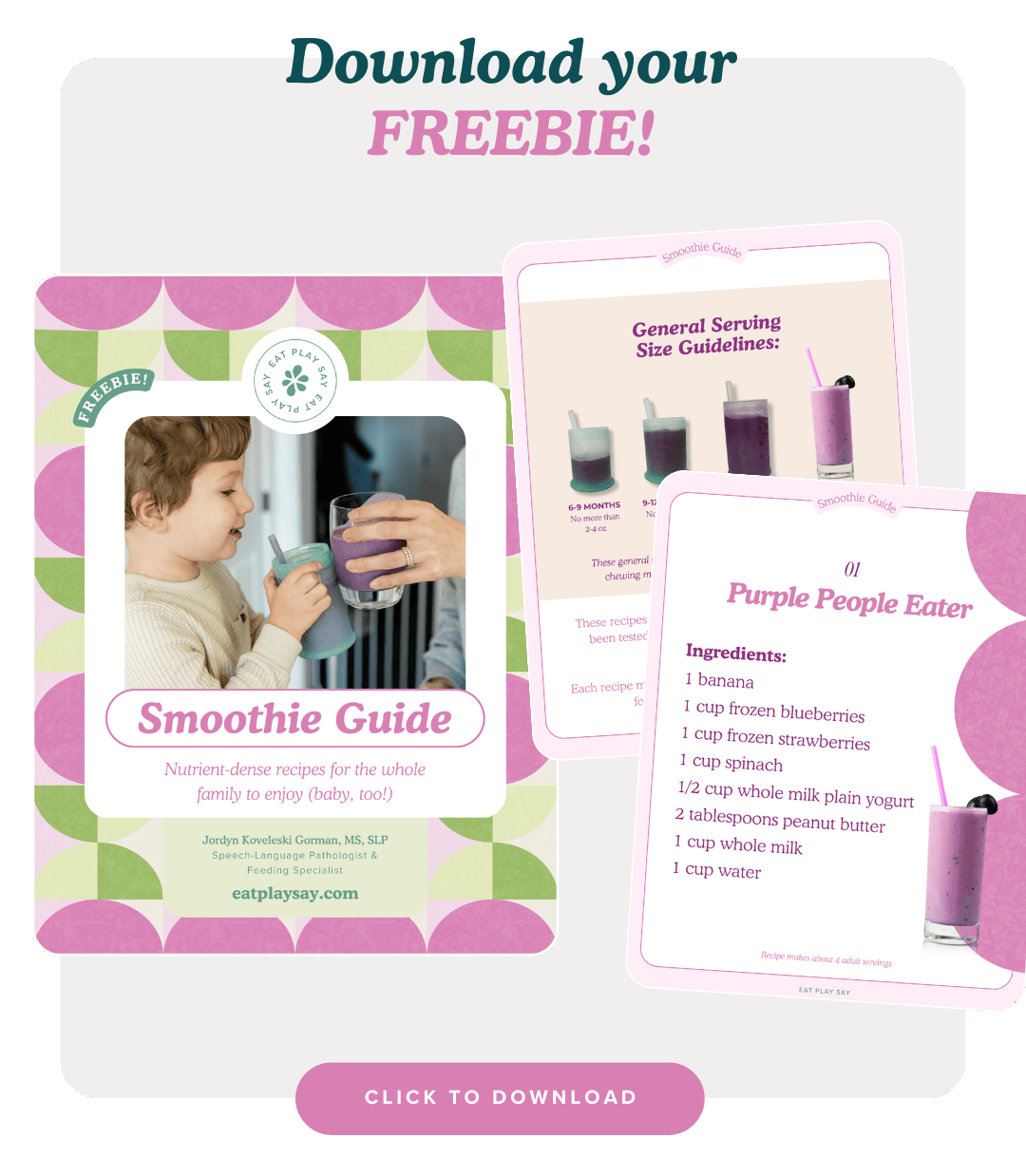
Smoothies for toddlers (and grown ups)
Smoothies make an excellent summer snack! They offer nutrition and hydration, something everyone needs a boost of on a hot day. There are a million different ways to make a smoothie, and you can easily make a batch for the entire family at once. Freeze leftovers into popsicle molds for another snack later on!
Greenie Genie Smoothie
Ingredients:
- 1 banana
- 1 avocado
- 1 cup frozen pineapple
- 1 cup frozen strawberries
- 1 cup spinach
- 2 tablespoons peanut butter
- 1 cup whole milk
- 1 cup water
Blend ingredients together and serve. Makes approximately 4 adult-sized servings.
For more of our favorite smoothie recipes, download our free Smoothie Guide!
High protein snacks for toddlers
Protein-dense snacks help power littles through the heat. Keep in mind that protein needs for toddlers are actually quite low compared to carbs—only 2 servings per day, or about 10–20 grams. (3)
Beef stick + cheese
A high quality beef stick paired with cheese is a classic snack that travels well and packs good nutrition in a small, mess-free package.
Nut butter + a carb
Nut butter spread on a piece of bread or rice cake can offer a good ratio of fat, protein, & carbs. Finely cut apples dipped in nut butter is another higher protein snack. Try to find one without any added sugar!
Salmon/tuna/chicken/egg salad
Whipping up a cold salad with canned salmon, light tuna, shredded chicken breast/thighs, or smashed hard boiled eggs with dressing or spices of choice can be an easy snack that contains a lot of protein and fat. Pair with a grain and a fruit or veggie if you need to turn this into a quick meal!
Gluten free snacks for toddlers
Yogurt + fruit dippers
Almost any fruit dips well in plain whole milk yogurt! Some of our favorites are cantaloupe, peaches, mango, and apples. You can also add nut butter for a little extra flavor. If preferred, add a touch of honey (for 12m+) or maple syrup to yogurt.
Cottage cheese + veggie
Another great combination! Peppers, cauliflower, and cucumbers work well alongside cottage cheese. For dipping, feel free to add a dressing of choice.
Grab and go snacks for toddlers
When you don’t have time to prep a snack plate, there are still some high-quality options that balance nutrition with simplicity!
Pouches
The internet may be divided on pouches, but nutritionally, they do offer several benefits. Similar to smoothies, pouches provide nutrition and hydration. Whether you make your own pouches at home or purchase them from the store, these are great for a quick snack. You can find our favorite pouches here.
Snack bars
Not all snack bars are nutritionally dense or appropriate for toddlers, but our favorite snack bars are great options. Balanced ingredients, no added sugars, and an easy to chew texture without too many large chunks are some things to look for!
More toddler resources
Looking for more summer fun? We’ve got you!
Check out our seasonal posts below:
- Favorite outdoor toys and sunscreen for the whole family
- Summer arts and crafts
- Activities for summer fun
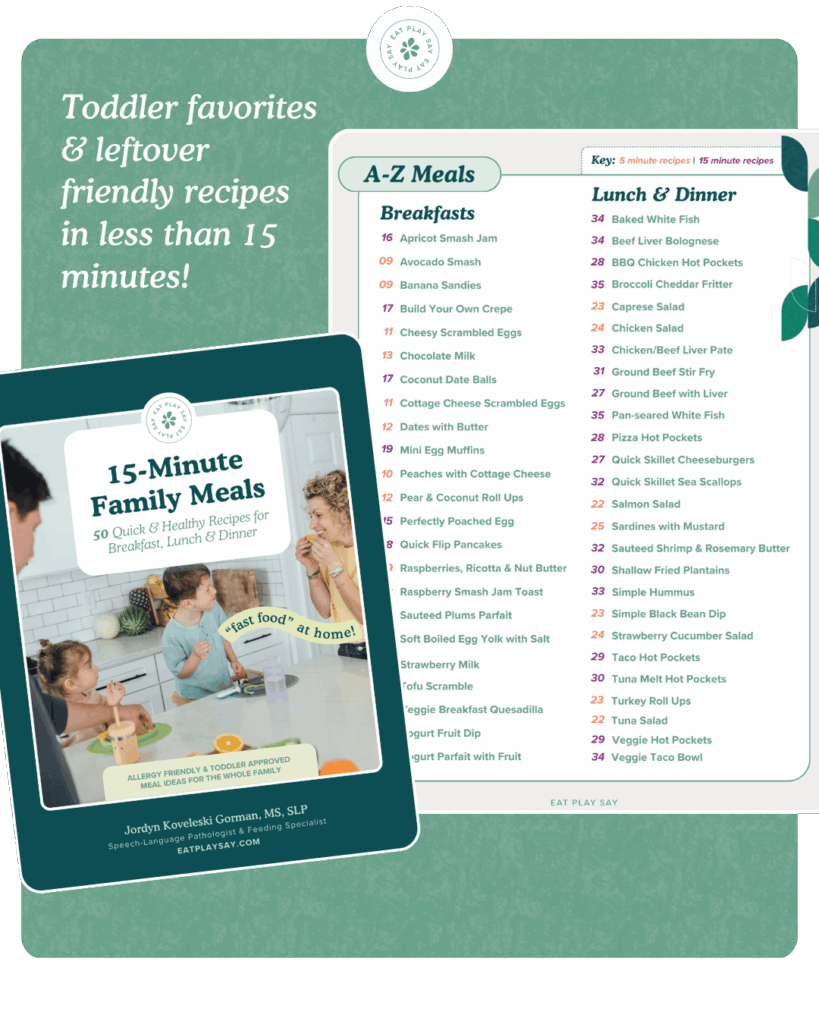
For more help feeding your toddler, grab our easy 15 Minute Family Meals guide! These meals are toddler tested and approved, and they actually take 15 minutes or less from start to finish.
Sources
- Gracner T, Boone C, Gertler PJ. Exposure to sugar rationing in the first 1000 days of life protected against chronic disease. Science. 2024 Nov 29;386(6725):1043-1048. doi: 10.1126/science.adn5421. Epub 2024 Oct 31. PMID: 39480913; PMCID: PMC12238948.
- Herrick KA, Fryar CD, Hamner HC, Park S, Ogden CL. Added Sugars Intake among US Infants and Toddlers. J Acad Nutr Diet. 2020 Jan;120(1):23-32. doi: 10.1016/j.jand.2019.09.007. Epub 2019 Nov 14. PMID: 31735600; PMCID: PMC7512119.
- American Academy of Pediatrics. Accessed June 2026. Healthy Children Website.
Leave a Reply
OTHER POSTS YOU MAY LIKE:


MS, SLP
Founder of Eat Play Say, Speech-Language Pathologist, Feeding Specialist, Play Expert, Mom of 3
Jordyn Koveleski Gorman
SPECIALIZES IN: Infant and toddler speech-language, play, and feeding development, and curating a team that provides expert help that feels like a reassuring text from that one mom friend
EDUCATION: Jordyn received her BS in Speech-Language Pathology from Bloomsburg University and her MS in Speech-Language Pathology from Towson University
FAVE PARENTING FIRST: “The first true smile, it’s the sweetest!”

MS, CCC-SLP, CBS, IBCLC
Speech-Language Pathologist & Feeding Specialist, Certified Breastfeeding Specialist, International Board Certified Lactation Consultant
Jessica Nicholson Cocca
SPECIALIZES IN: Breast and bottle feeding, tongue ties, oral motor dysfunction, starting solids, infant and toddler speech, treating oral motor disorders
EDUCATION: Jessica received her BS in Communication Sciences and Disorders from Pennsylvania State University in 2015 and her MS in Speech-Language Pathology from Towson University in 2017
FAVE PARENTING FIRST: “Baby’s first wave! What a fun first communication gesture!”

MA, CCC-SLP, CLC
Speech-Language Pathologist, Certified Lactation Counselor
Jennifer McFarlin
SPECIALIZES IN: Breast and bottle feeding, tongue ties, starting solids, infant and toddler speech development
EDUCATION: She received her BS in Speech-Language Pathology from Ball State in 2014 and a MA in Speech-Language Pathology from Ball State in 2016.
FAVE PARENTING FIRST: “My favorite baby’s first is their first true smile that just warms your soul knowing they are smiling at you. My other favorite is their first word. I love watching their language explode!”

MS, CCC-SLP
Bilingual Speech-Language Pathologist
Nicole La Petina Kelly
SPECIALIZES IN: Bilingual development (Spanish-English), supporting multilingual families, infant and toddler speech
EDUCATION: She received her BA in Communication Sciences and Disorders and in Spanish from the University of Wisconsin-Madison in 2014 and her MS in Speech-Language Pathology with an English-Spanish Specialization from Marquette University in 2016.
FAVE PARENTING FIRST: “It’s the first slobbery kisses for me!”

RDN, LD
Licensed Registered Dietitian
Kimberly Vede
SPECIALIZES IN: Infant and pediatric nutrition including breastfeeding, formula feeding, and starting solids. She also specializes in prenatal and postpartum nutrition.
EDUCATION: She received her BSc in Biology in 2014 from Life University, and her BSc in Dietetics from Life University in 2019.
FAVE PARENTING FIRST: ”The first time they say ‘mama!’”


This checklist was created with input from a Speech-Language Pathologist, Occupational Therapist and Physical Therapist and has been downloaded over 20,000 times by parents worldwide. Learn the important milestones to pay attention to, and keep it in your digital back pocket during the baby + toddler years!
Comprehensive Milestone Checklist for gross motor, fine motor, and speech-language milestones for 0-36 months,
DOWNLOAD FOR FREE


