


3 Month Old Wake Windows
June 4, 2026
Jordyn Koveleski Gorman

Last Updated on September 10, 2026 by Jordyn Koveleski Gorman
This page contains affiliate links. We will receive a commission on qualifying purchases using these links.
As your little one transitions out of the newborn phase into an era with more interaction, play, and curiosity, you might be wondering what to do now that they’re awake more.
In those first few weeks, wake windows were primarily spent feeding, changing diapers, and feeding some more. By 3 months, you’ve probably noticed you have a little extra time to pass between naps. And now that baby is starting to engage more with their surroundings, there are countless new activities to try, too!
Whether you’re feeling overwhelmed and paralyzed by information overload or you’re too exhausted to form coherent thoughts (or both!), we’ve got you covered. Play isn’t our middle name for nothing! Below are some sample schedules and activities you can do during your 3 month old’s wake windows!

What are 3 month old wake windows?
Your 3 month old’s wake windows are likely starting to stretch a bit more each day. Around 12 weeks, baby’s circadian rhythm begins to establish. For some, this means that nighttime stretches of sleep may start to extend over time. (1) This doesn’t happen for all babies, and it is biologically normal for babies to wake up overnight in their first year of life and even beyond. So if your little one’s night wakings are still frequent, know that is perfectly normal.
When night sleep stretches longer, this often corresponds with longer wake windows during the day. At 3 months, typical wake windows are anywhere from 1–2 hours long. As your little one grows, their tolerance for daytime sleep pressure will also increase. Sleep pressure, along with circadian rhythm, are the main biological drivers for sleep. (2)
Keep in mind that baby may have a wake window that is only an hour, another one closer to 90 minutes, and another that’s 2 hours all in the same day! Being responsive to your little one’s cues, whether they are for sleep or hunger, is more important than the clock.
What to do during wake windows
Play, play, play! Engaging in play with your little one is the best way to help them learn. (3) At 3 months old, play time is still mostly about interacting with you, as your visual cues teach baby about the world. (4) They might not be ready to break out the Barbies and Legos yet, but they are at the perfect age to begin introducing lots of other activities.
For instance, it’s around this time that babies start to play with toys by kicking, swatting, or reaching for them. (5) Now is also a great time to introduce teethers as baby starts mouthing objects. You can find more of our favorite activities for 3 month olds here.
3 month wake window schedules
Keeping some options in mind for how to best utilize wake time can help you navigate inconsistent wake windows as baby adapts to more wake time. You don’t have to fill every minute of their wake time with activities or chores. Short bursts of activities, lasting just a few minutes, are the best way to engage at this age. Through trial and error, you’ll find the balance that works best for you and your little one!
Remember that spending time with your baby is a good, healthy, and productive thing. Snuggling your baby is productive, and so is feeding them! Give yourself grace to take it one wake window at a time. Every day and every hour will look a little different, and that’s okay. And every baby’s personality is unique. Some are more laid back, while others prefer to be held constantly. Both are okay and totally normal!
Below are some sample wake window schedules to test out with your 3 month old! Feeding time is included in each sample schedule for reference, but you can fit feeds into wake windows based on your baby’s needs and hunger cues!
60 minute wake window schedules
For a wake window spent at home:
- Wake from sleep, diaper change, etc. (5 minutes)
- Feed (15–20 minutes)
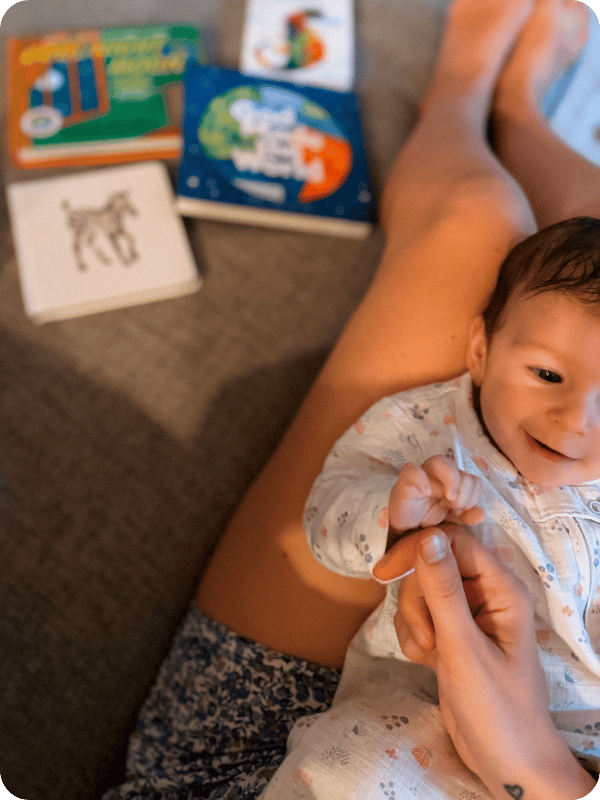
- Read a book to baby (5 minutes)
- Babywear or have floor play during household tasks (15–20 minutes)
- Tummy time (5 minutes)
- Have facetime and conversation with baby (5–10 minutes)
- Snuggle/feed to wind down for nap (5–10 minutes)
Wake window schedule when you need to leave the house:
- Wake from sleep, diaper change, etc. (5 minutes)
- Sensory play with baby (5–10 minutes)
- Tummy or floor time, using high contrast toys (5–10 minutes)
- Feed (15–20 minutes)
- Get ready to leave the house (5–10 minutes)
- Leave the house (5 minutes)
- Babywear, stroller, or car seat for outing, however you want baby to nap (15–20 minutes)
- Settle for nap with snuggles, a feed, or time in the car or stroller (5–10 minutes)
Schedule for a wake window when you’re already out and about:
- Wake from sleep, diaper change, etc. (5 minutes)
- Feed (15–20 minutes)
- Active time depending on where you are, such as babywearing, tummy time, taking a walk or having a dance party, etc. (15–30 minutes)
- Chat with baby about your surroundings and/or play with toys together (5–15 minutes)
- Begin settling for nap based on location — babywearing is my favorite for naps on the go! (5–10 minutes)

90 minute wake window schedules
For a wake window spent at home:
- Wake from sleep, diaper change, wake up snuggles, etc. (5–10 minutes)
- Read a book to baby (5–10 minutes)
- Feed (15–20 minutes)
- Tummy time (5 minutes)
- Babywear or have floor play during household tasks (15–30 minutes)
- Have facetime and conversation with baby, adding toys to extend the play session (10–15 minutes)
- Practice new skills, like rolling or mimicking facial expressions! (5–10 minutes)
- Floor play for a parent potty and/or snack break (5–10 minutes)
- Gentle movement, such as a walk, quick dance break, or tummy time on your chest (10–15 minutes)
- Snuggle/feed to wind down for nap (5–10 minutes)
Wake window schedule when you need to leave the house:
- Wake from sleep, diaper change, etc. (5 minutes)
- Feed (15–20 minutes)
- Get ready to leave the house, parent snack time (5–10 minutes)
- Leave the house (5 minutes)
- Babywear, stroller, or car seat for outing (15–20 minutes)
- Take a walk or get baby out of stroller/carseat to look around a new place (5–10 minutes)
- Sensory play (5–10 minutes)
- Activity with toys and/or books, having face time with caregiver, or more sensory play to extend wake time (10–15 minutes)
- Settle for nap with snuggles, a feed, or time in the car or stroller (5–10 minutes)
Schedule for a wake window when you’re already out and about:
- Wake from sleep, diaper change, etc. (5 minutes)
- Feed (15–20 minutes)
- Active time that works for your outing, like a stroller walk, babywearing, or visiting with family/friends (15–30 minutes)
- Chat with baby about your surroundings and/or play with toys together (5–15 minutes)
- Face-to-face play, working on skills like making eye contact, reaching for objects, or visually tracking objects (5–10 minutes)
- Babywear, stroller, or floor time for quick break (5–10 minutes)
- Begin settling for nap based on location (5–10 minutes)

2 hour wake window schedules
For a wake window spent at home:
- Wake from sleep, diaper change and snuggle time, etc. (5–10 minutes)
- Read a book to baby (5–10 minutes)
- Feed (15–20 minutes)
- Tummy time (5–10 minutes)
- Floor time or babywear while doing household tasks (15–30 minutes)
- Talk face-to-face with baby (10 minutes)
- Practice new skills, like rolling, mimicking facial expressions, or cooing (5–10 minutes)
- Floor play for a parent potty and/or snack break (5–10 minutes)
- Gentle movement, such as a walk, quick dance break, or tummy time on your chest (10–15 minutes)
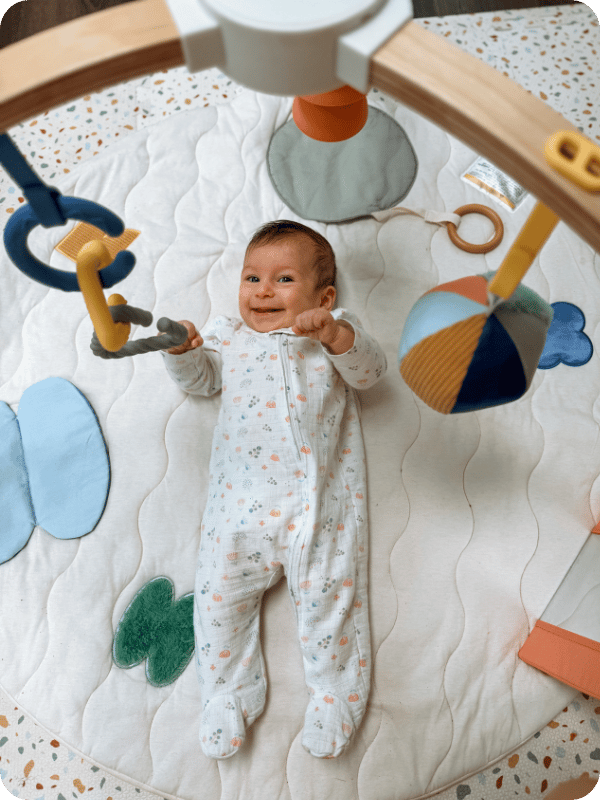
- Play gym time with high-contrast and/or dangling toys (5–10 minutes)
- Snuggle/feed to wind down for nap (5–10 minutes)
Wake window schedule when you need to leave the house:
- Wake from sleep, diaper change, etc. (5 minutes)
- Feed (15–20 minutes)
- Tummy or floor time, using high contrast toys and books (10–15 minutes)
- Get ready to leave the house, and don’t forget a snack for you! (5–10 minutes)
- Leave the house (5 minutes)
- Babywear, stroller, or car seat for outing (15–30 minutes)
- Take a walk or get baby out of stroller/carseat to look around a new place (10–15 minutes)
- Face time with caregiver (5–10 minutes)
- Sensory play to extend wake time (10–15 minutes)
- Settle for nap with snuggles, a feed, or time in the car or stroller (5–10 minutes)
Schedule for a wake window when you’re already out and about:
- Wake from sleep, diaper change, etc. (5 minutes)
- Feed (15–20 minutes)
- Active time that works for your outing, like a stroller walk, babywearing, or visiting with family/friends (15–30 minutes)
- Chat with baby about your surroundings and/or play with toys together (10–15 minutes)
- Face-to-face play, working on skills like making eye contact, reaching for objects, or visually tracking objects (5–10 minutes)
- Babywear, stroller, or floor time when possible (5–10 minutes)
- More play or active time (10–15 minutes)
- Read baby a book (5–10 minutes)
- Face time with caregiver (5–10 minutes)
- Sensory play to extend wake time (10–15 minutes)
- Begin settling for nap based on sleep needs and the day’s schedule (5–10 minutes)
3 month old wake window activities
So you’ve looked at the schedules above, and now you’re wondering what activities to mix into the routine. Our favorite skill-specific activities to do with your little one during wake windows are below. All of these come directly from our Infant Playbook, which has more than 100 age-appropriate ways to play with your baby in their first year using only what you have at home!
1. Mirror time!
Prop a small mirror so baby can see themself when they lift their head during tummy time. Get down next to baby and make funny faces in the mirror. Alternatively, you can lay in front of baby without a mirror and make funny faces, blow raspberries, or sing songs to encourage them to lift their head! If they need help, you can place their arms in the right position under their body. Mirror play will be really exciting for your little one for a long time to come!
2. Rolling, rolling, rolling.
As baby starts trying to roll in the coming weeks, this is a great activity to help them prepare. Find a clear area with lots of room. With baby on their back, place one arm above their head (by their ear) and roll them over that side. Once on their belly, keep rolling in the same direction. Go slowly, but try to keep the momentum so your baby does 3–4 rolls in a row. Then, go back the other way. If baby fusses or gets startled by rolling (it happens!), try rocking them side to side like I show in this video.
3. Batting practice!
Dangle some toys on a play gym bar (or any overhead structure) and lay baby directly underneath. If you don’t have a play gym, you can dangle items off the side of a coffee table! Take their hands and show them how to “bat” or swing at the item hanging overhead. It’s okay if they don’t grab onto the items at first! By 3 months, we look for baby to swing their arms at toys and enjoy watching them dangle. Add some functional language like “tap, tap!”
More activities for 3 month olds
With wake window activities locked in, you and baby are ready to tackle this new phase of life! Rotate activities throughout the week, and don’t be afraid to repeat! Repetition is vital to development. You’ve got this!
Looking for more resources? Check out our blog archives for support with things like:
For the rest of our infant activities that support development, grab your copy of the Infant Playbook! We help you cover every important milestone along the way while keeping things simple and low-cost. No fancy toys or equipment, just you, the baby, and stuff you already have at home!

Sources
- Yates J. PERSPECTIVE: The Long-Term Effects of Light Exposure on Establishment of Newborn Circadian Rhythm. J Clin Sleep Med. 2018 Oct 15;14(10):1829-1830. doi: 10.5664/jcsm.7426. PMID: 30353824; PMCID: PMC6175794.
- Fang Z, Rao H. Imaging homeostatic sleep pressure and circadian rhythm in the human brain. J Thorac Dis. 2017 May;9(5):E495-E498. doi: 10.21037/jtd.2017.03.168. PMID: 28616320; PMCID: PMC5465131.
- Pellegrini, A. D., Dupuis, D., & Smith, P. K. (2007). Play in evolution and development. Developmental Review, 27(2), 261–276.
- Serena Micheletti, Lorenzo Romagnoli, Erika Loi, Nicoletta Cusano, Elisa Fazzi, The eyes have it: Neurobiological roots, developmental trajectories, and social significance of mutual gaze in early parent-infant interactions, Neuroscience & Biobehavioral Reviews, Volume 175, 2025, 106220, ISSN 0149-7634.
- Folio, M. R., Fewell, R. R. (2000). PDMS-2 Peabody Developmental Motor Scales Second Edition. Austin, TX: PRO-ED, Inc.
Leave a Reply
OTHER POSTS YOU MAY LIKE:



MS, SLP
Founder of Eat Play Say, Speech-Language Pathologist, Feeding Specialist, Play Expert, Mom of 3
Jordyn Koveleski Gorman
SPECIALIZES IN: Infant and toddler speech-language, play, and feeding development, and curating a team that provides expert help that feels like a reassuring text from that one mom friend
EDUCATION: Jordyn received her BS in Speech-Language Pathology from Bloomsburg University and her MS in Speech-Language Pathology from Towson University
FAVE PARENTING FIRST: “The first true smile, it’s the sweetest!”

MS, CCC-SLP, CBS, IBCLC
Speech-Language Pathologist & Feeding Specialist, Certified Breastfeeding Specialist, International Board Certified Lactation Consultant
Jessica Nicholson Cocca
SPECIALIZES IN: Breast and bottle feeding, tongue ties, oral motor dysfunction, starting solids, infant and toddler speech, treating oral motor disorders
EDUCATION: Jessica received her BS in Communication Sciences and Disorders from Pennsylvania State University in 2015 and her MS in Speech-Language Pathology from Towson University in 2017
FAVE PARENTING FIRST: “Baby’s first wave! What a fun first communication gesture!”

MA, CCC-SLP, CLC
Speech-Language Pathologist, Certified Lactation Counselor
Jennifer McFarlin
SPECIALIZES IN: Breast and bottle feeding, tongue ties, starting solids, infant and toddler speech development
EDUCATION: She received her BS in Speech-Language Pathology from Ball State in 2014 and a MA in Speech-Language Pathology from Ball State in 2016.
FAVE PARENTING FIRST: “My favorite baby’s first is their first true smile that just warms your soul knowing they are smiling at you. My other favorite is their first word. I love watching their language explode!”

MS, CCC-SLP
Bilingual Speech-Language Pathologist
Nicole La Petina Kelly
SPECIALIZES IN: Bilingual development (Spanish-English), supporting multilingual families, infant and toddler speech
EDUCATION: She received her BA in Communication Sciences and Disorders and in Spanish from the University of Wisconsin-Madison in 2014 and her MS in Speech-Language Pathology with an English-Spanish Specialization from Marquette University in 2016.
FAVE PARENTING FIRST: “It’s the first slobbery kisses for me!”

RDN, LD
Licensed Registered Dietitian
Kimberly Vede
SPECIALIZES IN: Infant and pediatric nutrition including breastfeeding, formula feeding, and starting solids. She also specializes in prenatal and postpartum nutrition.
EDUCATION: She received her BSc in Biology in 2014 from Life University, and her BSc in Dietetics from Life University in 2019.
FAVE PARENTING FIRST: ”The first time they say ‘mama!’”


This checklist was created with input from a Speech-Language Pathologist, Occupational Therapist and Physical Therapist and has been downloaded over 20,000 times by parents worldwide. Learn the important milestones to pay attention to, and keep it in your digital back pocket during the baby + toddler years!
Comprehensive Milestone Checklist for gross motor, fine motor, and speech-language milestones for 0-36 months,
DOWNLOAD FOR FREE


