


Want Organized Toys? How To Do Toy Rotation
December 20, 2024
Jordyn Koveleski Gorman

Last Updated on April 27, 2026 by Jordyn Koveleski Gorman
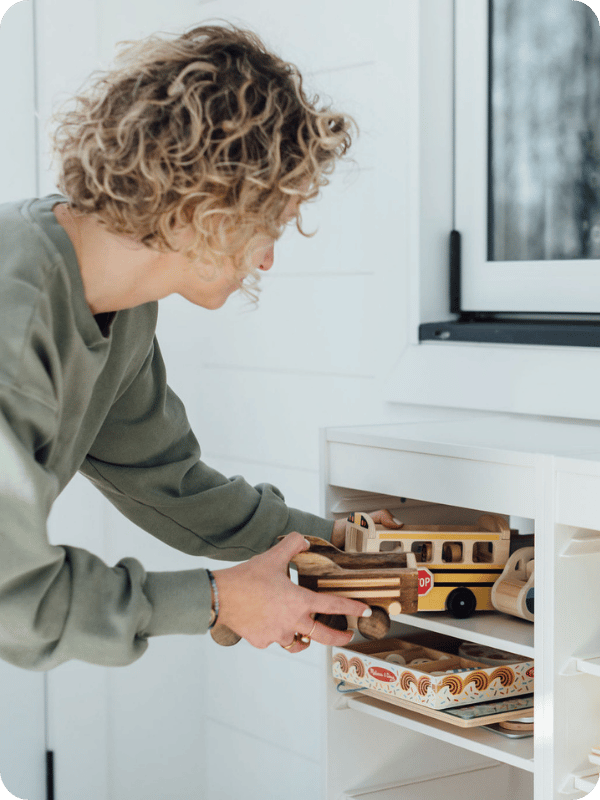
This page contains affiliate links. We will receive a commission on qualifying purchases using these links.
I’ve heard it said that “a cluttered home is a cluttered mind.” And damn, that hits.
When toys and books are EVERYWHERE, I want to lose my mind. We can imagine that littles also feel overwhelmed when they see everything they own all at once. There’s even some research that indicates that clutter can increase stress in young children. (1)
But kids are chaotic, and they play with a hundred different things in one day! Creating a system for organizing toys can help reduce some of the overwhelming feelings that littles (and their parents) face.
You might be wondering how to create this system? And where are you going to store toys that they aren’t using but you want to keep? How often do you change them out?
Every home and family operates in their own ways, but I’m sharing what works well for our family! We have recently gone from a family of four to five, welcoming our third baby home. It has put the system to the test, let me tell you! But so far, the toy rotation is still our favorite organization method!
How to organize toys: Toy rotation system
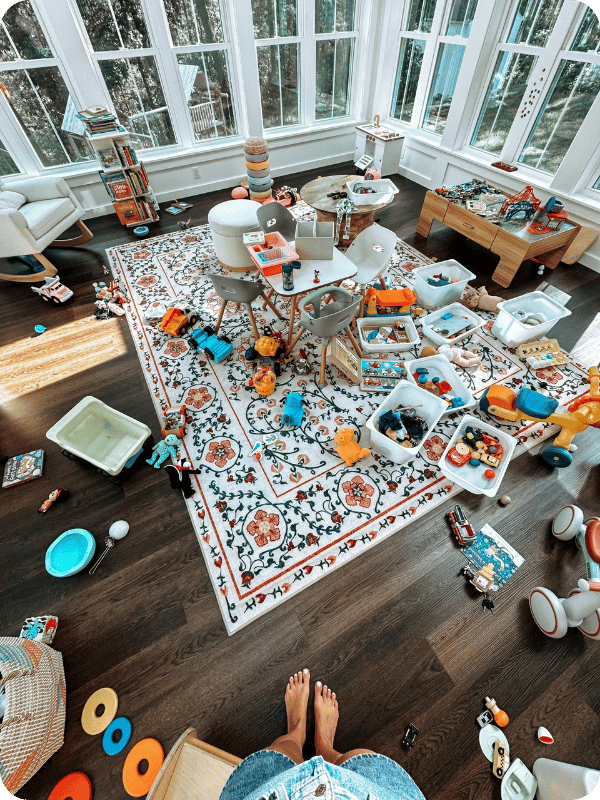
Step 1: Take inventory of toys & donate
If you feel like your little one has “too much stuff,” you might be right!
Research supports the notion that less is more. Studies have found that when kids are given fewer toy options, they play with more items and for a longer period of time. (2)
That doesn’t mean you need to throw out all of your little one’s toys and books. You also don’t need to feel bad if your child is blessed with lots of toys and books. However, this information can serve as good motivation to organize their things and help limit the amount of choices at one time.
Take some time to go through all of your child’s toys little by little. Find the toys that are broken, are not really played with, or are doubles of toys you already have (like do you need 3 sets of blocks? Probably not!). Take time to donate these, or post them in your local Buy Nothing Facebook Group.
Then, get rid of what you don’t want to keep.
Step 2: Create toy rotation categories
Group baby and toddler toys by category and see what you have!
Helpful Categories for Toy Rotations:
- Must Keep Out Toys
- Seasonal Toys/Books
- Outside Toys
- Puzzles
- Legos/Duplos
- Pretend Kitchen/Food Toys
- Fine Motor Development Toys, like puzzles, latch & lock boards, toys with small pieces
- Building Toys
- Pretend Play Toys
Put items that your little one really likes to play with on the daily in a pile of “must keep out” and start to make other piles of toys that may be seasonal, for outside, or ones that you want to take a break on and bring out later.
This step might take a little bit, but it’s worth it!
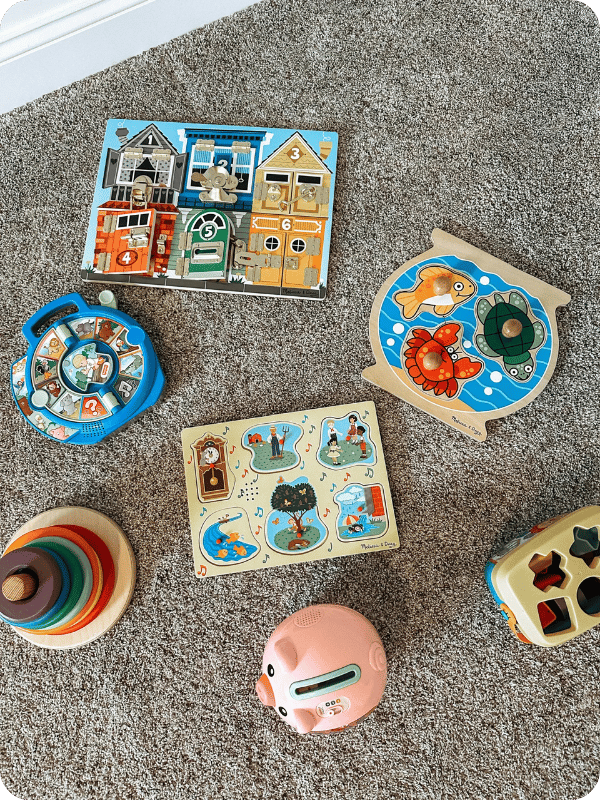
Step 3: Declutter toys for storage
Decide how you are going to store your toys when they aren’t “out.”
Are you going to keep toys that are out of rotation in bins with some on shelves that are easily reachable? Are you going to keep small toys in resealable bags? Will they be put away in a closet or storage room?
Think about the space you have to work with and how it will be best to keep track of everything.
Do you have any corners of your home where you can pop some baskets or a small organizer? Get creative with your space!
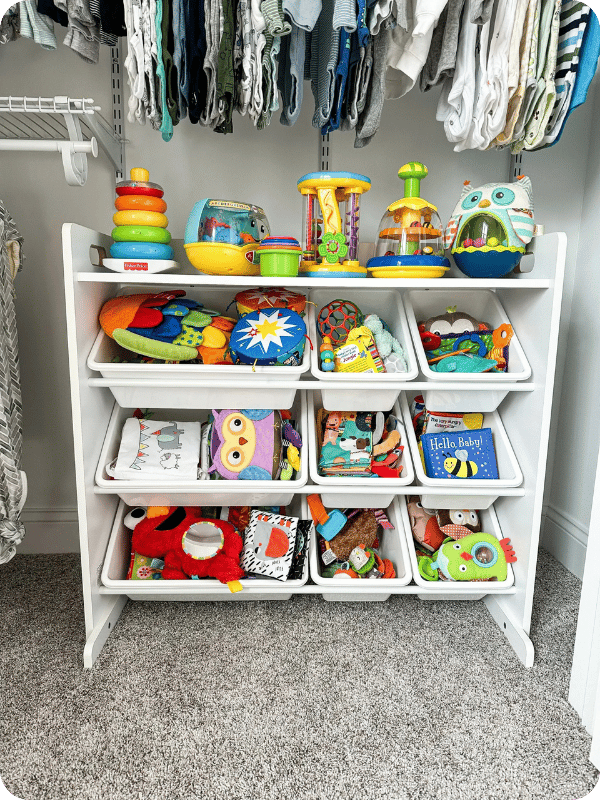
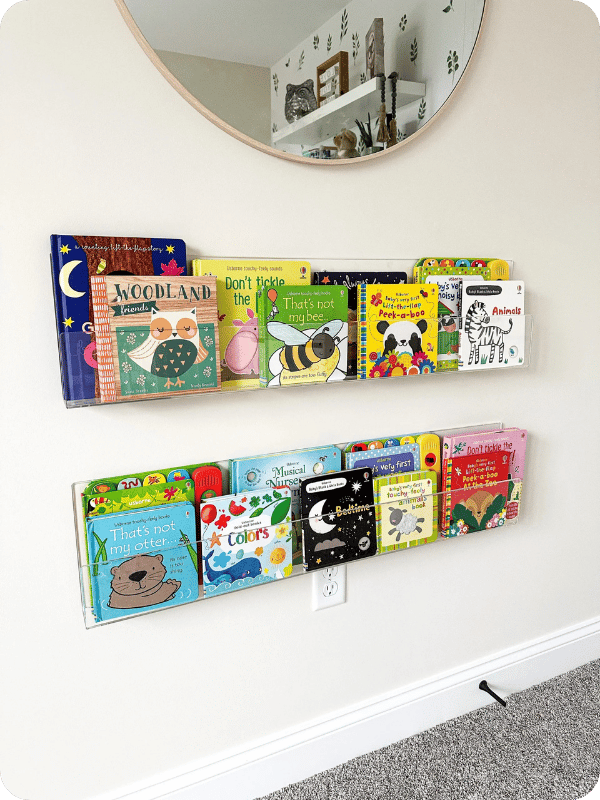
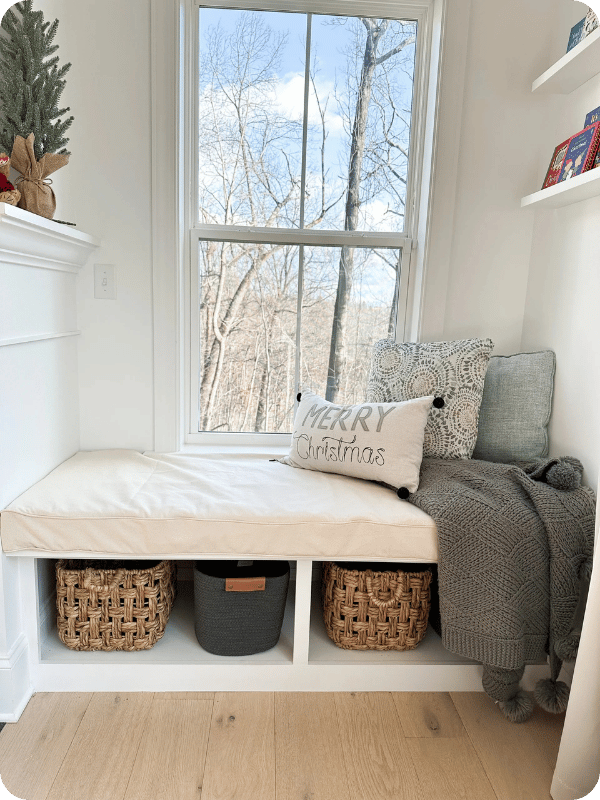
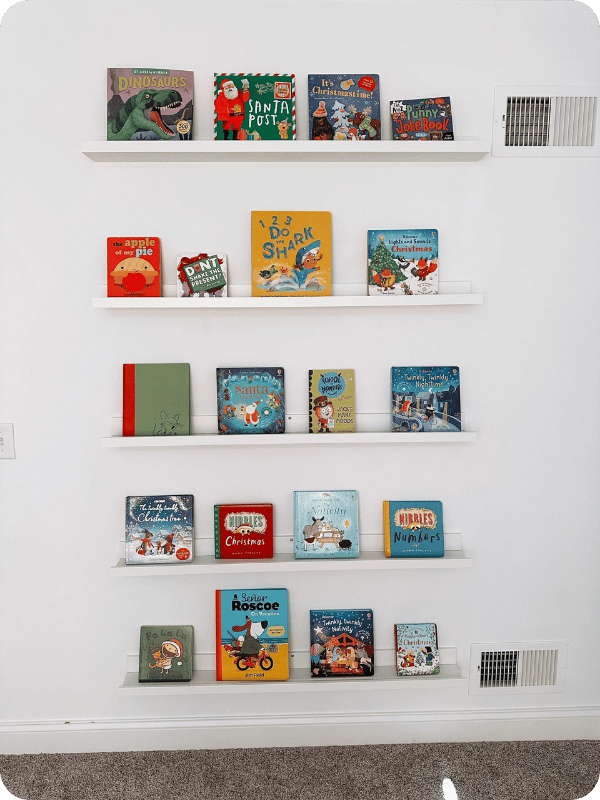
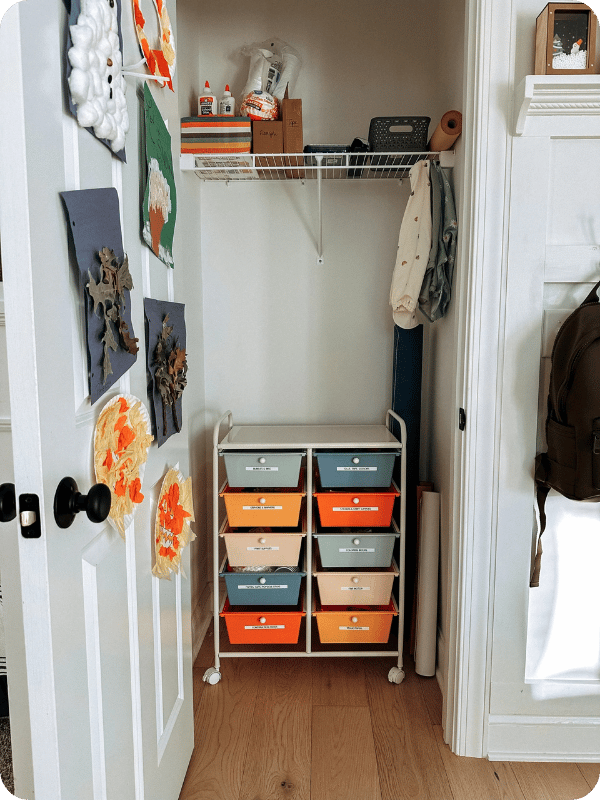
Below are some inspiration pictures of how we organize toys in our house. Swipe through!
This is a good time to head to our Free Organization Guide with so many ideas of how to get organized in every room of your house. Be sure to check out the slides that tell you how to store toys with small pieces!
Step 4: Keep a Schedule for Rotating Toys
Once you’ve figured out how you’re going to store the toys and items, it’s a good idea to think of how often you want to rotate toys. Weekly? Biweekly? Monthly?
Try to pick a day of the week or month where you go through and quickly sort, organize, and bag and box again. If you do this frequently, you won’t be doing it for very long each time you rotate!
One of our favorite ways to keep toys fresh is to pick a theme for rotating toys! This started for us by rotating books monthly/seasonally to prepare for holidays and upcoming changes. Eventually, the toys followed suit! We created a Play Themes freebie to help with this. There’s a play theme for every week of the year inside!
Organizing ideas for toys
There are so many ways to organize toys, from fancy systems to a classic basket from the back of your grandma’s closet. Our favorite ways to organize are listed below!
01: Baskets!
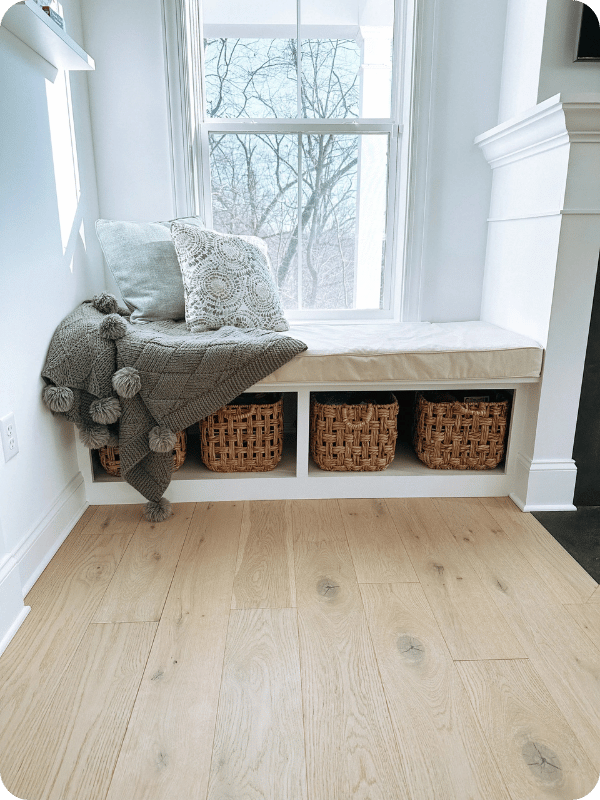
Get all kinds of baskets and use your furniture to organize the mess. Why do I love baskets? You can organize by category!
Put cars in one, instrument play in another, etc. Then, when your child picks a basket, they have all of their favorites in that category in one place. Plus, it’s super easy to clean up! You (or your little one) just put everything “in” and put it “back” and BAM. Organized, and really pretty! You have no idea that toys are hanging out in here!
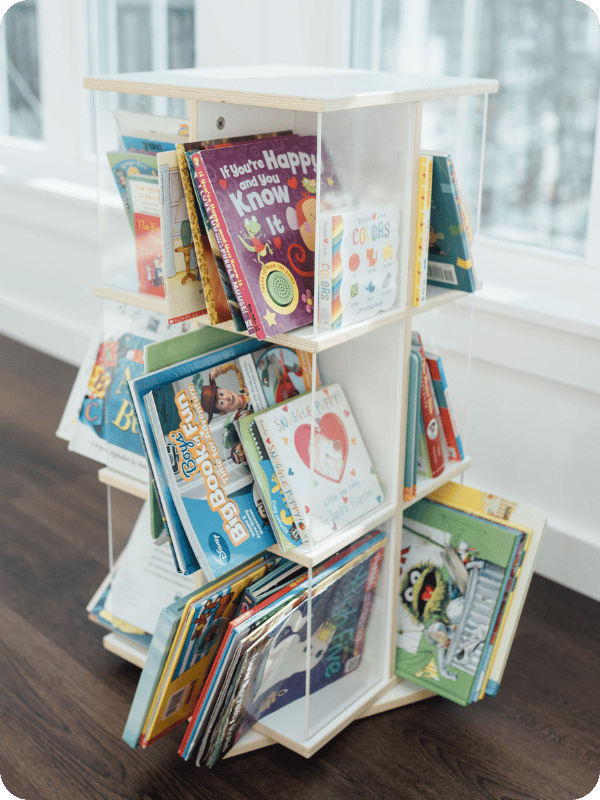
02: Rotating kids bookshelf
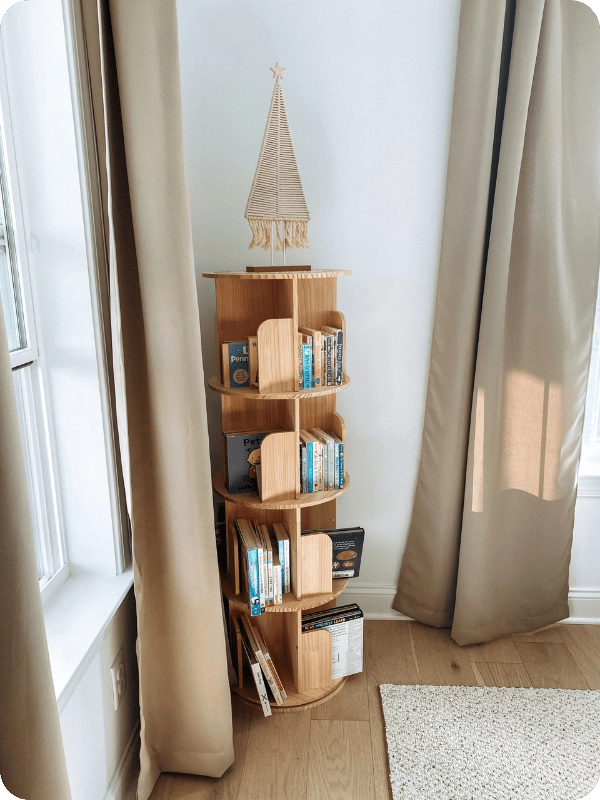
Invest in a cool bookshelf! Maybe it doesn’t have to rotate, but our favorite ones do spin. It’s a space-saver and they store more books when you can use all the sides!
This rotating one holds 160 board books and fits nicely in a corner! It’s really heavy and sturdy, so I’m not too concerned about it toppling over. Still, I recommend keeping it an area where little ones are supervised. This is another one of our favorites, too!
You can rotate books from top to bottom every week to help keep options limited and new books coming in!
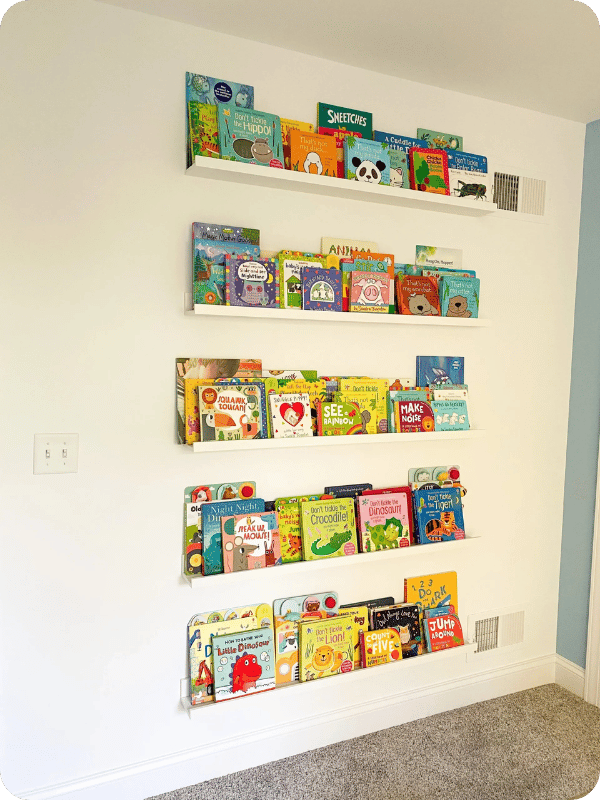
03: Create a book wall!
Another great way to store books is to create a book wall like we did in my son’s room! It’s a great use of space, especially in small rooms.
And you can easily rotate books, keeping the bottom shelves less cluttered (below they are packed for the picture, but typically I put about 5-8 books on the bottom two shelves and rotate weekly).
Having a book wall also prompts your little one to ask for books out of reach. That makes for a so a great communication temptation! You can take this idea and make a small version on a wall too. It doesn’t have to be size of the entire wall!
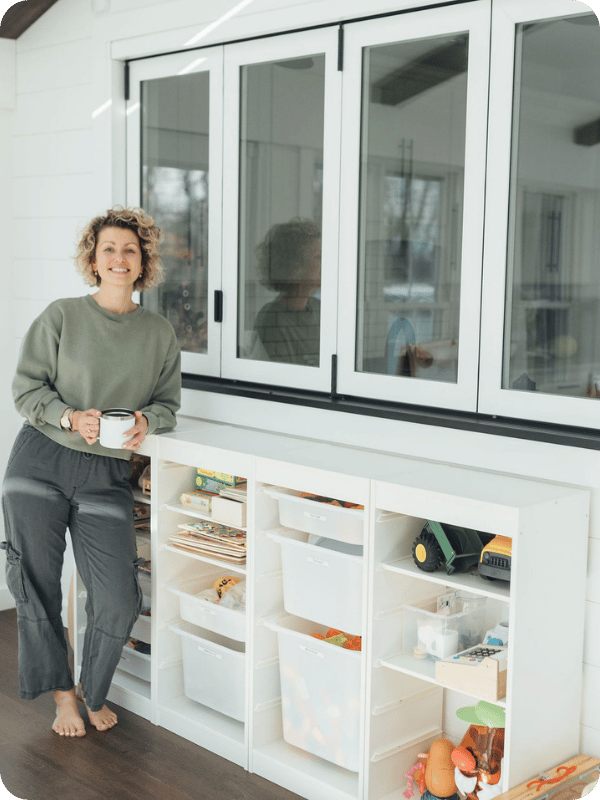
04: Pick a storage system like a toy organizer with bins
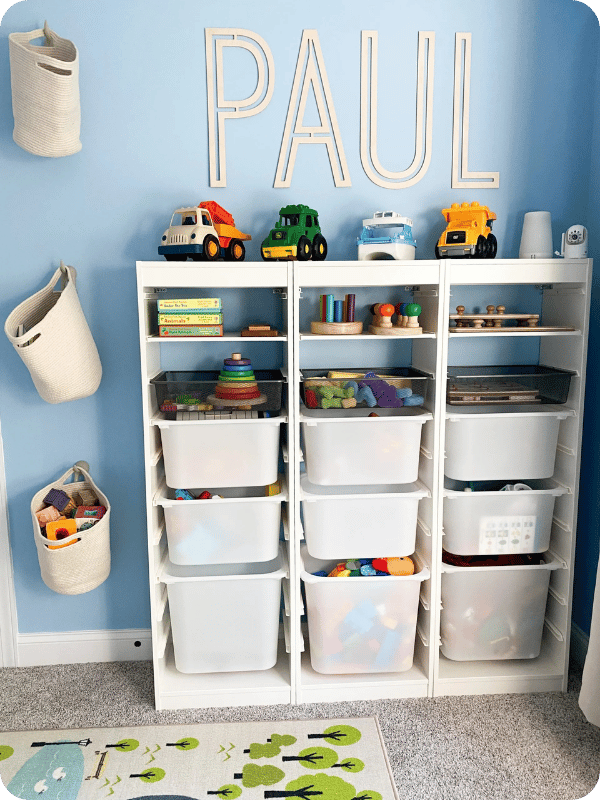
Invest in a storage system like the Ikea Trofast System! This system from IKEA is very practical and inexpensive. In fact, we use this in several rooms of our house because it’s so versatile! You can see it in a few places across this blog.
Again, use of baskets allows your little one to pull out one basket at a time to play with the toys inside. You can organize by category, and it makes clean up a BREEZE!
Rotating the bins and toys frequently, and keeping preferred items slightly out of reach, makes for a great communication exchange and motivates littles to ask!
Include your babies & toddlers in toy cleanup
Get in the habit of having your little one help you clean up early on.
Once they can sit up (around 6 months), you can start practicing routine directions like “put in.”
When they move from one toy to another, you can model putting their old toy “in” the basket and clean up a little as they go. As they get older, you can have them clean up before they transition to the kitchen for a meal, go up for a bath, or leave the house.
A less cluttered play area will help keep you happy and help keep your little one more focused!
Toy rotation can be an adjustment
Don’t beat yourself up if your house looks like a tornado hit it. And keep in mind, too, that clutter for one day or a week, or even some clutter on a daily basis, is not the end of the world. There’s a fine balance between a neat home that feels lived in and a place where creativity is stifled and fun is ruined by the need to clean!
Some mess means your little one had a day full of fun and learning!
If you notice your child is overwhelmed, overstimulated, or just a little unfocused, keep these tips in mind! And remember that playing with your child is the most important thing!
Looking for more toy organization tips?
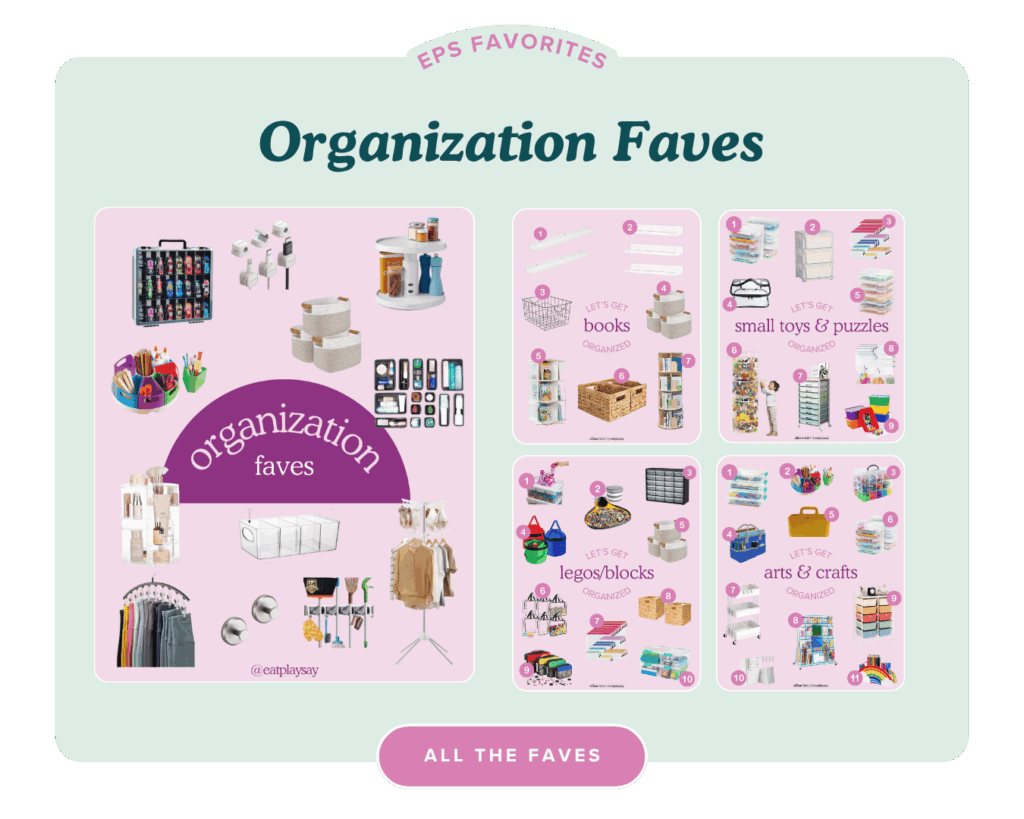
For all things organizing, all in one place, check out the Free Organization Faves!
Sources
- Schmeer KK, Yoon AJ. Home sweet home? Home physical environment and inflammation in children. Soc Sci Res. 2016 Nov;60:236-248. doi: 10.1016/j.ssresearch.2016.04.001. Epub 2016 Apr 6. PMID: 27712682; PMCID: PMC5116303.
- Dauch C, Imwalle M, Ocasio B, Metz AE. The influence of the number of toys in the environment on toddlers’ play. Infant Behav Dev. 2018 Feb;50:78-87. doi: 10.1016/j.infbeh.2017.11.005. Epub 2017 Nov 27. PMID: 29190457.
OTHER POSTS YOU MAY LIKE:



MS, SLP
Founder of Eat Play Say, Speech-Language Pathologist, Feeding Specialist, Play Expert, Mom of 3
Jordyn Koveleski Gorman
SPECIALIZES IN: Infant and toddler speech-language, play, and feeding development, and curating a team that provides expert help that feels like a reassuring text from that one mom friend
EDUCATION: Jordyn received her BS in Speech-Language Pathology from Bloomsburg University and her MS in Speech-Language Pathology from Towson University
FAVE PARENTING FIRST: “The first true smile, it’s the sweetest!”

MS, CCC-SLP, CBS, IBCLC
Speech-Language Pathologist & Feeding Specialist, Certified Breastfeeding Specialist, International Board Certified Lactation Consultant
Jessica Nicholson Cocca
SPECIALIZES IN: Breast and bottle feeding, tongue ties, oral motor dysfunction, starting solids, infant and toddler speech, treating oral motor disorders
EDUCATION: Jessica received her BS in Communication Sciences and Disorders from Pennsylvania State University in 2015 and her MS in Speech-Language Pathology from Towson University in 2017
FAVE PARENTING FIRST: “Baby’s first wave! What a fun first communication gesture!”

MA, CCC-SLP, CLC
Speech-Language Pathologist, Certified Lactation Counselor
Jennifer McFarlin
SPECIALIZES IN: Breast and bottle feeding, tongue ties, starting solids, infant and toddler speech development
EDUCATION: She received her BS in Speech-Language Pathology from Ball State in 2014 and a MA in Speech-Language Pathology from Ball State in 2016.
FAVE PARENTING FIRST: “My favorite baby’s first is their first true smile that just warms your soul knowing they are smiling at you. My other favorite is their first word. I love watching their language explode!”

MS, CCC-SLP
Bilingual Speech-Language Pathologist
Nicole La Petina Kelly
SPECIALIZES IN: Bilingual development (Spanish-English), supporting multilingual families, infant and toddler speech
EDUCATION: She received her BA in Communication Sciences and Disorders and in Spanish from the University of Wisconsin-Madison in 2014 and her MS in Speech-Language Pathology with an English-Spanish Specialization from Marquette University in 2016.
FAVE PARENTING FIRST: “It’s the first slobbery kisses for me!”

RDN, LD
Licensed Registered Dietitian
Kimberly Vede
SPECIALIZES IN: Infant and pediatric nutrition including breastfeeding, formula feeding, and starting solids. She also specializes in prenatal and postpartum nutrition.
EDUCATION: She received her BSc in Biology in 2014 from Life University, and her BSc in Dietetics from Life University in 2019.
FAVE PARENTING FIRST: ”The first time they say ‘mama!’”


This checklist was created with input from a Speech-Language Pathologist, Occupational Therapist and Physical Therapist and has been downloaded over 20,000 times by parents worldwide. Learn the important milestones to pay attention to, and keep it in your digital back pocket during the baby + toddler years!
Comprehensive Milestone Checklist for gross motor, fine motor, and speech-language milestones for 0-36 months,
DOWNLOAD FOR FREE


