


How to Teach Baby to Chew Food
February 6, 2025
Jordyn Koveleski Gorman

Last Updated on July 6, 2026 by Jordyn Koveleski Gorman
You might have noticed your baby is drawn to chewing on things from an early age. Whether they’re giving you a hunger cue in the early days, or simply learning how to mouth objects, those little gums are always hard at work. But when it’s time to start solids, it can feel like those skills don’t translate.
Picture it: you hand baby a spoonful of puree, a dissolvable snack, or even a slice of banana. And instead of chewing it and swallowing, they look at you in confusion until the food slides right back out of their mouth. Sigh.
Teaching baby how to chew food might seem silly, but it’s important developmentally! As a speech-language pathologist and feeding specialist, this is one of the most important pieces of oral-motor development. Overcoming anxiety related to gagging and choking so you can offer your little one positive experiences with chewable foods is worthwhile.
Let’s explore some tips to make this process smoother for everyone!

Why does chewing food matter when starting solids?
Chewing foods is an important part of baby’s feeding journey for many reasons. Wide jaw development, jaw strength, texture progression, and developing a wide variety of tastes are just a few reasons. (1, 2)
The ability to chew, called mastication, develops significantly from birth to toddlerhood. One study analyzed growth and development of the jaw and mouth, noting that from 6 months to 2 years, children’s ability to chew matures rapidly. (1)
The study notes that:
- Most improvement in managing purees and thin textures occurs between 6–8 months.
- From 6–24 months, chewing harder textures, like Cheerios, gradually takes less time and less effort.
- Harder textures may not be completely mastered until well after the age of 2. (1)
With this, we can see that chewing development begins to solidify well before baby is managing a steak on their own. Offering baby opportunities to practice chewing will help them later on, too!
When are babies expected to chew food?
Although there is not a hard and fast deadline to begin chewing, it is generally expected by 9 months old. The primary driver for this expectation might surprise you: picky eating. Research supports that babies who have experience chewing foods before 9 months of age are less likely to present with feeding difficulties, such as picky eating or delayed feeding milestone development. (2)
Ways to help baby learn to chew
The good news is that teaching your little one to chew doesn’t require a ton of effort. This is a natural piece of development, so rather than teaching your little one, it’s mostly about giving them positive exposure so that they can explore.
Below are some developmentally appropriate ways to help your little one gain experience with chewable foods.
Move from purees to mashed solids
If you’re not ready to go full blown baby led weaning and offer a slice of a whole food, that’s okay! However, if baby has been eating purees for a long time (more than just a couple weeks), it’s time to introduce some additional texture!
Some simple ways to transition from puree to mashed solids include:
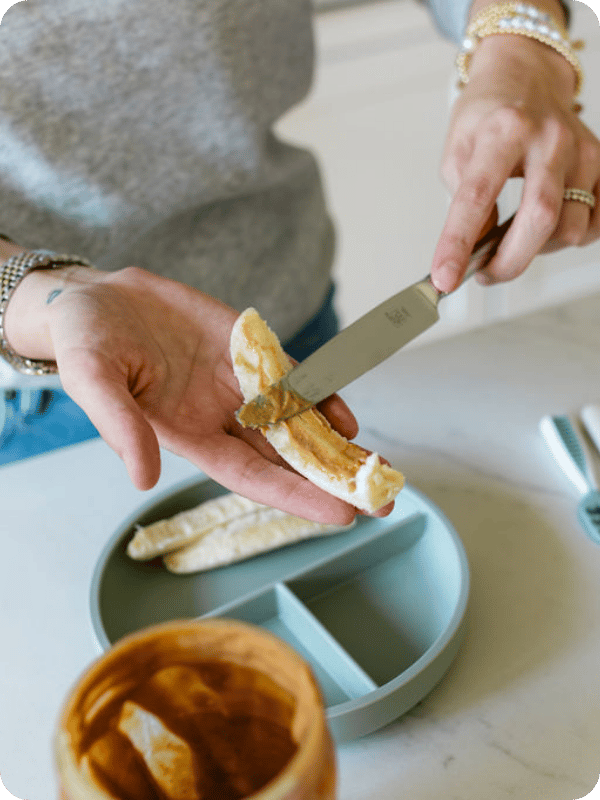
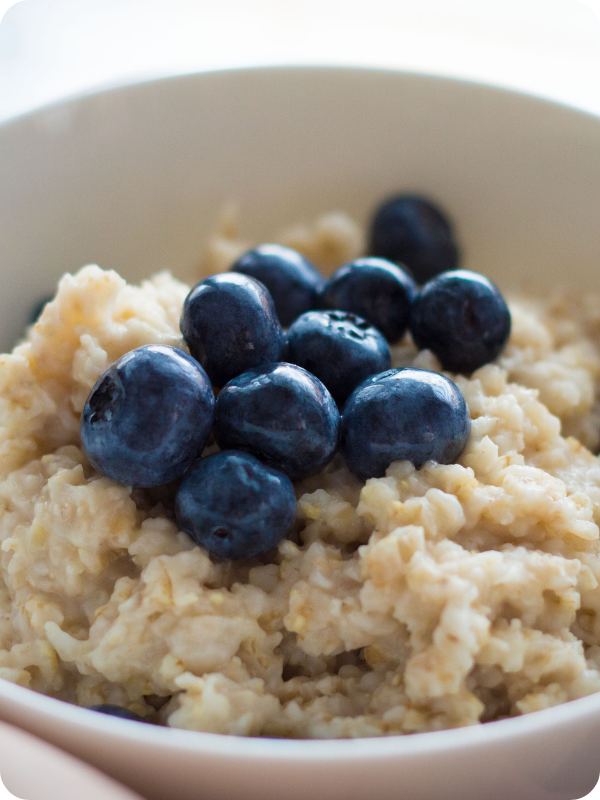
- Mash down a banana instead of pureeing it
- Make a baked potato with butter, mashing with a fork before serving
- Offer cottage cheese right on the spoon
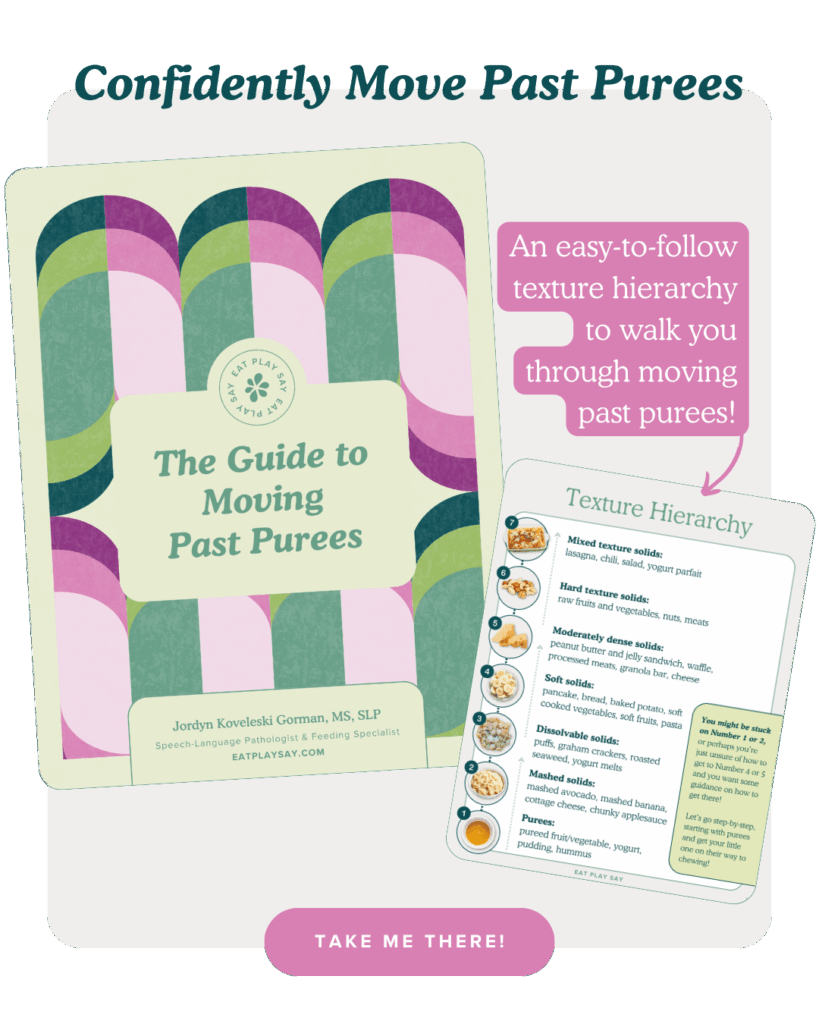
Work your way up the texture hierarchy so baby won’t get stuck on purees.
Need more help moving past purees? We can help! The Guide to Moving Past Purees walks you through helping your baby move up the texture hierarchy to start chewing confidently!
Pick squishy solids
Start with super soft foods, such as a banana or avocado. Give baby a long piece to hold, about the size of two fingerwidths, and let them take control of bringing it to their mouth. Even if they spit it out and don’t actually chew, this is progress. And it’s normal!
Keep offering foods like this throughout the week help baby get used to holding food and the feeling of that texture in their mouth. If you notice baby gagging a lot, back down on bite size and texture and try again later!
And if baby is having trouble holding softer solids, try rolling in crushed crumbs from a baby puff or other dissolvable and then offer!
Offer an open cup
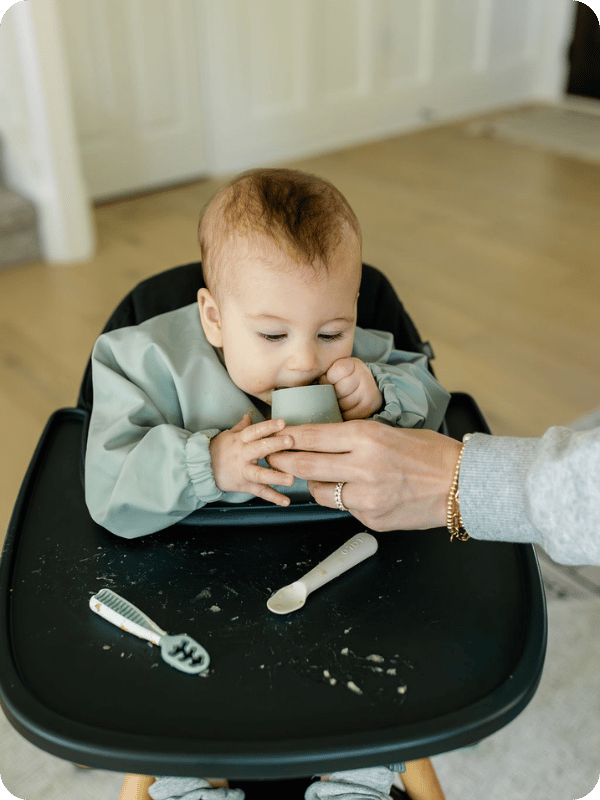
If you’re not having success with offering chewable foods yet, take a break and switch to offering an open cup. Trust me on this one!
To offer an open cup at meal time, fill it to the top with baby’s favorite puree and help them drink! Regulating a puree or liquid from an open cup requires a lot of jaw strength and oral coordination. Although this might not be a direct path to more textures, this trick still helps baby on their chewing (and drinking!) journey.
Using an open cup is also a great skill to work on if you need to take a break from offering solids. It can feel stressful if baby is not interested in chewing or is gagging a lot at mealtimes. Sometimes, taking a step back and working on cups can help with that. It’s okay if baby needs a little extra time to get comfortable with this new skill.
More parenting resources & support
Remember: you’re doing a great job, and your little one is so lucky to have you! Starting solids can be so much fun, but it’s also often a messy, trial-and-error filled process that takes months to master! It’s normal to feel overwhelmed by it sometimes.
For more quick tips and tricks from our team of pediatric specialists, check out the Eat Play Say blog:
- Explore baby & toddler development
- Find ways to play with your little(s)
- Practice speech and language skills
Our most in-depth resources take you step-by-step through every part of starting solids, down to recipes and ways to serve foods. The Starting Solids Handbook and Baby’s First 100 Foods bundle can help you take the worry out of meal time. You deserve to feed your baby with confidence!
Sources
- Le Révérend BJ, Edelson LR, Loret C. Anatomical, functional, physiological and behavioural aspects of the development of mastication in early childhood. Br J Nutr. 2014 Feb;111(3):403-14. doi: 10.1017/S0007114513002699. Epub 2013 Sep 24. PMID: 24063732; PMCID: PMC3927374.
- University of Bristol. Should we worry about picky eating? Accessed June 2026.
OTHER POSTS YOU MAY LIKE:


MS, SLP
Founder of Eat Play Say, Speech-Language Pathologist, Feeding Specialist, Play Expert, Mom of 3
Jordyn Koveleski Gorman
SPECIALIZES IN: Infant and toddler speech-language, play, and feeding development, and curating a team that provides expert help that feels like a reassuring text from that one mom friend
EDUCATION: Jordyn received her BS in Speech-Language Pathology from Bloomsburg University and her MS in Speech-Language Pathology from Towson University
FAVE PARENTING FIRST: “The first true smile, it’s the sweetest!”

MS, CCC-SLP, CBS, IBCLC
Speech-Language Pathologist & Feeding Specialist, Certified Breastfeeding Specialist, International Board Certified Lactation Consultant
Jessica Nicholson Cocca
SPECIALIZES IN: Breast and bottle feeding, tongue ties, oral motor dysfunction, starting solids, infant and toddler speech, treating oral motor disorders
EDUCATION: Jessica received her BS in Communication Sciences and Disorders from Pennsylvania State University in 2015 and her MS in Speech-Language Pathology from Towson University in 2017
FAVE PARENTING FIRST: “Baby’s first wave! What a fun first communication gesture!”

MA, CCC-SLP, CLC
Speech-Language Pathologist, Certified Lactation Counselor
Jennifer McFarlin
SPECIALIZES IN: Breast and bottle feeding, tongue ties, starting solids, infant and toddler speech development
EDUCATION: She received her BS in Speech-Language Pathology from Ball State in 2014 and a MA in Speech-Language Pathology from Ball State in 2016.
FAVE PARENTING FIRST: “My favorite baby’s first is their first true smile that just warms your soul knowing they are smiling at you. My other favorite is their first word. I love watching their language explode!”

MS, CCC-SLP
Bilingual Speech-Language Pathologist
Nicole La Petina Kelly
SPECIALIZES IN: Bilingual development (Spanish-English), supporting multilingual families, infant and toddler speech
EDUCATION: She received her BA in Communication Sciences and Disorders and in Spanish from the University of Wisconsin-Madison in 2014 and her MS in Speech-Language Pathology with an English-Spanish Specialization from Marquette University in 2016.
FAVE PARENTING FIRST: “It’s the first slobbery kisses for me!”

RDN, LD
Licensed Registered Dietitian
Kimberly Vede
SPECIALIZES IN: Infant and pediatric nutrition including breastfeeding, formula feeding, and starting solids. She also specializes in prenatal and postpartum nutrition.
EDUCATION: She received her BSc in Biology in 2014 from Life University, and her BSc in Dietetics from Life University in 2019.
FAVE PARENTING FIRST: ”The first time they say ‘mama!’”


This checklist was created with input from a Speech-Language Pathologist, Occupational Therapist and Physical Therapist and has been downloaded over 20,000 times by parents worldwide. Learn the important milestones to pay attention to, and keep it in your digital back pocket during the baby + toddler years!
Comprehensive Milestone Checklist for gross motor, fine motor, and speech-language milestones for 0-36 months,
DOWNLOAD FOR FREE


