


6 Month Old Wake Windows
September 23, 2026
Jordyn Koveleski Gorman

Last Updated on September 23, 2026 by Jordyn Koveleski Gorman
This page contains affiliate links. We will receive a commission on qualifying purchases using these links.
By 6 months old, your little one’s personality is really starting to blossom. Baby is ready to start solids (or will be soon), is likely starting to babble, and is mastering sitting up, too. To top it off, baby is now able to tolerate longer wake windows, leaving more time for fun activities and exploration throughout the day.
Keeping baby entertained requires more effort as their skills increase and their curiosity grows. But supporting baby as they engage with their surroundings still doesn’t have to be complicated! Having a working knowledge of baby’s development at this stage can make longer wake windows feel more manageable and even enjoyable.
Let’s talk about wake windows at 6 months: what to expect, how to pass the time, and some sample schedules to try out when you’re feeling unsure what to do next!

What are 6 month old wake windows?
By 3–4 months of age, a baby’s circadian rhythm develops, and day-night patterns become more regulated. (1) Although this doesn’t mean that babies will necessarily sleep through the night by this age, it does mean that baby might begin to have one longer stretch of sleep (ideally at night) in a 24-hour period, as well as one longer stretch of wake time. Some research indicates that this only happens for about 1 in 3 babies, however. (2)
It is biologically normal and expected for babies to awaken overnight in the first year of life, and sometimes even beyond that. (2) If your baby isn’t sleeping through the night by this age, that’s okay. But what does that mean for daytime wake windows?
Generally, by 6 months, babies can tolerate as much as 2–4 hours of wake time. At this age, you might find that baby has a few shorter wake windows paired with one that stretches toward 4 hours (often before bed). Babies also tend to drop from 3 naps to 2 between 6–9 months of age, which also impacts their wake windows.
What to do during wake windows
Six month olds thrive on play time, and its developmental impacts are widely supported by research. With longer wake windows, baby has more time to actively engage with the world around them, practicing language, social skills, and cognitive development through even the simplest activities. In addition to these skills, developmentally appropriate play promotes self-regulation that helps build executive function skills. (3)
And, by playing with baby, caregivers establish safe, nurturing relationships that impact baby’s growth for years to come. (3) At 6 months, toys are starting to hold baby’s interest, and the world is finally upright as little ones learn to sit. Caregivers can read books to baby or engage in conversation as they learn to babble. Babies also begin to play with objects functionally at this age, so modeling behaviors like drinking from a cup or talking on a play phone start to have an impact!
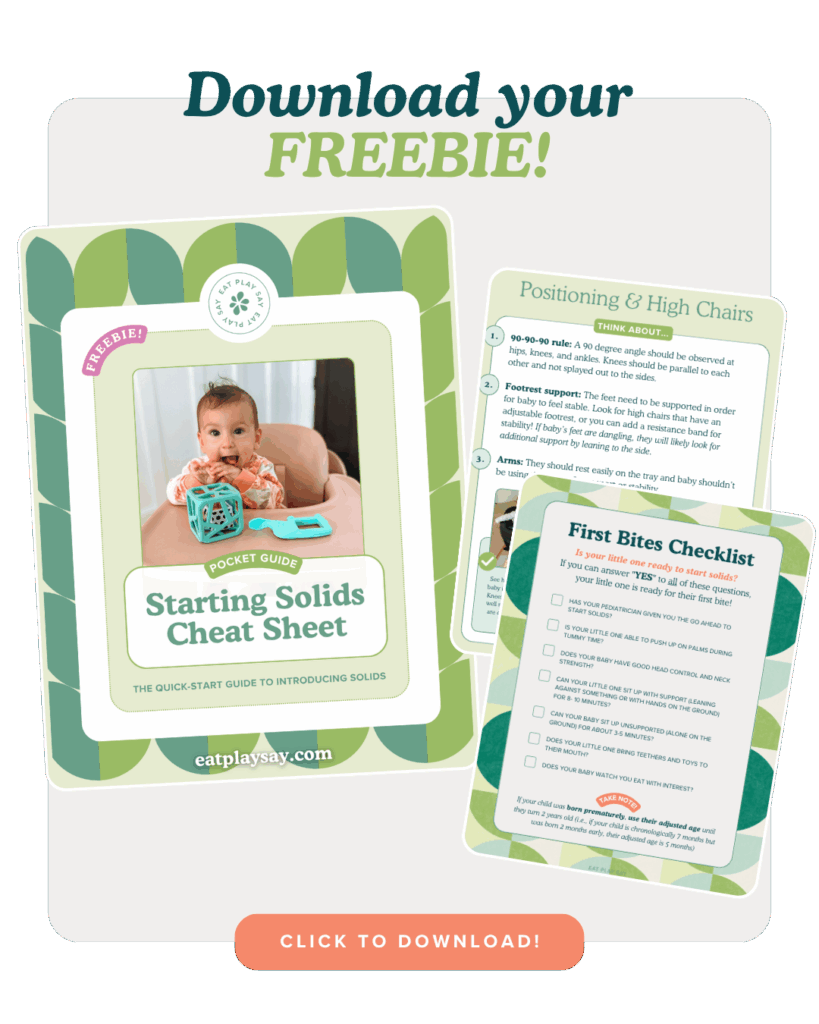
Getting ready to start solids with your little one? Get the most important tips and tricks by downloading our FREE Starting Solids Cheat Sheet!
6 month wake window schedules
By now, your day-to-day routine might be feeling a bit more predictable and natural. For a bit of variety, try out a new activity! The sample schedules below include placeholders for feeds, but you know your baby and their hunger cues best!
2 hour wake window schedules
For wake windows that are a bit shorter, try out a schedule like one of these.
Schedule 1:
- Wake from sleep, diaper change and snuggle time, etc. (5–10 minutes)
- Feed (10-15 minutes)
- Read a book together (5–10 minutes)
- Sitting practice on the floor (5–10 minutes)
- Continue floor time or babywear while doing household tasks (15–30 minutes)
- Face-to-face chat with baby to practice babbling (10-15 minutes)
- Floor play with an activity center for a parent potty and/or snack break (5–10 minutes)
- Begin nap routine that works for you (10–15 minutes)
Schedule 2:
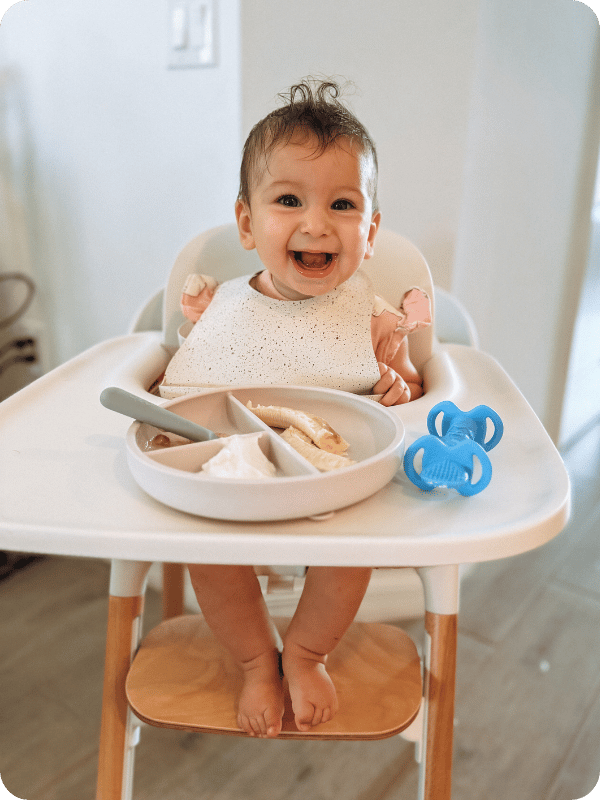
If you’re starting solids and wonder how to fit that into a shorter wake window, here’s an example:
- Wake from sleep, change diaper, snuggle, etc. (5–10 minutes)
- Bottle feed or nurse (10–15 minutes)
- Read a book or have a chat with baby (10 minutes)
- Play with toys on the play gym (10–15 minutes)
- Floor play while getting solids prepped (5–10 minutes)
- Eat solids in the high chair (10–15 minutes)
- Clean up and floor play (10–15 minutes)
- Take a walk or other light movement before nap (10–20 minutes)
- Wind down for nap with snuggles and beginning nap routine (10–15 minutes)
3 hour wake window schedules
As baby’s wake windows stretch more, you might notice the temptation to overcomplicate play time. It can stay simple and your baby will love it and learn just the same!
Schedule 1:
- Wake up, diaper change, snuggles, etc. (5–10 minutes)
- Bottle feed or nurse (10-15 minutes)
- Sitting practice on the floor (5–10 minutes)
- Build a block tower, practicing motor skills and modeling language (5–10 minutes)
- Continue floor time, babywear, or get in the car for an outing (10–15 minutes)
- Household tasks, a trip to the store, or school pickup/drop off line (20–45 minutes)
- Take a walk or go outside to have sensory play (20–30 minutes)
- Face-to-face chat with baby to practice babbling (15–20 minutes)
- Floor play with an activity center for a parent potty and/or snack break (10–15 minutes)
- Read books together (10-15 minutes)
- Begin nap routine that works for you (10–15 minutes)
Schedule 2:
For a 3-hour wake window with eating solids, try something like this:
- Wake up, change diaper, snuggle, etc. (5–10 minutes)
- Bottle feed or nurse (10–15 minutes)
- Read books or have a chat with baby (10–15 minutes)
- Get some wiggles out by playing with toys, play gym, or dancing (10–15 minutes)
- Floor play while getting solids prepped (5–10 minutes)
- Eat solids in the high chair (10–15 minutes)
- Clean up and floor play (10–15 minutes)
- Take a walk or run an errand (20–30 minutes)
- Babywear or go in stroller while out, or set up a sensory station at home (15–30 minutes)
- Chat with baby, practicing babbling (10–15 minutes)
- Wind down with snuggles, feeding, and nap routine (10–15 minutes)

4 hour wake window schedule
It’s not uncommon for the wake window before night sleep to stretch to 4 hours around 6 months, especially if baby drops to only 2 naps.
Schedule:
- Wake from nap, change diaper, snuggle, etc. (5–10 minutes)
- Bottle feed or nurse (10–15 minutes)
- Get some wiggles out through play time (15–20 minutes)
- Take a walk, go outside, or run errands (30–60 minutes)
- Chat with baby, practicing babbling (10–15 minutes)
- Read books together (10–15 minutes)
- Floor play while preparing meal or doing household tasks (15–30 minutes)
- Eat solids in the high chair (10–15 minutes)
- Clean up and floor play (10–15 minutes)
- Bath time/jammies on (15–30 minutes)
- Wind down with favorite toys, books, or face-to-face play (15–20 minutes)
- Feeding and/or bedtime routine (20–30 minutes)
6 month wake window activities
Doing the same activities over and over again can feel redundant, especially as baby spends more time awake. But repetition is actually very important! Neural pathways are built with repetitive experiences, and repetition has been demonstrated to improve speech-language development as well. (4)
A few of our favorite developmentally appropriate activities for 6 month olds that can easily be repeated day after day are listed below. You can find these activities and others like them in our Infant Playbook! This expert-written resource features more than 100 age-appropriate ways to play with your baby in their first year using only what you have at home!
1. Introduce Sign Language
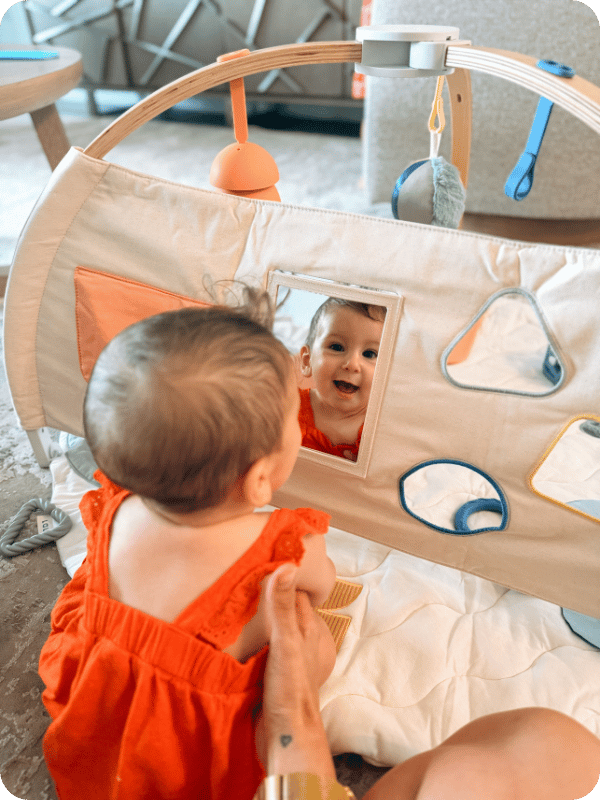
Gestures are right around the corner, so start using sign language during your routines if you haven’t already! Sign “milk,” “play,” “and “all done” during feedings, playing, and transitions. Add in more functional signs as you feel comfortable. Learn more about the benefits of sign language here.
2. Hide and Seek
Peek-a-boo! While baby is laying or sitting on the floor, “run away” and hide close by behind a piece of furniture or under a blanket. Encourage baby to come find you by calling their name and saying “come find (mama, dada, etc.)” How they get to you is up to them! They might roll, try to crawl, scoot, or just peek around the corner to find you. You can do the same thing with a stuffed animal. Hide it under a blanket or behind your back and see if baby will look for it.
3. Pots & Pans
Get a wooden spoon, some pots, and plastic Tupperware and make some music as baby sits between your legs or across from you. Have baby imitate your movements as you “bang” and “tap!” This doubles as motor play and baby can even play independently while you prepare a meal beside them. Wooden spoon handles are the perfect width for little hands to practice grasping. One spoon for each hand helps baby work on sitting without using their hands on the floor for support!
More infant resources
With a good foundational understanding of baby sleep, starting solids, and sitting up, there’s nothing that can stop you now! You’re doing an amazing job helping your little one learn and grow, and your baby is so lucky to have you!
Find more information about infant & toddler development on our blog.
For the most in-depth parenting resources, get one of our expert-written Handbooks! Guides are packed with hundreds of pages of research-backed guidance from our team of pediatric specialists. Whether you need help figuring out how to start solids confidently or want to take the guess work out of playtime, we’ve got your back!
Sources
- Yates J. PERSPECTIVE: The Long-Term Effects of Light Exposure on Establishment of Newborn Circadian Rhythm. J Clin Sleep Med. 2018 Oct 15;14(10):1829-1830. doi: 10.5664/jcsm.7426. PMID: 30353824; PMCID: PMC6175794.
- Ball HL. How babies sleep: a factful guide to the first 365 days and nights. London: Cornerstone Press; 2025.
- Michael Yogman, Andrew Garner, Jeffrey Hutchinson, Kathy Hirsh-Pasek, Roberta Michnick Golinkoff, COMMITTEE ON PSYCHOSOCIAL ASPECTS OF CHILD AND FAMILY HEALTH, COUNCIL ON COMMUNICATIONS AND MEDIA; The Power of Play: A Pediatric Role in Enhancing Development in Young Children. Pediatrics September 2018; 142 (3): e20182058. 10.1542/peds.2018-2058
- Schwab JF, Lew-Williams C. Repetition across successive sentences facilitates young children’s word learning. Dev Psychol. 2016 Jun;52(6):879-86. doi: 10.1037/dev0000125. Epub 2016 May 5. PMID: 27148781; PMCID: PMC5651173.
Leave a Reply
OTHER POSTS YOU MAY LIKE:



MS, SLP
Founder of Eat Play Say, Speech-Language Pathologist, Feeding Specialist, Play Expert, Mom of 3
Jordyn Koveleski Gorman
SPECIALIZES IN: Infant and toddler speech-language, play, and feeding development, and curating a team that provides expert help that feels like a reassuring text from that one mom friend
EDUCATION: Jordyn received her BS in Speech-Language Pathology from Bloomsburg University and her MS in Speech-Language Pathology from Towson University
FAVE PARENTING FIRST: “The first true smile, it’s the sweetest!”

MS, CCC-SLP, CBS, IBCLC
Speech-Language Pathologist & Feeding Specialist, Certified Breastfeeding Specialist, International Board Certified Lactation Consultant
Jessica Nicholson Cocca
SPECIALIZES IN: Breast and bottle feeding, tongue ties, oral motor dysfunction, starting solids, infant and toddler speech, treating oral motor disorders
EDUCATION: Jessica received her BS in Communication Sciences and Disorders from Pennsylvania State University in 2015 and her MS in Speech-Language Pathology from Towson University in 2017
FAVE PARENTING FIRST: “Baby’s first wave! What a fun first communication gesture!”

MA, CCC-SLP, CLC
Speech-Language Pathologist, Certified Lactation Counselor
Jennifer McFarlin
SPECIALIZES IN: Breast and bottle feeding, tongue ties, starting solids, infant and toddler speech development
EDUCATION: She received her BS in Speech-Language Pathology from Ball State in 2014 and a MA in Speech-Language Pathology from Ball State in 2016.
FAVE PARENTING FIRST: “My favorite baby’s first is their first true smile that just warms your soul knowing they are smiling at you. My other favorite is their first word. I love watching their language explode!”

MS, CCC-SLP
Bilingual Speech-Language Pathologist
Nicole La Petina Kelly
SPECIALIZES IN: Bilingual development (Spanish-English), supporting multilingual families, infant and toddler speech
EDUCATION: She received her BA in Communication Sciences and Disorders and in Spanish from the University of Wisconsin-Madison in 2014 and her MS in Speech-Language Pathology with an English-Spanish Specialization from Marquette University in 2016.
FAVE PARENTING FIRST: “It’s the first slobbery kisses for me!”

RDN, LD
Licensed Registered Dietitian
Kimberly Vede
SPECIALIZES IN: Infant and pediatric nutrition including breastfeeding, formula feeding, and starting solids. She also specializes in prenatal and postpartum nutrition.
EDUCATION: She received her BSc in Biology in 2014 from Life University, and her BSc in Dietetics from Life University in 2019.
FAVE PARENTING FIRST: ”The first time they say ‘mama!’”


This checklist was created with input from a Speech-Language Pathologist, Occupational Therapist and Physical Therapist and has been downloaded over 20,000 times by parents worldwide. Learn the important milestones to pay attention to, and keep it in your digital back pocket during the baby + toddler years!
Comprehensive Milestone Checklist for gross motor, fine motor, and speech-language milestones for 0-36 months,
DOWNLOAD FOR FREE


