


Educational Toys for 1 Year Olds
August 7, 2026
Jordyn Koveleski Gorman

Last Updated on September 1, 2026 by Jordyn Koveleski Gorman
This page contains affiliate links. We will receive a commission on qualifying purchases using these links.
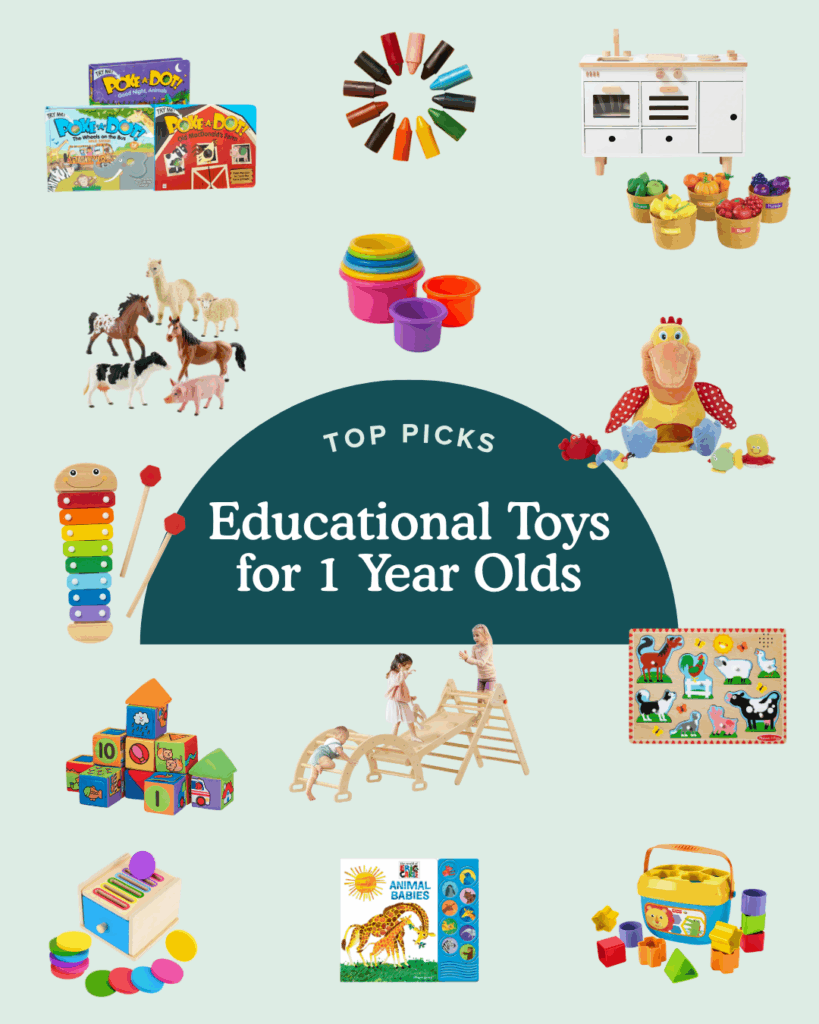
Watching your baby grow during their first year is an exciting milestone. Around their first birthday, little ones become even more curious, and more mobile! They are eager to explore the world around them. Choosing age-appropriate educational toys for 1-year-olds can help encourage that natural curiosity while supporting important developmental skills.
When you think about educational toys for a 1-year-old, you might picture flash cards or toys designed to teach letters and numbers. But at this age, learning happens through play. The best educational toys inspire exploration and discovery while building important skills. From encouraging problem-solving, to language development, and sensory exploration, the right toys make learning feel natural and fun. Whether you’re celebrating a first birthday or looking to encourage learning through play, we’ve got you covered. These age-appropriate picks are built to keep little ones engaged.
In this post, we’ve rounded up the best educational toys for one-year-olds to support your child’s growing mind and body. From stacking toys and shape sorters to toys that encourage language and pretend play, these recommendations are fun and developmentally appropriate.
Our goal is to make finding educational toys simple and stress-free. That way, you can choose toys that inspire learning through play and keep your little one engaged.
Fine Motor Toys
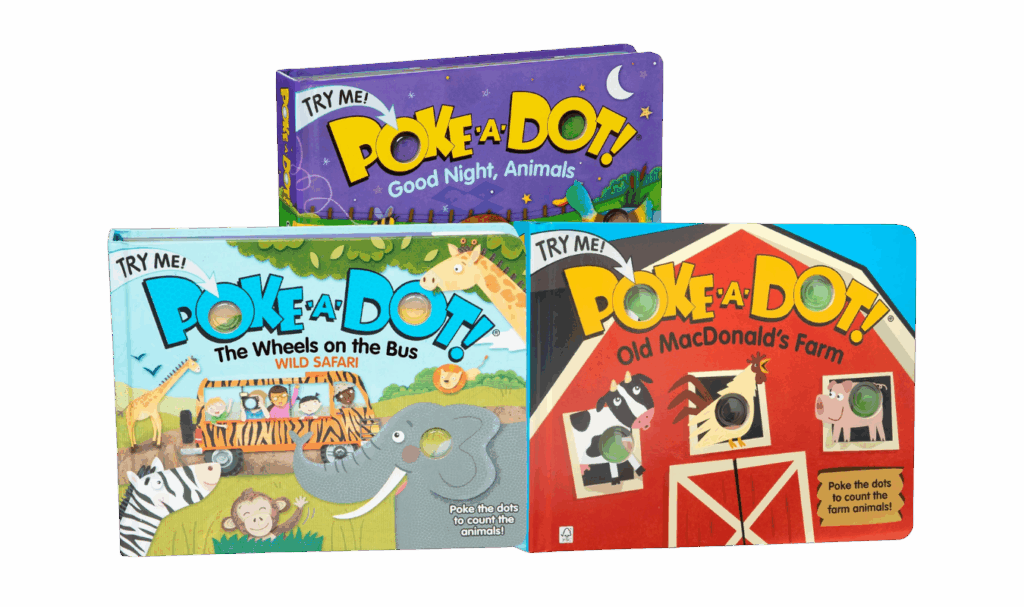
Poke-a-Dot Books
Best for: Fine motor skills & early literacy
Price: $10-20
Skills it encourages: Fine motor skills, finger isolation, language development
Ways to play: Press the dots while reading together, count the pops, or play simple games like I Spy
Why we love it: It’s an interactive book, so it makes reading feel like play while still working those fine motor skills!
Poke-a-Dot books are a favorite in our house! Each page features poppable buttons that encourage finger isolation, a milestone that typically develops around 15 months. Pressing the dots helps strengthen little fingers while keeping toddlers actively involved in the story.
With a wide variety of themes available, it’s easy to find a book that matches your child’s interests. We enjoy reading Wild Safari Wheels on the Bus and reading it to the tune of the song.
Try this!
Turn reading into a game by asking your toddler to pop all the dots on a page. As they get older, count each pop together or play I Spy. Ask them to find and press the dots on specific animals, objects, or colors. These simple activities help build language, listening, and early counting skills while making reading even more fun.
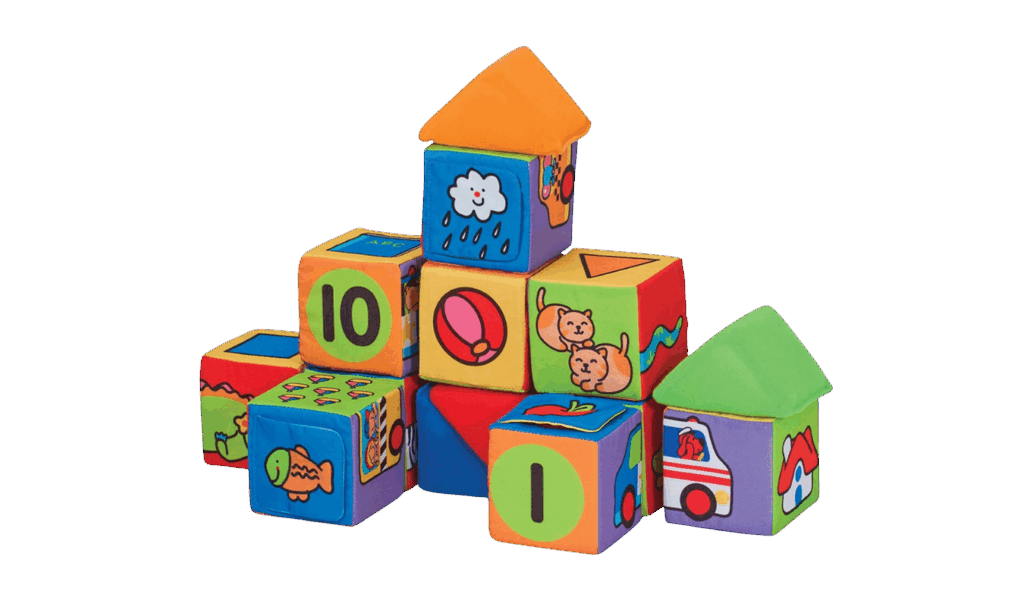
Melissa and Doug Soft Blocks
Best for: Fine motor skills
Price: ~$30
Skills it encourages: Fine motor skills, hand-eye coordination, spatial awareness, problem-solving, creativity, and early language development
Ways to play: Stack towers, build simple structures, complete picture puzzles, and practice counting together
Why we love it: The soft, lightweight blocks are safe for little hands and heads, making them a perfect first building toy that grows with your toddler.
Melissa & Doug Soft Blocks are a great introduction to building toys for one-year-olds. Because they’re soft and lightweight, toddlers can safely practice stacking towers as they build confidence with fine motor skills.
There are so many ways to play. Some sides create complete pictures when matched together like a simple puzzle. Other sides feature numbers and colorful illustrations that introduce number recognition and new vocabulary. As your child grows, the blocks can be used in new ways!
Try this!
As you stack the blocks, model the words “up” or “on top.” Then when your little one knocks it down, model words like, “down” and “crash!” You can also encourage listening and language skills. Ask things like, “Can you hand me the block with the house?” or “Can you find the block with the dog?” These simple interactions help build vocabulary while making playtime fun.
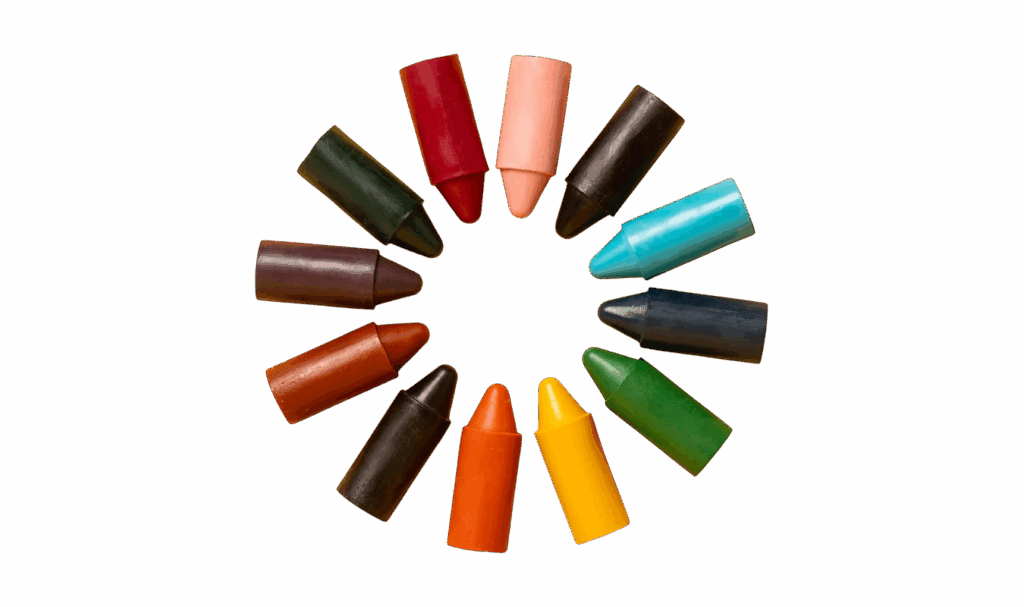
Honeysticks
Best for: Fine motor skills
Price: $~22
Skills it encourages: Fine motor skills, pre-writing skills, hand strength, dexterity, grasping
Ways to play: Make scribbles, practice different strokes, and explore colors
Why we love it: These chunky, toddler-friendly crayons are designed for little hands and make a great first step toward drawing and early writing.
These toddler crayons are best for 12-24 month olds because they’re small and chunky for little hands. Made from 100% beeswax, they’re a great option for toddlers who are still exploring their world with their mouths.
Coloring encourages toddlers to strengthen their fine motor skills, develop hand strength, and gain better control of their movements. The best part? It’s all through creative, hands-on play!
Try this!
Help your toddler practice a comfortable crayon grip! Place the crayon in their hand with their thumb facing toward the paper. Don’t worry about creating a picture yet. Instead, encourage them to scribble, make lines, and explore what happens when they move the crayon in different ways.
Educational Toys that Support Problem Solving
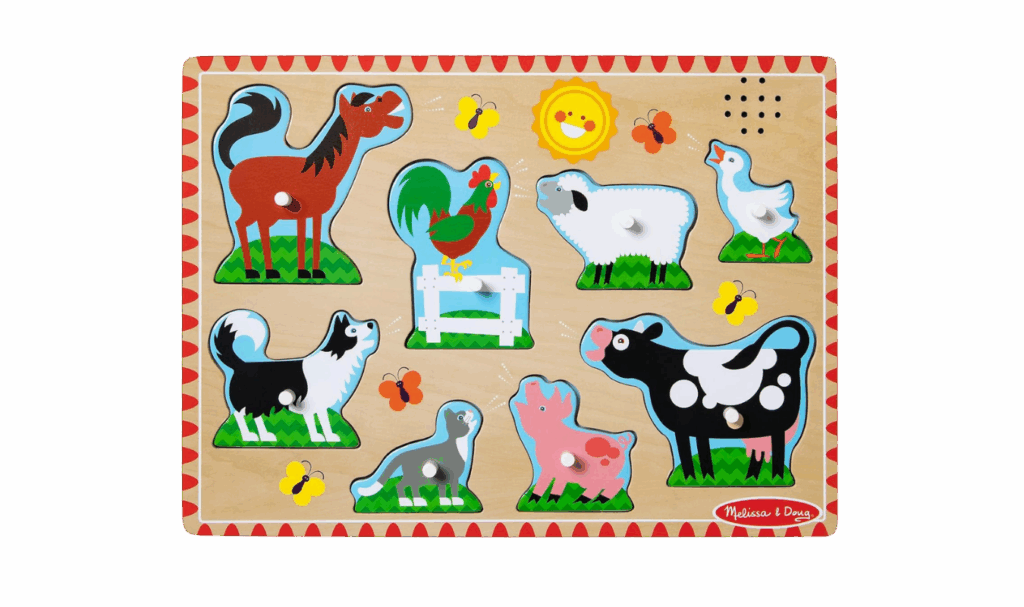
Melissa and Doug Sound Puzzle
Best for: Problem-solving skills
Price: $~15
Skills it encourages: Problem-solving, fine motor skills, pincer grasp, imitation, language development
Ways to play: Match puzzle pieces, practice animal sounds, and talk about the pictures together
Why we love it: Sound puzzles combine problem-solving and fine motor practice while creating fun opportunities for language development.
Puzzles are one of the most underrated educational toys for one-year-olds! They encourage toddlers with critical thinking, hand-eye coordination, and strengthening muscles in their hands as they pick up each piece.
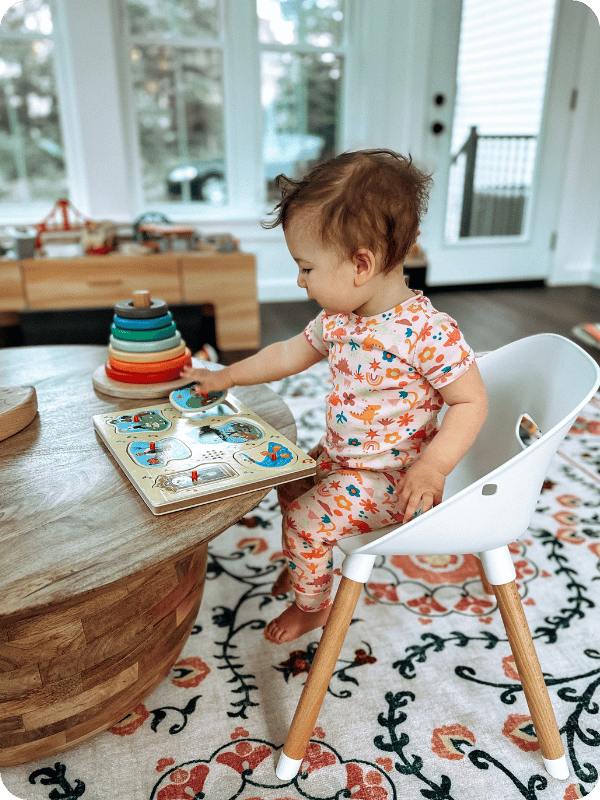
I love sound puzzles because they also add language and communication opportunities. When a piece is placed correctly and the sound comes on, it creates a chance to practice imitation.
Try this!
Show your toddler how to pick up the puzzle pieces using a pincer grasp (thumb and pointer finger). As each animal sound plays, imitate the sound yourself and pause to give your child a chance to copy you. You can also name the animal and make the connection between the picture, the sound, and the word. “Cow says moo!”
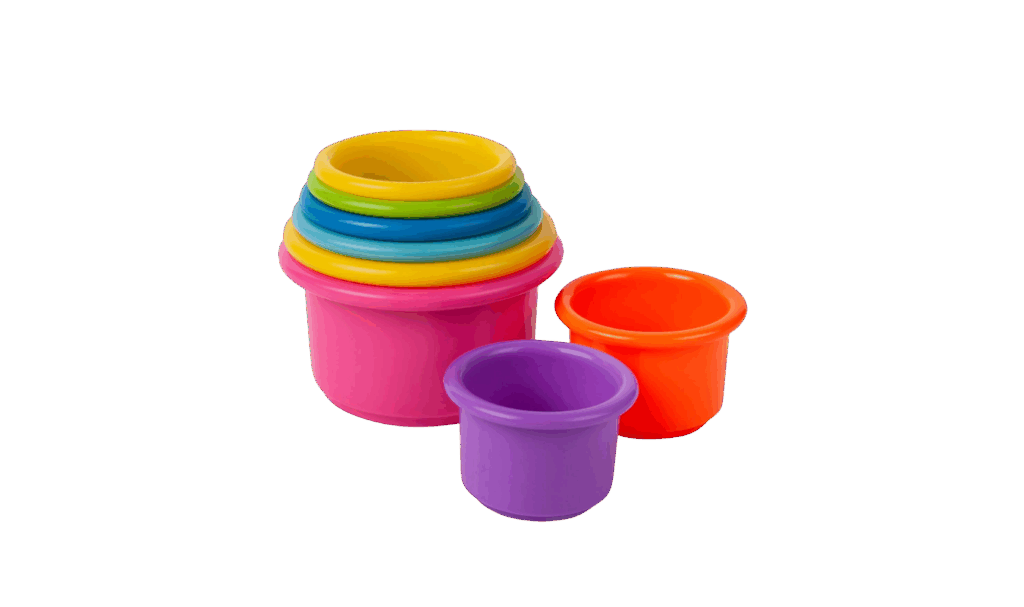
Stacking Cups
Best for: Problem-solving skills
Price: ~$7
Skills it encourages: Problem solving, hand-eye coordination, fine motor skills, color recognition, functional language
Ways to play: Stack, nest, pour, count, use them for pretend play or as bath toys
Why we love it: Stacking cups are an affordable, versatile educational toy that offers many ways to play as your child grows.
Stacking cups are an affordable educational toy for 1 year olds. They’re one of my favorite gifts for 18 month olds due to their versatility. They make a great first birthday gift because children can continue play differently with them as their skills develop.
Stacking and nesting refines problem solving skills and fine motor skills. They also create natural opportunities to introduce functional language like “up,” “down,” “in,” “out,” and “on top.” As your child gets older, you can use stacking cups to encourage pretend play. Turn the cups into pretend dishes, scoops, or containers.
Try this!
Bring stacking cups into the bath or a water table! Encourage your toddler to fill a cup with water and pour it into another cup. This helps to practice coordination and learn about cause and effect.
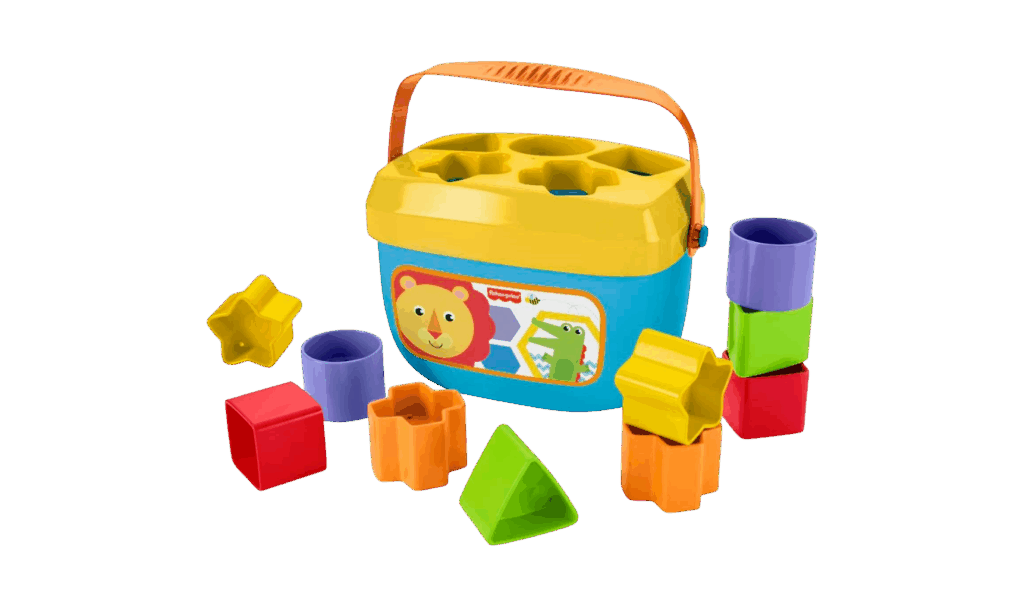
Shape Sorter
Best for: Problem-solving
Price: ~$12
Skills it encourages: Problem solving, fine motor skills, color and shape recognition
Ways to play: Sort shapes, stack pieces, practice colors and shapes, and model simple words during play.
Why we love it: A versatile educational toy that provides opportunities to work on lots of skills at once
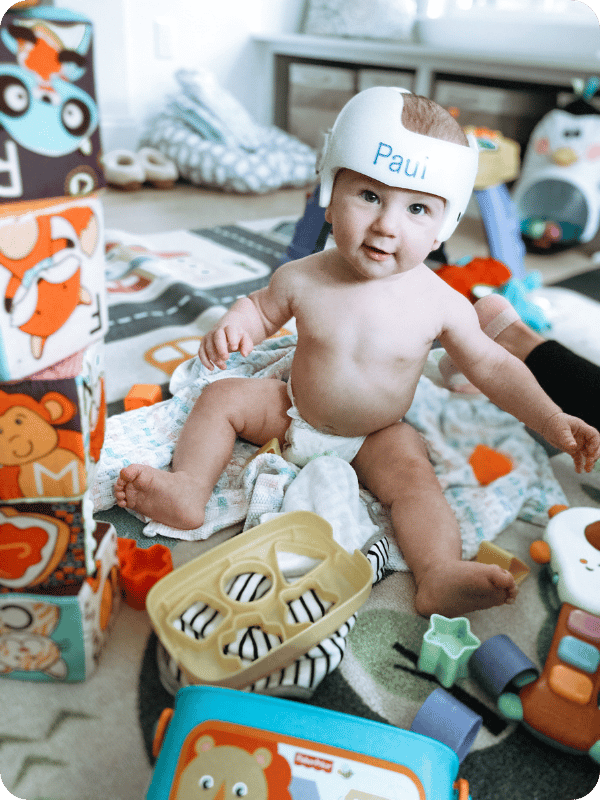
Shape sorters are another versatile educational toy for 1 year olds that can grow with them! Before toddlers are ready to match shapes correctly, they can explore the pieces by stacking, holding, and banging them together.
These learning toys naturally provide ways to model functional language like “in” and “out” as you play. The plastic shapes can be used as blocks to stack, or you can sort by color and shape.
Try this!
Start by taking the lid off the shape sorter and placing it on the floor. Show your toddler how each shape fits into its matching opening, turning it into a simple puzzle activity first. Once they become familiar with the shapes and openings, encourage them to try sorting the pieces independently. Offer clues like, “Try turning it,” or “Does it fit?” to support problem-solving without taking over.
Montessori Toys for 1 Year Olds
Pikler Triangle and Climbing Set
Best for: Gross motor skills
Price: ~$170
Skills it encourages: Gross motor skills, coordination, body awareness, strength, confidence
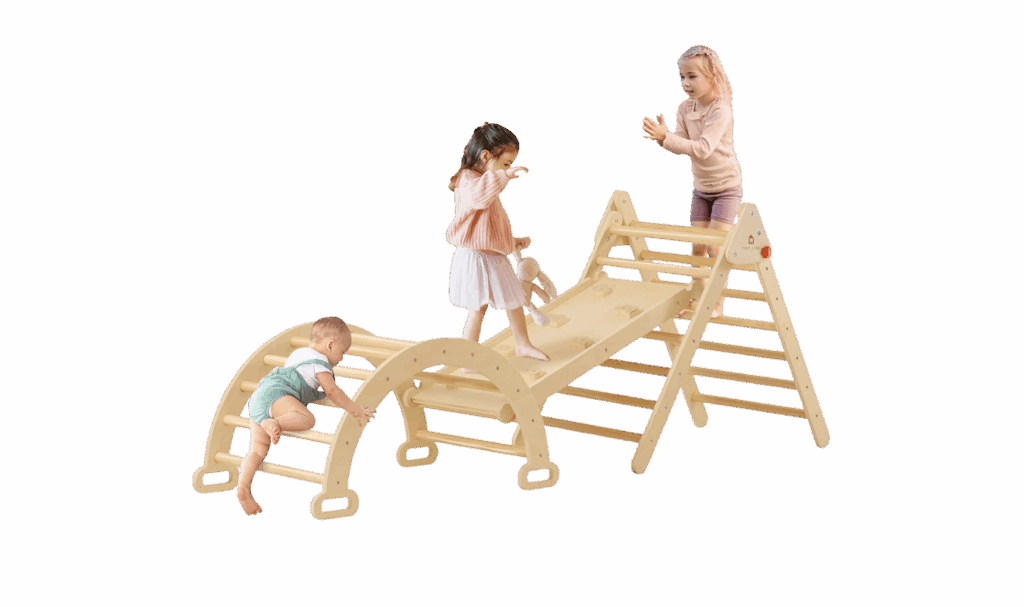
Ways to play: Climb, slide, pull up, work on balance, or build a fort with blankets
Why we love it: A Pikler triangle encourages independent movement and gives toddlers a safe way to practice climbing, balance, and more.
A Pikler triangle supports gross motor development, builds confidence, and encourages independent movement in young children. It’s a great Montessori toy for 1-year-olds because it grows with your child and supports developing gross motor skills in new ways over time.
It helps toddlers build strength and coordination as they crawl, climb, and explore movement at their own pace. By engaging large muscle groups, it supports balance, stability, and body awareness.
Try this!
Place pillows, tunnels, or soft play items around the Pikler triangle. Encourage your toddler to move over, under, and around them. This helps build body awareness, spatial awareness, and problem solving.
Realistic Animal Figures
Best for: Open-ended play
Price: ~$20
Skills it encourages: Open-ended play, real-world understanding, language development, pretend play
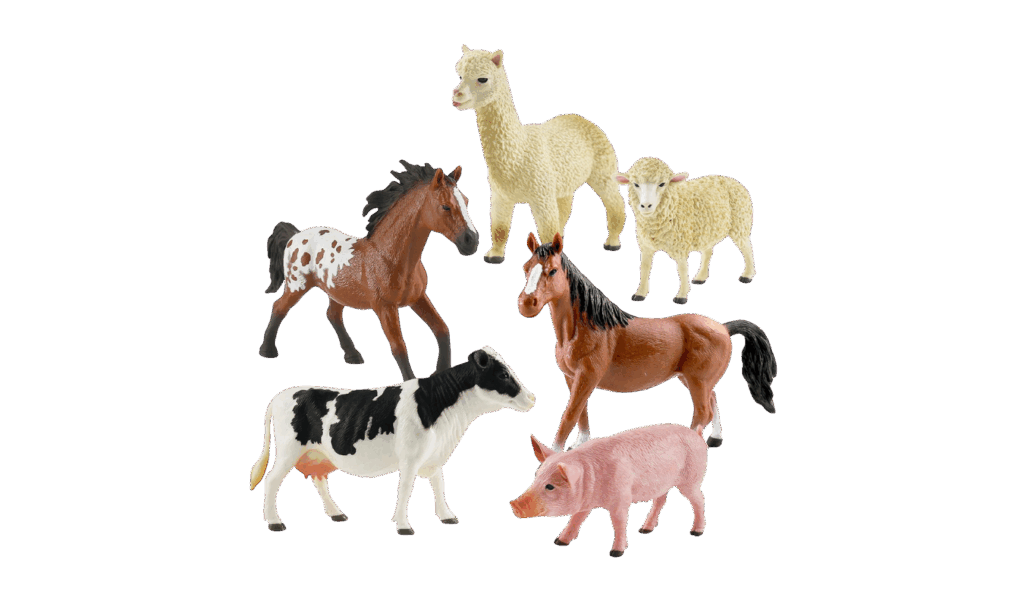
Ways to play: Mix the animals with blocks and other toys to build play scenes, narrate what animals are doing
Why we love it: Realistic animal figures like this will be played with through the elementary school years
These simple, open-ended toys encourage toddlers to explore animals in a hands-on way while expanding their vocabulary.
Little ones can use animal figures to build language skills. Label names and create play scenes for storytelling. Use the animals to introduce descriptive words such as striped, furry, smooth, rough, big, and small. This helps toddlers move beyond simple labeling and begin describing the world around them in more detail.
Try this!
Hide the animals around the room or in a sensory bin and ask your toddler to find them. Ask questions like, “Can you find the cow?” and “Where’s the horse?” This works on listening skills and receptive language.
Coin Drop Box
Best for: Fine motor skills and problem solving
Price: ~$16
Skills it encourages: Pincer grasp, fine motor skills, hand-eye coordination, cause and effect, object permanence
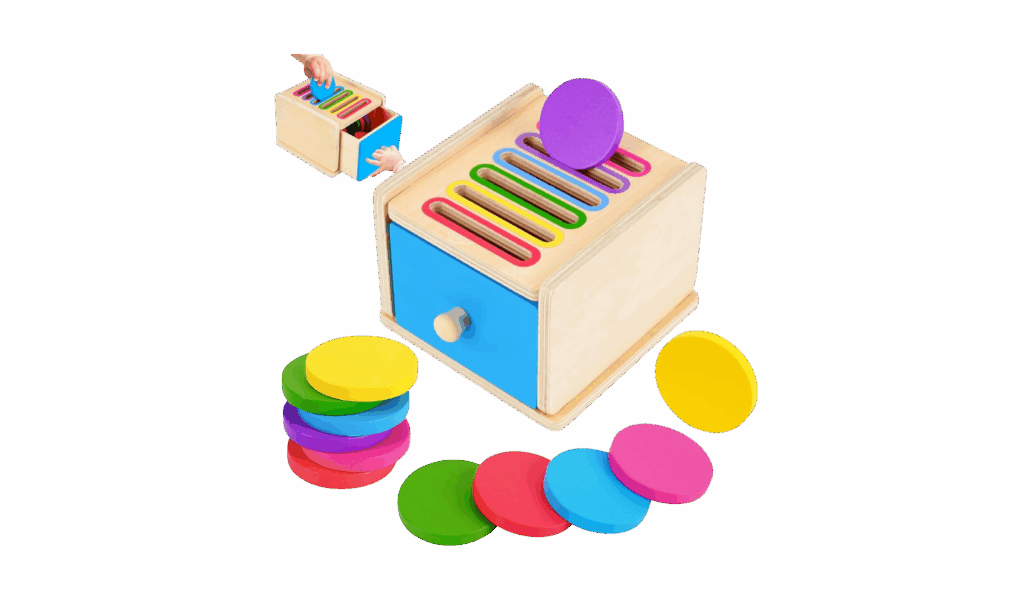
Ways to play: Drop the coins into the slot, match colors, count the coins, and practice following simple directions
Why we love it: This simple wooden toy packs so much learning into one activity. As your toddler grows, you can make it more challenging!
Montessori-inspired coin boxes work on so many skills at one time. They really pack a punch with learning and practicing fine motor skills.
It’s a Montessori toy that strengthens hand-eye coordination as your child reaches, grasps, and places the coins through the slots. It also supports focus and problem-solving skills as 1 year olds watch and learn how to use the toy.
Try this!
Open the box after all the coins are inside and dump them out together. Pause before opening it and ask, “Open?” or “More?” to encourage your toddler to communicate. Then repeat the activity. Toddlers love repetition!
Pretend Play Toys
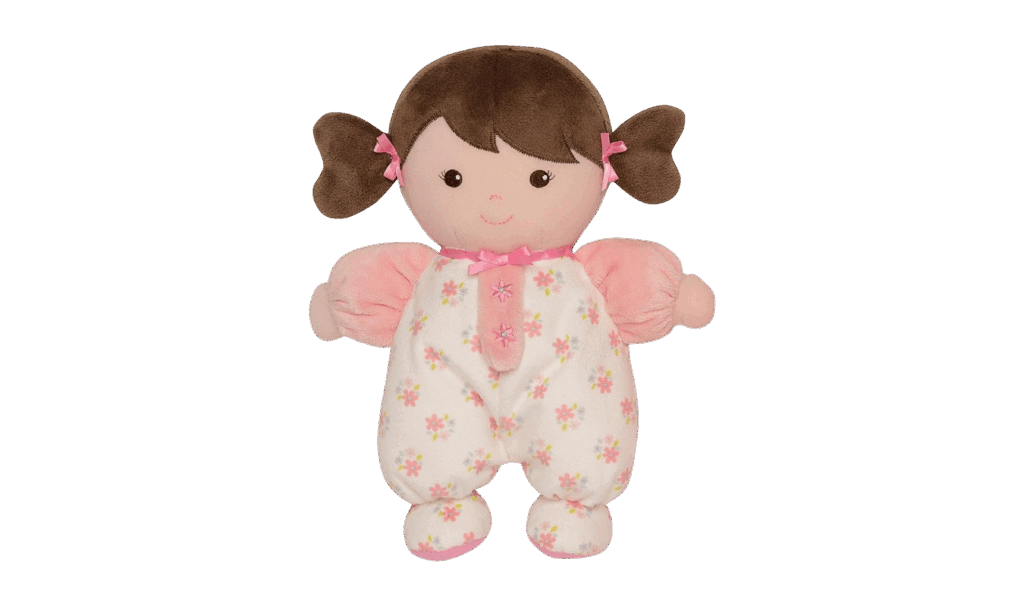
Baby Doll
Best for: Pretend play & social-emotional development
Price: ~$14
Skills it encourages: Pretend play, social-emotional skills, imitation, language development, body awareness
Ways to play: Feed, rock, dress, and care for the baby while acting out everyday routines
Why we love it: A soft, washable baby doll encourages nurturing play while helping toddlers build social-emotional skills and more.
Baby dolls are a simple yet powerful toy for encouraging pretend play. During play, little ones start to imitate the daily routines they see at home. They can feed the baby, give it a bottle, change its diaper, or tuck it in for bedtime. These everyday routines naturally encourage language development, imagination, and early social-emotional skills.
A baby doll is also an excellent tool for teaching body awareness. As you play together, point to and name the baby’s body parts like eyes, nose, ears, hands, and feet. Then encourage your toddler to find the same body parts on themselves.
Try this!
Pretend the baby is hungry, sleepy, or sad, and encourage your toddler to decide how to help. Narrate the play with simple phrases like, “Baby is tired,” “Time for a hug,” or “Let’s give baby a blanket.” This supports language development while introducing empathy and everyday routines.
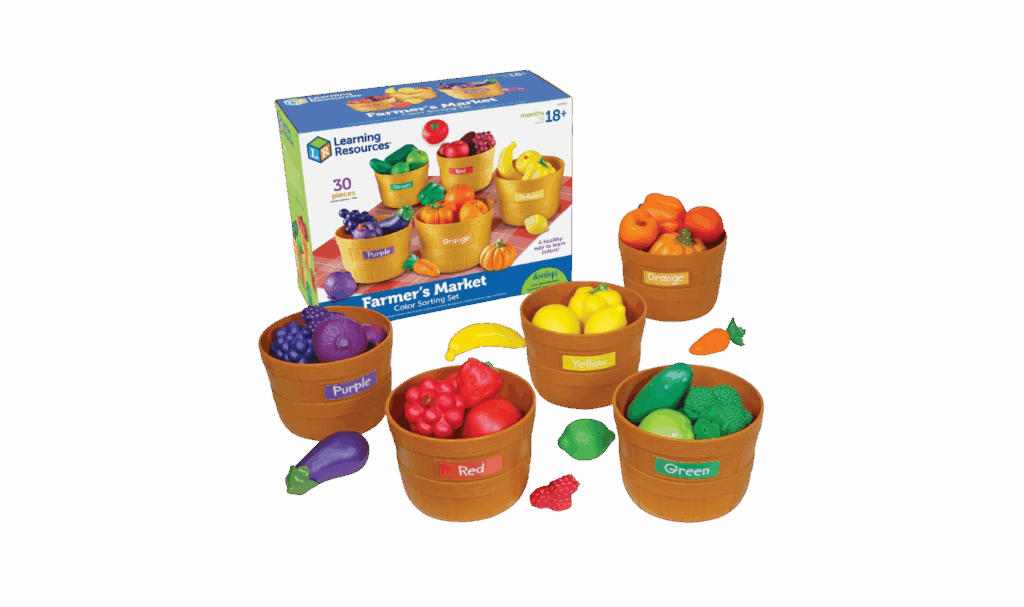
Learning Resources Pretend Play Food
Best for: Pretend play & more
Price: ~$30
Skills it encourages: Language development, pretend play, food recognition, color recognition
Ways to play: Cook, serve meals, feed stuffed animals, sort foods by color, and name different fruits and vegetables
Why we love it: Pretend play food offers endless opportunities for imaginative play while helping toddlers learn through everyday routines.
Play food may seem simple, but it provides littles with many opportunities to learn and develop important skills. Whether children are cooking in a play kitchen or serving a pretend meal, play food encourages hands-on learning through imagination.
There are so many types of pretend play food. We especially love this set from Learning Resources because it includes a variety of colorful fruits and vegetables. This allows for lots of language learning and food recognition, too. As your child grows, they can use the included baskets to sort foods by color, adding an extra layer of problem-solving.
Try this!
Set up a simple pretend picnic with your toddler’s favorite stuffed animals. Encourage your child to “feed” each animal. Model words and phrases like, “The bear wants an apple,” “More bananas, please,” or “The bunny is all done!”
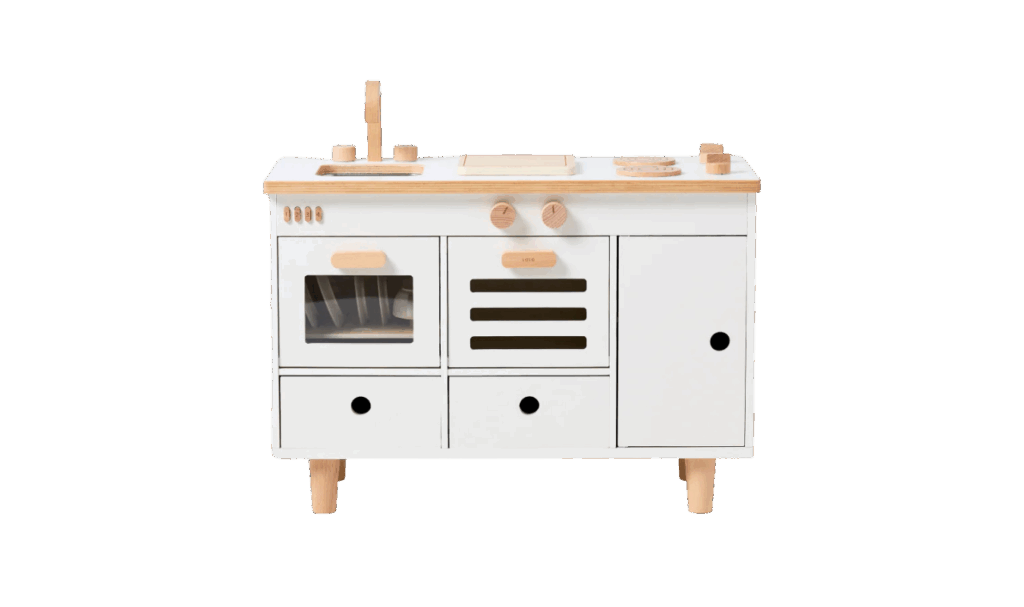
Lalo Play Kitchen
Best for: Pretend play & more!
Price: $395
Skills it encourages: Pretend play, language and communication, social-emotional skills, hands-on learning, and imitation
Ways to play: Cook, bake, stir, whisk, wash dishes, and plan meals
Why we love it: A play kitchen is an open-ended toy that grows with your child, encouraging years of imaginative play.
A play kitchen is one of the best educational toys you can buy for a one-year-old. Though it’s an investment, it’s an open-ended toy your child will enjoy for years.
Play kitchens help toddlers make sense of the everyday routines they see at home. As they pretend to cook, wash dishes, and prepare meals, they’re building language, practicing imitation, and developing social-emotional skills. Add a set of pretend food, pots and pans, or a baby doll, and you have endless pretend play scenarios.
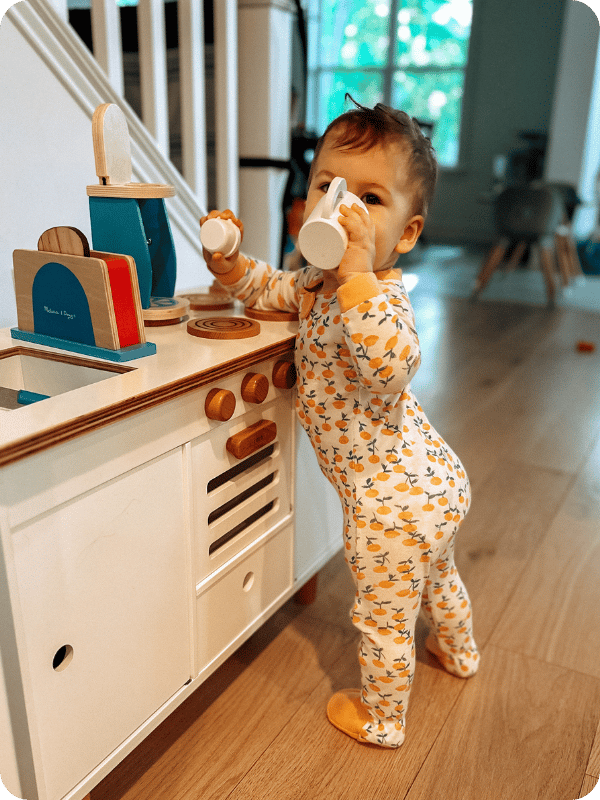
We love Lalo’s play kitchen for its simplicity and durability, but there are plenty of great options to fit different budgets. If you’re comparing styles, check out our post on our favorite play kitchens.
Try this!
Ask your toddler, “What are you cooking today?” Then model simple actions and functional language like “stir,” “mix,” “hot,” “pour,” and “all done.”
Educational Toys that Support Communication
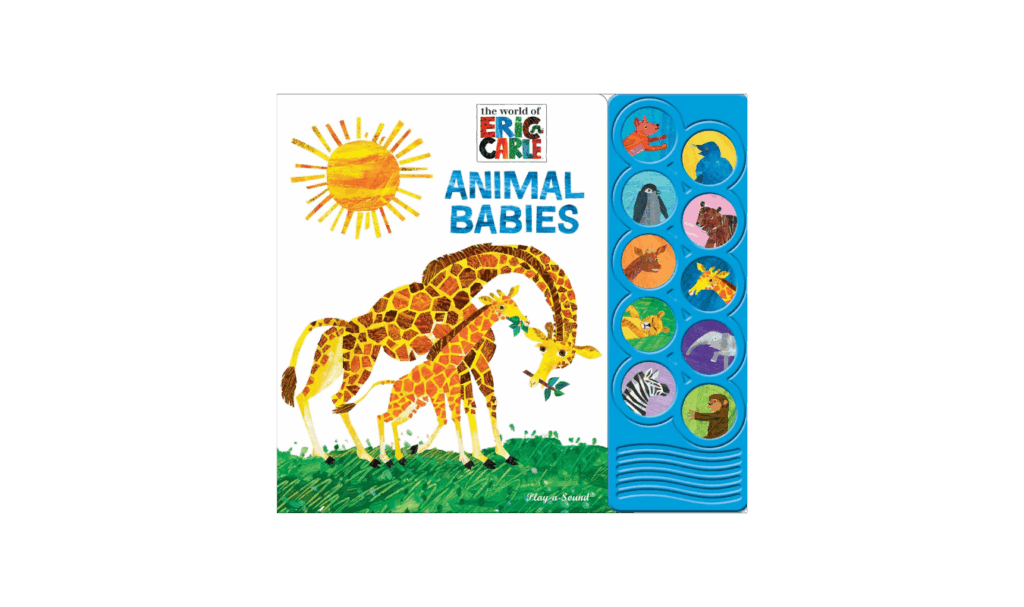
Sound Book
Best for: Early literacy
Price: ~$15
Skills it encourages: Language development, imitation, early literacy, fine motor skills, listening skills, and animal/object recognition
Ways to play: Read together, press the sound buttons, identify pictures, and imitate sounds
Why we love it: Interactive sound books make storytime more engaging while supporting communication skills through play.
The best toddler books feature illustrations and/or interactive elements that keep littles’ attention! Since toddlers learn best through hands-on experiences and play, books with interactive features like sounds make storytime engaging.
Sound books create natural opportunities to build vocabulary, practice imitation, and connect words with pictures and sounds. We have a post that contains many of our favorite interactive books for little ones. They make reading feel more like play!
Try this!
Practice matching sounds to pictures by asking your toddler to find the animal before pressing the button. After they hear the sound, imitate it together.
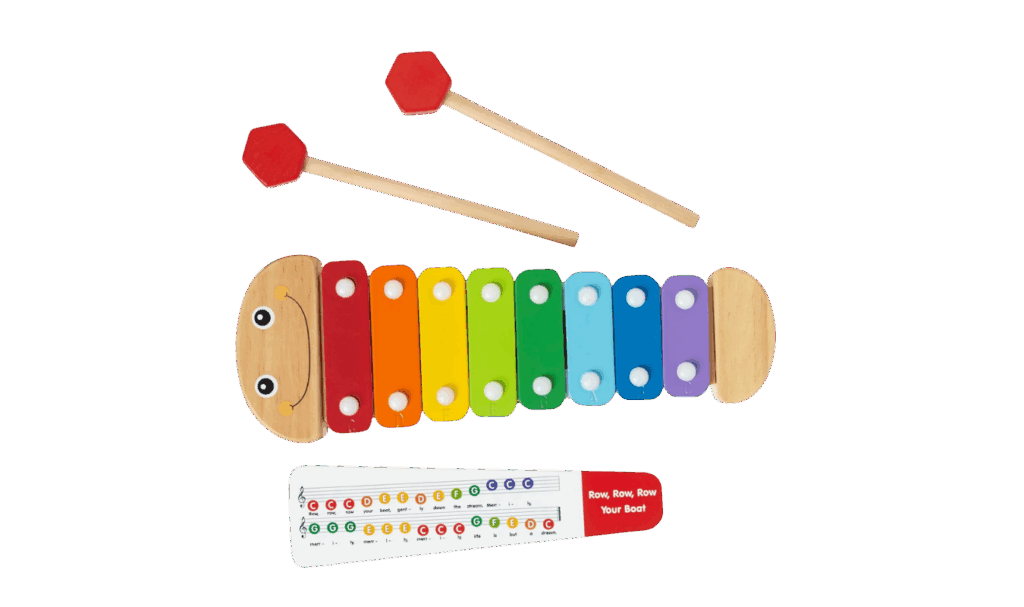
Xylophone Musical Toy
Best for: Music and movement
Price: ~$12
Skills it encourages: Fine motor skills, hand-eye coordination, cause and effect, imitation, creativity, auditory exploration, and functional language
Ways to play: Bang, tap, play, experiment with sounds, and sing along
Why we love it: Xylophones encourage toddlers to explore music through hands-on play while building coordination and communication.
Xylophones are great educational toys for 1-year-olds because they combine music, movement, and sensory exploration in one activity. At this age, toddlers are not trying to play a song. They’re learning through experimenting with sounds and cause and effect.
These musical toys offer opportunities for functional language as well. Model words like “bang, boom, tap.” See what sounds your child creates!
Try this!
Take turns making sounds with the xylophone. Tap a few keys and pause to see if your toddler imitates you. You can also describe what they’re doing. Use simple words like “soft,” “loud,” “fast,” and “slow” to build vocabulary while they play.
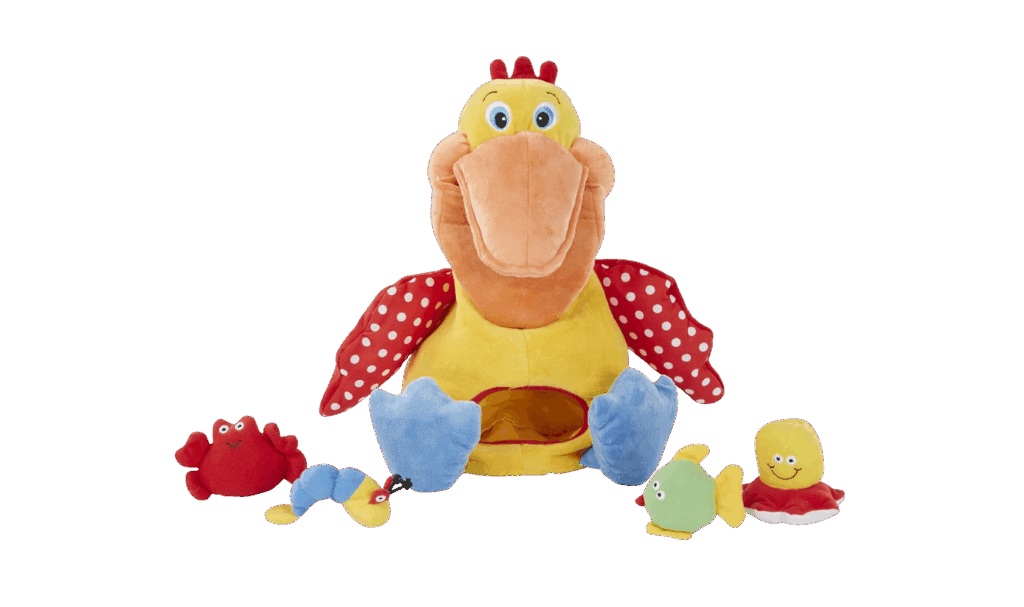
Melissa and Doug Hungry Pelican
Best for: Encouraging language and imitation
Price: ~$40
Skills it encourages: Language development, imitation, pretend play, sensory exploration, and turn-taking
Ways to play: Feed the pelican, open and close its beak, make silly sounds, and talk about what it’s eating
Why we love it: This silly, interactive toy encourages toddlers to imitate sounds, build vocabulary, and engage in imaginative play.
This was one of my favorite toys to play with my toddlers! The Hungry Pelican makes it easy to turn playtime into a fun conversation. As you feed the pelican, use silly voices and narrate what it’s thinking or eating. These playful interactions encourage imitation, build vocabulary, and support early communication skills.
The included fish and pelican food squeak and rattle, adding a fun sensory element to explore through play.
Try this!
Pretend the pelican is hungry and ask your toddler, “What should we feed him?” As you take turns feeding the pelican, model simple words and phrases. “More fish!” “Crunch, crunch!” or “The pelican is full!” Pause often to give your little one a chance to imitate sounds, gestures, or words.
Looking for more?
Find some of our favorite educational toys for 3 year olds that build on even more skills.
Explore all of our favorite toys by age all in one place with play ideas, too!
Leave a Reply
OTHER POSTS YOU MAY LIKE:


MS, SLP
Founder of Eat Play Say, Speech-Language Pathologist, Feeding Specialist, Play Expert, Mom of 3
Jordyn Koveleski Gorman
SPECIALIZES IN: Infant and toddler speech-language, play, and feeding development, and curating a team that provides expert help that feels like a reassuring text from that one mom friend
EDUCATION: Jordyn received her BS in Speech-Language Pathology from Bloomsburg University and her MS in Speech-Language Pathology from Towson University
FAVE PARENTING FIRST: “The first true smile, it’s the sweetest!”

MS, CCC-SLP, CBS, IBCLC
Speech-Language Pathologist & Feeding Specialist, Certified Breastfeeding Specialist, International Board Certified Lactation Consultant
Jessica Nicholson Cocca
SPECIALIZES IN: Breast and bottle feeding, tongue ties, oral motor dysfunction, starting solids, infant and toddler speech, treating oral motor disorders
EDUCATION: Jessica received her BS in Communication Sciences and Disorders from Pennsylvania State University in 2015 and her MS in Speech-Language Pathology from Towson University in 2017
FAVE PARENTING FIRST: “Baby’s first wave! What a fun first communication gesture!”

MA, CCC-SLP, CLC
Speech-Language Pathologist, Certified Lactation Counselor
Jennifer McFarlin
SPECIALIZES IN: Breast and bottle feeding, tongue ties, starting solids, infant and toddler speech development
EDUCATION: She received her BS in Speech-Language Pathology from Ball State in 2014 and a MA in Speech-Language Pathology from Ball State in 2016.
FAVE PARENTING FIRST: “My favorite baby’s first is their first true smile that just warms your soul knowing they are smiling at you. My other favorite is their first word. I love watching their language explode!”

MS, CCC-SLP
Bilingual Speech-Language Pathologist
Nicole La Petina Kelly
SPECIALIZES IN: Bilingual development (Spanish-English), supporting multilingual families, infant and toddler speech
EDUCATION: She received her BA in Communication Sciences and Disorders and in Spanish from the University of Wisconsin-Madison in 2014 and her MS in Speech-Language Pathology with an English-Spanish Specialization from Marquette University in 2016.
FAVE PARENTING FIRST: “It’s the first slobbery kisses for me!”

RDN, LD
Licensed Registered Dietitian
Kimberly Vede
SPECIALIZES IN: Infant and pediatric nutrition including breastfeeding, formula feeding, and starting solids. She also specializes in prenatal and postpartum nutrition.
EDUCATION: She received her BSc in Biology in 2014 from Life University, and her BSc in Dietetics from Life University in 2019.
FAVE PARENTING FIRST: ”The first time they say ‘mama!’”


This checklist was created with input from a Speech-Language Pathologist, Occupational Therapist and Physical Therapist and has been downloaded over 20,000 times by parents worldwide. Learn the important milestones to pay attention to, and keep it in your digital back pocket during the baby + toddler years!
Comprehensive Milestone Checklist for gross motor, fine motor, and speech-language milestones for 0-36 months,
DOWNLOAD FOR FREE


