


Montessori Toys for Babies & Toddlers (2026 Guide)
September 26, 2025
Jordyn Koveleski Gorman

Last Updated on July 22, 2026 by Jordyn Koveleski Gorman
This page contains affiliate links. We will receive a commission on qualifying purchases using these links.
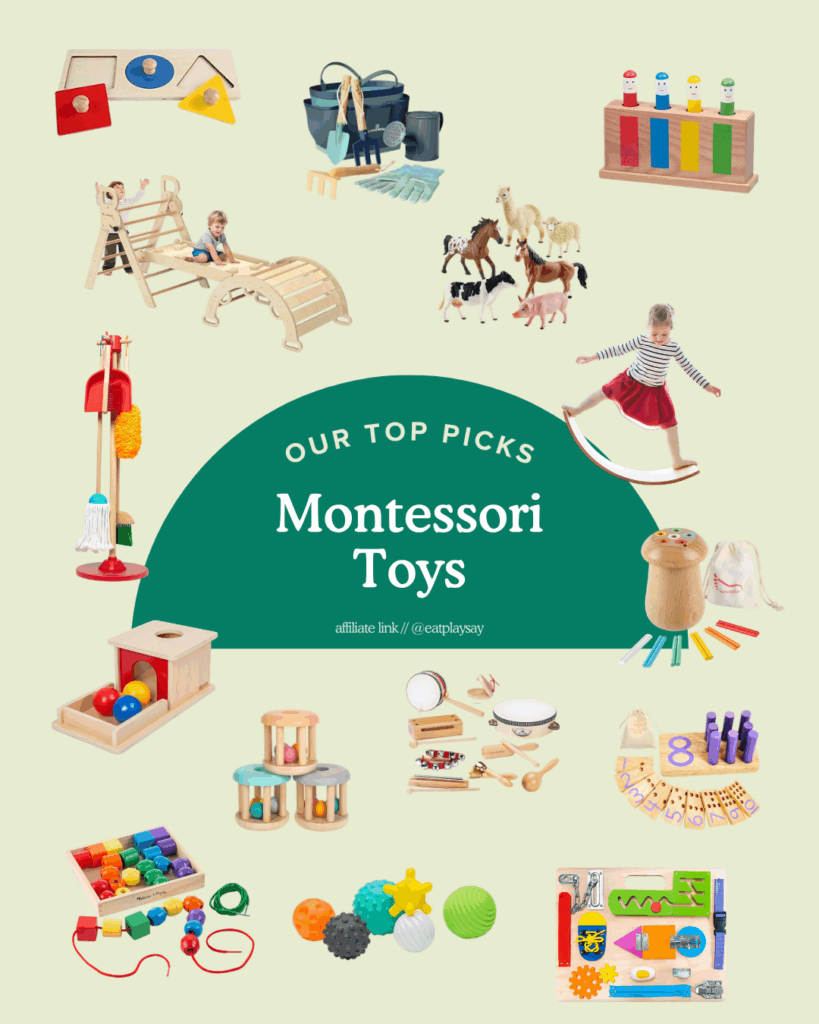
You’ve probably heard the term Montessori play before. You may have noticed “Montessori toys” look different than many of the colorful toys you find on Target shelves. But do you know what it all means?
What does Montessori mean?
Montessori is a method of education that was developed by Dr. Maria Montessori in the early 1900s. This educational method believes that play is the “work” of a child. The Montessori method of education puts an emphasis on independence (even at the youngest of age), hands-on learning, and self-directed exploration.
Instead of imaginative play, it’s more purposeful play. While children learn through all sorts of play, Montessori is a specific type of play.
What do Montessori toys teach?
Montessori toys have a purpose and a skill to teach.
Montessori toys focus on one skill at a time. They work on one concept or skill such as size, shape, color, or movement.
Many of them also focus on real-life/real-world play. A small toddler broom set is considered a Montessori toy as it teaches gross motor skills and the life skill of cleaning.
Montessori toys encourage independence. Adults do not need to be closely supervising children with Montessori play. This fosters a sense of confidence and autonomy in the child.
Why choose Montessori toys?
While many people don’t think of Montessori toys as being colorful, that’s not always true. Montessori toys can be colorful, and often teach colors!
Montessori toys typically use natural materials like wood, metal, cotton, and other non-toxic components. They avoid lights, sounds, and screens to support focused play.
Benefits of playing with Montessori toys:
- Hands-on learning & sensory exploration
- Encourage fine motor development and gross motor development
- Develop real-world practical skills
- Enhance problem-solving skills & concentration
- Foster language learning and vocabulary
- Build confidence
Why We Love Montessori Toys:
Montessori toys are great for improving hand strength. Hand strength is a crucial muscle to exercise for fine motor skill development in babies and toddlers.
From fine motor skills to gross motor movement, Montessori toys have such a wide range of benefits for helping baby and toddler meet their developmental milestones.
Montessori toys are great investments! I’ve seen these toys get used and grow with my children from baby to toddlerhood! Babies and toddlers can begin practicing real-world concepts with pretend play.
They’re also confidence building! Kids love being given a task and seeing how they can master it, and that’s the case with many Montessori toys. After practicing a few times, your little one will develop such a sense of confidence being able to sort shapes, insert wooden coins, etc.
Now that we know the why behind the Montessori method, let’s get to our list of best Montessori toys —
Montessori Baby Toys
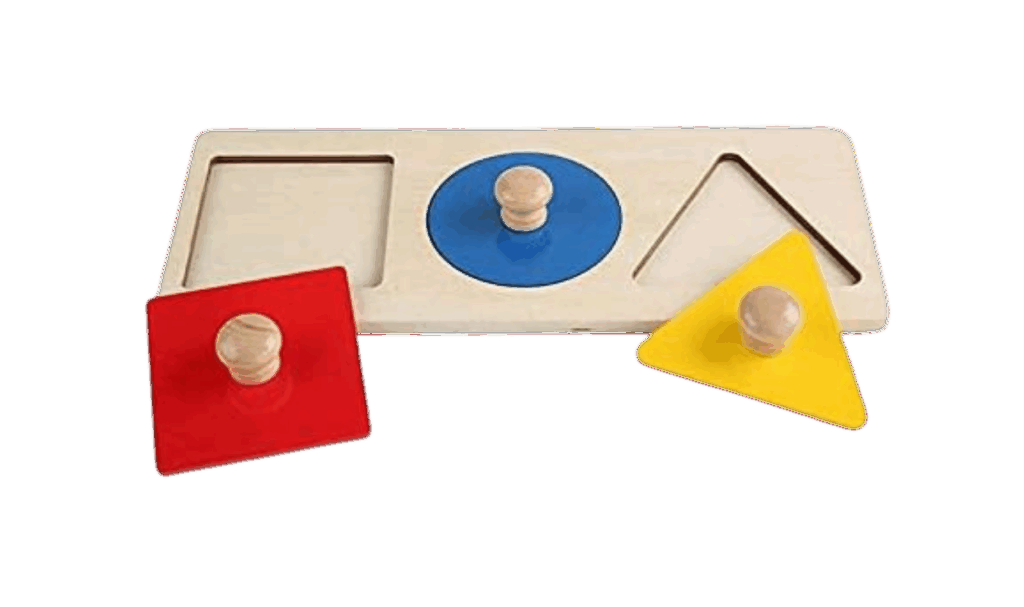
Montessori Shape Puzzle
What your child is practicing: pincer grasp, hand-eye coordination, problem-solving skills
Wooden shape puzzles like these are a great introduction to puzzles and problem-solving. When babies play with these, they practice grasping, hand-eye coordination, and concentration skills.
One of the main skills this toy supports is the pincer grasp, which is the ability to pick up small objects using the thumb and index finger. As little ones grasp the knobs, they continue working on refining the pincer grasp. This fine motor skill supports everyday tasks like eating, dressing, and eventually writing.
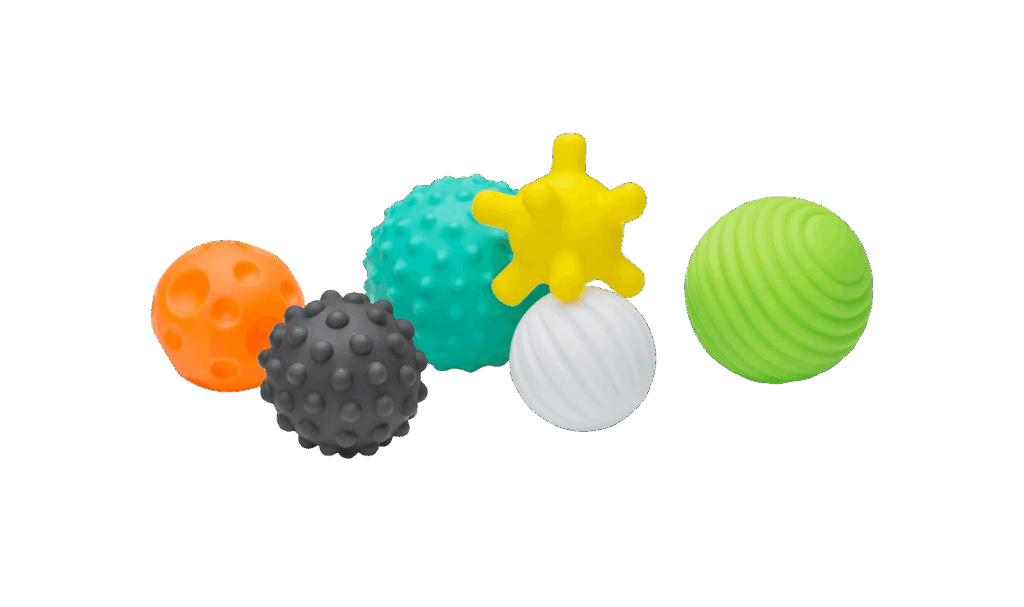
Textured Balls
What your child is practicing: reaching, grasping, sensory exploration, visual tracking
Balls with different textures are a simple Montessori toy for babies. They encourage sensory exploration as your baby explores the different colors and textures.
Not only that, small balls like this encourage baby to reach out and grasp. Babies practice holding the balls, then work on moving them back and forth. They also support visual tracking.
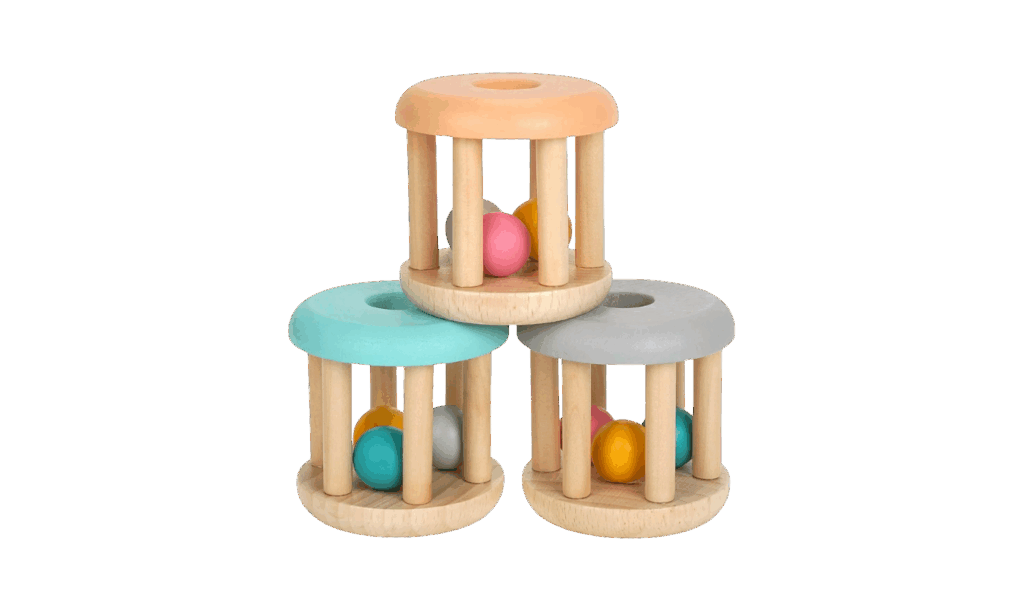
Rolling Rattles
What your child is practicing: reaching, movement, exploration, cause and effect
A rolling rattle is a great Montessori-style toy for babies because it encourages movement, exploration, and simple cause-and-effect learning. As the rattle rolls and makes gentle sounds, it naturally motivates your baby to reach, roll, and eventually crawl after it. This helps them explore their environment and build early motor skills.
Your baby can stack this set of three rattles or use them for musical play by shaking them together. There’s no one right way to play—they’re open-ended!
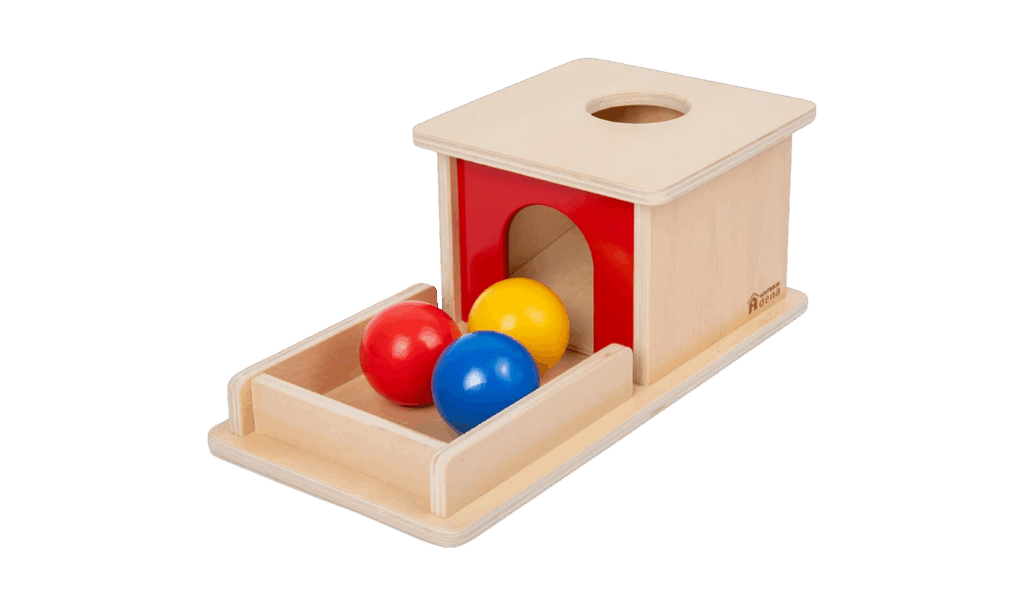
Object Permanence Box
What your child is practicing: object permanence, hand-eye coordination, problem solving
An object permanence box is a classic Montessori toy for babies. It teaches babies that objects still exist even when they can’t see them.
This Montessori toy also strengthens hand-eye coordination as your baby reaches, grasps, and places the ball through the hole. It works on focus and problem-solving skills as babies watch and learn how to use the toy.
Montessori Toys for 1 Year Old
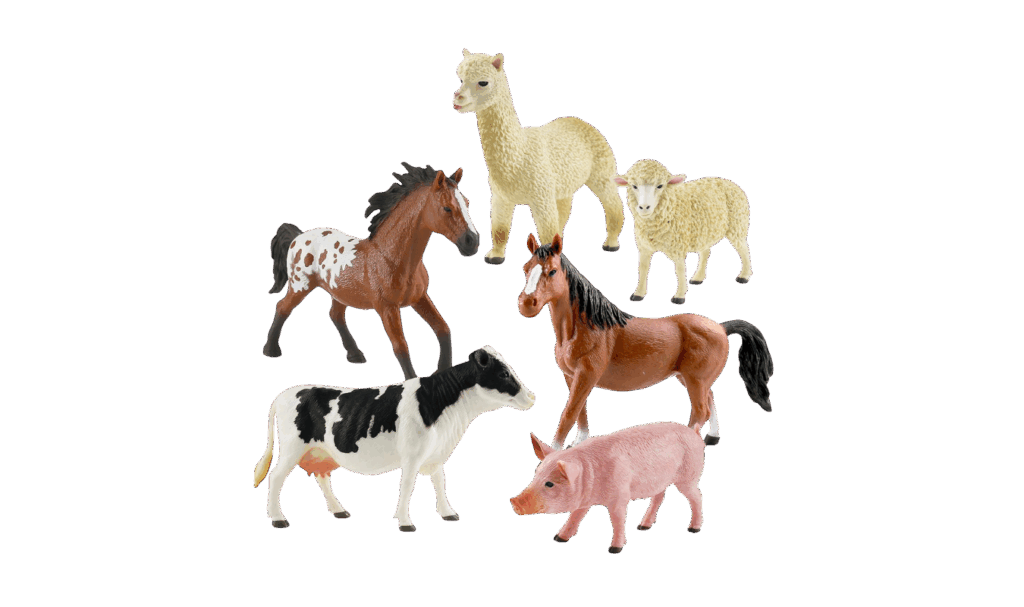
Farm Animal Figures
What your child is practicing: real-world understanding, open-ended play, language
These simple, open-ended toys encourage toddlers to explore animals in a hands-on way while expanding their vocabulary.
Little ones can use animal figures to learn and label names, but they also support language development through storytelling and using descriptive words such as striped, furry, smooth, rough, big, and small. This helps toddlers move beyond simple labeling and begin describing the world around them in more detail.
Animal figurines are a great Montessori toy for 1-year-olds, especially when introduced through simple play scenes. At this stage, parents can model language by naming animals and describing what they see.
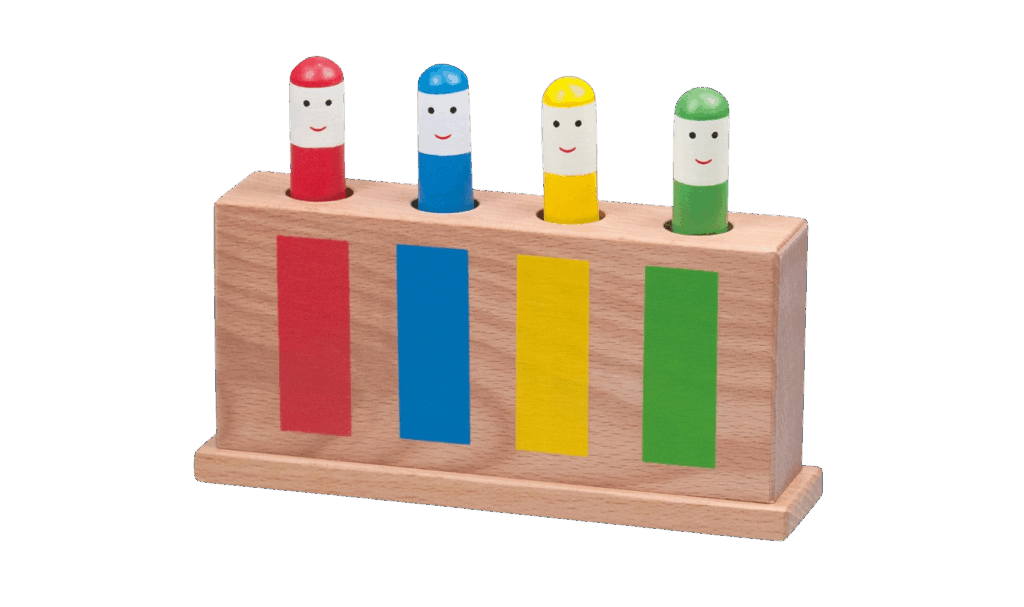
Pop-Up Toy
What your child is practicing: finger isolation, fine motor skills, cause and effect, intentionality
Pop-up toys are a great Montessori-style activity for building hand-eye coordination and fine motor skills in babies and young toddlers. Introduce this toy around 9 to 12 months of age, when babies are ready to explore more intentional hand movements.
Toys like these provide a great opportunity to pair language development with motor skills by narrating actions as your child plays. They also support finger isolation, a developmental milestone that comes around 15 months.
Through play, your child begins to understand cause and effect. For example, pressing a peg and watching it pop up. Beyond that, they’re also developing early cognitive concepts like predictability and intentionality.
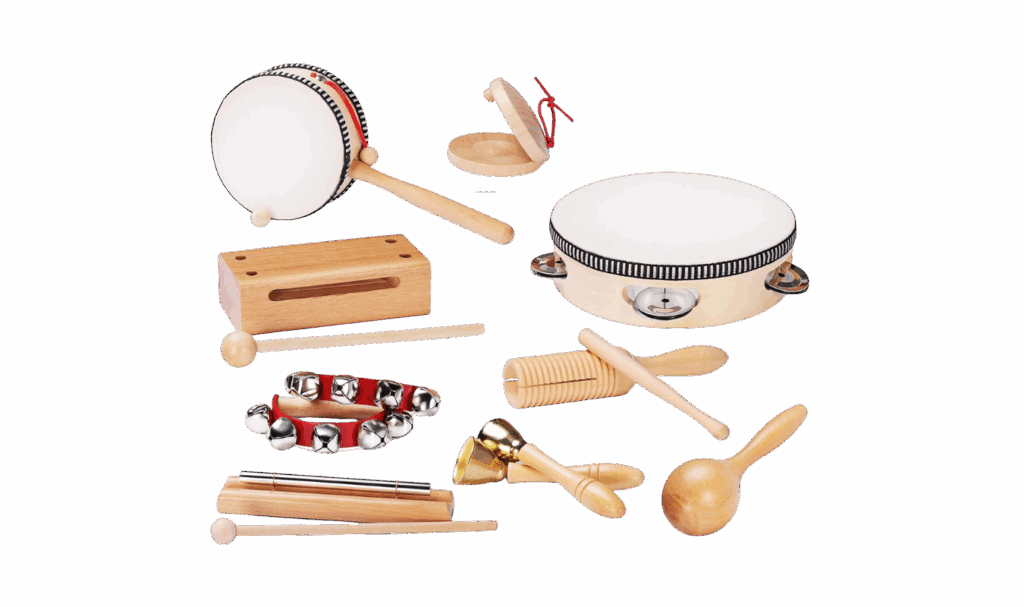
Musical Instruments
What your child is practicing: movement, rhythm, listening skills
Wooden musical instruments fit the Montessori style because they are real, purposeful, and simple in design. Unlike many electronic musical toys, they don’t include flashing lights or pre-programmed songs. Instead, they allow babies and toddlers to create their own sounds by banging, shaking, tapping, and exploring.
Musical toys are also great for building language and social skills. Parents can use them to introduce imitation, turn-taking, and early communication by playing back and forth with their child. As toddlers grow, instruments can even help introduce early concepts like patterns, rhythm, and rhyme.
Musical instruments like these grow with your child well beyond the baby and toddler years.
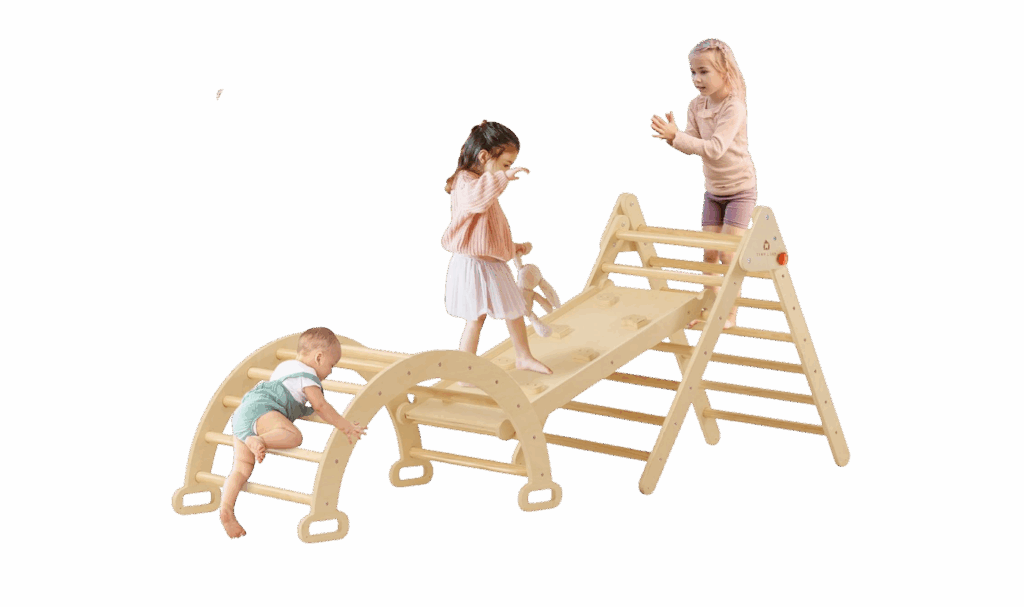
Pikler Triangle Set
What your child is practicing: gross motor development, confidence, strength, coordination
A Pikler triangle supports gross motor development, builds confidence, and encourages independent movement in young children. We think it’s a great Montessori toy for 1-year-olds because it can grow with your child and support developing gross motor skills in new ways over the years.
It helps toddlers build strength and coordination as they crawl, climb, and explore movement at their own pace. By engaging large muscle groups, it supports balance, stability, and body awareness, while also encouraging active sensory play.
This type of climbing set is especially useful for indoor play. It’s perfect for rainy days when toddlers need a safe outlet for movement and energy!
Montessori Toys for 2 Year Old
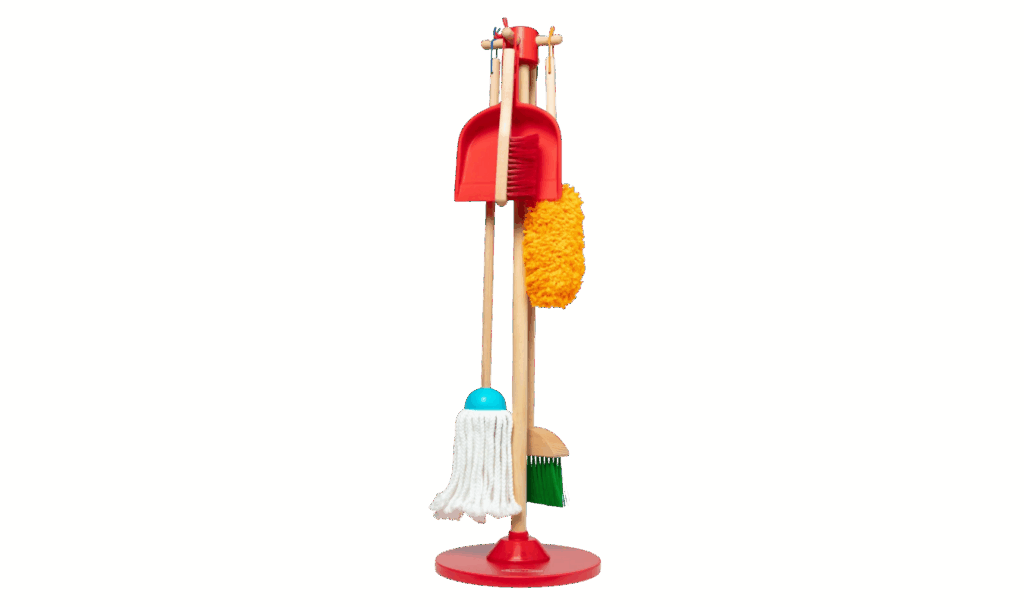
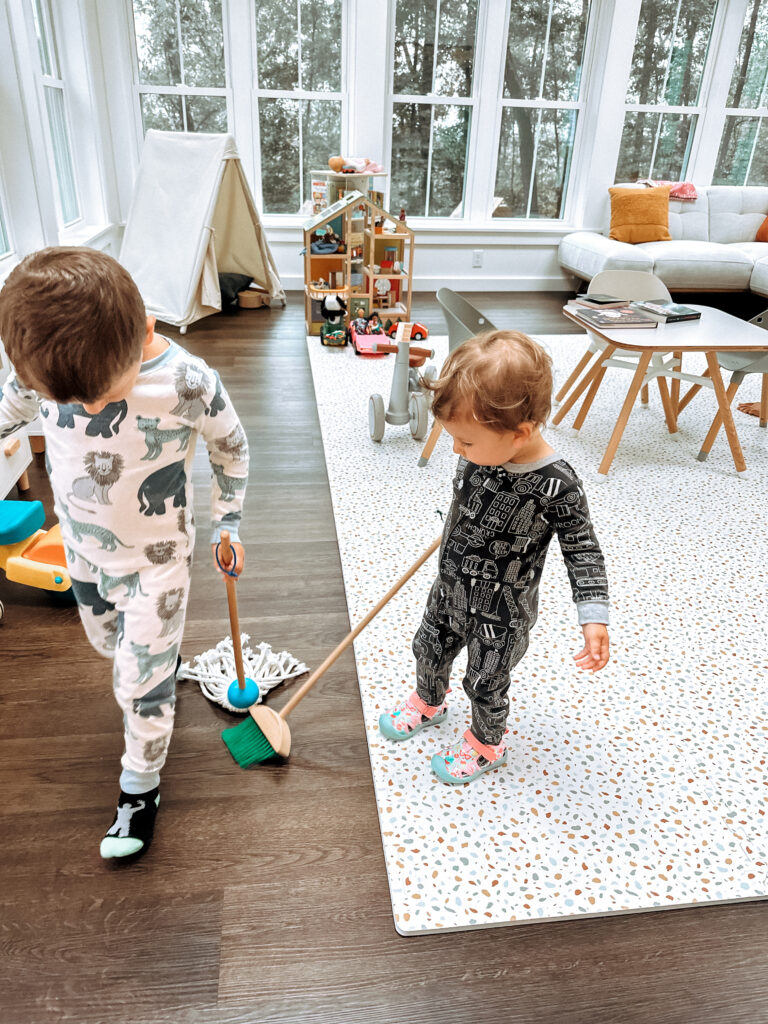
Melissa & Doug Dust, Sweep, Mop Set
What your child is practicing: practical life skills, gross and fine motor skills
The Melissa and Doug cleaning set isn’t an official Montessori-approved toy, but it aligns closely with Montessori principles. It includes realistic cleaning tools often marketed for pretend play, but your child can use the broom, brush, and dustpan for real household tasks.
The set includes toddler-sized versions of everyday cleaning tools, allowing children to imitate real-life activities. This aligns well with the Montessori approach because it introduces practical life skills, such as cleaning, tidying up, and using real tools with purpose. It also encourages children to mimic caregivers, helping them develop a sense of independence, responsibility, and confidence.
As children clean and participate in these activities, they are also strengthening both gross and fine motor skills through real, purposeful movement.
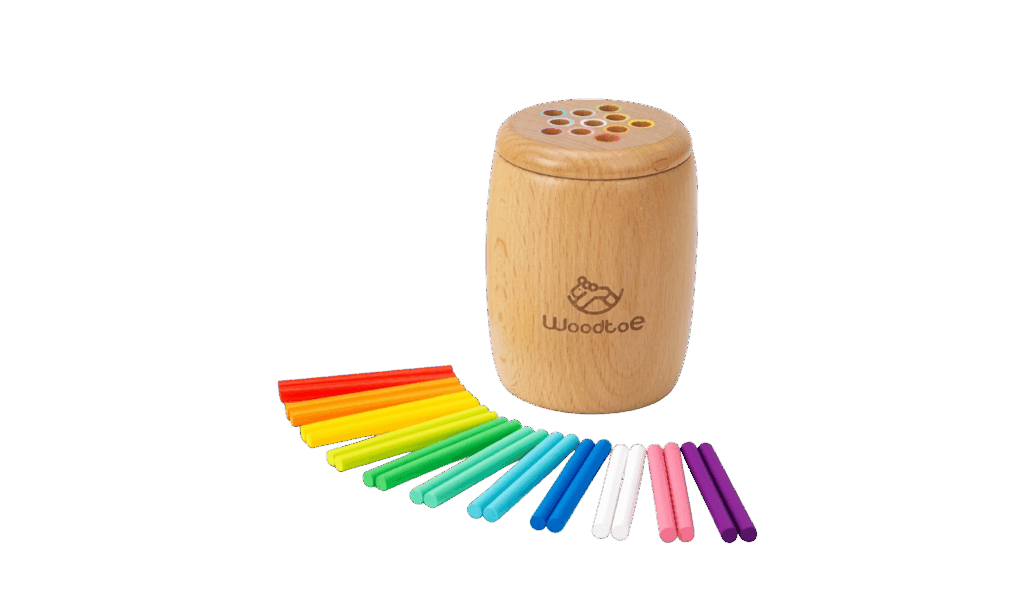
Color Sorting Sticks
What your child is practicing: fine motor skills, color recognition, coordination
This Montessori toy encourages color recognition and fine motor development through hands-on play. Toddlers match colored sticks to their corresponding colored holes, helping them build early sorting and matching skills.
It’s especially great for 2-year-olds who are developing coordination and hand strength. Beyond color sorting, this toy introduces an early math concept called one-to-one correspondence. This is where toddlers learn that each object matches a single space (for example, one orange stick goes into one orange hole).
Because the pieces are small and require precision, this activity also helps strengthen hand dexterity, concentration, and focus. It encourages toddlers to problem-solve and self-correct as they notice when a piece doesn’t match and try again over time.
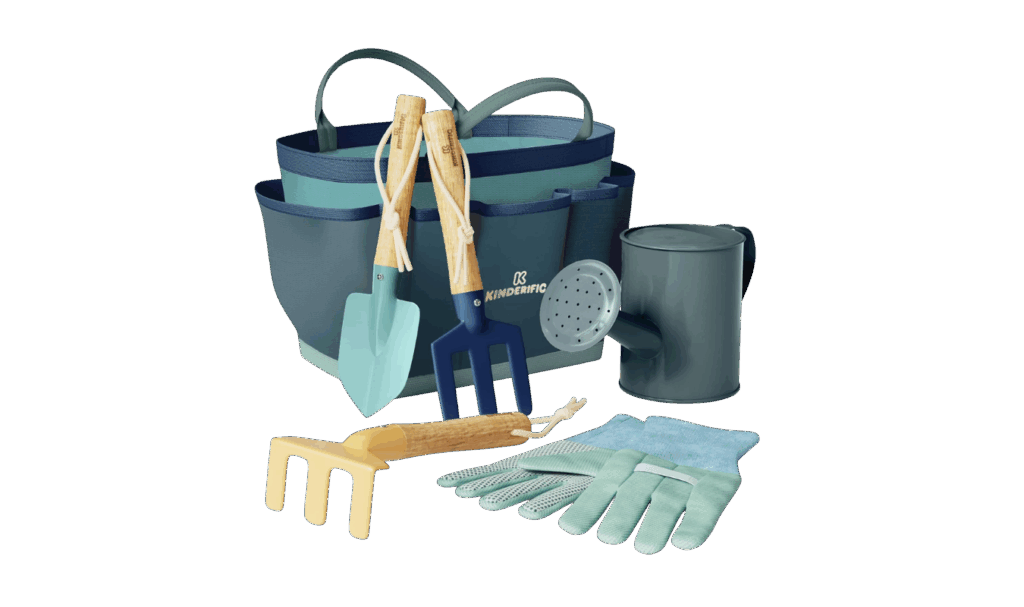
Kids’ Gardening Tools
What your child is practicing: real-world work, gross and fine motor skills, sensory play
Gardening tool sets like these align with the Montessori method because they are functional and sized appropriately for little hands. This set allows toddlers to do real-world work in the garden. And gardening is a great example of hands-on play!
Introduce gardening around 2 years of age. Your little one will love to garden, dig, and plant. They will work gross motor skills while digging, and then use fine motor skills to place seeds to plant.
Not only will your toddler learn practical skills through doing (digging, watering, weeding, etc.), they will also engage in sensory play. Gardening engages so many senses. Seeing the garden. Touching and feeling the textures of the soil, ground and leaves. Hearing the birds or buzzing of the bees while planting. Smelling the flowers, and maybe even tasting the food you grow together!
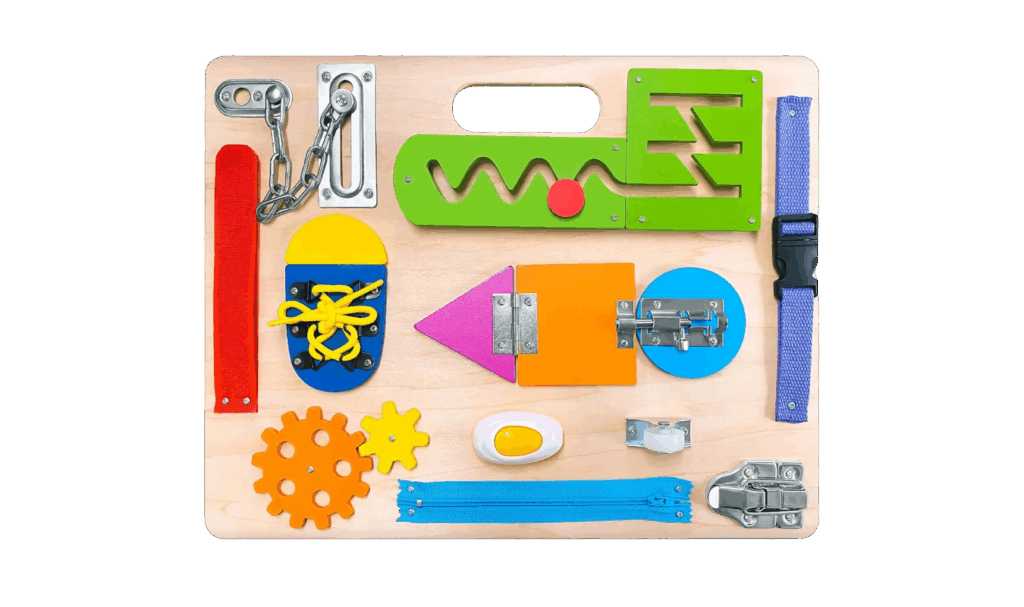
Montessori Busy Board
What your child is practicing: hands-on play, dressing skills, fine motor development
These Montessori-style toys help children develop practical life skills, independence, and an understanding of real-world concepts through hands-on play. You can introduce them as early as 6 months, but most children understand and use them more effectively around age 2.
Busy boards help toddlers build fine motor skills while practicing essential dressing abilities. They also provide a great opportunity to connect play with real life. Parents can ask toddlers where they might see zippers, buttons, or Velcro in everyday situations, helping reinforce understanding and vocabulary.
These activities support the development of fine motor skills required for independence in tasks like dressing, potty training, and putting on shoes. As toddlers practice these basic life skills, they build confidence, coordination, and a growing sense of independence.
Montessori Toys for 3 Year Old
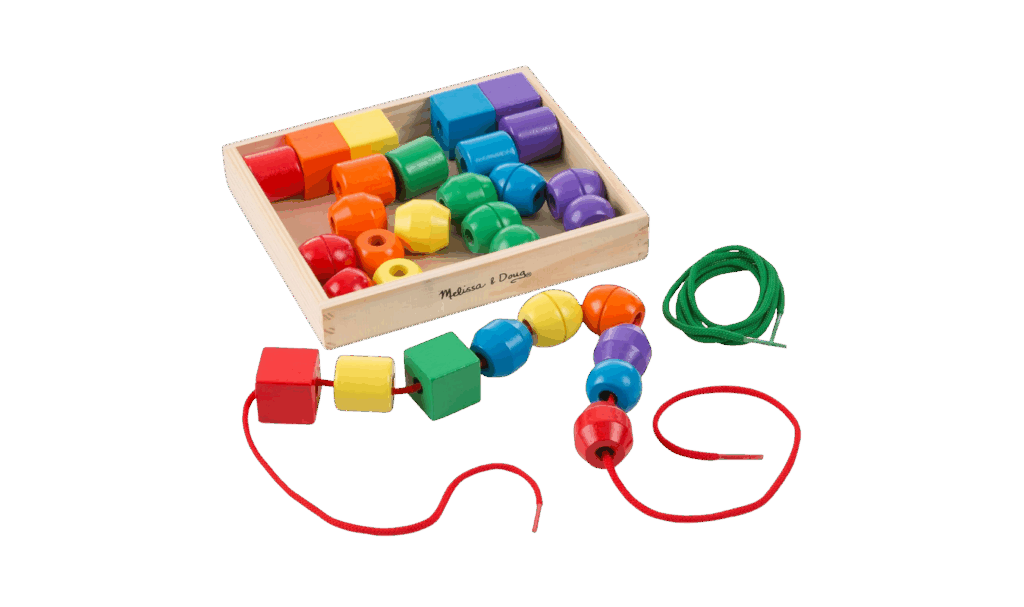
Lacing Beads
What your child is practicing: fine motor development, refined pincer grasp, sequencing and patterns
Lacing beads are a Montessori-inspired toy because they encourage hands-on, purposeful play. They support fine motor development, hand-eye coordination, concentration, and focus in a simple, engaging way.
Around age 3, children use lacing beads to develop a more refined pincer grasp, strengthen hand muscles, and practice bilateral coordination as both hands work together to thread each bead. As their skills grow, lacing beads also help introduce early concepts like patterning and sequencing.
This activity naturally encourages repetition and concentration, both of which are key for skill development. Lacing beads let toddlers work at their own pace and build independence through self-directed play. They can also begin to self-correct, especially when experimenting with patterns.
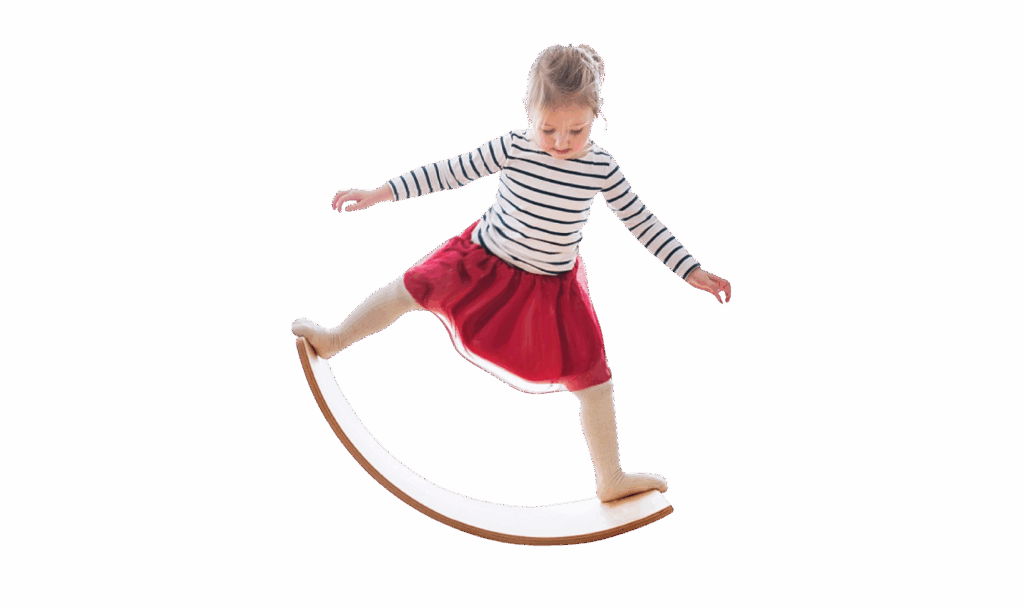
Wobble Board
What your child is practicing: balance, movement, core strength, imaginative play
A wobble board isn’t a traditional Montessori toy, but it often aligns with Montessori principles because it encourages open-ended, movement-based play. It’s a versatile toy where creativity and imagination come together with active exploration.
Toddlers can use a wobble board in many different ways—as a seat, bridge, slide, or even part of a pretend play setup. While it naturally supports balance and coordination, it also provides valuable vestibular input, helping regulate the body and improve overall movement control.
Wobble boards encourage children to learn through doing. As they play, they engage their core muscles, build strength, and explore new ways to move—all while using their imagination. This combination of physical and creative play lets your child use the toy in many different ways as they grow.
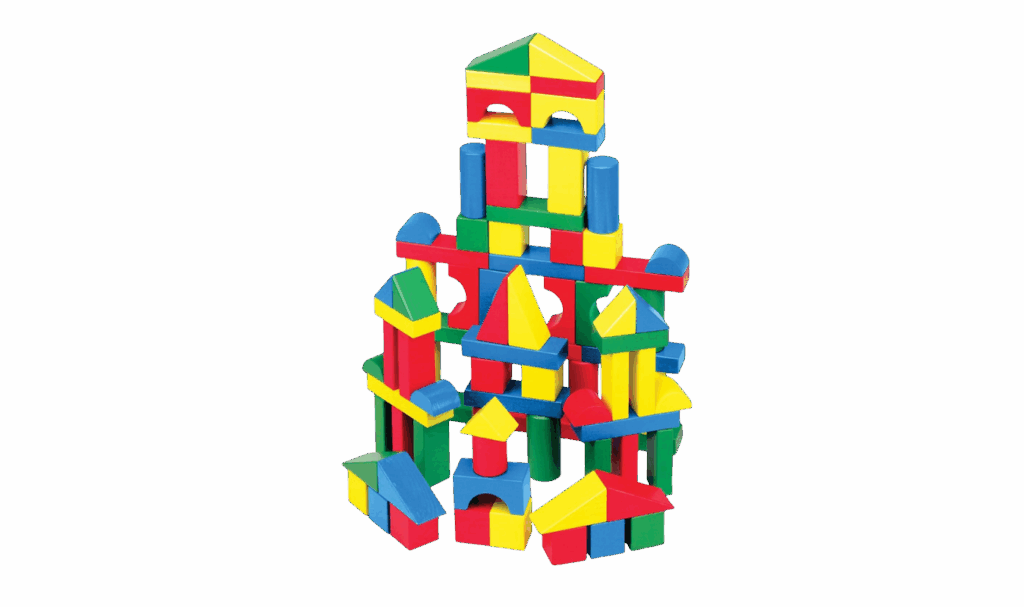
Melissa and Doug Wooden Blocks
What your child is practicing: open-ended play, fine motor skills, spatial awareness, cause and effect
While building blocks aren’t part of the original Montessori materials, they strongly align with Montessori principles. Wooden blocks are a powerful educational toy that teaches a wide range of skills through open-ended play.
They support fine motor development, coordination, creativity, and imagination, while also introducing early concepts like cause and effect. Children can stack, build, sort, and create imaginative scenes, all while naturally exploring colors, shapes, and even early counting.
Blocks also help develop spatial awareness, as children learn how structures balance, collapse, and rebuild. They’re also a great tool for social development, encouraging toddlers to play, communicate, and build together.
There is no single “right” way to play with blocks, which makes them especially valuable. Children can explore them independently at their own pace, building confidence and creativity through self-directed play.
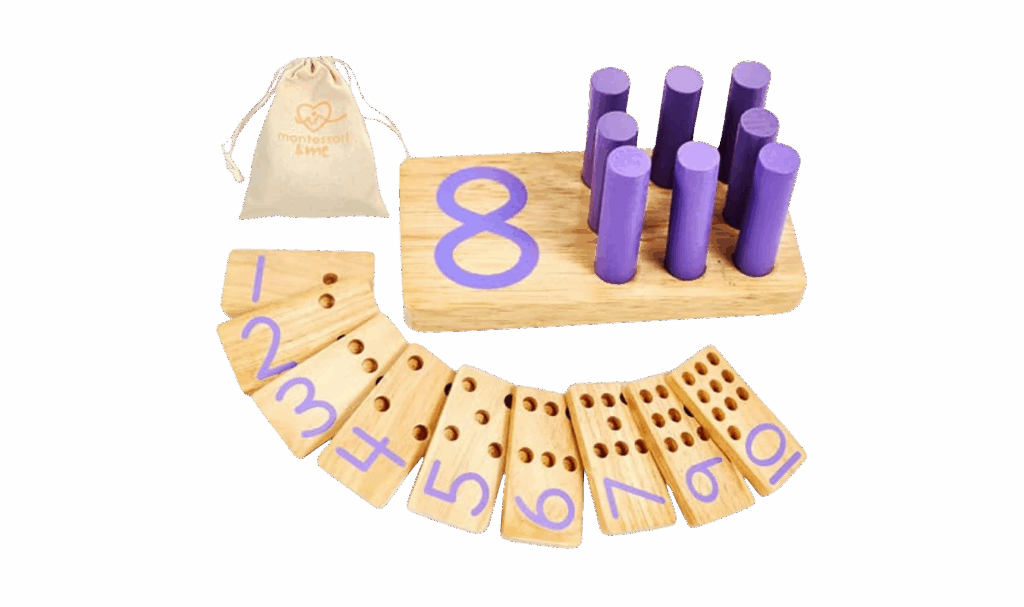
Montessori Counting Peg Boards
What your child is practicing: early math skills, one-to-one correspondence, focus, hand-eye coordination
Montessori counting peg boards emphasize tactile learning and early math skills. Using pegs as manipulatives is helpful way of teaching one to one correspondence. Instead of just memorizing numbers, toddlers can see and physically interact with quantities, which helps concepts “click” much faster.
More than math skills, when toddlers use peg boards they are practicing hand-eye coordination, fine motor movements, focus, and repetition.
Montessori-Aligned Kitchen Tools for Toddlers
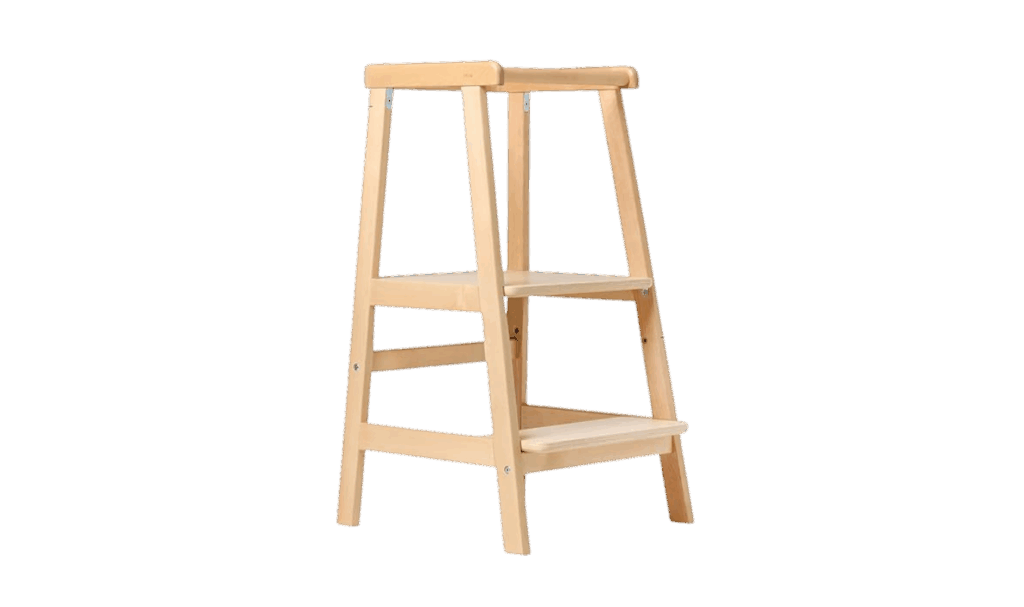
Lalo’s The Tower – Toddler Learning Tower
Learning or “helper” towers allow children the independence to participate in practical real-world activities like preparing food, cooking, and washing dishes.
Once your little one can stand unassisted and is cruising, this is a great option for them.
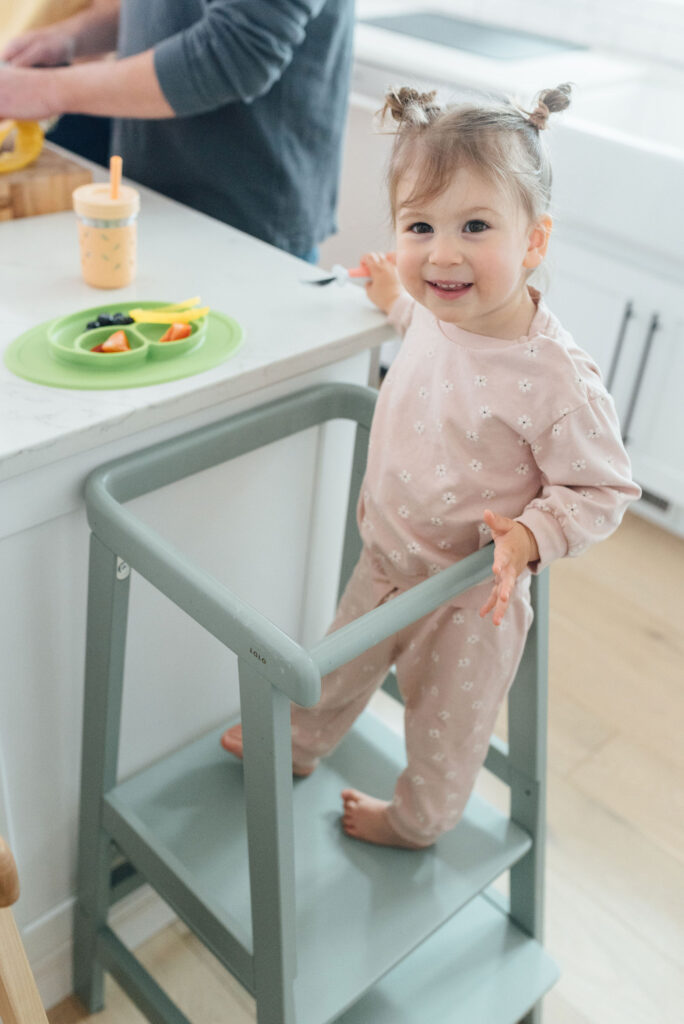
We use the Lalo tower every day for crafts and meals.
Use a toddler learning tower to involve your toddler in kitchen activities. Work on kitchen activities like washing produce, scooping/measuring and mixing ingredients, peeling fruits, assisting in making a smoothie, etc.
Your child can also help with simple cleaning tasks on the learning tower. Have them sweep their crumbs into a pile and dump them, or spray and wipe down the counters.
Allow them access to the sink to rinse dishes. There are so many skills to practice!
Make sure to supervise always 🙂
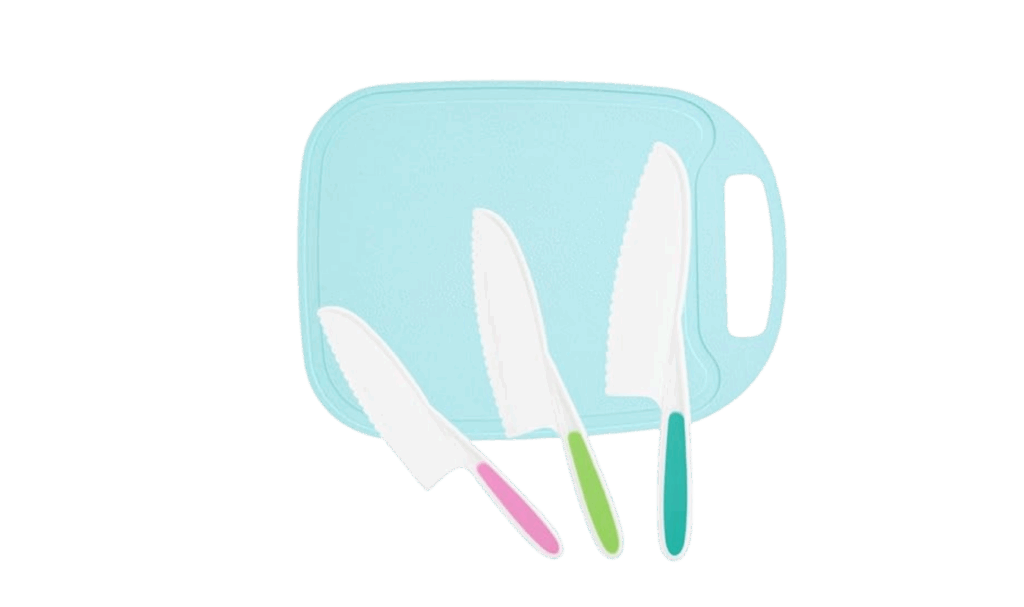
Toddler Knife Set
While on the subject of practical skills in the kitchen, a toddler knife set can go hand-in-hand with a learning tower.
These toddler-safe knives and cutting boards are Montessori-aligned and encourage practical life skills.
When your toddler is in their learning tower, allow them to cut softer foods for snacks and meal prep. Bananas, strawberries, bell peppers, cucumbers, and cheese are all great options!
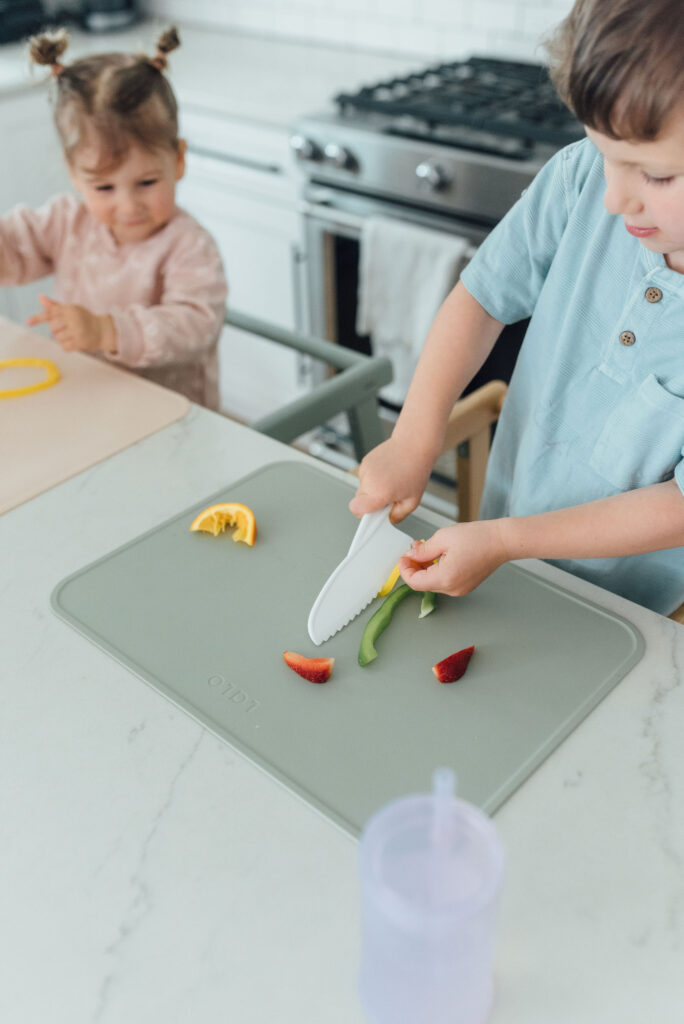
Paul, 4 years old, helps me cut fruit and vegetables daily with this knife set. We couldn’t love it more.
When toddlers use this set, they will be working on fine motor control and hand strength while developing more confidence in the kitchen.
My kids love being more involved with preparing their own snacks and meals. Remember, children eat more and try more foods when they have exposure to them OUTSIDE of meals. So, food prep as much as you can!
Looking for more?
Find more of our favorite toys by age and how to play.
And don’t forget to read! We rounded up the best books for babies and toddlers to make the most of playtime.
Leave a Reply
OTHER POSTS YOU MAY LIKE:



MS, SLP
Founder of Eat Play Say, Speech-Language Pathologist, Feeding Specialist, Play Expert, Mom of 3
Jordyn Koveleski Gorman
SPECIALIZES IN: Infant and toddler speech-language, play, and feeding development, and curating a team that provides expert help that feels like a reassuring text from that one mom friend
EDUCATION: Jordyn received her BS in Speech-Language Pathology from Bloomsburg University and her MS in Speech-Language Pathology from Towson University
FAVE PARENTING FIRST: “The first true smile, it’s the sweetest!”

MS, CCC-SLP, CBS, IBCLC
Speech-Language Pathologist & Feeding Specialist, Certified Breastfeeding Specialist, International Board Certified Lactation Consultant
Jessica Nicholson Cocca
SPECIALIZES IN: Breast and bottle feeding, tongue ties, oral motor dysfunction, starting solids, infant and toddler speech, treating oral motor disorders
EDUCATION: Jessica received her BS in Communication Sciences and Disorders from Pennsylvania State University in 2015 and her MS in Speech-Language Pathology from Towson University in 2017
FAVE PARENTING FIRST: “Baby’s first wave! What a fun first communication gesture!”

MA, CCC-SLP, CLC
Speech-Language Pathologist, Certified Lactation Counselor
Jennifer McFarlin
SPECIALIZES IN: Breast and bottle feeding, tongue ties, starting solids, infant and toddler speech development
EDUCATION: She received her BS in Speech-Language Pathology from Ball State in 2014 and a MA in Speech-Language Pathology from Ball State in 2016.
FAVE PARENTING FIRST: “My favorite baby’s first is their first true smile that just warms your soul knowing they are smiling at you. My other favorite is their first word. I love watching their language explode!”

MS, CCC-SLP
Bilingual Speech-Language Pathologist
Nicole La Petina Kelly
SPECIALIZES IN: Bilingual development (Spanish-English), supporting multilingual families, infant and toddler speech
EDUCATION: She received her BA in Communication Sciences and Disorders and in Spanish from the University of Wisconsin-Madison in 2014 and her MS in Speech-Language Pathology with an English-Spanish Specialization from Marquette University in 2016.
FAVE PARENTING FIRST: “It’s the first slobbery kisses for me!”

RDN, LD
Licensed Registered Dietitian
Kimberly Vede
SPECIALIZES IN: Infant and pediatric nutrition including breastfeeding, formula feeding, and starting solids. She also specializes in prenatal and postpartum nutrition.
EDUCATION: She received her BSc in Biology in 2014 from Life University, and her BSc in Dietetics from Life University in 2019.
FAVE PARENTING FIRST: ”The first time they say ‘mama!’”


This checklist was created with input from a Speech-Language Pathologist, Occupational Therapist and Physical Therapist and has been downloaded over 20,000 times by parents worldwide. Learn the important milestones to pay attention to, and keep it in your digital back pocket during the baby + toddler years!
Comprehensive Milestone Checklist for gross motor, fine motor, and speech-language milestones for 0-36 months,
DOWNLOAD FOR FREE


