


Best Toys for Sensory Development
October 23, 2026
Jordyn Koveleski Gorman

Last Updated on October 23, 2026 by Jordyn Koveleski Gorman
This page contains affiliate links. We will receive a commission on qualifying purchases using these links.
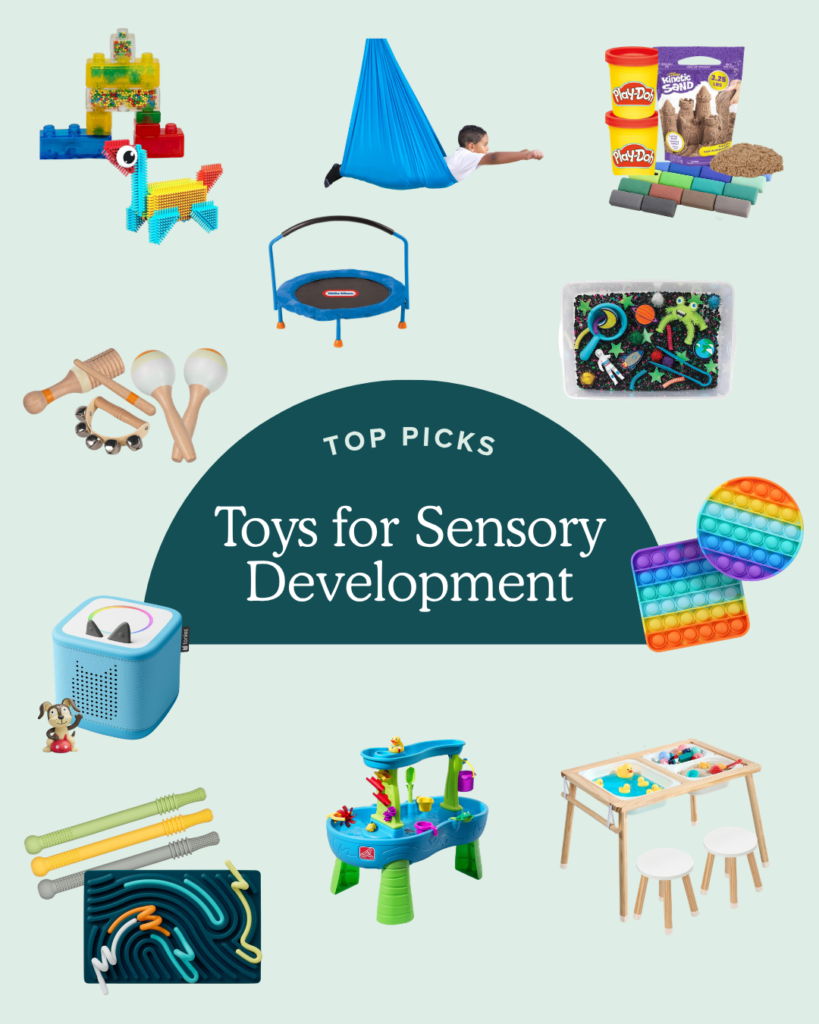
You’ve probably heard the term sensory development when reading toy descriptions, or learning more about childhood development. But what is sensory development and why does it matter to our little ones?
Sensory development is the process through which babies and children learn to receive, understand, and respond to information from their senses and bodies. It helps them make sense of the world around them and learn through everyday experiences.
We wrote this post so you can learn about the best toys for sensory development and ways to play with your little ones.
The 7 sensory systems:
- Tactile (Touch)
- Visual (Sight)
- Auditory (Hearing)
- Olfactory (Smell)
- Gustatory (Taste)
- Proprioceptive (Body Awareness)
- Vestibular (Balance and Movement)
Why is sensory play important?
- Supports brain development – Every time babies and toddlers explore a new texture, sound, or movement, their brains process information and build connections
- Develops motor skills and coordination – Reaching, grasping, squeezing, and manipulating toys helps littles develop muscle control, balance, hand-eye coordination, and fine motor skills.
- Encourages language and communication – Exploring new textures, tastes, sights, and sensations provides opportunities for caregivers to introduce new words and concepts.
- Builds curiosity and problem-solving skills – Exploring objects helps littles discover cause and effect, compare sizes and shapes, experience different sensations, and learn how things work.
- Supports self-regulation – Familiar, enjoyable sensory experiences can help some children feel comfortable and calm.
- Encourages social connection – Exploring sensory toys with caregivers and other children creates opportunities for shared attention, imitation, and turn-taking.
- Helps children understand their bodies and surroundings – Sensory experiences help children learn about textures, temperature, movement, pressure, and the position of their bodies. This information supports body awareness (proprioception) and everyday activities.
Best Toys for Sensory Development
These toys engage different sensory systems and provide a big bang for your buck in terms of developmental benefits as well. Read more to see our favorite toys for sensory development and different play ideas.
01. Play-Doh
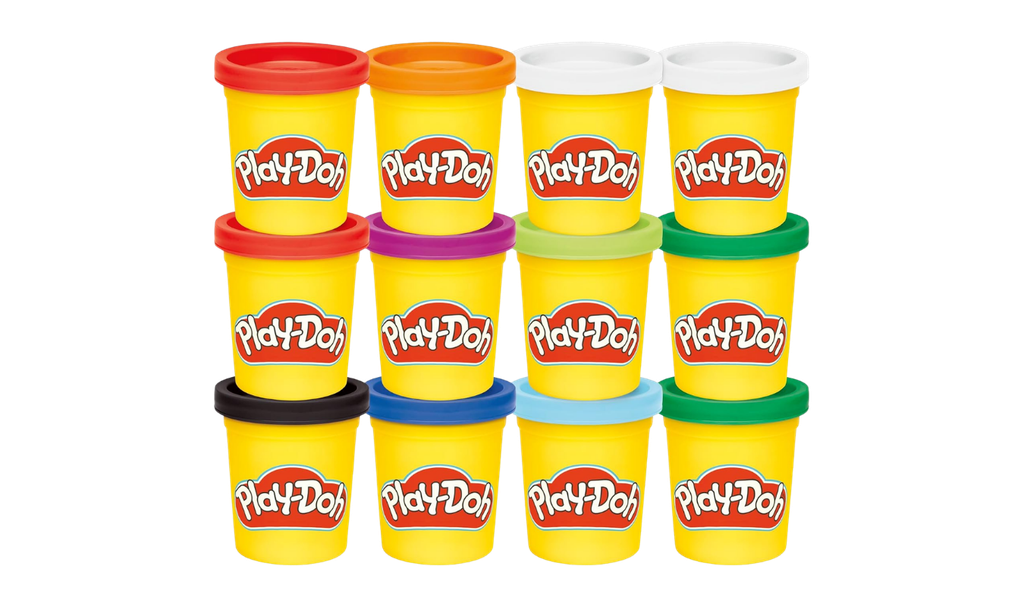
Play-Doh Sets
Price Range: $10-25
Age Recommendation: 2.5+
Sensory Systems Supported: Tactile & proprioceptive input
Developmental Benefits: Sensory exploration & input, creativity, imaginative play, fine motor practice
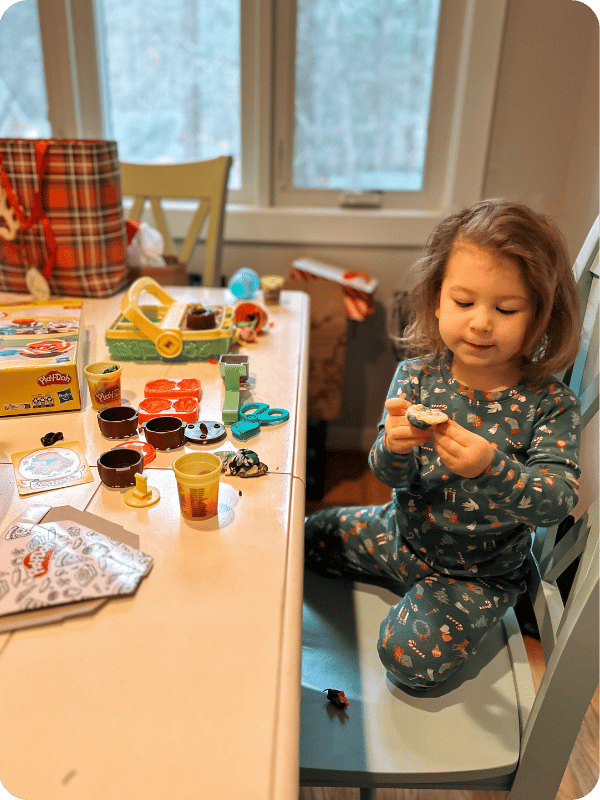
Play-Doh is an inexpensive toy that offers so many great sensory development opportunities. We’re huge fans! I love Play-Doh sets because they provide sensory input while little ones imagine and create. There are plenty of learning opportunities you can introduce through play as well!
Ways to Play & Engage
Touch & Feel: Explore textures through squeezing, pushing, rolling, and manipulating the dough. Show your little one how to roll a ball of dough. Encourage them to poke their finger into it, or squeeze it as hard as they can!
Press & Discover: Press large, safe, easy-to-clean objects into the dough, then remove them to see the impressions left behind. Use items like large buttons, stamps, crayons, or even toilet paper rolls.
Considerations
- Play-Doh can get messy! Use a silicone placemat to try and contain the mess. You can also put a tablecloth or splat mat down under the table to catch small pieces.
02. Sensory Bins
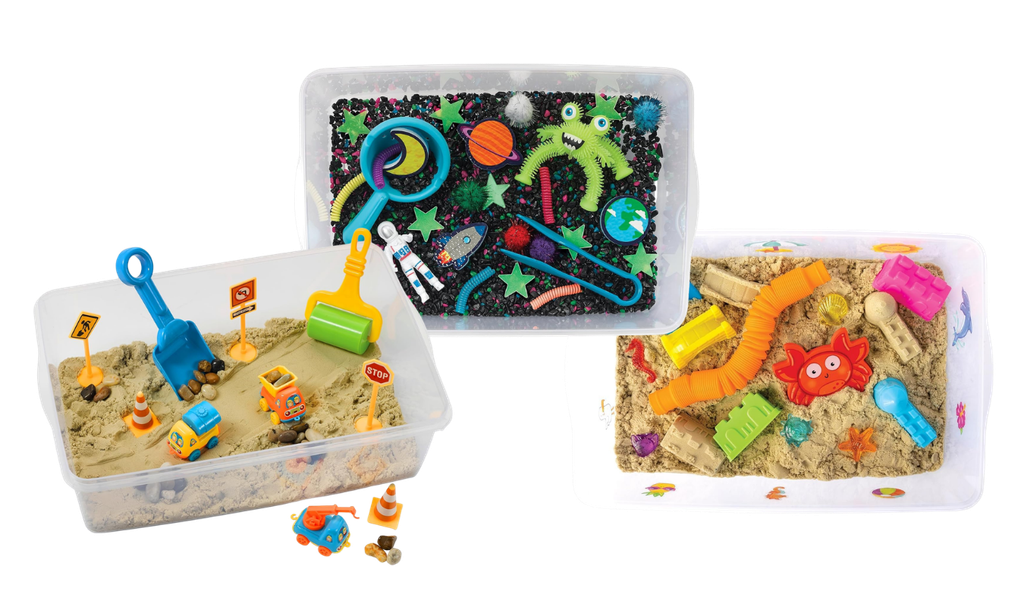
Creativity for Kids Sensory Bins
Price Range: $15-25
Age Recommendation: 2.5+
Sensory Systems Supported: Tactile, visual, auditory, olfactory, gustatory (depending on the sensory bin)
Developmental Benefits: Sensory exploration and input, fine motor practice, language and communication
When thinking about toys for sensory development, sensory bins always come to mind. After all, “sensory” is in the name! There are many brands that make sensory bins, and you can even make your own! We have enjoyed these bins from Creativity for Kids. They’re affordable, thematic, and can be used again and again.
I love sensory bins for building language and communication skills as well. They offer lots of opportunities to model functional and descriptive language.
Ways to Play & Engage
Hide & Seek: Hide small, age-appropriate objects in a sensory bin filled with kinetic sand, shredded paper, or another suitable material. Encourage your child to dig, scoop, and search for the hidden treasures. Once all the objects are found, have your child name, sort, or count them!
Create Your Own!: Find a plastic container and fill it with a pantry staple, such as oats, rice, or dried beans. Add measuring cups, spoons, and other tools for scooping and pouring. For an extra challenge, hide the pieces of a wooden puzzle in the bin and encourage your child to find the pieces and put the puzzle back together.
Considerations
- Sensory bins can contain small pieces. Always supervise your child during play!
03. Teethers
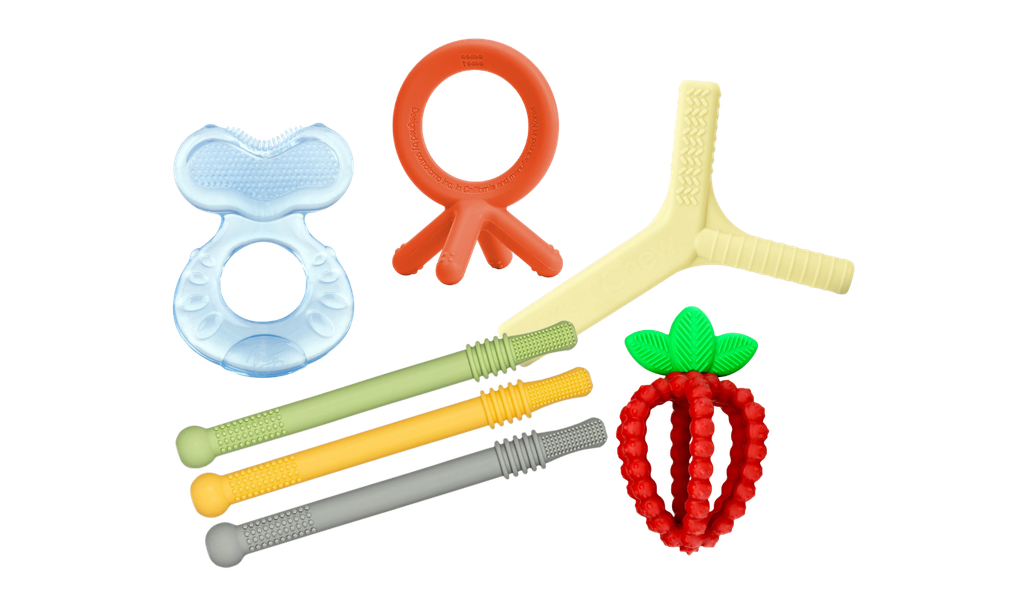
Favorite Teethers for Babies and Toddlers
Price Range: $5-15
Age Recommendation: 3 months+
Sensory Systems Supported: Tactile, proprioceptive, oral, gustatory
Developmental Benefits: Reaching, grasping, oral motor development, hand-eye coordination
As a feeding specialist, I can tell you that using baby teething toys is a critical part of oral motor development. Teething toys provide valuable oral sensory input as babies mouth and chew on them.
Teethers also give babies the opportunity to explore a variety of textures, supporting sensory development and body awareness. While many people think of teethers as only for babies, they can be used through the toddler years!
Ways to Play & Engage
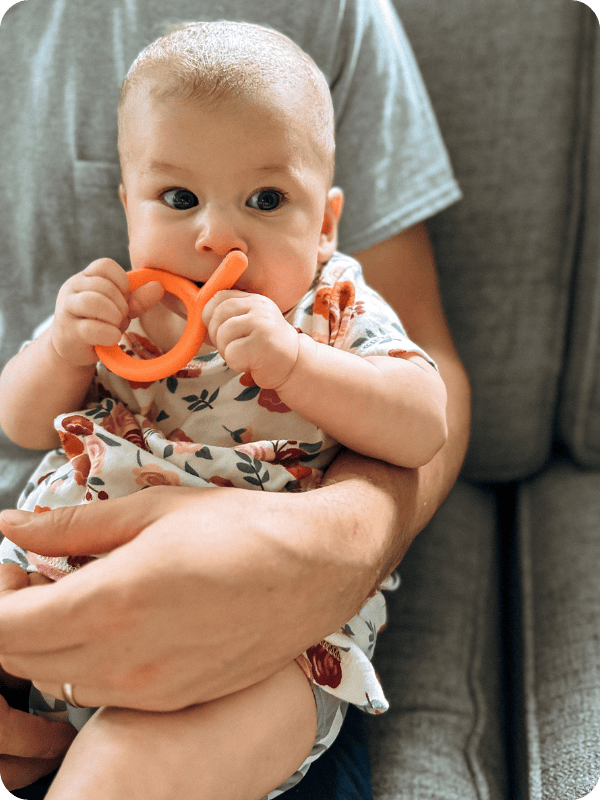
Reach & Grab: Hold a teether within your baby’s comfortable reach. Encourage them to reach for it, grasp it, and bring it toward their mouth. Switch sides to invite reaching in different directions.
Explore Textures AND Taste!: Offer your baby a few age-appropriate teethers with different bumps, ridges, and smooth surfaces. Let them hold, touch, and safely mouth the teethers at their own pace. If they’re ready for solids, you can dip the teethers in a few different purees to incorporate the gustatory system (taste!).
Considerations
- Choose teethers appropriate for your baby’s age and inspect them for cracks, tears, or loose parts.
- Avoid teething necklaces, long cords, and toys that could pose choking or strangulation risks.
04. Fidget Toys
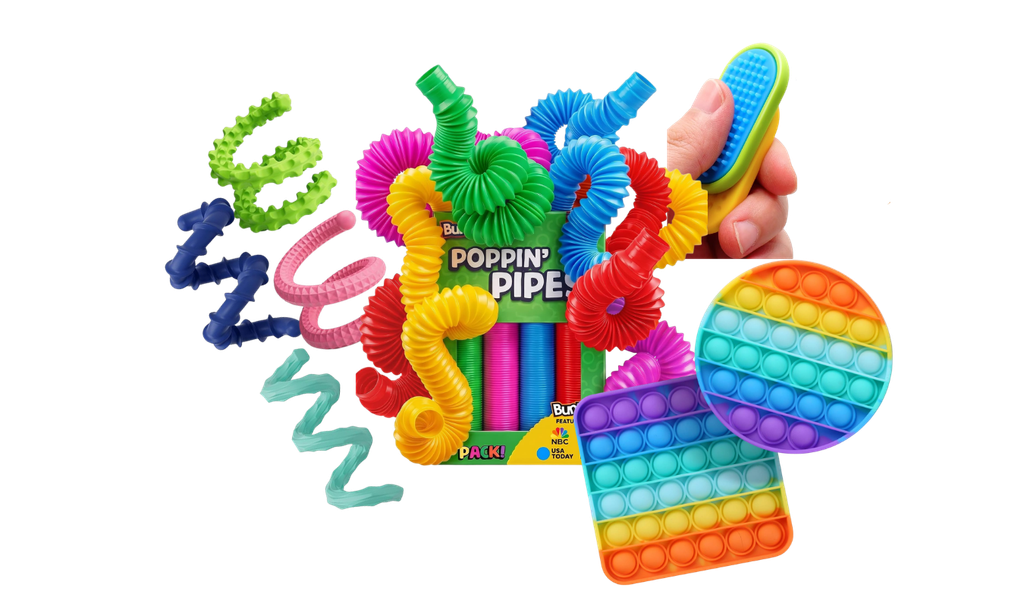
Fidget Toys
Price Range: $5-20
Age Recommendation: Toddler-Adult
Sensory Systems Supported: Auditory, visual and/or tactile input
Developmental Benefits: Sensory input, fine motor practice, calming effects, managing anxiety
Fidget toys is a broad term that encompasses many types of toys and “tools.” They are small, handheld objects or gadgets designed to provide sensory input while helping people regulate emotions, concentrate, and more. Popular fidget toys for toddlers and preschool-aged littles include things like Pop-Its, Pop Tubes, Needoh (or any squishy toy), and tangle toys.
Ways to Play & Engage
Pop & Play: Grab a Pop-It and encourage your child to press the bubbles one at a time using their fingers. Try popping a whole row, filling one side, or turning the toy over and starting again. For older toddlers, bring counting into play! Ask them if they can pop a certain number of buttons.
Stick & Match: Offer several large, age-appropriate press-and-peel toys in different colors. We love Squigz! Name a color and invite your child to find the matching toy and press it onto the surface. Then have them pull it apart!
Considerations
- There are so many different fidget toys, make sure you select ones that are age-appropriate for your child and be mindful of choking hazards.
05. PushPeel Sensory Toy
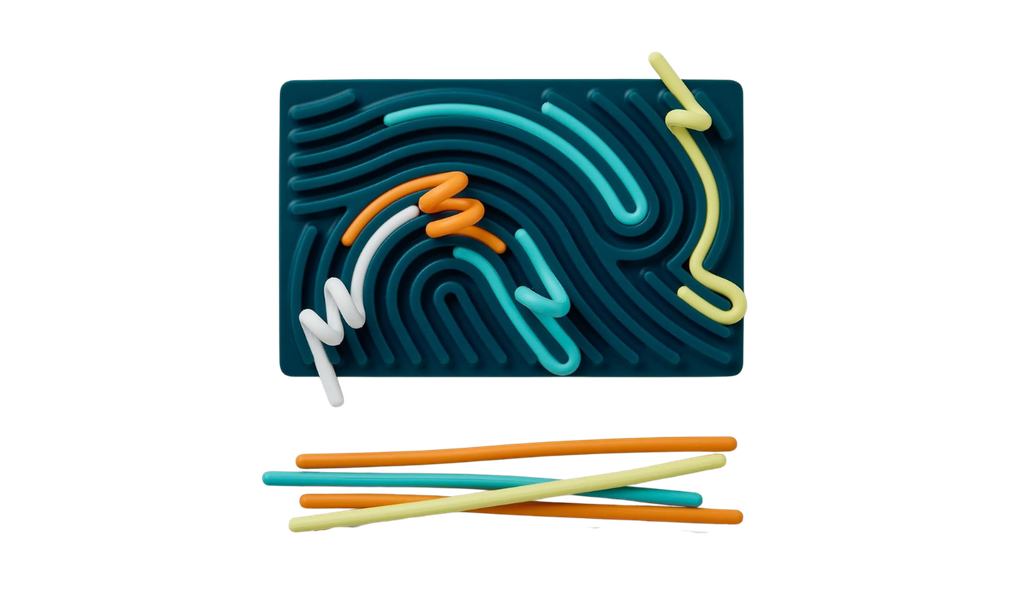
Pushpeel Sensory Activity Board
Price Range: $15-25
Age Recommendation: 2.5+
Sensory Systems Supported: Tactile, visual, proprioception
Developmental Benefits: Fine motor practice, hand-eye coordination, self-regulation
Sensory toys like this push and peel activity board work on fine motor skills including finger strength, pincer grasp, and dexterity. Little ones can start by simply pushing the silicone strings into the board. As they grow, they can create loops with the strings or work to create patterns. It makes a great travel toy as well!
Ways to Play & Engage
Copy Cat!: Press one piece, then another, and invite your child to copy your sequence. Keep it simple for toddlers and introduce longer sequences for preschoolers.
Fill the Board: Ask your child to press all the pieces into the board. See if they can fit them all into each curve and corner.
Considerations
- The silicone material can attract dust and hair, but thankfully, they’re easy to clean!
06. Bristle Blocks
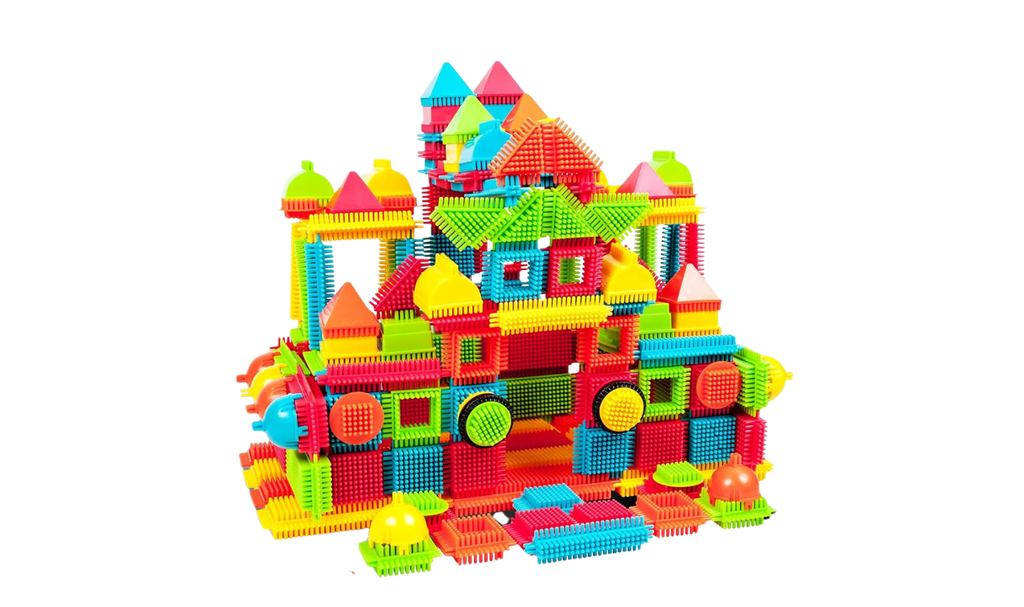
Bristle Blocks
Price Range: $18-30
Age Recommendation: 2+
Sensory Systems Supported: Tactile, proprioceptive, visual
Developmental Benefits: Fine motor practice, cognitive development, creativity and imagination
Bristle blocks are a fan favorite when it comes to building toys. Instead of snapping together like LEGO or DUPLO, the bristles allow pieces to connect from different angles. Because the pieces don’t need to line up perfectly, children of different ages and skill levels can experience success while building.
On top of being fun, bristle blocks offer all the benefits of building while providing more tactile input than typical blocks.
Ways to Play & Engage
Push & Pull: Invite your toddler to push two Bristle Blocks together and pull them apart. Demonstrate how the bristles connect, then let your child experiment independently.
Building Buddies: Build a simple structure using 4-6 blocks and encourage your toddler to make something similar. Let them explore their own ideas if they build something different.
Considerations
- Some users note bristles can fall off after extended play, but the pieces still remain functional.
07. Jelly Blox
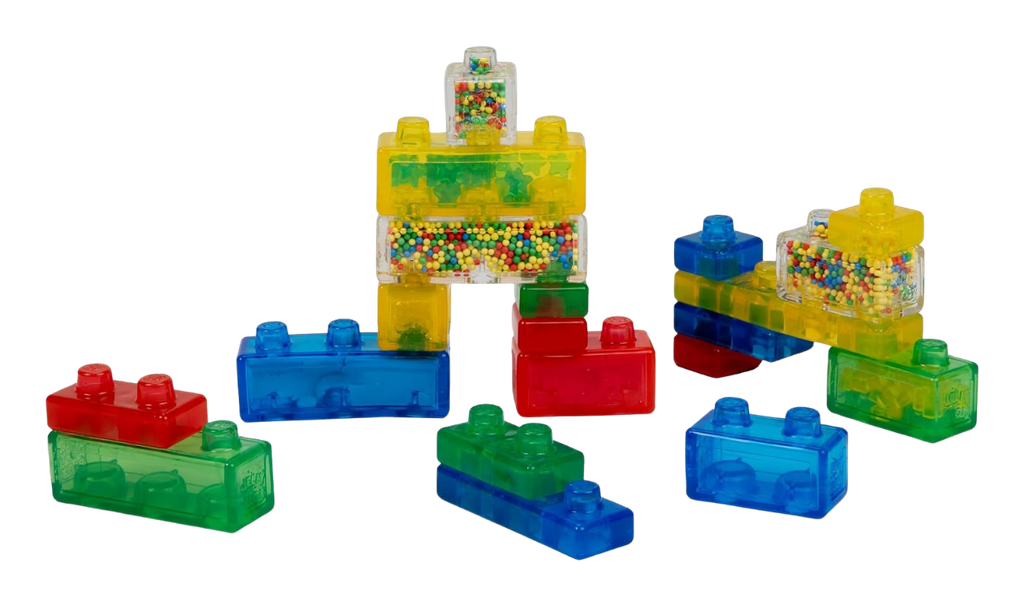
Jelly Blox Set
Price Range: $22-50
Age Recommendation: 2+
Sensory Systems Supported: Tactile, proprioceptive, visual
Developmental Benefits: Fine motor practice, sensory exploration & input, creativity
We love Jelly Blox for building toys! Stack, twist, stretch, and squish them as you build. Some are filled with sand, while others are filled with beads. They’re fun to look at and manipulate but also encourage plenty of imagination. We always pack these with our toys for a plane ride.
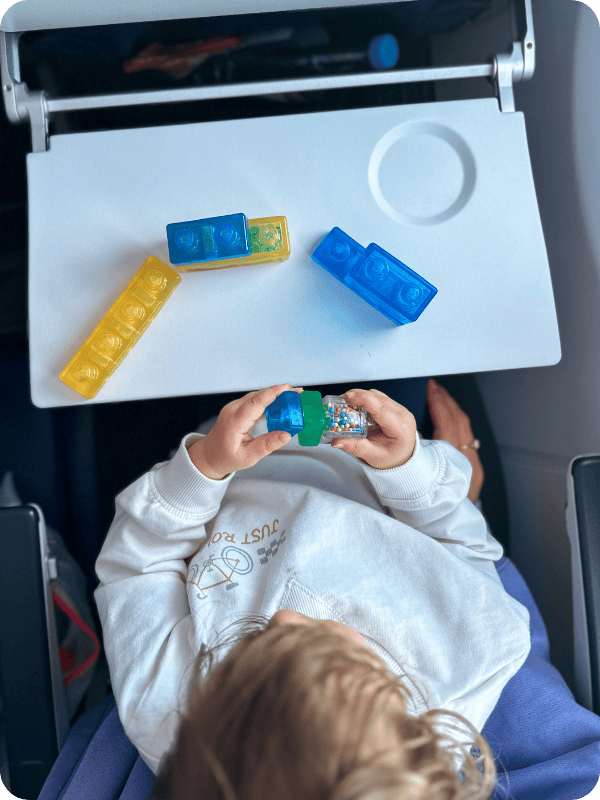
Ways to Play & Engage
Feel The Difference: Invite your child to hold, squeeze, and gently press the Jelly Blox. Encourage them to notice how the blocks feel and how they change shape when squeezed. Use words like soft, squishy, smooth, and firm to describe what they notice.
Build & Stack: Encourage your child to stack the blocks into a tower, build a small wall, or create their own structure. Let them experiment with what happens when they add or remove blocks.
Considerations
- The silicone material can attract dust and hair, but thankfully, they’re easy to clean!
08. Modeling Clay
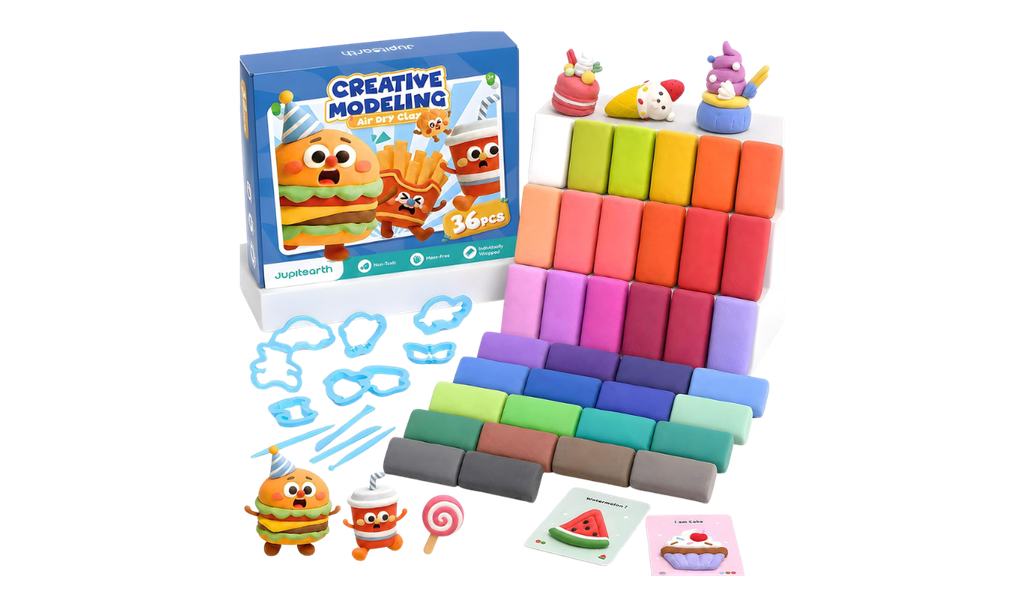
Jupitearth Modeling Clay
Price Range: $10-20
Age Recommendation: 3+
Sensory Systems Supported: Tactile & proprioceptive input
Developmental Benefits: Fine motor control, hand strength and dexterity, creativity
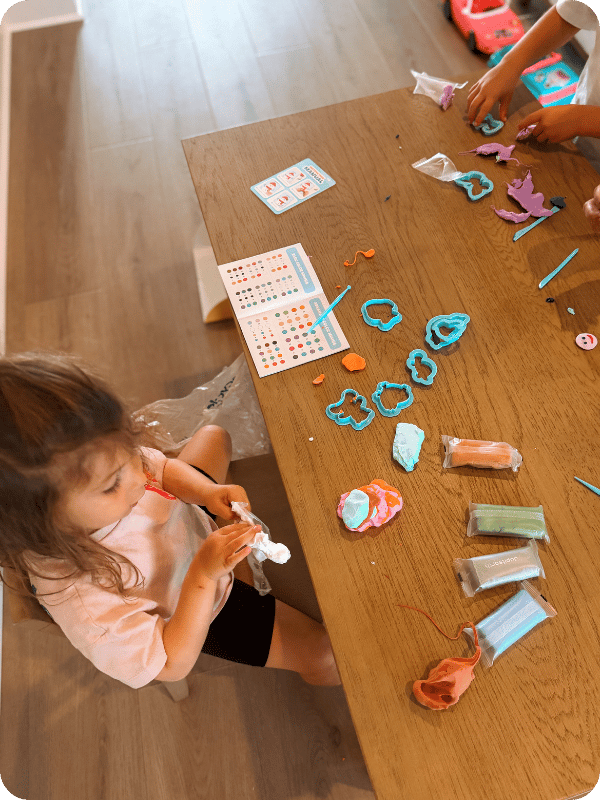
We got this modeling clay a few weeks ago and it’s been a hit! I would say it’s less messy than Play-Doh. It’s super fun to build creations and then you can let them air-dry and be displayed.
Ways to Play & Engage
Step-by-Step Creations: Use the QR code on the package to find step-by-step picture guides to build different designs. Work together and model how to use the tools for your child.
Pretend Play Cafe: Invite your child to make pretend pizzas, cookies, fruit, or other favorite foods. Talk about the colors, shapes, and sizes as you create together.
Considerations
- Always check for safety warnings and ingredients. Some Play-Doh and modeling clay can contain allergens.
09. Kinetic Sand
Kinetic Sand
Price Range: $10-45 (depending on size of bag or sets)
Age Recommendation: 2.5+ (supervise)
Sensory Systems Supported: Tactile, proprioceptive
Developmental Benefits: Fine motor development, hand strength, sensory exploration & input, creativity, early problem-solving
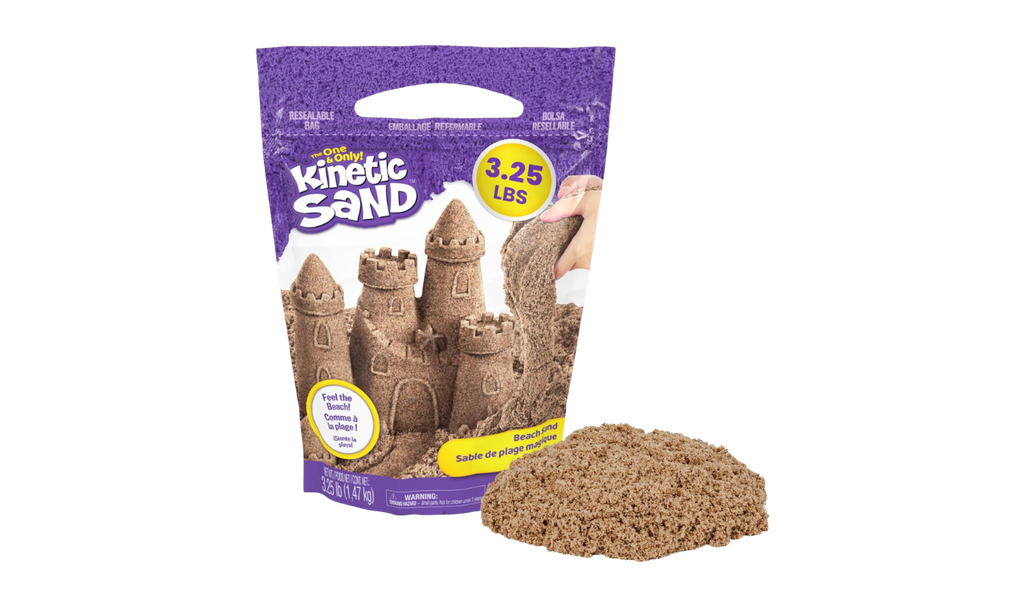
Kinetic Sand is similar to Play-Doh because little ones can squeeze, press, and mold it, but it has a unique, soft, flowing texture. Children can pack it into sandcastle molds, scoop it into containers, pour it, and watch it hold its shape without adding water. These activities encourage little hands to strengthen the muscles and coordination needed for everyday tasks while providing opportunities to explore texture, pressure, and cause and effect.
Kinetic Sand is a fun addition to sensory bins or can be enjoyed on its own. Parents can encourage creativity and learning by offering simple tools, containers, and molds while allowing their toddlers to explore freely.
Ways to Play & Engage
Fill & Build: Pack sand into large molds, cups, or containers and turn them over to make shapes and towers.
Squish, Pinch & Squeeze: Encourage your child to squeeze handfuls of sand, pinch small amounts, flatten it, and break it apart.
Considerations
- Kinetic Sand is not edible and may pose a choking risk, especially for children who still mouth toys or materials.
10. Water Table
Step2 Rain Showers Water Table
Price Range: $55-100
Age Recommendation: 12 months+
Sensory Systems Supported: Tactile, proprioceptive, visual & auditory input
Developmental Benefits: Fine motor development, cause and effect learning, gross motor movements, language development
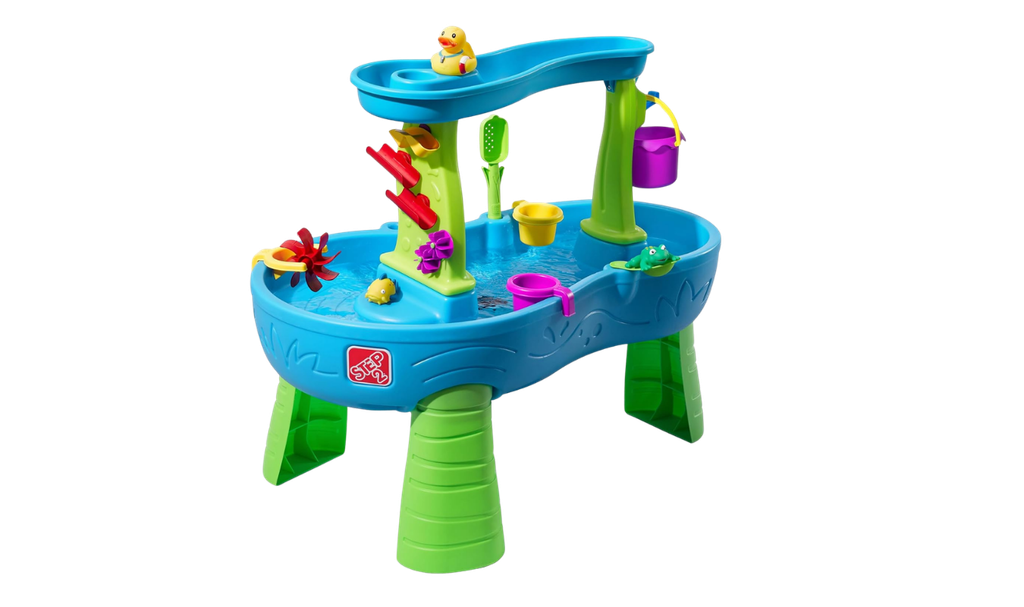
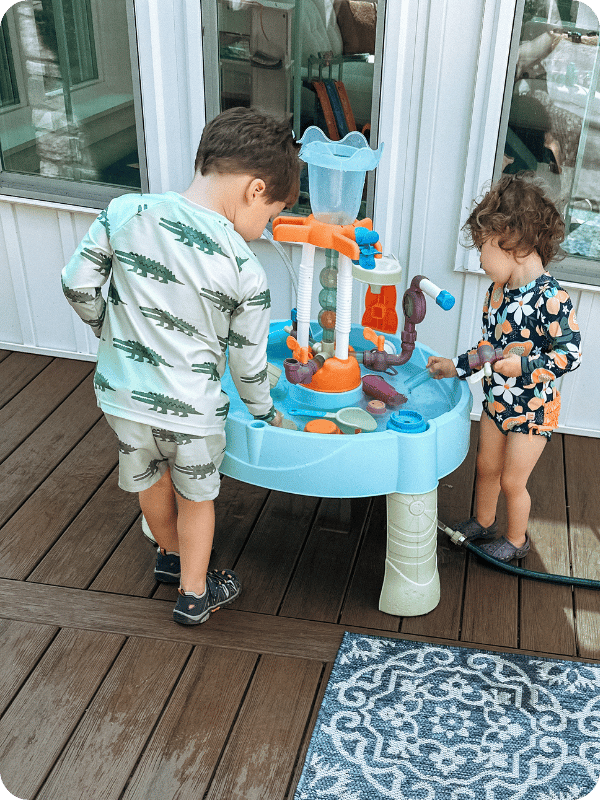
Water tables are one of our favorite toys for sensory and water play. One toy supports so many areas of development. As littles scoop, pour, and play, they’re practicing fine and gross motor movements. And there are tons of ways to incorporate language during playtime.
Ways to Play & Engage
Scoop & Pour: Add your measuring cups to the water table and encourage your little one to scoop the water and pour it into cups or funnels within the water table. This helps them practice hand-eye coordination and learn cause and effect!
Sponge Squeeze: Provide large, sturdy sponges for soaking up water and squeezing it back into the table. This helps with hand strength and proprioception.
Splash & Listen: Encourage gentle splashing, dripping, and pouring. Pause together to listen to the different sounds.
Considerations
- Because water tables involve water play, make sure to supervise always.
- After play, empty the water table and thoroughly dry all toys and accessories before storing them to help prevent mold and mildew.
11. Sensory Table
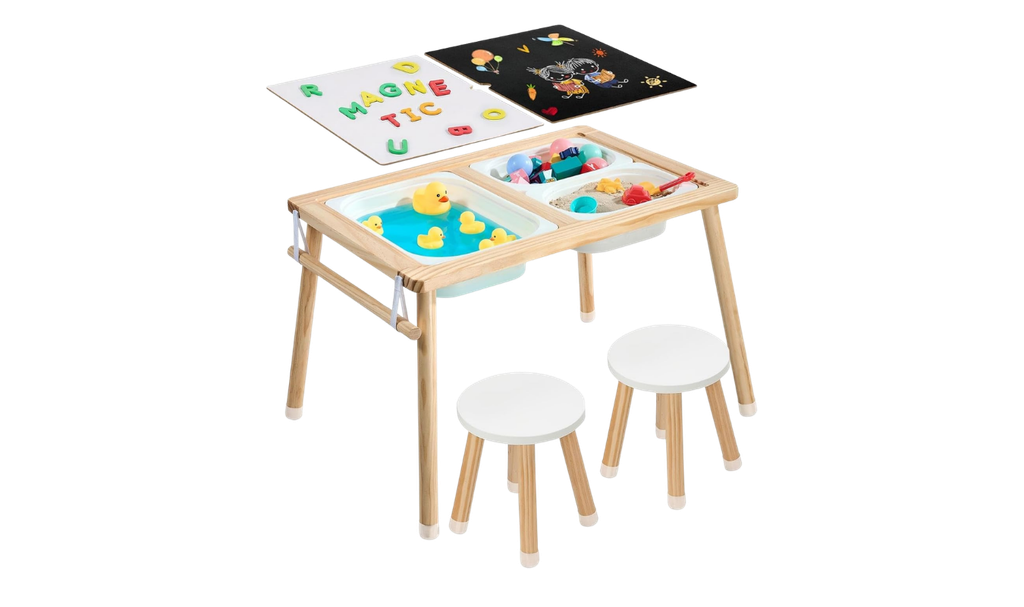
Sensory Table
Price Range: $70-125
Age Recommendation: 18 months+
Sensory Systems Supported: Tactile, proprioceptive, visual, auditory, olfactory, gustatory
Developmental Benefits: Fine motor development, sensory exploration and input including olfactory exploration, communication and language
A sensory table offers limitless possibilities for sensory exploration and input. Depending on what you add to it, it allows for almost all sensory systems to be touched upon. This is why we consider it one of the best toys for sensory development!
Make a taste-safe sensory bin to incorporate the gustatory sensory system. Or, add in scented items to engage the olfactory system. There are so many ways to play!
Ways to Play & Engage
Scent-Based Play: Depending on your child’s age, here are some options you can use to incorporate scent into your sensory bins: fresh herbs like basil, rosemary, and mint, cinnamon sticks, cocoa powder, coffee beans, and large citrus peels. Use these items in secured, scent-based containers for younger littles.
Modeling Functional Language: A sensory table and sensory bins provide a great way to introduce functional and descriptive language. Use words like “scoop, pour, in, out, on top” etc. and other adjectives to describe what you’re playing with and experiencing.
Sensory Bin Theme Ideas: Nature discovery, scent-based play, water play, texture treasure table, foam and bubbles, kinetic sand, animal habitats
Considerations
- A sensory table and sensory bins can come with some mess – we recommend playing outside when possible or using a splat mat underneath (or a tablecloth!).
- Sensory tables can involve small pieces. Make sure to supervise your child during playtime.
12. Bath Toys
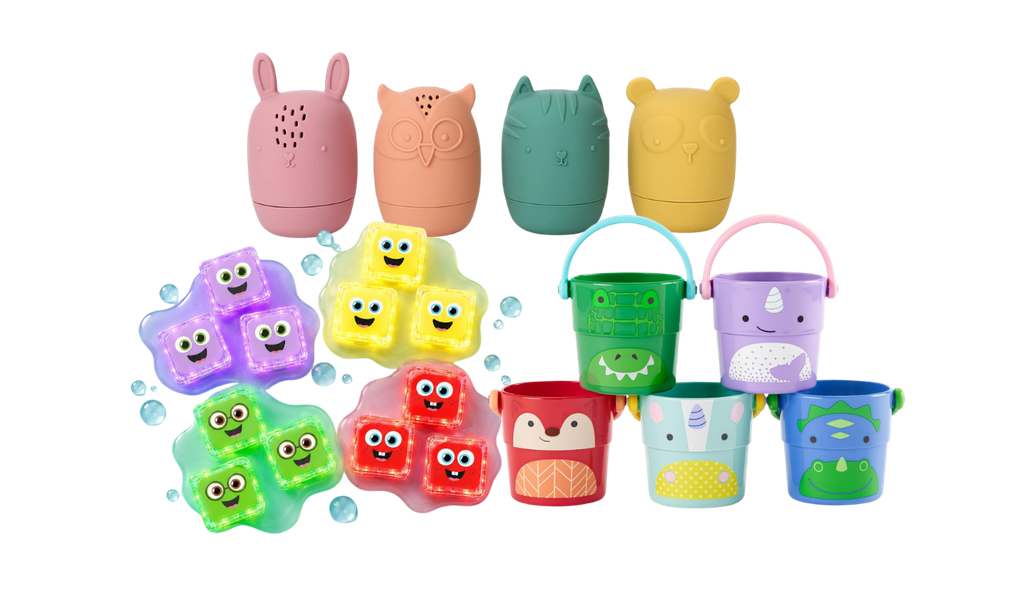
Bath Toys for Babies & Toddlers
Price Range: $10-30
Age Recommendation: 6 months+ (check individual age recommendations)
Sensory Systems Supported: Tactile, proprioceptive, visual, auditory
Developmental Benefits: Fine motor development, hand strength, hand-eye coordination, cause-and-effect learning, visual tracking, auditory awareness
Bath toys are a low-cost, versatile way to provide sensory input through scooping, pouring, squeezing, and splashing. Depending on the toy, you can engage different sensory systems while encouraging your little one to explore water through play.
Ways to Play & Engage
Auditory System: Use bath cups and pour water out at different heights and listen to how the sound changes. Encourage your little one to gently splash and hear the sounds it makes. Squeeze a washcloth or a bath squirter and listen to the sounds together. Squeezing also provides proprioceptive input through the muscles and joints.
Visual System: Try light-up bath toys—our favorites are Glo Pals—to encourage visual attention and tracking. Incorporate bubbles and bath crayons to add color and visual interest. Pour water between clear containers and watch it flow, fill, and empty.
Considerations
- Always supervise bath time closely and keep your child within arm’s reach.
- Ensure your bath toys air dry completely before putting away to avoid mold growth.
13. Stepping Stones
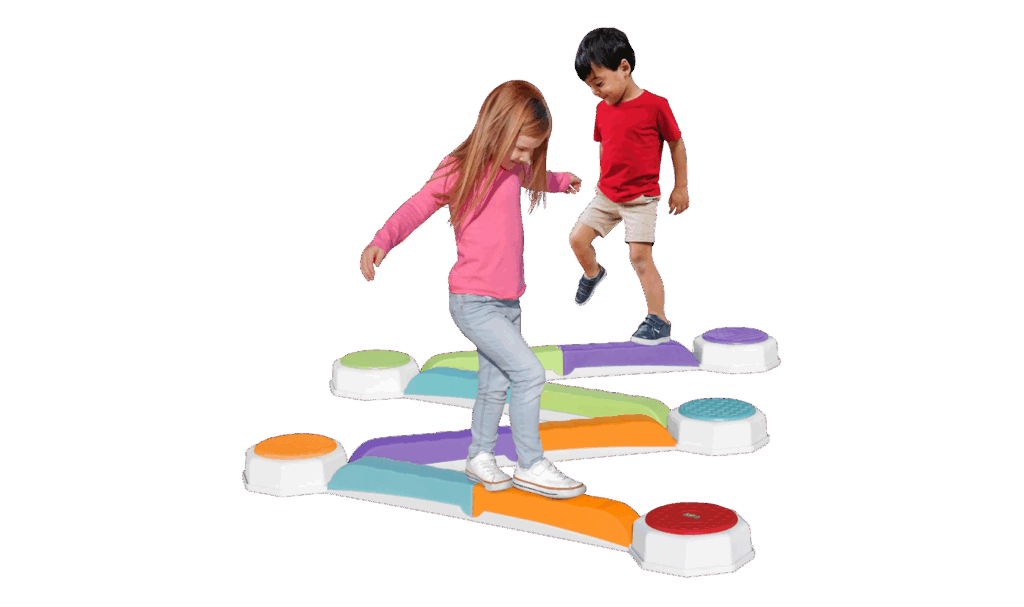
Acorn Avenue Balance Beam & Stepping Stones
Price Range: $25-125
Age Recommendation: 2+
Sensory Systems Supported: Vestibular, proprioceptive, tactile
Developmental Benefits: Balance, coordination, tactile input, body awareness, gross motor development
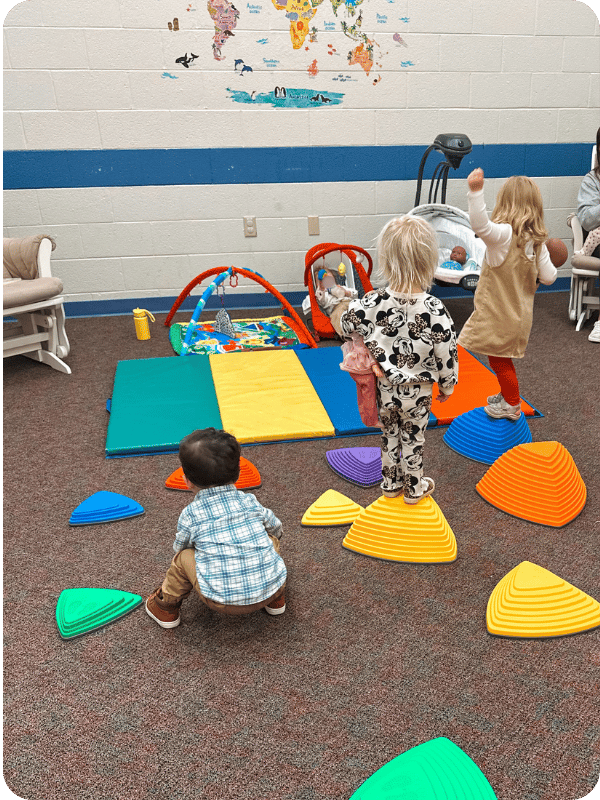
We love children’s stepping stones so much, we wrote a whole post on our favorites. Stepping from stone to stone challenges balance (the vestibular system). It encourages littles to adjust their positioning and movements while navigating the stones and their placement. The proprioceptive system is also engaged as children push through their feet, shift their weight, and adjust their bodies to stay balanced. Finally, the different textures on stepping stones provide tactile feedback through the soles of the feet!
Ways to Play & Engage
Don’t Fall in the River! – Pretend the floor is a river and the stepping stones are safe places to step. Encourage your child to cross with your help.
Color Call-Out: Set up your stepping stones and ask your child to find the blue one and step onto it. Then call out another color and encourage them to find it. For younger toddlers, point to the color or model the activity first.
Add a balance beam for even more sensory fun!
Considerations
- Look for stepping stones that are appropriate for your child’s age and motor skills. Some littles may need a hand to hold or closer support as they learn.
- We recommend stepping stones with non-slip bases for added safety and stability on hard floors.
14. Trampoline
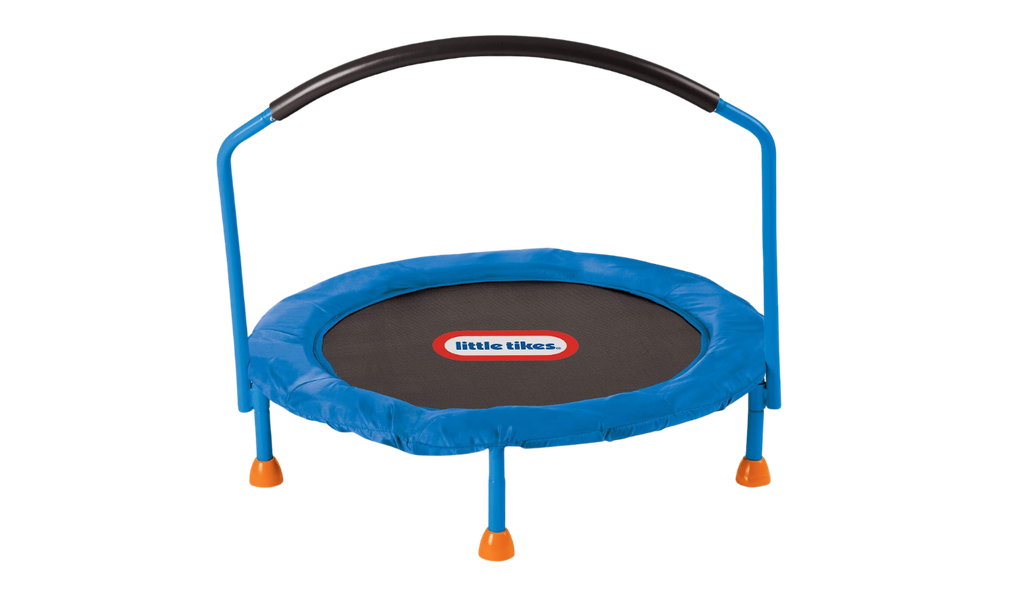
Little Tikes Trampoline
Price Range: $50-85
Age Recommendation: 2+
Sensory Systems Supported: Vestibular & proprioceptive
Developmental Benefits: Gross motor development, body awareness, balance and coordination
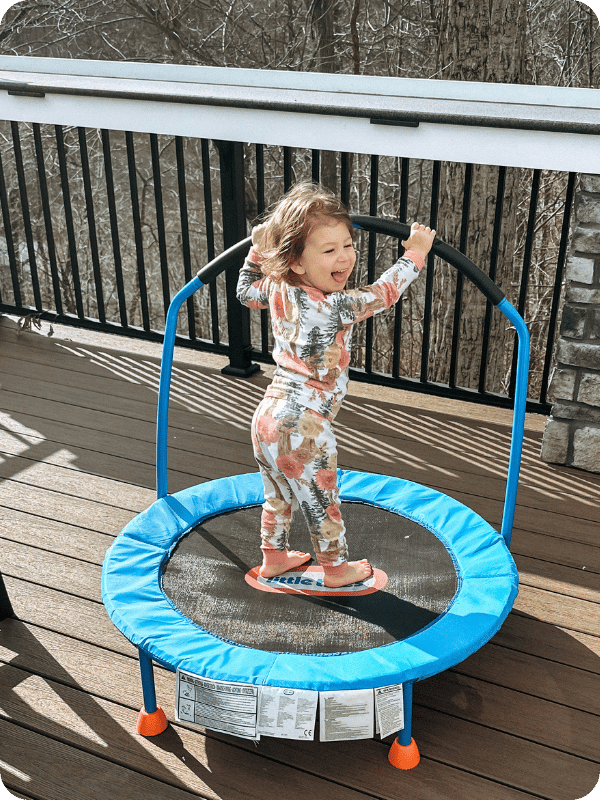
Trampolines are a great way to get toddler energy and another great toy for sensory development! Bouncing involves balance, movement, and awareness of the body in space. Pushing against the surface also provides feedback to the muscles and joints, engaging the proprioceptive system.
Ways to Play & Engage
Ready, Set, Stop!: Practice starting and stopping movement in response to simple verbal cues. Keep feet on the mat and avoid jumping when stopping.
Jumping Jams: Turn on some of your favorite songs (auditory input!) and get to jumping! Instead of a dance party, it’s a jumping party!
Considerations
- Trampolines with a bar across for balance are most appropriate for toddlers to use.
- Always supervise and allow one child on at a time.
15. Sensory Swing
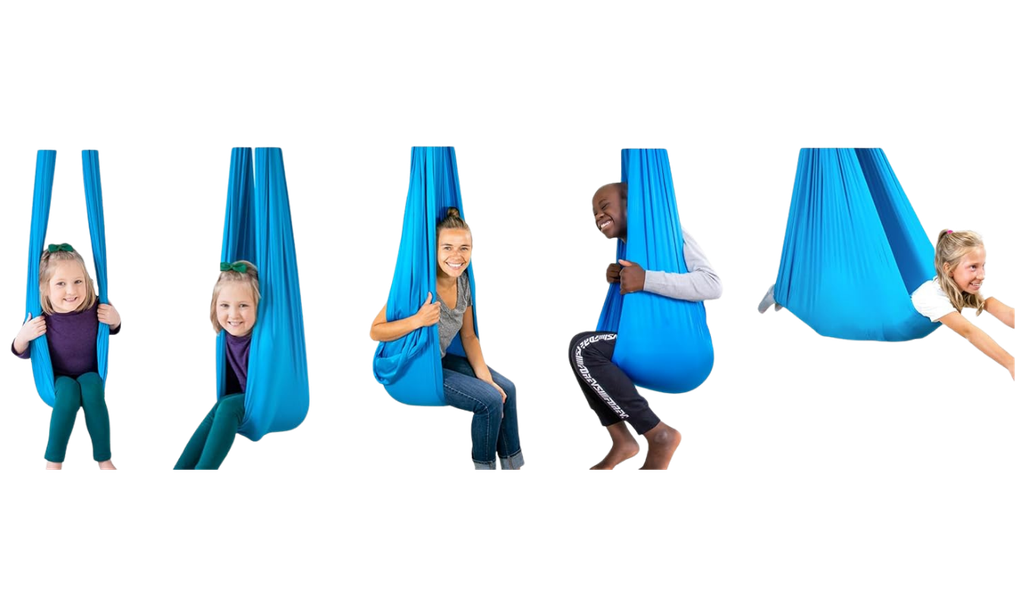
Harkla Sensory Swing
Price Range: $50-100
Age Recommendation: 3+
Sensory Systems Supported: Vestibular & proprioceptive
Developmental Benefits: Balance and coordination, body awareness, core stability, gross motor development, emotional regulation
Did you know swinging and movement helps develop strength and balance? A sensory swing like Harkla’s is wonderful for providing gentle pressure and input while swinging. It can be great for emotional regulation as well.
Ways to Play & Engage
Swinging Songs: Sing familiar songs while your child enjoys gentle movement. Pause at predictable points to encourage anticipation and interaction.
Reach & Touch: While the swing is stationary, invite your child to reach for a large, soft toy held nearby. Keep the toy within comfortable reach without encouraging leaning far out of the swing.
Considerations
- Some children enjoy swinging, while others may find movement uncomfortable or overwhelming. Follow your child’s lead and start slowly and gently.
16. Toniebox
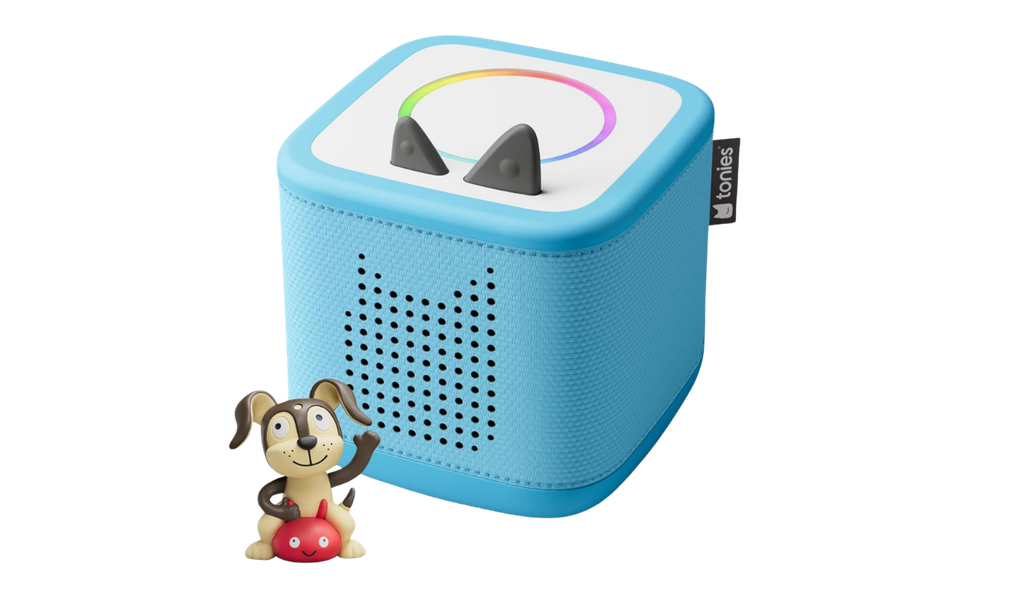
Toniebox2
Price Range: $149-220
Age Recommendation: 1+
Sensory Systems Supported: Auditory, visual, proprioceptive
Developmental Benefits: Listening skills, language development, fine motor development, cause and effect
It’s no secret that we love our Tonieboxes! We don’t always think of the Toniebox when listing toys for sensory development, but auditory stimulation is an important part of sensory exploration.
While little ones listen to music, songs, and stories, they’re also practicing fine motor skills as they manipulate Tonie figures and interact with the controls. Proprioception comes into play as children learn to tap the sides of the Toniebox to skip forward or go back to different tracks. The visual features and colorful character figures also add another layer of engagement!
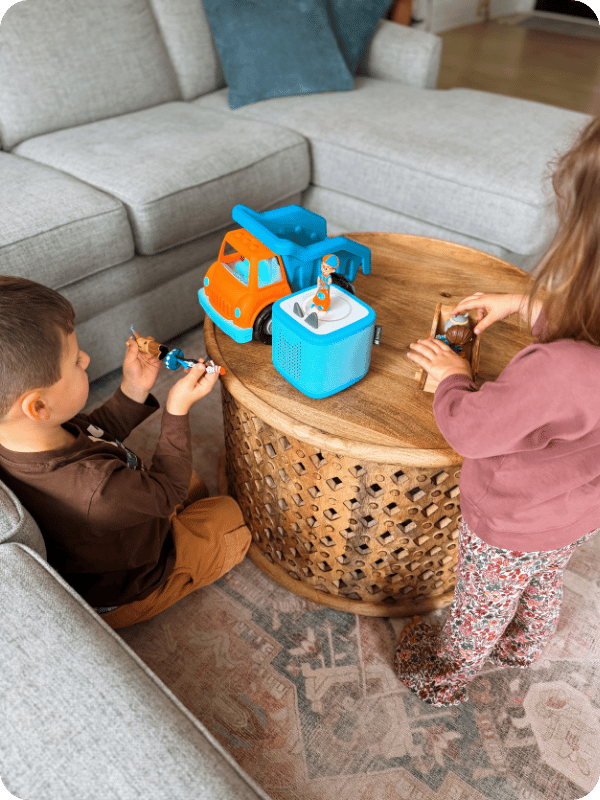
Ways to Play & Engage
Music Tonies: Put on a Tonie figure with your favorite music and dance it out to some songs together.
Storytime: Listen to a favorite story together and use toys, stuffed animals, or pretend play to act out what happens.
Find our favorite Tonies in this post.
Considerations
- Tonieboxes and additional Tonie figures can be an investment.
- Choose stories and music that are appropriate for your child’s age, interests, and attention span.
17. Musical Instruments
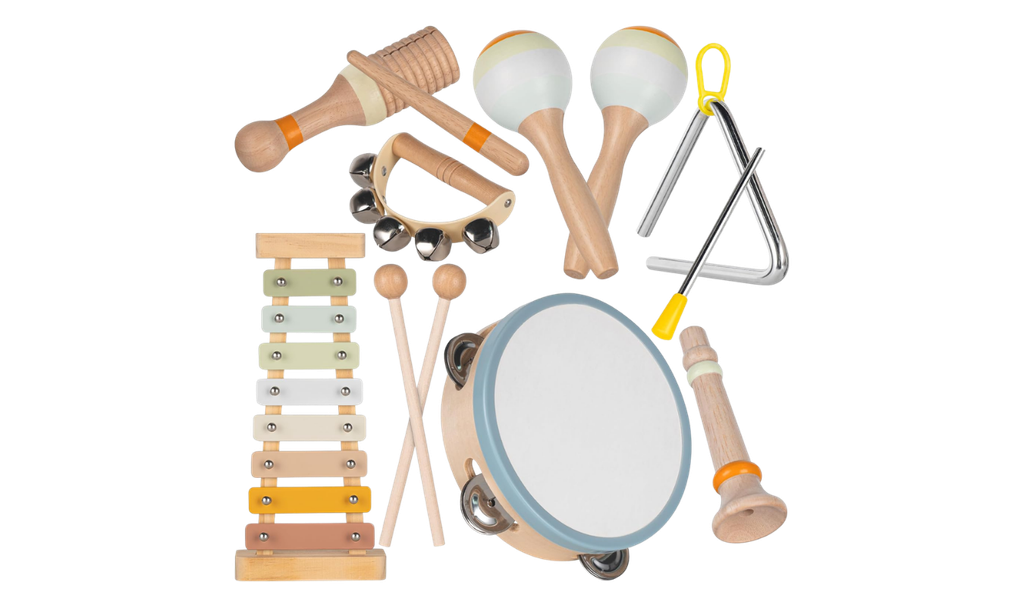
Wooden Instruments for Toddlers
Price Range: $25-35
Age Recommendation: ~ 1 yr. (depending on instrument)
Sensory Systems Supported: Auditory, tactile, proprioceptive
Developmental Benefits: Auditory development, fine motor and gross motor skills, coordination, sensory input, cause and effect learning
While musical instruments primarily foster the auditory sensory system, little ones still get tactile input when their hand hits the tambourine or they feel the vibration of the music. They also develop body awareness as they learn to play the different instruments by using their hands and arms and make music on their own.
Ways to Play & Engage
Imitation: If your little one is learning how instruments work and make sounds, grab the tambourine or bells and shake them. Place the instrument beside your child. Wait and see if they’ll imitate your movements to make the sounds! Don’t forget to use functional language like “bang, shake, tap!”
Music March: Give toddlers tambourines or bells and encourage them to march, sway, or clap along to a steady beat. Sing along to your favorite songs. This fosters balance, body awareness, coordination and rhythm!
Considerations
- Choose age-appropriate instruments without small detachable parts and supervise little ones closely.
- Keep the volume comfortable for young ears.
Looking for more?
Learn more about our favorite audio players for toddlers like the Toniebox!
For more sensory play, find our breakdown of the best Play-Doh sets for kids along with our favorites for water play.
Leave a Reply
OTHER POSTS YOU MAY LIKE:



MS, SLP
Founder of Eat Play Say, Speech-Language Pathologist, Feeding Specialist, Play Expert, Mom of 3
Jordyn Koveleski Gorman
SPECIALIZES IN: Infant and toddler speech-language, play, and feeding development, and curating a team that provides expert help that feels like a reassuring text from that one mom friend
EDUCATION: Jordyn received her BS in Speech-Language Pathology from Bloomsburg University and her MS in Speech-Language Pathology from Towson University
FAVE PARENTING FIRST: “The first true smile, it’s the sweetest!”

MS, CCC-SLP, CBS, IBCLC
Speech-Language Pathologist & Feeding Specialist, Certified Breastfeeding Specialist, International Board Certified Lactation Consultant
Jessica Nicholson Cocca
SPECIALIZES IN: Breast and bottle feeding, tongue ties, oral motor dysfunction, starting solids, infant and toddler speech, treating oral motor disorders
EDUCATION: Jessica received her BS in Communication Sciences and Disorders from Pennsylvania State University in 2015 and her MS in Speech-Language Pathology from Towson University in 2017
FAVE PARENTING FIRST: “Baby’s first wave! What a fun first communication gesture!”

MA, CCC-SLP, CLC
Speech-Language Pathologist, Certified Lactation Counselor
Jennifer McFarlin
SPECIALIZES IN: Breast and bottle feeding, tongue ties, starting solids, infant and toddler speech development
EDUCATION: She received her BS in Speech-Language Pathology from Ball State in 2014 and a MA in Speech-Language Pathology from Ball State in 2016.
FAVE PARENTING FIRST: “My favorite baby’s first is their first true smile that just warms your soul knowing they are smiling at you. My other favorite is their first word. I love watching their language explode!”

MS, CCC-SLP
Bilingual Speech-Language Pathologist
Nicole La Petina Kelly
SPECIALIZES IN: Bilingual development (Spanish-English), supporting multilingual families, infant and toddler speech
EDUCATION: She received her BA in Communication Sciences and Disorders and in Spanish from the University of Wisconsin-Madison in 2014 and her MS in Speech-Language Pathology with an English-Spanish Specialization from Marquette University in 2016.
FAVE PARENTING FIRST: “It’s the first slobbery kisses for me!”

RDN, LD
Licensed Registered Dietitian
Kimberly Vede
SPECIALIZES IN: Infant and pediatric nutrition including breastfeeding, formula feeding, and starting solids. She also specializes in prenatal and postpartum nutrition.
EDUCATION: She received her BSc in Biology in 2014 from Life University, and her BSc in Dietetics from Life University in 2019.
FAVE PARENTING FIRST: ”The first time they say ‘mama!’”


This checklist was created with input from a Speech-Language Pathologist, Occupational Therapist and Physical Therapist and has been downloaded over 20,000 times by parents worldwide. Learn the important milestones to pay attention to, and keep it in your digital back pocket during the baby + toddler years!
Comprehensive Milestone Checklist for gross motor, fine motor, and speech-language milestones for 0-36 months,
DOWNLOAD FOR FREE


