


Best Play-Doh Sets for Sensory and Imaginative Play
July 31, 2026
Jordyn Koveleski Gorman

Last Updated on August 3, 2026 by Jordyn Koveleski Gorman
This page contains affiliate links. We will receive a commission on qualifying purchases using these links.
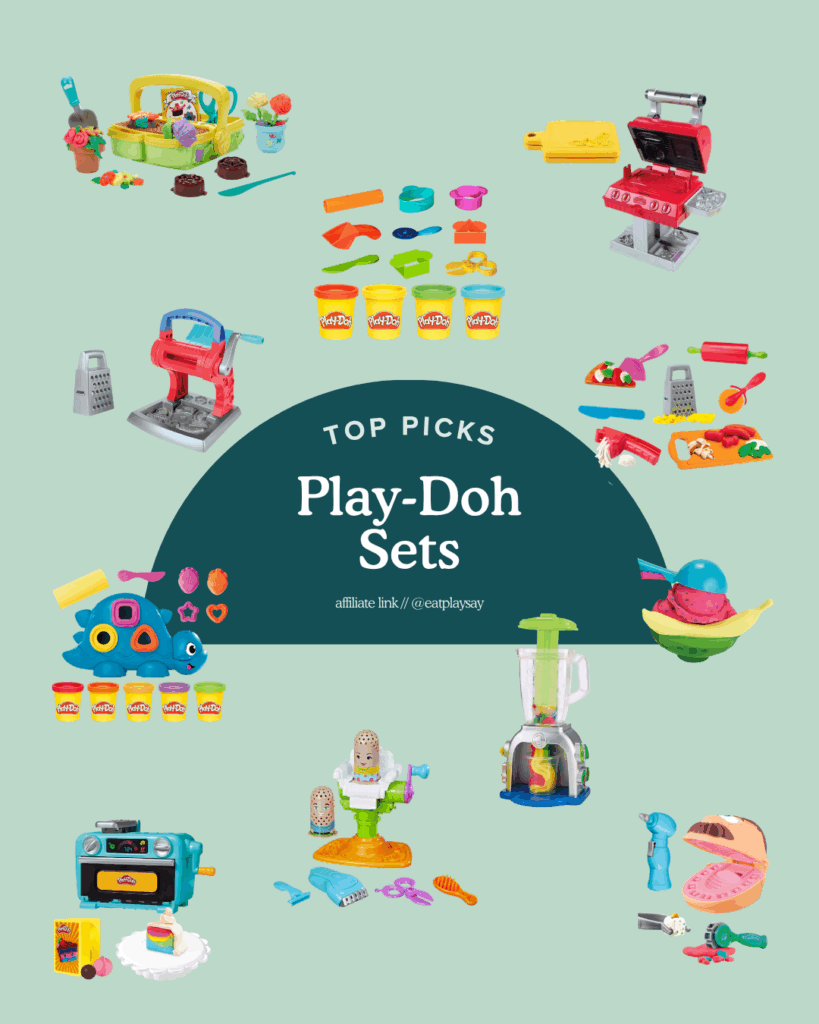
If you follow me on Instagram, you know our littles love playing with Play-Doh! We’ve collected quite a few Play-Doh sets over the years, and the kids continue to reach for them during playtime. They keep our kids engaged for long stretches of time and are activities they truly enjoy. They’re a great sensory activity to break up the day, or fun to pull out when the weather isn’t cooperating.
Most Play-Doh sets are built around fun themes and provide endless opportunities to strengthen fine motor skills. Play-Doh encourages so much imaginative play as little ones come up with stories and role-play as they create. But what I love most is how Play-Doh sets provide natural opportunities to teach educational concepts through hands-on fun!
We’ve rounded up some of our favorite Play-Doh playsets that encourage creativity and provide meaningful learning opportunities. For each set, you’ll find what’s included, the educational concepts it supports, and simple learning opportunities to incorporate through play.
Benefits of Playing with Play-Doh
Playing with Play-Doh offers countless developmental benefits for young children. It combines sensory exploration, fine motor practice, creativity, and imaginative play into one fun, hands-on activity.
Can it get a little messy at times? Yes! But that’s part of the learning experience! Messy play encourages curiosity as children explore different textures and experiment freely. It builds important developmental skills through play.
Pro Tip from a Play-Doh Loving Parent: Put a play mat or older tablecloth under whatever table or space you’re playing with Play-Doh. When little bits fall onto the ground, they won’t get smashed into your kitchen floor or carpet! If you use a tablecloth, bundle it up after play and shake all the excess Play-Doh crumbs into the trash can.
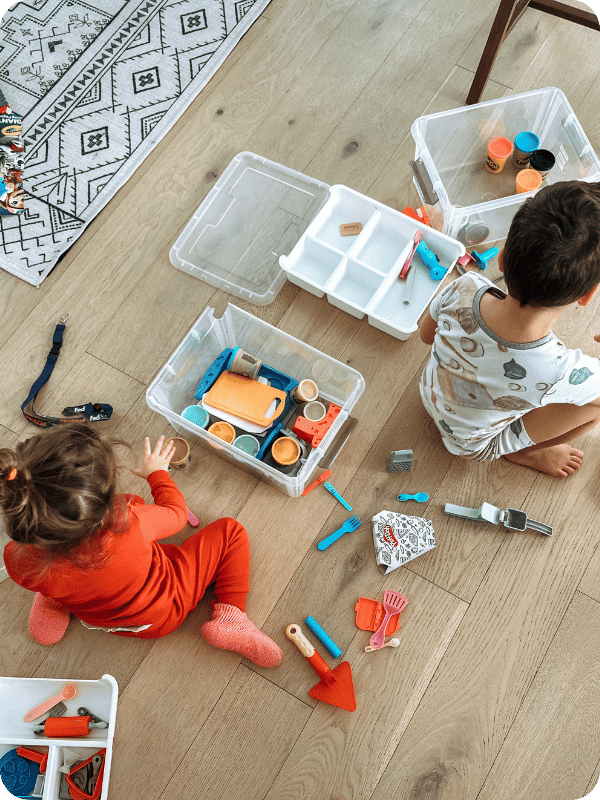
Here’s what your child is learning through playing with Play-Doh:
Sensory Exploration & Input
Manipulating Play-Doh provides rich sensory experiences that help children explore different textures, temperatures, and resistance.
Creativity
Play-Doh is an open-ended material that allows children to create anything they can imagine. There are no right or wrong ways to play. This provides little ones with the freedom to experiment and build confidence.
Imaginative Play
Whether they’re running a pretend bakery, making dinner, or creating silly creatures, Play-Doh encourages storytelling and role-playing. Imaginative play helps develop language skills, social-emotional growth, problem-solving, and more.
Introducing Educational Concepts Through Play
Play-Doh provides natural opportunities to introduce early learning concepts like colors, shapes, counting, patterns, and sizes. The list goes on and on. It’s a great way to talk about measurement, sequencing, and simple science concepts like cause and effect, too.
Fine Motor Development
The fine motor development opportunities with Play-Doh are endless. Rolling, squeezing, pinching, pressing, cutting, and molding the dough strengthens hands and fingers. Playing strengthens hand-eye coordination and bilateral coordination which are so important as little ones grow and complete future tasks like writing and dressing skills.
Play-Doh Kitchen Creations Sets
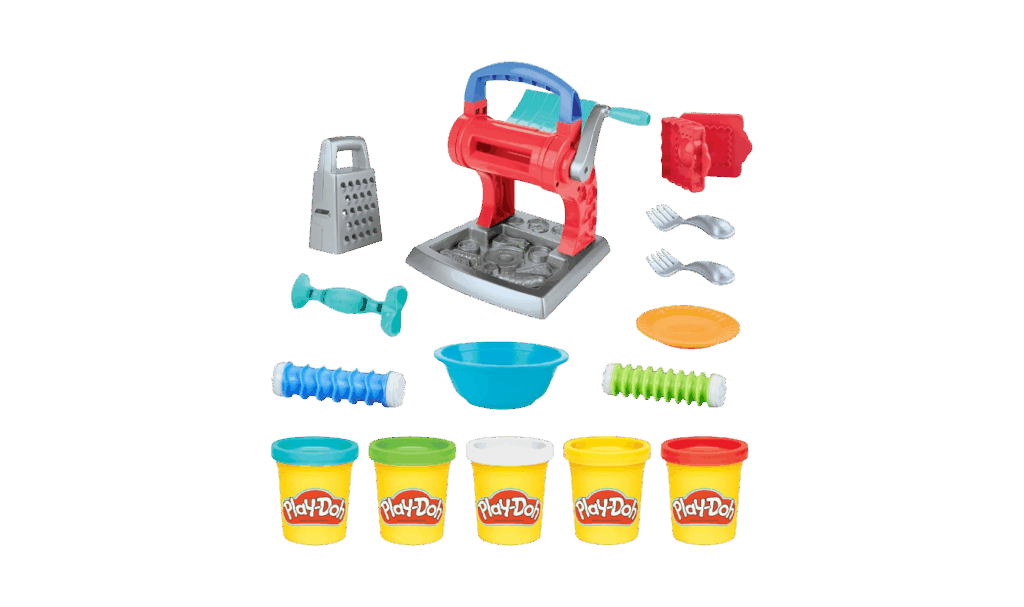
Noodle Party Playset
Price: $$
Age recommendation: 3+
What’s included: Noodle machine, 5 Play-Doh colors, 2 noodle cutter attachments, pasta stamper, ravioli mold, pretend cheese grater, bowl, plate, fork
This is a great Play-Doh set for the noodle-loving toddler. You can create your own Italian restaurant and make all types of pasta creations.
Educational Concepts
Counting: Count noodles or servings
Sorting: Organize noodles by color, length, or thickness.
Measuring: Compare long vs. short and thick vs. thin, etc.
Sequencing: Walk through making the pasta meal step-by-step through following directions
Vocabulary Development: Introduce words such as pasta, noodles, spaghetti, ravioli, sauce, cheese, grater, ingredients, and chef
Try This Play Idea!
Use the crank pasta machine to make noodles. Then, practice cutting them into different lengths. Talk about which noodles are longer and shorter, count how many noodles you made, or take turns serving pasta to family members.
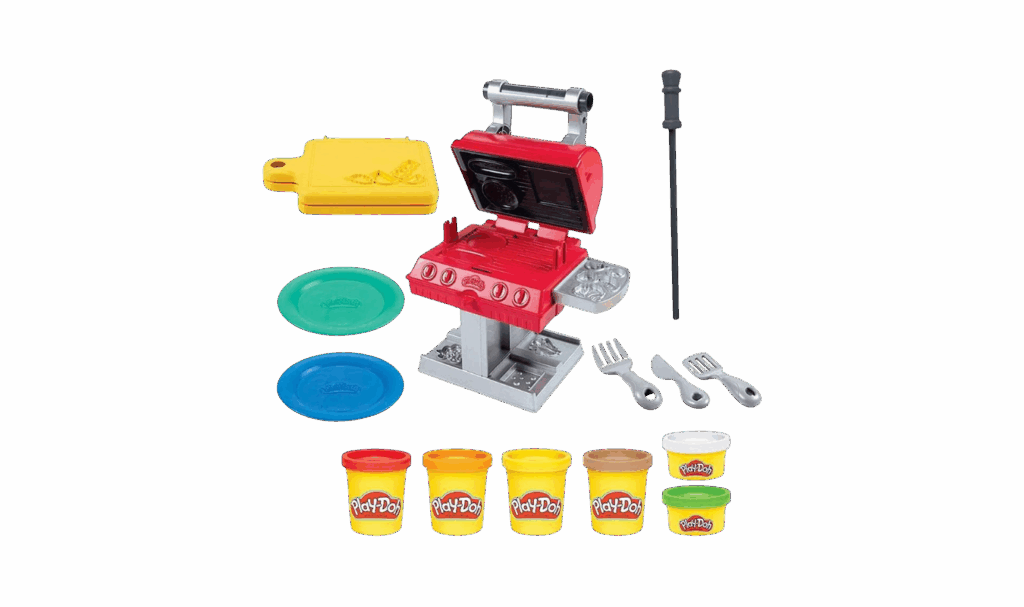
Play-Doh Grill ‘n Stamp Playset
Price: ~$20
Age recommendation: 3+
What’s included: Grill playset with built-in inkpad, kabob skewer, cutting board book-mold, spatula, 2 plates, fork, knife, and 6 cans of Play-Doh
The perfect Play-Doh set for summer barbecue season! Your little one can grill hotdogs, hamburgers, or mold some vegetables to skewer on their kabob.
Educational Concepts:
Sorting & Classifying: Sort foods by type, color, size, or whether they are proteins or vegetables
Patterns: Build repeating food patterns or arrange toppings in a sequence
Healthy Eating: Introduce food groups when creating the kabobs and talk about creating balanced meals
Following Directions: Build listening and comprehension skills by following recipes or filling pretend food orders
Vocabulary Development: Introduce words like barbecue, hamburger, hotdog, kabob, skewer, lettuce, drumstick, and other vegetables
Try This Play Idea!
Mold a variety of vegetables and meats, then work together to build a colorful kabob. Challenge your child to create a repeating pattern or have them follow a pattern that you start.
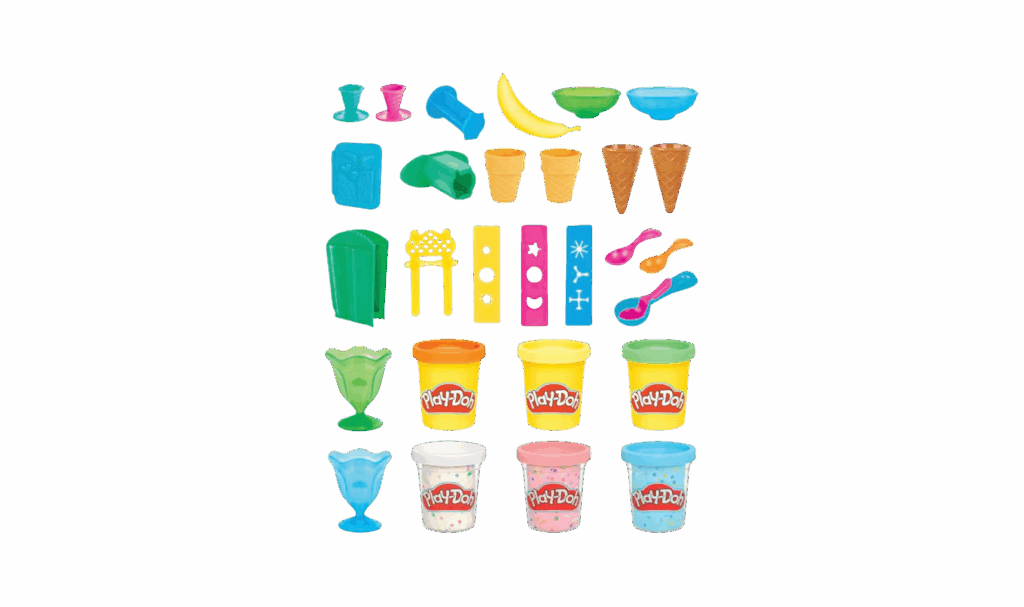
Play-Doh Ice Cream Party Set
Price: ~$15
Age recommendation: 3+
What’s included: 2 cups, 2 bowls, 4 cones, 2 cone stands, scoop, banana stamper, decorating tool with 3 rails, ice pop book-mold with stick, fruit book-mold, 2 spoons, 6 Play-Doh colors
This Play-Doh ice cream set allows for lots of variety and customization. Your toddler can scoop hard ice cream, or pinch the decorating tool to make soft serve.
Educational Concepts:
Colors: Identify, name, and match different Play-Doh colors
Counting: Count scoops, cones, toppings, and customers.
Early Math: Practice one-to-one correspondence and simple addition (“2 scoops + 1 scoop = 3 scoops”)
Cause & Effect: Observe how pressing, scooping, or extruding Play-Doh changes its shape.
Pretend Play & Social Skills: Take turns being the customer and ice cream shop worker while practicing greetings and asking questions.
Vocabulary Development: Introduce words like: scoop, cone, sundae, sprinkle, swirl, topping, flavor, melt, and freeze.
Try This Play Idea!
Turn the playset into an ice cream shop. Take turns being the customer and the ice cream maker, using phrases like, “I’d like a chocolate cone, please!” This encourages conversation, pretend play, and social skills.
Play-Doh Sets We Own and Love
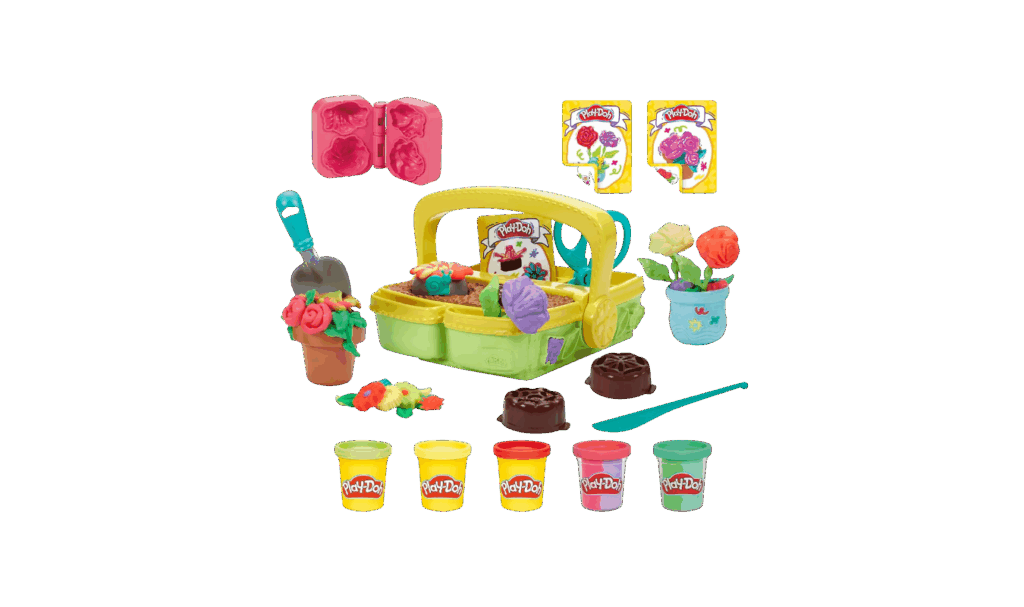
Play-Doh Blooming Flower Garden Set
Price: ~$10
Age recommendation: 3+
What’s included: Garden box, 4 flower pucks, 3 stems, flower book-mold, vase, flower pot, trowel, shears, knife, and 5 cans of Play-Doh
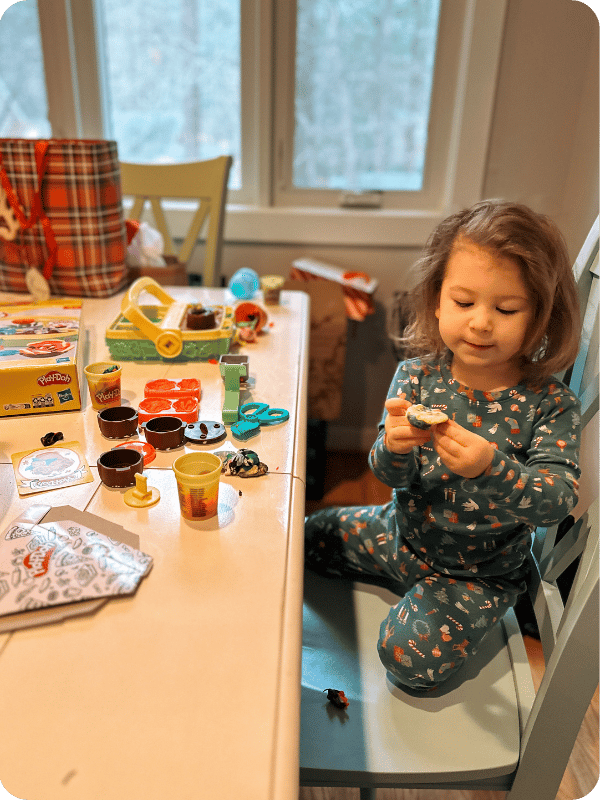
We bought this for Penelope last Christmas and she has loved playing with it! I love how it leads to natural opportunities to talk about growing and planting.
Educational Concepts:
Plant Life Cycle: Learn the stages of a plant’s growth from seed to flower.
Parts of a Plant: Identify roots, stems, leaves, petals, and flowers.
Nature & Science: Learn what plants need to survive and explore pollinators like bees and butterflies.
Healthy Eating: Talk about how flowers grow into fruits and vegetables and why gardens are important.
Vocabulary Development: Introduce words such as seed, soil, stem, leaf, petal, bloom, garden, watering can, pollinate, and grow.
Try This Play Idea!
Use the garden set to create a bouquet together. Talk about the different colors you will use and count the numbers of blooms and leaves you include. You can also use this Play-Doh set to talk about planting a garden during play, then head outside and plant your own wildflowers together!
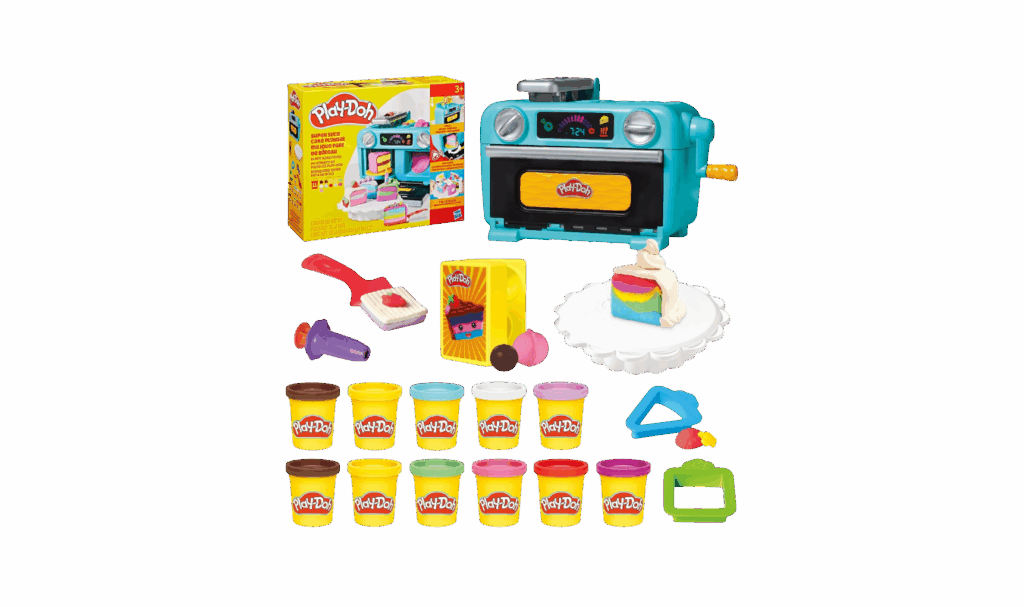
Play-Doh Super Slice Cake Playset
Price: ~$30
Age recommendation: 3+
What’s included: Cake oven playset, cake mix mold, turntable stand, 2 cutters, decorating tool, spatula, and 11 cans of Play-Doh
This Play-Doh cake-making set is so detailed! You roll the dough ball, press it into the oven, then the oven dings and you have a perfectly sized cake slice. It comes with so many options for decorating each slice. Our family loves it!
Educational Concepts:
Shapes: Identify circles, triangles, squares, hearts, etc.
Counting: Count cake slices, candles, decorations, and toppings
Fractions: Introduce concepts like whole, half, quarter, and equal parts by dividing a cake into slices
Cause & Effect: Discover how pressing molds creates the cake slices and cranking dough makes flat icing to create the finished cake
Celebrations & Social Skills: Practice birthday traditions, taking turns, sharing, serving others, and celebrating special occasions
Vocabulary Development: Learn words like cake, slice, frosting, icing, sprinkles, candle, layer, decorate, dessert, baker, recipe, serve, and celebrate
Try This Play Idea!
Ask your little one what kind of cake slice they want to create. Encourage them to decide how many layers it should have and choose the Play-Doh colors they’ll use. Then, mold decorations for the top and count how many they included. Finish by inventing a fun cake flavor together!
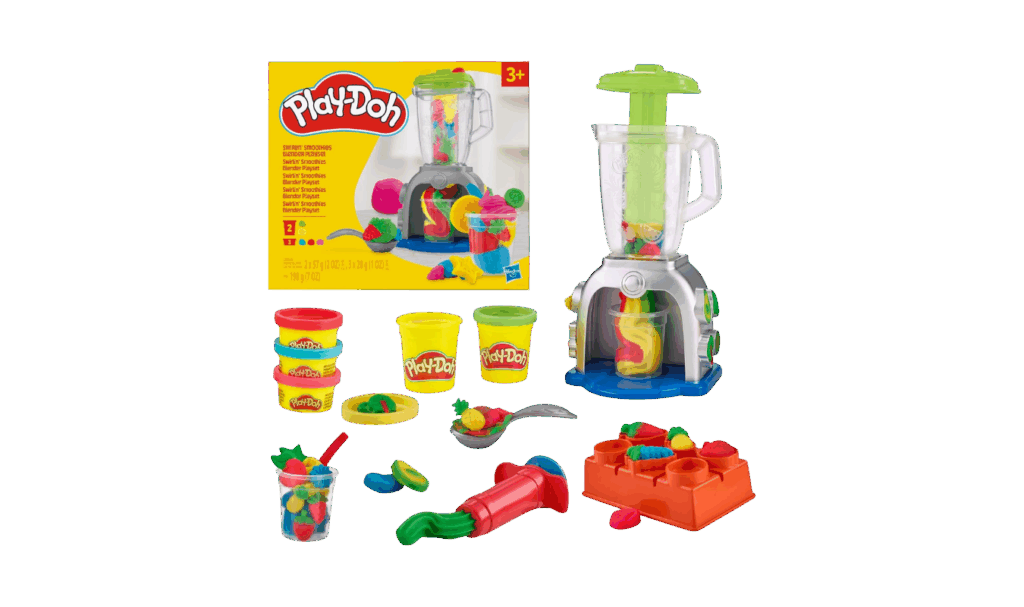
Play-Doh Swirlin’ Smoothies Set
Price: ~$10
Age recommendation: 3+
What’s included: Blender playset with plunger, extruder, scoop, ice cube tray, 2 cups, and 5 cans of Play-Doh
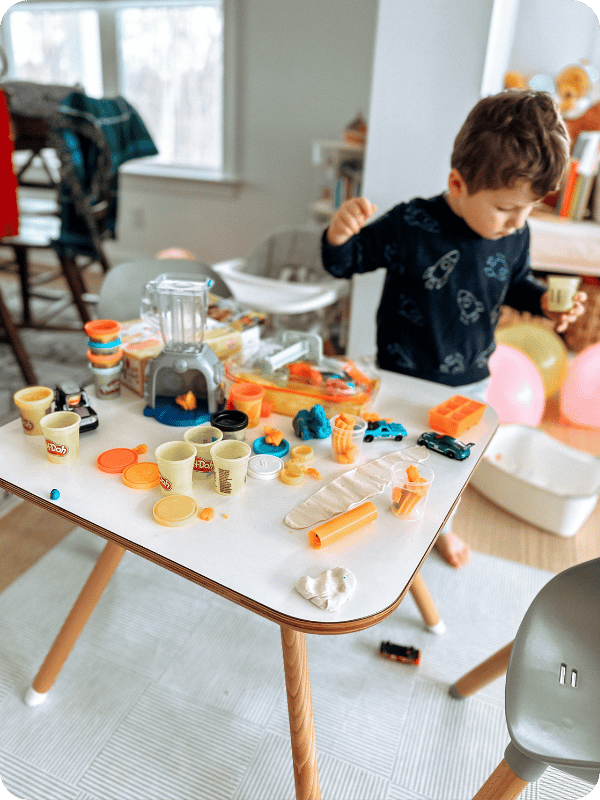
We love smoothies in this house, and smoothie-making toys are always a hit. This is an affordable Play-Doh set where you can mold ice cubes, fruits, and veggies, then blend a custom creation.
Educational Concepts:
Counting: Count fruits, ice cubes, and toppings as you drop them into the blender
Sorting & Classifying: Sort ingredients by color, size, or food group
Measurement: Introduce concepts like full, half-full, empty, more, and less
Sequencing: Follow the steps of making a smoothie—choose ingredients, add them to the blender, blend, pour, and serve
Healthy Eating: Talk about food groups and discuss how fruits and vegetables help our bodies grow strong and healthy
Vocabulary Development: Introduce words such as smoothie, blender, ingredients, fruit, vegetables, yogurt, pour, mix, blend, recipe, garnish, and serve
Try This Play Idea!
Ask your little one what kind of smoothie they want to make. As they add each ingredient to the blender, name and describe the different fruits and vegetables they’re using. Talk about their colors and textures. Take the opportunity to talk about how healthy foods like fruits, vegetables, yogurt, and healthy fats help our bodies grow and give us energy to play. For an extra learning challenge, create a simple smoothie recipe for your child to follow.
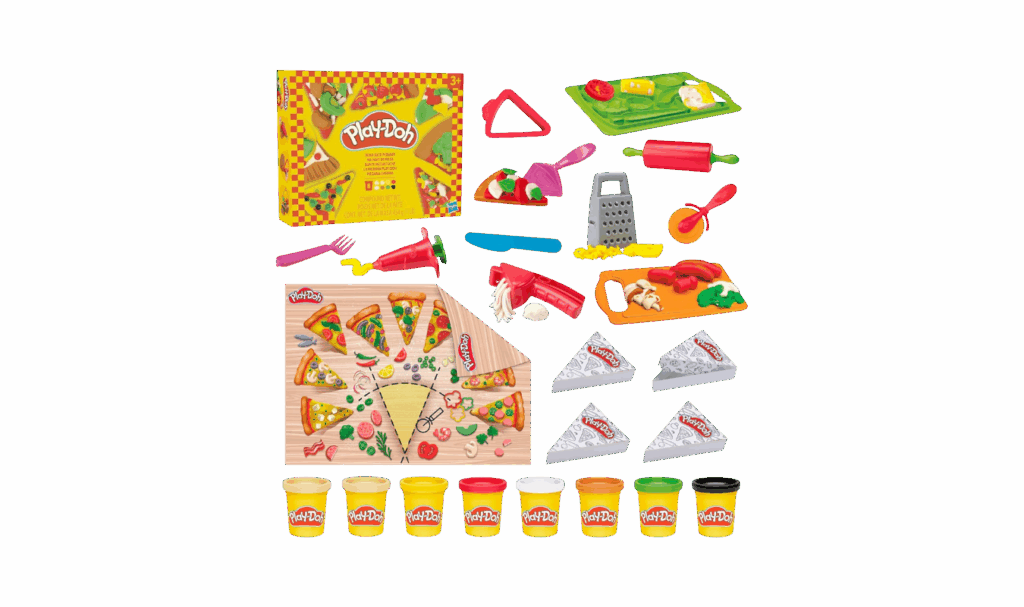
Pizza Slice Playset
Price: ~$20
Age recommendation: 3+
What’s included: 2 cutting board molds, cheese grater, rolling pin, garlic presser, triangle cutter, pizza cutter, playmat, 4 pizza slice boxes, spatula, knife, fork, and 8 cans of Play-Doh
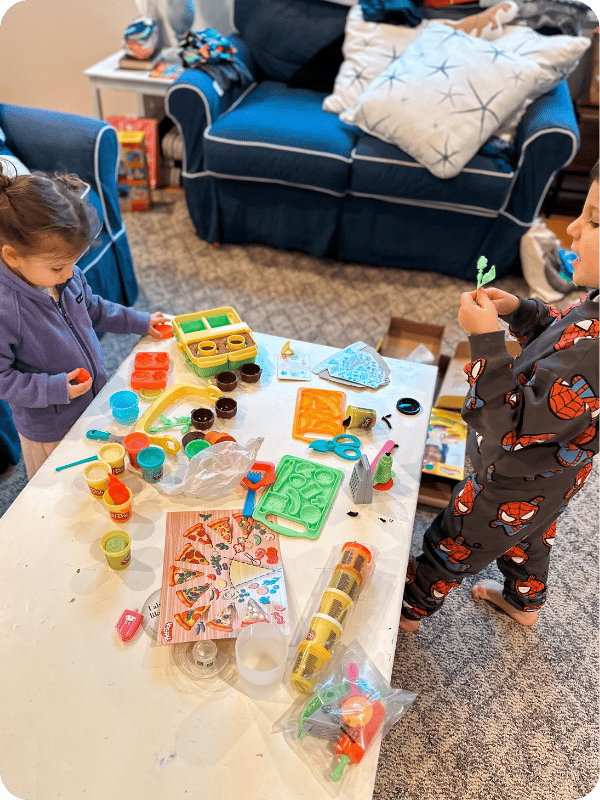
I’m giving you fair warning – your entire house will be turned into a pizza shop with this set. It’s great for practicing sequencing as your little one cuts the crust, grates the cheese, and molds the toppings.
Educational Concepts:
Counting: Count pizza slices, toppings, customers, or ingredients
Fractions: Introduce concepts like whole, half, and quarter by making slices to complete the pie
Sequencing: Follow the steps of making a pizza—roll the dough, add sauce, sprinkle cheese, add toppings, bake, slice, and serve
Following Directions: Strengthen listening skills by following a pizza recipe or filling customer orders
Vocabulary Development: Introduce words such as pizza, crust, sauce, cheese, toppings, pepperoni, mushrooms, vegetables, slice, oven, recipe, bake, and serve
Try This Play Idea!
Be your child’s first customer at their pretend pizza shop! Place a custom pizza order by describing exactly which toppings you’d like on each slice. For example, “I’d like mushrooms on one slice, peppers on another, and cheese on the rest.” Encourage your little one to follow your directions step by step as they build your pizza.
Occupation-Themed Play-Doh Sets
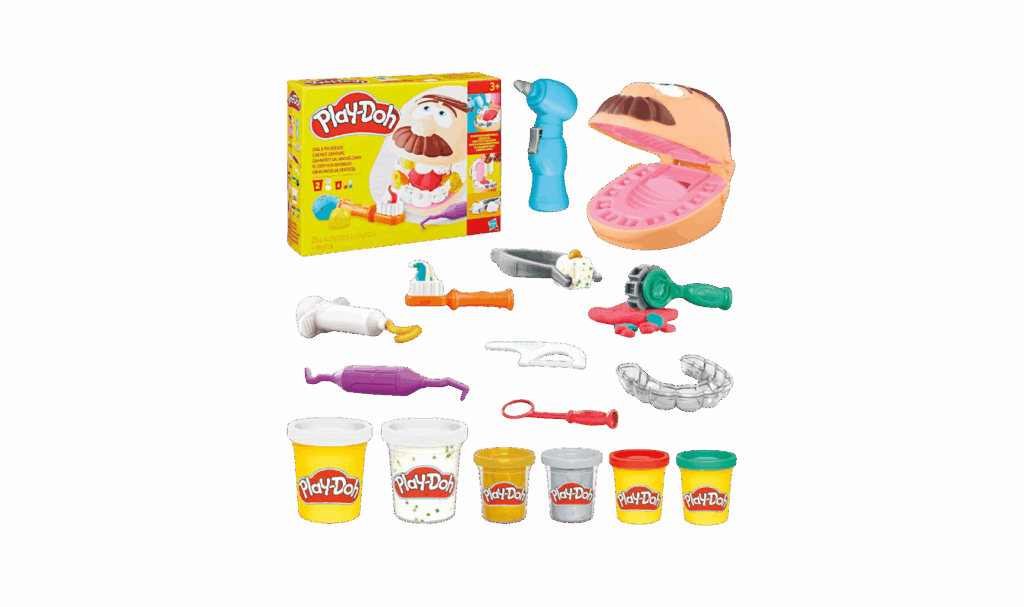
Drill and Fill Dentist Set
Price: ~$15
Age recommendation: 3+
What’s included: Patient, drill, braces roller, tooth mold, toothbrush, syringe extruder, mirror, pick, flosser, tweezers, and 8 cans of Play-Doh
The Drill n’ Fill Dentist Play-Doh set is a lot of fun. Set your patient up, mold his teeth, and then brush! You can use the drill to get the cavities out and other tools to put fillings in. It’s a great set to talk about the importance of brushing teeth and good oral habits!
Educational Concepts:
Oral Hygiene: Learn the importance of brushing, flossing, and visiting the dentist to keep teeth healthy
Healthy Habits: Discuss how brushing twice a day, eating nutritious foods, and limiting sugary treats help prevent cavities
Body Awareness: Identify parts of the mouth, including teeth, gums, tongue, molars, and jaw
Emotional Readiness: Use pretend play to talk about what happens during a dental visit, helping your child become more comfortable with real-life checkups
Counting: Count teeth, cavities, toothbrushes, or dental tools
Vocabulary Development: Introduce words like dentist, patient, cavity, filling, toothbrush, toothpaste, floss, gums, plaque, molar, and checkup
Try This Play Idea!
As you play, talk about brushing twice a day, flossing, and eating foods that help keep teeth healthy. You can also count the teeth you make along with which ones are “clean” and which ones need a filling.
Want to build healthy brushing habits at home? Check out our post about the best baby and toddler toothbrushes.
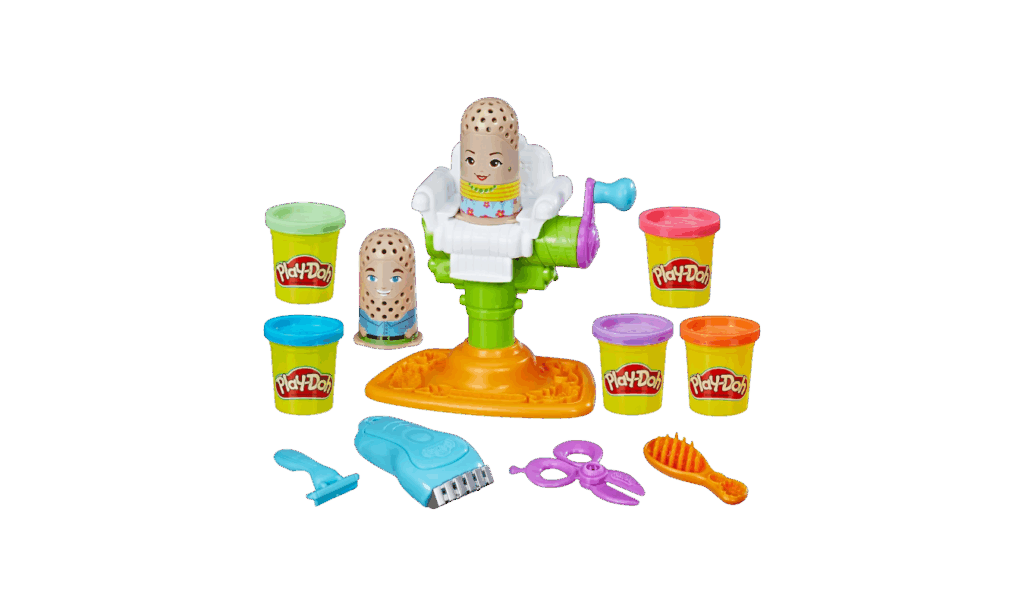
Play-Doh Buzz ‘n Cut Barber Shop Set
Price: ~$15
Age recommendation: 3+
What’s included: Fuzzy pumper playset, electric buzzer, 2 character thimbles, razor, scissors, brush, 5 cans of Play-Doh
Good to know: The electric buzzer requires batteries to make a buzzing sound!
This Barber Shop Play-Doh set is one of our favorites. Crank the barber seat and watch the hair grow. You can work on scissor skills as you cut hair, or choose to buzz it off with the electric clippers.
Educational Concepts:
Self-Care & Hygiene: Learn about hair care routines, including washing, brushing, combing, and getting haircuts
Body Awareness: Identify parts of the head and face, such as hair, scalp, ears, eyebrows, beard, etc.
Size & Comparison: Compare long and short hair and thick and thin styles
Measurement: Introduce concepts like longer, shorter, shortest, trim, and equal lengths while giving haircuts
Cause & Effect: Observe how pressing Play-Doh through the chair creates “hair” and how cutting or styling changes its appearance
Vocabulary Development: Introduce words such as barber, salon, haircut, hairstyle, scissors, comb, clippers, trim, shave, beard, mustache, style, and customer.
Try this Play Idea!
Set up a pretend barber shop and take turns being the barber and the customer. Ask questions like, “How would you like your hair cut today?” or “Should we make it short or leave it long?” This encourages conversation, imaginative play, and descriptive vocabulary.
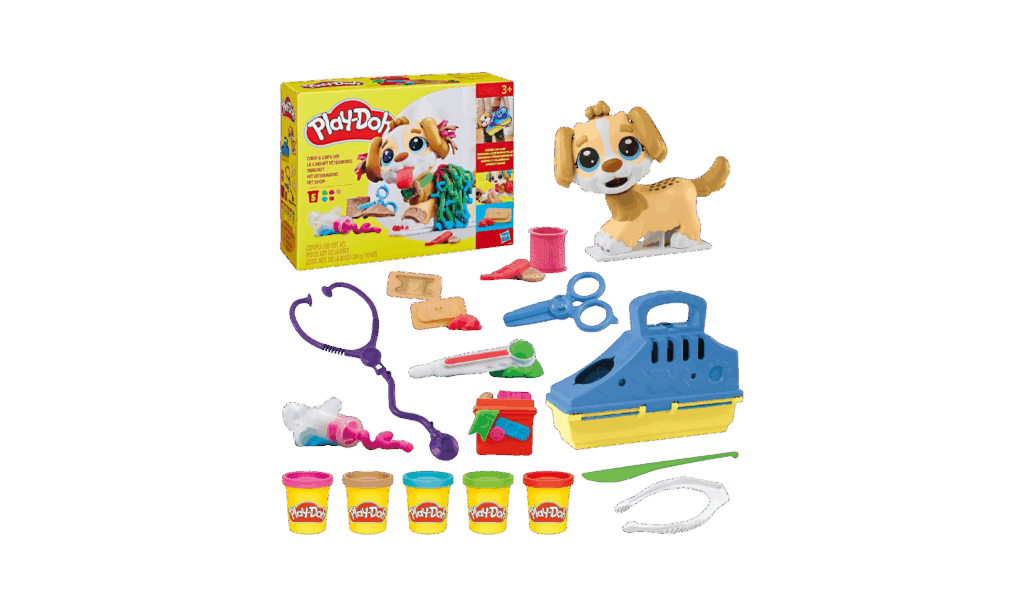
Play-Doh Vet Set
Price: ~$20
Age recommendation: 3+
What’s included: Toy pup, carrier, stethoscope stamper, syringe extruder, thermometer mold, 2 bandage stampers, bandage box, bandage roller, tweezers, scissors, knife, and 5 cans of Play-Doh
This vet play set is perfect for animal-loving little ones! It brings up so many great learning opportunities and discussions like community helpers, responsibility, and taking care of ourselves and our pets.
Educational Concepts:
Animal Care: Learn the responsibilities of caring for pets, including feeding, grooming, medical care, etc.
Empathy & Kindness: Develop compassion by caring for sick or injured animals and understanding that pets have needs and feelings, too
Role-Playing & Social Skills: Take turns being the veterinarian and pet owner while practicing communication, cooperation, and caring for others
Community Helpers: Learn about the important role vets play in keeping animals healthy and safe
Vocabulary Development: Introduce words like veterinarian, patient, stethoscope, bandage, medicine, checkup, vaccine, examine, diagnose, healthy, and sick
Try This Play Idea!
Set up a pretend veterinary clinic and let your little one become the veterinarian! Use the included Play-Doh pup and have your child groom the dog first. Then, encourage your toddler to complete a checkup. Ask questions like, “What do you think is wrong with your pet?” or “What tools will you need to help them feel better?”
Play-Doh Sets for Early Learning
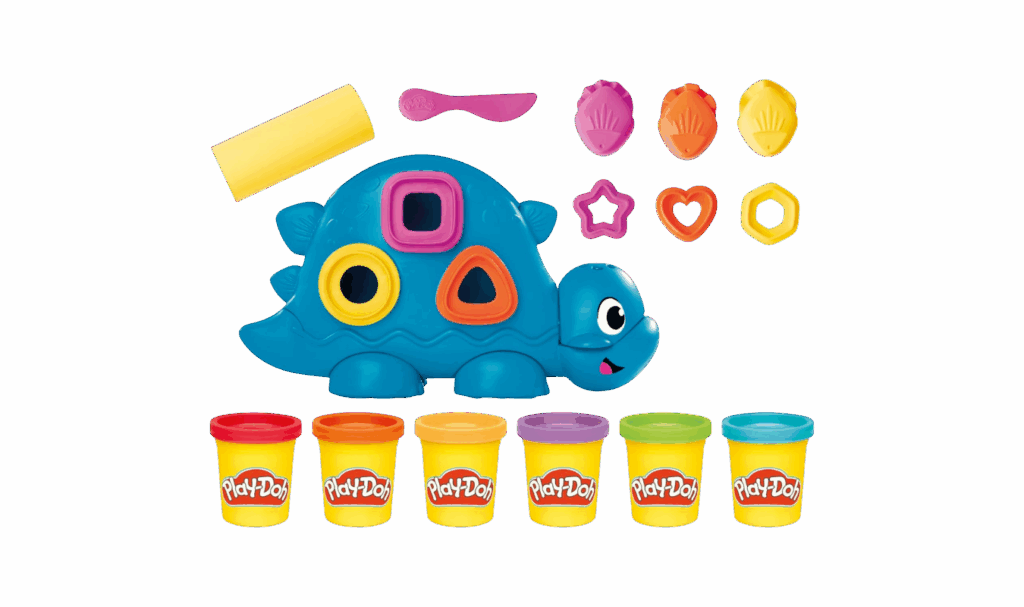
Shapes and Colors Dino Set
Price: ~$15
Age recommendation: 2+
What’s included: Dino shape sorting toy, knife, roller, shape cutters, and 6 cans of Play-Doh
This is like a Play-Doh shape sorter in dinosaur form. Young toddlers will love cutting out different shapes and putting them into the dino’s belly. There’s a ton of early learning opportunities through sensory play!
Educational Concepts:
Color Recognition: Identify, name, and match different Play-Doh colors
Shape Recognition: Learn and identify basic shapes such as circles, squares, triangles, stars, and hearts
Color Matching: Match Play-Doh colors to tools and the included picture card
Patterns: Create repeating patterns using colors and shapes
Cause & Effect: Observe how pressing Play-Doh into different molds creates new shapes and dinosaur features
Vocabulary Development: Introduce color and shape words, and other words like dinosaur, fossil, footprints, etc.
Try This Play Idea!
Create a colorful shape challenge for your little one! Call out a color and shape, such as “Can you make a blue triangle?” or “Make three yellow circles,” and have your child use the Play-Doh molds to create them.
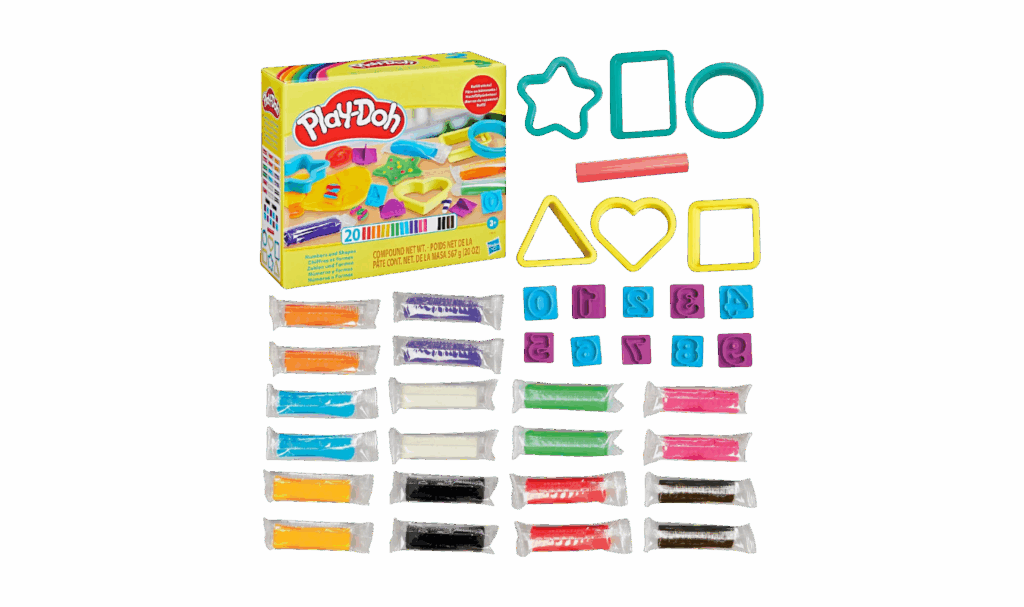
Play-Doh Numbers and Shapes Playset
Price: ~$10
Age recommendation: 3+
What’s included: 10 number stampers, roller, 6 shape cutters, and 20 sticks of Play-Doh
This Play-Doh set is perfect for number and shape recognition. There are lots of colors to explore, too! Your toddler will have so much fun playing with this set, they won’t realize how much they’re also learning.
Educational Concepts:
Color Recognition: Identify, name, and match different Play-Doh colors
Shape Recognition: Learn and identify basic shapes such as circles, squares, triangles, stars, and hearts
Number recognition and counting: Identify and name numbers, practice basic counting
Number Sequencing: Arrange numbers in order from smallest to largest or identify the missing number in a sequence
Spatial Awareness: Learn positional words like above, below, next to, inside, outside, and between while arranging numbers and shapes.
Vocabulary Development: Introduce words like number, shape, count, circle, square, triangle, rectangle, side, corner, pattern, compare, equal, and sequence
Try This Play Idea!
Turn Play-Doh time into a fun math challenge! Invite your little one to stamp a number using the molds, then create the matching number of Play-Doh objects. For example, if they stamp the number 5, have them roll 5 small balls of Play-Doh to match.
Other ideas: As you play, ask questions like, “Which number comes next?”, “How many shapes did you make?”, or “Can you find the shape with three sides?”
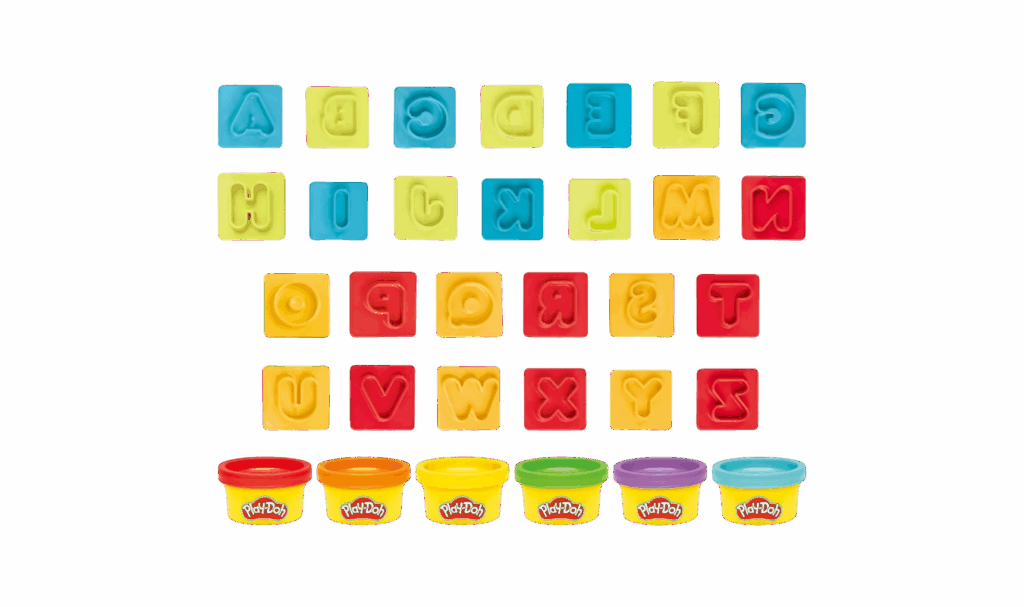
Play-Doh Letters Starter Set
Price: ~$15
Age recommendation: 3+
What’s included: 26 Letter Stamper Tools and 6 Colors of Play-Doh
I love this set for learning more about letters. It’s fine motor skills and early learning all at once. Stamp a letter into the Play-Doh and talk about the sound it makes.
Educational Concepts:
Alphabet Knowledge: Learn the letters of the alphabet and practice putting them in alphabetical order
Letter-Sound Correspondence: Connect letters with their beginning sounds (e.g., B is for bear, ball, or banana)
Phonemic Awareness: Listen for beginning sounds, identify rhyming words, and practice hearing individual sounds in words
Name Recognition & Spelling: Build and spell a child’s name or simple sight words
Early Reading Skills: Form simple CVC (consonant-vowel-consonant) words such as cat, dog, and sun
Try This Play Idea!
Make learning the alphabet a hands-on adventure! Invite your little one to stamp a letter and say its name and sound. Then, challenge them to think of something that starts with that letter and create it with Play-Doh. For example, if they pick B, they could make a ball, butterfly, or banana.
Play-Doh Tools
Having some extra Play-Doh tools can make playtime even more creative! Here are some of our favorites.
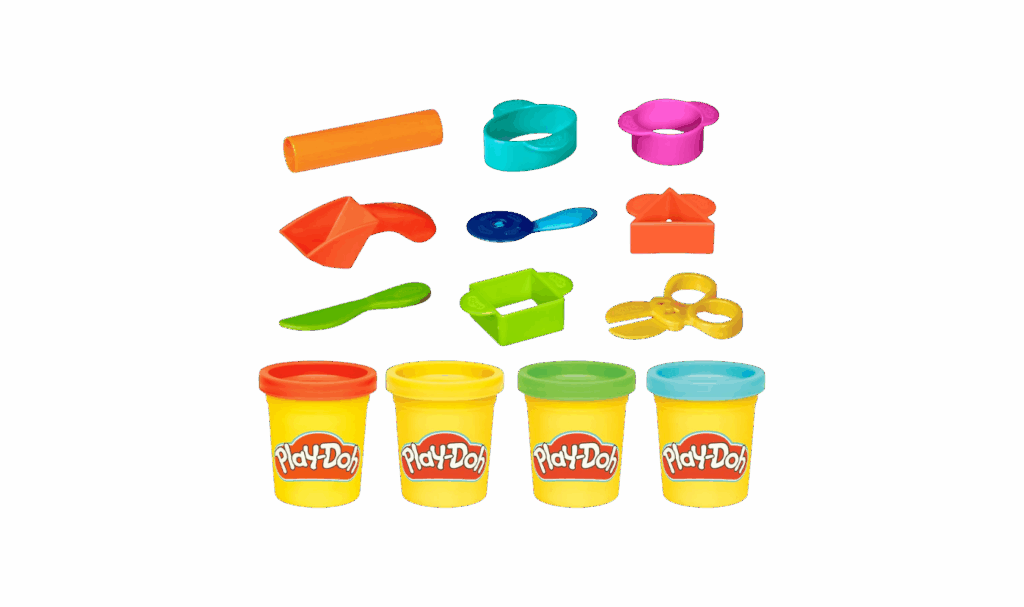
Play-Doh Tools Starter Set
Price: ~$10
What’s included: Shape cutters, scissors, scoop, knife, slicer, and 4 cans of Play-Doh
Skills it encourages:
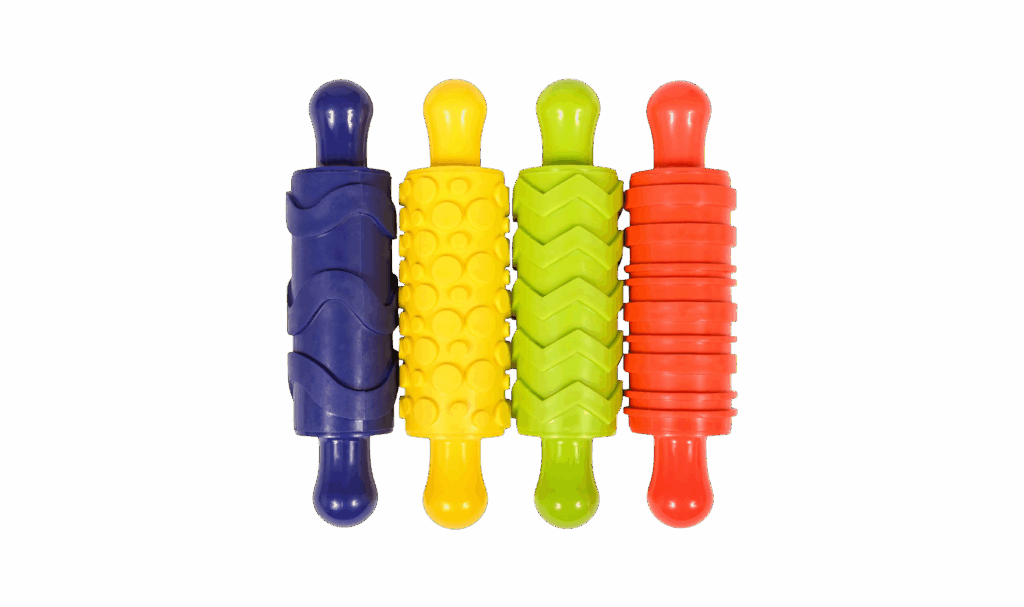
Dough Rollers
Price: ~$10
What’s included: 4 textured rolling pins
Skills it encourages: Hand strength, core and shoulder stability, proprioceptive input, cause and effect
These rolling pins are great for rolling out different patterns and textures onto Play-Doh pieces. They’re versatile enough to use with modeling clay, kinetic sand, or even paint!
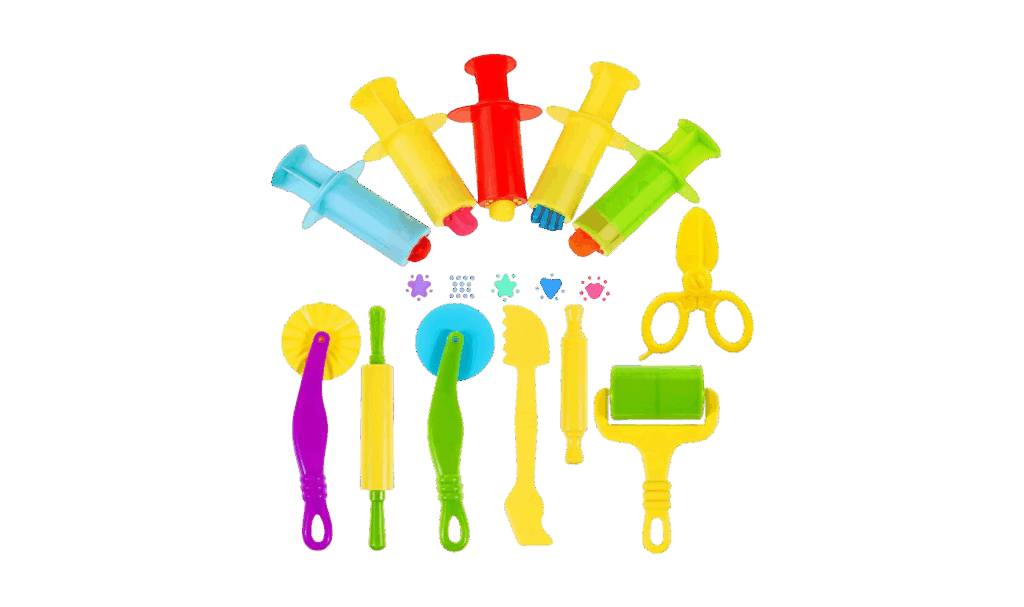
Dough Tools Set
Price: ~$10
What’s included: 5 different shaped extruders, rolling pin, scissors, roller, slicing tools
Skills it encourages: Hand strength, grip strength, dexterity, precision, control, focus and persistence
This Play-Doh tools set has everything your little one needs to push, press, roll, slice, and mold endless creations. With a variety of tools to explore, children strengthen their fine motor skills while engaging in open-ended, imaginative play.
My Favorite Way To Store Play-Doh Sets
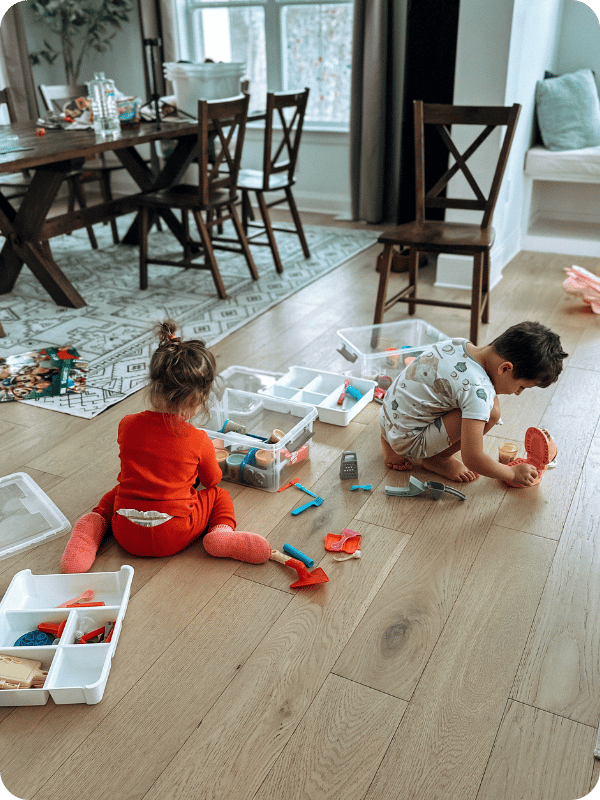
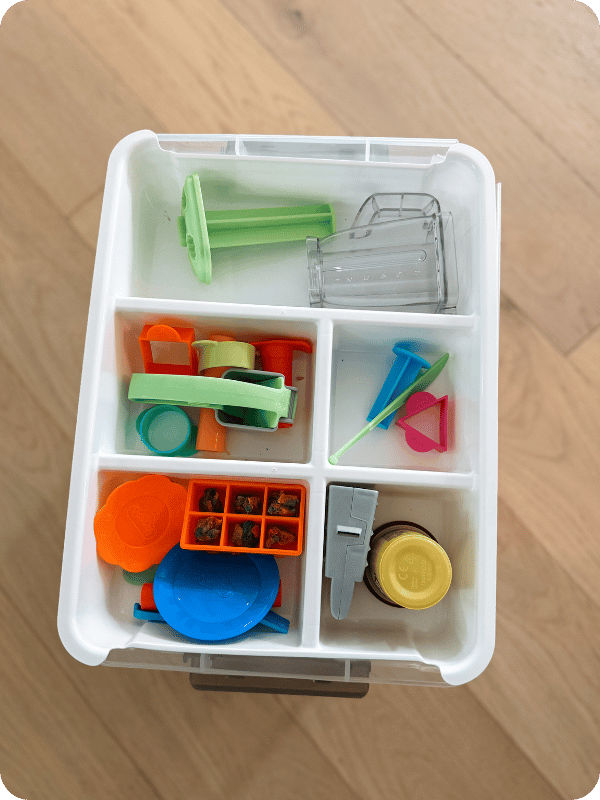
Play-Doh sets come in thin cardboard boxes with all the pieces neatly packed together. But once you take everything out, it’s nearly impossible to fit it all back in. After some trial and error with my organization favorites, I found the perfect way to store all our Play-Doh playsets. Here’s the solution that’s made Play-Doh storage less chaotic!
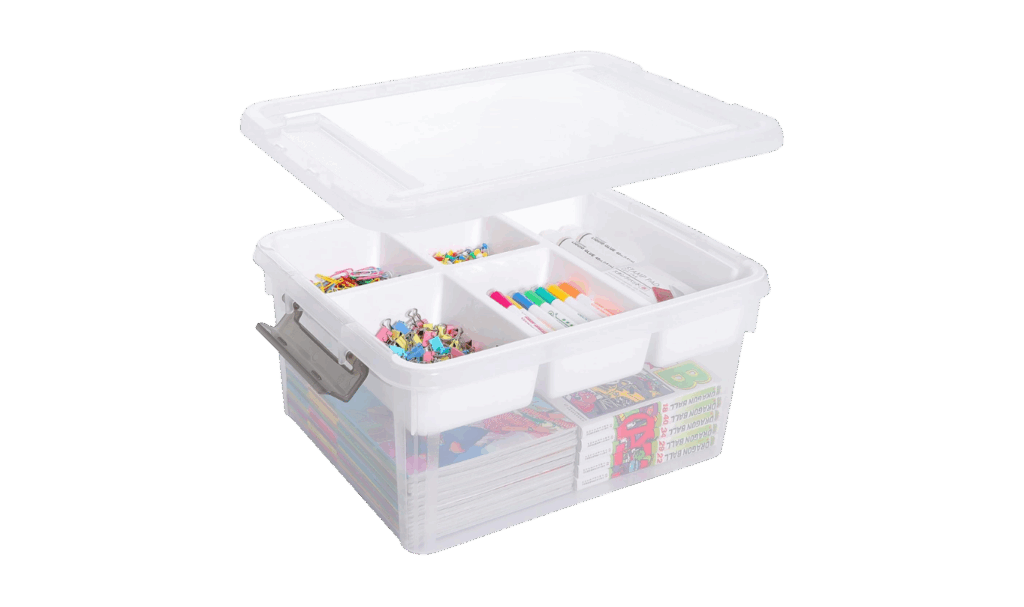
CityLife 17 Qt. Craft Storage Organizer
These containers are perfect for all the Play-Doh, toys, and tools. The top tray is sectioned off making it a great way to organize smaller tools, shape cutters, and playset pieces. The bottom storage is best for larger toys and the Play-Doh cans. This kind of storage solution has saved a ton of my sanity!
Looking for more?
We rounded up our favorite play mats (perfect for containing messy play!) and toddler tables that create the ultimate space for all types of play.
Feeling crafty? Explore more of our favorite coloring supplies for little artists.
Leave a Reply
OTHER POSTS YOU MAY LIKE:


MS, SLP
Founder of Eat Play Say, Speech-Language Pathologist, Feeding Specialist, Play Expert, Mom of 3
Jordyn Koveleski Gorman
SPECIALIZES IN: Infant and toddler speech-language, play, and feeding development, and curating a team that provides expert help that feels like a reassuring text from that one mom friend
EDUCATION: Jordyn received her BS in Speech-Language Pathology from Bloomsburg University and her MS in Speech-Language Pathology from Towson University
FAVE PARENTING FIRST: “The first true smile, it’s the sweetest!”

MS, CCC-SLP, CBS, IBCLC
Speech-Language Pathologist & Feeding Specialist, Certified Breastfeeding Specialist, International Board Certified Lactation Consultant
Jessica Nicholson Cocca
SPECIALIZES IN: Breast and bottle feeding, tongue ties, oral motor dysfunction, starting solids, infant and toddler speech, treating oral motor disorders
EDUCATION: Jessica received her BS in Communication Sciences and Disorders from Pennsylvania State University in 2015 and her MS in Speech-Language Pathology from Towson University in 2017
FAVE PARENTING FIRST: “Baby’s first wave! What a fun first communication gesture!”

MA, CCC-SLP, CLC
Speech-Language Pathologist, Certified Lactation Counselor
Jennifer McFarlin
SPECIALIZES IN: Breast and bottle feeding, tongue ties, starting solids, infant and toddler speech development
EDUCATION: She received her BS in Speech-Language Pathology from Ball State in 2014 and a MA in Speech-Language Pathology from Ball State in 2016.
FAVE PARENTING FIRST: “My favorite baby’s first is their first true smile that just warms your soul knowing they are smiling at you. My other favorite is their first word. I love watching their language explode!”

MS, CCC-SLP
Bilingual Speech-Language Pathologist
Nicole La Petina Kelly
SPECIALIZES IN: Bilingual development (Spanish-English), supporting multilingual families, infant and toddler speech
EDUCATION: She received her BA in Communication Sciences and Disorders and in Spanish from the University of Wisconsin-Madison in 2014 and her MS in Speech-Language Pathology with an English-Spanish Specialization from Marquette University in 2016.
FAVE PARENTING FIRST: “It’s the first slobbery kisses for me!”

RDN, LD
Licensed Registered Dietitian
Kimberly Vede
SPECIALIZES IN: Infant and pediatric nutrition including breastfeeding, formula feeding, and starting solids. She also specializes in prenatal and postpartum nutrition.
EDUCATION: She received her BSc in Biology in 2014 from Life University, and her BSc in Dietetics from Life University in 2019.
FAVE PARENTING FIRST: ”The first time they say ‘mama!’”


This checklist was created with input from a Speech-Language Pathologist, Occupational Therapist and Physical Therapist and has been downloaded over 20,000 times by parents worldwide. Learn the important milestones to pay attention to, and keep it in your digital back pocket during the baby + toddler years!
Comprehensive Milestone Checklist for gross motor, fine motor, and speech-language milestones for 0-36 months,
DOWNLOAD FOR FREE


