


Wake Windows by Age & Development
May 20, 2026
Jordyn Koveleski Gorman

Last Updated on June 16, 2026 by Jordyn Koveleski Gorman
This page contains affiliate links. We will receive a commission on qualifying purchases using these links.
Baby sleep is a topic that often intimidates parents and caregivers. There are countless approaches you can take to support your baby’s sleep, and many of the popular ones today share a common phrase: wake windows. So what is a wake window, and does it even matter? And truly, why is it so hard to get babies to go to sleep?
As a mom of three (including a newborn), each with their own unique sleep needs and preferences, let me start by saying that I understand. Managing baby sleep is overwhelming. And social media is full of self-proclaimed experts promising your baby can sleep 12 hours straight with 3 easy steps or that you can “stretch those wake windows” to get more sleep at night.
And if you’re struggling, exhausted, and feeling like you’ll never sleep again, let this next part be for you. This is just a season. It will pass. You will sleep again.
There may not be a quick fix that can solve all of your sleep struggles. After all, newborns and infants are still brand new to this whole sleep thing. It takes time and repetition for rhythms and schedules to fall into place. In the meantime, there is still something you can do to help.
So instead of focusing on sleep, let’s talk about wake windows from a developmental perspective.

What is a wake window?
A wake window is simply the length of time that a baby is awake from one sleep to the next. Some people measure wake windows only from when a child leaves their sleep space rather than when they wake. Another common approach is to consider a wake window over as soon as your child is laid down for their nap or bed, regardless of if they are asleep at that time.
Are wake windows evidence-based?
Sort of. Truthfully, there isn’t current, specific research that indicates tracking wake windows is an effective approach to navigating baby sleep. However, the concept of a wake window is generally intended to support the two main elements that lead to sleep.
The two main biological influences on sleep are:
- Sleep pressure, also known as sleep debt, is well-documented in research. It is essentially the drive to go to sleep, and it increases over the length of time that a person is awake. Sleep pressure also decreases when we sleep. (1)
- Circadian rhythm, which is our biological internal “clock” that runs on approximately the same cycle as a 24-hour day. (1) Infants are not born with a developed circadian rhythm. Instead, it is established in the first 3–4 months of life. (2)
When thinking about how sleep pressure and circadian rhythm work together, it’s no wonder that wake windows have become a popular topic. Wake windows sort of mix the two concepts together, and can be a simple way to visualize both sleep pressure and circadian rhythm together. Sometimes, though, wake windows may complicate or cause confusion unnecessarily.
Down sides to wake windows for babies
It’s important to mention that wake windows are not the end-all, be-all of infant sleep. Every baby’s needs will be specific to them. Some babies naturally tend to sleep more than others. This is commonly called “higher sleep needs.” And, unfortunately, some babies really don’t seem to care for sleep right off the bat. This is commonly called “lower sleep needs.” This is largely influenced by temperament, which has been linked to developing sleep patterns by several studies. (3)
Temperament often seems to be overlooked in infant sleep education. Although wake window guidelines are useful for infants with average sleep needs, their effectiveness can be reduced significantly if an infant has lower-than-average sleep needs.
Unfortunately, the signs of an infant with low sleep needs can often resemble the signs that a baby needs more sleep. It can be confusing for parents to distinguish!
Younger infants with low sleep needs may show less sleepy signs at an expected nap time. They may refuse to nap or take a long time to fall asleep, or they may take short naps consistently. Older infants with low sleep needs may also drop a nap before guidelines recommend, or may sleep less hours per day than recommended.
Essentially, there is no one sign to know if your child has low sleep needs. Over time, you will get to know your little one’s sleep needs and habits, and that will be how you know! Being aware of this possibility can help you feel prepared if this is something you experience.
Wake windows by age and development
The recommendations below are just general guidelines rather than a prescription. You know your little one best! Figuring out sleep involves so much trial and error. Naps won’t always be perfect, and neither will night time sleep. But the more you learn about development, sleep, and your own child, the more you will feel empowered to approach challenges along the way!
Newborn wake windows
Newborns cannot tolerate long wake windows. 70% of a newborn’s time is spent sleeping, which is as much as 16–17 hours per day. (2) Those first few days of life, they are likely to sleep even more. And, although they sleep a lot, newborns also do not sleep for long stretches. Typically, a newborn will not sleep more than 4 hours at one time. (And if they did, it would be necessary to wake them to eat anyway).
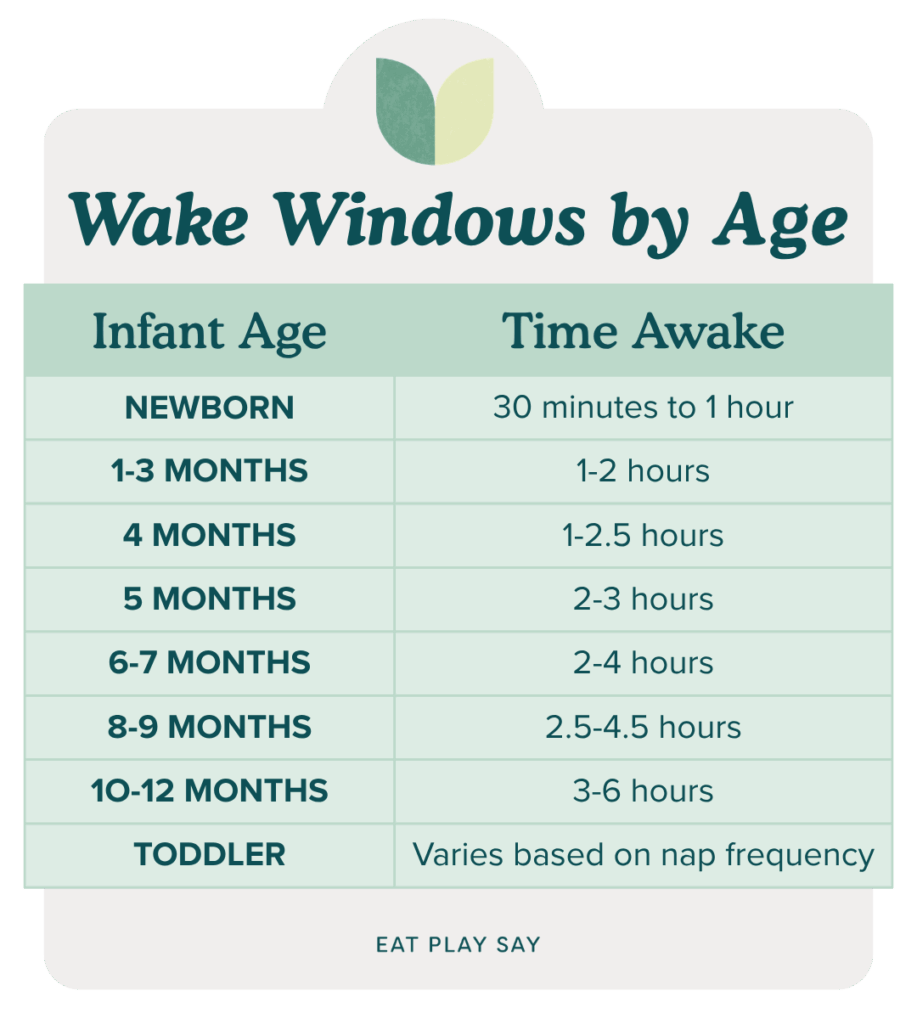
Generally, newborn wake windows are from 30 minutes to 1 hour in the first month. From 1–3 months, some babies stretch to as much as 2 hours of wake time between naps. Keep in mind that wake windows include time spent feeding. If a feed takes 20 minutes, that means it may only be 10 minutes spent on “other” activities before baby is ready for another nap!

3 month old wake windows
Around 12 weeks, longer nighttime sleep windows can begin to develop, although this isn’t necessarily an immediate change. (2) It may be that baby prolongs night sleep by a few minutes over the course of weeks or months. Other babies increase their night sleep more suddenly. When this nighttime increase happens, it typically leads to longer wake windows during the day!
(If your baby is waking at night, please know that it is biologically normal throughout their first year or longer! You’re not doing anything wrong!)
Most 3 month olds have wake windows from 1–2 hours consistently between naps. Babies at this age may still take between 4–5 naps a day. This is the age where play skills really start to take off. Milestones like bringing objects to mouth, grasping, and cooing/babbling start to occur.
4 month old wake windows
By 4 months of age, baby is ready for more wake time during the day. Sleep needs in a 24-hour period are lower now, 14–15 hours. (2) This leaves 10 hours of wake time throughout the day! Yay! At this age, it is common for infants to drop a nap, settling into a rhythm with 3–4 naps per day. Short naps are also very common at this age.
You can expect your 4 month old to have wake windows that vary from 1–2.5 hours. It’s usually around this time that parents start thinking, “Oh wow, they are awake for longer! What can I do to fill those wake windows?” We have the answers in our Infant Playbook!

5 month old wake windows
In the next few months, baby will start to enjoy the world around them more than ever. Staying awake may sound more enticing than a nap. Developmentally, this coincides with milestones like sitting, developing new language skills, and becoming more mobile as they learn to move their bodies in new ways.
At 5 months, wake windows from 2–3 hours are typical.
6 month old wake windows
Between starting solids and a hundred other things your 6 month old has going on, staying awake for longer stretches can feel exhilarating for baby! There’s so much to see and explore.
Wake windows may be between 2–4 hours in your little one’s sixth month, typically with at least one longer wake throughout the day.
7 month old wake windows
Hopefully by this point, sleep is more predictable and consistent. When there are challenges, such as sleep regressions or even teething, you can feel confident that these changes won’t last forever. It is common for babies to drop a nap between 6–9 months. For most, this leads to a 2-nap schedule.
At 7 months, wake windows are typically still between 2–4 hours.
8 month old wake windows
For the next few months, baby’s wake windows will likely not shift too much day-to-day. They may start to develop a more predictable routine that is less based on wake windows. That’s okay! If you have a change in routine, keeping wake windows in mind can still help you navigate your baby’s sleep.
At 8 months, wake windows begin to stretch as much as 2.5–4.5 hours.
9 month old wake windows
Wake windows for 9 month olds are generally the same as the month prior, but you might find that your child is able to tolerate a few minutes more of wake time every week. It’s a gradual shift as they grow! Milestones such as crawling, babbling, and teething can lead to sleep disruption for a period of time, but not necessarily.
Wake windows at 9 months tend to be between 2.5–4.5 hours, slowly increasing over time.
10 month old wake windows
Baby’s sleep pattern may begin to look more like a toddler’s than that tiny newborn you brought home. From 10–12 months, wake windows can extend quite a bit for some. For babies with higher sleep needs, wake time may still be lower between naps. And that’s okay! Babies with lower sleep needs may even drop to one nap a day in the next few months. Remember that every baby is unique, and you know your baby best!
At 10 months, wake windows between 3–6 hours are common and developmentally appropriate.
11 month old wake windows
Toddlerhood is near. Babies continue to explore new skills every day, whether they are pulling to stand, beginning to cruise, or getting close to their first word. They are learning so much right now!
With their skills booming, babies are also able to stay awake longer as their circadian rhythm and sleep pressure tolerance develops further. Wake windows of 3–6 hours are normal.
12 month old wake windows
Happy birthday, little one! At 12 months of age, baby is officially a toddler. Wake windows haven’t changed much in the last month, though they are likely able to tolerate a bit more awake time than even just a few weeks ago. Most 12 month olds still take 2 naps per day, though the drop to 1 nap is near for many. Walking is also coming soon for many littles! This milestone can throw a wrench in sleep for some, but again, not all!
At 12 months, wake windows are still between 3–6 hours, although longer stretches may become more normal as they transition into toddlerhood.
Toddler wake windows
Generally, wake windows are less helpful for navigating toddler sleep. If you notice that wake windows are proving less helpful than they used to for your toddler, it’s likely time to switch to a schedule. Find what works best for your family and daily life! Sometimes, this schedule happens organically. Especially for littles who go to daycare and experience scheduled naps from an early age!
Toddlers usually drop from 2 naps to 1 nap daily between 13–18 months. But sometimes this doesn’t happen until closer to two, and that’s okay! One nap leaves only 2 wake windows per day—one in the morning and one in the afternoon. One nap may seem like freedom, or it may seem like a lot of pressure (what if it doesn’t go well?!). You will learn and adapt, just like you have in the last year with your little one. You’ve got this!
Keep the wake window by age recommendations handy by screenshotting the graphic below!
What to do with baby during wake windows
Making the best out of your baby’s time spent awake doesn’t have to be complicated. There are some consistent, simple activities that you can rely on to help reduce decision fatigue and support your baby’s development.
Our favorite wake window activities from birth through the first year of life (and beyond!) include:
Feeding baby. This may seem obvious, but it’s easy to overlook that time spent feeding your baby is beneficial in more than one way! In addition to the obvious of nourishing your child, feeding provides opportunities to bond, socialize, and explore the world. Once baby starts solids, meal times give them the chance to explore texture, develop chewing and fine motor skills, and play with objects functionally!
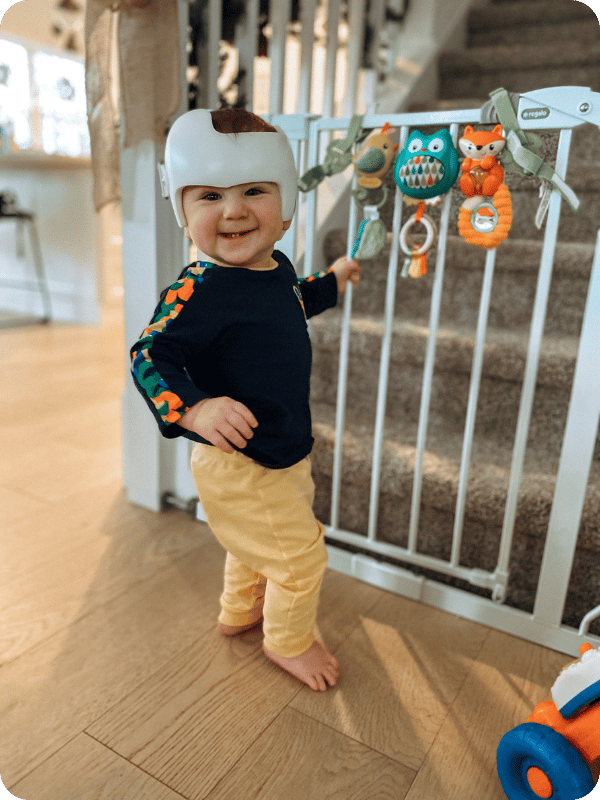
Play time. Whether this is tummy time for your newborn or stacking blocks for your 9 month old, play time is universal. Play doesn’t have to be complicated! Our favorite toys for babies grow with them through different stages of development. Play is how babies and toddlers best learn and is a vital piece of brain development. (4) We created our Playbooks to help parents feel empowered through play with their littles, using only what you have at home to help your infant learn!
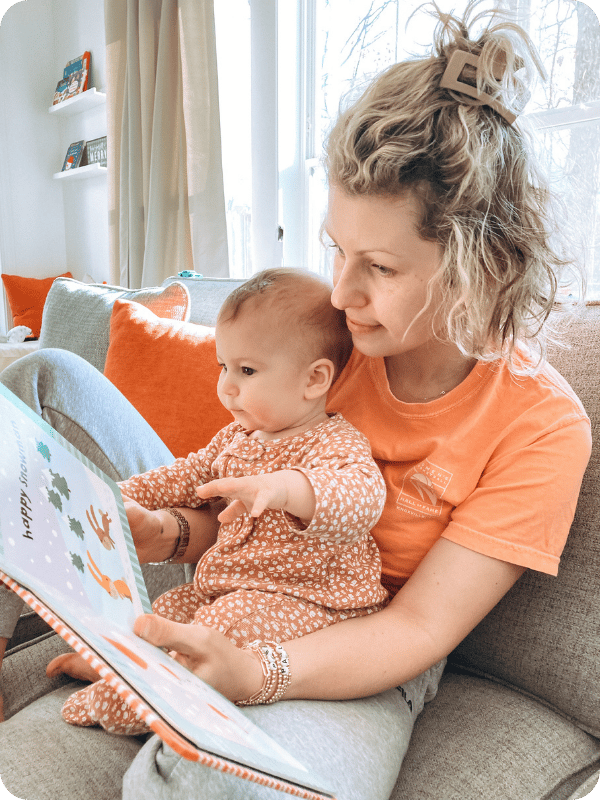
Read books. Social media may try to tell you that reading to your infant is pointless. That is not true. Early and consistent reading provides measurable language benefits as early as 9 months of age. (5) The sooner you establish reading as a daily activity, the better! Plus, there are some amazing books out there for newborns, infants, and toddlers. Reading to and with my littles is one of my favorite activities. You can spend so much time looking at books and modeling language!
Get outside. The great outdoors are a magical place. Whenever possible, heading outside for a light walk or fun activity can be an amazing reset for everyone. Time spent outside in early childhood has even been linked to lower anxiety in preschoolers. (6) And it makes sense, because as an adult, getting outside and touching grass helps me, too! We try to eat a meal outside a few times a week. Plus, especially for young infants, time spent outdoors (protected from the sun) can help develop their circadian rhythm and improve overnight sleep! (2)
More infant support
Now that you know what the research says, hopefully you can rest assured that your child’s sleep will eventually regulate, and you can do things to support them along the way.
For more help with your little one, check out our blog:
- Breast and bottle feeding support
- Posts about baby and toddler development
- More about starting solids
And if you need the kind of support that stays in your pocket all the time and is faster and better than a Google search, we’ve got your back. Our Handbooks have been created by our amazing team of child development experts—from PT and OT to lactation and feeding specialists, we have our bases covered. We answer your most asked questions about taking care of your little one!

Sources
- Fang Z, Rao H. Imaging homeostatic sleep pressure and circadian rhythm in the human brain. J Thorac Dis. 2017 May;9(5):E495-E498. doi: 10.21037/jtd.2017.03.168. PMID: 28616320; PMCID: PMC5465131.
- Yates J. PERSPECTIVE: The Long-Term Effects of Light Exposure on Establishment of Newborn Circadian Rhythm. J Clin Sleep Med. 2018 Oct 15;14(10):1829-1830. doi: 10.5664/jcsm.7426. PMID: 30353824; PMCID: PMC6175794.
- Hayes MJ, McCoy SK, Fukumizu M, Wellman JD, Dipietro JA. Temperament and Sleep-Wake Behaviors from Infancy to Toddlerhood. Infant Child Dev. 2011 Sep;20(5):495-508. doi: 10.1002/icd.720. PMID: 22003317; PMCID: PMC3190304.
- Miller P, Betancur L, Coulanges L, Kammerzell J, Libertus M, Bachman HJ, Votruba-Drzal E. Time spent playing predicts early reading and math skills through associations with self-regulation. J Appl Dev Psychol. 2022 Nov-Dec;83:101470. doi: 10.1016/j.appdev.2022.101470. Epub 2022 Nov 19. PMID: 38037616; PMCID: PMC10688615.
- Franks AM, Seaman C, Franks EK, Rollyson W, Davies T. Parental Reading to Infants Improves Language Score: A Rural Family Medicine Intervention. J Am Board Fam Med. 2022 Dec 23;35(6):1156-1162. doi: 10.3122/jabfm.2022.220064R2. Epub 2022 Nov 17. PMID: 36396412.
- Wu, JB., Zhang, Y., Yang, Y. et al. Association between early childhood outdoor activity and anxiety symptoms in preschoolers. BMC Psychiatry 25, 388 (2025). https://doi.org/10.1186/s12888-025-06831-2
Leave a Reply
OTHER POSTS YOU MAY LIKE:



MS, SLP
Founder of Eat Play Say, Speech-Language Pathologist, Feeding Specialist, Play Expert, Mom of 3
Jordyn Koveleski Gorman
SPECIALIZES IN: Infant and toddler speech-language, play, and feeding development, and curating a team that provides expert help that feels like a reassuring text from that one mom friend
EDUCATION: Jordyn received her BS in Speech-Language Pathology from Bloomsburg University and her MS in Speech-Language Pathology from Towson University
FAVE PARENTING FIRST: “The first true smile, it’s the sweetest!”

MS, CCC-SLP, CBS, IBCLC
Speech-Language Pathologist & Feeding Specialist, Certified Breastfeeding Specialist, International Board Certified Lactation Consultant
Jessica Nicholson Cocca
SPECIALIZES IN: Breast and bottle feeding, tongue ties, oral motor dysfunction, starting solids, infant and toddler speech, treating oral motor disorders
EDUCATION: Jessica received her BS in Communication Sciences and Disorders from Pennsylvania State University in 2015 and her MS in Speech-Language Pathology from Towson University in 2017
FAVE PARENTING FIRST: “Baby’s first wave! What a fun first communication gesture!”

MA, CCC-SLP, CLC
Speech-Language Pathologist, Certified Lactation Counselor
Jennifer McFarlin
SPECIALIZES IN: Breast and bottle feeding, tongue ties, starting solids, infant and toddler speech development
EDUCATION: She received her BS in Speech-Language Pathology from Ball State in 2014 and a MA in Speech-Language Pathology from Ball State in 2016.
FAVE PARENTING FIRST: “My favorite baby’s first is their first true smile that just warms your soul knowing they are smiling at you. My other favorite is their first word. I love watching their language explode!”

MS, CCC-SLP
Bilingual Speech-Language Pathologist
Nicole La Petina Kelly
SPECIALIZES IN: Bilingual development (Spanish-English), supporting multilingual families, infant and toddler speech
EDUCATION: She received her BA in Communication Sciences and Disorders and in Spanish from the University of Wisconsin-Madison in 2014 and her MS in Speech-Language Pathology with an English-Spanish Specialization from Marquette University in 2016.
FAVE PARENTING FIRST: “It’s the first slobbery kisses for me!”

RDN, LD
Licensed Registered Dietitian
Kimberly Vede
SPECIALIZES IN: Infant and pediatric nutrition including breastfeeding, formula feeding, and starting solids. She also specializes in prenatal and postpartum nutrition.
EDUCATION: She received her BSc in Biology in 2014 from Life University, and her BSc in Dietetics from Life University in 2019.
FAVE PARENTING FIRST: ”The first time they say ‘mama!’”


This checklist was created with input from a Speech-Language Pathologist, Occupational Therapist and Physical Therapist and has been downloaded over 20,000 times by parents worldwide. Learn the important milestones to pay attention to, and keep it in your digital back pocket during the baby + toddler years!
Comprehensive Milestone Checklist for gross motor, fine motor, and speech-language milestones for 0-36 months,
DOWNLOAD FOR FREE


