


10 Best Toys for Imaginative Play for Toddlers and Preschoolers
June 9, 2026
Jordyn Koveleski Gorman

Last Updated on June 9, 2026 by Jordyn Koveleski Gorman
This page contains affiliate links. We will receive a commission on qualifying purchases using these links.
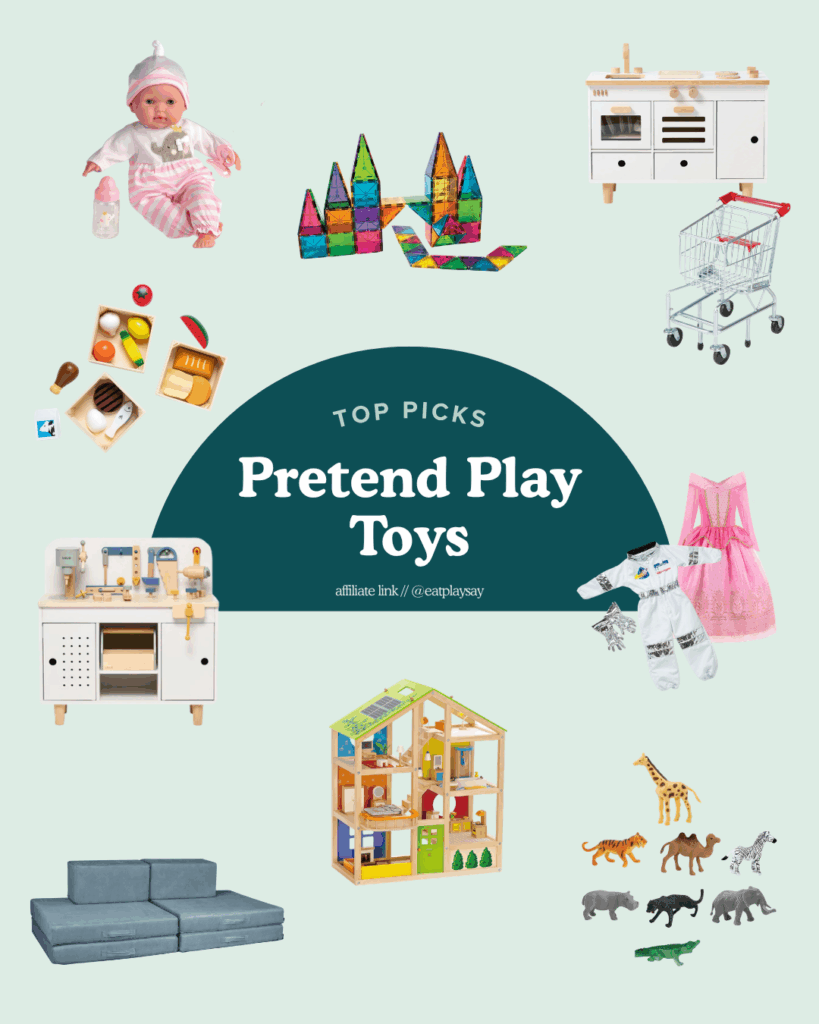
Imaginative play is one of the most important parts of childhood. When children pretend, create stories, and step into new roles, they aren’t “just playing” – they’re working on so many skills!
The best toys for imaginative play give littles the freedom to explore their ideas without too many rules or limits. Whether they’re running a pretend restaurant, building on a construction site, caring for baby dolls, or acting out a scenario, pretend play toys help little ones make sense of the world around them.
In this post, I’m sharing our favorite pretend play toys that spark creativity, imagination, support development, and truly stand the test of time.
Imaginative Play vs. Pretend Play
Surprise, they’re the same! Pretend play, or imaginative play, is a broad category of play that involves make-believe and representational play. Children act out social routines or scenarios they’ve seen in real life and use toys to do so. Pretend play involves storytelling and imagination, role-playing, and symbolic action.
Why is pretend play important for child development?
Pretend play helps toddlers understand how the real world works. It allows littles to express themselves and grow by practicing real-life routines in a safe and playful way.
It also strengthens functional language skills. As toddlers act out scenarios, they use words and phrases they hear in daily life. This helps them practice conversation, build vocabulary, and learn how to communicate in real-world situations. The more opportunities children have for pretend play, the stronger their language development becomes.
Beyond language, pretend play gives little ones a powerful way to express themselves. Through imaginative play, children explore their interests, test new ideas, and begin forming a sense of identity. They discover what they enjoy, what excites them, and how they relate to others.
What are the benefits of pretend play toys?
Pretend play toys aren’t just for keeping littles entertained. They support nearly every area of early childhood development so toddlers learn through play.
Pretend play toys support:
- Language Development: functional language, expressive language, listening and conversation skills
- Social Skills: practice turn-taking, sharing, learning different perspectives
- Creativity & Imagination
- Emotional Development: practice and process real-life experiences, empathy
- Cognitive Skills: planning, sequencing, symbolic thinking, flexible thinking
- Fine Motor Development
- Confidence & Independence
Best Pretend Play Toys
Read more about the 10 best pretend play toys, the skills they foster, and pretend play ideas for toddlers and preschoolers.
01. Wooden Play Kitchen
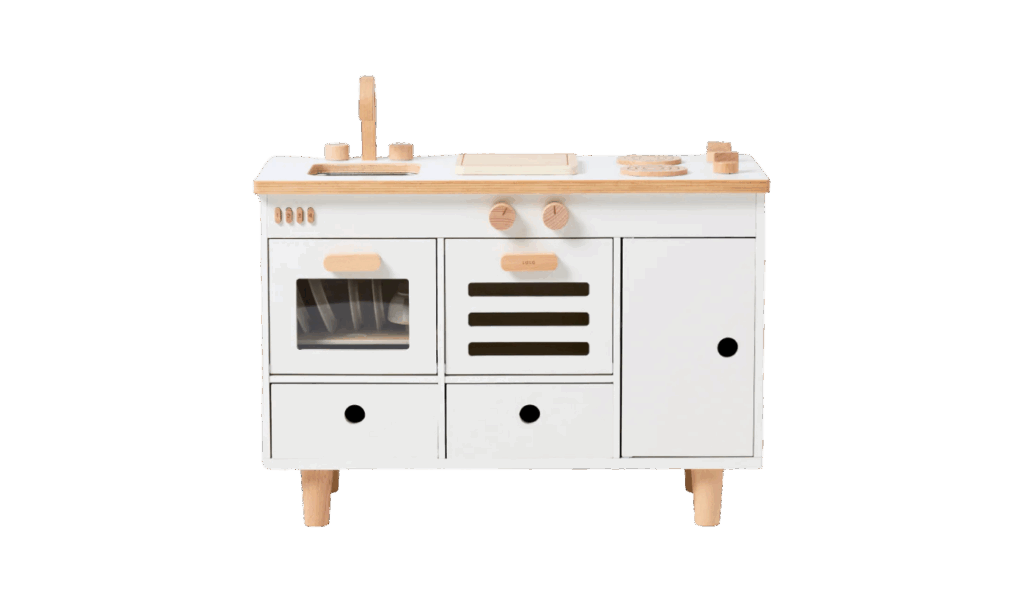
Lalo Play Kitchen
Age recommendation: 15-18 months +
A play kitchen is one of the most versatile pretend play toys because it supports language development, social skills, executive function, and fine motor growth all at once. Best of all, it’s a toy that grows with your child. My 5 and 3 year old still love playing with their wooden play kitchen.
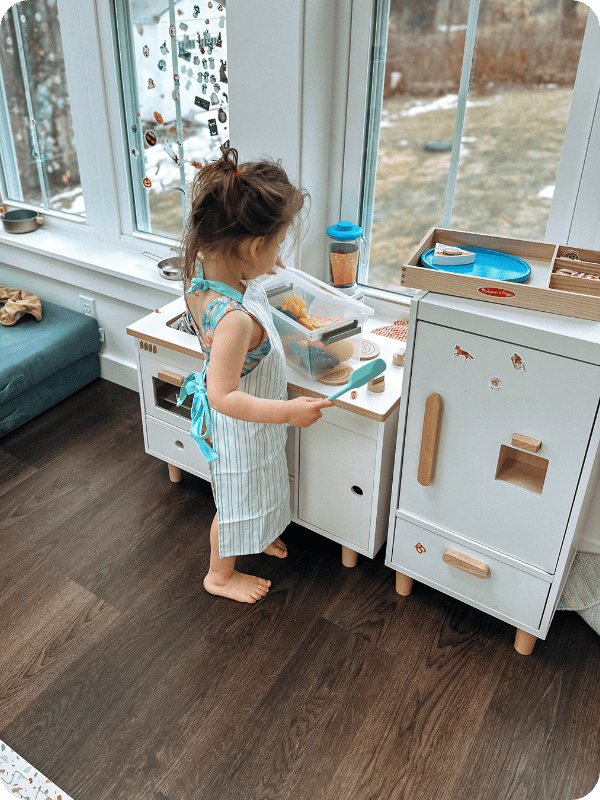
We love the Lalo Play Kitchen because it has a small footprint but makes a big impact. Its minimalist design ultimately encourages more creativity and imaginative play. You can see more of our favorite play kitchens here.
Skills It Supports
Language & Communication – Children expand their vocabulary by naming kitchen utensils and foods, engaging in storytelling, practicing conversation, and sequencing steps (“First we mix, then we bake.”).
Social & Emotional Skills – Kitchen play creates opportunities to practice cooperation, negotiation, turn-taking, and sharing. It also builds empathy as children take on different roles like parent, chef, or customer.
Symbolic Thinking – Pretending a pot is full of soup or a block is a piece of cake strengthens symbolic thinking (the ability to let one object represent another).
Pretend Play Ideas
Restaurant Play – Turn the kitchen into a restaurant, create a simple play menu, and take turns being the chef and the customer
Meal Prep – Ask your child to prepare a meal, plan the meal, and serve it to friends or stuffed animals
Drive-Thru Window – Set up a drive-thru on one side of the kitchen, take quick orders, practice greetings, conversation, and collecting money
02. Kids’ Workbench
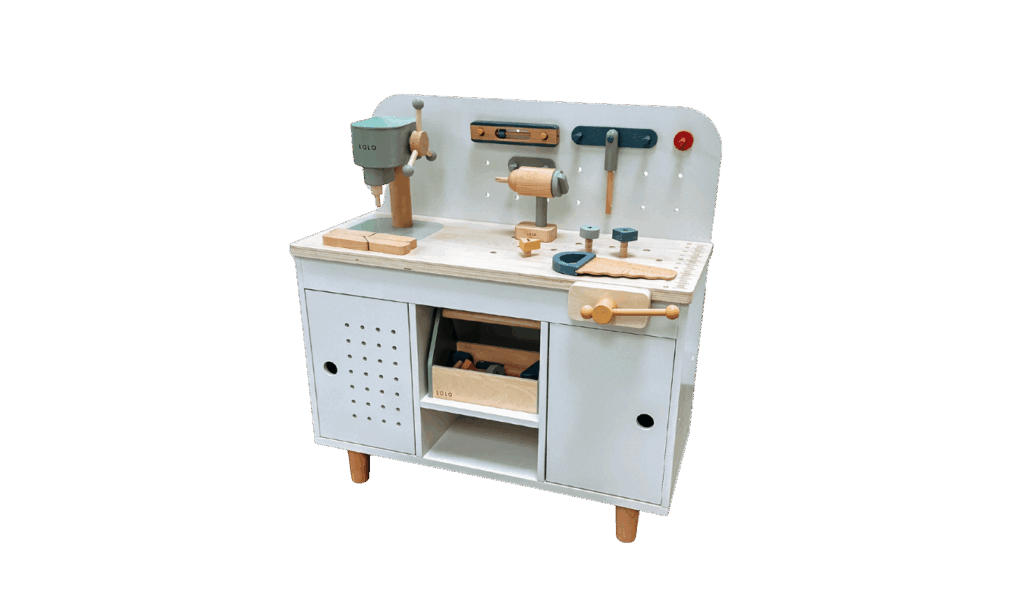
Lalo Workbench
Age recommendation: 2 years +
A kids’ workbench is a great pretend play toy that works on fine motor skills and problem-solving. As children hammer, twist, screw, and build, they strengthen important hand muscles while learning how things fit together. Workbenches also introduce little ones to new vocabulary related to tools, construction, and building.
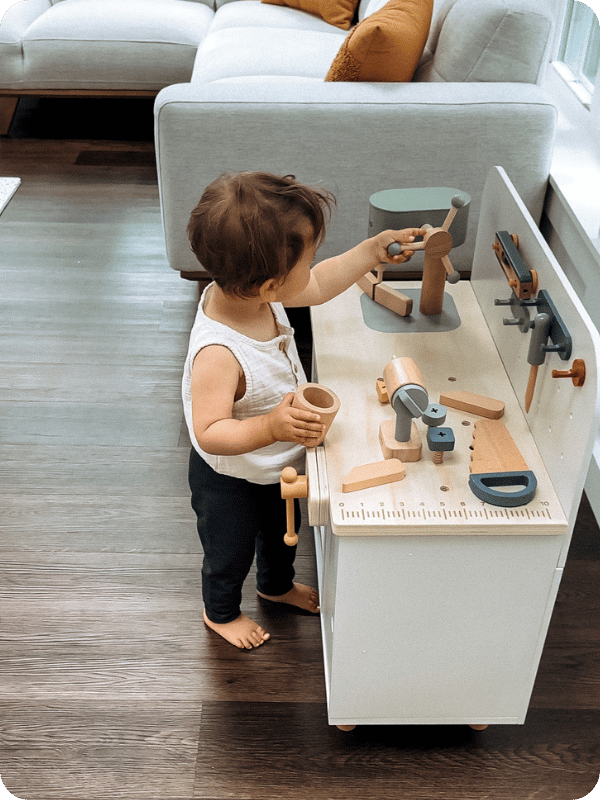
Because it mimics real-world tasks that children often see adults doing, it feels meaningful and engaging while supporting important developmental milestones.
Skills it Supports
Fine Motor Skills – Using play tools helps build hand strength, dexterity, and hand-eye coordination
Problem-Solving – Children practice planning, experimenting, building, and finding solutions.
Encourages Persistence – Teaches little ones to keep trying, adjust their approach, and work through challenges — building resilience and confidence.
Pretend Play Ideas
Repair Shop – Pretend stuffed animals, dolls, or broken toys need fixing. Diagnose the “problem,” and find a tool to fix it!
Custom Build Shop – Let your toddler play Mr./Ms. Fix It! Have your little one take special orders from family members and ask if they need something built or fixed.
Measurement & Design Station – Add a ruler and tape measure and measure blocks and other building materials. Talk about what materials are longer or shorter.
03. Kids’ Shopping Cart
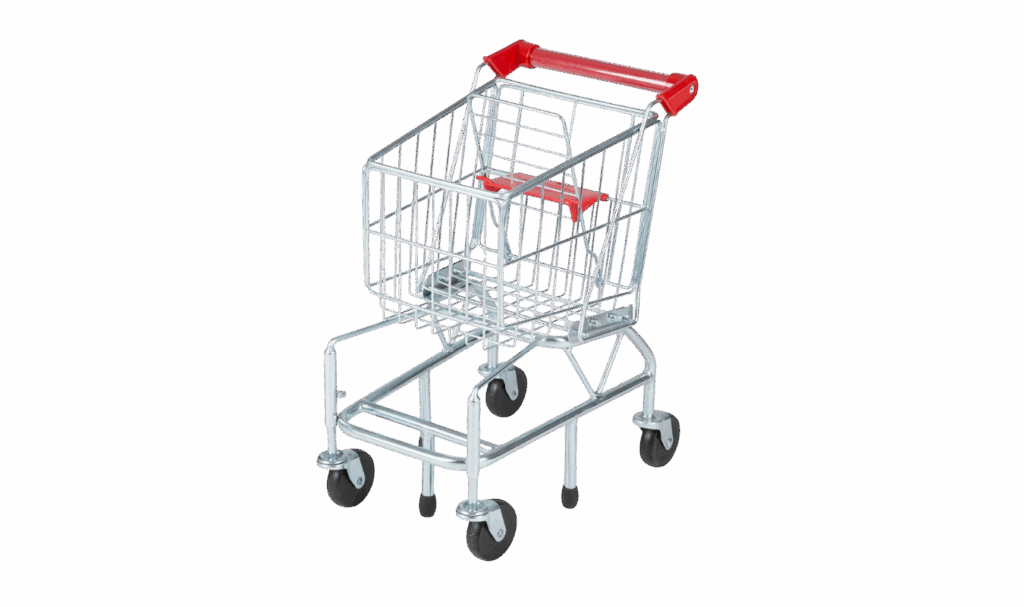
Melissa and Doug Shopping Cart
Age recommendation: 12 months + (new walkers)
Kids’ shopping carts can add a lot of opportunities for realistic pretend play. If you have a play kitchen or grocery store set up, a cart can add to the fun of role-playing. Even if you don’t, toddlers enjoy pushing and filling it with pretend play food. Older preschoolers turn it into full grocery store role play with shopping lists, pretend money, and checkout stations.
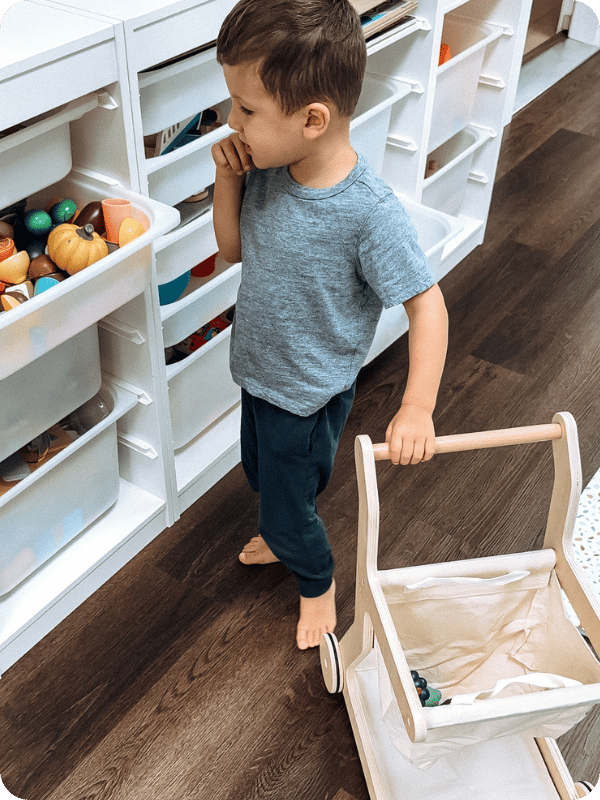
Little ones love it because it mirrors real-life experiences they see often, like going to the grocery store or on a trip to Target.
Skills it Supports
Early Math Skills – Shopping cart play introduces early math concepts in a natural way by counting items, sorting groceries into categories, and comparing quantities like “more” and “less”
Real-World Understanding – A shopping cart helps little ones make sense of everyday routines. They learn what it means to take a shopping trip.
Gross & Fine Motor Skills – Pushing a shopping cart helps develop balance, coordination, and gross motor strength. Picking up, placing, and organizing items also builds fine motor control.
Pretend Play Ideas
Grocery Store Shopping List – Make a simple grocery list with pictures and have your little one go hunt for those items at the “grocery store.”
Color or Shape Hunt – Add a little challenge for older toddlers and ask them to only put red foods in the cart, or only round items. Keep changing up the categories!
Cleanup Helper Game – Pretend the shopping cart is the clean up cart. Go around the room collecting toys and putting them back where they belong.
04. Magnetic Building Tiles
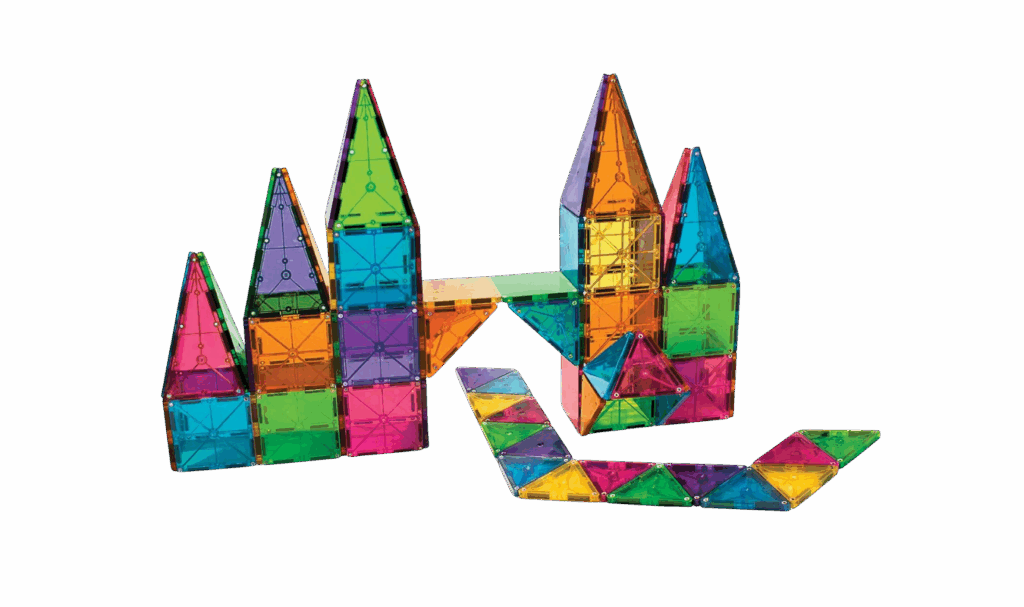
MAGNA-TILES
Age recommendation: 2.5 years + (supervise)
These open-ended STEM toys provide hours of pretend play. Magnetic building tiles can be used to create houses, castles, garages, and even art.
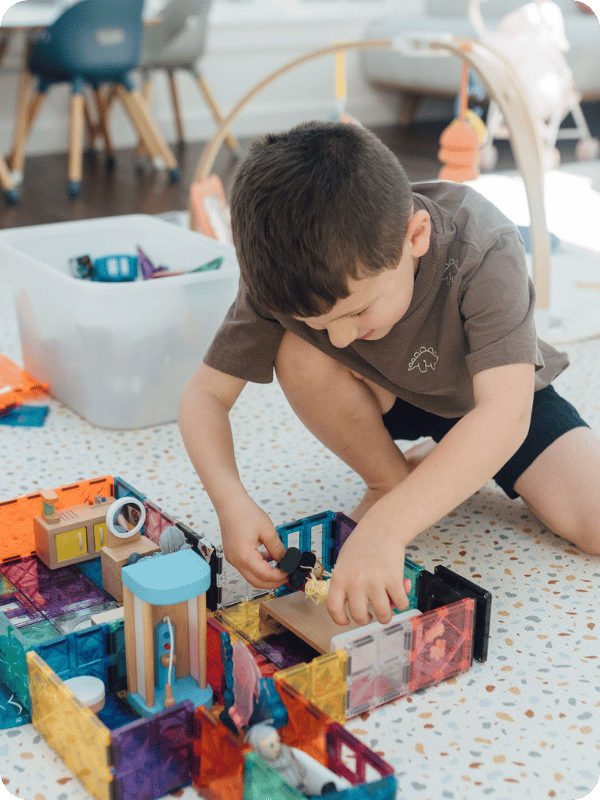
Magnetic tiles grow with your child. Toddlers enjoy stacking and connecting, hearing the pieces click. Older kids turn them into complex buildings with detailed stories and role play. They’re incredibly versatile and deliver a big bang for your buck.
Skills it Supports
Early STEM Thinking – Even during pretend play, littles are learning about balance, spatial reasoning, and cause and effect.
Support Storytelling & Role-Playing – Once a structure is built, children often assign roles and stories to it.
Social Skills – When playing with others, magnetic tiles encourage turn-taking, collaboration, sharing, and problem solving.
Pretend Play Ideas
Magnetic Art – Use the refrigerator or even your garage door and let little ones use the magnetic tiles to make art.
Garage Play – Grab the toy cars and make a garage structure to pull each vehicle into. You can add ramps, too.
Animal Zoo – Build enclosures for the animals to create a zoo. Talk about what types of animals are there and the sounds they make or other fun facts.
05. Dollhouse
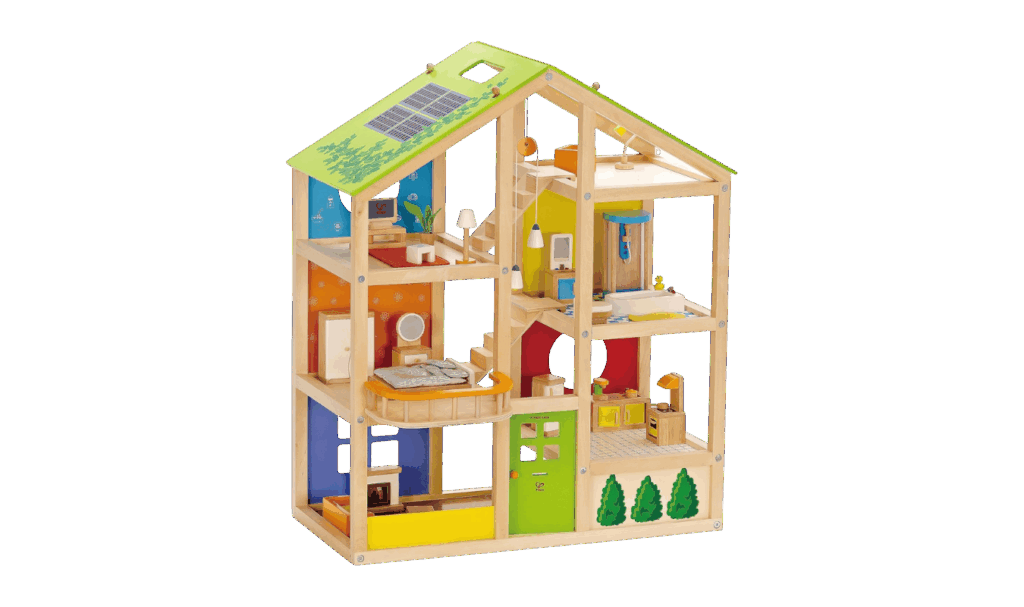
Hape Dollhouse
Age recommendation: 2.5 years +
Dollhouses provide the opportunity for storytelling, acting out daily routines, and experimenting with social roles and relationships. It’s a toy that grows with your little one, and helps to support fine motor skills, too. Moving the small dolls and furniture pieces takes dexterity.
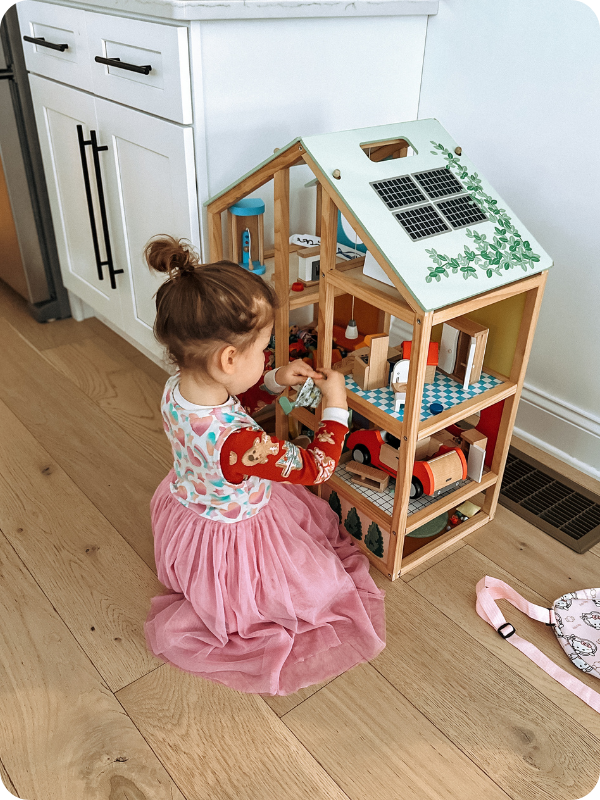
This pretend play toy can evolve as your child collects different dolls, furniture sets, and accessories.
Skills it Supports
Executive Function Skills – Dollhouse play helps develop early planning and thinking skills as children practice sequencing, planning storylines, and exploring roles.
Creative Thinking – A dollhouse is an open-ended toy, meaning there’s no “right” way to play. Little ones practice creativity by making up stories, creating characters, and building their own little worlds.
Real-World Understanding – Dollhouses help children make sense of everyday life. They begin to understand how homes are organized and daily routines.
Pretend Play Ideas
House Guests – Invite characters over for a visit and host a meal or overnight stay.
Pets & Animal Care – Add pet figurines and feed and care for the animals, or take them to the vet.
Holiday/Seasonal Stories – Tie play to real-life experiences and host Christmas cookie baking or a Halloween party in the dollhouse.
06. Dolls
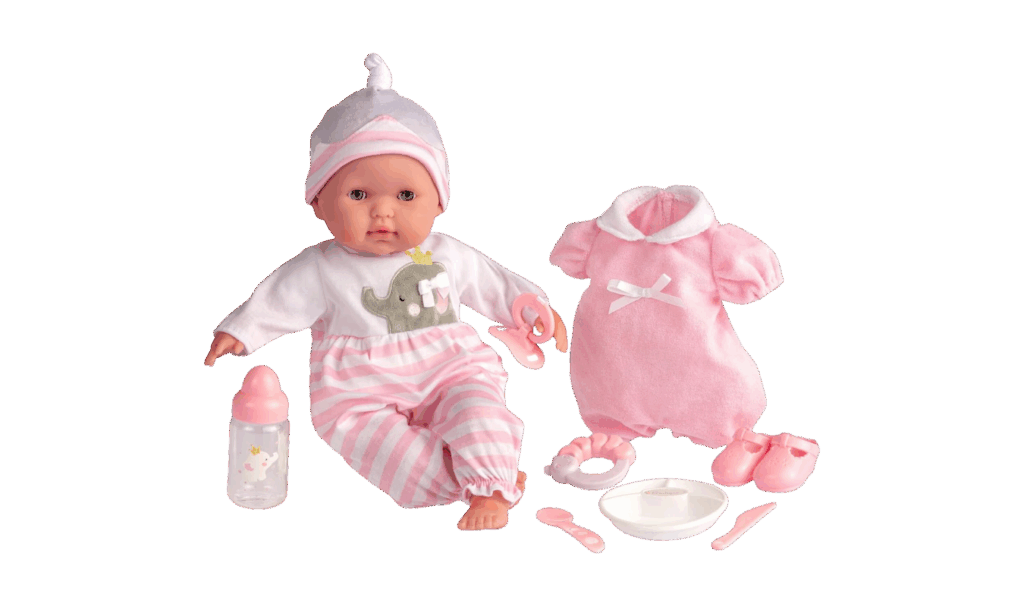
Baby Doll
Age recommendation: 18 months +
Baby dolls are another toy that sparks tons of imaginative play. Through doll play, little ones naturally step into caregiving roles. This type of hands-on pretend play builds empathy, nurturing skills, and emotional understanding.
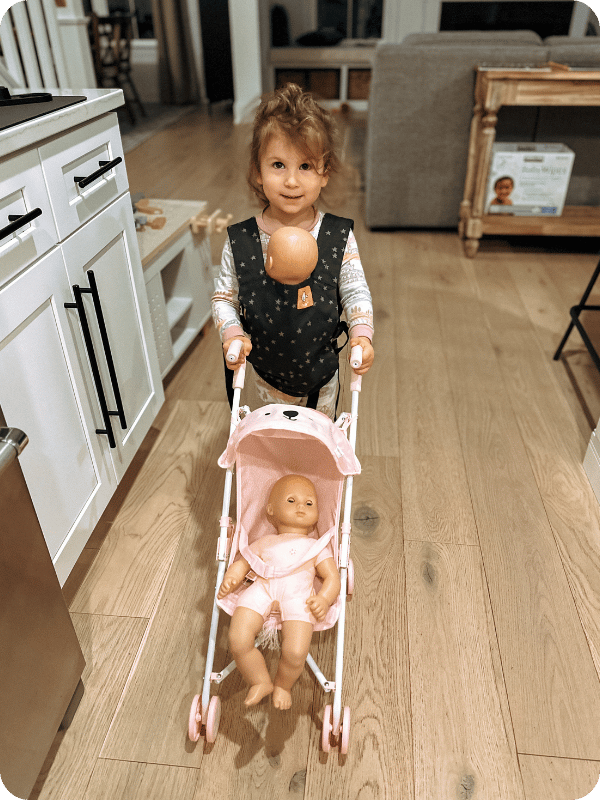
Doll play also encourages storytelling. Little ones create scenarios, act out routines, and use language to describe what their baby needs.
I especially love introducing baby dolls before a new sibling arrives. Practicing caregiving through pretend play helps little ones understand what to expect and feel included in the process. Having their own baby to care for gives them a sense of responsibility and connection during a big family transition.
Skills It Supports
Fine Motor Skills – Dressing dolls, fastening snaps, brushing hair, and using small accessories strengthen hand-eye coordination and dexterity.
Social & Emotional Development – Littles practice empathy, nurturing, and understanding others’ needs as they care for their dolls.
Confidence & Responsibility – Caring for a doll gives children a sense of purpose and independence.
Pretend Play Ideas
Big Sibling Practice – Especially helpful before a new baby arrives! Practice holding the baby, gently tickling their feet, giving a bottle, etc.
Doctor Visit – Pretend the doll needs a checkup. Get out the doctor kit and listen to the heartbeat, take a temperature, give a bandage.
Tea Party – Invite other dolls or stuffed animals and set the table, serve snacks and tea, and practice conversation.
07. Modular Play Couches
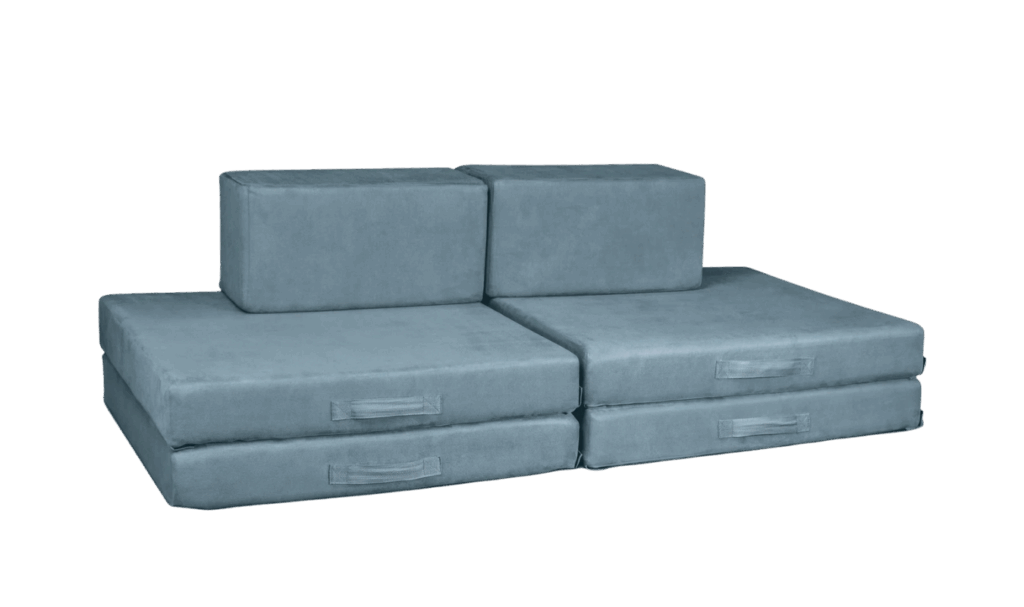
Figgy Play Couch
Age recommendation: 12 months +
We have the Figgy play couch and absolutely love it. It’s a main fixture in our playroom and I love that it’s made with safer, non-toxic materials.
There is so much pretend play that happens with play couches. We use our favorite couch swag panels to create a car wash and an ice cream shop. Other forts and obstacle courses are always being dreamed up, too.

Modular play couches are great for gymnastics-like play and working on gross motor skills. We make ramps and work on balance, tumbling, and walking up an incline.
Skills It Supports
Creative Thinking – There’s always something to dream up! One day it can be set up as a campsite, the next day it can be a car wash with our favorite couch swag panels.
Gross Motor Skills – Play couches encourage and provide opportunities for climbing, jumping, sliding, rolling, crawling, balancing, and core strength.
Teamwork & Building Skills – Kids can build together, or independently. Think: forts, obstacle courses, pirate ships, rockets, mountains, and more!
Pretend Play Ideas
Build a Fort – Build a cozy hideout! Create walls and a roof, add blankets and flashlights, and tell campfire stories.
Obstacle Course – Set up cushions for jumping and climbing. Make a slide with the wedge pieces and add in some stepping stones and/or other pillows from home!
Ice Cream Truck – Flip the pieces to make a counter and sell ice cream and other treats to customers. Add a couch swag panel to create more pretend play opportunities.
08. Dress Up Clothes & Accessories
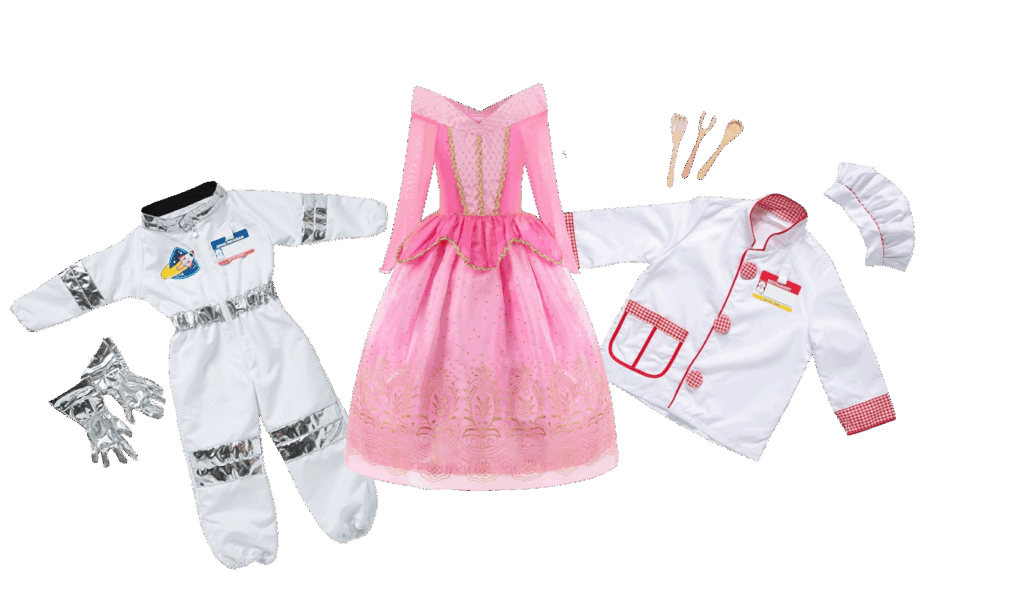
Toddler Dress Up Clothes
Age recommendation: 2.5 years +
Dress up clothes unlock a world of pretend play. With an outfit change, your littles can transform into princesses, doctors, vets, community helpers, and more. Anything they can dream up!
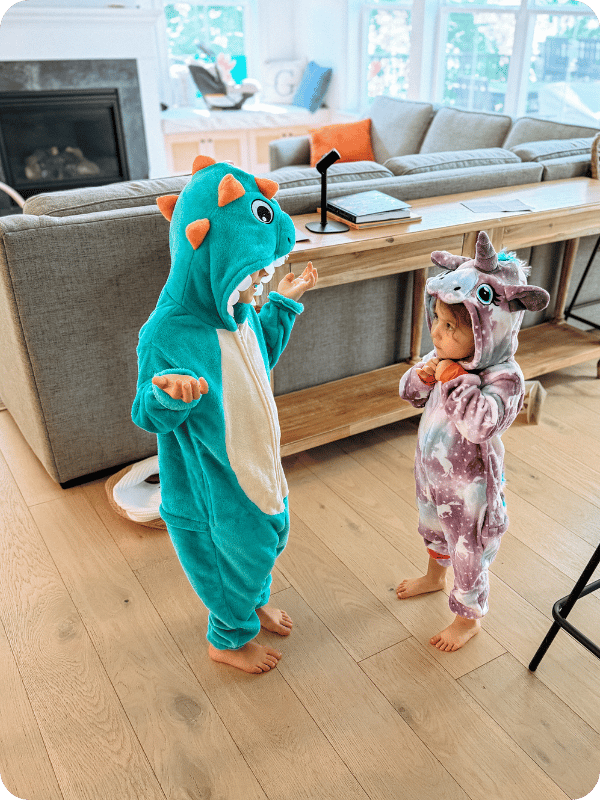
One of the best things about dress-up clothes is that they help children explore different roles and experiences. By acting out real-world jobs and everyday situations, kids gain a better understanding of the world around them while building confidence in their own abilities.
Dress up clothes and accessories can even help with practicing new experiences. If your child doesn’t like going to the doctor, you can spend time playing with a doctor kit acting out what will happen. This can make children feel more at ease.
Pro Tip: If your toddler loves dress-up, grab this dress up clothes organizer. We love it!
Skills it Supports
Language & Communication – Dress-up play encourages storytelling, role-playing conversations, and learning new vocabulary related to different professions and experiences.
Confidence & Self-Expression – Taking on new roles allows littles to experiment with ideas, express their interests, and build self-confidence.
Imagination & Creativity – Children create characters, invent storylines, and act out endless scenarios using their imagination.
Pretend Play Ideas
Superhero Adventures – Create a mission for your superhero. Rescue stuffed animals or build obstacle courses to complete!
Storybook Characters – Bring your favorite books to life by acting out scenes from a favorite story.
School Play – Take turns being the teacher and student. Read books, teach lessons, talk about the weather and days of the week, and take attendance.
09. Play Food
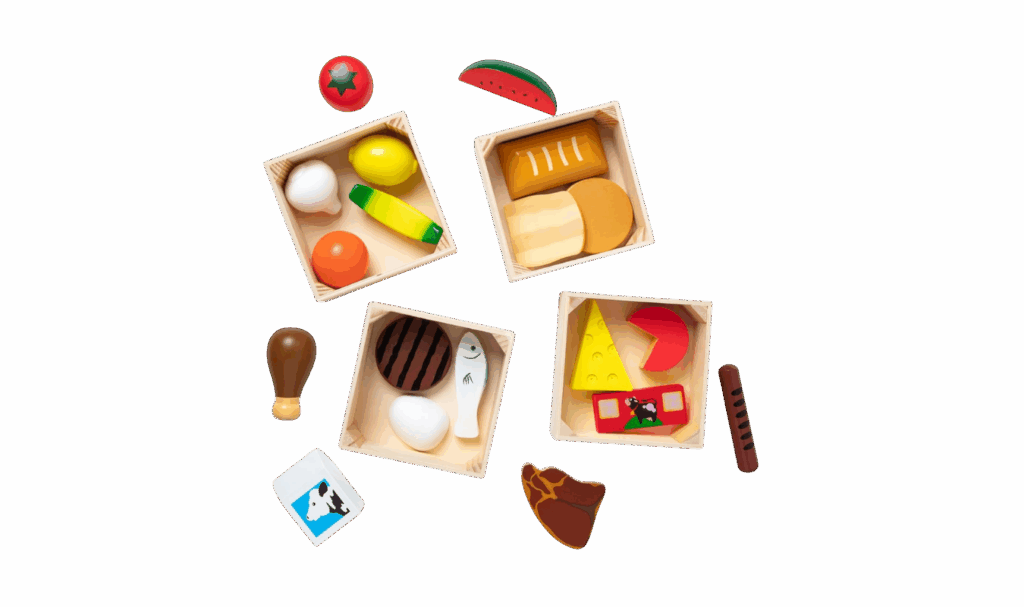
Wooden Play Food
Age recommendation: 12-15 months +
Even if you don’t have a play kitchen, play food is still such a fun pretend play toy. It’s so versatile. It can be used with a play kitchen, shopping cart, dollhouse, play store, or even on its own. Your kids can pretend the couch is a roadside farm stand and sell their play food from there. The possibilities are endless, which means it continues to engage littles as their imaginative play becomes more complex.
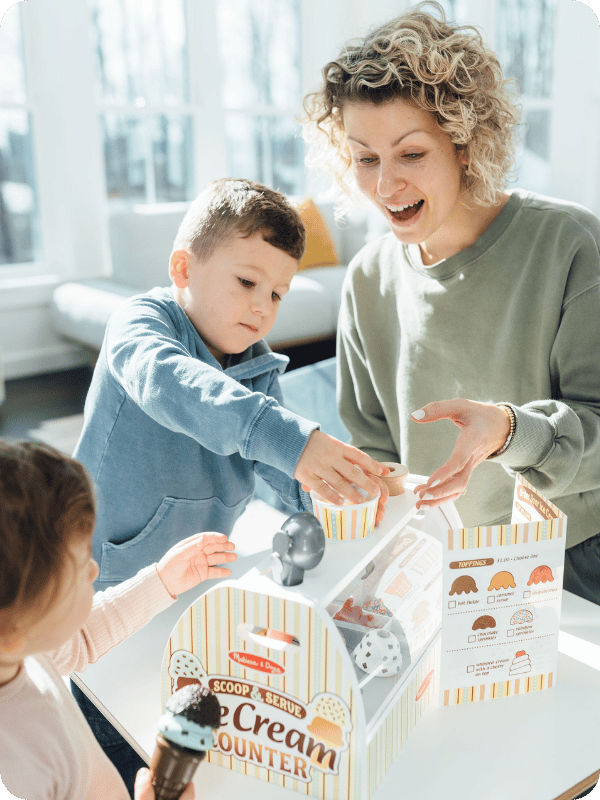
Because food is such a familiar part of everyday life, little ones naturally know how to incorporate it into their play. They can imitate what they see adults doing, create their own stories, and practice social and communication skills through play.
Skills it Supports
Early Math Skills – Play food provides opportunities to count, sort, categorize, compare quantities, and practice simple money concepts during play.
Fine Motor Skills – Many play food sets include pieces that can be cut, stacked, sorted, or arranged, helping little ones strengthen hand muscles and coordination.
Language & Communication – Children build vocabulary by naming foods, describing meals, taking orders, and engaging in pretend conversations.
Pretend Play Ideas
Picnic Day – Pack a basket and head out on an adventure. Choose foods for the picnic, spread out a blanket, and serve dolls and stuffed animals.
Birthday Party – Plan a celebration! Bake a birthday cake, serve the party food, sing, and celebrate with dolls, stuffed animals, or peers.
Play Kitchen Cooking – Use play food to prepare a meal! Follow a simple recipe, and serve it.
10. Realistic Toy Animals
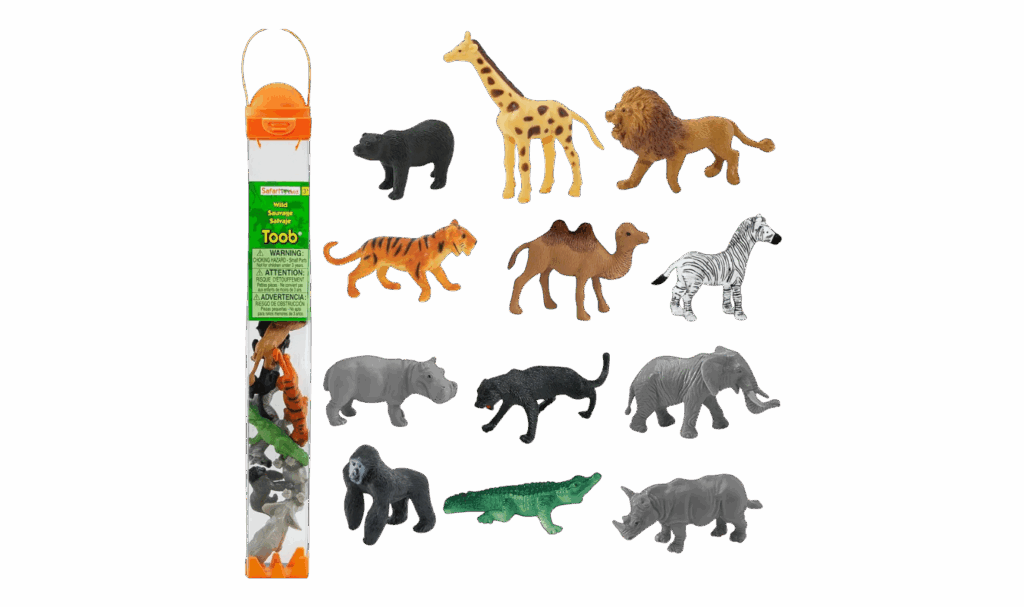
Toob Animal Figurines
Age recommendation: 2 years + (depending on size of toy animals)
Realistic toy animal figurines are often used in Montessori-inspired playrooms, and they’re a great toy for pretend play. They can be combined with other pretend play toys like Magnatiles, dollhouses, and toy barns. Children use them as characters and come up with imaginative play scenarios!
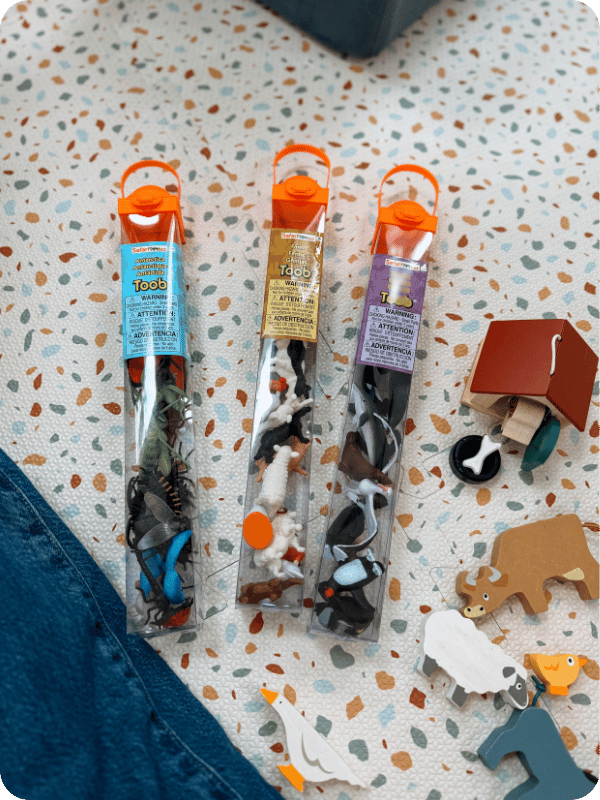
Unlike lots of toys with a specific purpose, animal figures can be used in endless ways. Your little one might use them to recreate a trip to the zoo one day and imagine a safari adventure the next. This flexibility helps keep play new and engaging while allowing littles to lead the story.
Skills it Supports
Early Science & Nature Learning – Animal figures introduce concepts like habitats, life cycles, animal characteristics, and ecosystems.
Critical Thinking – Children think through challenges during play, such as finding shelter for animals, organizing habitats, or helping animals solve problems within their stories.
Social & Emotional Development – Caring for animals, rescuing them, or creating family groups encourages empathy and helps children understand relationships and emotions.
Pretend Play Ideas
At The Zoo – Grab blocks or Magnatiles to build a zoo. Make sure each animal has some shelter and food!
Vet Clinic – Turn your play space into an animal hospital. Check heartbeats, apply bandages, feed recovering animals and help them feel better.
Habitat Building – Create homes for different animals. Build a jungle, ocean, farm, desert, or forest and talk about what each animal needs to survive. You can make this more like nature play and take the animals outside to build homes with real sticks, rocks, grass, etc.
Looking for more?
Learn more about my playroom organization system and the toy storage systems that actually work.
We also broke down our favorite play kitchens, modular play couches, and toddler tables so you can figure out what works best for your family!
Leave a Reply
OTHER POSTS YOU MAY LIKE:




MS, SLP
Founder of Eat Play Say, Speech-Language Pathologist, Feeding Specialist, Play Expert, Mom of 3
Jordyn Koveleski Gorman
SPECIALIZES IN: Infant and toddler speech-language, play, and feeding development, and curating a team that provides expert help that feels like a reassuring text from that one mom friend
EDUCATION: Jordyn received her BS in Speech-Language Pathology from Bloomsburg University and her MS in Speech-Language Pathology from Towson University
FAVE PARENTING FIRST: “The first true smile, it’s the sweetest!”

MS, CCC-SLP, CBS, IBCLC
Speech-Language Pathologist & Feeding Specialist, Certified Breastfeeding Specialist, International Board Certified Lactation Consultant
Jessica Nicholson Cocca
SPECIALIZES IN: Breast and bottle feeding, tongue ties, oral motor dysfunction, starting solids, infant and toddler speech, treating oral motor disorders
EDUCATION: Jessica received her BS in Communication Sciences and Disorders from Pennsylvania State University in 2015 and her MS in Speech-Language Pathology from Towson University in 2017
FAVE PARENTING FIRST: “Baby’s first wave! What a fun first communication gesture!”

MA, CCC-SLP, CLC
Speech-Language Pathologist, Certified Lactation Counselor
Jennifer McFarlin
SPECIALIZES IN: Breast and bottle feeding, tongue ties, starting solids, infant and toddler speech development
EDUCATION: She received her BS in Speech-Language Pathology from Ball State in 2014 and a MA in Speech-Language Pathology from Ball State in 2016.
FAVE PARENTING FIRST: “My favorite baby’s first is their first true smile that just warms your soul knowing they are smiling at you. My other favorite is their first word. I love watching their language explode!”

MS, CCC-SLP
Bilingual Speech-Language Pathologist
Nicole La Petina Kelly
SPECIALIZES IN: Bilingual development (Spanish-English), supporting multilingual families, infant and toddler speech
EDUCATION: She received her BA in Communication Sciences and Disorders and in Spanish from the University of Wisconsin-Madison in 2014 and her MS in Speech-Language Pathology with an English-Spanish Specialization from Marquette University in 2016.
FAVE PARENTING FIRST: “It’s the first slobbery kisses for me!”

RDN, LD
Licensed Registered Dietitian
Kimberly Vede
SPECIALIZES IN: Infant and pediatric nutrition including breastfeeding, formula feeding, and starting solids. She also specializes in prenatal and postpartum nutrition.
EDUCATION: She received her BSc in Biology in 2014 from Life University, and her BSc in Dietetics from Life University in 2019.
FAVE PARENTING FIRST: ”The first time they say ‘mama!’”


This checklist was created with input from a Speech-Language Pathologist, Occupational Therapist and Physical Therapist and has been downloaded over 20,000 times by parents worldwide. Learn the important milestones to pay attention to, and keep it in your digital back pocket during the baby + toddler years!
Comprehensive Milestone Checklist for gross motor, fine motor, and speech-language milestones for 0-36 months,
DOWNLOAD FOR FREE


