


How to Transition from Formula to Milk
March 7, 2026
Jordyn Koveleski Gorman

Last Updated on March 7, 2026 by Jordyn Koveleski Gorman
If you’re wondering how to transition from formula to milk, then it’s likely that there’s a first birthday somewhere in your near future. You’re probably wondering how a year went by so fast.
You’ve put so much time, effort, and energy into feeding your little one in their first year. And now that you’ve got the hang of it, it’s time to change! If that doesn’t describe parenthood, I don’t know what does.
Making the switch from formula to milk can feel like so many decisions all at once. Do you stop cold turkey? Change from bottle to cup at the same time? Do you drop feeds? What kind of milk do you offer them? What if your baby hates milk? The questions go on and on!
Rest assured: you don’t have to make all these decisions right now. You have time. And Eat Play Say is in your corner. Our team of development experts, feeding specialists, and speech-language pathologists has the resources to help you feel prepared for this!
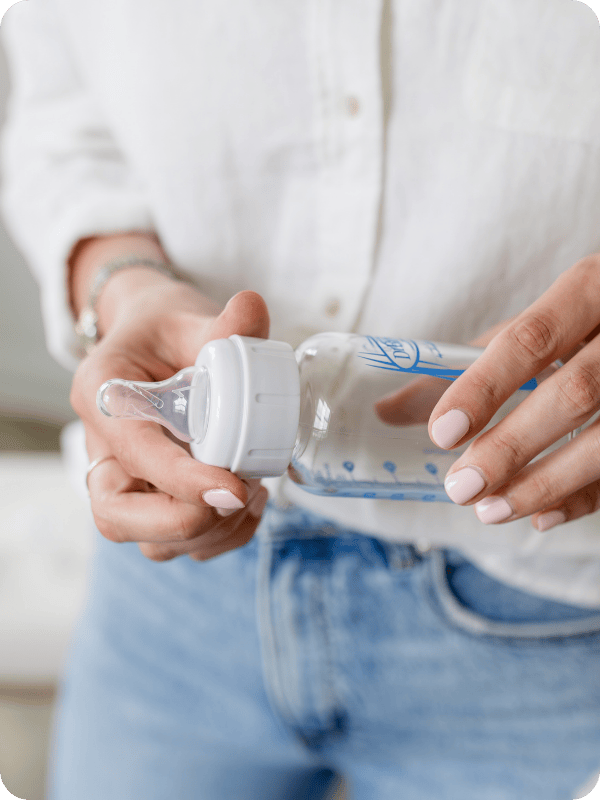
Switching from formula to milk: What to know
There are tons of milk and milk alternative options on the market these days. Choosing the right milk option for your little one involves weighing the benefits and drawbacks of different choices that fit within your family.
What does Eat Play Say’s dietitian suggest when it comes to choosing which milk to serve your little one? As long as they don’t have a dairy allergy or sensitivity and there are no other reasons they need to avoid dairy, we strongly encourage cow’s milk. This blog breaks down what the best milk is for your toddler and why.
If your child has an allergy or sensitivity to cow’s milk, there are some great plant-based options on the market. It can be hard to reproduce the nutritional makeup of cow’s milk in plant-based milks, but there are multiple options that provide well-balanced nutrition for littles who can’t have cow’s milk for any number of reasons.
You can find more information about our recommendations for plant-based milks here. It can feel overwhelming to sort through the options and to know what’s “good,” but you aren’t alone.
It’s also important to note that you do not have to wean from formula to cow’s milk. In fact, you can wean to water and focus more on offering nutrient-rich foods! If you are offering your child a variety of nutrient dense foods, specifically those foods that offer high levels of Vitamin D and calcium, they are likely to absorb a similar amount of nutrients from foods as they would from milk.
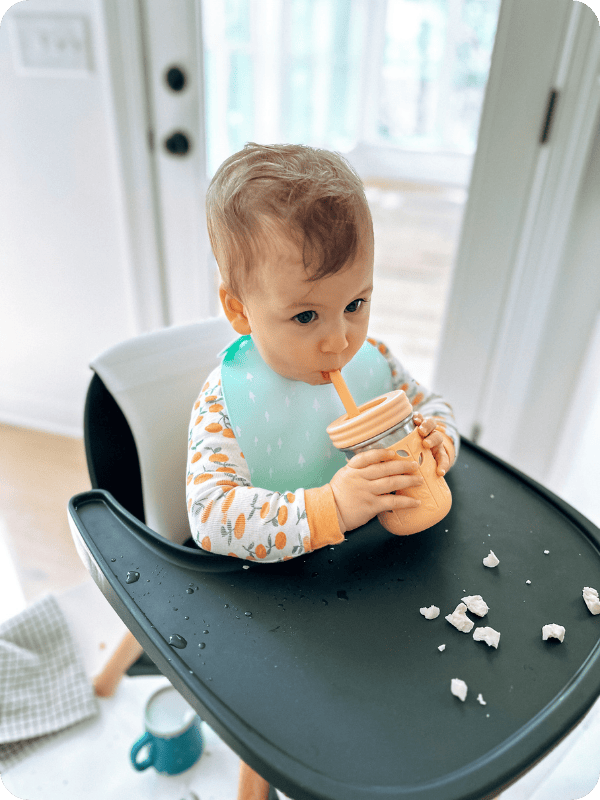
When can babies have whole milk?
For the purpose of this blog, we’re going to refer to transitioning away from formula to whole cow’s milk. The nutrient profile of whole milk is the most complete and beneficial for littles entering toddlerhood.
Infants (babies under 12 months) should not be given whole milk to drink. (1) After turning one, whole milk is recommended as a nutrient-dense beverage. As infants transition into toddlerhood at the 1-year mark, whole milk becomes easier to digest. The nutritional benefits also increase for children at this age.
Weaning from formula around 12 months isn’t an arbitrary age—your little one’s nutrition needs really are changing around this time! After 12 months, formula is not considered a complete source of nutrition. Toddlers are now expected to get the majority of their calories from solid foods and some from a complete nutritional drink, like milk.
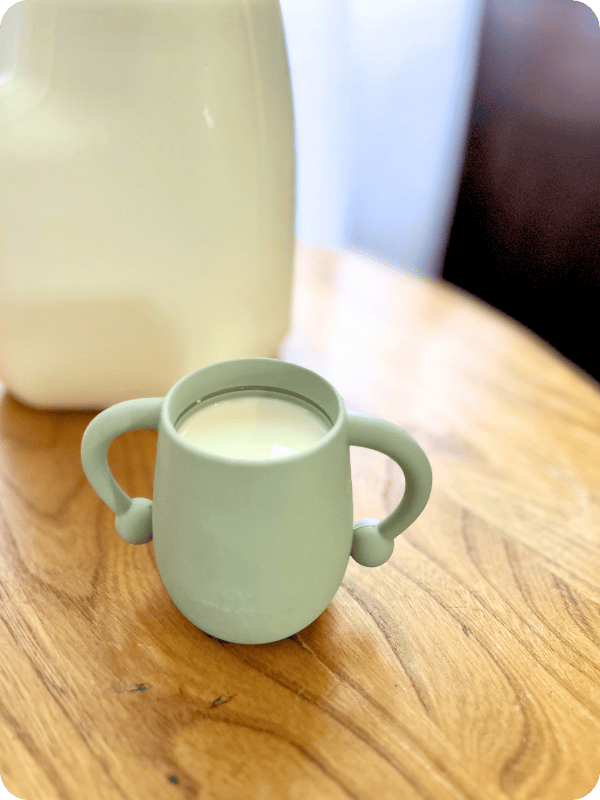
How much whole milk for a 1 year old?
The American Academy of Pediatrics recommends that toddlers (over 1 year of age) consume up to 16-24 ounces of milk per day. Additionally, they recommend 8-32 ounces of water daily. (2) If still nursing or pumping into toddlerhood, these amounts may be lower as breastmilk counts towards both milk and water intake.
First, your child is not defined by the number of ounces they drink. The best way to tell if your little one is getting enough to drink is through monitoring wet diapers, their stool, weight gain, and overall growth.
As feeding specialists, we have clinically seen that many toddlers struggle to drink 16-24 ounces of milk a day. In fact, the more milk a toddler drinks, the more likely they are to experience constipation. This is especially true if milk is not balanced with water. Too much milk can also impact iron absorption. It’s important to remember that every child is different.
Secondly, as mentioned above, milk is not necessary at this age. It sounds shocking, but it’s true! The nutrition provided by milk is necessary, but drinking milk is not the only way for little ones to get that nutrition. There are other foods and drinks that can provide similar nutritional profiles.
For a multitude of reasons, your little one may not reach the recommended amount of milk consumption set by the AAP, and that may be perfectly okay. Some little ones don’t like milk and refuse it entirely, or drink only small sips. Some would rather replace their formula feeds with whole foods. To a feeding specialist like me, that’s actually great news!
How much does a 1 year old eat?
A typical 1-2 year old will consume 1,000-1,400 calories per day. (3) That means the upper end of the AAP’s recommended daily milk consumption of 16-24 ounces would make up 40% of your child’s daily caloric intake!
That leaves very little room to explore new foods, chewing, and oral-motor skills needed to develop healthy eating patterns. That should really put into perspective for you that it is okay if your child does not drink a large volume of milk. We want toddlers to eat their calories rather than drink them!
So, how much milk does your 1-year-old need? It depends. For littles whose diet is rich in other dairy products, such as yogurt, kefir, and cheeses—not much! Maybe as little as a few ounces per day. For littles who don’t love dairy products or have limited whole foods, more milk may be important. Focus on your child’s overall liquid and solid consumption, rather than a specific amount of one food or drink.
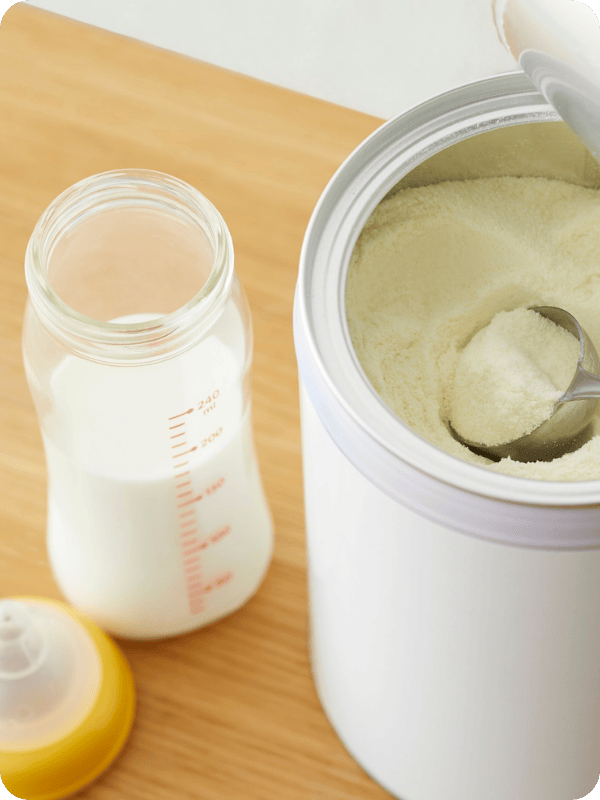
When to stop formula
Weaning from formula around the 12 month mark is developmentally and nutritionally appropriate, but it is not a hard and fast deadline. If your child consumes formula for a few weeks past their first birthday, that’s okay.
If you begin weaning and find that it’s proving especially frustrating for your child, you can slow down a little bit. On the other hand, if you’ve got their first birthday circled on the calendar as the day you can toss the can out cold turkey…we get it! Formula is expensive.
That said, the nutrition provided by formula is intended for infants under the age of one, and past their first birthday, it no longer provides the best benefit nutritionally compared to regular whole milk.
Toddler formulas and transitional formulas are available, but they don’t provide the complete nutrition that toddlers need. (4) To be frank, these are primarily excellent marketing campaigns from formula companies hoping to extend your investment into toddlerhood.
Generally speaking, your child doesn’t need these! In some cases, toddler formulas or other nutrition drinks may be recommended by medical professionals. But, those cases are usually secondary to a specific diagnosis or nutrition deficit.
How to transition from formula to milk
First, always consult with your pediatrician regarding your child’s specific needs or medical concerns. They know your little one’s history and can give appropriate medical advice specific to your child.
There are two types of weaning that will take place in the next few months. The first is switching from formula to milk. The second is weaning from a bottle to a cup. You may be tempted to try both at the same time. We recommend separating the events for best results and the least amount of road bumps.
You can move as fast or as slow as you want through weaning. Some littles accept a cold turkey approach where formula is replaced 100% with milk in one try. Many, however, do not. And that’s okay!
A slower approach is to transition the milk gradually over the course of a week, followed by one additional week of monitoring your baby. On day one, use ¾ formula and ¼ of new milk in the cup. By day 3, you can increase to a 50/50 split. Day 5 becomes ¼ formula, ¾ new milk. On day 7, you can transition to 100% new milk.
If your child refuses to drink at any point or shows signs of discomfort, it’s okay to move back to a previous step! Always consult your pediatrician regarding your child’s health and any concerns you have about symptoms they experience.
Remember that milk isn’t the only way to provide your child with the nutrition they need. If you’re struggling to get your little one on board with whole milk (I’ve been there!), try increasing their intake of other products, such as yogurt, cheeses, and foods rich in vitamins D, A, and calcium.

Need more help weaning?
Weaning is a process, and it’s okay to need support through it!
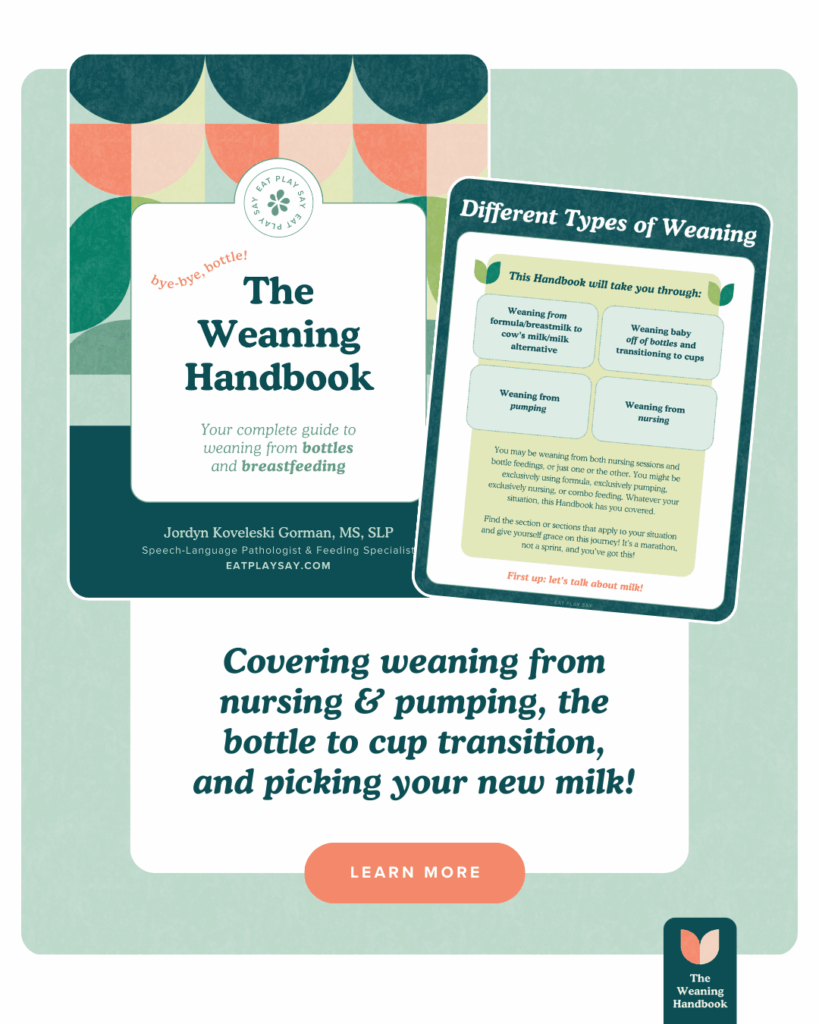
This blog offers a small window into our Weaning Handbook, which provides more than 100 pages of expert knowledge and guidance on weaning. Whether you’re formula feeding, breastfeeding, or pumping, this handbook covers it all. From weaning schedules to expert guidance on the best cups, this handbook has you covered.
Sources
- Committee on Nutrition; The Use of Whole Cow’s Milk in Infancy. Pediatrics June 1992; 89 (6): 1105–1109. 10.1542/peds.89.6.1105
- Lott M, Callahan E, Welker Duffy E, Story M, Daniels S. Healthy Beverage Consumption in Early Childhood: Recommendations from Key National Health and Nutrition Organizations. Consensus Statement. Durham, NC: Healthy Eating Research, 2019. Available at http://healthyeatingresearch.org.
- “Nutrition in Childhood and Adolescence”, The Clinician’s Guide to Pediatric Nutrition, Natalie D. Muth, MD, MPH, RDN, FACSM, FAAP, Mary Tanaka, MD, MS, FAAP
- George J. Fuchs, Steven A. Abrams, A. Adjowa Amevor, COMMITTEE ON NUTRITION; Older Infant-Young Child “Formulas”. Pediatrics November 2023; 152 (5): e2023064050. 10.1542/peds.2023-064050
Leave a Reply
OTHER POSTS YOU MAY LIKE:




MS, SLP
Founder of Eat Play Say, Speech-Language Pathologist, Feeding Specialist, Play Expert, Mom of 3
Jordyn Koveleski Gorman
SPECIALIZES IN: Infant and toddler speech-language, play, and feeding development, and curating a team that provides expert help that feels like a reassuring text from that one mom friend
EDUCATION: Jordyn received her BS in Speech-Language Pathology from Bloomsburg University and her MS in Speech-Language Pathology from Towson University
FAVE PARENTING FIRST: “The first true smile, it’s the sweetest!”

MS, CCC-SLP, CBS, IBCLC
Speech-Language Pathologist & Feeding Specialist, Certified Breastfeeding Specialist, International Board Certified Lactation Consultant
Jessica Nicholson Cocca
SPECIALIZES IN: Breast and bottle feeding, tongue ties, oral motor dysfunction, starting solids, infant and toddler speech, treating oral motor disorders
EDUCATION: Jessica received her BS in Communication Sciences and Disorders from Pennsylvania State University in 2015 and her MS in Speech-Language Pathology from Towson University in 2017
FAVE PARENTING FIRST: “Baby’s first wave! What a fun first communication gesture!”

MA, CCC-SLP, CLC
Speech-Language Pathologist, Certified Lactation Counselor
Jennifer McFarlin
SPECIALIZES IN: Breast and bottle feeding, tongue ties, starting solids, infant and toddler speech development
EDUCATION: She received her BS in Speech-Language Pathology from Ball State in 2014 and a MA in Speech-Language Pathology from Ball State in 2016.
FAVE PARENTING FIRST: “My favorite baby’s first is their first true smile that just warms your soul knowing they are smiling at you. My other favorite is their first word. I love watching their language explode!”

MS, CCC-SLP
Bilingual Speech-Language Pathologist
Nicole La Petina Kelly
SPECIALIZES IN: Bilingual development (Spanish-English), supporting multilingual families, infant and toddler speech
EDUCATION: She received her BA in Communication Sciences and Disorders and in Spanish from the University of Wisconsin-Madison in 2014 and her MS in Speech-Language Pathology with an English-Spanish Specialization from Marquette University in 2016.
FAVE PARENTING FIRST: “It’s the first slobbery kisses for me!”

RDN, LD
Licensed Registered Dietitian
Kimberly Vede
SPECIALIZES IN: Infant and pediatric nutrition including breastfeeding, formula feeding, and starting solids. She also specializes in prenatal and postpartum nutrition.
EDUCATION: She received her BSc in Biology in 2014 from Life University, and her BSc in Dietetics from Life University in 2019.
FAVE PARENTING FIRST: ”The first time they say ‘mama!’”


This checklist was created with input from a Speech-Language Pathologist, Occupational Therapist and Physical Therapist and has been downloaded over 20,000 times by parents worldwide. Learn the important milestones to pay attention to, and keep it in your digital back pocket during the baby + toddler years!
Comprehensive Milestone Checklist for gross motor, fine motor, and speech-language milestones for 0-36 months,
DOWNLOAD FOR FREE


