


Activities for Babies Learning Two Languages at Once
September 1, 2024
Jordyn Koveleski Gorman

Last Updated on August 21, 2026 by Jordyn Koveleski Gorman
This page contains affiliate links. We will receive a commission on qualifying purchases using these links.
Learning two languages at once might be one of the hardest skills an adult could take on, but for babies, it’s natural.
Whether baby is being raised in a bilingual home where both parents speak two (or more) languages or baby is learning one language from one parent and a different language from the other, incorporating activities that support bilingual language learning can be quite simple!
I teamed up with the Eat Play Say bilingual speech-language pathologist to pull together 5 simple activities for your little one learning two languages at once!
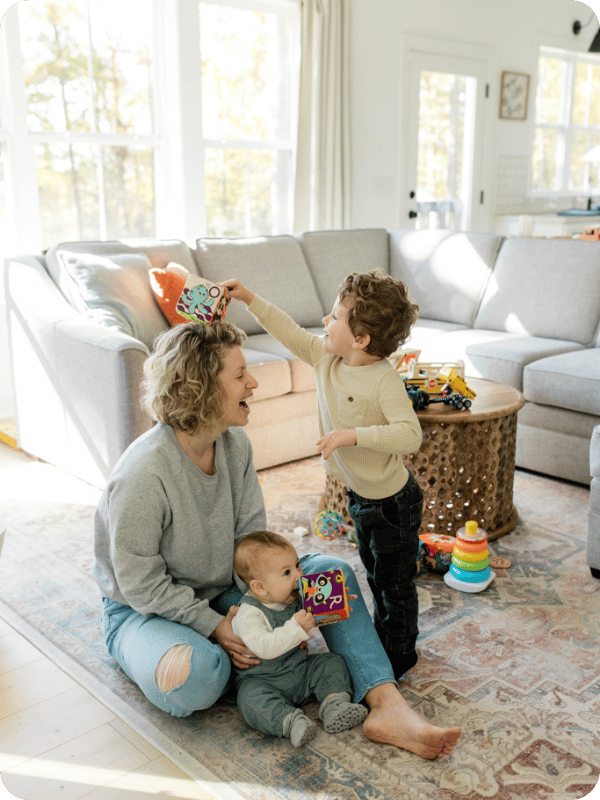
How to help baby learn two languages at once
It might seem overwhelming to come up with a game plan for teaching baby two languages. But the research is clear: being bilingual has many benefits. Benefits include improved executive function, a wider vocabulary, and even displaying more empathy than those who only speak one language. (1, 2, 3)
Even with strong evidence that raising bilingual children is a good thing, many parents feel discouraged by their community or have a hard time committing because it feels like too much work. Hopefully the activities in this blog help you feel less overwhelmed and more excited about raising a bilingual baby!
One helpful method for introducing a minority language is to pick one wake window during the day to speak exclusively the second language. This can make it feel more approachable, especially if only one member of the family speaks that language!
If you’ve already started introducing a second language to your little one, that’s great! Try out these tips below to increase exposure. And if you haven’t started yet, consider these ideas a roadmap for starting the journey.
5 daily routines to help baby learn two languages
Prepare a meal
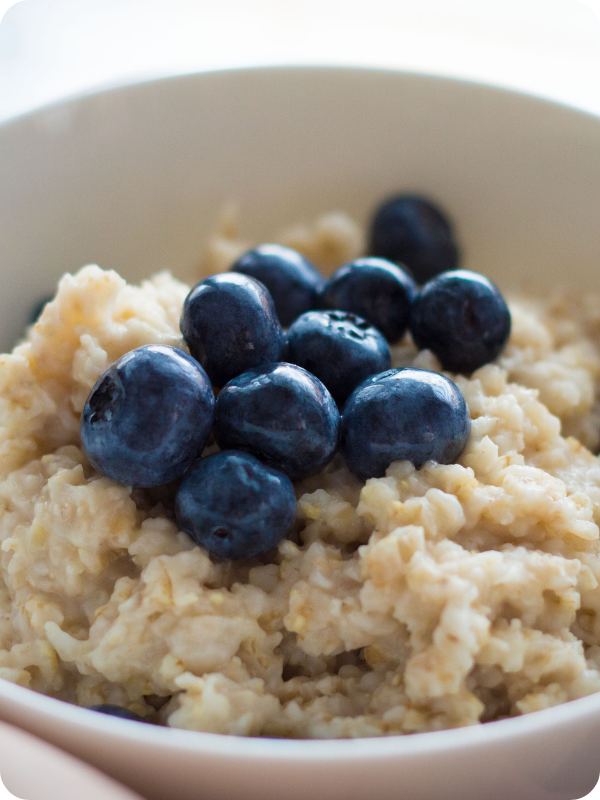
We all need to nourish our bodies, and what better time to expose baby to new words and phrases than while cooking a meal! Label foods and ingredients using the second language, and add descriptors, too, such as the color, texture, or flavor of something! Rotate what meal of the day you speak in the secondary language so baby gets exposure to breakfast, lunch, and dinner foods.
In addition to labeling ingredients, you can describe what you are doing as well, such as cutting fruit, spreading the butter, or frying the bacon. If only one parent speaks the minority language and rotating meals doesn’t work well for your schedule, that’s okay. Any exposure is helpful!
Do a chore
For a brief time in a child’s life, chores will be the most exciting thing ever! Take advantage of their interest in household tasks by including them in chores while speaking the second language.
Laundry is a great example. You can label clothing items and practice basic commands, like “put it in,” “close,” and “open.” These words and phrases will be commonly heard in the primary language throughout day-to-day life, which ensures that your little one will build associations between the different vocabularies!
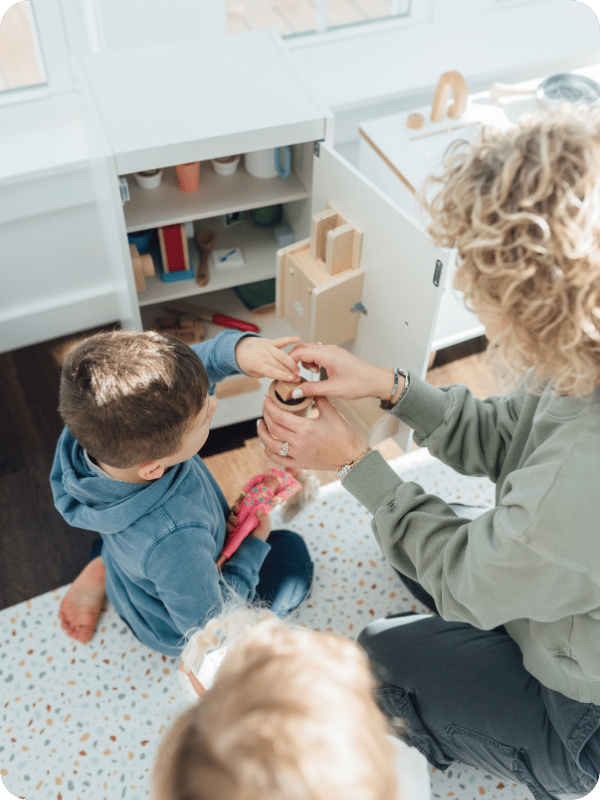
Play with toys
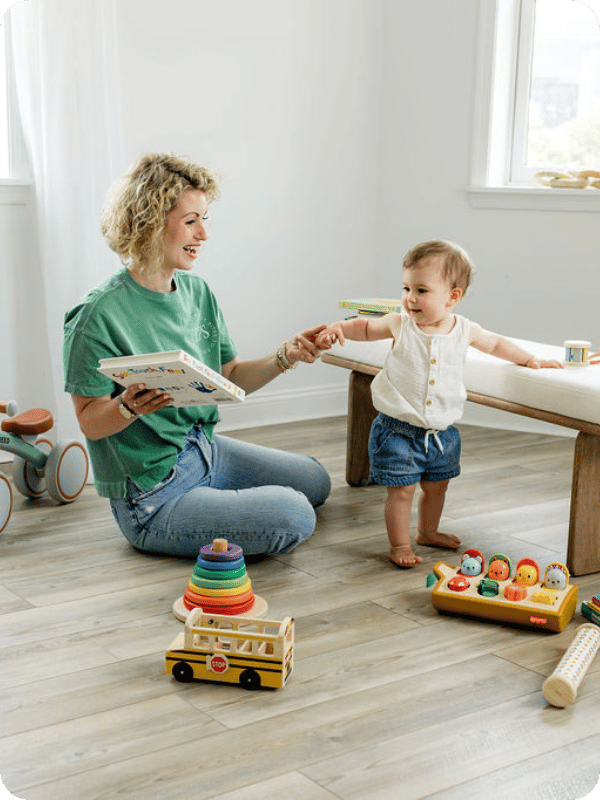
Use baby’s everyday toys, but switch to the minority language! There’s no need for special “bilingual” toys; what your baby already has will work perfectly. Similarly to the words baby hears when doing chores, playing and using both languages at different times can help baby build associations.
Use functional vocabulary (basic nouns, verbs, and prepositions) to develop and grow language skills with toys. If you’re playing with a water table, for instance, you can label the animals in the water (fish, frog, turtle, etc.) and describe what they’re doing, like swimming or jumping. Use basic commands like “put in” and “take out,” too.
Generally, playtime using the second language should look very similar to playtime in the primary language!
Sing a song
Have a dance party to music in the minority language! You can sing along to the words with your little one. If you’re looking for a fun musical activity you can take with you, both Tonies and Yoto Players allow for multiple languages on their devices. You can check out our breakdown of these two screen-free players here.
Using gestures can help keep baby involved and enhance the song’s vocabulary. Aside from the benefits that singing has on language development, it’s also fun, keeps baby’s attention (for the most part), and is a great way to bond!
Read a book
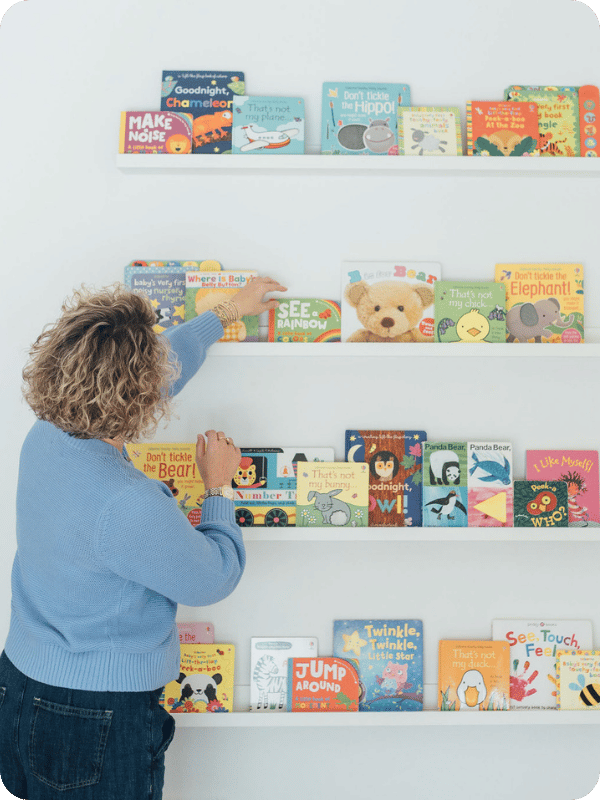
Reading has many benefits regardless of how many languages you’re trying to teach your child! Pick a book that is written in the minority language, or even a bilingual book that mixes both languages. For English/Spanish speakers, we recommend these books!
Use the same reading strategies you normally would to get baby involved: pause for imitation, include movements and gestures, and use sound effects, too! Feel free to expand on the book’s written text by labeling nouns and verbs to describe what’s on the page.
By implementing these 5 simple things into your daily routine, you will make a huge impact on your bilingual baby!
More ways to help baby learn two languages at once
In addition to these simple daily tasks, there are a few other things that can help improve baby’s retention and mastery of two languages. Research indicates that exposure to multiple speakers of the secondary language, even for short bursts, may improve their language skills more than hearing the same voice speak in the minority language for long periods of time! (4) For families where only one immediate family member speaks the minority language, it can be especially helpful to find a group or community to join that has other speakers of that language too.
Remember that consistency and quality is better than quantity. If baby only hears the minority language for one hour per day, but gets that exposure in meaningful ways every day, that will be better long-term than if they hear it for 8 hours once a month!
And don’t forget to give yourself and your family grace; teaching baby two languages doesn’t happen overnight, and it’s okay if things aren’t perfect all the time! It will be worth it for your child to experience the future benefits of being bilingual!
More resources for babies and toddlers
For more support and educational resources to help you parent with confidence, check out our Handbooks! Written by our team of pediatric specialists, these in-depth guides help you through the big milestones with evidence-backed tips, tricks, and practical hands-on knowledge. No fluff, just answers!
Find more free resources on our blog:
- More speech & language help
- Starting solids tips
- Breast & bottle feeding support
- Play activities for littles
- Infant & toddler development
- Get help feeding toddlers
Sources
- Shoghiro, R. Acquisition of Literacy in Bilingual Children.
- Chen, Muzi & Fang, Yuqi. (2022). The Relationship between Bilingual and Empathy. 10.2991/assehr.k.220504.423.
- Barac R, Bialystok E, Castro DC, Sanchez M. The Cognitive Development of Young Dual Language Learners: A Critical Review. Early Child Res Q. 2014;29(4):699-714. doi: 10.1016/j.ecresq.2014.02.003. PMID: 25284958; PMCID: PMC4180217.
- Hoff E, Core C. Input and language development in bilingually developing children. Semin Speech Lang. 2013 Nov;34(4):215-26. doi: 10.1055/s-0033-1353448. Epub 2013 Dec 2. PMID: 24297614; PMCID: PMC4457512.
OTHER POSTS YOU MAY LIKE:


MS, SLP
Founder of Eat Play Say, Speech-Language Pathologist, Feeding Specialist, Play Expert, Mom of 3
Jordyn Koveleski Gorman
SPECIALIZES IN: Infant and toddler speech-language, play, and feeding development, and curating a team that provides expert help that feels like a reassuring text from that one mom friend
EDUCATION: Jordyn received her BS in Speech-Language Pathology from Bloomsburg University and her MS in Speech-Language Pathology from Towson University
FAVE PARENTING FIRST: “The first true smile, it’s the sweetest!”

MS, CCC-SLP, CBS, IBCLC
Speech-Language Pathologist & Feeding Specialist, Certified Breastfeeding Specialist, International Board Certified Lactation Consultant
Jessica Nicholson Cocca
SPECIALIZES IN: Breast and bottle feeding, tongue ties, oral motor dysfunction, starting solids, infant and toddler speech, treating oral motor disorders
EDUCATION: Jessica received her BS in Communication Sciences and Disorders from Pennsylvania State University in 2015 and her MS in Speech-Language Pathology from Towson University in 2017
FAVE PARENTING FIRST: “Baby’s first wave! What a fun first communication gesture!”

MA, CCC-SLP, CLC
Speech-Language Pathologist, Certified Lactation Counselor
Jennifer McFarlin
SPECIALIZES IN: Breast and bottle feeding, tongue ties, starting solids, infant and toddler speech development
EDUCATION: She received her BS in Speech-Language Pathology from Ball State in 2014 and a MA in Speech-Language Pathology from Ball State in 2016.
FAVE PARENTING FIRST: “My favorite baby’s first is their first true smile that just warms your soul knowing they are smiling at you. My other favorite is their first word. I love watching their language explode!”

MS, CCC-SLP
Bilingual Speech-Language Pathologist
Nicole La Petina Kelly
SPECIALIZES IN: Bilingual development (Spanish-English), supporting multilingual families, infant and toddler speech
EDUCATION: She received her BA in Communication Sciences and Disorders and in Spanish from the University of Wisconsin-Madison in 2014 and her MS in Speech-Language Pathology with an English-Spanish Specialization from Marquette University in 2016.
FAVE PARENTING FIRST: “It’s the first slobbery kisses for me!”

RDN, LD
Licensed Registered Dietitian
Kimberly Vede
SPECIALIZES IN: Infant and pediatric nutrition including breastfeeding, formula feeding, and starting solids. She also specializes in prenatal and postpartum nutrition.
EDUCATION: She received her BSc in Biology in 2014 from Life University, and her BSc in Dietetics from Life University in 2019.
FAVE PARENTING FIRST: ”The first time they say ‘mama!’”


This checklist was created with input from a Speech-Language Pathologist, Occupational Therapist and Physical Therapist and has been downloaded over 20,000 times by parents worldwide. Learn the important milestones to pay attention to, and keep it in your digital back pocket during the baby + toddler years!
Comprehensive Milestone Checklist for gross motor, fine motor, and speech-language milestones for 0-36 months,
DOWNLOAD FOR FREE


