


When Do Babies Start Walking?
September 9, 2024
Jordyn Koveleski Gorman

Last Updated on March 16, 2026 by Jordyn Koveleski Gorman
This page contains affiliate links. We will receive a commission on qualifying purchases using these links.
Your baby is likely crawling everywhere, and they may be faster than you ever thought possible. You finally got all the outlets covered and cabinets secured, and who knows what else you had to baby proof along the way.
With help from our physical therapist, we put together this guide about when to expect your little one to walk and how you can help them do it.
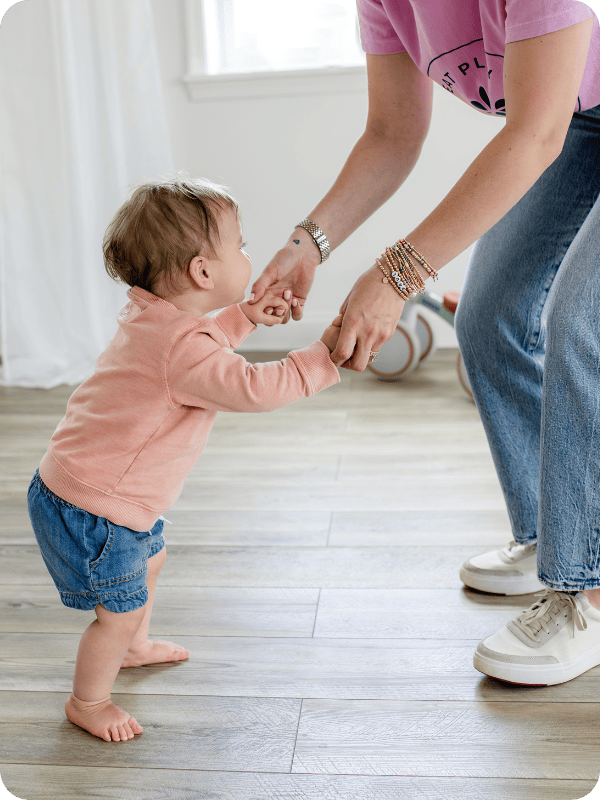
When do infants begin to walk?
Many babies take their first steps between 9 and 18 months. (1)
That’s a huge range, isn’t it? There’s a big difference between a 9 month old and an 18 month old.
Well, walking is a huge deal. It’s one of those developmental milestones that requires many pieces to come together in order to happen. And at the same time, your baby is growing, saying their first words, weaning from breastmilk or formula, eating more solids, and sleeping longer stretches. They have a lot going on!
Because this milestone occurs at such a wide timeframe, gauging when it will happen is truly an individual process. Every baby is different! That said, there are a few sure signs that independent walking is on its way.
You can bet their first independent steps are right around the corner once your baby is able to:
- Crawl on hands and knees
- Pull to stand
- Stand without support for a few seconds
- Walk with hands held or a push toy
If your baby is showing no signs of trying to pull to stand by 9-10 months, or you see no progress towards walking within 2 months of pulling to stand, or no movement towards walking by 15 months at the latest, it’s time to look into an evaluation so your baby doesn’t fall behind. You can talk to a pediatric professional at Eat Play Say in just a few days.
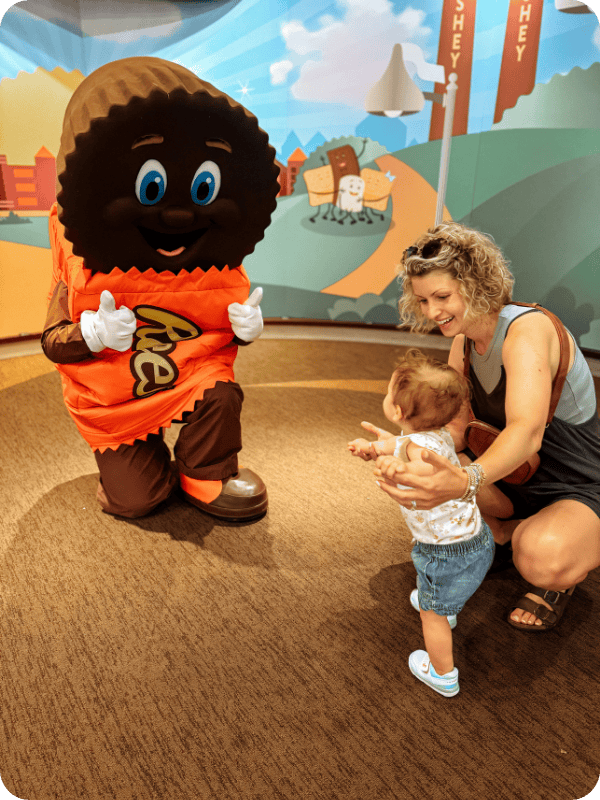
How to help baby learn to walk
There are so many things caregivers can do to help support little ones on their journey to walking. In fact, so many games, activities, and toys are helpful, that it’s easier to start off by telling you just a few things to avoid.
For instance, we recommend leaving behind sit-in baby walkers. These come with a high risk of falls and other injuries. And they don’t actually help your baby learn to walk! Little ones tend to rely on the support from the walker rather than their own muscles.
Next, we want to avoid holding your baby’s hands above their shoulder height. Your baby needs their arms for balance! If they want to hold your hands, it’s best to get down on their level so you can hold them at shoulder level or below. Or even better, support them at their trunk or waist and keep their hands free for balance and catching themselves if they fall!
Last but not least, we do not want to wait and see. If you’re ever worried about your baby’s development, it’s time to ask for help! Early intervention is free or low cost in most states, and you can self-refer if your pediatrician wants you to “wait and see.”
Your intuition is real. Listen to your gut. If you feel like your baby isn’t making progress toward independent walking by their first birthday, don’t wait! You can download our free comprehensive Milestone Checklist to check and see your baby’s progress and where they might need more support!
Now that you know what to avoid, below are our favorite activities that encourage your baby to take those first steps. These activities help them build strength, confidence, and endurance as they figure out how to use their feet!
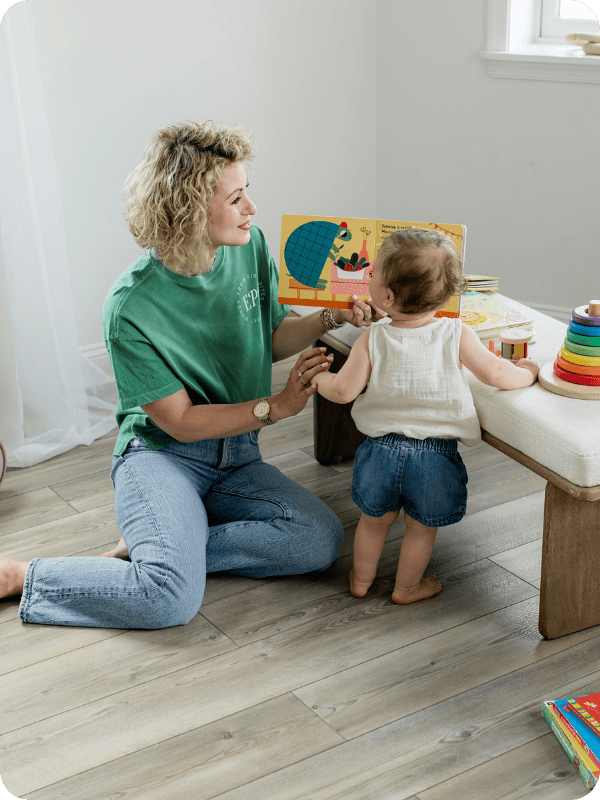
Break out the bubbles!
Bubbles are a favorite activity for so many reasons. They’re great for working on speech (“pop, bubbles, more”), fine motor (finger isolation), and gross motor development (chasing bubbles). Grab your favorite bubble wand, gun or machine and let the bubbles do the heavy lifting. While your baby is standing at a stable surface, blow the bubbles up in the air far enough away that they might want to let go to reach and pop the bubbles! This will encourage independent standing and maybe even a step or two.
Walk to mama or dada (or whoever else is around!)
A classic “game” of walking from one caregiver to the other or from the couch/wall to a caregiver. Stand your baby up independently, step back a few steps, and call their name (or hold their favorite toy). Reach out your hands to encourage them to take a step or two. Don’t get too far away at first. You want to build their confidence, and strength, instead of discouraging them.
Fill up your baby’s hands
When working on standing, give baby two toys to hold, such as egg shakers, small balls, or mini stuffed animals. Encourage them to bring them to you, put them in a basket, or just have a dance party. Since their hands are full, they won’t be able to grab onto anything for support and might just take a few steps!
Use a push toy or shopping cart
You will have to help your baby control, steer, and propel push toys at first, but soon they’ll get the hang of it. Block off any stairs with a secure gate and keep your baby out of the kitchen when you’re cooking. Set up an open space for them to roam. Sometimes it’s easier to start on carpet so they don’t go too fast, but they’ll be zooming around on hard floors in no time. If using a shopping cart, I recommend adding heavier toys inside so it doesn’t tip or get away from your baby.
Take it outside
Pull out the water table, little slide, or even bubbles and work on standing and walking in the grass. Your baby can work on stand-squat-stand and cruising at the water table. The slide encourages reciprocal leg movement when going up the steps. The grass is a more unstable surface (but still cushions those falls!) to practice balance.
For more activities that support your baby’s development, check out our blog on the best activities for 1 year olds!
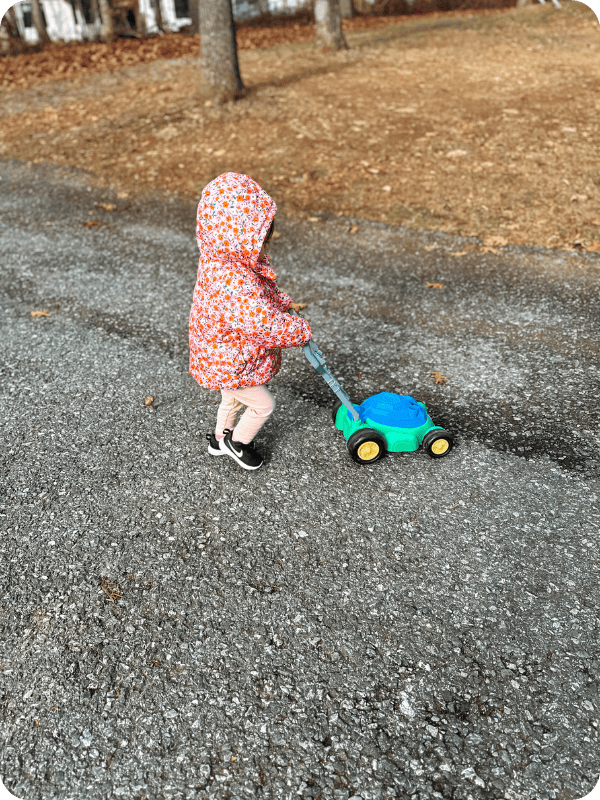
More ways to help your baby walk
In addition to specific activities, you can also help your baby learn to walk by selecting toys that encourage specific skills. There are countless ways to promote muscle strengthening, cruising, pulling to stand, and building balance!
Toys to help baby walk
Here are some physical therapist approved toys for working on walking!
Activity Cube: Work on pulling to stand, cruising around to play with the different parts of the cube, and letting go with one or both hands to play while standing.
Push Walker: What better way to work on walking than actually walking? (hint: there is none). Plus, this one doubles as a toy for sitting and standing play.
Balance Bike: Great to work on reciprocal leg movement and balance, of course!
Ride-On Train: Work on stand-squat-stand to pick up the letter blocks and drop them in the train. Use it as a ride-on or a push walker!
Cardboard Blocks: Stack up to work on squat to stand, kick towers over to work on single leg balance, or make a path to walk through with a push toy or hand held assistance.
Shopping Cart or Doll Stroller: Better for more experienced walkers because many of them are lightweight and can tip, but they are great for pushing around toys and dolls and cleaning up! Weigh them down with some heavier toys if needed.
You can find more of our favorites development-supportive toys for littles here. For the best toys specific to gross motor development, check out this guide.
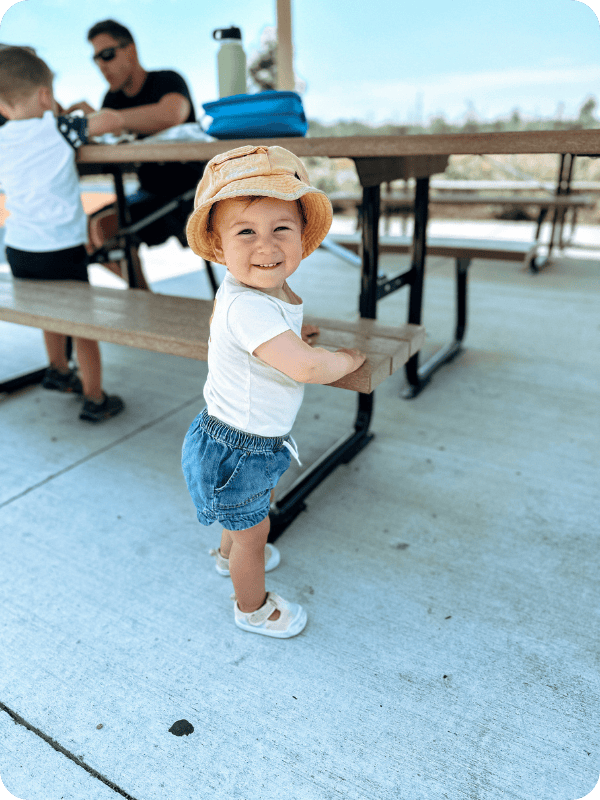
Best shoes for new walkers
When you’re inside, it’s best to go barefoot, unless there is an underlying issue with tone or alignment that requires shoes. In general, being barefoot is best because it helps build proper strengthening and foot development.
For outdoor play or leaving the house, shoes with flexible soles and a wide toe box are best for development. You can find our favorite, physical therapist approved shoes for new walkers here!
More development support
Your baby is now a toddler! It happened so fast, am I right?
We have so many resources to help you and your new toddler through this transition. From our Playbooks, with over 100 activities that help your little one meet milestones, to our Weaning Handbook, we’ve got you covered!
Sources
- Jennifer M. Zubler, Lisa D. Wiggins, Michelle M. Macias, Toni M. Whitaker, Judith S. Shaw, Jane K. Squires, Julie A. Pajek, Rebecca B. Wolf, Karnesha S. Slaughter, Amber S. Broughton, Krysta L. Gerndt, Bethany J. Mlodoch, Paul H. Lipkin; Evidence-Informed Milestones for Developmental Surveillance Tools. Pediatrics March 2022; 149 (3): e2021052138. 10.1542/peds.2021-052138
OTHER POSTS YOU MAY LIKE:


MS, SLP
Founder of Eat Play Say, Speech-Language Pathologist, Feeding Specialist, Play Expert, Mom of 2
Jordyn Koveleski Gorman
SPECIALIZES IN: Infant and toddler speech-language, play, and feeding development, and curating a team that provides expert help that feels like a reassuring text from that one mom friend
EDUCATION: Jordyn received her BS in Speech-Language Pathology from Bloomsburg University and her MS in Speech-Language Pathology from Towson University
FAVE PARENTING FIRST: “The first true smile, it’s the sweetest!”

MS, CCC-SLP, CBS, IBCLC
Speech-Language Pathologist & Feeding Specialist, Certified Breastfeeding Specialist, International Board Certified Lactation Consultant
Jessica Nicholson Cocca
SPECIALIZES IN: Breast and bottle feeding, tongue ties, oral motor dysfunction, starting solids, infant and toddler speech, treating oral motor disorders
EDUCATION: Jessica received her BS in Communication Sciences and Disorders from Pennsylvania State University in 2015 and her MS in Speech-Language Pathology from Towson University in 2017
FAVE PARENTING FIRST: “Baby’s first wave! What a fun first communication gesture!”

MA, CCC-SLP, CLC
Speech-Language Pathologist, Certified Lactation Counselor
Jennifer McFarlin
SPECIALIZES IN: Breast and bottle feeding, tongue ties, starting solids, infant and toddler speech development
EDUCATION: She received her BS in Speech-Language Pathology from Ball State in 2014 and a MA in Speech-Language Pathology from Ball State in 2016.
FAVE PARENTING FIRST: “My favorite baby’s first is their first true smile that just warms your soul knowing they are smiling at you. My other favorite is their first word. I love watching their language explode!”

MS, CCC-SLP
Bilingual Speech-Language Pathologist
Nicole La Petina Kelly
SPECIALIZES IN: Bilingual development (Spanish-English), supporting multilingual families, infant and toddler speech
EDUCATION: She received her BA in Communication Sciences and Disorders and in Spanish from the University of Wisconsin-Madison in 2014 and her MS in Speech-Language Pathology with an English-Spanish Specialization from Marquette University in 2016.
FAVE PARENTING FIRST: “It’s the first slobbery kisses for me!”

RDN, LD
Licensed Registered Dietitian
Kimberly Vede
SPECIALIZES IN: Infant and pediatric nutrition including breastfeeding, formula feeding, and starting solids. She also specializes in prenatal and postpartum nutrition.
EDUCATION: She received her BSc in Biology in 2014 from Life University, and her BSc in Dietetics from Life University in 2019.
FAVE PARENTING FIRST: ”The first time they say ‘mama!’”


This checklist was created with input from a Speech-Language Pathologist, Occupational Therapist and Physical Therapist and has been downloaded over 20,000 times by parents worldwide. Learn the important milestones to pay attention to, and keep it in your digital back pocket during the baby + toddler years!
Comprehensive Milestone Checklist for gross motor, fine motor, and speech-language milestones for 0-36 months,
DOWNLOAD FOR FREE


