


Top Toddler Bikes That Support Balance and Motor Skills
April 30, 2026
Jordyn Koveleski Gorman

Last Updated on July 31, 2026 by Jordyn Koveleski Gorman
This page contains affiliate links. We will receive a commission on qualifying purchases using these links.
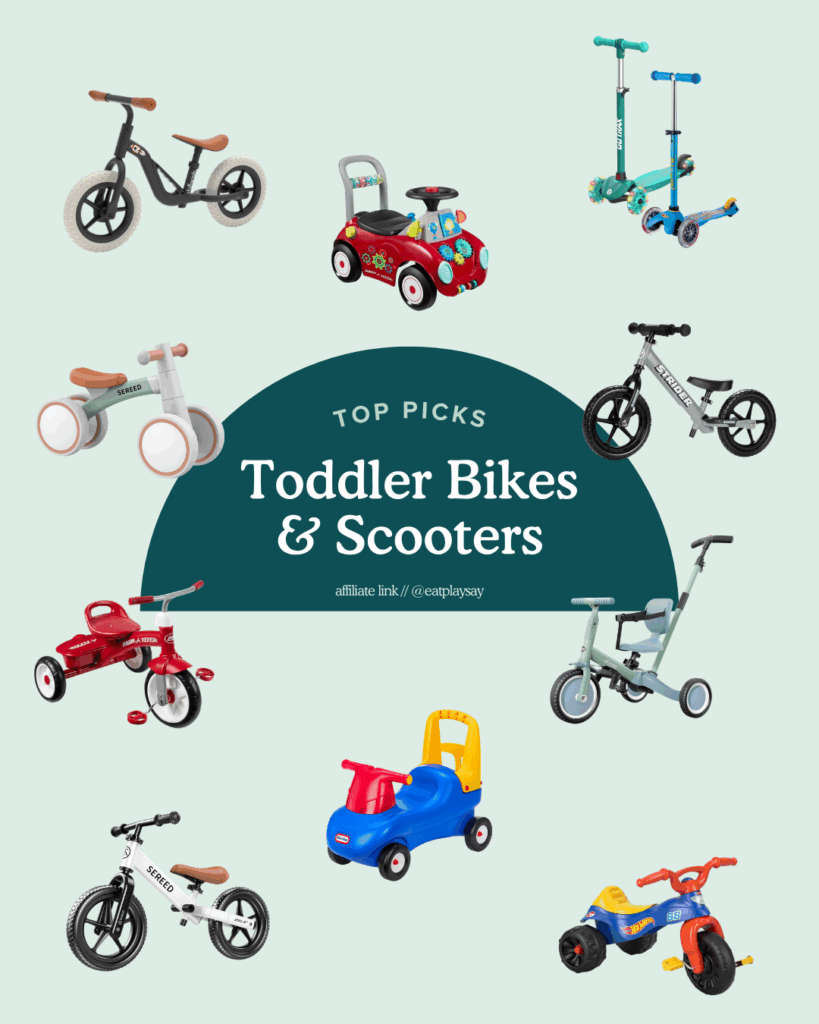
When you think about a toddler bike, you’re probably picturing a balance bike, tricycle, or a push car—not a traditional two-wheel bike. And that’s exactly how it should be. The best toddler bike meets your child where they are developmentally, supporting the gross motor skills, coordination, and balance they need before they’re ready to pedal.
After all, you can’t hand a 3-year-old a regular bike and expect them to just “figure it out.” Riding a bike is actually a complex skill that builds over time. Toddlers need opportunities to practice foundational movements like balancing, steering, pushing, and stopping before everything comes together.
That’s where push cars, balance bikes, tricycles, and scooters come in. Each one supports different stages of development and helps toddlers build confidence and skills through play. From learning how to stay upright on a balance bike to developing coordination on a scooter, these early riding toys play a key role in preparing your child for a traditional pedal bike.
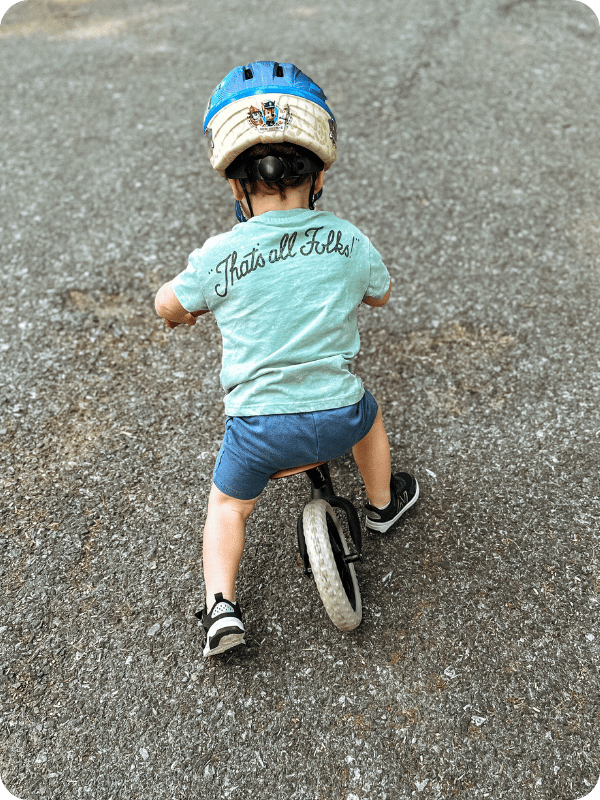
In this post, we’ll walk through some of the best toddler bikes to help your little one build essential skills, gain confidence, and have fun while learning to ride!
Push Cars
Ride-on toys like push cars are a great starting point for babies and young toddlers to build gross motor skills before transitioning to a tricycle or balance bike. They engage the whole body.
Push cars are especially ideal as a first “toddler bike” for 1- and 2-year-olds, giving them a safe and confidence-building way to explore movement before advancing to more complex riding toys.
How do push cars support toddler development?
Push cars are often one of the first ride-on toys toddlers use, helping them build the foundational skills needed to eventually ride a bike. While they may seem simple, they support several important areas of development:
- Core gross motor skills
- Encourages hamstring and quad strength
- Balance & coordination
- Motor planning
- Support active play
Top Picks: Toddler Push Cars
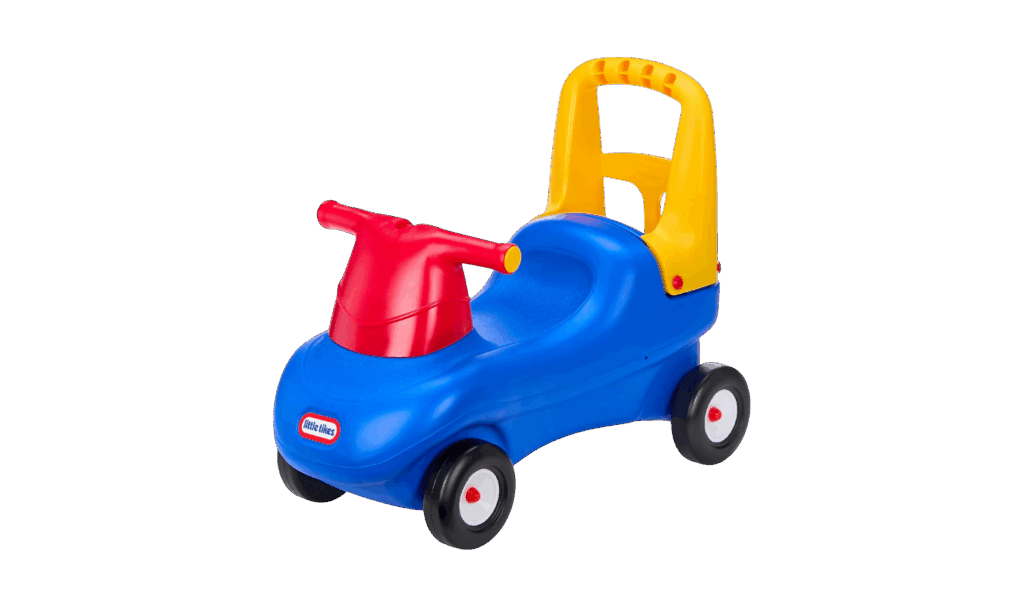
Little Tikes Push & Ride Racer
Price: $34.99
Age recommendation: 1-2 years
This Little Tikes push car is a classic. It’s a great toy for teaching older babies and young toddlers how to use their feet to push off and move the car!
As a bonus, it doubles as a sturdy walker for babies who are cruising around.
Highlights:
- Doubles as a baby walker and push car for maximum usage
- Affordable
- Sturdy and durable
- Low to the ground to reduce risk of falling
Considerations:
- Assembly required
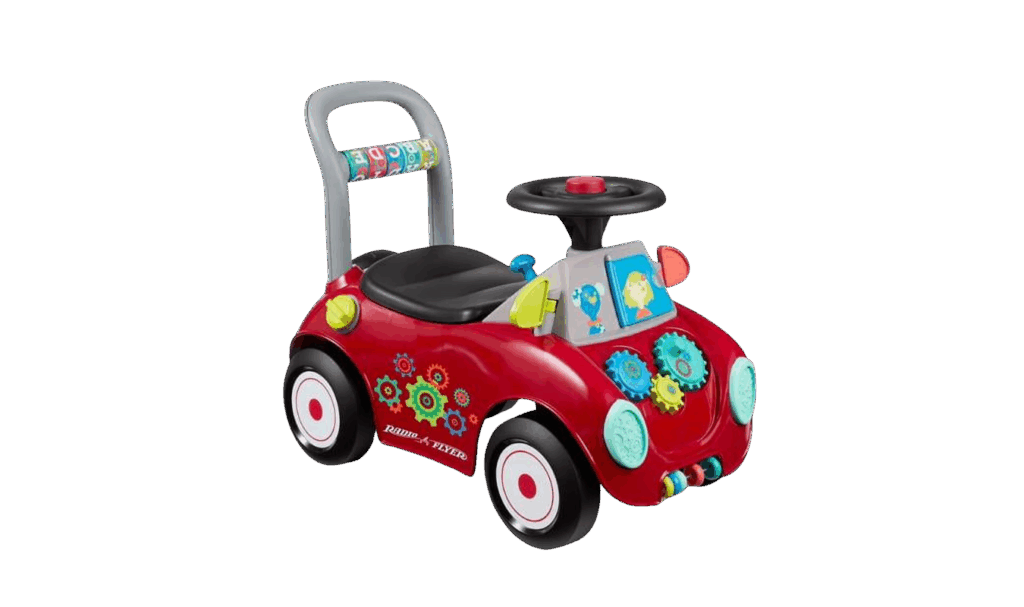
Radio Flyer Busy Buggy
Price: $42.99
Age recommendation: 1-2 years
When thinking about a bike for 1-year-olds, this is it. While it doesn’t necessarily look like a bike, this busy buggy teaches core skills needed to ride a bike in the future.
One-year-olds can practice getting on and off themselves. The wide seat sits low to the ground and helps them feel more sturdy as they sit and scoot. If they fall off, they don’t fall far!
Highlights:
- Walker and push car combined
- Teaches early skills for riding a bike
- Interactive activities for additional play
Considerations:
- Reviewers note that this toy can roll very quickly when used as a baby walker, so it may not be the best choice for early or unsteady walkers.
What is a balance bike?
A balance bike is a small, pedal-free bike designed for toddlers and young children to learn how to balance and steer before they ever deal with pedaling.
Instead of pedals, kids sit on the seat and use their feet to push themselves along the ground. As they gain confidence, they start lifting their feet and gliding. This is where real balance develops.
Unlike push cars, balance bikes are ridden with alternating strides. Instead of stepping forward and pushing with two legs at the same time, kids step with one leg at a time.
Why are balance bikes beneficial for toddlers?
Balance bikes teach the most foundational skill of bike riding: balance! Balance bikes let toddlers focus on staying upright and controlling their body. This directly supports their understanding of weight shifting and coordination.
Traditional pedal bikes can be too complex for many toddlers. Think about it. With traditional pedal bikes, toddlers need to think about pedaling, steering, and balancing all at once to be able to ride! That’s a lot for a little brain to focus on when learning a new skill.
Balance bikes:
- Teach balance first!
- Build coordination and motor planning
- Improve confidence and independence
- Encourage proper posture and movement patterns
- Support overall physical development
- Help transition to pedal bikes more seamlessly
Top Picks: Balance Bikes
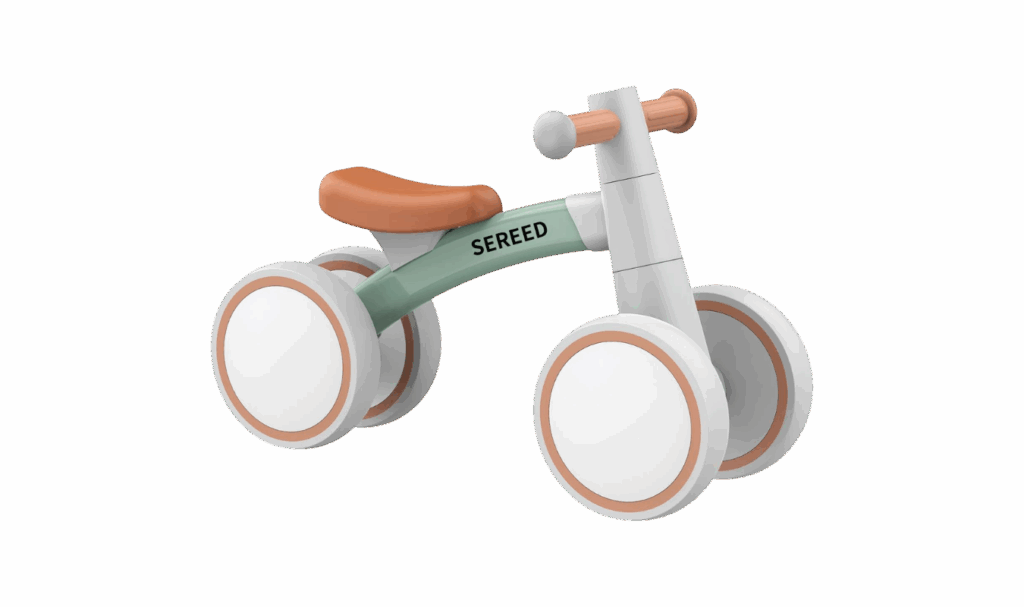
Sereed Baby Balance Bike
Price: $49.99
Age recommendation: 12-18 months +
Bike weight: 3.5 lbs.
Weight limit: 55 lbs.
If you have an older baby who loves to move, the Sereed Baby Balance Bike is a fun and developmentally appropriate first ride-on toy. My daughter got it for her first birthday and loved figuring out how to push off with her feet and steer.
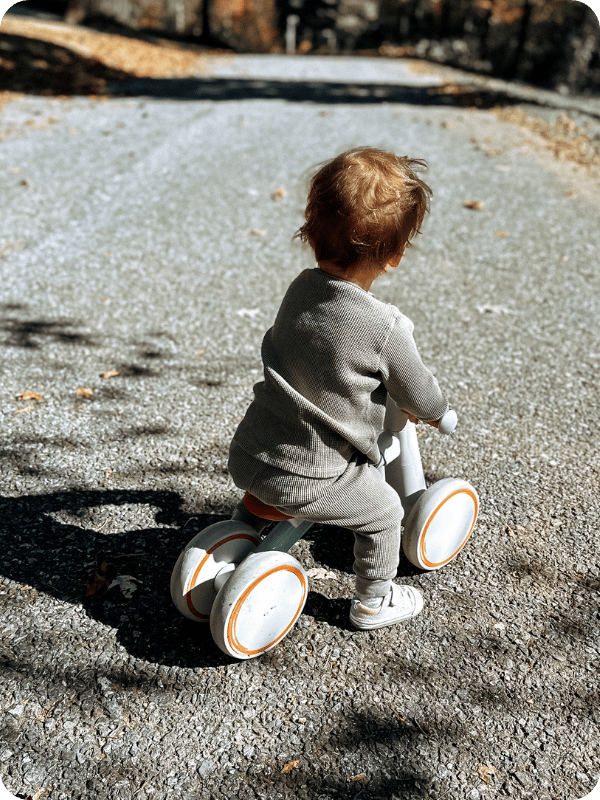
This bike is a great introduction to riding. It’s essentially a cross between a push car and a balance bike, designed specifically for younger toddlers. It can really glide on indoor floors, or you can take it outside to ride as well.
Highlights:
- Suitable for babies and toddlers to work on gross motor skills
- Smooth-gliding wheels for easy movement across surfaces
- Functional steering wheel to encourage motor planning
- Quick and easy setup (1-minute assembly)
Considerations:
- Smaller size means toddlers may outgrow it relatively quickly
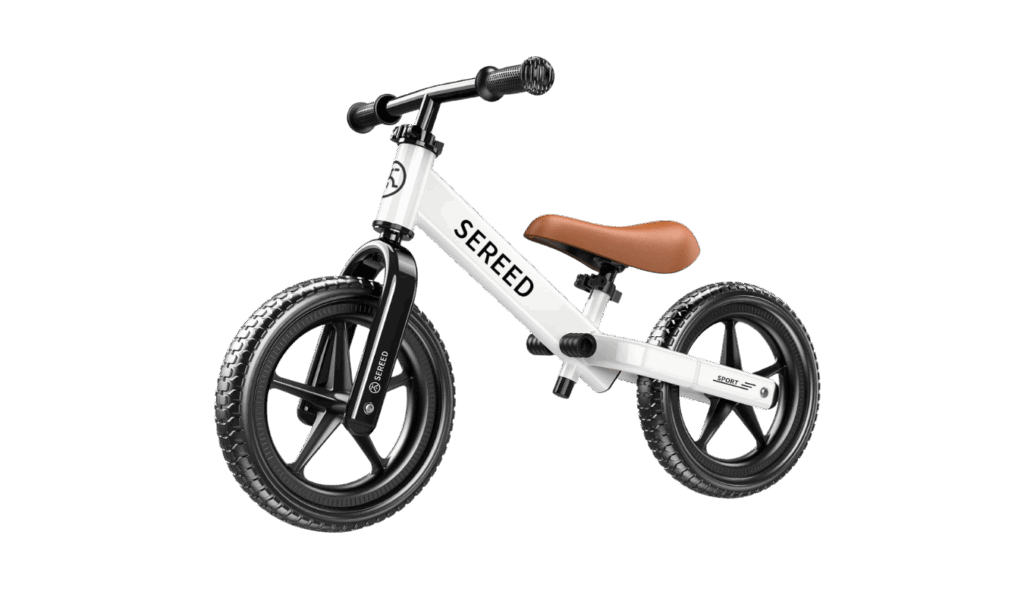
Sereed Balance Bike
Price: $59.99
Age recommendation: 2-5 years
Tire size: 11 in.
Bike weight: 7.8 lbs.
Weight limit: 110 lbs.
The Sereed Balance Bike is a great option for toddlers who are learning to ride and build balance. It’s lightweight enough for young children to handle, while still offering a sturdy, durable frame. The 11-inch tires provide a smooth ride, making it a solid choice for both indoor and outdoor play.
One standout feature is how easy it is to adjust. Both the seat and handlebars can be modified without tools, which is especially helpful as your child grows.
Highlights:
- Personalizable riding plate for a fun, custom touch
- Soft seat with easy-grip handlebars
- Sporty design built for active toddlers
- Compact, removable footrests for practicing balance and gliding
Considerations:
- Some reviewers note mixed quality with the tires
- Footrest position may feel awkward for some toddlers (though they can be removed)
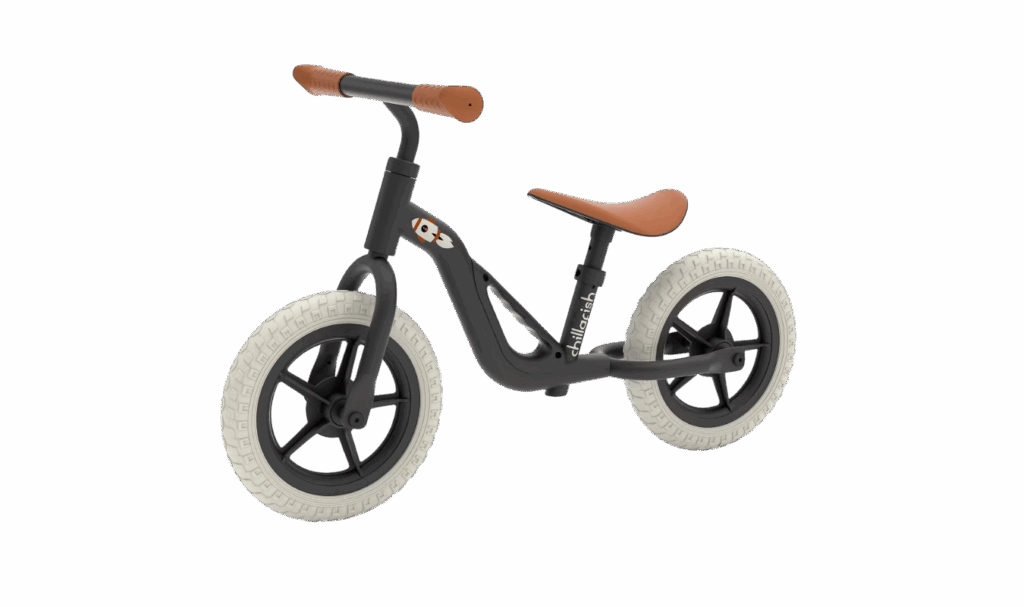
Chillafish Balance Bike
Price: $49.99
Age recommendation: 18 months – 3 years
Tire size: 10 in.
Bike weight: 5.5 lbs.
Weight limit: 77 lbs.
We bought the Chillafish Balance Bike for my son Paul just before he turned 2, and it was a great fit for him as a beginner. The size is ideal for younger toddlers who are just starting to learn how to push, steer, and eventually glide.
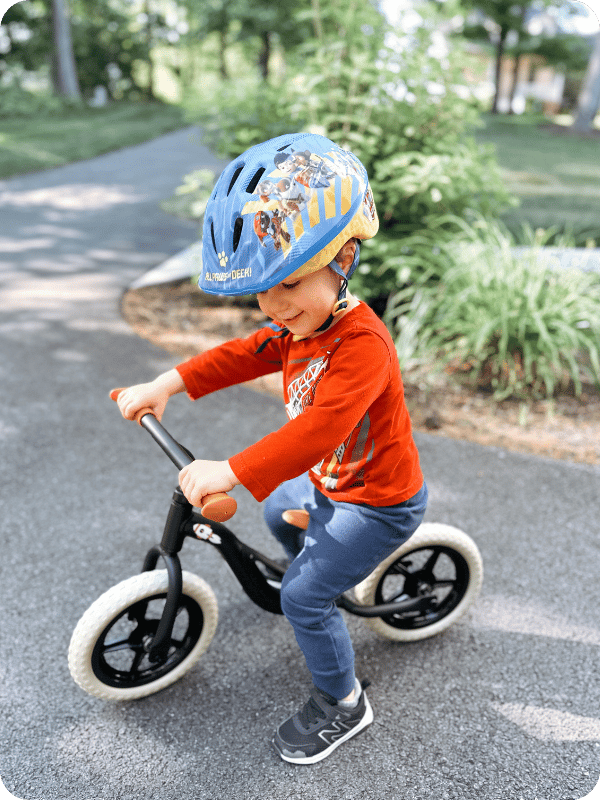
I’ve been especially impressed with the overall quality at this price point. It’s lightweight, easy for little ones to handle, and holds up well to everyday use. As a first balance bike, it offers excellent value without sacrificing functionality.
Highlights:
- Great value for the price
- Sleek, European-inspired design
- Lightweight frame with a built-in carry handle
- Adjustable seat and handlebars to grow with your child
- Maintenance-free tires that won’t go flat
Considerations:
- Smaller 10-inch tires may limit how long it fits, especially into the preschool years
- Some reviewers note the wheels can slip on indoor surfaces since they aren’t rubber
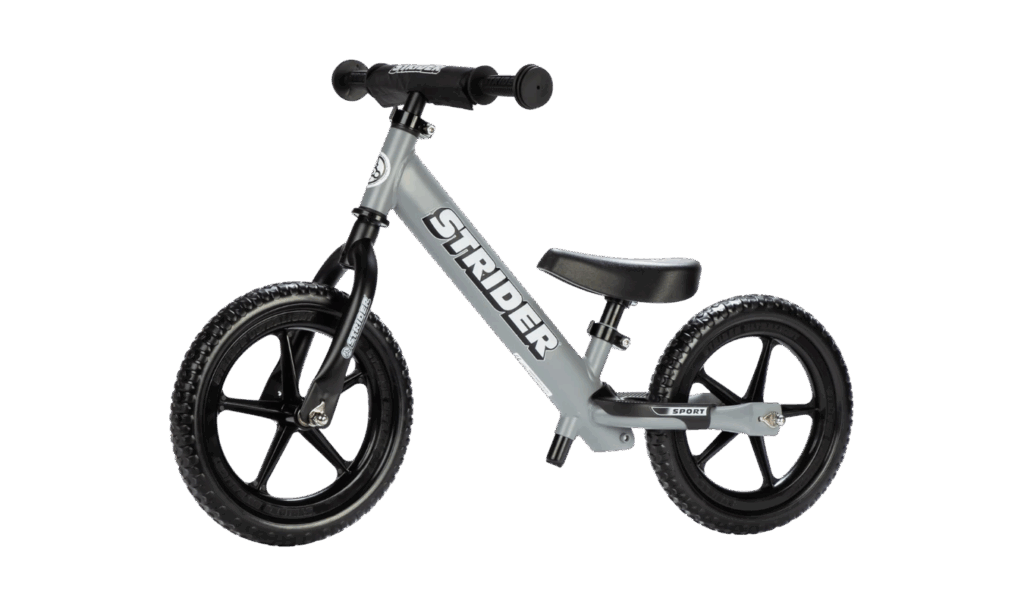
Strider Balance Bike
Price: $149.99
Age recommendation: 2-5 years
Tire size: 12 in.
Bike weight: 6.7 lbs.
Weight limit: 60 lbs.
The Strider Balance Bike is often considered the gold standard when it comes to balance bikes, and for good reason. It’s thoughtfully designed, highly durable, and built to grow with your child through preschool.
Thanks to its adjustable seat and handlebars, this bike can be used for multiple years, making it a great long-term investment. Despite its durability, it remains lightweight and easy for toddlers to control as they learn to glide and balance.
Highlights:
- Sporty, kid-friendly design
- Durable yet lightweight frame
- Adjustable seat and handlebars for long-term use
- Foam rubber tires that will never go flat
- Available in a variety of colors
Considerations:
- Higher price point compared to many other balance bikes
- Maximum weight limit of 60 lbs. is low in comparison to other comparable balance bikes
Tricycles
While balance bikes focus on balance first, tricycles really work on pedaling. They can be a good option if you have a young toddler who isn’t quite ready for a balance bike yet. They sit lower to the ground so there is less chance of falls.
Tricycle riding can also come after balance bike riding. Your toddler will have learned balance and coordination, then the tricycle can teach them more about pedaling and steering together without having to worry about balance on top of that.
What skills do tricycles work on?
Tricycles work on foundational gross motor skills. As stated before, they don’t focus on balance. However, they are usually a toddler’s first introduction to “riding” because they feel stable and predictable.
Here are some benefits of tricycle riding:
- Pedaling coordination
- Leg strength and endurance
- Bilateral coordination
- Steering and spatial awareness
- Confidence building
Top Picks: Toddler Tricycles
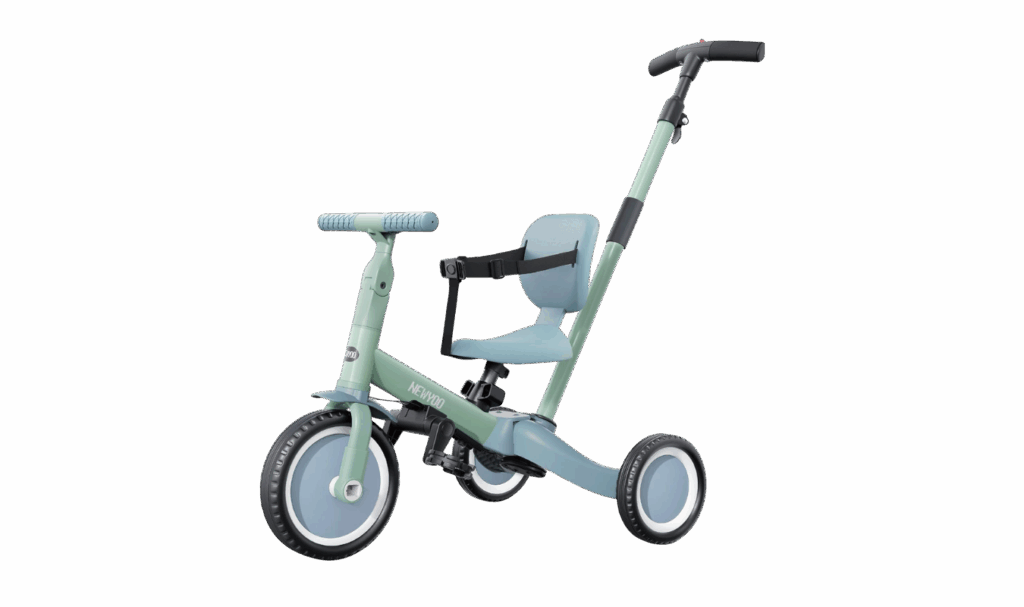
Newyoo Toddler Tricycle
Price: $89.99
Age recommendation: 1-3 years
Item weight: 9.7 lbs.
Weight limit: 55 lbs.
This 5-in-1 push tricycle is a versatile toddler bike that can be used as a trike, push bike, and even a balance bike as your child grows. It’s a great option for younger toddlers who are just starting to explore riding, while also giving parents the ability to step in and help when needed.
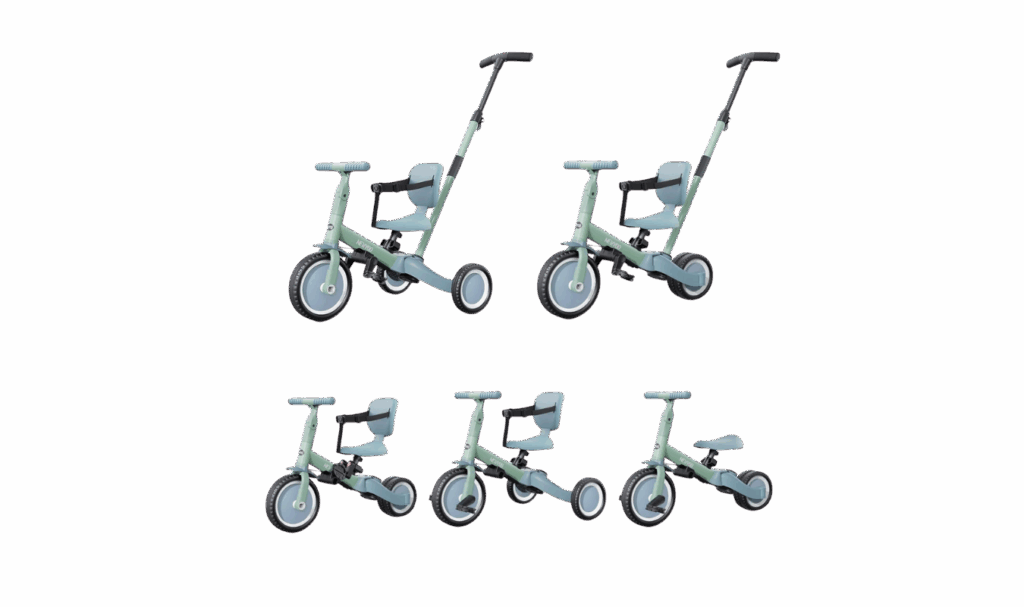
Whether your toddler is learning to pedal or just enjoying a ride around the block, the parental push handle makes outings easier. As your child builds confidence and coordination, you can gradually transition through the different stages.
It offers a similar concept to higher-end models like the Doona tricycle, but at a much more affordable price point!
Highlights:
- 5-in-1 design that grows with your child
- Excellent adaptability for the price
- Easy to switch between different stages
- Parental push handle with steering control
Considerations:
- When using the push handle, toddlers can still override steering by turning the handlebars
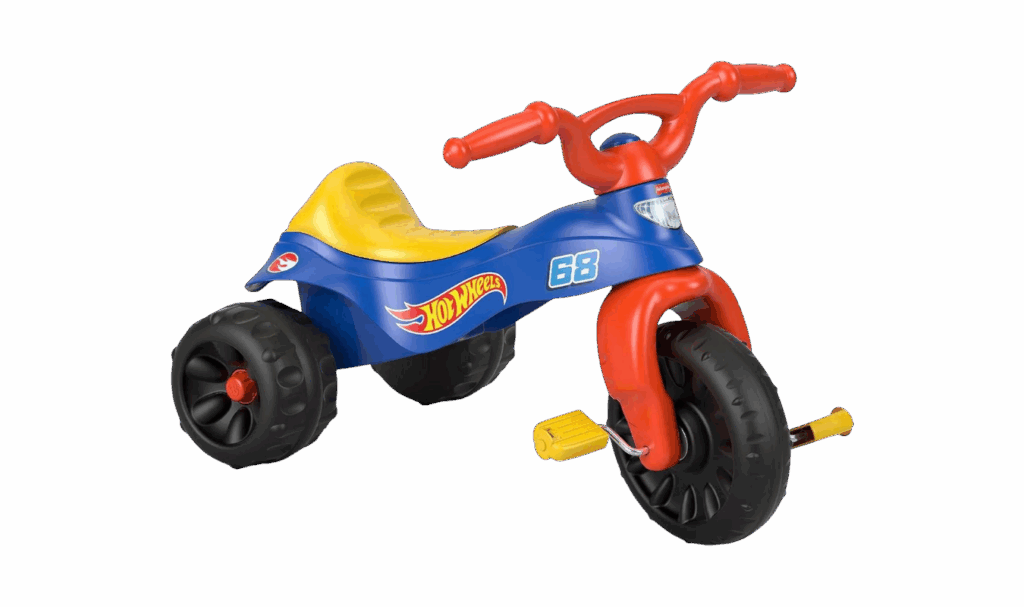
Fisher Price Tricycle
Price: $55.40
Age recommendation: 2.5-5 years
The Fisher-Price Tricycle is a classic toddler favorite, and for good reason. With over 32,000 reviews and a high rating on Amazon, it’s a go-to option for parents looking for a reliable first trike.
This tricycle sits low to the ground, making it easy for toddlers to climb on and off independently. The lower center of gravity also adds stability, which is especially helpful as kids learn how to pedal. And if they do tip, the shorter distance to the ground can make falls less intimidating.
Highlights:
- Smooth, easy pedaling for beginners
- Sturdy wheelbase for added stability
- Builds confidence as toddlers learn to ride
- Hidden storage compartment under the seat for toys or snacks
Considerations:
- Toddlers need to be tall enough for their feet to reach the pedals comfortably
- Limited design options (Hot Wheels or Harley-Davidson styles may not appeal to all children)
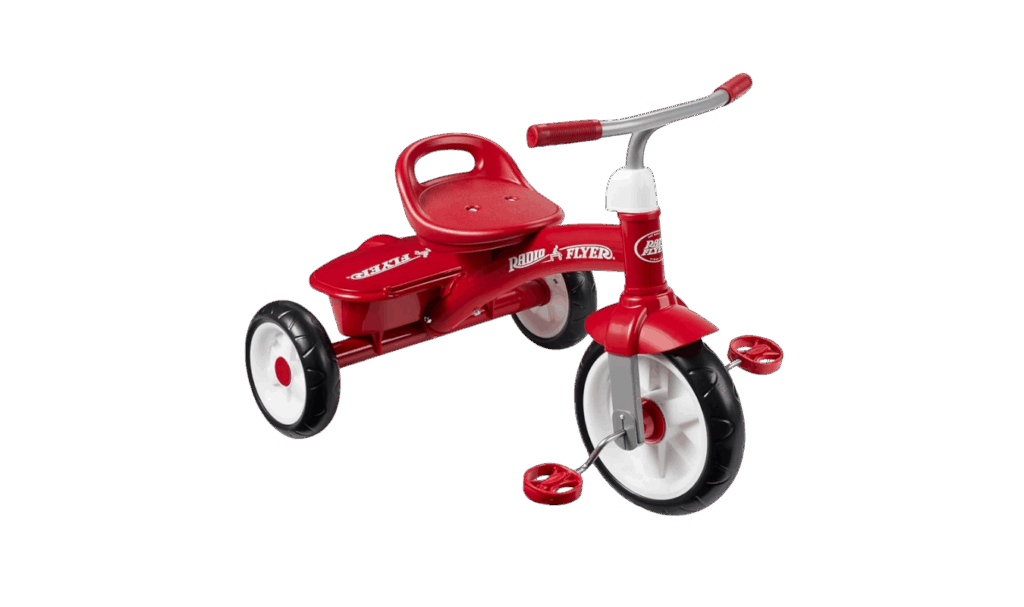
Radio Flyer Tricycle
The Radio Flyer Tricycle is a true classic. When most people picture a toddler trike, it’s that iconic red design that comes to mind. Known for its durability and timeless style, this tricycle is a reliable choice for toddlers learning how to pedal.
It features an adjustable seat, allowing it to grow with your child through the toddler and early preschool years. The rear storage basket is perfect for imaginative toddlers that love toting special treasures.
Highlights:
- High-quality tricycle from a trusted brand
- Adjustable seat to grow with your child
- Rear storage basket for toys or a water bottle
- Smooth, stable ride for beginner riders
Considerations:
- Assembly is required
- Pedals have small plastic grips that may be uncomfortable for barefoot riders
Scooters
Toddler scooters are small ride-on toys designed to help children move by pushing off the ground with one foot while the other stays on the deck for balance. When toddlers ride scooters, they’re developing a slightly different set of skills than they would on a balance bike or tricycle.
What skills do scooters help develop?
Scooters are especially effective for building dynamic balance, coordination, and core strength, all while encouraging independent movement.
Toddler scooters help develop:
- Dynamic balance, which means maintaining balance while moving, not just standing still
- Bilateral coordination
- Core strength and postural control
- Coordination and timing
Top Picks: Toddler Scooters
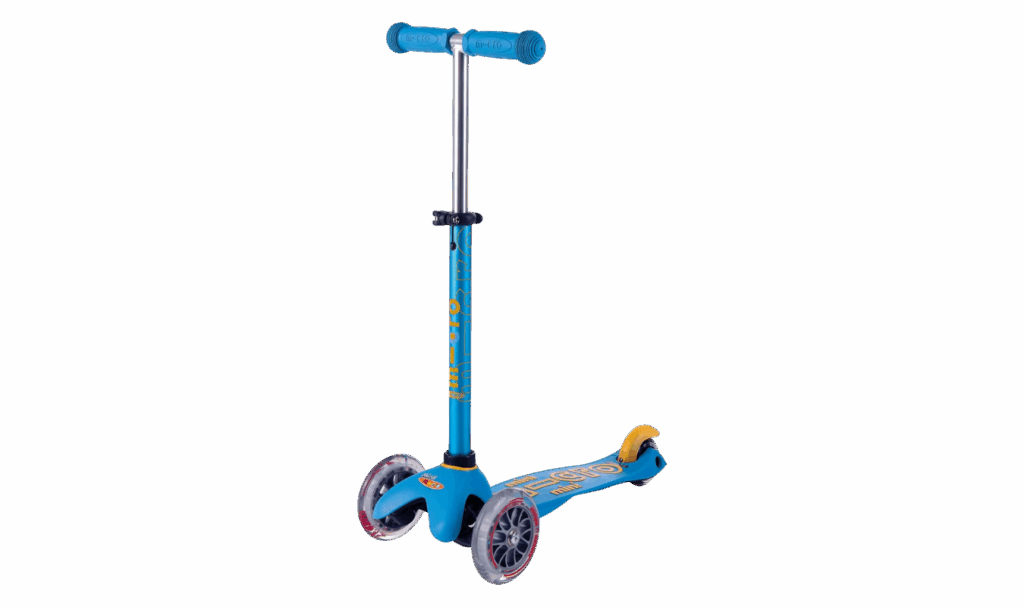
Micro Mini Scooter
Price: $109.99
Age recommendation: 2-5 years
Scooter weight: 3.4 lbs.
Weight limit: 110 lbs.
The Micro Mini Scooter is a top choice for first-time riders. Its three-wheel design provides great stability, making it easier for toddlers to build confidence as they learn how to ride.
While it is a higher-priced option, it’s built to last through both the toddler and preschool years thanks to its high-quality design. Many families find it to be a worthwhile investment because it grows with your child and holds up well to frequent use.
Highlights:
- 3-wheel, lean-to-steer design provides stability for early riders
- Adjustable handlebar heights to grow with your child
- Slip-resistant footplate for added safety and control
Considerations:
- Higher price point for a toddler scooter, but consistently strong reviews highlight its durability and quality
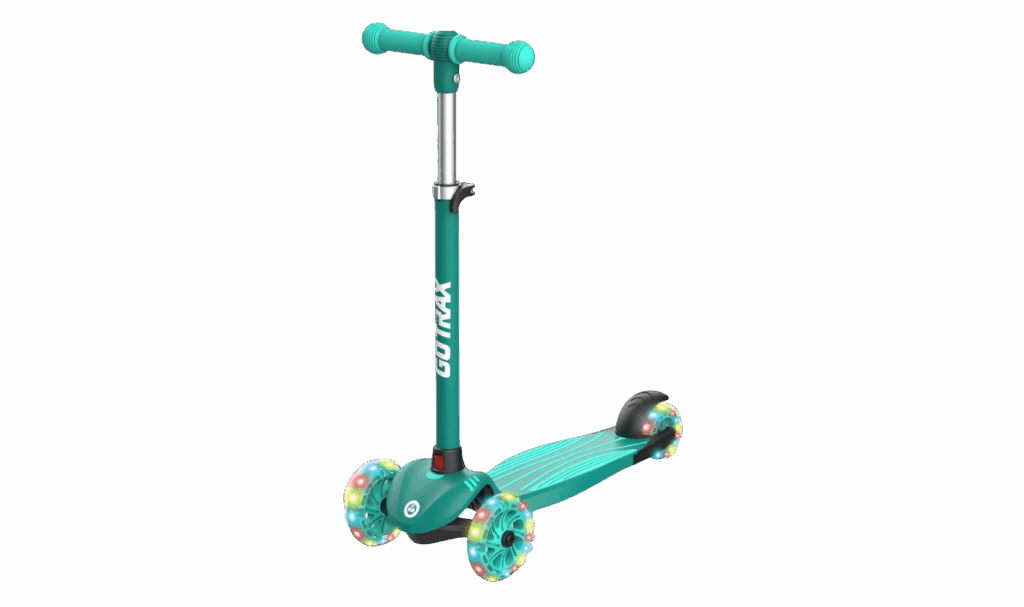
GoTrax Kids’ Scooter
Price: $37.99
Age recommendation: 2-8 years
Scooter weight: 5.1 lbs.
Weight limit: 100 lbs.
This is the scooter we bought for our son Paul when he was around 4 years old. Since he had already learned to ride a balance bike, we felt it was the right time to introduce a scooter to help build bilateral coordination and confidence in motion. My daughter is learning on it, too at just 2.5 years old!
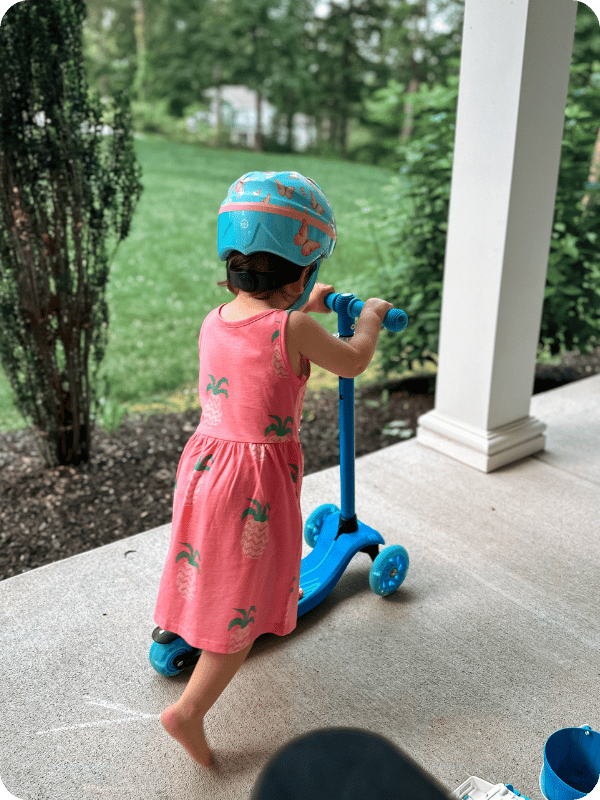
It’s a great scooter for the price, and the light-up wheels add a fun motivating factor. He was especially excited to keep riding just to see them light up. It makes learning to push and glide feel more like play than practice.
Highlights:
- Affordable toddler scooter
- Light-up wheels add extra motivation and fun for toddlers
- Wide footbase provides stability while learning
- Lean-to-steer design supports balance and coordination
Considerations:
- This scooter does not fold for storage and must be disassembled to put away
- Some reviewers note that the lean-to-steer design can be difficult for younger toddlers to understand at first
Toddler Bike Helmets
Always put safety first! Remember, toddlers are still developing their balance and coordination. Their reaction times will be more delayed, especially when learning new skills.
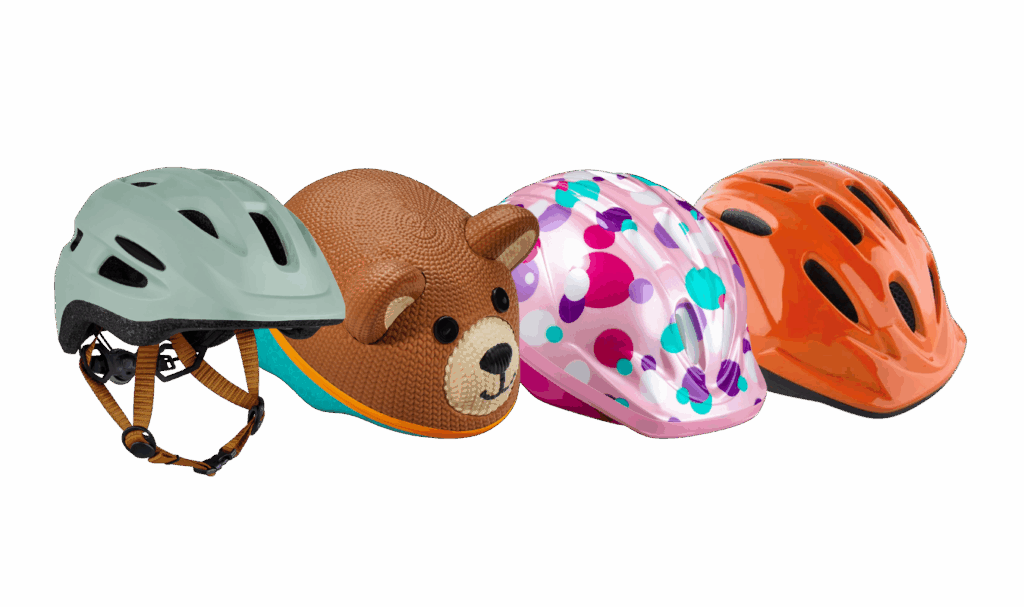
Falls are a normal part of learning how to ride. Use a toddler bike helmet to reduce the risk of head injury and promote safety habits. When toddlers start using bike helmets early, it just becomes part of their routine!
Here are some of our favorite bike helmets for little ones to keep them protected while playing.
Looking for more?
Find all of our favorites for outdoor play, including ride-on toys, water tables, bubbles, and more.
Teaching your toddler how to ride? Make sure you have a good pair of toddler sneakers and keep your little one hydrated with our favorite toddler water bottles!
Leave a Reply
OTHER POSTS YOU MAY LIKE:


MS, SLP
Founder of Eat Play Say, Speech-Language Pathologist, Feeding Specialist, Play Expert, Mom of 3
Jordyn Koveleski Gorman
SPECIALIZES IN: Infant and toddler speech-language, play, and feeding development, and curating a team that provides expert help that feels like a reassuring text from that one mom friend
EDUCATION: Jordyn received her BS in Speech-Language Pathology from Bloomsburg University and her MS in Speech-Language Pathology from Towson University
FAVE PARENTING FIRST: “The first true smile, it’s the sweetest!”

MS, CCC-SLP, CBS, IBCLC
Speech-Language Pathologist & Feeding Specialist, Certified Breastfeeding Specialist, International Board Certified Lactation Consultant
Jessica Nicholson Cocca
SPECIALIZES IN: Breast and bottle feeding, tongue ties, oral motor dysfunction, starting solids, infant and toddler speech, treating oral motor disorders
EDUCATION: Jessica received her BS in Communication Sciences and Disorders from Pennsylvania State University in 2015 and her MS in Speech-Language Pathology from Towson University in 2017
FAVE PARENTING FIRST: “Baby’s first wave! What a fun first communication gesture!”

MA, CCC-SLP, CLC
Speech-Language Pathologist, Certified Lactation Counselor
Jennifer McFarlin
SPECIALIZES IN: Breast and bottle feeding, tongue ties, starting solids, infant and toddler speech development
EDUCATION: She received her BS in Speech-Language Pathology from Ball State in 2014 and a MA in Speech-Language Pathology from Ball State in 2016.
FAVE PARENTING FIRST: “My favorite baby’s first is their first true smile that just warms your soul knowing they are smiling at you. My other favorite is their first word. I love watching their language explode!”

MS, CCC-SLP
Bilingual Speech-Language Pathologist
Nicole La Petina Kelly
SPECIALIZES IN: Bilingual development (Spanish-English), supporting multilingual families, infant and toddler speech
EDUCATION: She received her BA in Communication Sciences and Disorders and in Spanish from the University of Wisconsin-Madison in 2014 and her MS in Speech-Language Pathology with an English-Spanish Specialization from Marquette University in 2016.
FAVE PARENTING FIRST: “It’s the first slobbery kisses for me!”

RDN, LD
Licensed Registered Dietitian
Kimberly Vede
SPECIALIZES IN: Infant and pediatric nutrition including breastfeeding, formula feeding, and starting solids. She also specializes in prenatal and postpartum nutrition.
EDUCATION: She received her BSc in Biology in 2014 from Life University, and her BSc in Dietetics from Life University in 2019.
FAVE PARENTING FIRST: ”The first time they say ‘mama!’”


This checklist was created with input from a Speech-Language Pathologist, Occupational Therapist and Physical Therapist and has been downloaded over 20,000 times by parents worldwide. Learn the important milestones to pay attention to, and keep it in your digital back pocket during the baby + toddler years!
Comprehensive Milestone Checklist for gross motor, fine motor, and speech-language milestones for 0-36 months,
DOWNLOAD FOR FREE


