


Ultimate Hospital Bag Checklist for Mom, Baby & Partner (2026)
May 8, 2026
Jordyn Koveleski Gorman

Last Updated on June 1, 2026 by Jordyn Koveleski Gorman
This page contains affiliate links. We will receive a commission on qualifying purchases using these links.
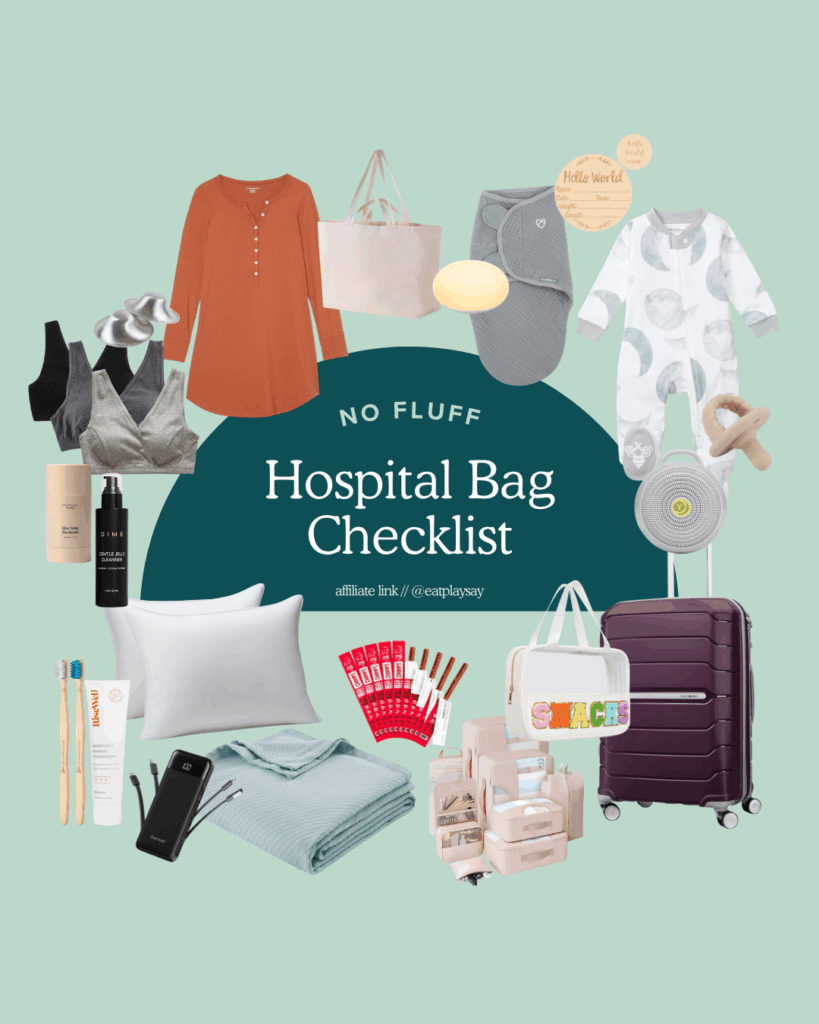
Wondering what you should pack in your hospital bag? It’s a lot to think about, and you don’t have to tackle everything at once! When thinking about packing your hospital bag, we recommend breaking the packing down into four categories: for mom, for baby, for your support person, and odds and ends.
After three hospital births, I’ve learned what’s actually worth packing and what isn’t. This hospital bag checklist is intentionally minimalist, it’s just the essentials you’ll truly use. Because when you get home, the last thing you want is to unpack a bag full of unnecessary items while you’re exhausted and newly postpartum.
What should I use as my hospital bag?
Chances are you don’t need a brand new bag for your hospital bag. You probably own a few good options already!
I recommend choosing a bag with plenty of space to fit everything you need, then using toiletry bags or packing cubes to keep things organized inside.
For my third birth, I packed a small suitcase and used packing cubes to separate everything. It worked so well and made it easy to find what I needed!
What I used for my hospital bag:
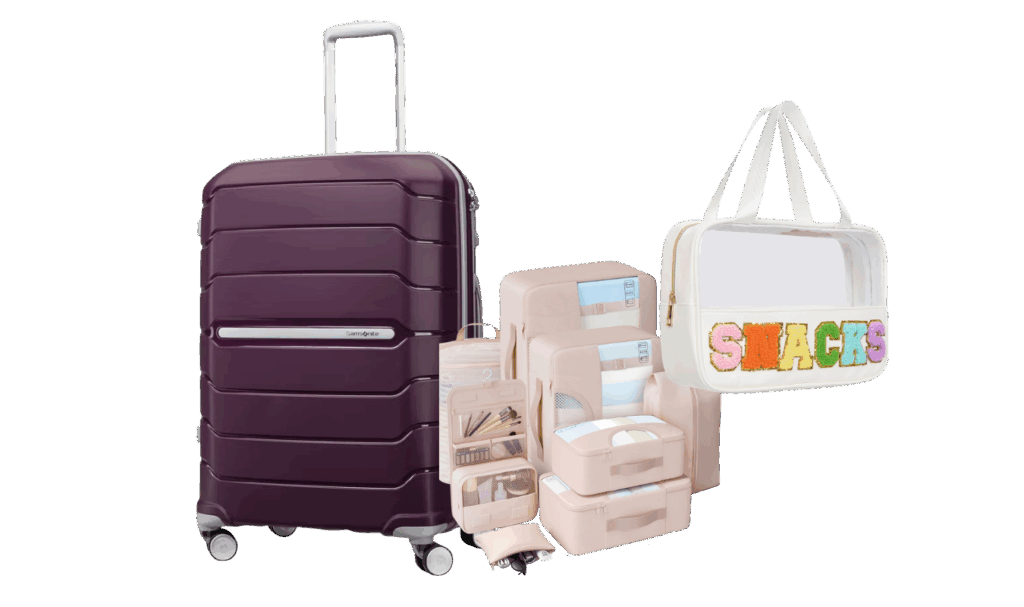
Samsonite Freeform Medium Suitcase
This suitcase was easy for us to roll in and out. There was no schlepping a heavy duffel bag or multiple bags into the labor and delivery wing. I also love the hard shell which makes it easy to clean. Once we were home, we unpacked, wiped it down, and stored it for our next travels! The best part is, you probably have something like this at home.
Packing Cubes Set
These packing cubes are my favorite travel accessory because they make everything more organized. I separated my stuff, baby’s stuff, and Eric’s stuff each in their own separate cube.
Snack Bag
When packing your hospital bag, don’t forget the snacks! Having a few of your favorites on hand can make a big difference—whether you’re craving something between feedings or need a quick boost while waiting for labor to progress.
It’s also a good idea to pack snacks for your partner, since hospitals sometimes only provide meals for the person giving birth. Having easy, grab-and-go options keeps everyone fueled and a little more comfortable during your stay.
What to Pack in Your Hospital Bag for Mom
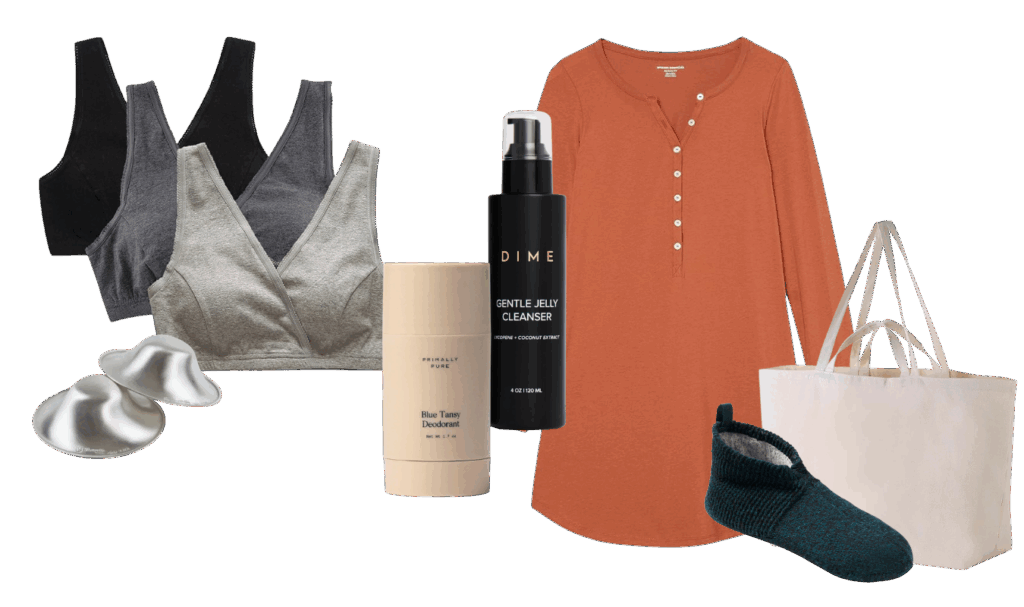
Cotton Nursing Bras
When I’m in the hospital after birth, I want to have as many skin-to-skin opportunities with my baby as possible. So once I deliver and get rid of the hospital gown, I’m typically in a nursing-friendly nightgown with these cotton nursing bras. They provide gentle support and comfort as your milk is coming in, and allow for easy breastfeeding access.
I keep reaching for these nursing bras even after birth and consider them a postpartum essential!
If you want something more supportive for the hospital, we wrote a post about the best nursing and pumping bras breaking down the pros and cons.
Silverettes
Silverettes are a great option for nipple recovery and breastfeeding support. Made from silver, they have natural antimicrobial properties and help protect sore or sensitive nipples between feeds. They also create a gentle barrier that can promote healing while preventing friction from bras and clothing.
I also love using these for hand expressing breast milk. The small cups make it easy to collect every drop and can even be used to feed or supplement your baby directly.
Bombas Slipper Socks
Let’s be honest, the hospital socks don’t really cut it. I like to have something comfortable and warm on my feet, and I love these Bombas slipper socks. The grippies on the bottom provide much needed traction on the hospital floors.
Once I get home, I just pop them in the wash to get them clean again. Hospital germs be gone!
Nursing Nightgown
I love this nursing-friendly nightgown and keep reaching for it postpartum, too. The longer length offers extra coverage while still feeling breathable and comfortable. Nightgowns are seriously underrated, especially when you want something easy, functional, and cozy.
Non-Toxic Deodorant
Trust me, the postpartum sweats are real. Primally Pure makes the best non-toxic deodorant (aluminum free!) I’ve found that smells great and combats the postpartum stench. I love the Blue Tansy scent.
Another bag (like a recyclable bag or canvas tote)
One of my best tips is to pack an extra bag and load it full of all the hospital essentials you can take along with you. Those extra pads you have in the hospital bathroom, pack ‘em. The disposable underwear, pack it!
You’ll probably have some extra diapers, other baby supplies, and the swaddle blanket the hospital provides (if they let you take that home). It’s nice to have a bag for all of that stuff so it’s more organized when you get home and unpack.
Comfortable Clothes for Going Home
I like to pack one outfit that’s not only comfortable but also makes me feel good. After my third baby, I chose a pair of stretchy leggings and a soft cotton t-shirt in a color I love. It may seem simple, but having something cozy and familiar to wear made a big difference. It’s nice to leave the hospital feeling just a little more like yourself.
These are some of my favorite pieces of clothing I’ve been reaching for throughout postpartum.
A Note on Colostrum
If you harvested colostrum during the weeks leading up to birth, don’t forget to bring some of that to the hospital to supplement your baby’s feeds!
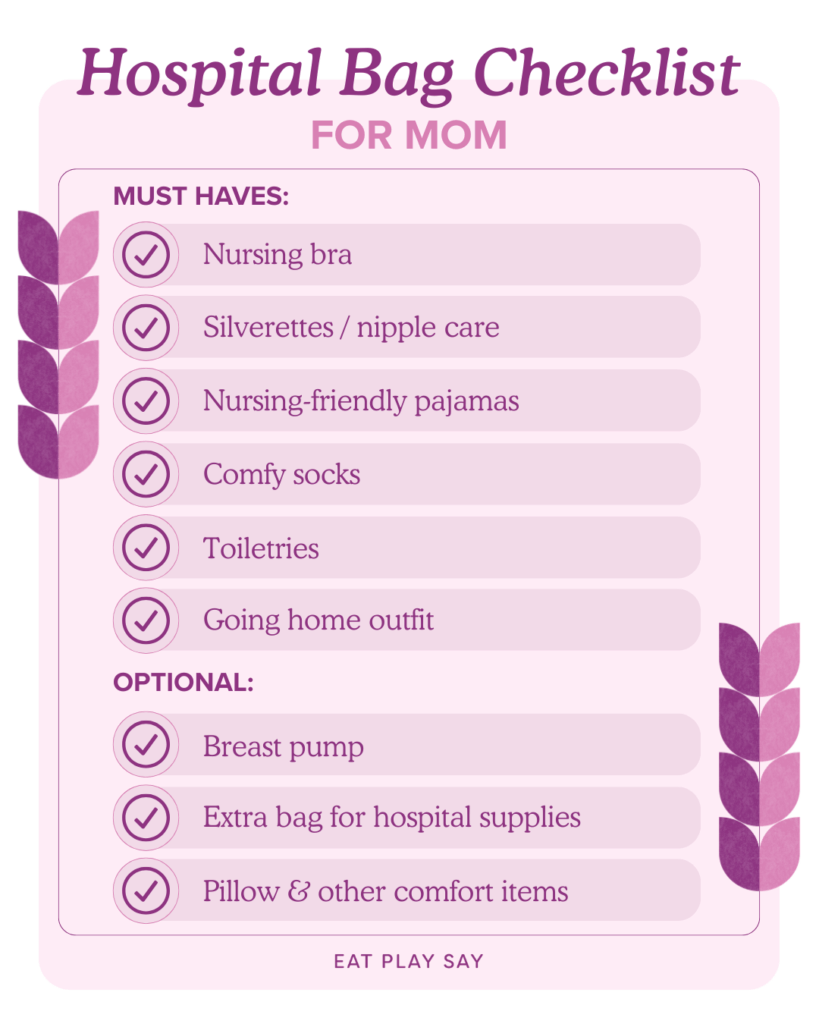
Hospital Bag Checklist for Mom
Screenshot this hospital bag checklist for mom to make packing easier!
What to Pack in Your Hospital Bag for Baby
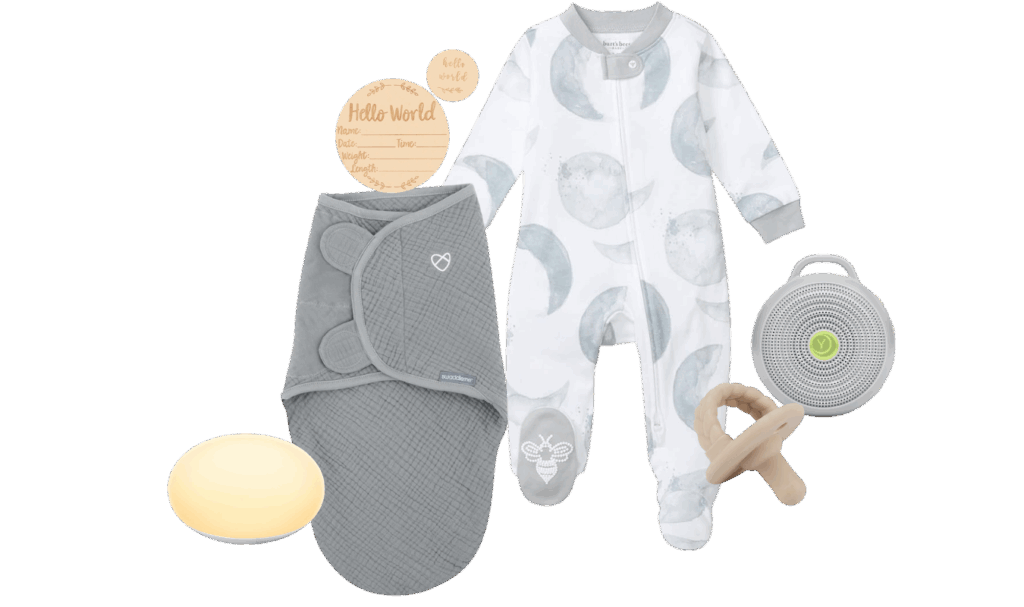
Dimmable Night Light
This is one of those items that’s just as helpful for mom as it is for baby. If you’ve followed me for a while, you know I swear by this dimmable night light. It’s perfect for breastfeeding, nighttime diaper changes, and creating a soft, calming light rather than the harsh fluorescent lights in hospital rooms.
It’s also something you’ll continue to use well beyond your hospital stay. From those early postpartum nights to toddler years, you’ll be using it!
Portable Sound Machine
Don’t forget this item! There can be so much noise in hospital rooms, from the beeping machines, to nurse check-ins, and hallway traffic. A portable sound machine muffles all of that, and it provides a more calming environment for your baby. The white noise is similar to the sounds they heard in the womb.
Bonus: it helps you and your partner get some sleep, too!
Swaddle
The hospital provides all the swaddle blankets you need, but you can always choose to use your own! I typically bring one with me to keep the baby warm and get a few photos.
A velcro swaddle can make things a lot easier in the hospital, especially if you’re not a swaddle blanket pro like all the nurses!
Pacifier
Pacifiers are soothing for babies, especially newborns as they typically find comfort in sucking. Some hospitals provide pacifiers while others don’t. I like to bring my own pacifiers that check all the boxes from my perspective as a feeding therapist. Check out my post on the best pacifiers for newborns to see the brands I recommend and why!
Going Home Outfit for Baby
Choose a simple, comfortable outfit for your baby to wear home from the hospital. Beyond comfort, this can also be a meaningful choice. Some parents like to use the same outfit for each baby for sentimental value, while others pick something unique to save as a keepsake or pass down one day.
Or, it can be as simple as choosing a cute outfit for those first photos and memories you’ll add to the baby book—there’s no right or wrong choice
I brought a gender neutral sleeper that my first two babies wore coming home from the hospital, too!
Photo Props
For each of my babies, I took pictures of them in their hospital bassinet with a little Hello World sign. Photo props aren’t necessary to pack, they’re simply optional. You get to decide what your priorities are for photos!
Car Seat
Make sure your car seat is ready and installed properly in your vehicle before your baby arrives! Trust me, it’s too stressful to be reading car seat manuals and installation tutorials right before discharge.
We selected the Chicco Keyfit 30 ClearTex Infant Car Seat for my third. It’s free from flame retardants and Greenguard Gold Certified for lower chemical emissions.
A Note on Diapers
While the hospital provides diapers for babies, they’re usually Pampers which means they have a scent. Especially for newborns, I like to select a more non-toxic, fragrance-free diaper for their delicate skin. For my most recent birth, I brought Pura diapers with me.
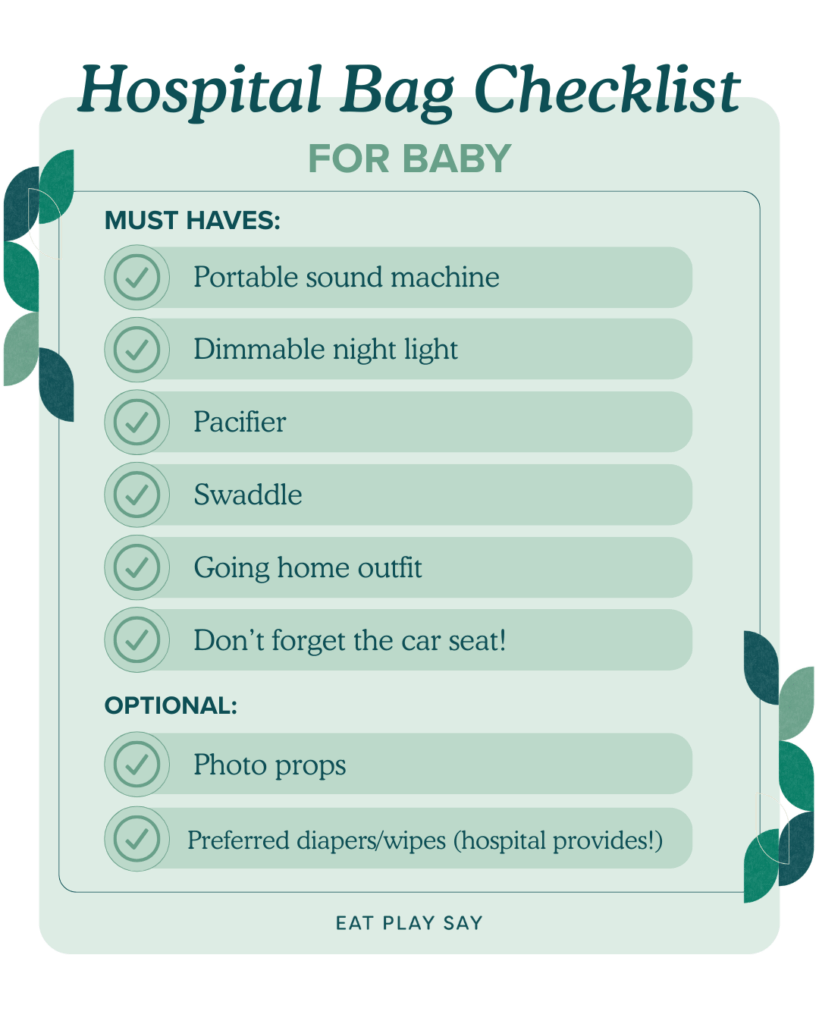
Hospital Bag Checklist for Baby
Screenshot this hospital bag checklist for baby to make packing easier!
What to Pack in Your Hospital Bag for Your Partner/Support Person
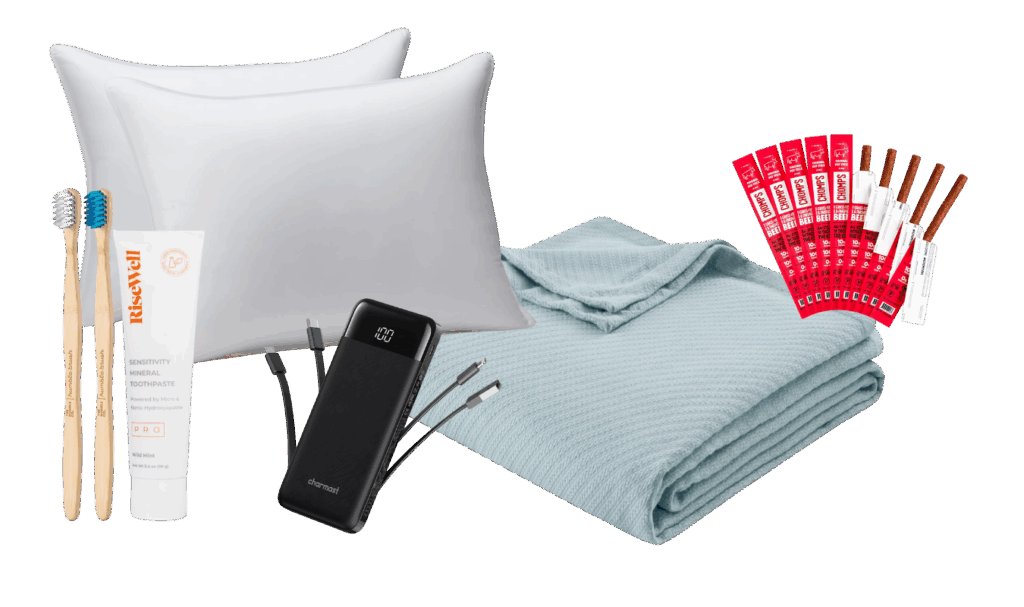
While your partner or support person plays an important role during labor and delivery, packing for them is actually pretty simple. Take something off your plate and let them handle their packing themselves!
Here’s what I recommend they bring:
Comfortable Clothes
You never know how long you’ll be at the hospital, so it’s important for your partner to pack comfortable clothes. I recommend bringing 1–2 outfits for the stay, along with clean underwear and socks. Layers are always a good idea as hospital rooms can be unpredictable. Consider packing a sweatshirt or light jacket!
Pajamas
Make sure they also pack something comfortable to sleep in. If your partner usually wears jeans during the day, they’ll definitely appreciate having sweats or pajamas to change into at night for better rest.
Pillow & Blanket
Let’s be real, hospitals aren’t exactly known for comfortable sleep setups, especially for your support person. Bringing a pillow and blanket can make the cot or recliner a lot more bearable during your stay.
Pro Tip: Skip your favorites. With everything going on during discharge, it’s easy for things to get left behind. Pack bedding materials that are “good enough” for a few nights that you won’t mind losing or forgetting.
Toiletries
Pack simply. Think: face wash, moisturizer, toothbrush and toothpaste, glasses and/or contacts and solution.
Hospitals can only provide medication for patients (mom and baby). Make sure your partner has some pain reliever with them if they get a headache, etc.
Chargers
Chances are, you’ll be using your phone a lot—updating family, taking photos, and passing the time. Make sure to pack a charging cable that’s long enough to reach your bed, since outlets can be awkwardly placed in hospital rooms.
It’s also a good idea to bring a portable power bank so you always have a backup charge when you need it.
Snacks
I know I’ve already mentioned snacks, but they’re worth repeating! Have your partner pack a stash of their favorite options so they’re covered throughout your stay. Hospitals typically only provide meals for the person giving birth, so having easy, grab-and-go snacks on hand is best!
Some of our favorite snacks for the hospital were Chomps beef sticks and Skout Bars!
Wallet & Photo ID
A wallet in case they need to DoorDash some food, or use the hospital cafeteria. A photo ID for hospital security.
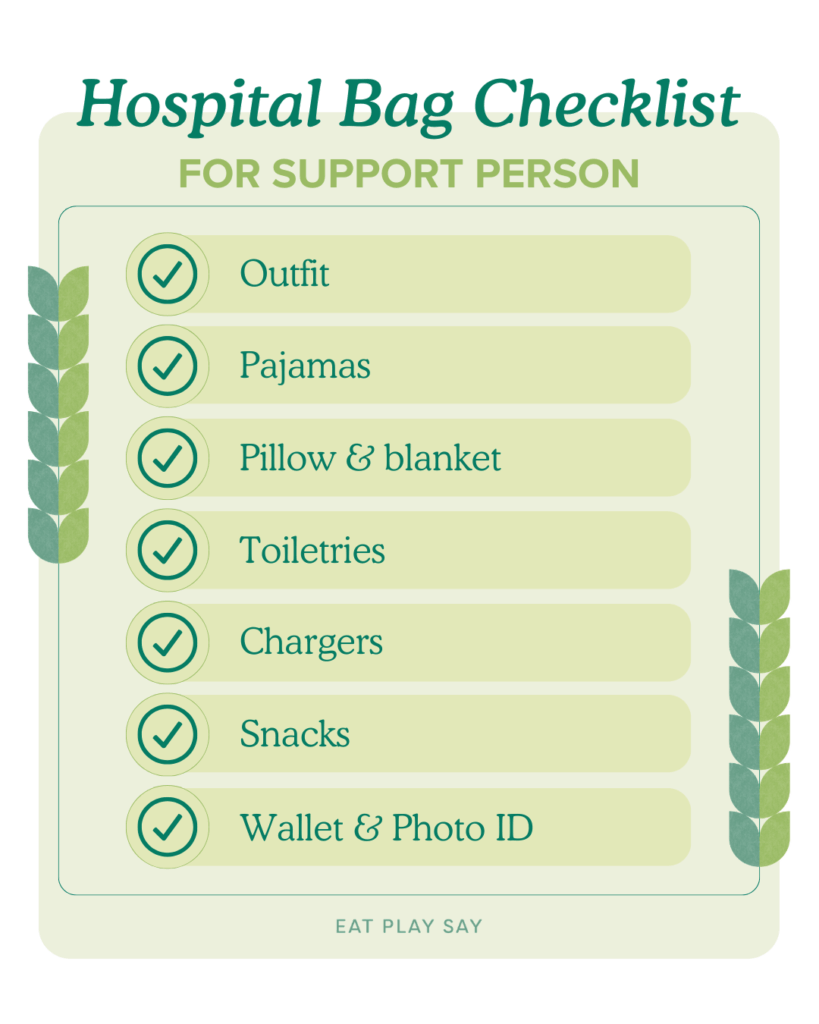
Hospital Bag Checklist for Partner/Support Person
Grab a screenshot of this hospital bag checklist and send it to your partner or support person so they can pack!
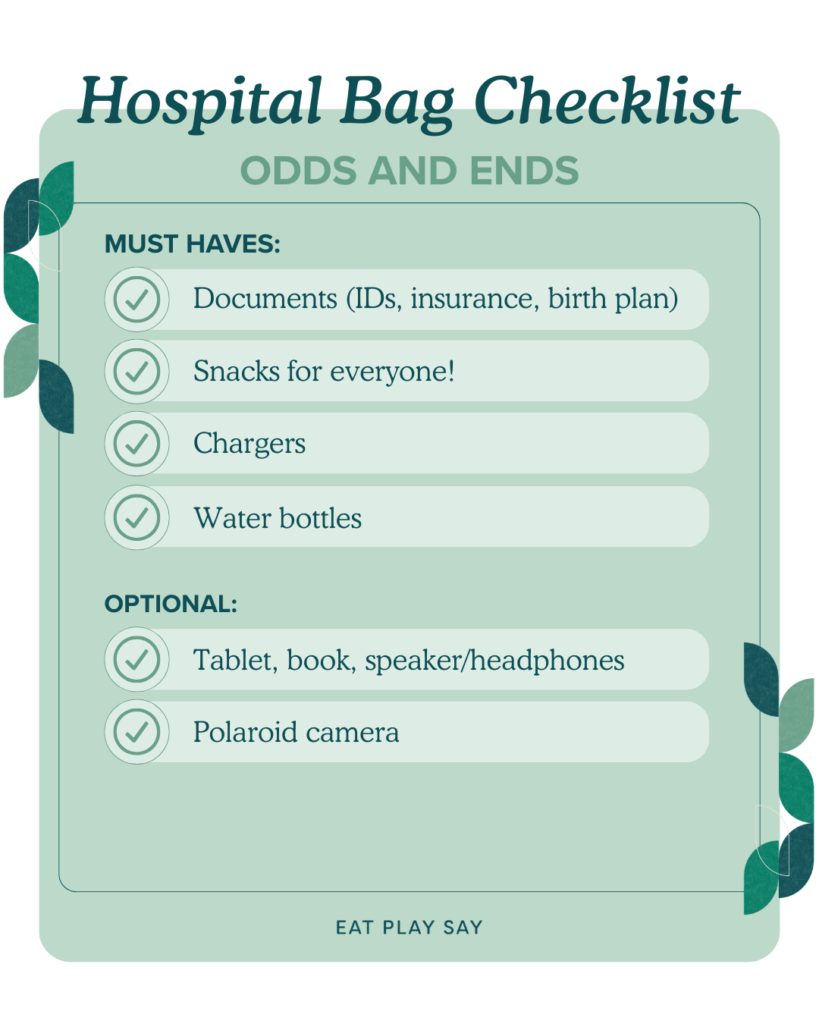
Hospital Bag Checklist Odds & Ends
While these items may not fit neatly into a specific category, they’re still worth remembering when packing your hospital bag.
If you’ve created a birth plan, be sure to bring a copy with you so your medical team can better understand your preferences and goals for labor and delivery.
When should I pack my hospital bag?
I packed my hospital bag at 37 weeks pregnant! I would recommend packing a hospital bag at least 2 weeks prior to your due date, just so you don’t feel rushed at the end.
What does the hospital provide during the labor and delivery process?
Most hospitals provide the basic essentials that both mom and baby need during labor, delivery, and postpartum recovery. There is no fluff involved, it’s just the necessities. In most cases, you only need to pack the personal items and preferences that will make your stay more comfortable.
For babies, hospitals typically provide a onesie, swaddle blankets, diapers, and wipes. Many hospital systems use Pampers diapers and wipes, but if you have a preferred brand, feel free to bring your own. For example, I packed Pura diapers and Honest wipes because those were the products I planned to use at home and they’re fragrance-free.
Hospitals also provide small bottles and formula if you choose—or need—to bottle feed. However, they likely won’t carry the specific bottle brand you researched and selected ahead of time. If you already have a preferred bottle and plan to use it, it’s a good idea to pack one or two.
For moms, hospitals usually supply postpartum essentials like pads, disposable underwear, peri bottles, and other recovery items. And while they do provide hospital gowns, I personally find a nursing nightgown much more comfortable and easier to move around in during recovery.
Looking for more?
Find my tried and true postpartum essentials that get me through the first few weeks after birth and beyond.
Searching for the best baby bottles for oral development? We broke down all our favorite options.
Leave a Reply
OTHER POSTS YOU MAY LIKE:


MS, SLP
Founder of Eat Play Say, Speech-Language Pathologist, Feeding Specialist, Play Expert, Mom of 3
Jordyn Koveleski Gorman
SPECIALIZES IN: Infant and toddler speech-language, play, and feeding development, and curating a team that provides expert help that feels like a reassuring text from that one mom friend
EDUCATION: Jordyn received her BS in Speech-Language Pathology from Bloomsburg University and her MS in Speech-Language Pathology from Towson University
FAVE PARENTING FIRST: “The first true smile, it’s the sweetest!”

MS, CCC-SLP, CBS, IBCLC
Speech-Language Pathologist & Feeding Specialist, Certified Breastfeeding Specialist, International Board Certified Lactation Consultant
Jessica Nicholson Cocca
SPECIALIZES IN: Breast and bottle feeding, tongue ties, oral motor dysfunction, starting solids, infant and toddler speech, treating oral motor disorders
EDUCATION: Jessica received her BS in Communication Sciences and Disorders from Pennsylvania State University in 2015 and her MS in Speech-Language Pathology from Towson University in 2017
FAVE PARENTING FIRST: “Baby’s first wave! What a fun first communication gesture!”

MA, CCC-SLP, CLC
Speech-Language Pathologist, Certified Lactation Counselor
Jennifer McFarlin
SPECIALIZES IN: Breast and bottle feeding, tongue ties, starting solids, infant and toddler speech development
EDUCATION: She received her BS in Speech-Language Pathology from Ball State in 2014 and a MA in Speech-Language Pathology from Ball State in 2016.
FAVE PARENTING FIRST: “My favorite baby’s first is their first true smile that just warms your soul knowing they are smiling at you. My other favorite is their first word. I love watching their language explode!”

MS, CCC-SLP
Bilingual Speech-Language Pathologist
Nicole La Petina Kelly
SPECIALIZES IN: Bilingual development (Spanish-English), supporting multilingual families, infant and toddler speech
EDUCATION: She received her BA in Communication Sciences and Disorders and in Spanish from the University of Wisconsin-Madison in 2014 and her MS in Speech-Language Pathology with an English-Spanish Specialization from Marquette University in 2016.
FAVE PARENTING FIRST: “It’s the first slobbery kisses for me!”

RDN, LD
Licensed Registered Dietitian
Kimberly Vede
SPECIALIZES IN: Infant and pediatric nutrition including breastfeeding, formula feeding, and starting solids. She also specializes in prenatal and postpartum nutrition.
EDUCATION: She received her BSc in Biology in 2014 from Life University, and her BSc in Dietetics from Life University in 2019.
FAVE PARENTING FIRST: ”The first time they say ‘mama!’”


This checklist was created with input from a Speech-Language Pathologist, Occupational Therapist and Physical Therapist and has been downloaded over 20,000 times by parents worldwide. Learn the important milestones to pay attention to, and keep it in your digital back pocket during the baby + toddler years!
Comprehensive Milestone Checklist for gross motor, fine motor, and speech-language milestones for 0-36 months,
DOWNLOAD FOR FREE


