


Ingredients in Baby Formula Explained
January 22, 2025
Jordyn Koveleski Gorman

Last Updated on March 24, 2026 by Jordyn Koveleski Gorman
Baby formula is a gift to humankind. For families who want or need to use formula to feed their little ones, it provides assurance that infants can receive the nutrition they need to thrive. Plain and simple, baby formula feeds babies.
I formula fed my firstborn after struggles with breastfeeding, so I personally have walked the road to offering formula. That journey taught me so much. I just wish I had educated myself a bit about baby formula and its ingredients ahead of time.
Combined with the expertise of our amazing pediatric registered dietitian, we put together this quick-read guide that will empower you to make informed, empowered decisions about what formula is best for your little one and your family!
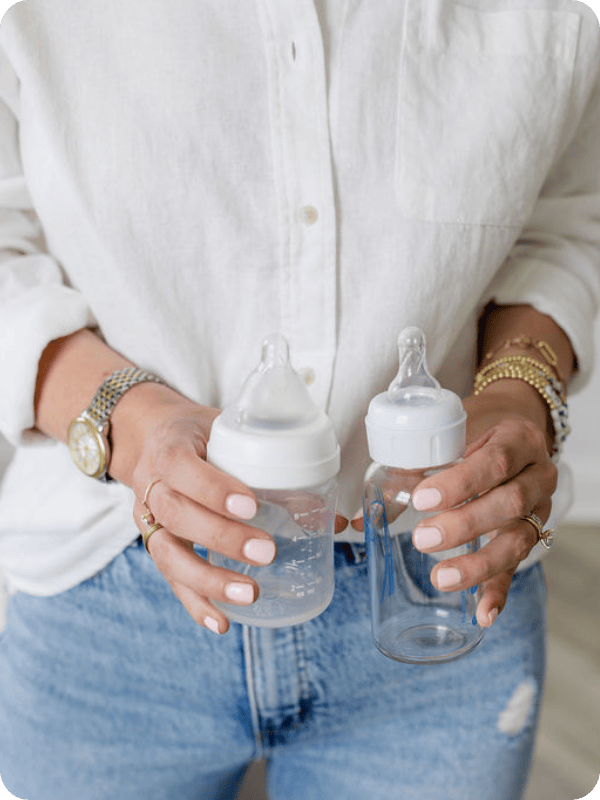
Baby formula ingredients
When I knew it was time to offer baby formula, I gravitated toward whatever my pediatrician handed me. I didn’t pay much attention to the ingredients. I also wasn’t given any information to better help me understand baby formula ingredients, the different kinds of formula, or what I should look for when reading an ingredient label.
Education about infant formula and its ingredients is a vital missing piece of the puzzle for so many parents.
Although my son tolerated the baby formula we gave, I wish we had been given more education about formula. Making informed decisions kind of requires information, right?
Knowledge is power. Just like there are ingredients we may want to avoid in our own food whenever possible, there are also ingredients in formula that aren’t as nutritionally strong as others. And it’s important to know about them!
When I was pregnant with my second, I made sure to research baby formula ingredients. I researched which formulas are closest to breastmilk in composition and decided on a formula that I would try if needed. Not only did I take ingredients into account, but I also factored in accessibility and price, too. Those factors matter, too!
I felt much better about my feeding journey that time around because I had the education to make informed decisions.
Maybe you’re casually researching formulas and the ingredients they contain in preparation for your baby’s arrival. Or maybe you find yourself in a more frantic position, trying to figure out what all these ingredients in formula are because you weren’t exactly planning to use formula, but it turns out that it’s the best thing for your family now.
Whichever position you find yourself in, know that educating yourself will help you feel good about the decisions you make around formula. The nutrition we give our babies matters in the short-term and the long-term, so digging a little deeper into the ingredients and nutrition is important and worth your time.

Types of baby formula
The main types of baby formula include:
- Cow’s Milk Based
- Goat’s Milk Based
- Soy Based
- Partially Hydrolyzed
- Extensively Hydrolyzed/Hypoallergenic
- Lactose Free/Reduced Lactose
Typically, if there are no allergies or digestive discomfort symptoms, a cow’s milk formula (organic, if you’d like) is a good place to start. Goat’s milk based formulas can be a bit gentler on the stomach if needed, and are similar to cow’s milk formulas in terms of nutrients.
What is baby formula made of?
All infant formulas are made of the following main components: protein, fat, carbohydrates, vitamins and minerals. The specific sources of these components can vary, and there can be additional ingredients added, such as prebiotics and probiotics.
The main sources of the components in infant formula are:
Protein sources: cow’s milk, goat’s milk, soy
Fat sources: palm oil, palm kernel oil, soy oil, coconut oil, sunflower oil, safflower oil
Carbohydrate sources: lactose, corn syrup, corn syrup solids, corn maltodextrin, glucose syrup, brown rice syrup and sucrose.
Vitamins and minerals: All formulas are required to contain 27 vitamins and minerals that are essential to baby’s growth, with minimum and maximum amounts regulated by the FDA, therefore there is little variation between formulas.
Due to the variation of ingredients in infant formula from brand to brand (and even within different versions from one brand), formulas are not all created equal. Some ingredients are more desired, and some are best to avoid or limit if you can.
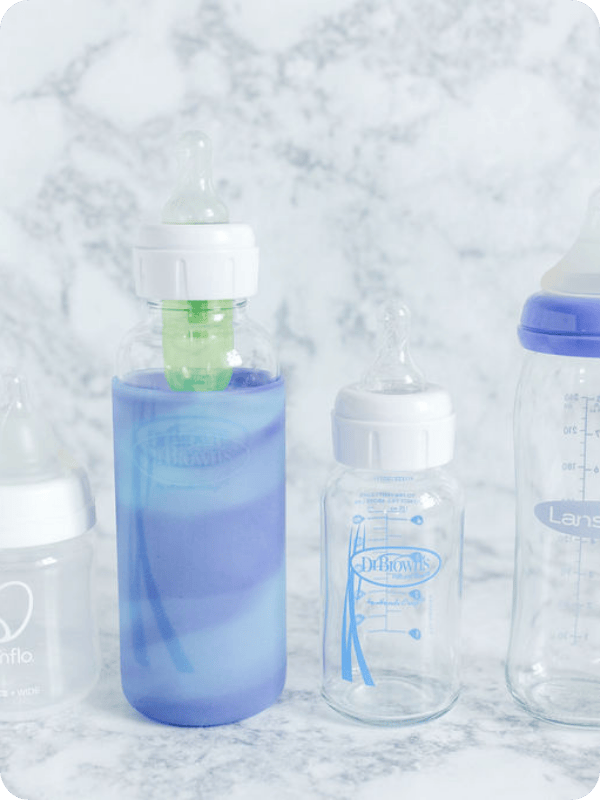
Ingredients to avoid in baby formula
What ingredients should you try to avoid if possible? Generally, we recommend limiting or avoiding ingredients that aren’t as nutritionally strong as others.
Soy
Soy is an alternative protein source typically recommended for babies who cannot tolerate standard cow’s milk formula, or for families who want to avoid animal products. Unless your baby has one of the rare conditions called galactosemia or lactase deficiency, then soy formula is not indicated for use.
Even if a family follows a vegan diet, we recommend considering giving baby formula derived from cow’s or goat’s milk for optimal nutrition. Soy formulas contain soy protein isolates that are usually made from GMO soy, unless they are organic. Soy formulas are also high in phytoestrogens, aluminum, and antinutrients (oxalates, phytates, etc) that can interfere with protein digestion. (1, 2) You can check out the AAP’s stance on soy formula here.
Non-lactose carbohydrate sources
Ideally the main and/or only carbohydrate source source in formula would be lactose. Avoiding ingredients such as corn syrup, corn syrup solids, glucose syrup, brown rice syrup, and sucrose is recommended.
Lactose is the carb source found in breast milk, and babies are born with the lactase enzyme meant for digesting lactose. Other carb sources added to formulas are cheaper to make, taste sweeter, and do not utilize the baby’s lactase enzyme to digest. (3)
There is a rare circumstance when a lactose free formula may be necessary, but that is for a rare genetic condition called congenital lactase deficiency. Overall, lactose is the most ideal carbohydrate source.
Palm Oil
According to The Baby Formula Expert Dr. Bridget Young, palm oil provides a large amount of palmitic acid, similar to the fat in breast milk, so it is often the primary fat in formula. But palmitic acid from palm oil is not absorbed as well as the palmitic acid from breast milk, and sometimes the unabsorbed palmitic acid from formula can bother sensitive stomachs. (4)
Unabsorbed palmitic acid can react in the intestines in a way that decreases the absorption of calcium from the formula, causing it to be pooped out instead of absorbed. Several studies have shown that babies drinking formula with palm olein oil absorb 40% of the calcium from their formula, while babies consuming formula without palm olein oil absorb 55% of the calcium. Breast fed babies absorb 60% of the calcium from breast milk. Formula contains more calcium to compensate for this lower absorption rate. (4)
Consider avoiding palm oil as the primary fat source if baby is struggling with constipation or is premature. Instead, look for a formula with a higher amount of other fat sources, such as whole milk, coconut, and sunflower oils.
Carrageenan
This is a thickening agent used to stabilize formulas, mostly found in ready-to-feed formulas. Although approved by the FDA for use in infant formula, it is prohibited by the EU. Research has linked carrageenan to intestinal inflammation. Since it is not a necessary ingredient in formula, providing no nutritive or flavor benefits, we would advise to steer clear of it if you can. (5)
GMOs
Genetically modified ingredients (GMOs) come with a lot of concerns. A significant problem that arises from these food sources is heavy use of pesticides and/or herbicides, including glyphosate.
Minimizing your baby’s exposure to glyphosate is very important for their future health and is recommended by the AAP. (6) Certified organic formulas are GMO-free, but can be hard to access sometimes. This GMO-free status includes ensuring that the animal products inside do not come from animals fed GMO diets. Additionally, organic formulas assure that oils and carb sources do not come from GMO sources, either.
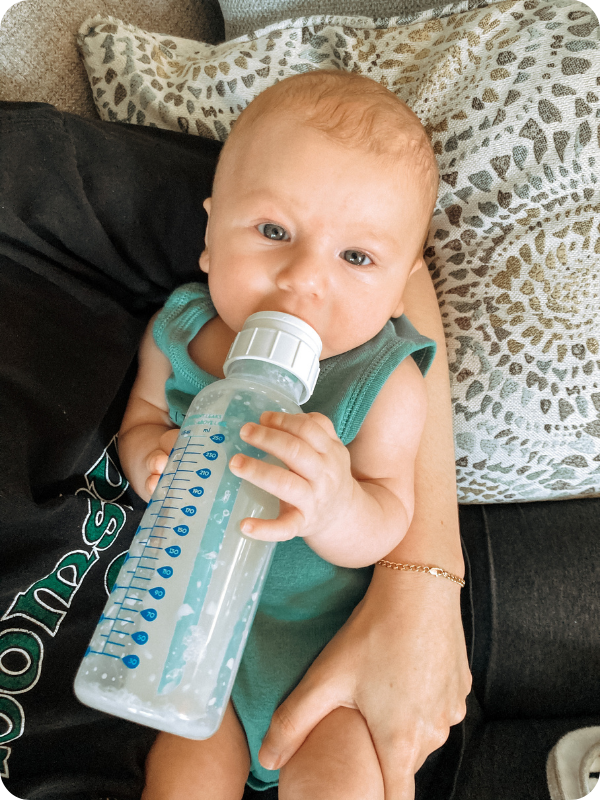
Best baby formula
Remember: the best formula for your baby is one that is available, accessible, and well-tolerated. Still not sure what to choose? Read our blog for more specific guidance on brands that include optimum nutrition.
I know it can feel overwhelming to sort through how to feed your baby. I’ve been there! Helping you feel empowered as a parent is why Eat Play Say exists. You can learn more with our newborn feeding guide, and even learn our best tips for playing with your newborn here.
More infant feeding and development help
Like all things in parenthood, feeding will look different from baby to baby and family to family. Educating yourself is the first step to making a decision that’s best for you and your little one!
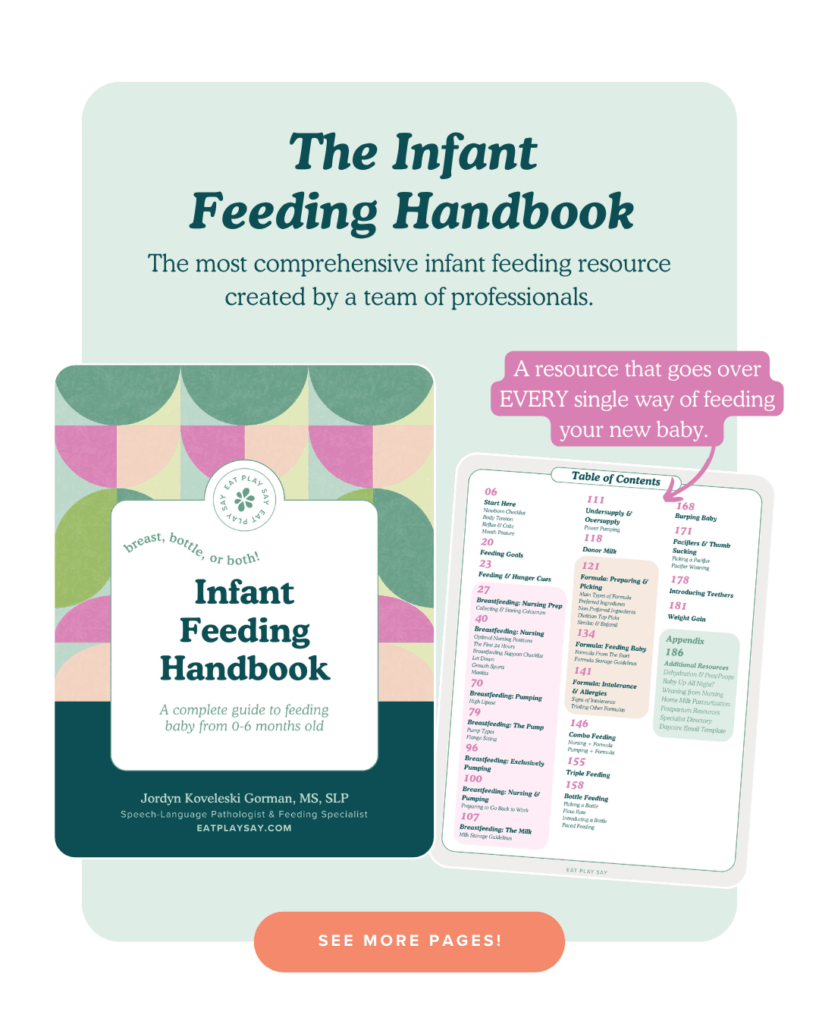
Now that you know more about formula, you can decide which bottles to try out with your little one.For more about formula brands and all the ways of feeding your new baby, check out our complete Infant Feeding Handbook!
Sources
- Concerns for the use of soy-based formulas in infant nutrition. Paediatr Child Health. 2009 Feb;14(2):109-18. PMID: 19436562; PMCID: PMC2661347.
- Burrell SA, Exley C. There is (still) too much aluminium in infant formulas. BMC Pediatr. 2010 Aug 31;10:63. doi: 10.1186/1471-2431-10-63. PMx: 20807425; PMCID: PMC2939626.
- https://babyformulaexpert.com/baby-formula-carbs/
- https://babyformulaexpert.com/baby-formula-fat/
- Komisarska P, Pinyosinwat A, Saleem M, Szczuko M. Carrageenan as a Potential Factor of Inflammatory Bowel Diseases. Nutrients. 2024 Apr 30;16(9):1367. doi: 10.3390/nu16091367. PMID: 38732613; PMCID: PMC11085445.
- https://www.healthychildren.org/English/healthy-living/nutrition/Pages/are-GMO-foods-safe-for-my-child-AAP-policy-explained.aspx
OTHER POSTS YOU MAY LIKE:






MS, SLP
Founder of Eat Play Say, Speech-Language Pathologist, Feeding Specialist, Play Expert, Mom of 2
Jordyn Koveleski Gorman
SPECIALIZES IN: Infant and toddler speech-language, play, and feeding development, and curating a team that provides expert help that feels like a reassuring text from that one mom friend
EDUCATION: Jordyn received her BS in Speech-Language Pathology from Bloomsburg University and her MS in Speech-Language Pathology from Towson University
FAVE PARENTING FIRST: “The first true smile, it’s the sweetest!”

MS, CCC-SLP, CBS, IBCLC
Speech-Language Pathologist & Feeding Specialist, Certified Breastfeeding Specialist, International Board Certified Lactation Consultant
Jessica Nicholson Cocca
SPECIALIZES IN: Breast and bottle feeding, tongue ties, oral motor dysfunction, starting solids, infant and toddler speech, treating oral motor disorders
EDUCATION: Jessica received her BS in Communication Sciences and Disorders from Pennsylvania State University in 2015 and her MS in Speech-Language Pathology from Towson University in 2017
FAVE PARENTING FIRST: “Baby’s first wave! What a fun first communication gesture!”

MA, CCC-SLP, CLC
Speech-Language Pathologist, Certified Lactation Counselor
Jennifer McFarlin
SPECIALIZES IN: Breast and bottle feeding, tongue ties, starting solids, infant and toddler speech development
EDUCATION: She received her BS in Speech-Language Pathology from Ball State in 2014 and a MA in Speech-Language Pathology from Ball State in 2016.
FAVE PARENTING FIRST: “My favorite baby’s first is their first true smile that just warms your soul knowing they are smiling at you. My other favorite is their first word. I love watching their language explode!”

MS, CCC-SLP
Bilingual Speech-Language Pathologist
Nicole La Petina Kelly
SPECIALIZES IN: Bilingual development (Spanish-English), supporting multilingual families, infant and toddler speech
EDUCATION: She received her BA in Communication Sciences and Disorders and in Spanish from the University of Wisconsin-Madison in 2014 and her MS in Speech-Language Pathology with an English-Spanish Specialization from Marquette University in 2016.
FAVE PARENTING FIRST: “It’s the first slobbery kisses for me!”

RDN, LD
Licensed Registered Dietitian
Kimberly Vede
SPECIALIZES IN: Infant and pediatric nutrition including breastfeeding, formula feeding, and starting solids. She also specializes in prenatal and postpartum nutrition.
EDUCATION: She received her BSc in Biology in 2014 from Life University, and her BSc in Dietetics from Life University in 2019.
FAVE PARENTING FIRST: ”The first time they say ‘mama!’”


This checklist was created with input from a Speech-Language Pathologist, Occupational Therapist and Physical Therapist and has been downloaded over 20,000 times by parents worldwide. Learn the important milestones to pay attention to, and keep it in your digital back pocket during the baby + toddler years!
Comprehensive Milestone Checklist for gross motor, fine motor, and speech-language milestones for 0-36 months,
DOWNLOAD FOR FREE


