


What is Power Pumping & How Do You Do It?
April 28, 2026
Jordyn Koveleski Gorman

Last Updated on April 28, 2026 by Jordyn Koveleski Gorman
This page contains affiliate links. We will receive a commission on qualifying purchases using these links.
You might be thinking, “What the heck is power pumping and why does it sound like a workout?” And if that’s you, then you’re in the right place. First off, let’s get one thing clear: it is a workout.
Power pumping is a short-term method of pumping breastmilk that mimics cluster feeding in newborns. Generally, moms turn to power pumping to increase their milk supply. Whether your supply is clinically low or you are hoping to have a few bottles on hand when needed, power pumping can be an effective tool to boost the amount of milk you produce.
I consulted our amazing lactation consultants for this handy guide that breaks down power pumping from start to finish, including the pros and cons of this method. Plus, we included some sample schedules and more things to consider if you’re struggling with low supply!

What is power pumping?
Normal pumping sessions last from 15–20 minutes for most moms. Power pumping generally takes 1 hour and involves multiple short bursts of pumping followed by short breaks. The newborn witching hour, which often involves cluster feeding, is important because it tells a mother’s breasts to make more milk. Power pumping stimulates the same response!
Breastfeeding is primarily about supply and demand. Typically, the more demand there is, the more supply there will be. That’s why not only consistency, but also balance, matters. And that’s why pumping too frequently can lead to an oversupply.
Because of the risk of oversupply, power pumping is recommended for short-term use to help establish or maintain supply. If you have questions or concerns, talking with a certified lactation consultant is recommended. Some insurance plans even cover visits with lactation.
How to power pump
You can implement a power pumping session any time of the day in between regular nursing or pumping sessions. However, the most optimal time for a power pump is in the middle of the night or early in the morning. Prolactin, the primary milk-making hormone, is at its highest level between 2–6 a.m. (1) Many lactating mothers experience their highest output in these hours.
Power pumping during work can also help maintain supply if you have to be away from your little one. Some find success with power pumping right before bed! You will find what works best for you and your schedule with a little practice. You might need to take several days to figure out what works best for you.
It’s important to focus on hydration and nutrition any time you are breastfeeding or pumping, but especially for this longer stretch of pumping. Our Postpartum Meals & Snacks freebie can help you stay nourished during marathon sessions!
Power pumping schedule
Most of the time, one power pumping session per day is adequate to boost or maintain supply. Adding more than one power pump session per day can lead to oversupply. More guidance on frequency can be provided by your lactation consultant!
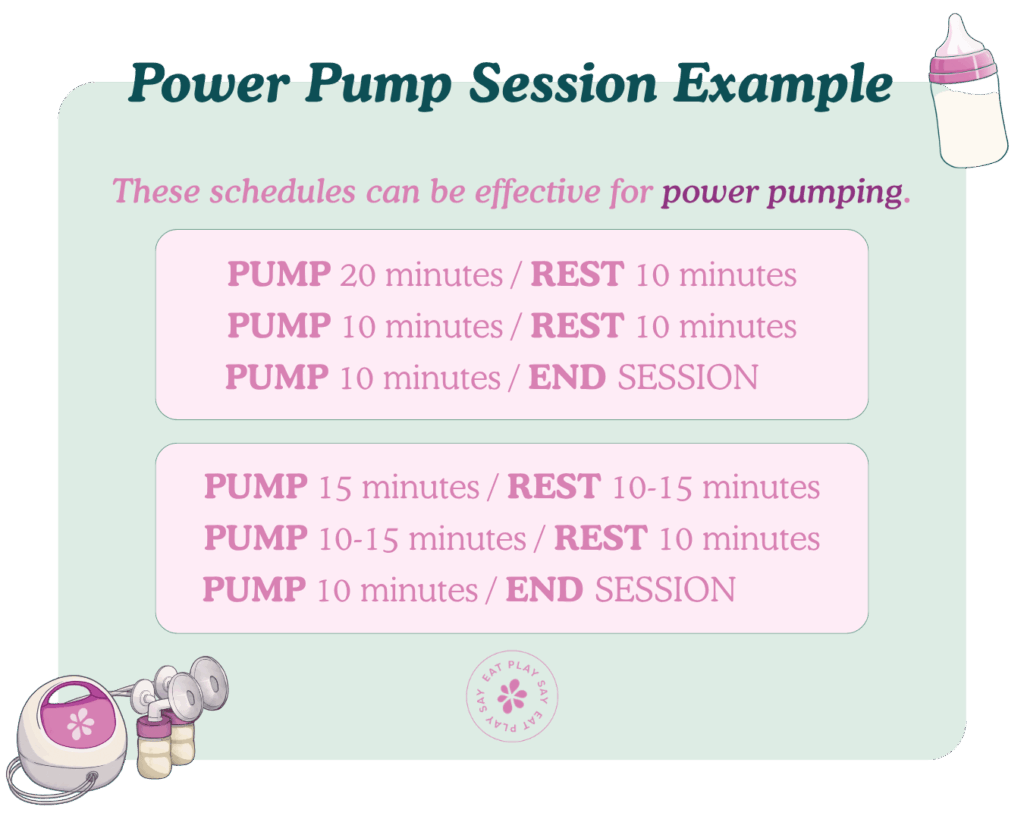
An example of a power pumping session is:
- Pump 20 minutes, rest for 10
- Pump 10 minutes, rest for another 10
- Pump for 10 more minutes, then end the session
Another example of a power pumping session is:
- Pump 15 minutes, rest for 10-15
- Pump 10-15 minutes, rest for another 10
- Pump 10 minutes, then end the session
Since most “normal” pumping sessions last around 15–20 minutes, this is a good starting point for power pumps. Consider how long you typically pump and start from there, resting for 10 minutes before moving into the next portion. The goal is to make your second and third pumps a little shorter than the first, mimicking those cluster feeds of a newborn.
Remember to think calm, soothing thoughts as best as you can while pumping. Stress can negatively impact letdown of milk. (2) Looking at your baby or even pictures of them can be helpful!
Breast pump for low milk supply
Is there a pump that is best for mothers with low milk supply? Contrary to marketing that declares a million pumps as “hospital quality,” there is actually such a thing as hospital grade—and most of the pumps on the market aren’t that.
There are certainly some pumps that get better reviews than others or that seem to have better suction. For moms in need of a power pumping session, there are a few pumps that come to mind. So, we outlined those below!
As a note: in the US, most insurance plans are required by law to include coverage for breast pumps and supplies with a doctor’s prescription. Check with your insurance provider for your plan’s coverage details, or check using a website like Aeroflow!
Medela hospital grade pump
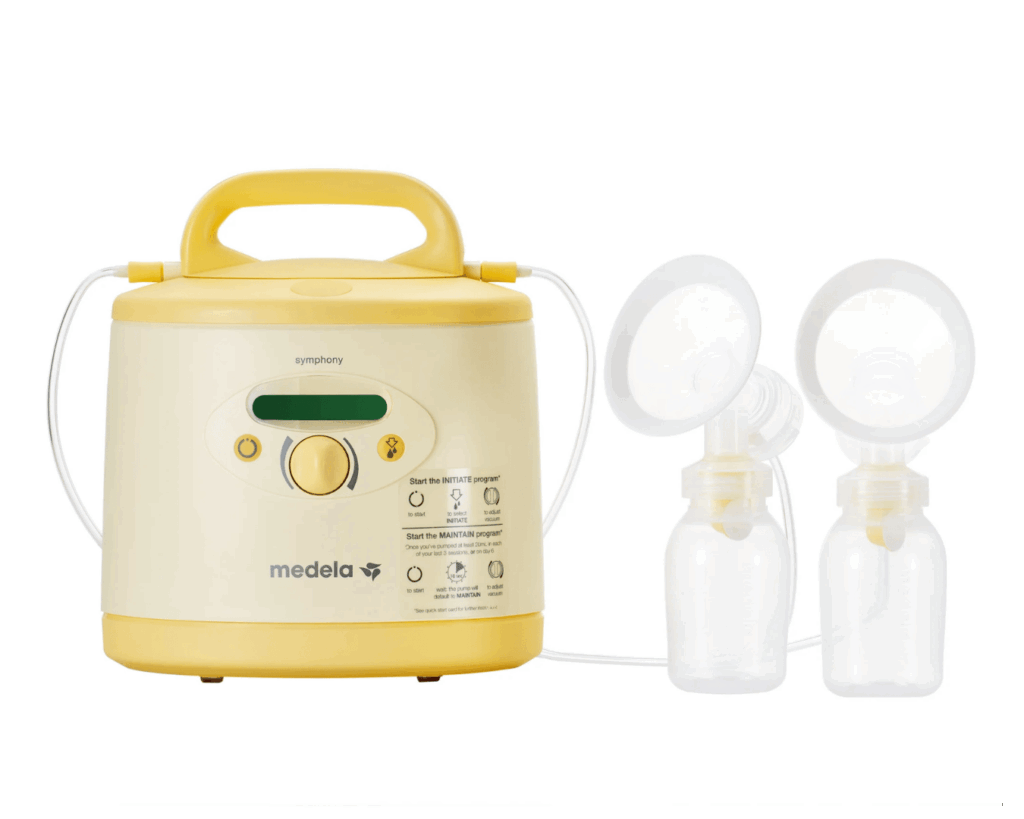
Okay, so the Medela Symphony is a hospital grade pump. You may have seen it before or even used it during a hospital stay! These pumps (and others like them) are thousands of dollars, and for good reason. They are not typically necessary for the average pumping journey. Hospital grade pumps can be especially helpful for mothers dealing with clinically established low supply.
These are often able to be rented or even loaned out by some hospitals. If you are struggling with supply or do not have access to a high quality pump that works well for you, it may be worth looking into local rentals or loaner programs.
Spectra breast pump
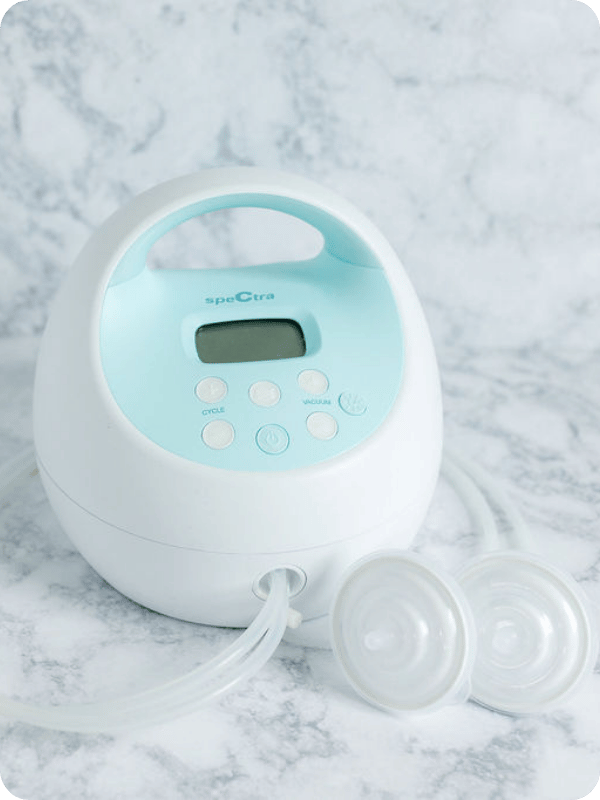
For many moms, Spectra breast pumps provide adequate suction to help establish and maintain supply. The Spectra S1 (the blue one) and Spectra S2 (pink one) are very similar, with essentially the same features. The only super obvious difference is that the S1 has a built-in rechargeable battery, making it more portable. You don’t need to be plugged into the wall to use it!
Spectra pumps are efficient, powerful, and work well for power pumping sessions and exclusive pumping. Personally, I have used the S1 in the past and it worked well for me!
Manual hand pump
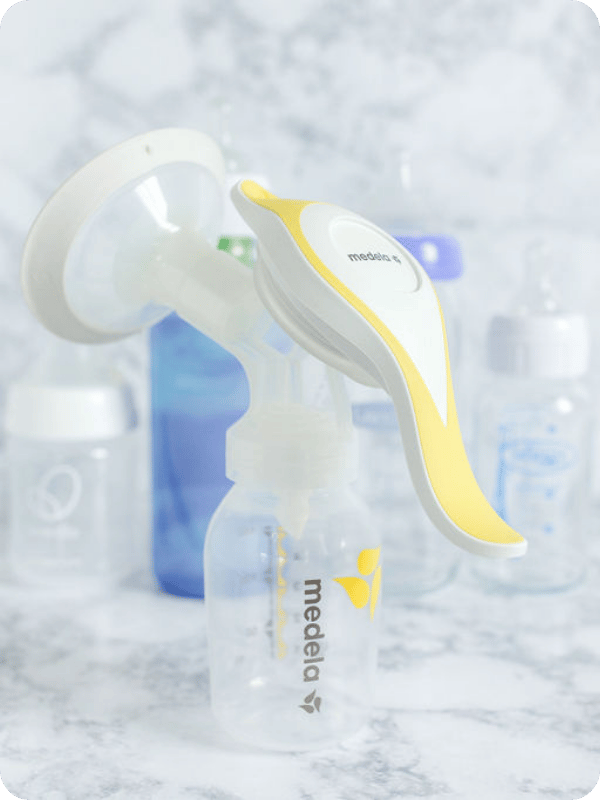
Although using a hand pump might get exhausting for a power pumping session, I have been utilizing mine in my third postpartum journey as my primary pump. It’s easy, portable, and way less mentally taxing than plugging myself into the wall. Honorable mention to the hand pump! If you need to pump quickly or only for a short 5 minute session, it’s great!
More feeding resources from Eat Play Say
Now that you’ve mastered the power pump, you’re a pumping pro! Hoping to learn more about breast and bottle-feeding? Check out our Breast & Bottle blogs!
For more newborn content, head to these posts:
- Understanding newborn hunger cues
- How to play with your newborn + our favorite tummy time mats
- Our favorite pacifiers for infants
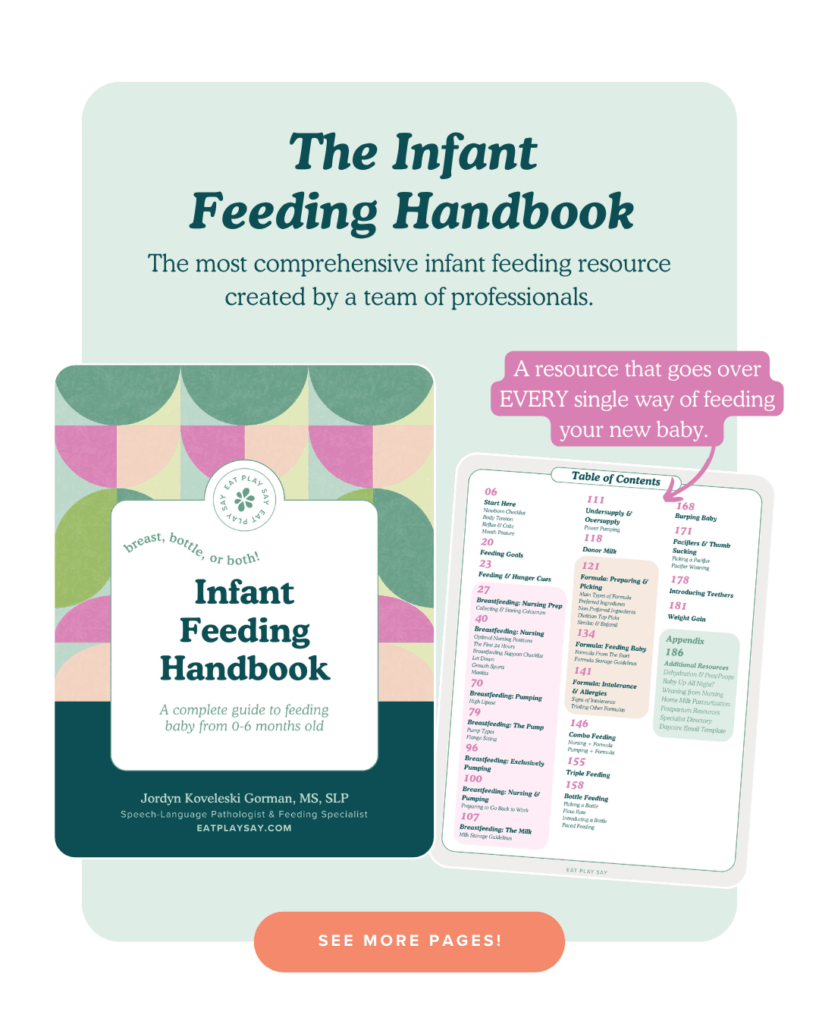
If you need the kind of support that stays in your pocket and goes with you everywhere, it’s time for an Eat Play Say Handbook! Our handbooks are written by our team of experts and cover so many topics from every angle. The Infant Feeding Handbook has almost 200 pages of helpful education and hands-on tips for every stage of the feeding journey!
Sources
- Stern JM, Reichlin S. Prolactin circadian rhythm persists throughout lactation in women. Neuroendocrinology. 1990 Jan;51(1):31-7. doi: 10.1159/000125312. PMID: 2106085.
- Nagel EM, Howland MA, Pando C, Stang J, Mason SM, Fields DA, Demerath EW. Maternal Psychological Distress and Lactation and Breastfeeding Outcomes: a Narrative Review. Clin Ther. 2022 Feb;44(2):215-227. doi: 10.1016/j.clinthera.2021.11.007. Epub 2021 Dec 20. PMID: 34937662; PMCID: PMC8960332.
Leave a Reply
OTHER POSTS YOU MAY LIKE:





MS, SLP
Founder of Eat Play Say, Speech-Language Pathologist, Feeding Specialist, Play Expert, Mom of 3
Jordyn Koveleski Gorman
SPECIALIZES IN: Infant and toddler speech-language, play, and feeding development, and curating a team that provides expert help that feels like a reassuring text from that one mom friend
EDUCATION: Jordyn received her BS in Speech-Language Pathology from Bloomsburg University and her MS in Speech-Language Pathology from Towson University
FAVE PARENTING FIRST: “The first true smile, it’s the sweetest!”

MS, CCC-SLP, CBS, IBCLC
Speech-Language Pathologist & Feeding Specialist, Certified Breastfeeding Specialist, International Board Certified Lactation Consultant
Jessica Nicholson Cocca
SPECIALIZES IN: Breast and bottle feeding, tongue ties, oral motor dysfunction, starting solids, infant and toddler speech, treating oral motor disorders
EDUCATION: Jessica received her BS in Communication Sciences and Disorders from Pennsylvania State University in 2015 and her MS in Speech-Language Pathology from Towson University in 2017
FAVE PARENTING FIRST: “Baby’s first wave! What a fun first communication gesture!”

MA, CCC-SLP, CLC
Speech-Language Pathologist, Certified Lactation Counselor
Jennifer McFarlin
SPECIALIZES IN: Breast and bottle feeding, tongue ties, starting solids, infant and toddler speech development
EDUCATION: She received her BS in Speech-Language Pathology from Ball State in 2014 and a MA in Speech-Language Pathology from Ball State in 2016.
FAVE PARENTING FIRST: “My favorite baby’s first is their first true smile that just warms your soul knowing they are smiling at you. My other favorite is their first word. I love watching their language explode!”

MS, CCC-SLP
Bilingual Speech-Language Pathologist
Nicole La Petina Kelly
SPECIALIZES IN: Bilingual development (Spanish-English), supporting multilingual families, infant and toddler speech
EDUCATION: She received her BA in Communication Sciences and Disorders and in Spanish from the University of Wisconsin-Madison in 2014 and her MS in Speech-Language Pathology with an English-Spanish Specialization from Marquette University in 2016.
FAVE PARENTING FIRST: “It’s the first slobbery kisses for me!”

RDN, LD
Licensed Registered Dietitian
Kimberly Vede
SPECIALIZES IN: Infant and pediatric nutrition including breastfeeding, formula feeding, and starting solids. She also specializes in prenatal and postpartum nutrition.
EDUCATION: She received her BSc in Biology in 2014 from Life University, and her BSc in Dietetics from Life University in 2019.
FAVE PARENTING FIRST: ”The first time they say ‘mama!’”


This checklist was created with input from a Speech-Language Pathologist, Occupational Therapist and Physical Therapist and has been downloaded over 20,000 times by parents worldwide. Learn the important milestones to pay attention to, and keep it in your digital back pocket during the baby + toddler years!
Comprehensive Milestone Checklist for gross motor, fine motor, and speech-language milestones for 0-36 months,
DOWNLOAD FOR FREE


