


How to Start Homeschooling
August 11, 2026
Jordyn Koveleski Gorman

Last Updated on August 11, 2026 by Jordyn Koveleski Gorman
This page contains affiliate links. We will receive a commission on qualifying purchases using these links.
Thinking about embarking on a homeschooling journey with your little one but not sure how to start? You’re not alone! Two years ago I was asking myself this same question.
Over the years, parents have turned to resources like local libraries, search engines, and (sometimes very expensive) curriculum built for homeschooling in order to provide their children with education at home. As homeschooling has become more common, resources have become more plentiful and easier to find. That’s great news! The downside to increased access, though, is that sometimes it can be hard to sort through all the information to know how to begin.
As a pediatric speech-language pathologist and feeding specialist, supporting my own kids’ development has always been a passion of mine. So when my oldest was nearing preschool, we decided to try out homeschooling to see how it felt! As it turned out, our entire family loved the process, and we’ve decided to keep going as long as it continues to fit our family.
This guide to starting homeschooling includes helpful tips and tricks regardless of your child’s age. Together, we’ll break down homeschooling styles and approaches, as well as different regulations across the US. Let’s dive in!
What is homeschooling?
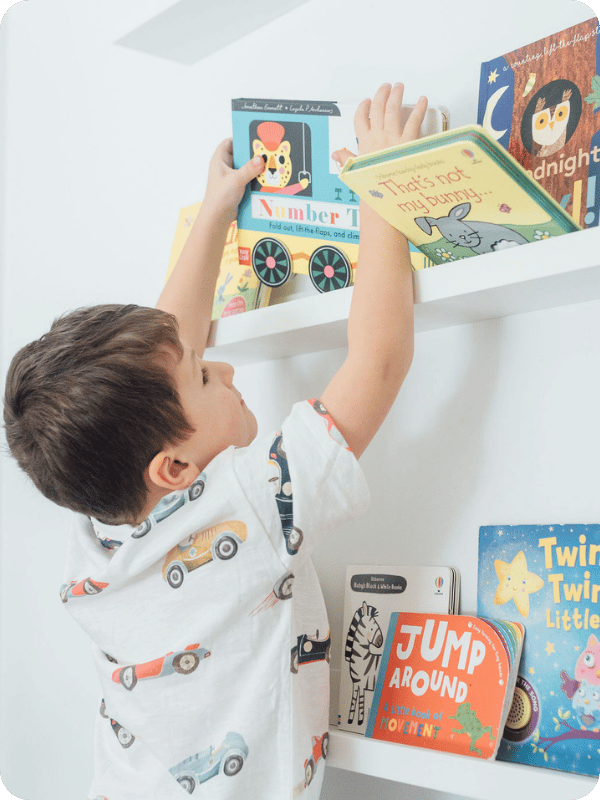
Homeschooling is a broad term used for providing education to children at “home” rather than in a traditional public or private school setting. Under the homeschool umbrella, there are many variations (and they don’t always take place at home)!
Some families do structured studies that mirror traditional school settings. Others take less formal approaches that focus on real-life activities and experiences as school. And many other families fall somewhere in between. Whether you plan to unschool your little one or sit for scheduled lessons daily, there are resources that can guide you as you begin.
How to start homeschooling
Jumping into homeschooling is easier with a plan. Organizing documentation and creating a schedule are just two pieces of a much bigger puzzle!
Steps to take before beginning include:
- Get to know local regulations about homeschooling, including potential testing requirements or formal notifications that must be made before starting.
- Decide what approach to teaching and learning feels best for your family right now. You can always adapt and change the approach later if it doesn’t feel like a great fit anymore!
- Find curriculum/teaching materials that fit your child’s development and support their growth.
- Create a schedule to test out when beginning. Remember, you can adapt as you go to fit your family’s needs!
- Track progress, noting where your child might need more support and providing additional instruction, experiences, or external help if needed.

Homeschool laws by state
Before diving into homeschool planning, it’s worth noting the specific homeschooling laws in your state, as they vary widely. Homeschooling is legal in all 50 states, but the requirements to homeschool can look vastly different from one state to the next.
Some states, such as Texas, Alaska, and Indiana, are low regulation states that require little to no documentation in order to begin. Some low regulation states require that parents give notice before beginning, such as Florida, Ohio, and California. (1) Overall, across the US, many states offer parents a high amount of flexibility and freedom in choosing how to homeschool.
By contrast, a few states, like Washington, Minnesota, New York, Pennsylvania, and Rhode Island, have more regulations on homeschooling. These states are considered moderate to high regulation. (1) Filing documentation about homeschool plans is required in some places, as well as ongoing student evaluations in others.
Understanding the laws where you plan to homeschool is the first major step. Once you know what to expect at the state level, you can make a plan to start homeschooling! You can find state-specific regulations by visiting your state’s Department of Education website. In addition, we found The Homeschool Bible helpful for laying out state regulations and how to approach them when researching homeschool.
Different homeschool methods
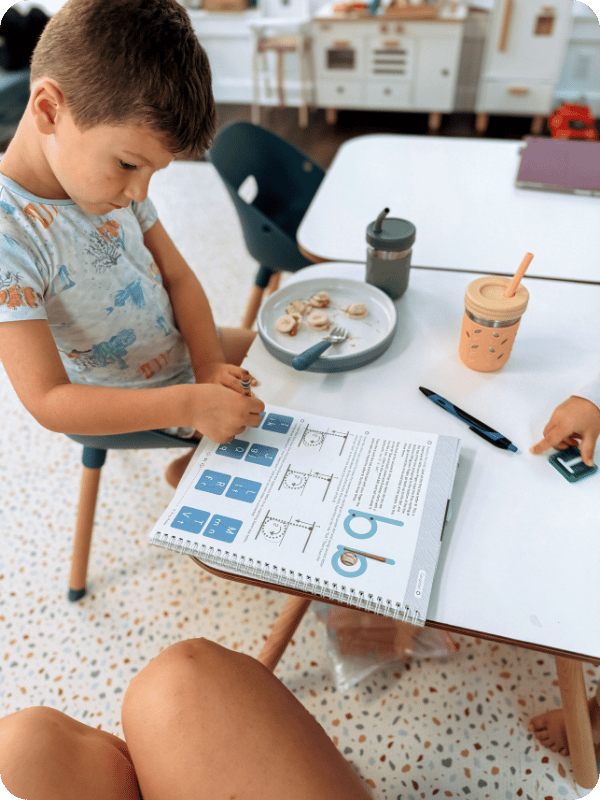
Finding the right homeschooling approach for your family’s values and habits can take some trial and error. In the end, you may find that a mix of styles fits your family well.
For instance, some families have success with more formal, lesson-style math or language arts, paired with more experiential learning for science. Some families prefer using most of their school time to build real-world skills, practice the arts, or gain other hands-on experience.
Some popular homeschool approaches include:
Traditional
Structured similarly to a regular school day, with instruction by a parent and textbooks, workbooks, and assignments that mirror those that might be used in a regular school setting. There are typically distinct lessons for each subject, which may be taught daily or weekly.
Classical
When thinking of the Classical approach, think Plato and Aristotle. This method of learning has been used for centuries. It takes a big picture view of learning by separating education into 3 different phases, called the Trivium, that occur in succession over the years of schooling. The stages are known as grammar, dialectic, and rhetoric. This approach involves a lot of structure, routine, and discipline. Classical Conversations is an example of a well-known classical homeschool program.
Charlotte Mason
Named after its creator, who was a British educator in the 1800s, the Charlotte Mason approach uses minimal textbooks or curriculum. Instead, lessons focus on the “atmosphere” of learning. It primarily features short lessons and narrative-driven “living books” to teach concepts. (2) Charlotte Mason encourages teaching a wide variety of subjects each week, including art, music, and craftmaking, such as pottery or sewing.
Montessori
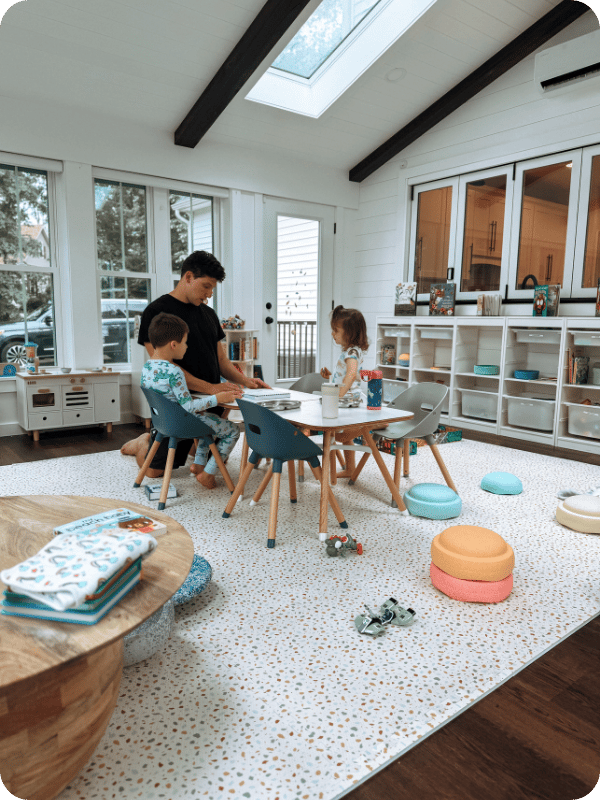
Created by Dr. Maria Montessori, this style has become widely known not just for homeschool education but also as a style of play. Often associated with screen-free and wooden toys that promote sensory exploration, Montessori learning is typically geared toward preschool and elementary-aged children. Hands-on learning is valued over traditional lessons, and day-to-day home life is incorporated into teaching. Although not focused heavily on textbook learning, the Montessori method does include structured and prepared hands-on learning.
Waldorf
The Waldorf approach pairs well with Charlotte Mason and Montessori approaches to homeschooling. (2) This method focuses on hands-on learning, with art, music, and handcrafts as major elements to learning. Guided learning in each subject ties back to the “Main lesson” at hand, which is often taught through stories and examples. Created by Rudolf Steiner, the Waldorf approach emphasizes educating the “whole child,” with special focus on children’s spiritual development. (2) Creativity and art are major components of teaching in the Waldorf style.
Unschooling
Instead of using set curriculum or textbooks, unschooling is an approach that is child-led, often without a formal structure to day-to-day learning. This approach prioritizes connection and responsiveness to little ones’ interests and/or the nearby environment. Unschooling may not be suitable for families in states that have moderate to high regulation on homeschooling.
These approaches to at-home education are just scratching the surface! Find more information about homeschool methods here.
What is a homeschool co-op?
A homeschool co-op is a group of homeschool families who share the workload of teaching and providing socialization to their kids. Some co-ops are church-based, while others aren’t associated with religious organizations at all. Homeschool co-ops have become increasingly popular as homeschooling has become more mainstream.
Joining a local co-op was incredibly beneficial to our family as we began our homeschooling journey. It’s helpful to know you’re not alone! Our particular group met once weekly, and my husband and I both participated in leading a baby/toddler class while our oldest did preschool with his group. Co-op programs are meant to be supplemental, as the majority of learning happens at home the other days of the week. But, students are able to experience a classroom-like feel or a group learning atmosphere that is similar to a typical school experience.
Looking for a co-op near you? You can search for local groups on social media or even search for a database in your state. You can also use HSLDA’s group search feature for locating nearby co-ops!
Choosing curriculum, setting a schedule & tracking progress
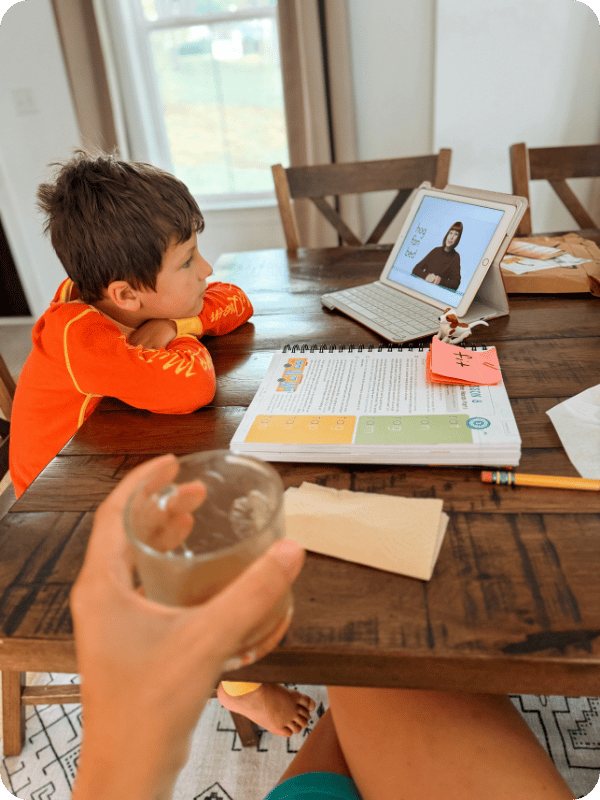
Although choosing curriculum can be overwhelming, it can also be such an exciting and fulfilling process! Our family has found that mixing two homeschooling styles works best for us, including some curriculum teaching as well as experiential learning. Combining Classical elements with Charlotte Mason has been effective and sustainable for our family.
Our weekday homeschool schedule:
- Wake up and go outside, weather permitting. We have adopted Charlotte Mason’s use of a “book basket” and we always have some fun titles ready on the table to read before or during breakfast!
- Eat breakfast
- Language arts lesson/practice
- Play time
- Math
- Lunch
- Craft or activity for science, or a history lesson (science and history typically alternate)
We try to complete this schedule 4 days per week, year round. We have found that taking smaller breaks during holidays and vacations is more enjoyable for us than one big winter or summer break. Plus, it allows us to keep a steady rhythm all year, and allows flexibility during the week. Since most states require 180 days of instruction during the year as an overarching guideline, spreading out school days is actually easy to do.
Finding a curriculum that balances education with ease of implementation and personal values can be one of the toughest parts of starting homeschooling. There are so many options, and the jargon can make it hard to decipher without purchasing the materials. Our favorite curriculum options so far have been The Good and the Beautiful (they have multiple free options!). We have used The Good and the Beautiful Preschool Language Arts, their Science Curriculums, and their Kindergarten Prep Curriculum. During free play and book time, we use these homeschool resources, because learning can truly happen anywhere!
You’ll notice that the books in the list above are “living books,” which is one of those terms coined by Charlotte Mason. They help children learn non-fiction through beautiful pictures and stories. Reading books throughout the day is a very big staple of many homeschool curriculums. So, don’t discount all the reading you’re doing day in and day out!
More parenting support
Congratulations: you’re well on your way to homeschooling! Homeschooling is an investment, and it’s a privilege. Although it isn’t the best fit for every family, teaching your little one(s) at home can be an incredible experience. Even when it’s challenging, you aren’t alone!
For more parenting support, check out our blog:
- Infant & toddler development
- Play activities for babies, toddlers & preschoolers
- Nutrition support and recipes for feeding littles
For the most in-depth, hands-on parenting support, check out our Handbooks! Written by our team of child development specialists, our resources answer your most Googled questions with research-backed tips, tricks, and education parents need.
Sources
- Home School Legal Defense Association. Homeschool Laws by State. Accessed August 2026.
- HSLDA. What’s My Educational Approach to Homeschooling? 21 November 2019. Accessed August 2026.
Leave a Reply
OTHER POSTS YOU MAY LIKE:



MS, SLP
Founder of Eat Play Say, Speech-Language Pathologist, Feeding Specialist, Play Expert, Mom of 3
Jordyn Koveleski Gorman
SPECIALIZES IN: Infant and toddler speech-language, play, and feeding development, and curating a team that provides expert help that feels like a reassuring text from that one mom friend
EDUCATION: Jordyn received her BS in Speech-Language Pathology from Bloomsburg University and her MS in Speech-Language Pathology from Towson University
FAVE PARENTING FIRST: “The first true smile, it’s the sweetest!”

MS, CCC-SLP, CBS, IBCLC
Speech-Language Pathologist & Feeding Specialist, Certified Breastfeeding Specialist, International Board Certified Lactation Consultant
Jessica Nicholson Cocca
SPECIALIZES IN: Breast and bottle feeding, tongue ties, oral motor dysfunction, starting solids, infant and toddler speech, treating oral motor disorders
EDUCATION: Jessica received her BS in Communication Sciences and Disorders from Pennsylvania State University in 2015 and her MS in Speech-Language Pathology from Towson University in 2017
FAVE PARENTING FIRST: “Baby’s first wave! What a fun first communication gesture!”

MA, CCC-SLP, CLC
Speech-Language Pathologist, Certified Lactation Counselor
Jennifer McFarlin
SPECIALIZES IN: Breast and bottle feeding, tongue ties, starting solids, infant and toddler speech development
EDUCATION: She received her BS in Speech-Language Pathology from Ball State in 2014 and a MA in Speech-Language Pathology from Ball State in 2016.
FAVE PARENTING FIRST: “My favorite baby’s first is their first true smile that just warms your soul knowing they are smiling at you. My other favorite is their first word. I love watching their language explode!”

MS, CCC-SLP
Bilingual Speech-Language Pathologist
Nicole La Petina Kelly
SPECIALIZES IN: Bilingual development (Spanish-English), supporting multilingual families, infant and toddler speech
EDUCATION: She received her BA in Communication Sciences and Disorders and in Spanish from the University of Wisconsin-Madison in 2014 and her MS in Speech-Language Pathology with an English-Spanish Specialization from Marquette University in 2016.
FAVE PARENTING FIRST: “It’s the first slobbery kisses for me!”

RDN, LD
Licensed Registered Dietitian
Kimberly Vede
SPECIALIZES IN: Infant and pediatric nutrition including breastfeeding, formula feeding, and starting solids. She also specializes in prenatal and postpartum nutrition.
EDUCATION: She received her BSc in Biology in 2014 from Life University, and her BSc in Dietetics from Life University in 2019.
FAVE PARENTING FIRST: ”The first time they say ‘mama!’”


This checklist was created with input from a Speech-Language Pathologist, Occupational Therapist and Physical Therapist and has been downloaded over 20,000 times by parents worldwide. Learn the important milestones to pay attention to, and keep it in your digital back pocket during the baby + toddler years!
Comprehensive Milestone Checklist for gross motor, fine motor, and speech-language milestones for 0-36 months,
DOWNLOAD FOR FREE


