


Board Games for Kids: Picks for Toddlers, Preschoolers, & Families
July 17, 2026
Jordyn Koveleski Gorman

Last Updated on August 1, 2026 by Jordyn Koveleski Gorman
This page contains affiliate links. We will receive a commission on qualifying purchases using these links.
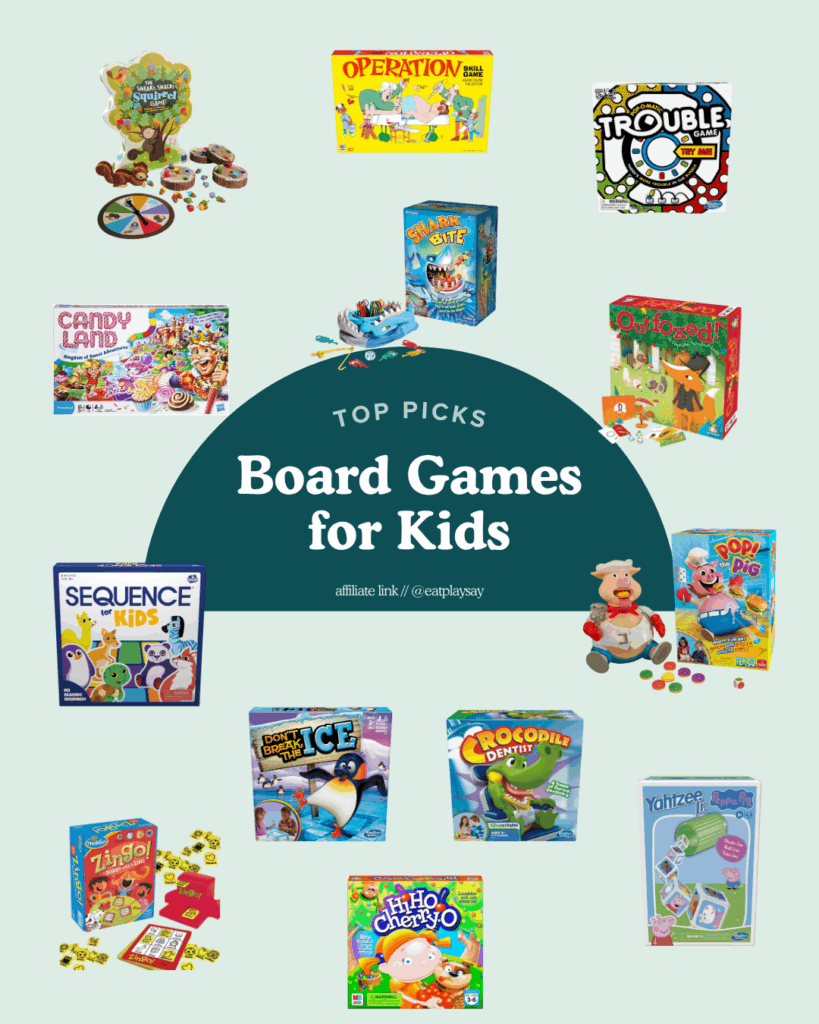
You might think that board games for kids are hard to find. It can be difficult to know which board games are appropriate for young children, but the truth is that there are so many board games for kids that the whole family can play!
Board games are more than just a fun way to pass the time. They actually provide great opportunities for kids to learn and connect with family and peers. Whether you’re introducing a toddler to their first matching game, helping a preschooler learn to take turns, or searching for a family game everyone can participate in, there’s a board game for every age and stage.
In this post, we rounded up the best board games for kids, with a focus on toddlers, preschoolers, and young elementary-aged children. We also looked for family-friendly favorites that bring everyone to the table.
Why You Should Play Board Games with Kids
We love using board games as a fun learning experience. Board games offer a wide range of developmental, social, and emotional benefits for young children.
Here are just a few of the advantages to playing board games with your little ones:
- Builds critical thinking skills
- Fosters memory, concentration, and patience
- Practice social skills such as turn-taking, sharing, sportsmanship, and cooperation
- Works on fine motor skills through play
- Encourages language development
- Provides an opportunity for family bonding
Best Board Games for Toddlers
These are some of our favorite board games for toddlers ages 2 and up. Many of them are recommended for 3 years and up, but with adult guidance, many littles can start learning at 2. With simple rules, short playtimes, and plenty of opportunities to practice skills, they’re a fun way to introduce little ones to board games.
The Sneaky Snacky Squirrel Game
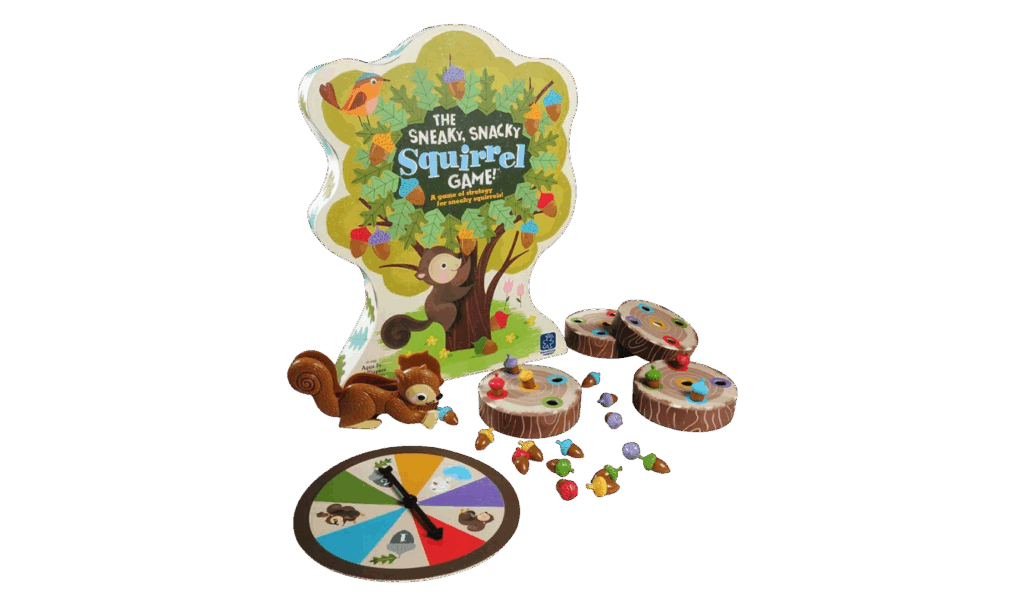
Sneaky Snacky Squirrel Game
Age recommendation: 3 years+
Price: $24.99
Number of players: 2-4
Play time: 10-15 minutes
Skills it encourages: Color recognition, matching, turn-taking, fine motor skills
Great for: Strengthening fine motor skills through play
Our littles love playing the Sneaky Snacky Squirrel Game! It’s one of our favorite first board games for preschoolers.
Take turns using the spinner and be the first player to collect one acorn in each of the five colors and fill your log. The squirrel squeezer is what really makes this game stand out. As kids grasp and transfer the acorns, they’re strengthening fine motor skills without even realizing. The spinner keeps every game exciting with surprises like wind storms or opportunities to “steal” an acorn from another player.
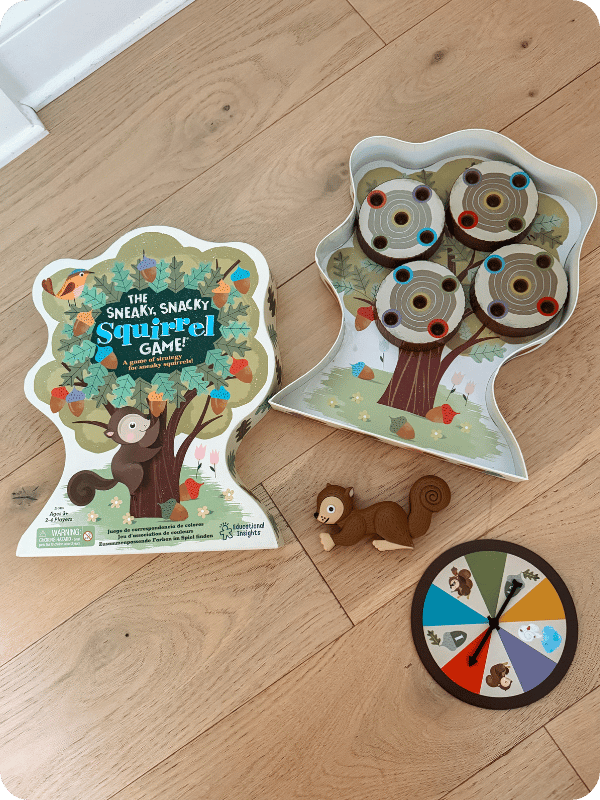
We love this game because it’s easy for littles to learn, plays quickly, and teaches children how to be good sports when they don’t always win!
Pros
- Simple rules that are easy for young children to understand
- High-quality, durable game pieces
- Encourages fine motor development with the squirrel tweezers
- Great for practicing turn-taking and good sportsmanship
Cons
- Small acorns can pose a choking hazard for children who still mouth objects
Pop The Pig
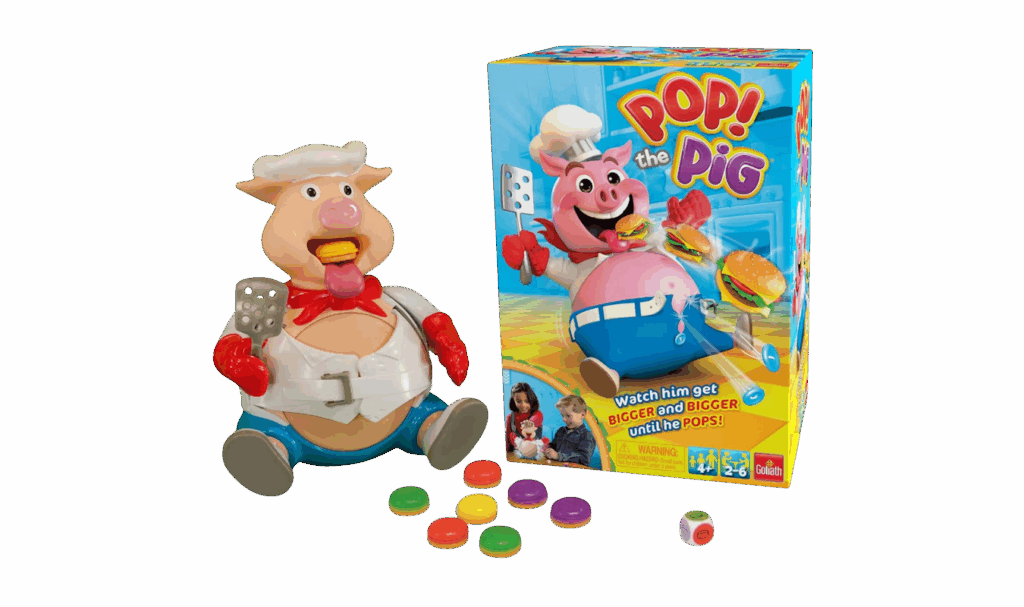
Pop the Pig
Age recommendation: 3 years+
Price: $19.99
Number of players: 2-6
Play time: 5-10 minutes
Skills it encourages: Color recognition, number recognition, counting, turn-taking
Great for: Quick games, building anticipation, and introducing simple board game concepts
Pop the Pig is one of those games that always gets toddlers giggling. Players take turns rolling the die, choosing the matching hamburger, and feeding the pig. Each hamburger has a number on the bottom, so you press down on his head the number of times shown. With every turn, players eagerly wait to see whose move will make the pig’s belly pop!
The rules are simple enough for young children to learn after just one round, making it a fantastic first board game. Since each game only takes a few minutes to play, it’s perfect for toddlers with shorter attention spans.
Pros
- Ready to play with minimal assembly
- Reinforces counting, color recognition, and number recognition through play
- Builds excitement and anticipation with every turn
- Quick gameplay that’s perfect for young children
- Easy for preschoolers to learn independently after a few rounds
Cons
- Limited gameplay variety because the objective remains the same each round, so older children may lose interest more quickly
Don’t Break The Ice
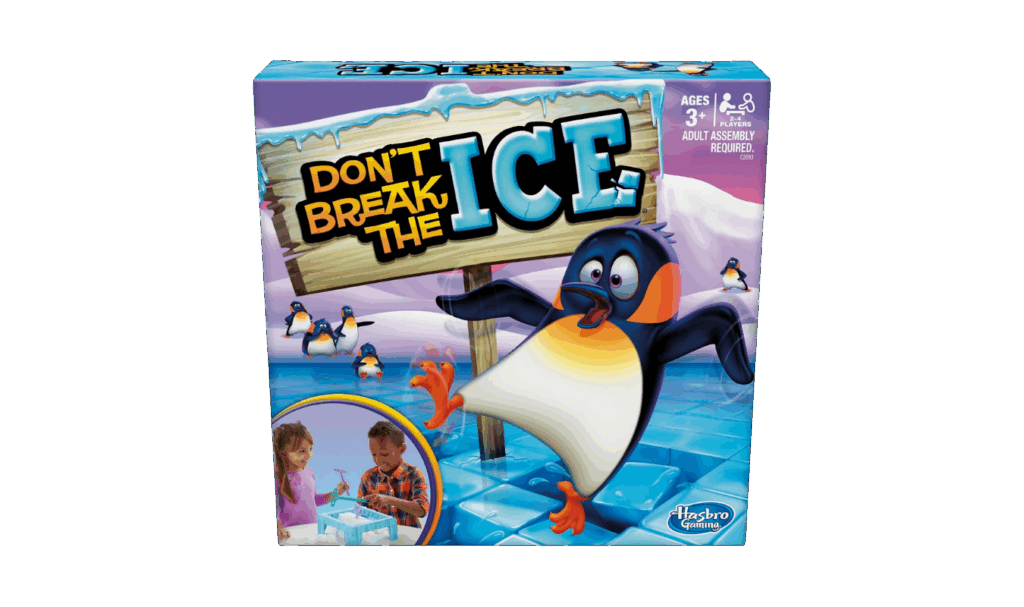
Don’t Break The Ice
Age recommendation: 3 years+
Price: $19.99
Number of players: 2-4
Play time: About 5 minutes
Skills it encourages: Hand-eye coordination, motor skills, turn-taking, cause and effect
Great for: Building coordination through play
Don’t Break the Ice is a classic children’s board game that many parents will remember from their own childhood. Players take turns using a small hammer to carefully tap out individual ice blocks. Be careful so Phillip the Penguin doesn’t fall from the middle!
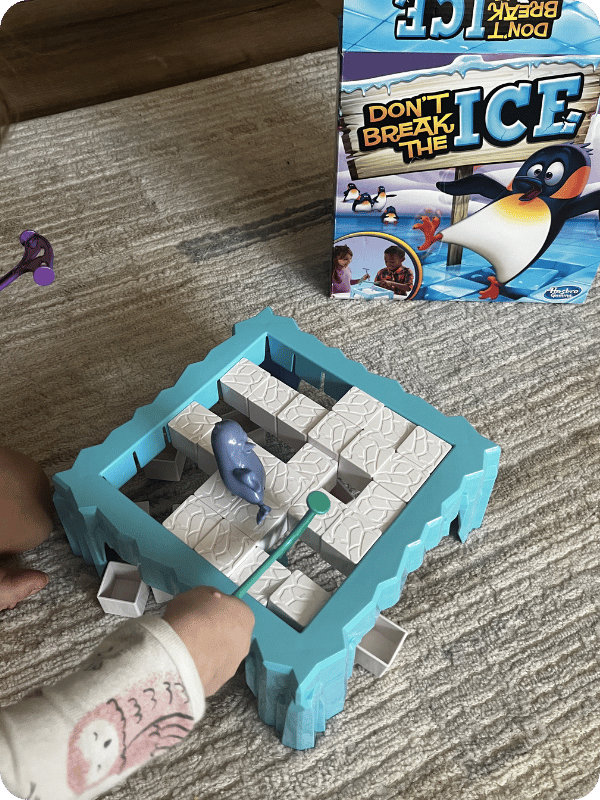
Beyond being fun, this game gives toddlers plenty of opportunities to practice fine motor skills as they carefully aim each tap. It also introduces simple problem-solving and critical thinking as players decide which ice block to remove next.
Pros
- Simple rules that are easy for toddlers to learn
- Builds anticipation and excitement with every turn
- Strengthens hand-eye coordination and fine motor skills through play
- Quick games are perfect for little attention spans
Cons
- Setting up all 32 ice blocks can be challenging for younger children and may require adult help
- While each game unfolds differently, the overall strategy remains fairly consistent
Shark Bite Game
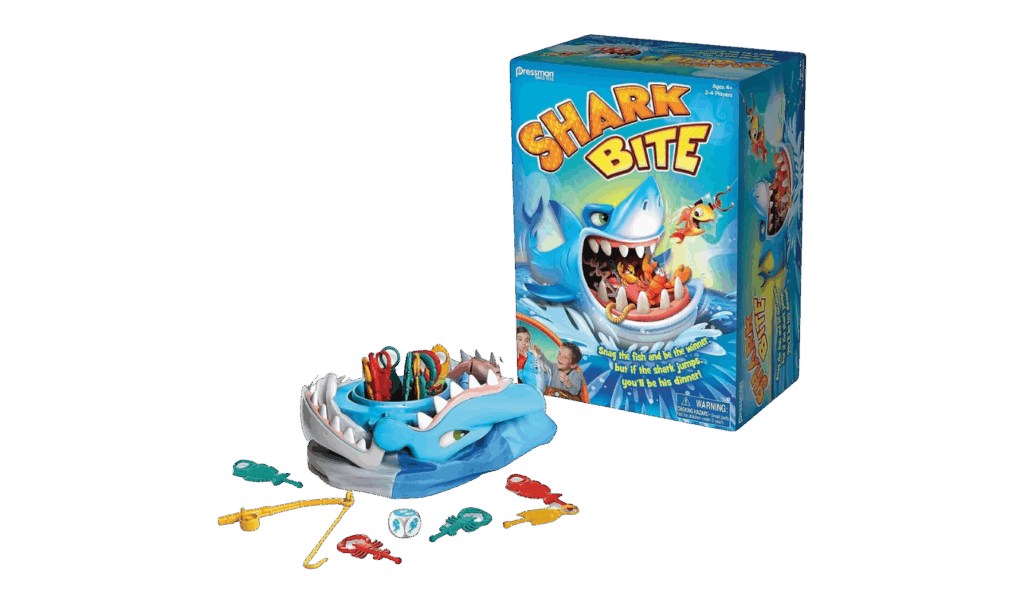
Shark Bite
Age recommendation: 3 years+
Price: $23.99
Number of players: 2-4
Play time: About 5 minutes
Skills it encourages: Color recognition, hand-eye coordination, counting, patience
Great for: Quick games that gets little ones excited to play
This game fills toddlers and preschoolers with anticipation and excitement. Players roll the die to determine how many fish to carefully remove from the shark’s mouth. No one knows when the shark will suddenly snap! With short rounds and simple gameplay, it’s an exciting choice for littles who enjoy surprises.
Pros
- Quick, engaging rounds
- Works on fine motor skills through play
- Easy for toddlers and preschoolers to learn and play
Cons
- The shark’s jumping mechanism can be finicky, and some reviewers report it may wear out or break over time
Crocodile Dentist
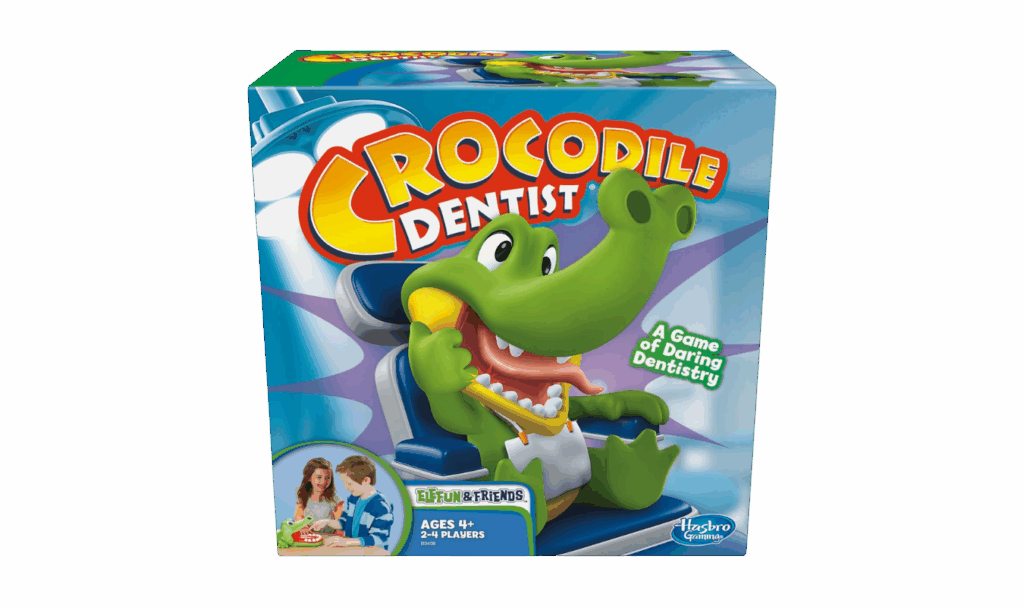
Crocodile Dentist
Age recommendation: 18 months+
Price: $24
Number of players: 2-4 players
Play time: 1-2 minutes
Skills it encourages: Finger isolation, taking turns, cause and effect
Great for: Quick rounds and lots of laughs
Crocodile Dentist is one of the easiest board games for kids to learn. It’s a great choice for even the youngest players. Each player takes turns pressing one of the crocodile’s teeth to find the sore tooth. No one knows which press will make the crocodile’s mouth snap shut! The suspense and silly surprise keep littles laughing and eager to play again.
Pros
- Simple enough for young toddlers to understand and enjoy
- No loose pieces to keep track of
- Fast, exciting rounds that encourage repeated play
Cons
- Individual rounds are very short, so the game may only hold children’s attention for 10–15 minutes at a time
- The gameplay may feel too simple for older preschoolers
Candy Land
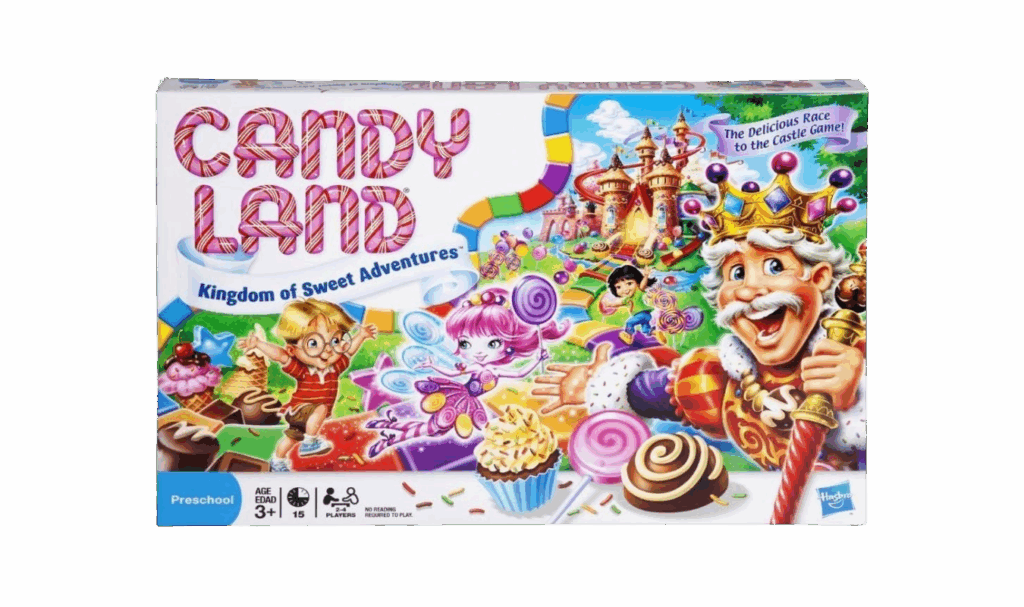
Candy Land
Age recommendation: 3 years+
Price: $12.99
Number of players: 2-4
Play time: About 10 minutes
Skills it encourages: Color recognition, matching, counting, turn-taking
Great for: A first board game for kids
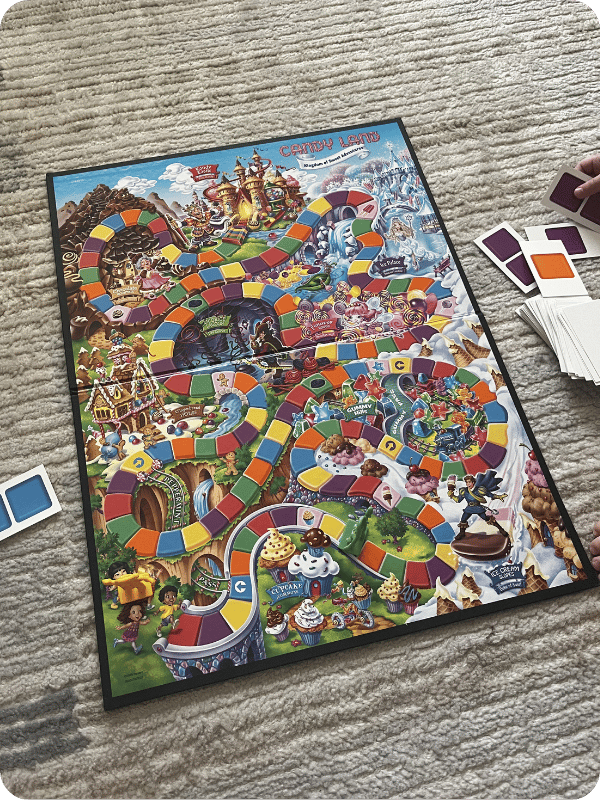
Candy Land is a classic board game for toddlers! With simple rules, colorful cards, and no reading required, it’s an excellent introduction to board games. Young children can practice taking turns, recognizing colors, and following basic game rules while having fun. Plus, it’s a nostalgic favorite that parents and grandparents will likely remember playing themselves.
Pros
- Simple rules that are easy for young children to understand
- No reading required, making it ideal for pre-readers
- Affordable and durable enough to enjoy for years
Cons
- Drawing a card that sends a player backward can be frustrating for young children who are close to the finish line
Best Board Games for Preschoolers
These board games work well for preschoolers ages 3-5. As children’s attention spans grow, they’re ready for games with longer playtimes and opportunities to practice skills like counting, decision-making, and literacy skills. All of these options are great picks for family game nights as well!
Wild Wobble
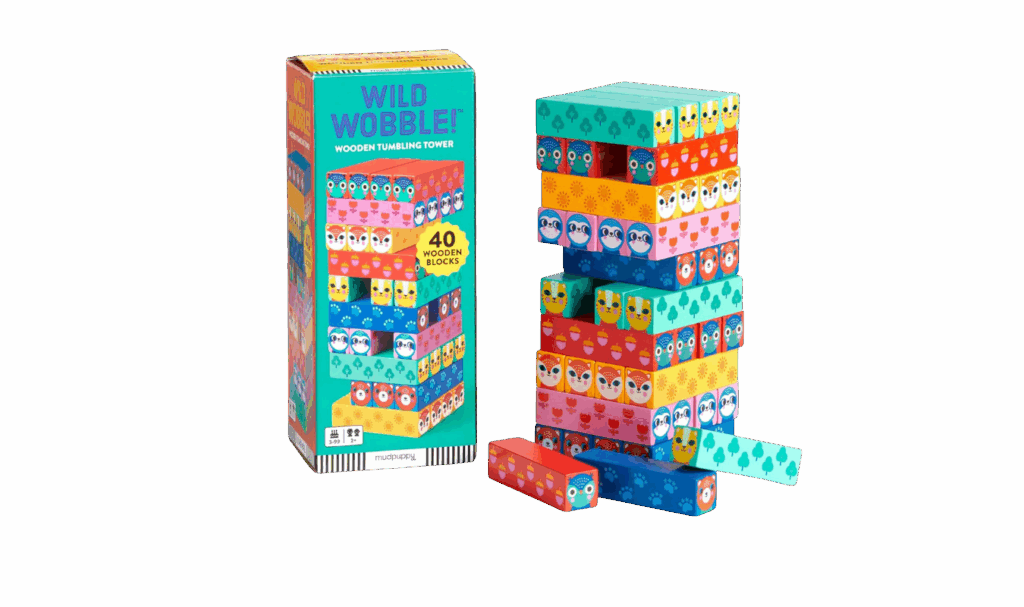
Wild Wobble Wooden Tumbling Tower
Age recommendation: 3 years+
Price: $19.99
Number of players: 2-4
Play time: 5-10 minutes
Skills it encourages: Turn-taking, patience, decision-making,
Great for: Preschoolers, first stacking games, and quick family game nights
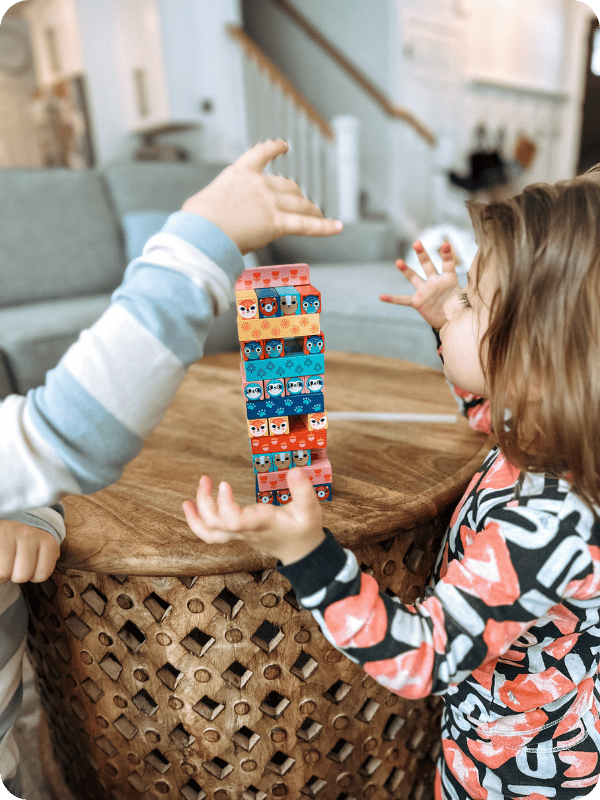
Mudpuppy’s Wild Wobble is essentially a kid-friendly version of Jenga that’s perfectly sized for younger children. The colorful wooden blocks feature adorable animals and nature-themed illustrations.
My kids love taking turns carefully sliding blocks out of the tower while waiting to see who will make it tumble. The tower is built with four blocks across instead of three. This makes it more stable and easier for little hands to play successfully.
Bonus: the blocks double as open-ended building toys, so the fun can continue even after the game is over.
Pros
- Easy to learn
- Bright, colorful artwork designed for young children
- 4 blocks across for a more kid-friendly game experience
- Fun for the whole family
- Blocks can also be used for creative building play
Cons
- More expensive than regular Jenga for essentially the same game
Zingo
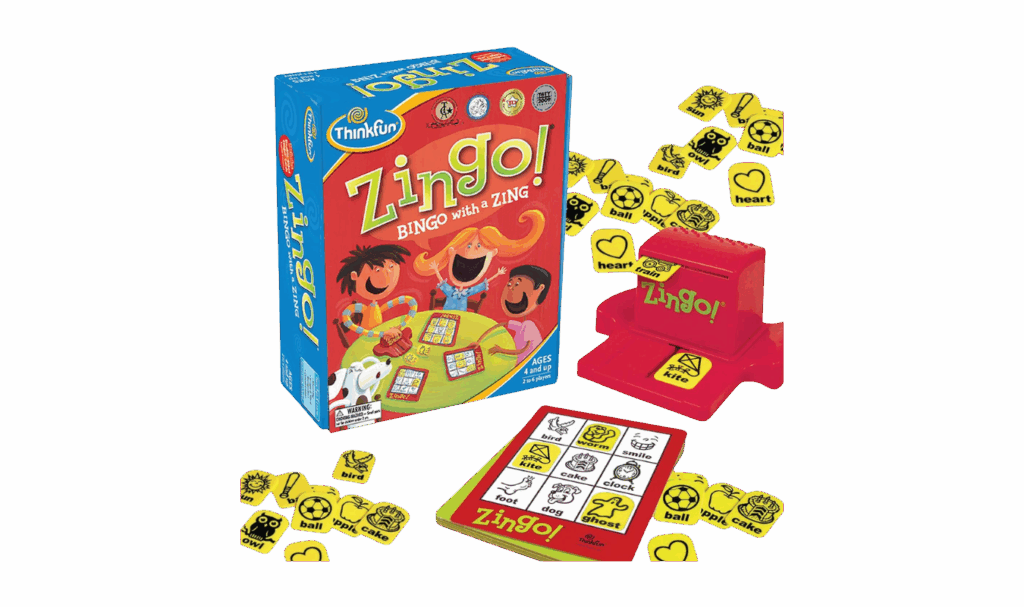
Zingo
Age recommendation: 4 years+
Price: $24.99
Number of players: 2-7
Play time: 10-15 minutes
Skills it encourages: Early literacy, quick thinking, picture recognition
Great for: Pre-readers and early readers
Zingo! is an award-winning preschool game that puts a fun twist on the classic Bingo. Each player fills their game card by matching picture-and-word tiles dispensed from the unique Zinger device. Players have to think quickly to claim the tiles they need, making the game exciting while reinforcing learning. It’s a favorite for preschoolers, but still engaging enough for older siblings and adults to enjoy during family game night.
Pros
- Award-winning game for preschoolers and pre-kindergarten
- Makes practicing early literacy and vocabulary more like play
- Easy for preschoolers and older family members to play together
Cons
- Some players report that the tile dispenser can occasionally jam during gameplay
Hi Ho! Cherry-O
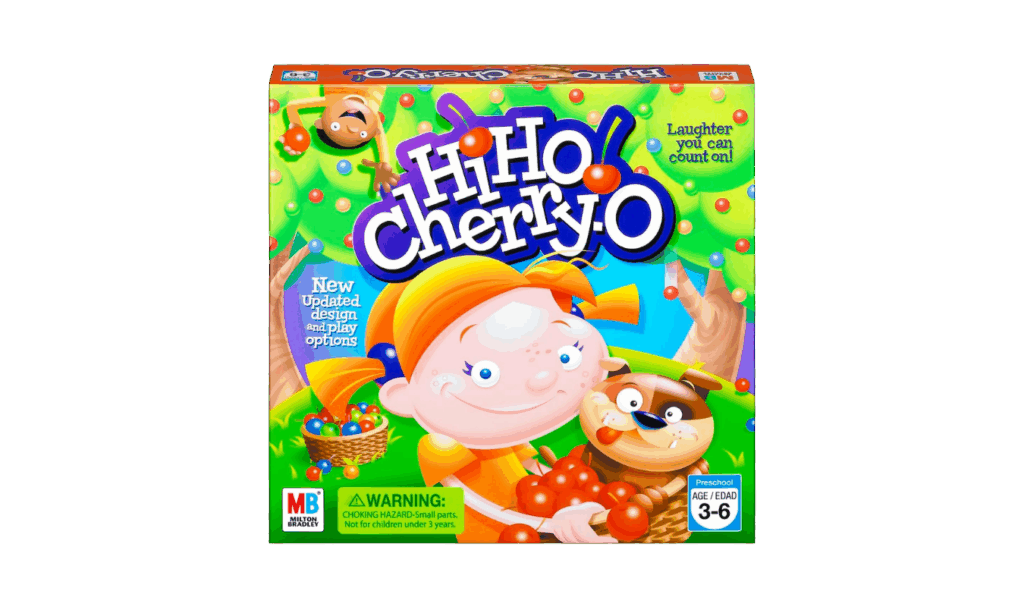
Hi Ho! Cherry-O!
Age recommendation: 2.5 years+
Price: $11.99
Number of players: 2-4
Play time: 10-15 minutes
Skills it encourages: Counting, number recognition, fine motor skills, color recognition
Great for: Introducing early math skills through simple, hands-on play
Pick fruit from the trees, fill your basket, and be the first player to collect all your pieces! Hi Ho! Cherry-O is a classic preschool game that makes practicing counting and number recognition feel like play.
Pros
- Affordable board game under $15
- Simple setup and easy-to-understand rules
- Builds counting skills and fine motor coordination through play
Cons
- The small fruit pieces can be a choking hazard for younger children who still put objects in their mouths
- Losing the small fruit pieces affects gameplay
Trouble
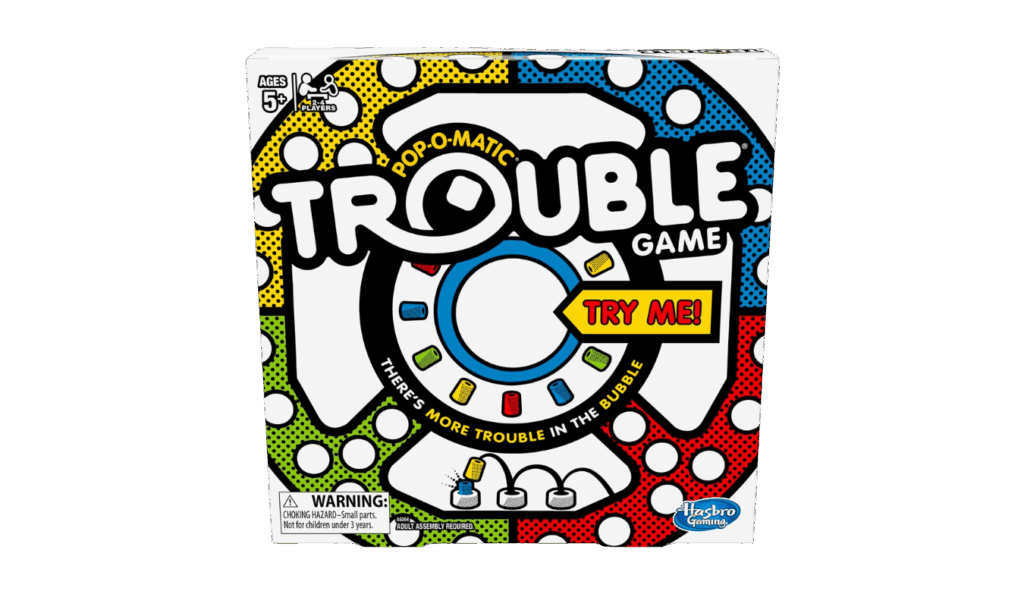
Trouble Game
Age recommendation: 4 years+
Price: $10
Number of players: 2-4
Play time: 20-25 minutes
Skills it encourages: Number recognition, counting, fine motor skills, turn-taking
Great for: A poppin’ good time for various ages
Trouble is a timeless family board game that many parents will remember from their own childhood. I know I do! With simple rules, it’s a great game for 4- and 5-year-olds learning to count spaces and follow game rules. The Pop-O-Matic die roller makes every turn satisfying and helps keep young players engaged from start to finish.
Pros
- Easy to teach young children the rules
- Budget-friendly and widely available
- Longer gameplay is ideal for young kids with growing attention spans
- The Pop-O-Matic die roller adds excitement and keeps the die from getting lost
Cons
- Small game pieces can be a choking hazard for children under 3 years old
Best Board Games for Families with Young Children
These family board games are easy enough for younger children to learn but engaging enough for the whole family to enjoy. Whether you’re starting a new family game night tradition or looking for a screen-free family activity, we’ve got you covered.
Outfoxed Board Game
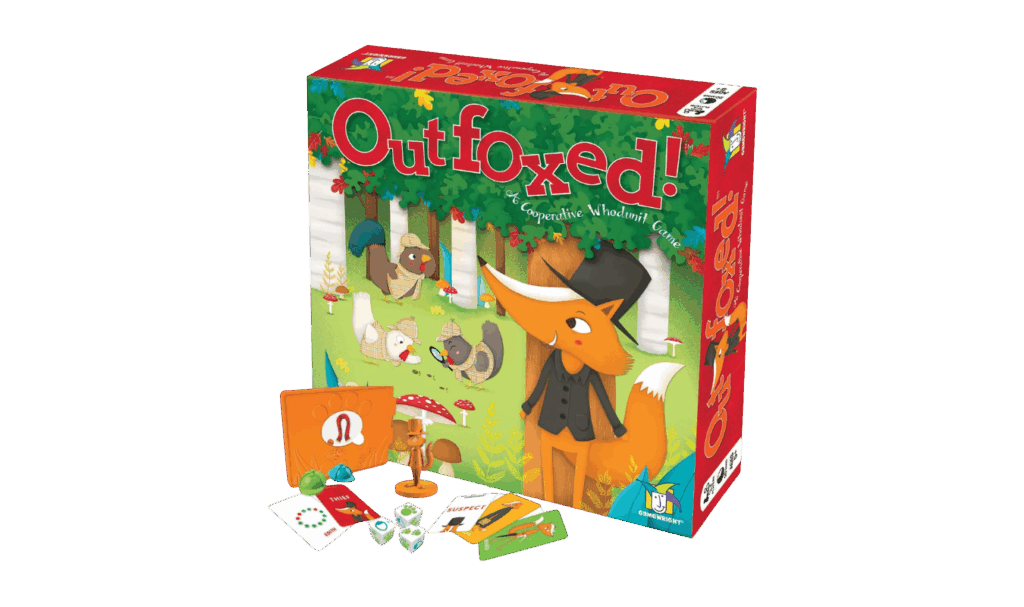
Outfoxed
Age recommendation: 5 years+
Price: $24
Number of players: 2-4
Play time: 15-20 minutes
Skills it encourages: Counting, memory, logic, cooperative play
Great for: Families looking for a cooperative board game where everyone works together instead of competing
Outfoxed! is one of our favorite cooperative board games for families. Instead of competing against one another, players work together to solve the mystery and catch the guilty fox before it escapes.
Players roll the dice, collect clues, and use the special clue decoder to eliminate suspects one by one. Children must remember the clues they’ve uncovered and use deductive reasoning to determine which fox is the culprit. Every game features a different mystery, so it stays fresh and exciting no matter how many times you play.
Pros
- Cooperative board game encourages teamwork instead of competition
- Builds logic, memory, and deductive reasoning through play
- Every game is different with a new mystery to solve
- Engaging enough for older siblings and adults to enjoy, too
Cons
- May be too complex for most children under 5 without significant adult help
Sequence for Kids
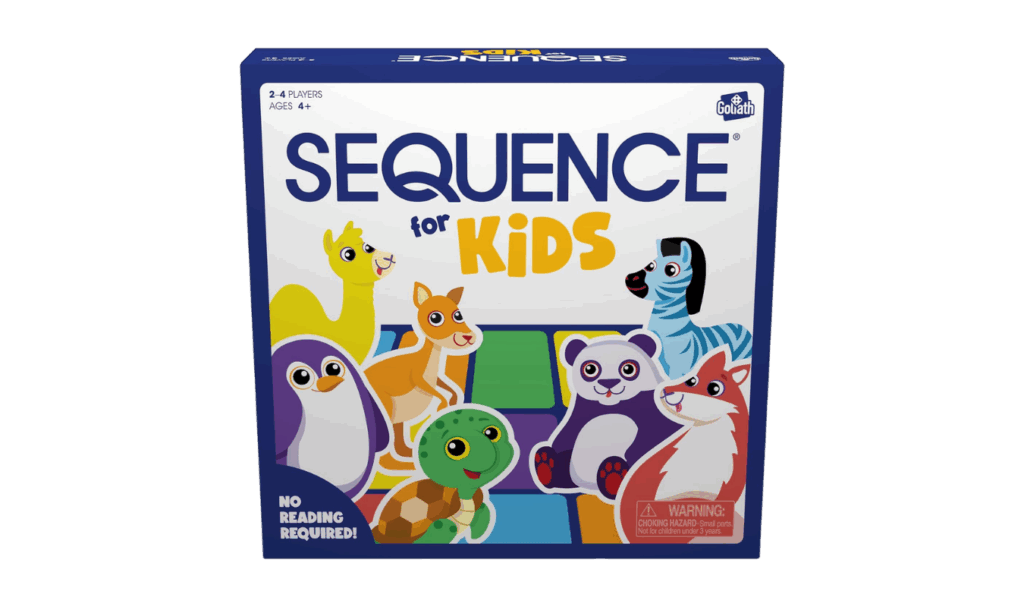
Sequence for Kids
Age recommendation: 4 years+
Price: $19.99
Number of players: 2-4
Play time: 10-15 minutes
Skills it encourages: Matching, visual discrimination, strategy, decision-making, turn-taking
Great for: Introducing strategy games to preschoolers and family game nights with mixed ages
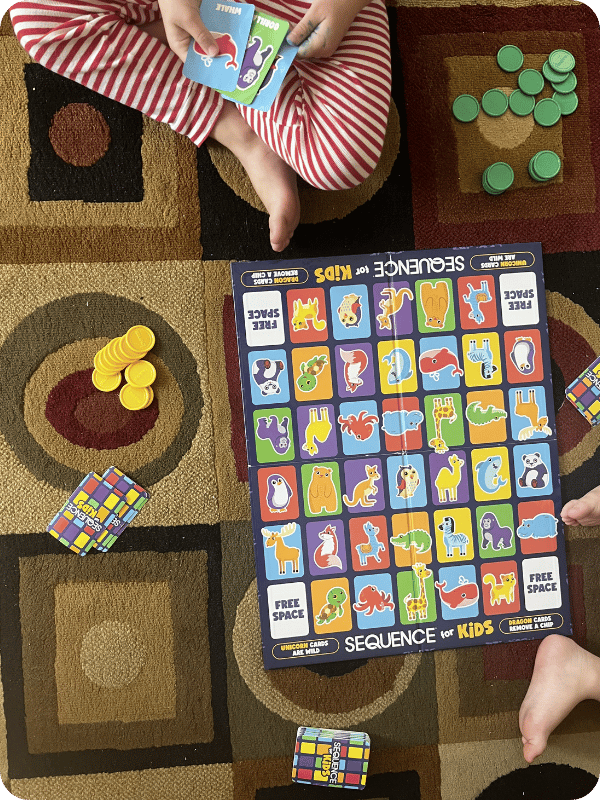
Sequence for Kids is a great board game that parents and older siblings can play, too! While the game is recommended for 4 years and up, 3-year-olds can definitely play with adult assistance.
Each player starts with three animal cards and takes turns matching them to the game board. The goal is to place chips in an effort to make a row of four. Along the way, players may draw wild cards that can be played anywhere or dragon cards that let them remove another player’s chip. This adds some excitement and strategy for all ages.
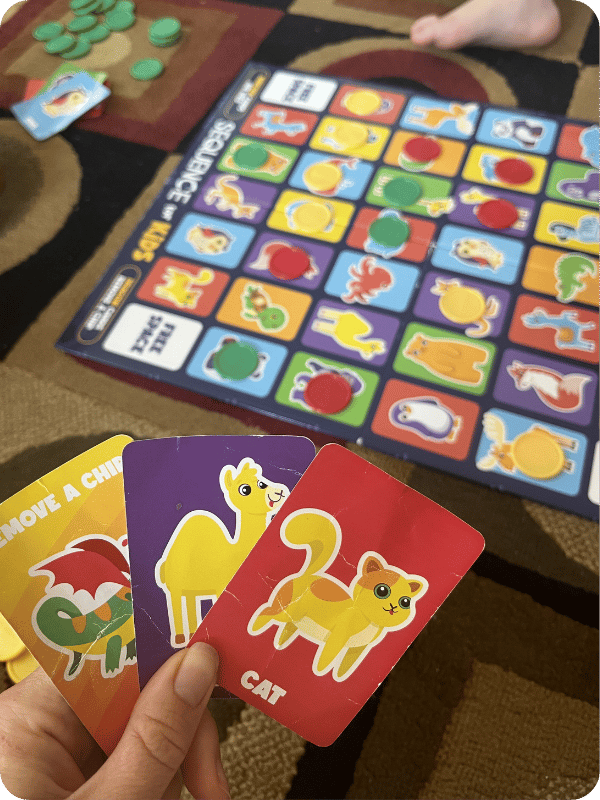
While younger preschoolers may not fully grasp the strategic aspects at first, they can still enjoy matching the animals and placing their chips. Before long, they’ll begin recognizing patterns and planning their moves!
Pros
- No reading required to play
- Introduces strategy and decision-making in a fun, age-appropriate way
- Cute animals cover the board
Cons
- Winning requires some strategic thinking, so younger children may need adult guidance during their first few games
Yahtzee Junior
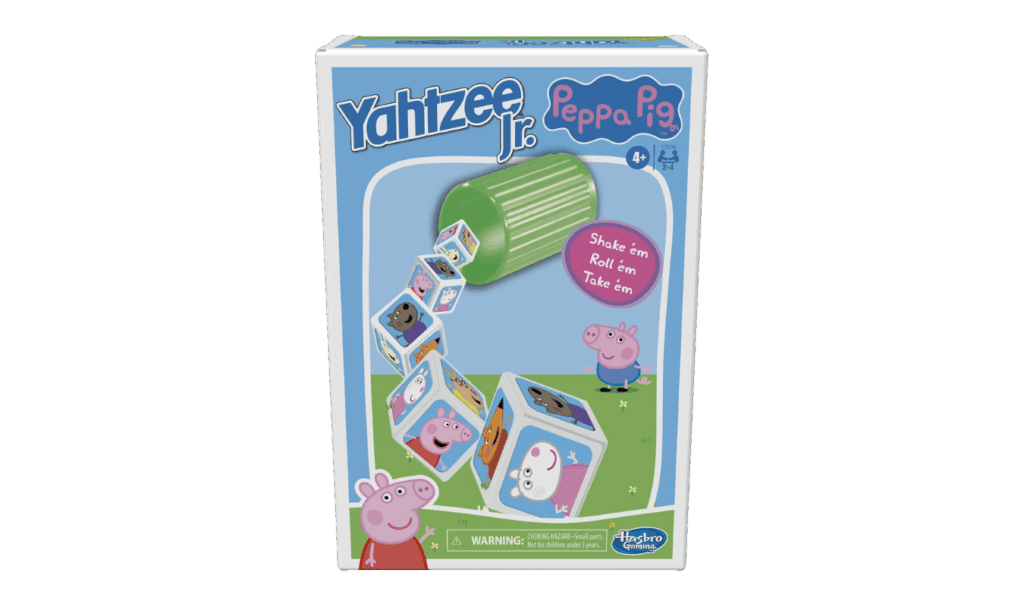
Yahtzee Junior
Age recommendation: 4 years+
Price: $14.99-$19.99 (depending on the character edition)
Number of players: 2-4
Play time: 10 minutes or less
Skills it encourages: Counting, matching, number recognition, turn-taking
Great for: Family fun, preschoolers, and children who love their favorite characters
Yahtzee Junior takes the classic dice game and makes it accessible for young children. It comes in fun character-themed editions like Peppa Pig to Spidey and His Amazing Friends, and the Disney Princesses. Instead of matching numbers, players roll the dice to match their favorite characters.
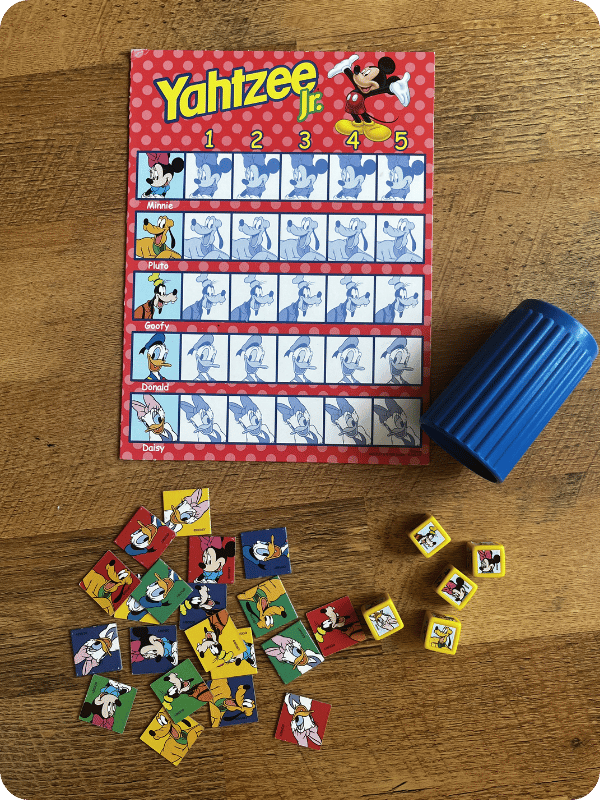
One of our favorite things about this game is how quickly it plays. Most rounds are over in 10 minutes or less, making it perfect for young children with shorter attention spans. Since every roll of the dice is different, no two games are exactly the same!
Pros
- Quick games that are never the same
- No reading required for little ones
- Easy to learn and play independently after a few rounds
- Multiple character editions to match your child’s interests
Cons
- Gameplay relies heavily on luck rather than strategy
- Small scoring chips can be easy to lose, making the game difficult to complete if pieces go missing
Hedbanz
Hedbanz Game
Age recommendation: 6 years+
Price: $16.99
Number of players: 2-6
Play time: ~20 minutes
Skills it encourages: Logic, asking questions, deductive reasoning, communication, turn-taking, vocabulary development
Great for: Family game nights, mixed-age groups, and building critical thinking through conversation
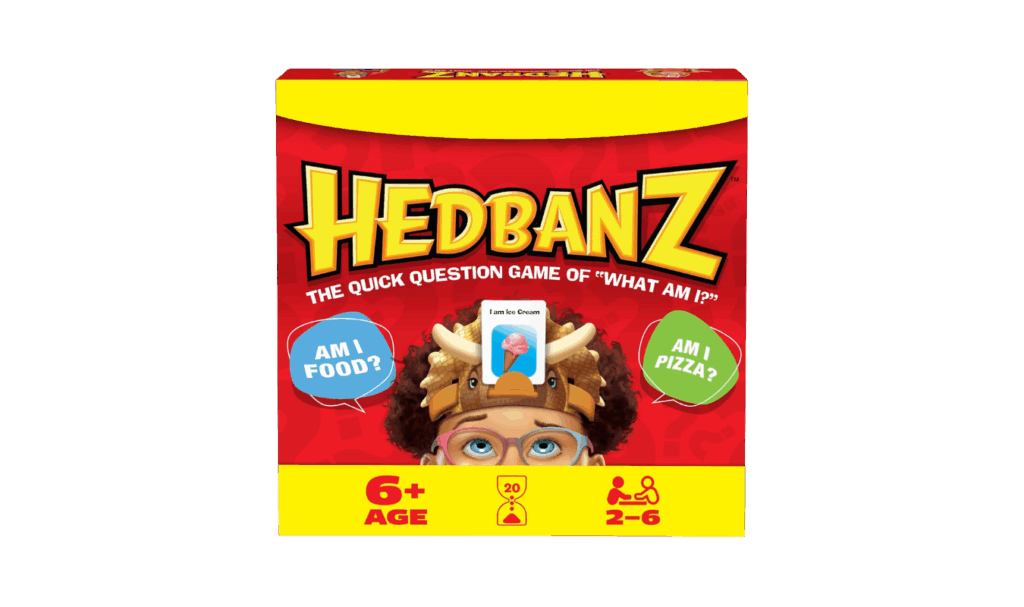
Hedbanz is a great family game that can span a vast variety in ages. There’s no reading required which is great for younger children. Each person wears a headband that has a picture of an object.
Players can only ask yes or no questions to figure out what’s on top of their headband. While the recommended age is 6 years, many 5-year-olds could play this game with some adult assistance!
Pros
- Simple rules make it accessible for younger children
- Can accommodate up to 6 players
- Moves quickly so kids stay engaged
Cons
- Headbands can be uncomfortable to wear, especially for little ones who might have sensory preferences
- After a few games, older kids may start to remember the nouns on the cards and it becomes less challenging
Operation
Operation Skill Game
Age recommendation: 5 years+
Price: $19.99
Number of players: 1-4
Play time: 15-20 minutes
Skills it encourages: Fine motor skills, hand-eye coordination, patience, concentration, turn-taking
Great for: Family game night, siblings of different ages, and practicing fine motor skills through play
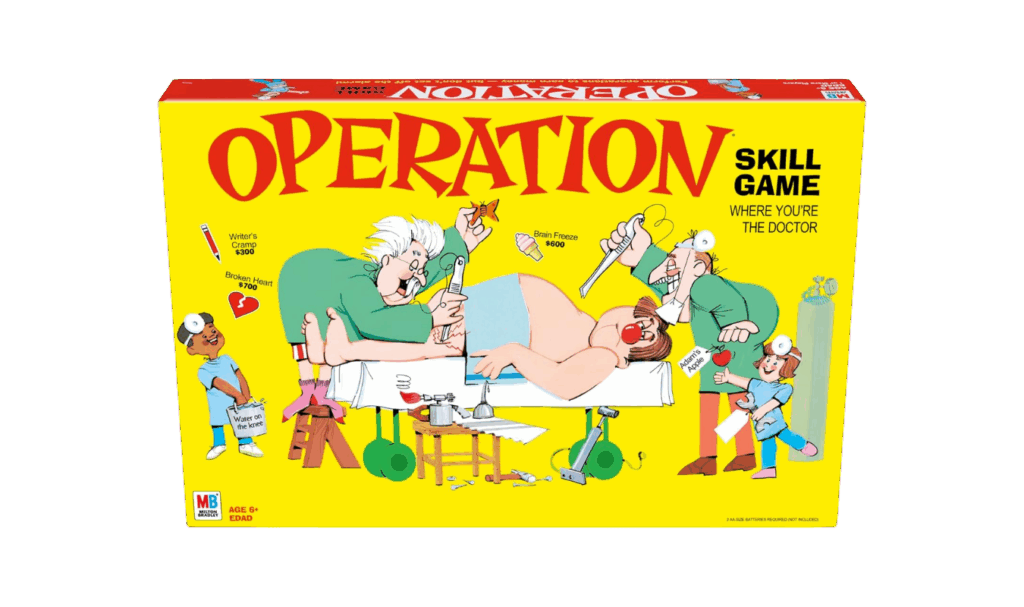
Operation is one of the best family board games because it’s entertaining for adults and kids alike. Many parents will recognize it as a childhood favorite (the nostalgia!). The suspense of carefully removing each piece without setting off the buzzer keeps everyone laughing and engaged.
While the official age recommendation is 6+, many 4- and 5-year-olds can enjoy playing with adult assistance. The game is an excellent way to strengthen fine motor skills, hand-eye coordination, and concentration. Children carefully use the tweezers to remove each “ailment.”
Pros
- Simple set up
- Good to play with a variety of ages, can bring the whole family to the table!
- Works on fine motor skills in a play-based way
- Nostalgic gameplay
Cons
- Small pieces
- Younger children or those with developing fine motor skills may become frustrated if the buzzer goes off frequently
Children’s Matching Games
While they’re not technically board games, children’s matching games deserve a spot on this list! These classic games help build important developmental skills like memory, concentration, visual discrimination, language development, and more. One of the best things about matching games is how easy they are to adapt to your child’s age and abilities. Start with just a few matching pairs for toddlers, then gradually add more as their memory, attention span, and confidence grow.
Chuckle & Roar Matching Game
Baby Animals Children’s Matching Game
Age recommendation: 2 years+
Price: $9.99
Number of players: 1+
Play time: 5-10 minutes
Skills it encourages: Matching, memory, problem-solving, language development
Great for: A game that grows with your child and can be played solo or with others
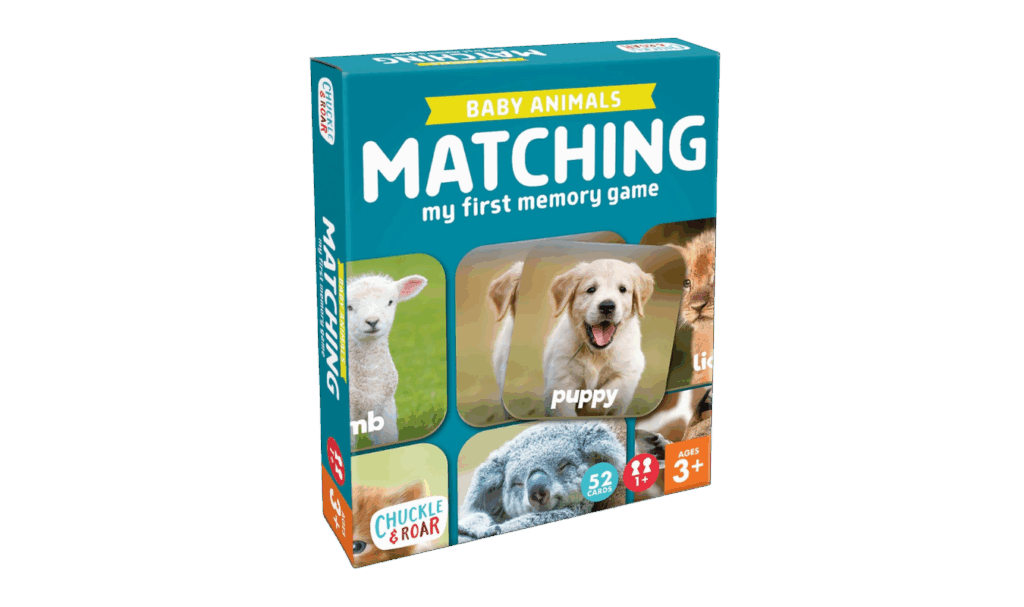
Matching games are simple yet engaging and easy to adapt for different ages. Younger toddlers can start with just a few matching pairs, while older children can play with the full set for a greater challenge.
Pros
- Easy to adjust the difficulty by adding or removing matching pairs
- Great for introducing memory games to toddlers and increasing the challenge as they grow
- Can be played independently or with family and friends
- Animal pictures encourage vocabulary building and language development
Cons
- Losing a card means losing a matching pair
- Matching cards are small
Spot It!
Spot it! Classic Set
Age recommendation: 4 years+
Price: $7
Number of players: 2-8
Play time: 10-15 minutes
Skills it encourages: Visual perception, matching, focus, quick thinking
Great for: Playing with larger groups and mixed ages
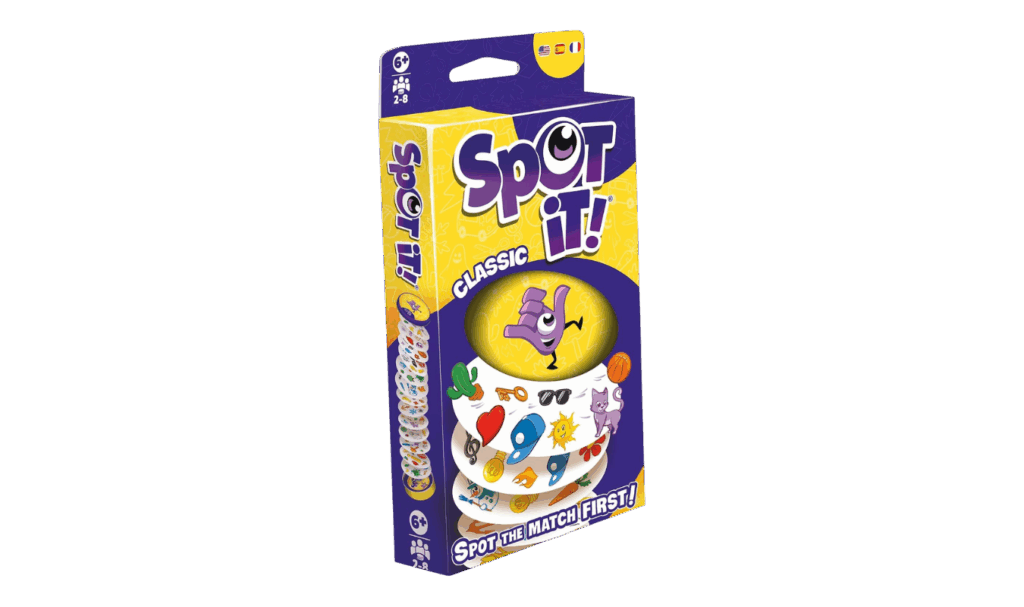
Spot It! is a fast-paced matching game that’s fun for both kids and adults. Every pair of cards has exactly one matching symbol, and players race to spot it first. While the recommended age is 6+, many 4-year-olds can quickly learn the game and enjoy playing alongside older siblings, parents, and family members.
Pros
- Simple enough for preschoolers to learn while still being fun for older kids and adults
- Budget-friendly and portable
- Includes five different game variations for added replay value
Cons
- The small box it comes in isn’t the most durable, so many families transfer the cards to a plastic bag or sturdier container over time
Key Tips for Finding the Best Board Games for Kids
With so many board games to choose from, it’s helpful to keep a few things in mind before making a purchase. The best games are not only fun but also match your child’s age, interests, and developmental stage.
Choose age-appropriate games – Check the recommended age range, but also consider your child’s individual abilities and attention span. Some younger children may be ready for games intended for older kids with a little guidance.
Look for simple rules – Young children learn best with games that are easy to understand and don’t require a lot of setup or reading.
Consider play time – Toddlers and preschoolers typically enjoy games that last 5–20 minutes. As children get older, they can stay engaged with longer games. Every child is different, so consider your littles’ attention spans!
Pick games that build skills through play – Many board games naturally encourage counting, matching, memory, problem-solving, fine motor skills, early literacy, and turn-taking while kids play.
Think about the number of players – If you plan to play as a family, choose games that are enjoyable for both children and adults. Select games that accommodate your usual group size.
Look for replay value – Games with multiple ways to play or adjustable difficulty levels can grow with your child and stay fun for years.
Prioritize durability and safety – Young children can be tough on game pieces, so sturdy components and quality construction are worth considering. Keep in mind that games with small pieces aren’t suitable for children who still put objects in their mouths.
Looking for more?
Find our favorite toddler tables that are great for playing board games on!
For more screen-free activities for littles, check out our round-ups of the best pretend play toys, play kitchens, and sticker books for kids.
Leave a Reply
OTHER POSTS YOU MAY LIKE:




MS, SLP
Founder of Eat Play Say, Speech-Language Pathologist, Feeding Specialist, Play Expert, Mom of 3
Jordyn Koveleski Gorman
SPECIALIZES IN: Infant and toddler speech-language, play, and feeding development, and curating a team that provides expert help that feels like a reassuring text from that one mom friend
EDUCATION: Jordyn received her BS in Speech-Language Pathology from Bloomsburg University and her MS in Speech-Language Pathology from Towson University
FAVE PARENTING FIRST: “The first true smile, it’s the sweetest!”

MS, CCC-SLP, CBS, IBCLC
Speech-Language Pathologist & Feeding Specialist, Certified Breastfeeding Specialist, International Board Certified Lactation Consultant
Jessica Nicholson Cocca
SPECIALIZES IN: Breast and bottle feeding, tongue ties, oral motor dysfunction, starting solids, infant and toddler speech, treating oral motor disorders
EDUCATION: Jessica received her BS in Communication Sciences and Disorders from Pennsylvania State University in 2015 and her MS in Speech-Language Pathology from Towson University in 2017
FAVE PARENTING FIRST: “Baby’s first wave! What a fun first communication gesture!”

MA, CCC-SLP, CLC
Speech-Language Pathologist, Certified Lactation Counselor
Jennifer McFarlin
SPECIALIZES IN: Breast and bottle feeding, tongue ties, starting solids, infant and toddler speech development
EDUCATION: She received her BS in Speech-Language Pathology from Ball State in 2014 and a MA in Speech-Language Pathology from Ball State in 2016.
FAVE PARENTING FIRST: “My favorite baby’s first is their first true smile that just warms your soul knowing they are smiling at you. My other favorite is their first word. I love watching their language explode!”

MS, CCC-SLP
Bilingual Speech-Language Pathologist
Nicole La Petina Kelly
SPECIALIZES IN: Bilingual development (Spanish-English), supporting multilingual families, infant and toddler speech
EDUCATION: She received her BA in Communication Sciences and Disorders and in Spanish from the University of Wisconsin-Madison in 2014 and her MS in Speech-Language Pathology with an English-Spanish Specialization from Marquette University in 2016.
FAVE PARENTING FIRST: “It’s the first slobbery kisses for me!”

RDN, LD
Licensed Registered Dietitian
Kimberly Vede
SPECIALIZES IN: Infant and pediatric nutrition including breastfeeding, formula feeding, and starting solids. She also specializes in prenatal and postpartum nutrition.
EDUCATION: She received her BSc in Biology in 2014 from Life University, and her BSc in Dietetics from Life University in 2019.
FAVE PARENTING FIRST: ”The first time they say ‘mama!’”


This checklist was created with input from a Speech-Language Pathologist, Occupational Therapist and Physical Therapist and has been downloaded over 20,000 times by parents worldwide. Learn the important milestones to pay attention to, and keep it in your digital back pocket during the baby + toddler years!
Comprehensive Milestone Checklist for gross motor, fine motor, and speech-language milestones for 0-36 months,
DOWNLOAD FOR FREE


