


What If My Baby Hates Tummy Time?
June 18, 2024
Jordyn Koveleski Gorman

Last Updated on May 26, 2026 by Jordyn Koveleski Gorman
Tummy time can feel stressful. And when baby absolutely hates tummy time…yikes. First of all, you aren’t alone! There are things you can do to troubleshoot and hopefully get to a more enjoyable place for everyone during tummy time.
So you’ve tried all of the tricks in our post about how to do tummy time, but baby is still resisting or crying out when you try to practice with them. What next? It’s time to dig a little deeper into possible reasons your baby might be experiencing frustration with it!
Our team’s physical therapist joined in for this blog to offer some insight about persistent tummy time troubles!

Why does my baby hate tummy time?
There are a few common reasons that often contribute to babies hating tummy time. The good news is that addressing the root cause usually resolves issues with tummy time. I promise, your baby doesn’t hate being on their belly just for fun! Identifying and supporting them through fixing the root issue is key to improving their experience (and yours!).
Reflux and tummy time
One major contributor to struggles with tummy time is infant reflux. Tummy time can be especially daunting for caregivers, too, when baby has reflux. The fear of them spitting up what feels like their entire feed, as well as the pain of washing several outfits a day and cleaning up the mess? It’s a lot. And for baby, the discomfort from extra pressure on their belly can make for quite the fight.
The good news is that tummy time doesn’t have to be flat on the floor!
Tips to help reduce stomach pressure and spit-up during tummy time
- The 20-30 Minute Rule. Wait 20–30 minutes after feeding baby to place them on their stomach. This will give them time to digest their formula or breastmilk and decrease the volume of spit-up.
- Softer Surfaces. Try placing baby on pillows, a Boppy, a couch cushion, or a rolled up blanket to relieve some pressure on their stomach. A slightly elevated chest can help prevent or decrease reflux during tummy time.
- Yoga Ball. These are my favorite for babies experiencing reflux! The yoga ball creates a softer surface for baby’s belly, and you can quickly roll them backwards to a more upright position to work on head control or forward into a flatter position when they need a break.
- Elevated Tummy Time. Baby wearing can be extremely beneficial for babies who have reflux. Babies can still work on head control in upright positions! Engaging in tummy time practice while baby is elevated works with gravity, helping keep everything down in the stomach while baby is still working out all of their head, neck, and core muscles. You can find our favorite baby carriers here.
- On Your Chest. Similar to baby wearing, if you sit slightly reclined on the couch and put baby chest-to-chest with you, they will stay mostly upright (at about 45 degrees). They can still work to bring their head up to look at you, as well as move their head left-and-right.
- Sidelying Position. While this is not a tummy time replacement, sidelying position is amazing for baby and often gets forgotten about when working towards a successful tummy time experience. Placing baby on their side to look at a mirror or high contrast toy actually does engage many of the core and neck muscles needed for tummy time. Remember to do sidelying on both sides.
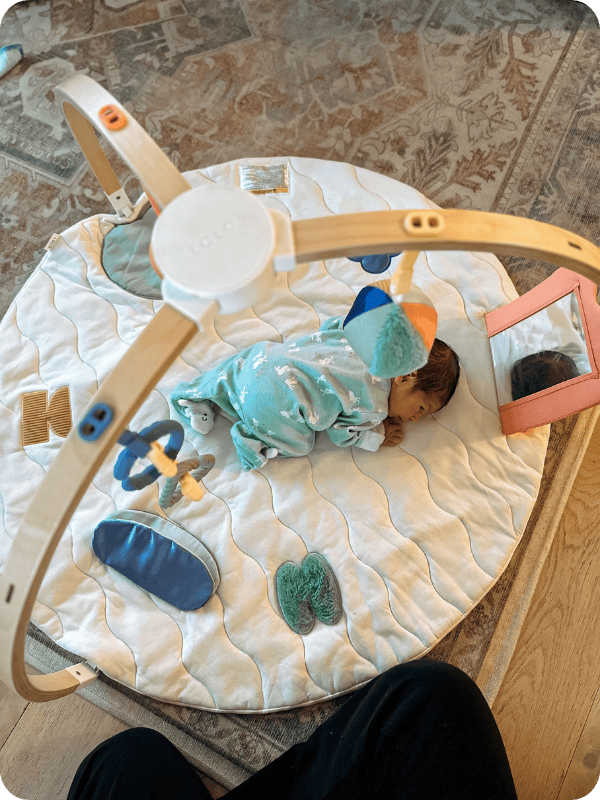
Body tension and tummy time
Is baby over-arching their back when laying on their stomach? Or maybe it’s especially difficult to get them onto their belly in the first place? Both of these things can be signs that body tension may be contributing to their struggles on their tummy.
If you notice their back is overly arched or their arms are stretched out backwards, this could signal that baby is actually using back muscles to maintain tummy time positioning instead of core muscles.
Or maybe you’ve tried to place your baby on their belly and you notice some awkwardness in their positioning. Some examples include:
- They might keep their head turned to either the left or right side no matter what you try to put in front of them. This is called a head turning preference.
- They may keep their knees tucked under their belly and seem to have a hard time laying flat.
- Positioning both elbows under their shoulders might seem hard, which prevents them from supporting their head when trying to look up.
Underlying tension (such as torticollis) or a retained primitive reflex can make it extra hard for babies to have success with tummy time. The good news is that if these difficulties are identified and addressed early, they can usually be resolved, and resolved swiftly!
Tips for tummy time with body tension
If any of the items above describe your little one, it’s okay! Baby might just need a little help from an occupational or physical therapist to relieve the extra tension or integrate their reflex.
You can talk to your pediatrician about an Early Intervention evaluation or even self-refer. Evaluations are free in the US! You can also book a 1:1 virtual consultation with someone on our team in a matter of days, or find a private practice that accepts your insurance. If you’re concerned about meeting milestones or aren’t sure where baby is at, check and see with our free Milestone Checklist!
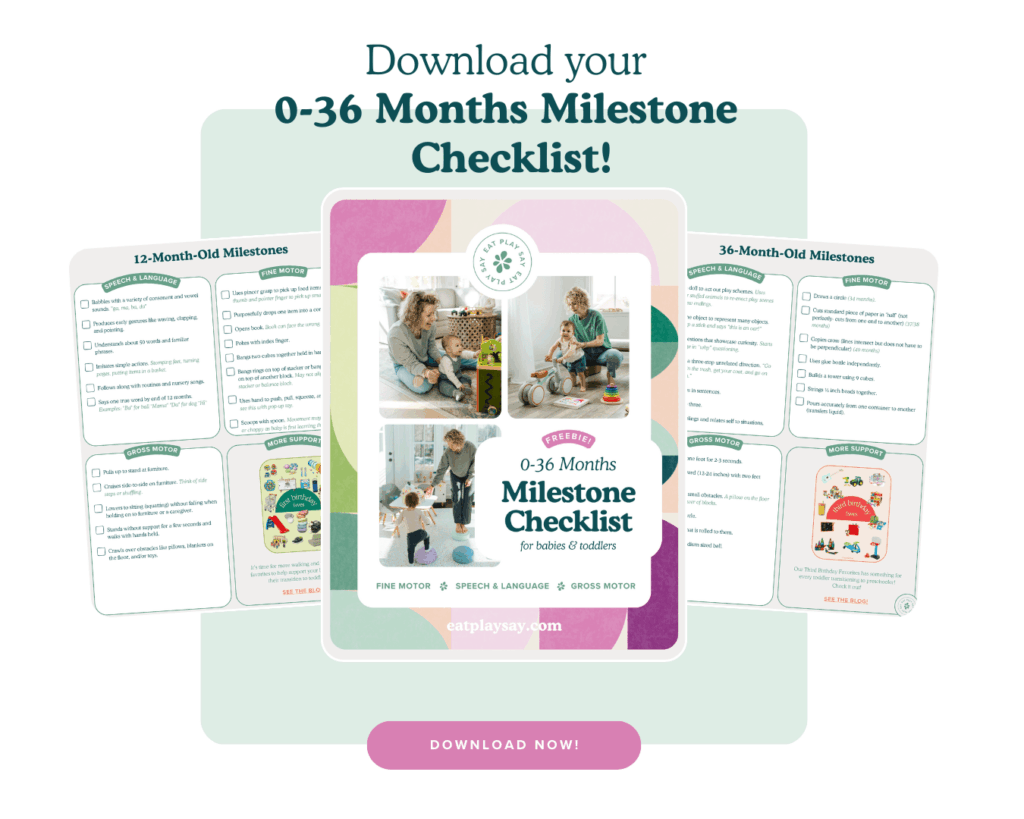
While you wait for an evaluation, there are things that you can try to improve tummy time!
First, ensuring that baby is tucking their elbows directly under their shoulders is important. You may have to help them, and that’s okay! Having the proper position ensures that they’re using the correct group of muscles (core, arm, shoulder, and neck) to maintain their positioning rather than compensating with their back muscles. This can help reduce exhaustion that sets in quickly when using the wrong muscle groups for an activity!
Utilizing a yoga ball for babies with tension can provide calming sensory movement, helping them relax a little easier. Rocking them lightly from side to side on the yoga ball can be especially soothing!
Just like for babies with reflux, rolling them backwards/more upright for head control exercise and then forward to give them a rest can be very helpful.
What to do if baby rolls out of tummy time
So maybe baby isn’t tense or experiencing reflux. What are you supposed to do when they escape?!
It’s very common for new rollers (around 3-5 months) to use their newfound independence to roll out of forced tummy time positioning. After all, this is a new and amazing skill they’ve just learned! And we do want them to show it off. But as proud as we are that baby has learned to roll, tummy time is still important once they start rolling!
How to keep your baby from rolling out of tummy time
- Sensory Play. Once babies start reaching their hands and arms forward around 3-4 months, a whole other sensory world opens: “tactile.” It’s no longer just about high contrast and colorful things to look at. Now it’s time to engage baby with things that they will want to touch. You can find our favorite tummy time toys here!
- Mirrors. A nice reflection is a fabulous way to help captivate baby’s attention during tummy time. Try laying right next to baby so that both of your reflections are visible. You can take turns looking at each other in the mirror. Baby will probably flash some cute smiles your way during this activity, which is always a gift!
- Household Objects. Toys are great, but have you noticed that your baby is extra curious about random things around your house? The remote, your cup, your glasses? If you feel like toys aren’t captivating your baby’s attention, go for a random item around the house and see if that helps to spark their interest.
- Back To The Yoga Ball. Have I said this one already? Tried and true! The yoga ball is a great way to provide your new roller the sensory input they are looking for and receiving from rolling, while keeping them locked into good tummy time practices.
- Airplane. This is another great way to help give baby the sensory input they’re looking for! Lay flat on your back with knees bent and hold baby securely on your knees. You can lightly bounce them up and down and sing them a song to keep their attention on you.
Remember: quality over quantity when it comes to tummy time, especially at the beginning. Start small and work your way up. If baby is spitting up or getting fussy after 1 minute of tummy time, aim for 30-45 seconds. Small, successful increments will help increase their time on their tummies. Every little bit counts!
More age-appropriate ways to play
Tummy time is hard! And you’re doing great. Please, don’t be afraid to ask for help if you or your little one needs it!
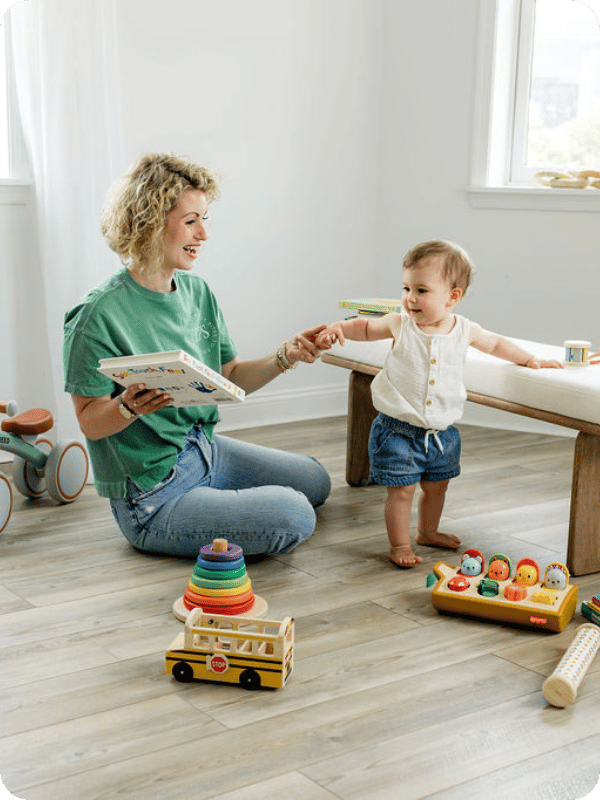
Whether your baby is just a newborn or getting close to starting solids, we have resources for you! You can also browse our blog for what you need!
Not sure how to best play with your little one? Our Playbooks have more than 100 developmentally appropriate ways to play using just what you have at home!
OTHER POSTS YOU MAY LIKE:




MS, SLP
Founder of Eat Play Say, Speech-Language Pathologist, Feeding Specialist, Play Expert, Mom of 3
Jordyn Koveleski Gorman
SPECIALIZES IN: Infant and toddler speech-language, play, and feeding development, and curating a team that provides expert help that feels like a reassuring text from that one mom friend
EDUCATION: Jordyn received her BS in Speech-Language Pathology from Bloomsburg University and her MS in Speech-Language Pathology from Towson University
FAVE PARENTING FIRST: “The first true smile, it’s the sweetest!”

MS, CCC-SLP, CBS, IBCLC
Speech-Language Pathologist & Feeding Specialist, Certified Breastfeeding Specialist, International Board Certified Lactation Consultant
Jessica Nicholson Cocca
SPECIALIZES IN: Breast and bottle feeding, tongue ties, oral motor dysfunction, starting solids, infant and toddler speech, treating oral motor disorders
EDUCATION: Jessica received her BS in Communication Sciences and Disorders from Pennsylvania State University in 2015 and her MS in Speech-Language Pathology from Towson University in 2017
FAVE PARENTING FIRST: “Baby’s first wave! What a fun first communication gesture!”

MA, CCC-SLP, CLC
Speech-Language Pathologist, Certified Lactation Counselor
Jennifer McFarlin
SPECIALIZES IN: Breast and bottle feeding, tongue ties, starting solids, infant and toddler speech development
EDUCATION: She received her BS in Speech-Language Pathology from Ball State in 2014 and a MA in Speech-Language Pathology from Ball State in 2016.
FAVE PARENTING FIRST: “My favorite baby’s first is their first true smile that just warms your soul knowing they are smiling at you. My other favorite is their first word. I love watching their language explode!”

MS, CCC-SLP
Bilingual Speech-Language Pathologist
Nicole La Petina Kelly
SPECIALIZES IN: Bilingual development (Spanish-English), supporting multilingual families, infant and toddler speech
EDUCATION: She received her BA in Communication Sciences and Disorders and in Spanish from the University of Wisconsin-Madison in 2014 and her MS in Speech-Language Pathology with an English-Spanish Specialization from Marquette University in 2016.
FAVE PARENTING FIRST: “It’s the first slobbery kisses for me!”

RDN, LD
Licensed Registered Dietitian
Kimberly Vede
SPECIALIZES IN: Infant and pediatric nutrition including breastfeeding, formula feeding, and starting solids. She also specializes in prenatal and postpartum nutrition.
EDUCATION: She received her BSc in Biology in 2014 from Life University, and her BSc in Dietetics from Life University in 2019.
FAVE PARENTING FIRST: ”The first time they say ‘mama!’”


This checklist was created with input from a Speech-Language Pathologist, Occupational Therapist and Physical Therapist and has been downloaded over 20,000 times by parents worldwide. Learn the important milestones to pay attention to, and keep it in your digital back pocket during the baby + toddler years!
Comprehensive Milestone Checklist for gross motor, fine motor, and speech-language milestones for 0-36 months,
DOWNLOAD FOR FREE


