


How & When to Burp a Baby—And When Can You Stop?
April 10, 2026
Jordyn Koveleski Gorman

Last Updated on April 10, 2026 by Jordyn Koveleski Gorman
Burping a baby is a nearly universal cultural experience. Everyone burps! And since babies, especially newborns, don’t really know how to relieve the air in their bellies on their own yet, it makes sense that we try to help them out. Right? Maybe…and maybe not!
Research indicates that even though burping is a global practice, evidence about benefits in healthy term infants remains limited and conflicting. (1) In fact, some research points to burping being correlated with a significant increase in spit up episodes. (2) This limited research is intriguing, but not necessarily the end all, be all.
As a feeding specialist and mom of three, I know that there are times when burping comes in handy. Every baby is unique! Some may benefit more from burping than others. Learning how to respond to your baby’s cues comes with time and practice. Having a good baseline knowledge of when burping can be helpful, as well as how to do it effectively, is a great place to start!
When to burp a baby
The main reason to burp a baby is to help relieve any discomfort from eating, primarily driven by taking in air while feeding. Burping is not necessary for every baby at every feeding, but you can still offer a burp.
Burping after bottle feeding
If you are bottle feeding with a vented bottle system, such as Dr. Brown’s or Lansinoh, it’s unlikely that your little one will take in too much air. However, their efficiency when taking the bottle does influence their air intake.
If you feel that baby needs to burp, do so after 2–3 ounces or halfway through the bottle feed. Waiting until the end of the feed to attempt a burp may contribute to increased spit up episodes. If you are noticing that baby is taking in a lot of air or experiencing discomfort after feeding, you may consider taking a look at their bottle.
Burping after breastfeeding
If baby nurses at the breast, their burping needs can vary greatly. Similar to bottle feeding, their efficiency in taking feeds matters. If your little one takes both breasts during a feed, try to burp them between sides. If they take only one side during a feed, you can burp about halfway through the session.
If you notice baby farting often while feeding, they may not need to be burped.
How to burp a baby
Burping can feel intimidating at first. Newborns are especially tiny and seem so fragile! The idea of patting their back to induce a burp can certainly be frightening. As long as you offer proper head and neck support, as well as keep their body in a good line for breathing, then you’re in good shape.
It’s important to remember that burping a baby doesn’t have to be forceful. You can offer steady, sturdy pats in whatever position feels most effective. But if you find that baby doesn’t release a burp after several tries, they most likely don’t need to burp. Feel free to continue the feed from this point, until they show signs of fullness.
Best way to burp a baby
Over time, you will learn how your baby enjoys being burped. Some babies will only burp in one position, while others are able to release a burp easier! Our recommended burping positions are below.
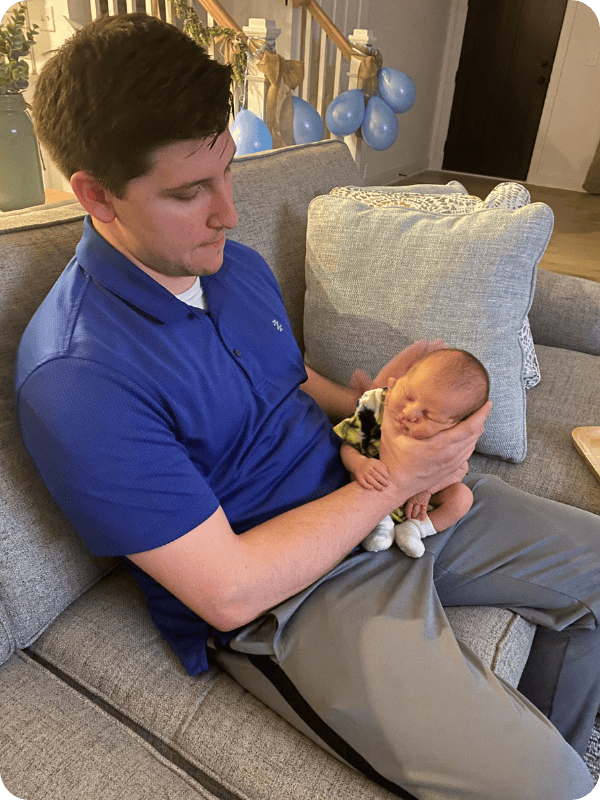
Positions for burping a newborn or infant
Upright burping position
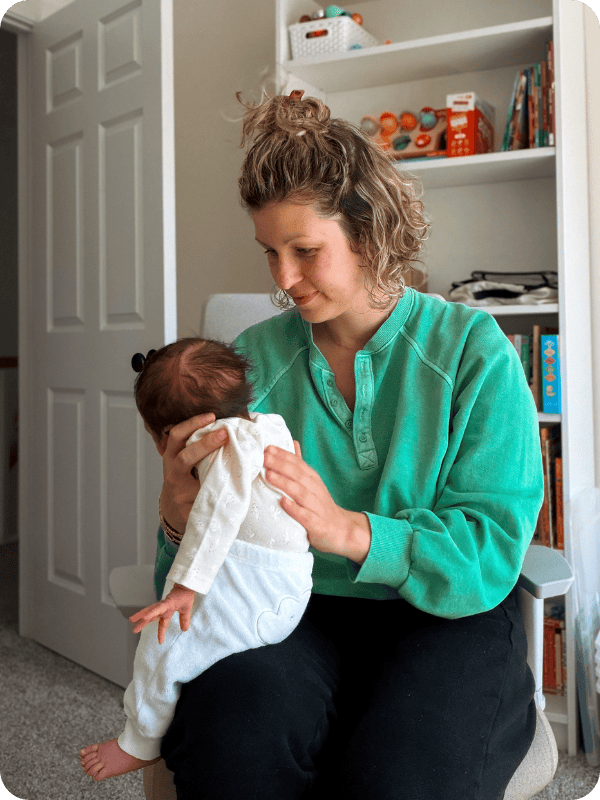
Sit your little one in an upright position on your legs. Lean baby forward slightly and support their chin and chest with one hand. Use your free hand to rub or lightly pat baby’s back. Lower back taps or moving from the lower back up to between the shoulder blades can be effective. The first photo in this blog, as well as the photo above, are examples of this burping method.
Remember that burping should not be forceful. You’re not giving your child the Heimlich Maneuver! When thinking about the amount of pressure to apply, start by thinking how you might politely knock on a door. You want it to be loud enough for someone on the other side to hear it, but not so intense that it causes panic! You will find the right rhythm for your baby with more practice.
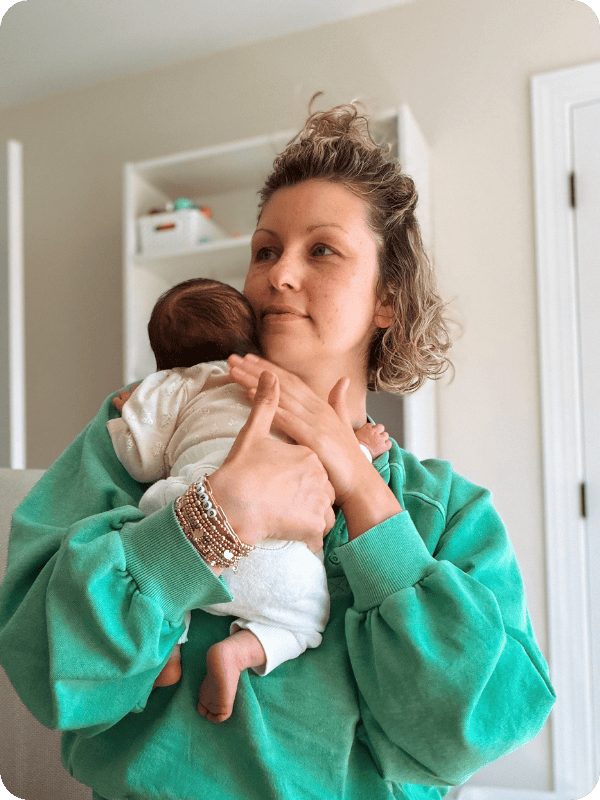
Over the shoulder burping position
For this burping position, you want to position baby high enough on your shoulder to ensure that light pressure is being applied to their abdomen. Then, gently rub baby’s back. Making sure their chest is above your shoulder is key! This position doesn’t require patting their back. It can be quite gentle and soothing. See photo below for reference.
When can you stop burping a baby?
Generally, most babies become efficient enough at feeding to reduce or stop burping around 3–4 months of age. When they take in less air during feeding, they tend to have less discomfort.
If your baby has reflux or frequently spits up, tapping and burping can actually make symptoms worse. (2) Instead of burping in this scenario, holding baby upright for a light walk after feeding may be more effective. Reflux is a symptom of a larger, whole body issue that can typically be resolved by treating underlying issues. Reflux is often related to whole body tension.
Talking to a specialist to find the root cause of your baby’s reflux is the key to improving symptoms and preventing other potential issues from developing. You can start with your child’s pediatrician or find a specialist on your own (especially if you feel dismissed!). Our team of feeding specialists can provide a virtual consultation in just a matter of days.
Additional feeding resources
You’ve mastered the burp and set yourself free from the expectation of burping at every feed—congrats! If you have more questions or need more support, we’ve got what you need.
Check out the blog for more guides from our team of professionals, including:
- Breast and bottlefeeding support
- Information about milestones and baby development
- Tips for starting solids, including signs of readiness
- Developmentally appropriate play activities for every age!
For more in-depth support you can keep for life, check out our Handbooks! Built for parents who want all the answers but don’t have time to take a college course. Our handbooks are searchable and cover so many parenting topics!
Sources
- James V, Savargaonkar R. Science of the burp: understanding aerophagia and eructation in newborns. BMJ Paediatr Open. 2025 Oct 29;9(1):e004066. doi: 10.1136/bmjpo-2025-004066. PMID: 41167623; PMCID: PMC12581050.
- Kaur R, Bharti B, Saini SK. A randomized controlled trial of burping for the prevention of colic and regurgitation in healthy infants. Child Care Health Dev. 2015 Jan;41(1):52-6. doi: 10.1111/cch.12166. Epub 2014 Jun 9. PMID: 24910161.
Leave a Reply
OTHER POSTS YOU MAY LIKE:



MS, SLP
Founder of Eat Play Say, Speech-Language Pathologist, Feeding Specialist, Play Expert, Mom of 3
Jordyn Koveleski Gorman
SPECIALIZES IN: Infant and toddler speech-language, play, and feeding development, and curating a team that provides expert help that feels like a reassuring text from that one mom friend
EDUCATION: Jordyn received her BS in Speech-Language Pathology from Bloomsburg University and her MS in Speech-Language Pathology from Towson University
FAVE PARENTING FIRST: “The first true smile, it’s the sweetest!”

MS, CCC-SLP, CBS, IBCLC
Speech-Language Pathologist & Feeding Specialist, Certified Breastfeeding Specialist, International Board Certified Lactation Consultant
Jessica Nicholson Cocca
SPECIALIZES IN: Breast and bottle feeding, tongue ties, oral motor dysfunction, starting solids, infant and toddler speech, treating oral motor disorders
EDUCATION: Jessica received her BS in Communication Sciences and Disorders from Pennsylvania State University in 2015 and her MS in Speech-Language Pathology from Towson University in 2017
FAVE PARENTING FIRST: “Baby’s first wave! What a fun first communication gesture!”

MA, CCC-SLP, CLC
Speech-Language Pathologist, Certified Lactation Counselor
Jennifer McFarlin
SPECIALIZES IN: Breast and bottle feeding, tongue ties, starting solids, infant and toddler speech development
EDUCATION: She received her BS in Speech-Language Pathology from Ball State in 2014 and a MA in Speech-Language Pathology from Ball State in 2016.
FAVE PARENTING FIRST: “My favorite baby’s first is their first true smile that just warms your soul knowing they are smiling at you. My other favorite is their first word. I love watching their language explode!”

MS, CCC-SLP
Bilingual Speech-Language Pathologist
Nicole La Petina Kelly
SPECIALIZES IN: Bilingual development (Spanish-English), supporting multilingual families, infant and toddler speech
EDUCATION: She received her BA in Communication Sciences and Disorders and in Spanish from the University of Wisconsin-Madison in 2014 and her MS in Speech-Language Pathology with an English-Spanish Specialization from Marquette University in 2016.
FAVE PARENTING FIRST: “It’s the first slobbery kisses for me!”

RDN, LD
Licensed Registered Dietitian
Kimberly Vede
SPECIALIZES IN: Infant and pediatric nutrition including breastfeeding, formula feeding, and starting solids. She also specializes in prenatal and postpartum nutrition.
EDUCATION: She received her BSc in Biology in 2014 from Life University, and her BSc in Dietetics from Life University in 2019.
FAVE PARENTING FIRST: ”The first time they say ‘mama!’”


This checklist was created with input from a Speech-Language Pathologist, Occupational Therapist and Physical Therapist and has been downloaded over 20,000 times by parents worldwide. Learn the important milestones to pay attention to, and keep it in your digital back pocket during the baby + toddler years!
Comprehensive Milestone Checklist for gross motor, fine motor, and speech-language milestones for 0-36 months,
DOWNLOAD FOR FREE


