


How To Collect Colostrum
March 24, 2026
Jordyn Koveleski Gorman

Last Updated on March 24, 2026 by Jordyn Koveleski Gorman
This page contains affiliate links. We will receive a commission on qualifying purchases using these links.
As you near the end of pregnancy, you’re probably thinking through what the next few weeks have in store. Meeting your precious little one for the first time, snuggling them close to your chest, and finally seeing their teeny, tiny nose and toes in real life.
At the same time, maybe you’re thinking through your plans for feeding your newborn. You’ve probably heard about colostrum by now, and may have even seen it leaking from your own breasts (or maybe not, and that’s normal, too!).
Whether you plan to nurse exclusively, pump and bottle feed, formula feed, or combination feed, collecting colostrum can be helpful in those first few days of your little one’s life!
With help from the Eat Play Say lactation consultants, we wrote this guide to help you understand everything you need to know about collecting colostrum!
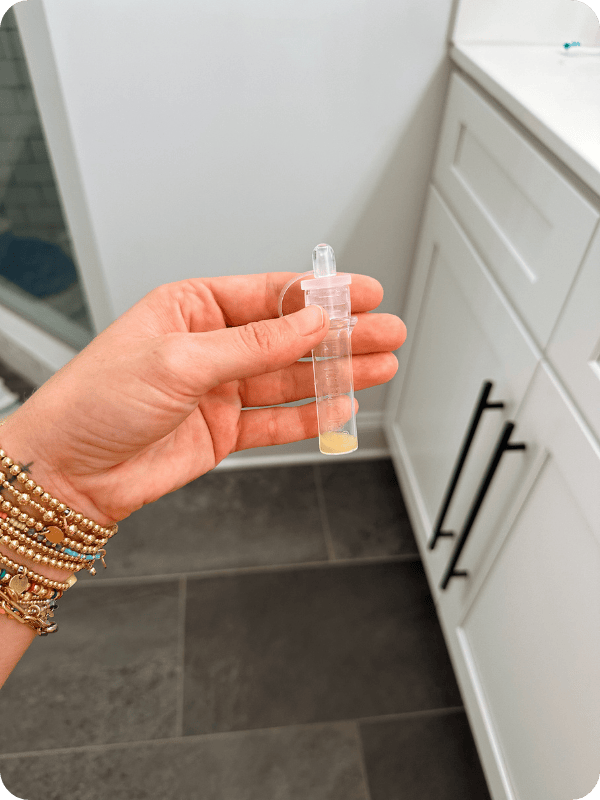
Collecting colostrum
First of all, did you know that a pregnant woman’s body begins to make breast milk as early as 12–16 weeks into pregnancy? And even before then, in the first trimester, breast tissue and nipples begin to change in preparation for making colostrum. (1)
Colostrum is the first milk your body produces for your little one. It is a highly nutrient-dense, thick, often yellow-colored milk. They call it “liquid gold” for this exact reason! A few days after birth, colostrum transitions to “mature” milk, which is whiter in color and thinner in texture.
For some women, colostrum will naturally leak from their breasts toward the end of pregnancy. It’s not a gush of milk, but usually a droplet or two dripping from the nipple or appearing as a wet spot in your bra or shirt. For others, there won’t be any leaking, and that is also okay and normal!
Regardless, a pregnant woman’s body is making colostrum well before baby arrives, and for some, collecting colostrum can provide a great boost for the early days of postpartum!
Before diving in, we want to note that if your goal is to breastfeed, it is most important to bring baby to your breast first once they are born. Offering harvested colostrum to baby should be done after bringing them to the breast whenever possible. Essentially, colostrum collected during pregnancy is used to supplement breastfeeding sessions once baby is born.
Why collect colostrum?
It is not necessary to collect colostrum during pregnancy. However, there are some potential benefits if you would like to collect it!
First, if at any time mom and baby are separated, the collected colostrum can be sent with baby for feedings. If there is a period of separation, mom will have to continue hand expressing to signal their body to transition into mature milk production.
Additionally, babies born to mothers with diabetes, including gestational, are more likely to experience low blood sugar after birth. Giving baby harvested colostrum can help stabilize their blood sugar with less medical interventions. (2) With my third baby, I experienced this firsthand. I had gestational diabetes and my baby was born with low blood sugar. The colostrum I collected during pregnancy was given to her after our first feeding, and as a result, her blood sugars normalized.
And, for babies experiencing jaundice, which happens to 6 out of 10 newborns to some degree, extra colostrum can also provide benefits. (3) One benefit is that colostrum helps stimulate baby to pass meconium, the early stools that are dark and thick. Since meconium is rich in bilirubin, passing it quickly reduces the possibility that bilirubin will be reabsorbed into the bloodstream. (4)
Some cases of jaundice can be associated with struggles to take in enough milk, whether from issues latching or other causes. (4) No one can predict in advance how a feeding journey will look, and having extra colostrum on hand can provide peace of mind in cases like these, as well as providing tangible benefits to babies.
Additionally, harvesting colostrum can also help mothers get more comfortable with the mechanisms involved in breastfeeding. Nursing for the first time can feel awkward! Collecting colostrum in pregnancy can help mothers feel more familiar with their body.
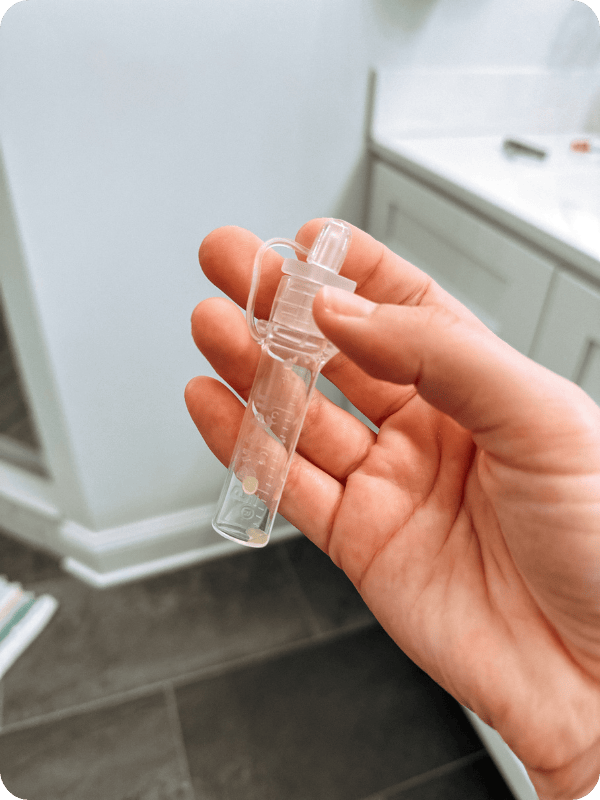
When to start collecting colostrum?
Generally, colostrum collection can begin after 37 weeks gestation. However, it’s important to speak with your OB, midwife, or birth provider before beginning this process. Nipple stimulation, which will occur during the collection process, can contribute to inducing labor if a mother is already experiencing pre-labor signs. It will not induce labor on its own.
How to collect colostrum before birth
There are two ways to collect colostrum during pregnancy. The first is by using a reusable silicone colostrum catcher that you can express into and then freeze. The second is to express colostrum onto a spoon and then use a sterile syringe to store it and then freeze.
It’s important to remove any expectations about volume when you begin this process. You may express for a few minutes for a few days before catching your first drop! And that is okay, and it also is not indicative of what your milk volume will be postpartum.
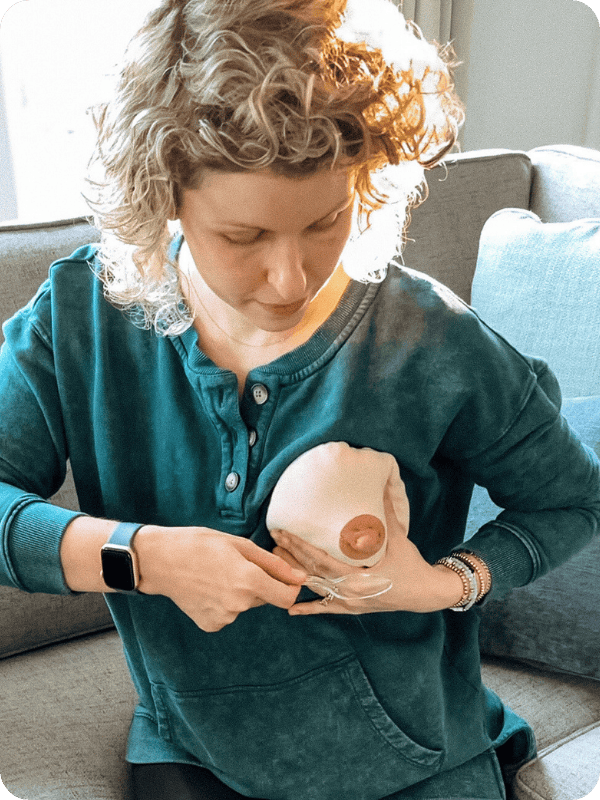
How to collect colostrum
Make a “C” with your hand.
Put your thumb on the top of your breast, toward your chest, and cup the outside of your breast with your palm. Put your fingers under your breast.
Gently cup your breast, moving your thumb down toward your nipple, stopping at the edge of the areola.
Repeat after me: NO PINCHING THE NIPPLE! Repeat this movement from your chest towards the nipple, but don’t touch your nipple. Seriously, don’t pinch your nipple!
Set a timer for 2-5 minutes.
Don’t overdo it. Only a few minutes on each breast once per day is recommended during pregnancy. If baby has already arrived, you can hand express as much as you’d like, but usually only a small volume is necessary.
If you need a little more help figuring things out, I posted instructions for colostrum collection on Instagram, including a video modeling the steps!
Colostrum collection kit and storage
If you are expressing using the spoon method, it’s easiest to store colostrum in individual syringes in the freezer. Use one syringe per colostrum harvesting session to suck the milk off the spoon and place in the freezer. Use tape to date it!
If you are using a colostrum collection kit to harvest, you can keep one collector in the fridge and collect the next day’s in a new collector. Place both in the fridge and then combine once they are the same temperature. Continue to do this for up to four days, or when the collector is full, then freeze. Don’t forget to label with the date of collection/freezing.
The CDC notes that milks should be combined at the same temperature to avoid reheating already cold milk, which can allow bacteria to grow. (5) There is not much data or research on this topic, so although it’s a good recommendation to follow, don’t stress too much on combining milks that are different temps!
In general, freshly expressed breast milk (including colostrum) is safe at room temperature for up to 4 hours, in the fridge for up to 4 days, and in the freezer for about 6-12 months.
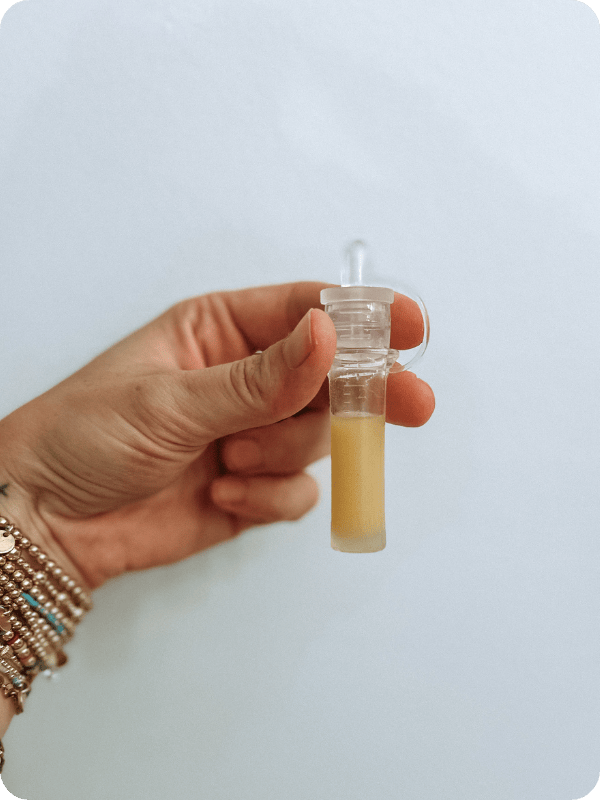
You can find our favorite products to support your feeding journey here, whether you plan to breastfeed, bottle feed, or both!
More newborn support
The days ahead are such a happy-tired kind of time. You are already doing an amazing job, and your baby is so lucky to have you!
We are here to help you feel empowered as you embark on this journey with your new little one. For additional resources, check out our searchable blog to find answers to so many questions!
You can find information on signs of newborn hunger cues here or check out our favorite activities with your newborn here. Or, if you need help with tummy time—count on us.
We also have some amazing downloadable resources for you! Our Handbooks are written by licensed professionals and child development experts. We’re with you on this journey!
Sources
- Alex A, Bhandary E, McGuire KP. Anatomy and Physiology of the Breast during Pregnancy and Lactation. Adv Exp Med Biol. 2020;1252:3-7. doi: 10.1007/978-3-030-41596-9_1. PMID: 32816256.
- Tozier PK. Colostrum versus formula supplementation for glucose stabilization in newborns of diabetic mothers. J Obstet Gynecol Neonatal Nurs. 2013 Nov-Dec;42(6):619-28. doi: 10.1111/1552-6909.12260. PMID: 25803211.
- Mitra S, Rennie J. Neonatal jaundice: aetiology, diagnosis and treatment. Br J Hosp Med (Lond). 2017 Dec 02;78(12):699-704.
- Flaherman VJ, Maisels MJ; Academy of Breastfeeding Medicine. ABM Clinical Protocol #22: Guidelines for Management of Jaundice in the Breastfeeding Infant 35 Weeks or More of Gestation-Revised 2017. Breastfeed Med. 2017 Jun;12(5):250-257. doi: 10.1089/bfm.2017.29042.vjf. Epub 2017 Apr 10. PMID: 29624434.
- Centers for Disease Control. Breast Milk Storage Questions and Answers. 2023. http://cdc.gov/breastfeeding/php/guidelines-recommendations/faqs.html
Leave a Reply
OTHER POSTS YOU MAY LIKE:



MS, SLP
Founder of Eat Play Say, Speech-Language Pathologist, Feeding Specialist, Play Expert, Mom of 2
Jordyn Koveleski Gorman
SPECIALIZES IN: Infant and toddler speech-language, play, and feeding development, and curating a team that provides expert help that feels like a reassuring text from that one mom friend
EDUCATION: Jordyn received her BS in Speech-Language Pathology from Bloomsburg University and her MS in Speech-Language Pathology from Towson University
FAVE PARENTING FIRST: “The first true smile, it’s the sweetest!”

MS, CCC-SLP, CBS, IBCLC
Speech-Language Pathologist & Feeding Specialist, Certified Breastfeeding Specialist, International Board Certified Lactation Consultant
Jessica Nicholson Cocca
SPECIALIZES IN: Breast and bottle feeding, tongue ties, oral motor dysfunction, starting solids, infant and toddler speech, treating oral motor disorders
EDUCATION: Jessica received her BS in Communication Sciences and Disorders from Pennsylvania State University in 2015 and her MS in Speech-Language Pathology from Towson University in 2017
FAVE PARENTING FIRST: “Baby’s first wave! What a fun first communication gesture!”

MA, CCC-SLP, CLC
Speech-Language Pathologist, Certified Lactation Counselor
Jennifer McFarlin
SPECIALIZES IN: Breast and bottle feeding, tongue ties, starting solids, infant and toddler speech development
EDUCATION: She received her BS in Speech-Language Pathology from Ball State in 2014 and a MA in Speech-Language Pathology from Ball State in 2016.
FAVE PARENTING FIRST: “My favorite baby’s first is their first true smile that just warms your soul knowing they are smiling at you. My other favorite is their first word. I love watching their language explode!”

MS, CCC-SLP
Bilingual Speech-Language Pathologist
Nicole La Petina Kelly
SPECIALIZES IN: Bilingual development (Spanish-English), supporting multilingual families, infant and toddler speech
EDUCATION: She received her BA in Communication Sciences and Disorders and in Spanish from the University of Wisconsin-Madison in 2014 and her MS in Speech-Language Pathology with an English-Spanish Specialization from Marquette University in 2016.
FAVE PARENTING FIRST: “It’s the first slobbery kisses for me!”

RDN, LD
Licensed Registered Dietitian
Kimberly Vede
SPECIALIZES IN: Infant and pediatric nutrition including breastfeeding, formula feeding, and starting solids. She also specializes in prenatal and postpartum nutrition.
EDUCATION: She received her BSc in Biology in 2014 from Life University, and her BSc in Dietetics from Life University in 2019.
FAVE PARENTING FIRST: ”The first time they say ‘mama!’”


This checklist was created with input from a Speech-Language Pathologist, Occupational Therapist and Physical Therapist and has been downloaded over 20,000 times by parents worldwide. Learn the important milestones to pay attention to, and keep it in your digital back pocket during the baby + toddler years!
Comprehensive Milestone Checklist for gross motor, fine motor, and speech-language milestones for 0-36 months,
DOWNLOAD FOR FREE


