


Yoto vs. Tonie: Which one is best for toddlers?
December 19, 2025
Jordyn Koveleski Gorman

Last Updated on January 28, 2026 by Jordyn Koveleski Gorman
This page contains affiliate links. We will receive a commission on qualifying purchases using these links.
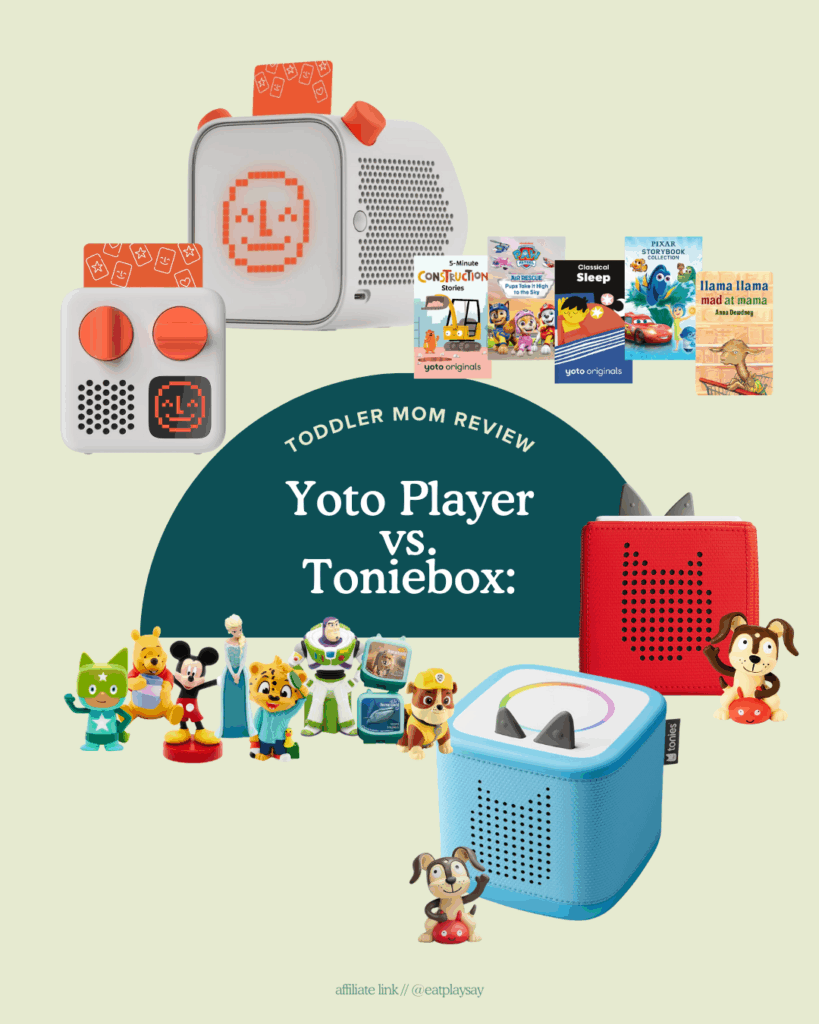
What’s the best audio player for kids?
This is a great question—and one many parents are asking. We often hear parents debating which audio player is better: the Yoto Player, Yoto Mini Player, or the Toniebox. It’s a classic Yoto vs. Tonie debate! So, we decided to dive in and compare them.
Read on to learn more about the Yoto Players and the Toniebox, along with a few other audio players we’ve tried.
Yoto Player & Yoto Mini Player
What is a Yoto Player?
The Yoto Player and Yoto Mini Player are screen-free audio players designed for kids ages 3–12+. They are plastic cubes with speakers and a light-up pixel display on the front.
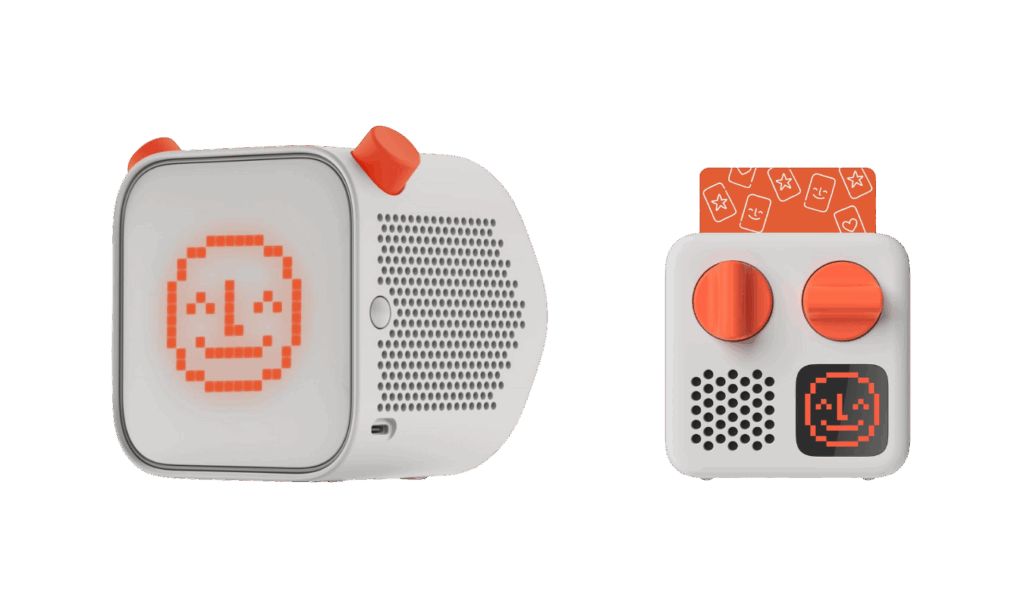
Yoto vs. Yoto Mini Player
The Yoto Player uses physical cards to play songs, stories, and educational content. When a card is inserted into the slot on top of the player, the corresponding image lights up on the pixel screen.
The Yoto Mini Player was developed after the release of the Yoto Player. It still has all the same functions as the Yoto, but it’s smaller and more portable.
What are Yoto Player Cards?
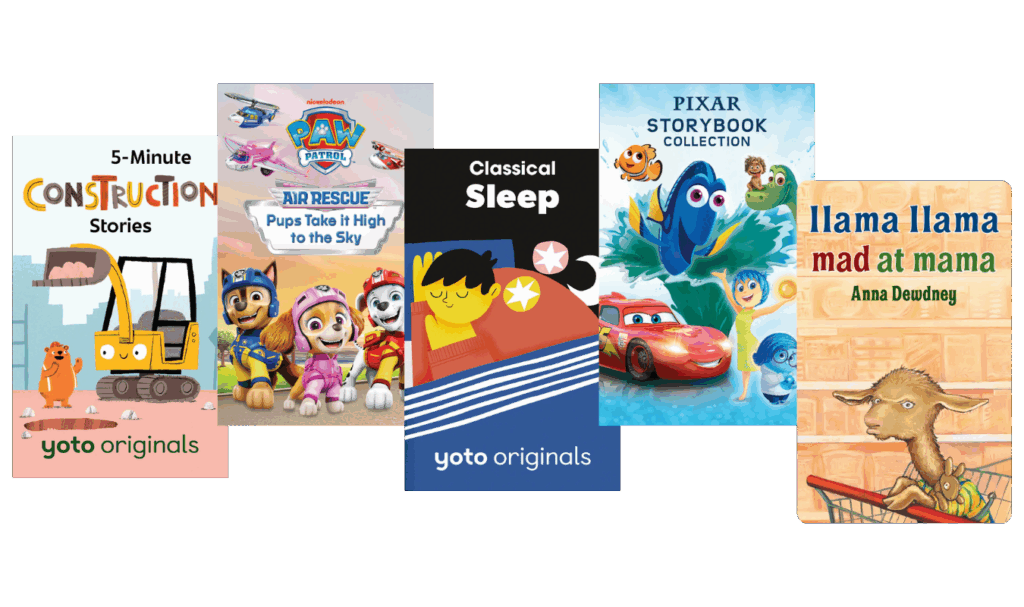
Yoto Player Cards are physical cards that are inserted into the slot on top of the Yoto or Yoto Mini Player to unlock audio content. Parents can browse cards by age recommendations, best sellers, and more. Most cards feature audiobooks and stories.
BrainBot Yoto Player Cards are designed for learning and educational content. These sets cover subjects like the solar system, the human body, animals, shapes, numbers, and more.
With hundreds of Yoto Cards available, there’s truly something for every child. Single Yoto Player Cards typically range from $4.99–$14.99, depending on the content and run time, while Yoto Card sets range from $14.99 to $59.99.
Yoto Player & Yoto Mini Player Review
Age Recommendation: 3-12+
Price: $110 for Yoto Player; $80 for Yoto Mini Player
Battery Life: Yoto offers up to 24 hours on a full-charge; Yoto Mini Player offers 14 hours
Player Card Price: $5-60 depending on content
Note: When deciding between the Yoto vs. Yoto Mini, the biggest difference is their size. The original Yoto Player is larger and features a bigger pixel screen. In contrast, the Yoto Mini Player is compact and portable, making it easy to take anywhere while still offering the same functionality.
The Yoto and Yoto Mini Player are cleverly designed audio players built for longevity. They can grow with your child and offer content for a wide age range. When used as a sound machine from birth, the Yoto can last for 10+ years, depending on your child’s interests. Beyond audio playback, the Yoto also has an okay-to-wake clock, making it useful for many stages of childhood.
While prices vary, Yoto Player Cards are generally affordable, including many story sets. With thousands of Yoto Cards available, there’s truly content that every child will enjoy.
Parents note the Yoto app is especially well designed and easy to use. It’s helpful for troubleshooting and allows parents to control volume and brightness settings. Additionally, Yoto stories can be played through the app on your phone or directly on the player itself. This flexibility means you can even listen to stories together in the car via Bluetooth.
Pros:
- Great battery life
- Yoto Mini Player is incredibly portable and easy to travel with
- Can be used for audio content and bedtime routine
- Pixel screen adds visual interest
- Okay-to-wake clock system
- Grows with your child through tween years
- Thousands of Yoto Player Cards available
- Lots of accessories made for both devices
Cons:
- Only comes in one color
- Needs additional Adventure Jacket for added durability
- Yoto Player Cards are small and thin, potentially easy to lose or misplace.
Toniebox 1 & Toniebox 2
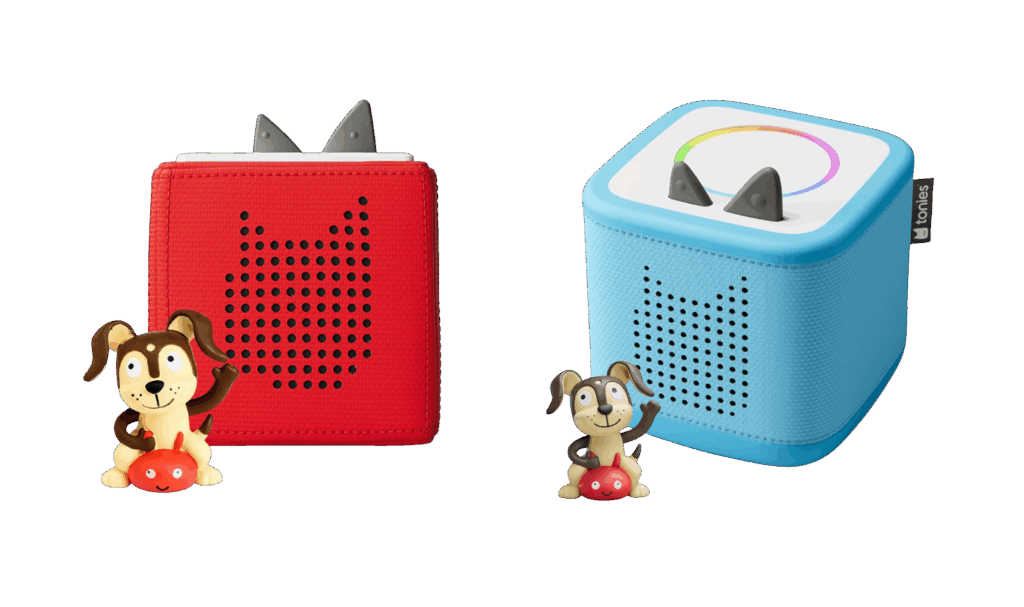
What is a Toniebox?
The Toniebox is a screen-free audio player for kids designed for independent play. It’s a soft, padded cube with intuitive controls for adjusting volume, fast-forwarding, and rewinding. Children simply tap one side of the cube to move forward to the next story or song, or tap the opposite side to go back.
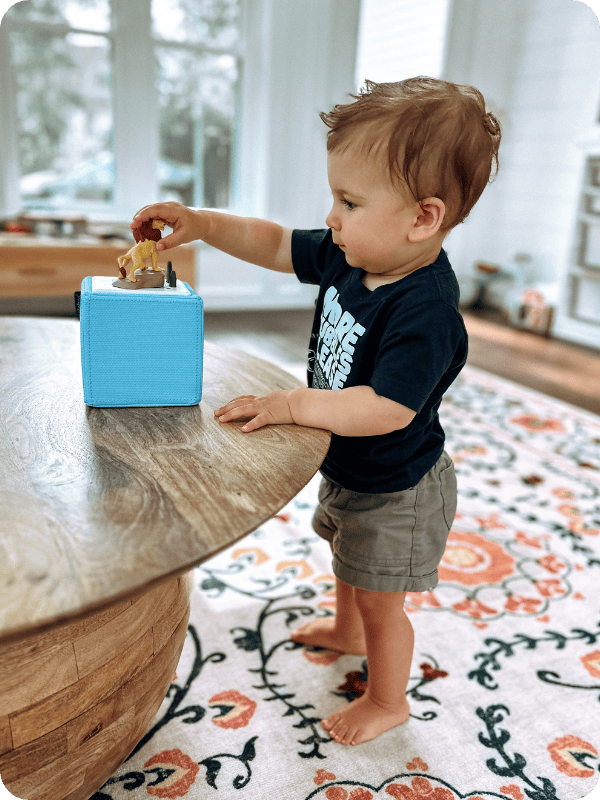
The Toniebox 1 was released in the United States in 2020 and was originally geared toward children ages 3 and up.
In 2025, the company released the Toniebox 2 with the same simple design. However, the Toniebox 2 is now marketed to children ages 1-9+. While it’s similar to the original Toniebox, it has the ability for Tonieplay. Tonieplay features games, quizzes, and challenges for little ones and can be played independently or collaboratively.
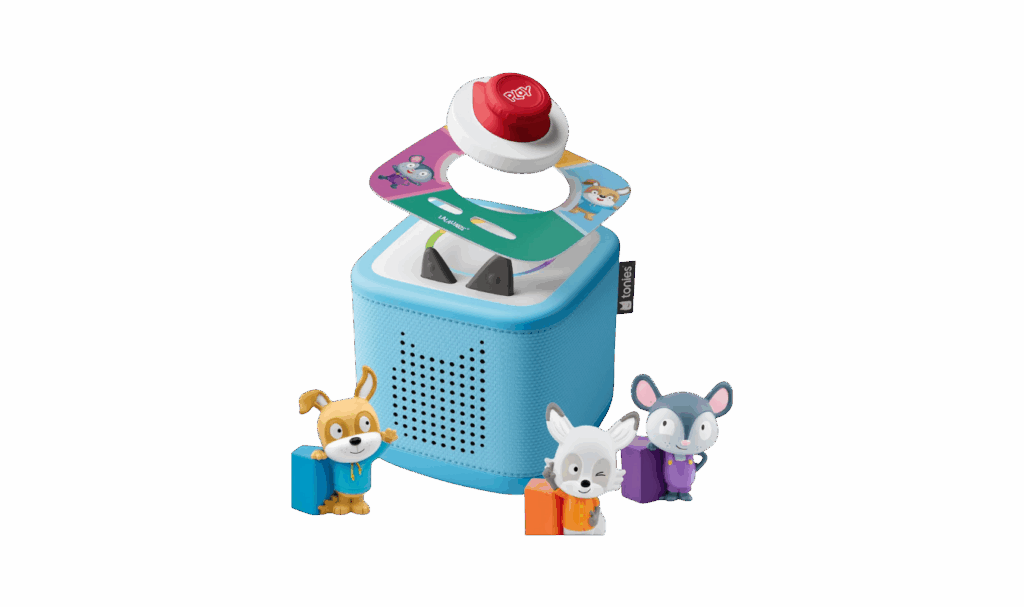
Both the Toniebox 1 and Toniebox 2 require Tonies to play stories, songs, and other educational content. Tonies are character figurines that magnetize to the top of the Toniebox in order to start playing. Different Tonies are continuing to be added, so there’s no shortage of content! While the Toniebox version 1 is getting upgraded to Toniebox 2, the tonies will continue to work on both models!
What are Tonies?
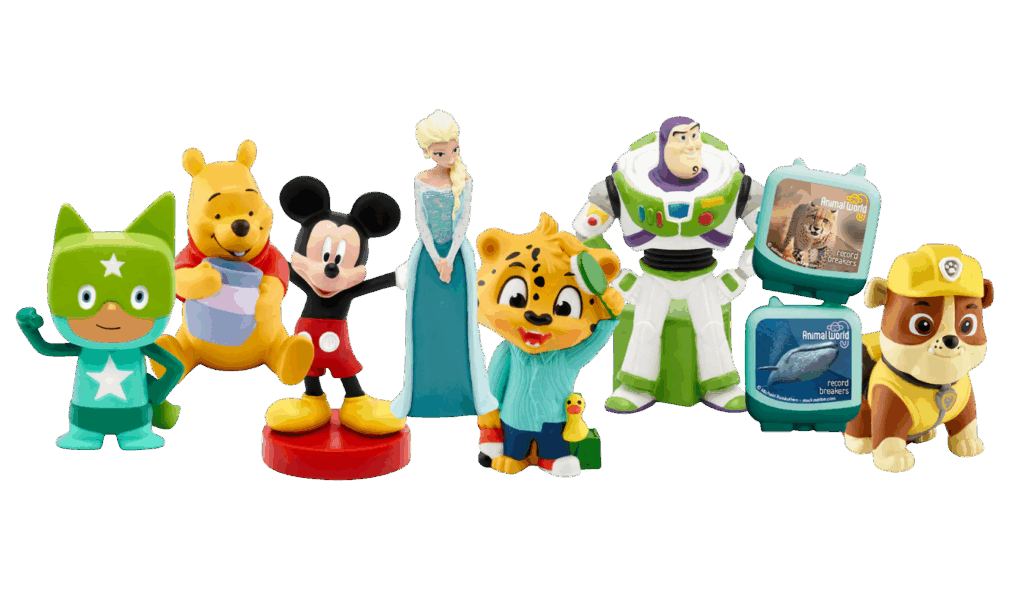
Tonies are figurines used to play music and stories on the Toniebox. They magnetically attach to the top of the Toniebox to start playback. Because they’re free-standing characters and animals, Tonies are playful, fun, and double as toys. Each Tonie varies on its content and runtime. Depending on the Tonie you choose, there are stories, songs, and/or educational content.
There are also Clever Tonies, marketed for children ages 5 and up, that focus on educational content and typically offer 100+ minutes of total run time. Toniebox also offers Creative Tonies. These figurines allow you to upload your own content, so your child can listen to your voice singing songs or reading their favorite stories.
When you use a Tonie for the first time, WiFi is required to download and sync the content to the Toniebox. After the initial download, internet access is no longer needed to play Tonie content, making it easy to take anywhere.
Toniebox Review
Age Recommendation: 3-6 years for Toniebox 1; 1-9+ for Toniebox 2
Price: $100 for Toniebox 1 Starter Set, $140 for Toniebox 2 Starter Set
Battery Life: 7 hours on a full charge for Toniebox 1, the Toniebox 2 can last up to 9 hours
Tonie Price: $10-40 depending on content
The Toniebox is a great audio player for younger children thanks to its soft, cushioned design and collectible play figures. While some Tonie content is suitable for children up to age 9, the Toniebox’s sweet spot is typically ages 2–6.
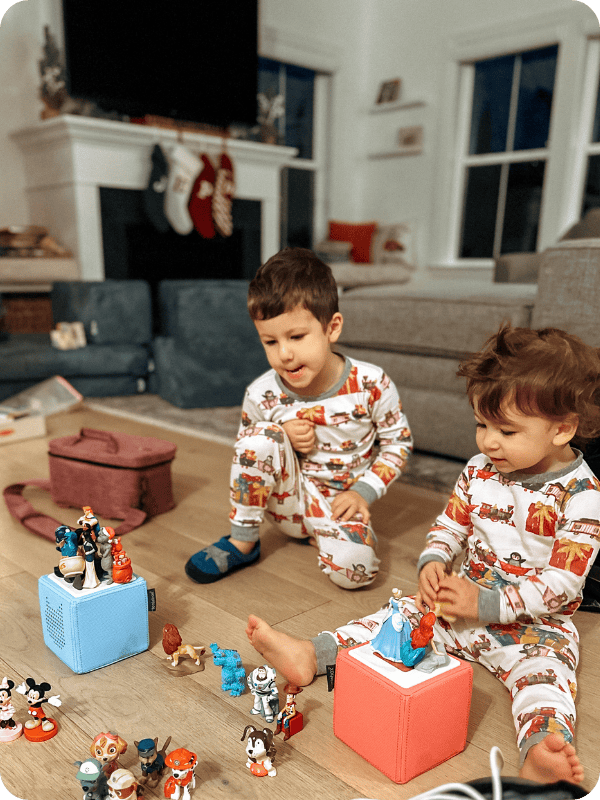
We love our Tonieboxes, and my kids have enjoyed using them from about 20 months and up. They love playing with the Tonie figurines and listening to the different stories.
I especially appreciate that Tonies offers so many popular Disney characters and stories, along with other beloved favorites like Winnie the Pooh, Sesame Street, and Paw Patrol.
These are some of our favorite Tonies to listen to!
Pros:
- Simple design
- Collectible Tonie figurines double as toys
- Can be operated independently with ease
- Toniebox 2 offers Tonieplay in additional to audio stories
- Different colors to choose from
- Lots of accessories made for it – headphones, carrying cases, shelves, etc.
Cons:
- Can be tough for young toddlers to understand how to fast-forward and rewind because they have to tap the sides to do so.
- Geared toward younger children so doesn’t have as much longevity
- Less content available in comparison to the Yoto
Yoto Mini Player vs. Toniebox: Which is Best?
Both the Yoto Mini Player and the Toniebox are excellent audio players for kids, offering creative, screen-free play. When it comes down to it, we believe the biggest factor to consider is your child’s age.
The Toniebox is the best audio player for toddlerhood through kindergarten.
Its soft, cushioned design and playful figurines make it especially appealing to younger children, and much of the content is geared toward ages 2–5. The Tonies are also a great size for small hands and are less likely to get lost than cards, which can be helpful with toddlers.
The Yoto Mini Player is best suited for kids ages 4–9 and it’s the most portable.
While it can still work well for toddlers, it leans more heavily toward stories and educational content. Because the content is stored on small cards and often more narrative-based, we find it to be a better fit for preschoolers and older children. Because of its size, the Yoto Mini Player is by far the most portable option.
When it comes down to it, every child is different.
Your 3-year-old may adore their Yoto Mini Player, or your 6-year-old may still be completely captivated by their Toniebox. Both are great options for audio stories—choose the one that best suits your child and your family’s needs.
WiFi Required for Yoto & Toniebox
It’s important to note that you can’t simply buy a Yoto or Tonie and use it right out of the box. Both Yoto Players and the Toniebox require Wi-Fi for initial setup and to download content. Once a Yoto Player Card or Tonie has been downloaded to the audio player, it can be used on the go without Wi-Fi.
Other Audio Players for Kids
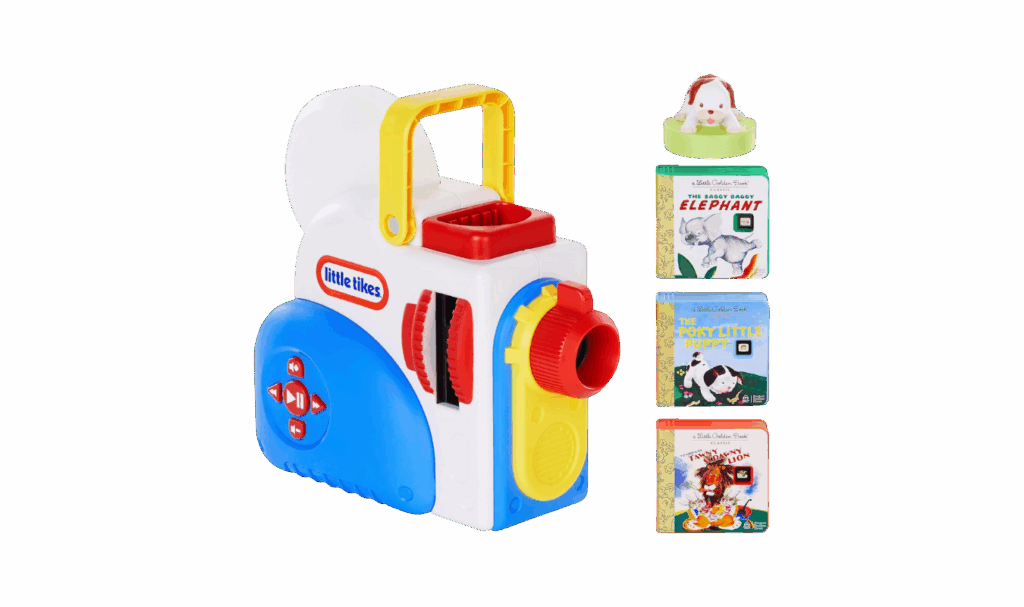
Little Tikes Dream Story Machine Starter Set
Age Recommendation: 3+
Price: $55
Battery Life: 4 AA batteries, 8-10 hours of continuous play
Story Cost: $17 for a collection
Part audio player, part projector, this toy brings stories to life as it projects them onto any blank wall. The starter set comes with 3 classic Golden Book stories and one character. The characters on the top add light effects during nighttime mode.
The Dream Story Machine allows children to watch and listen to stories. Budding readers can read along with the words on the screen, too.
Other story collections are available for purchase for $17. These collections include 3 additional stories and a new character for your projector. Story collections include popular characters including Sesame Street, Paw Patrol, Eric Carle classics, and more.
Pros:
- Audio and visual elements for screen-free storytelling
- More affordable option
- Easy-to-use, straightforward controls
Cons:
- Some users note the need to readjust focus throughout a story
- Included Golden Books may not be as engaging as other story collections sold separately

Little Bible Stories Speaker
Age Recommendation: 2+
Price: $70
Battery Life: 5 hours
Additional Bible Stories & Songs: $20-40
This small speaker plays audio Bible stories for kids. It’s a screen-free device that comes preloaded with 30 Bible stories, 12 prayers, and 8 songs. Each Bible story is approximately three minutes long and is brought to life with music and sound effects.
The speaker does not require WiFi, is not connected to Bluetooth, and includes a headphone jack. Bible stories include Samson’s Strength, Walls Fall Down, Daniel the Brave, The First Christmas, and Jesus Is Alive!
Additional Bible songs and Bible story bundles are available for purchase and can be instantly downloaded to the speaker.
You can use the code EATPLAYSAY at checkout to save 10%.
Pros:
- Compact & portable
- Screen-free & engaging way to introduce kids to Bible stories
- Price includes 30 Bible stories, 12 prayers, and 8 songs
Cons:
- Can’t preview all content before buying
- Only 2 colors available
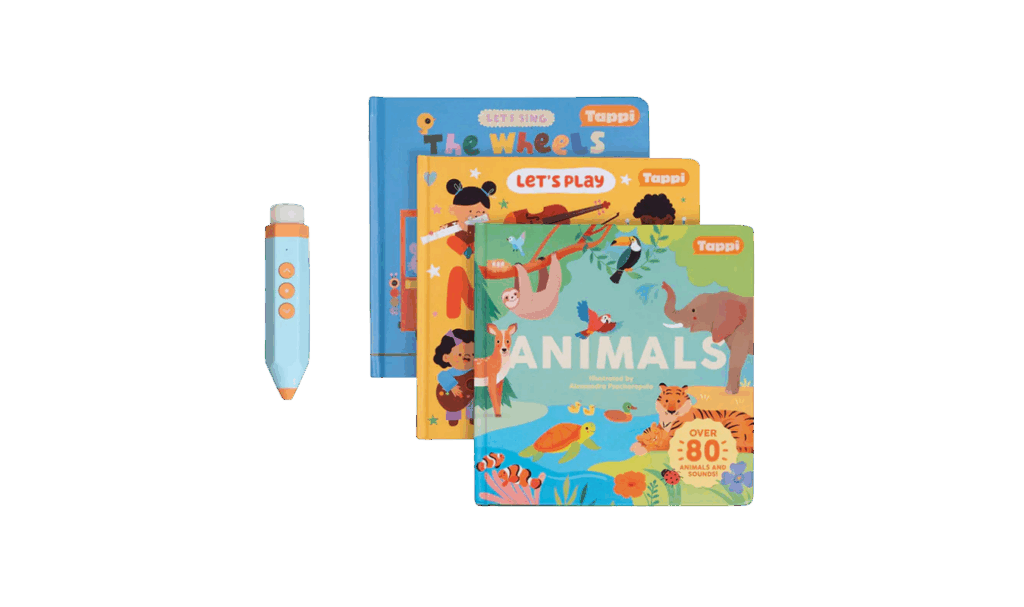
Tappi Starter Set
Age Recommendation: 0-6 years
Price: $110 for Starter Set
Battery Life: Not provided, but lasts for hours from experience!
Tappi Book Cost: $21.50
The Tappi is an interactive book series. They’re tappable board books that work with the Play Pen to narrate content. The chunky pen fits easily into toddler hands. Each time you tap something on the page, the book comes to life with sounds, games, or stories.
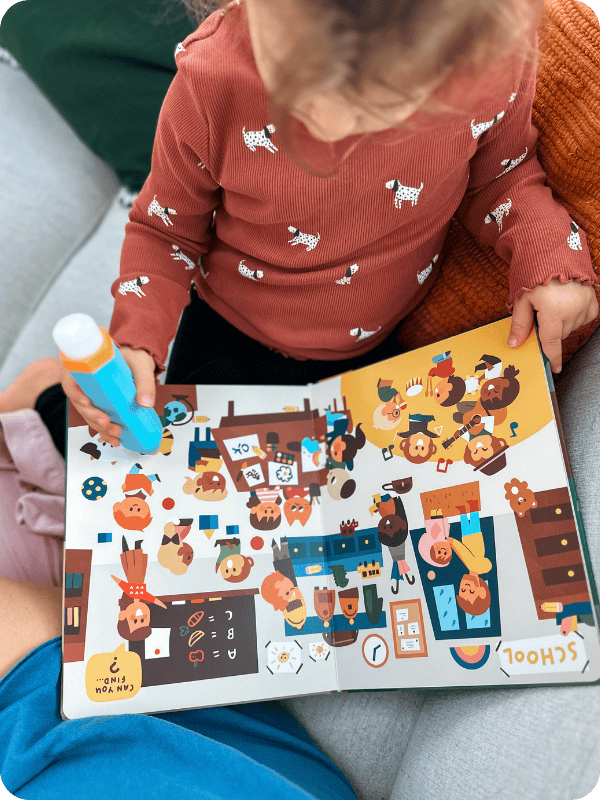
While it’s not an audio player, it functions more like an interactive audiobook. Tappi helps foster early literacy skills such as language development and reading comprehension.
The Tappi Starter Set includes the Play Pen and three tappable books. Additional books are available for purchase for $21.50.
You can use the code EATPLAYSAY at checkout to save 10%.
Pros:
- Engages little ones in reading
- Fosters early literacy skills
Cons:
- Limited book options to choose from
- Downloading new books to the Tappi requires an app or a computer download
Why is listening to audio stories good for toddlers?
Audio stories are a great option for screen-free entertainment or quiet time. Beyond that, listening to audio stories offers many developmental benefits for toddlers.
Benefits of Listening to audio stories:
- Builds language skills and supports early communication
- Strengthens listening and attention skills
- Fosters imagination and creative thinking
- Encourages early literacy
Looking for more?
For more ways to support your little one’s love of stories, be sure to check out my post on the best books for babies and toddlers.
Looking for other age-appropriate toys? Find our favorite toys for ages 0-4, all in one place!
Leave a Reply
OTHER POSTS YOU MAY LIKE:





MS, SLP
Founder of Eat Play Say, Speech-Language Pathologist, Feeding Specialist, Play Expert, Mom of 2
Jordyn Koveleski Gorman
SPECIALIZES IN: Infant and toddler speech-language, play, and feeding development, and curating a team that provides expert help that feels like a reassuring text from that one mom friend
EDUCATION: Jordyn received her BS in Speech-Language Pathology from Bloomsburg University and her MS in Speech-Language Pathology from Towson University
FAVE PARENTING FIRST: “The first true smile, it’s the sweetest!”

MS, CCC-SLP, CBS, IBCLC
Speech-Language Pathologist & Feeding Specialist, Certified Breastfeeding Specialist, International Board Certified Lactation Consultant
Jessica Nicholson Cocca
SPECIALIZES IN: Breast and bottle feeding, tongue ties, oral motor dysfunction, starting solids, infant and toddler speech, treating oral motor disorders
EDUCATION: Jessica received her BS in Communication Sciences and Disorders from Pennsylvania State University in 2015 and her MS in Speech-Language Pathology from Towson University in 2017
FAVE PARENTING FIRST: “Baby’s first wave! What a fun first communication gesture!”

MA, CCC-SLP, CLC
Speech-Language Pathologist, Certified Lactation Counselor
Jennifer McFarlin
SPECIALIZES IN: Breast and bottle feeding, tongue ties, starting solids, infant and toddler speech development
EDUCATION: She received her BS in Speech-Language Pathology from Ball State in 2014 and a MA in Speech-Language Pathology from Ball State in 2016.
FAVE PARENTING FIRST: “My favorite baby’s first is their first true smile that just warms your soul knowing they are smiling at you. My other favorite is their first word. I love watching their language explode!”

MS, CCC-SLP
Bilingual Speech-Language Pathologist
Nicole La Petina Kelly
SPECIALIZES IN: Bilingual development (Spanish-English), supporting multilingual families, infant and toddler speech
EDUCATION: She received her BA in Communication Sciences and Disorders and in Spanish from the University of Wisconsin-Madison in 2014 and her MS in Speech-Language Pathology with an English-Spanish Specialization from Marquette University in 2016.
FAVE PARENTING FIRST: “It’s the first slobbery kisses for me!”

RDN, LD
Licensed Registered Dietitian
Kimberly Vede
SPECIALIZES IN: Infant and pediatric nutrition including breastfeeding, formula feeding, and starting solids. She also specializes in prenatal and postpartum nutrition.
EDUCATION: She received her BSc in Biology in 2014 from Life University, and her BSc in Dietetics from Life University in 2019.
FAVE PARENTING FIRST: ”The first time they say ‘mama!’”


This checklist was created with input from a Speech-Language Pathologist, Occupational Therapist and Physical Therapist and has been downloaded over 20,000 times by parents worldwide. Learn the important milestones to pay attention to, and keep it in your digital back pocket during the baby + toddler years!
Comprehensive Milestone Checklist for gross motor, fine motor, and speech-language milestones for 0-36 months,
DOWNLOAD FOR FREE


