


Gross Motor Activities for Toddlers
December 10, 2025
Jordyn Koveleski Gorman

Last Updated on February 21, 2026 by Jordyn Koveleski Gorman
This page contains affiliate links. We will receive a commission on qualifying purchases using these links.
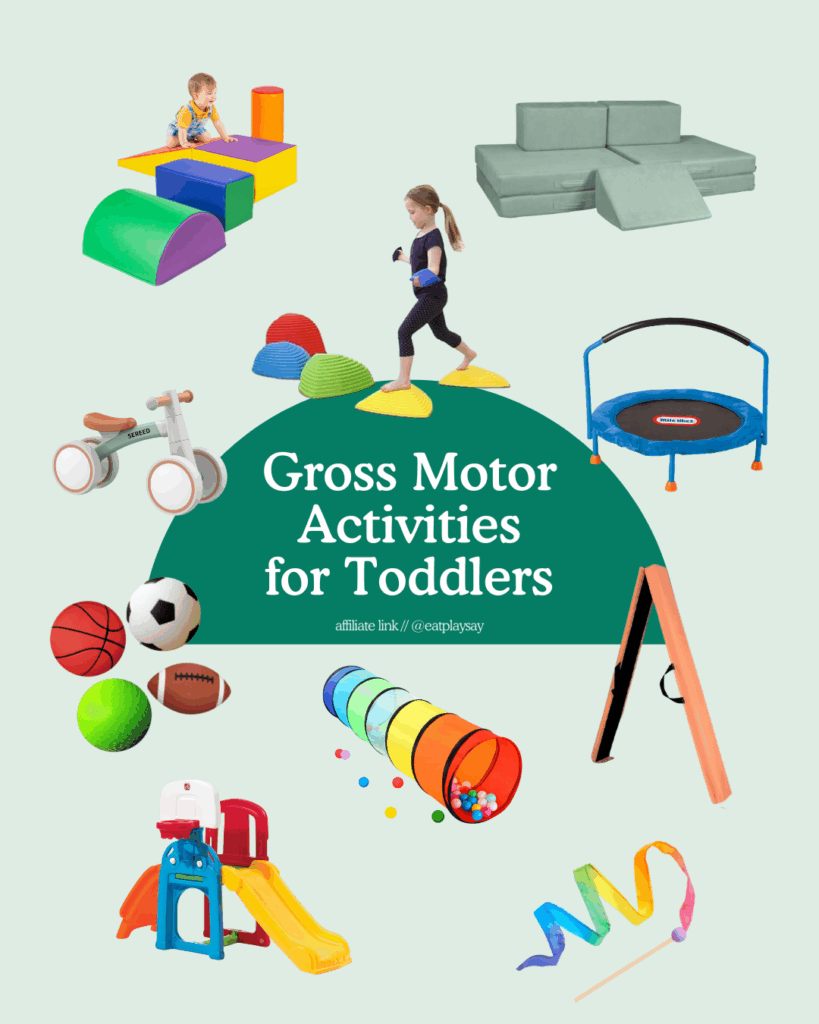
There are so many gross motor activities for toddlers—and many are probably right in front of your eyes! You likely already have plenty of toys that support gross motor development. You just need a few ideas for how to use them and engage your toddler in active play. Have no fear—we’ve got you covered!
What are gross motor activities and why do they matter?
Gross motor activities involve movements that engage the large muscle groups in the body. Think about the arms, legs, and core. Gross motor movements foster children’s physical development and lay the foundation for activities of daily living.
Gross motor activities include things like running, jumping, climbing, throwing, catching, kicking, crawling, and dancing.
When your child is running around, or jumping up and down, or navigating a new playground, they aren’t just getting good exercise. They’re really working on gross motor skills that play a huge role in development!
Engaging in gross motor activities and play develops foundational skills including:
- Balance and coordination
- Body control and awareness
- Full body strength
- Spatial awareness
- Endurance
It’s important to remember, when you engage in large motor skills activities, you are investing in healthy outcomes for your child. Gross motor skills are so important because they support everyday independence. When your child is able to run and play on the playground, that’s a confidence boost for them! They’re able to play with their peers and engage in more social play!
Toys that Support Gross Motor Activities for Toddlers
01. Foam Climbing Blocks
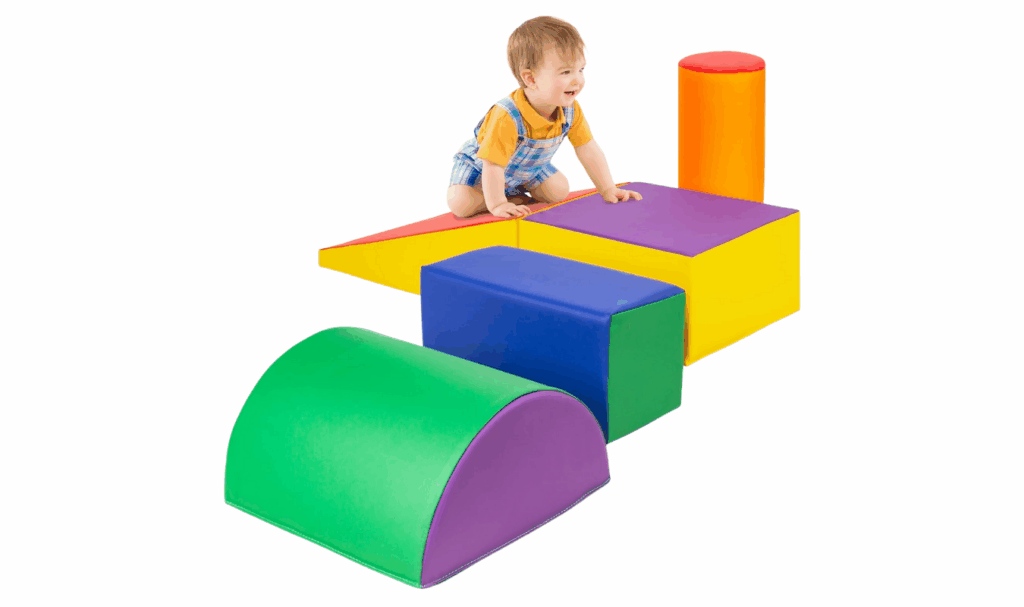
Climb & Crawl Soft Foam Blocks
Age recommendation: 12 months and beyond
Gross motor movements: climbing, crawling, walking, jumping, squatting, standing, and more!
This foam block set is a great toy for gross motor activities and can grow with your child. The five different shapes in this set are great for crawling and using for obstacle courses.
Help your toddler walk and crawl up and down inclines. Don’t forget to ask them to step over blocks, too! As they get older you can ask them to march, tiptoe, or jump through an obstacle course of blocks and pillows. These activities are all engaging gross motor movements!
Bonus: the foam challenges balance more than walking on solid ground.
Don’t have it at home?
Allow your toddler to crawl over pillows and couch cushions. Make obstacle courses with these items at home.
02. Balance Bike
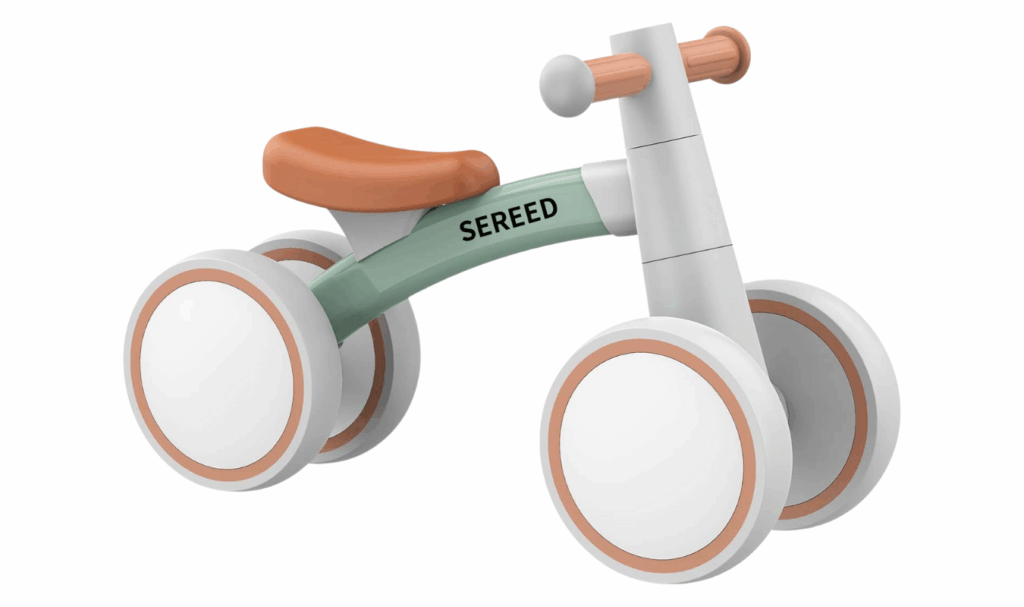
Sereed Balance Bike
Age recommendation: 12-18 months +
Gross motor movements: balance, coordination, core strength, legs pushing off the ground, dynamic single-leg balance
Let your toddler zoom around the house on this balance bike. As its name states, riding the bike works on balance!
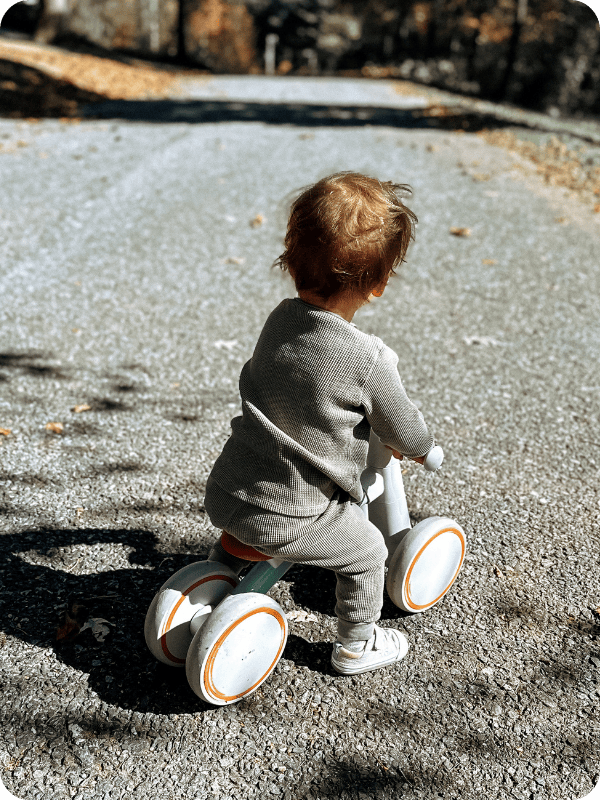
Your toddler will learn how to stabilize their body while riding and gliding. This also works on core strength and bilateral coordination (using both sides of the body together). Practice getting on and off the bike to work on dynamic single-leg balance. This means your toddler is balancing on one foot while doing something else.
Don’t have it at home?
Any ride-on toy can work on a lot of these gross motor skills! Check out local toddler gyms that might offer free playtime and ride-on toys for practicing.
03. Kids Play Tunnel
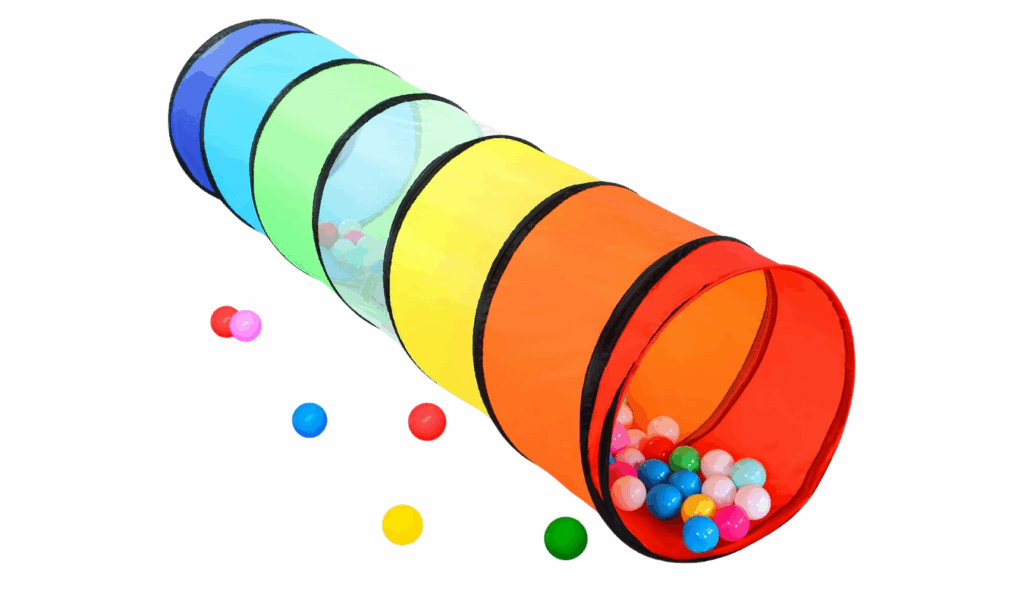
Collapsible Play Tunnel
Age recommendation: 9-12 months through toddlerhood
Gross motor movements: crawling (army crawl & hands and knees), coordination, arm, leg and core strength
This is a great toy to work on crawling on hands and knees! You can ask your toddler to army crawl through it to really work those upper body muscle groups!
Grab some pillows and add it to an obstacle course. Or, grab a ball and roll it back and forth to each other while sitting on opposite ends of the tunnel.
Don’t have it at home?
Create a makeshift tunnel using couch cushions, or let your toddler crawl under the kitchen table.
04. Sports Climbing Toy
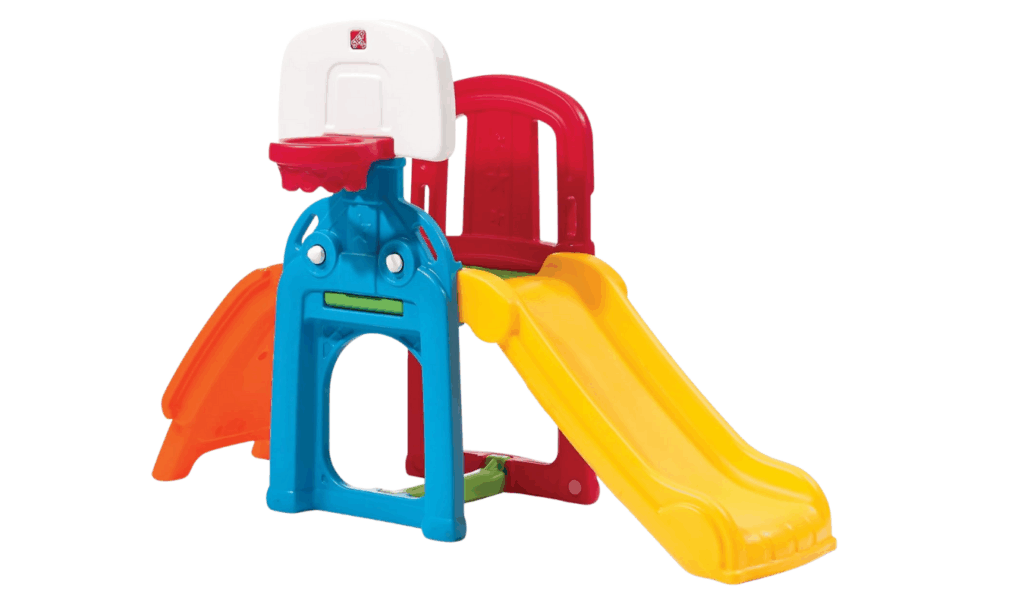
Step2 Game Time Sports Climber
Age recommendation: 18-24 months +
Gross motor movements: climbing, sliding, throwing, bending, reaching
Practice those climbing and sliding skills at home. You can use this sports climber inside or outside without taking up too much space.
It’s also fun to use the slide as a ball or car ramp. This works on bending, reaching, and catching the object that comes down the slide. The basketball hoop is perfect for throwing at a target, or simply reaching up to try and get the ball through the hoop.
Don’t have it at home?
Find a local park that has some age-appropriate climbing equipment to practice things like climbing and sliding; work on throwing a ball at home together.
05. Balls
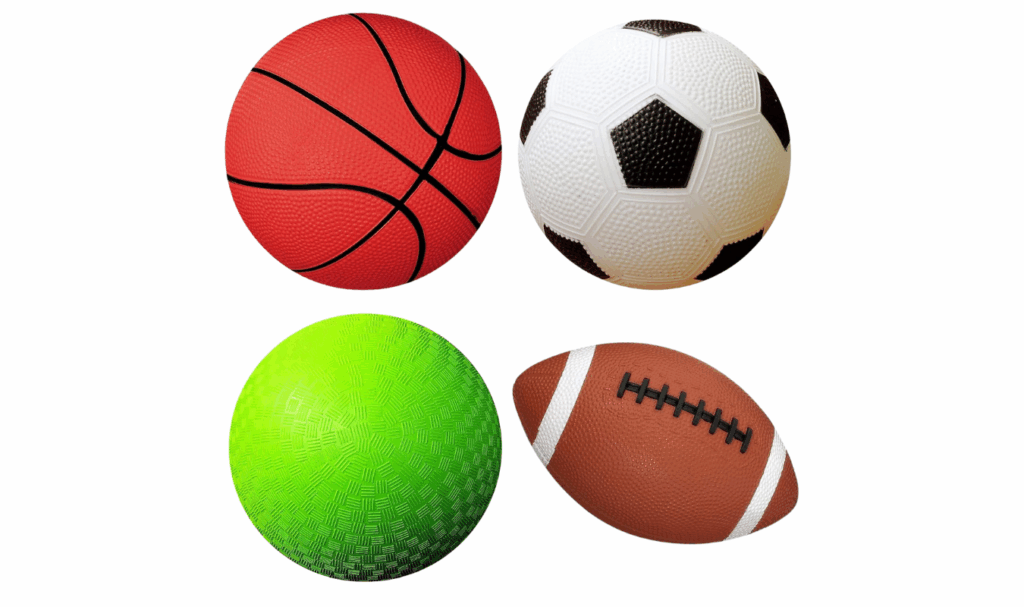
4-Pack Sports Balls
Age recommendation: 2 years +
Gross motor movements: rolling, throwing, catching, kicking
A variety of balls make perfect open-ended toys for indoor and outdoor play. Use the balls to kick around or into a goal, bounce, and catch. Sit down and roll them back and forth on the floor. Try to roll them slightly out of your toddler’s reach so they have to twist and turn to reach them.
Other options include using them for bowling, throwing at a toddler basketball hoop, or using a hula hoop as a target.
Don’t have it at home?
Any type of ball can be used—whether it’s a wool dryer ball or a tennis ball you find in the garage.
06. Ribbon Wands
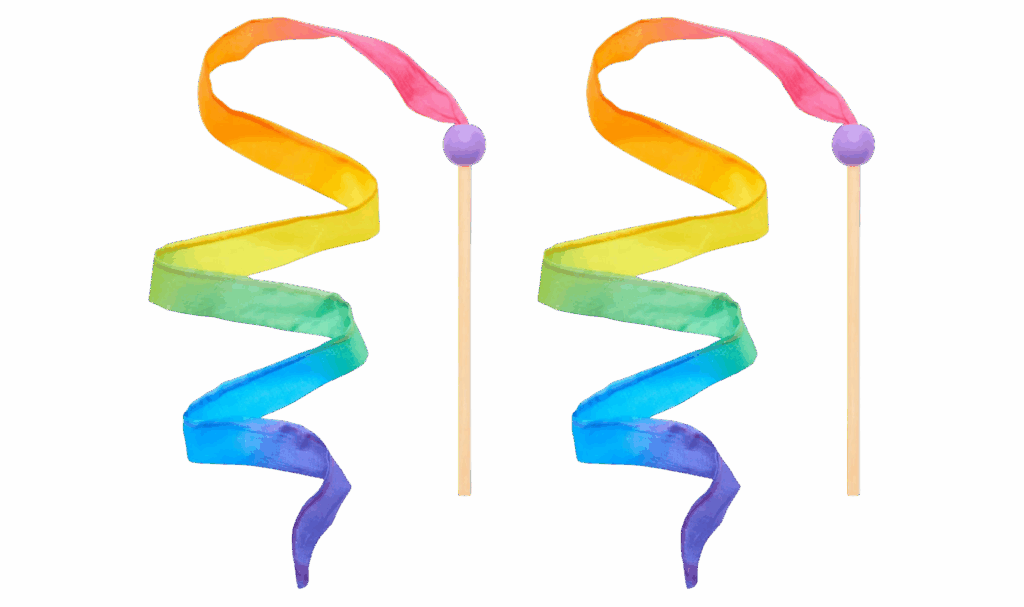
Sarah’s Silks Rainbow Ribbon Wands
Age recommendation: 18-24 months +
Gross motor movements: dancing, spinning, swinging, stretching, bending, reaching, large arm movements
These ribbon wands are a fun and affordable way to engage in gross motor play at home. There are so many ways to use these, but our favorite is for dance parties!
Depending on your toddler’s age, you can wave them around or spin in circles. Practice shaking them all the way up and then bend down to shake them on the floor. Put them on the ground and jump over them, or make up your own dance moves.
Don’t have it at home?
Use scarves you already have in the closet, hand towels, or even streamers sitting in the decorations bin for your dance parties.
07. Trampoline
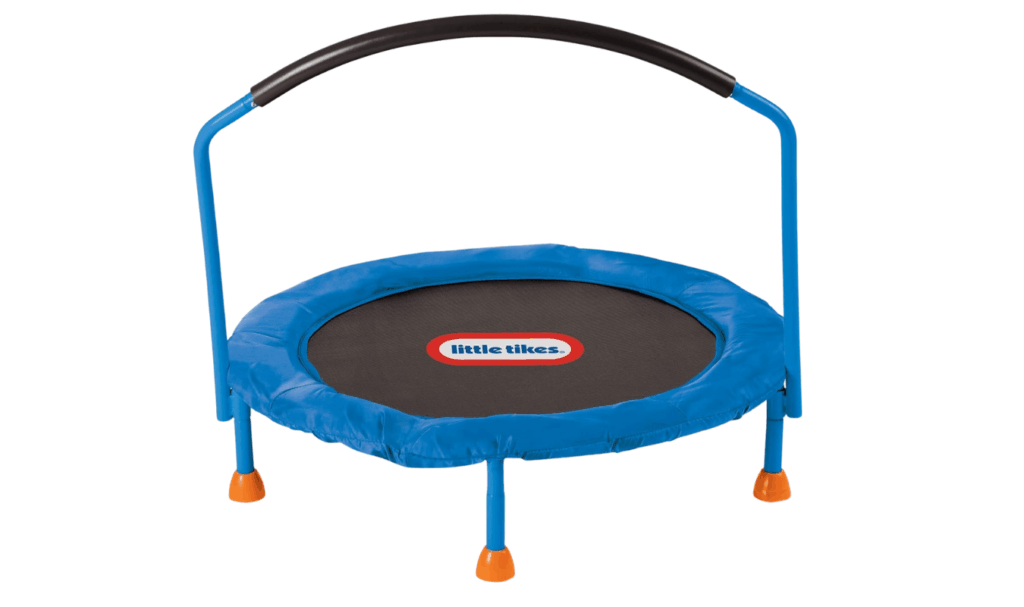
Little Tikes Trampoline
Age recommendation: 2 years + (always supervise)
Gross motor movements: jumping, bending, squatting, leg strength
This is a great toy for helping toddlers burn off energy while practicing their jumping skills! The grab bar gives little ones extra support so they can keep their balance as they learn to jump confidently.
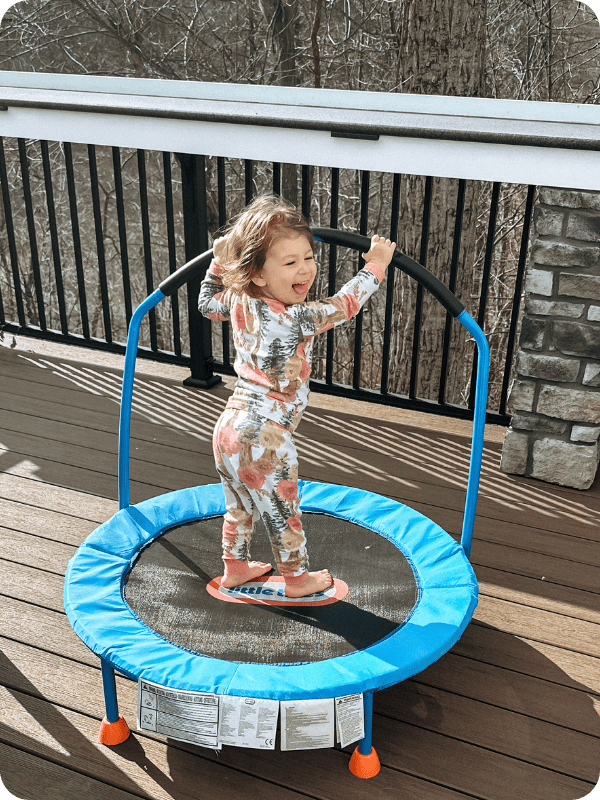
As your toddler grows, try having them jump on one foot to build even more balance. You can also challenge them to jump with their legs moving apart and together—just like a jumping jack, without the arm movements.
Don’t have it at home?
Plan a special outing to a local trampoline park, or hold a toy over your child’s head and ask if they can jump and grab it! Turn on a fun song and jump to the music.
08. Stepping Stones
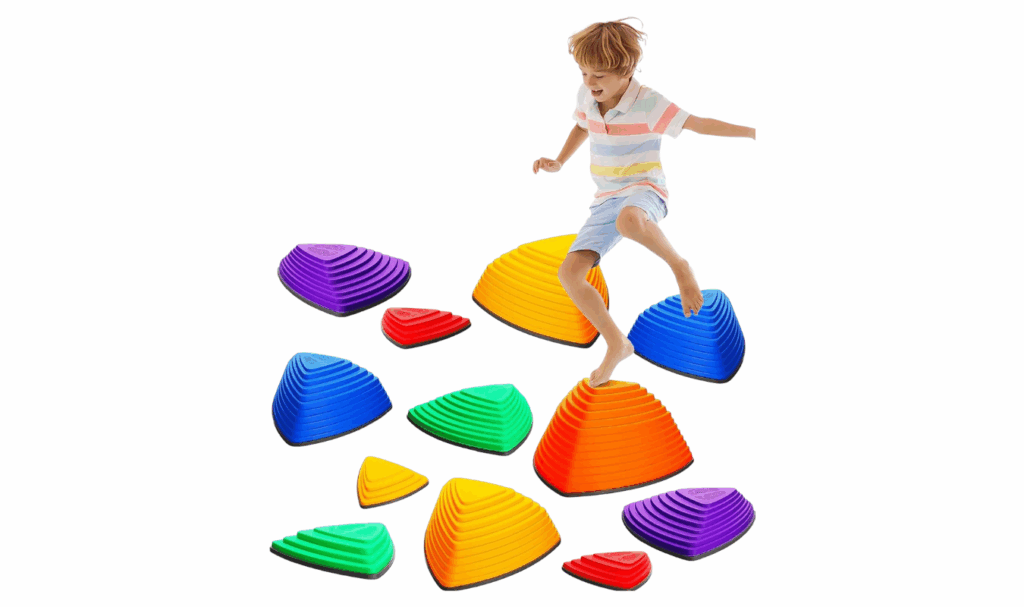
Giggle & Play Stepping Stones
Age recommendation: 18 months +
Gross motor movements: coordination, balance, lower body strength, weight shifting
These stepping stones are a great gross motor toy because they challenge the whole body. There are 4 different heights which make toddlers step up and down inclines. Practice stepping to each stone and then balancing on one foot for an additional challenge.
When you set these up as part of an obstacle course, they engage balance, coordination, and core strength. Your toddler will work on things like weight shifting and motor planning as they analyze what step is next and how they will get to it.
Don’t have it at home?
Cut out cardboard circles and stagger them on the floor to work on things like weight shifting and motor planning at home.
09. Play Couch
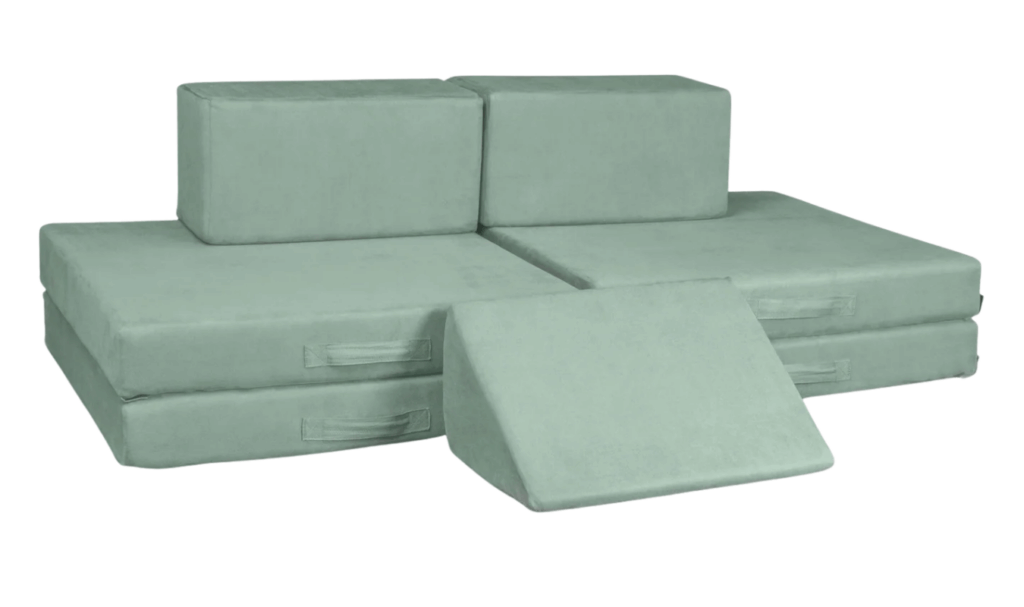
Figgy Play Couch
Age recommendation: 12 months +
Gross motor movements: walking, crawling, climbing, jumping, scooting, imaginative movement, spatial awareness
This open-ended play couch allows for hours of fun and pretend play while working on gross motor skills. Make a fort, build a slide, or plan out an obstacle course using other items around the house.
While playing, your toddler will be using their whole body to move and play. Make a slide to slide and scoot or practice walking on an incline. Use the soft cushions as a safe place to practice jumping. The opportunities for creating gross motor games and activities are endless.

The covers come off for easy washing, too. You’ll have this for years! CODE: EATPLAYSAY saves 10% off any order.
Don’t have it at home?
Engage the imagination! Grab the couch cushions, chairs, blankets, and other pillows to create your own obstacle courses and forts.
10. Balance Beam
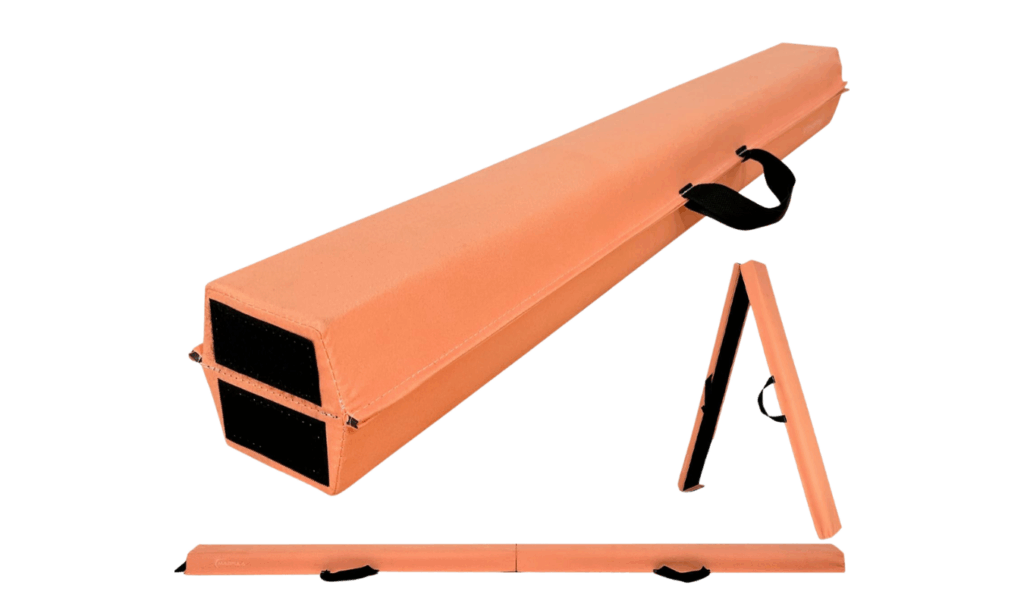
Portable Balance Beam
Age recommendation: 2-3 years +
Gross motor movements: balance, coordination, heel-to-toe walking, tiptoeing, stepping over, side stepping
This is a great toy to use on its own, or to add to your obstacle course or stepping stones. It’s great for working on heel-to-toe walking, stepping over, and side stepping.
Challenge your toddler to march across the balance beam with high knees, or tiptoe across. Once their feet are planted, see if they can take one foot off the beam and balance on one foot.
Don’t have it at home?
Grab a piece of chalk and draw a balance beam on the driveway or sidewalk!
Gross Motor Play Using Chalk
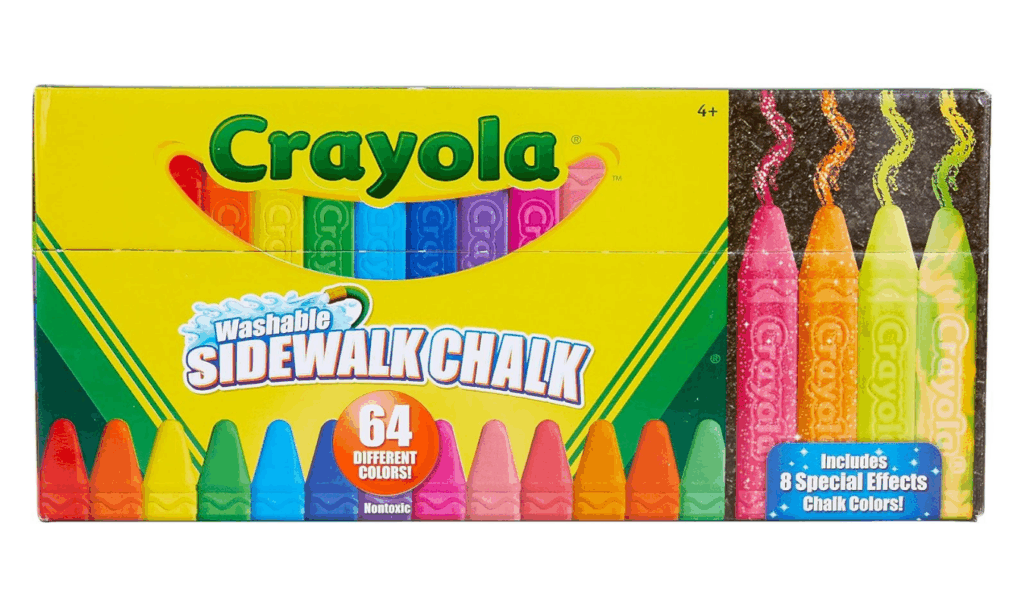
Crayola Sidewalk Chalk
Age recommendation: 2-3 years +
Gross motor movements: squatting, stretching, running, hopping, balance, etc.
Use chalk to create gross motor games on the driveway. Draw some hopscotch or a bike course to challenge your child’s coordination. You can even draw a balance beam for your child to walk across.
Drawing in different positions works on gross motor skills as well. Challenge your toddler to draw in a squat position, on their tummy, or sitting in a straddle. These positions all work different muscle groups. As they draw, they’ll be working on fine motor skills, too.
Don’t have it at home?
You can find chalk cheaply at your local dollar store! Many local parks have hopscotch games and opportunities to run and balance as well.
Adapting Gross Motor Activities
As your child becomes an older toddler and reaches preschool age, you can use many of these same toys to work on gross motor skills and activities. A lot of the time, you just need to modify the activity to make it more challenging to fit their skill level.
An Example using Stepping Stones:
If your preschooler has mastered using the stepping stones alone, pair them with the balance beam as well. Or, try moving the stepping stones further apart and staggering them more. This will challenge your child to stretch and balance more to get from stone to stone.
Other gross motor activities for preschoolers include:
- Riding a scooter
- Riding a bike (likely with training wheels)
- Ring toss
- Running and navigating playgrounds
- Participating in age-appropriate sports activities (soccer, t-ball, basketball)
- Dance or gymnastics classes
Looking for more?
Need more gross motor play ideas? Find all our favorite toys that support gross motor development from 0-3!
When your little one is engaging in large motor movement activities, make sure they have the right footwear. We rounded up the best shoes for babies and toddlers—from sneakers to boots—all in one place.
Leave a Reply
OTHER POSTS YOU MAY LIKE:




MS, SLP
Founder of Eat Play Say, Speech-Language Pathologist, Feeding Specialist, Play Expert, Mom of 2
Jordyn Koveleski Gorman
SPECIALIZES IN: Infant and toddler speech-language, play, and feeding development, and curating a team that provides expert help that feels like a reassuring text from that one mom friend
EDUCATION: Jordyn received her BS in Speech-Language Pathology from Bloomsburg University and her MS in Speech-Language Pathology from Towson University
FAVE PARENTING FIRST: “The first true smile, it’s the sweetest!”

MS, CCC-SLP, CBS, IBCLC
Speech-Language Pathologist & Feeding Specialist, Certified Breastfeeding Specialist, International Board Certified Lactation Consultant
Jessica Nicholson Cocca
SPECIALIZES IN: Breast and bottle feeding, tongue ties, oral motor dysfunction, starting solids, infant and toddler speech, treating oral motor disorders
EDUCATION: Jessica received her BS in Communication Sciences and Disorders from Pennsylvania State University in 2015 and her MS in Speech-Language Pathology from Towson University in 2017
FAVE PARENTING FIRST: “Baby’s first wave! What a fun first communication gesture!”

MA, CCC-SLP, CLC
Speech-Language Pathologist, Certified Lactation Counselor
Jennifer McFarlin
SPECIALIZES IN: Breast and bottle feeding, tongue ties, starting solids, infant and toddler speech development
EDUCATION: She received her BS in Speech-Language Pathology from Ball State in 2014 and a MA in Speech-Language Pathology from Ball State in 2016.
FAVE PARENTING FIRST: “My favorite baby’s first is their first true smile that just warms your soul knowing they are smiling at you. My other favorite is their first word. I love watching their language explode!”

MS, CCC-SLP
Bilingual Speech-Language Pathologist
Nicole La Petina Kelly
SPECIALIZES IN: Bilingual development (Spanish-English), supporting multilingual families, infant and toddler speech
EDUCATION: She received her BA in Communication Sciences and Disorders and in Spanish from the University of Wisconsin-Madison in 2014 and her MS in Speech-Language Pathology with an English-Spanish Specialization from Marquette University in 2016.
FAVE PARENTING FIRST: “It’s the first slobbery kisses for me!”

RDN, LD
Licensed Registered Dietitian
Kimberly Vede
SPECIALIZES IN: Infant and pediatric nutrition including breastfeeding, formula feeding, and starting solids. She also specializes in prenatal and postpartum nutrition.
EDUCATION: She received her BSc in Biology in 2014 from Life University, and her BSc in Dietetics from Life University in 2019.
FAVE PARENTING FIRST: ”The first time they say ‘mama!’”


This checklist was created with input from a Speech-Language Pathologist, Occupational Therapist and Physical Therapist and has been downloaded over 20,000 times by parents worldwide. Learn the important milestones to pay attention to, and keep it in your digital back pocket during the baby + toddler years!
Comprehensive Milestone Checklist for gross motor, fine motor, and speech-language milestones for 0-36 months,
DOWNLOAD FOR FREE


