


Best Baby Teethers and Teething Toys
September 24, 2025
Jordyn Koveleski Gorman

Last Updated on February 12, 2026 by Jordyn Koveleski Gorman
This page contains affiliate links. We will receive a commission on qualifying purchases using these links.
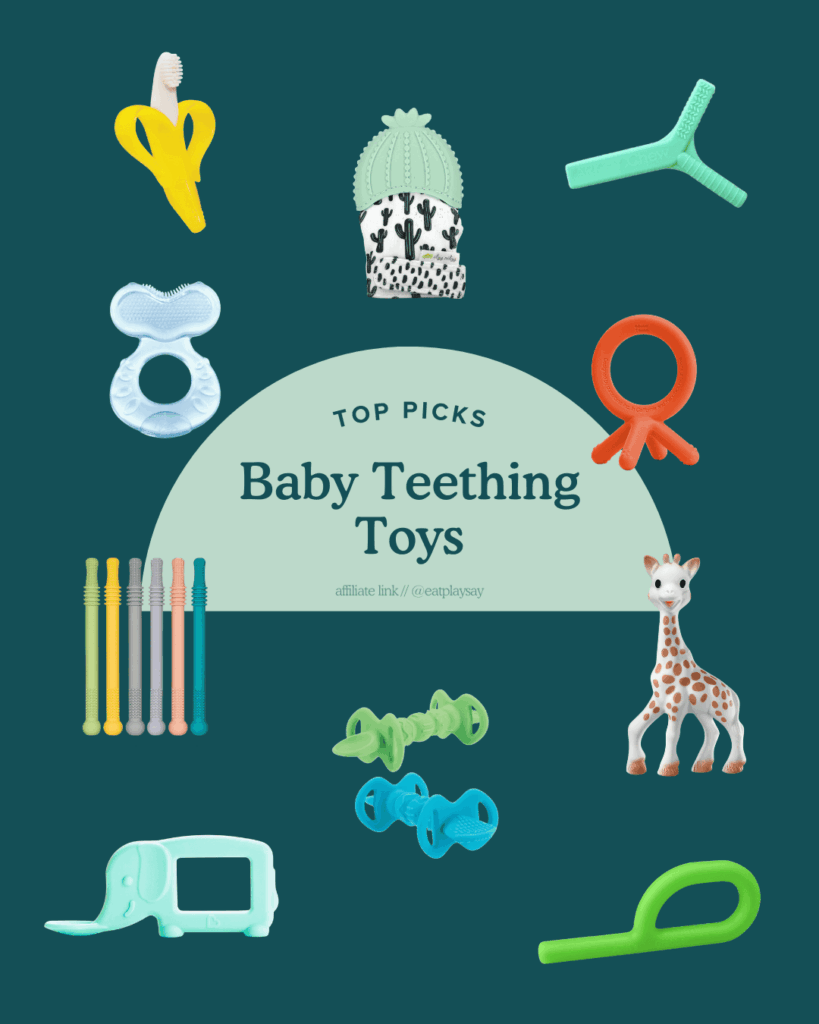
Oftentimes, teethers can be overlooked. But as a feeding specialist, I can tell you that using baby teething toys is a critical part of oral motor development.
Teething toys provide valuable oral sensory input as babies mouth and chew on them. They also give babies the opportunity to explore a variety of textures, supporting sensory development and body awareness.
When can babies start using teethers?
Parents are usually surprised to find out that signs of “teething” can begin as early as 10-12 weeks of age. During the first year, we want a baby’s mouth to experience different textures during play and meals. This helps regulate their oral sensory system.
Start to offer teethers around 3 months of age and continue into toddlerhood!
Why are teethers important?
- Teethers help move the gag reflex back
- Teethers help practice the motor plan for chewing
- Teethers support mature oral motor development
- Teethers are important for baby’s oral–sensory development
- Teethers aid in introducing textures without introducing foods, and so on!
As feeding specialists, we broke down our favorite baby teethers and how to use them. See which ones made our list and why!
01. Best First Teether for Infants
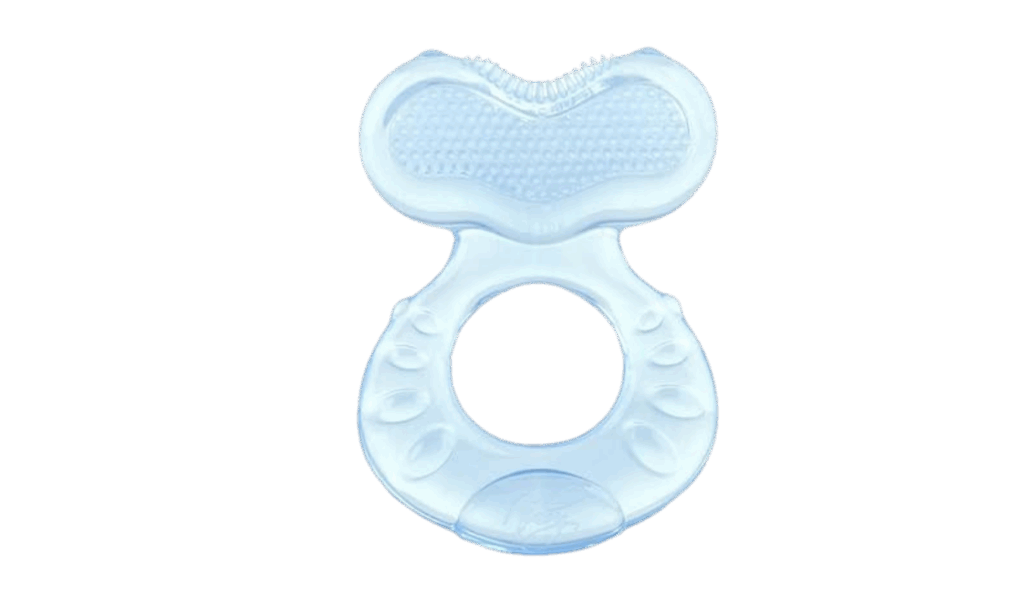
Nuby Infant Teether
Price: $6.59
Material: silicone
Age Range: 3-6 months
Best For: newborns and infants, soothing gums
This is my FAVORITE infant teether! It’s a product I recommend for baby registries, and I buy one for every new mom I know.
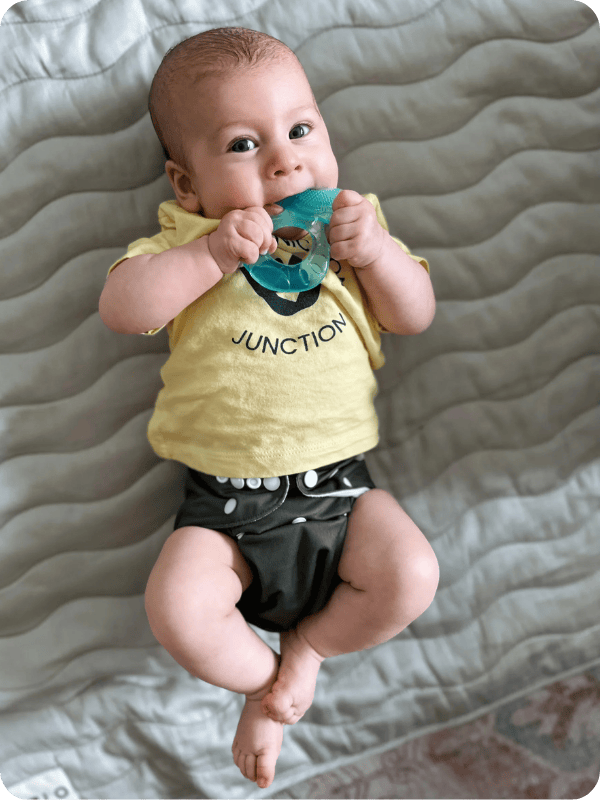
The bristles on this teether are soothing to a baby’s gums. It doesn’t go too far back in the mouth, and its ring shape makes it easy for your baby to hold and mouth. It comes with a hygienic carrying case so you can easily pop into the diaper bag for traveling.
Start offering this teether to your baby around 3 months of age. Continue to use it when their baby teeth start erupting around 6 months!
02. Best Overall Teether for Babies
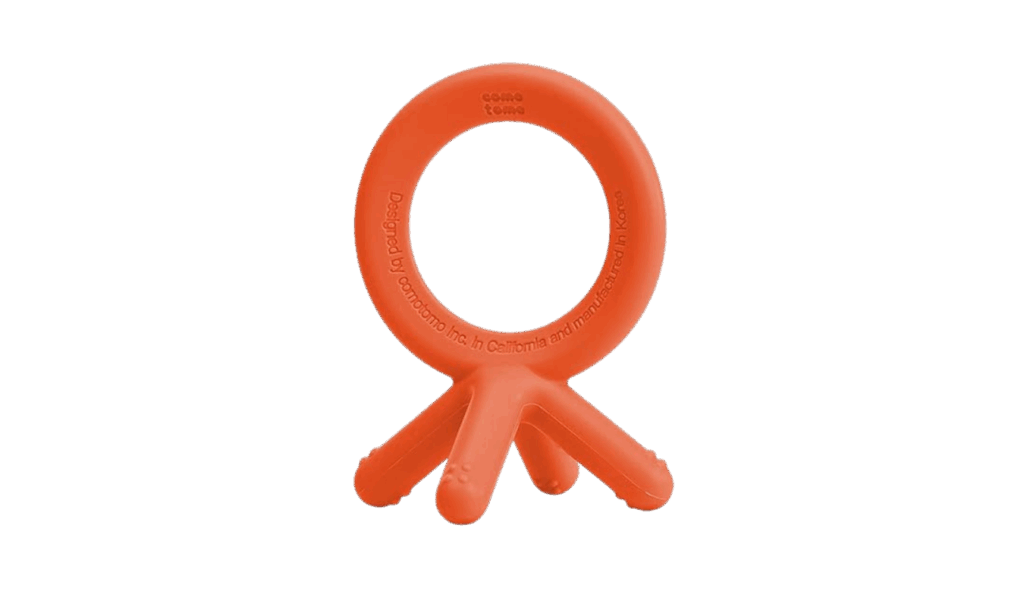
Comotomo Baby Teether
Price: $6.99
Material: silicone
Age Range: 4-12 months
Best For: infants, easy to grab and hold
This “octopus” teether is one of the best teething toys for baby because it’s easy to grasp and mouth.
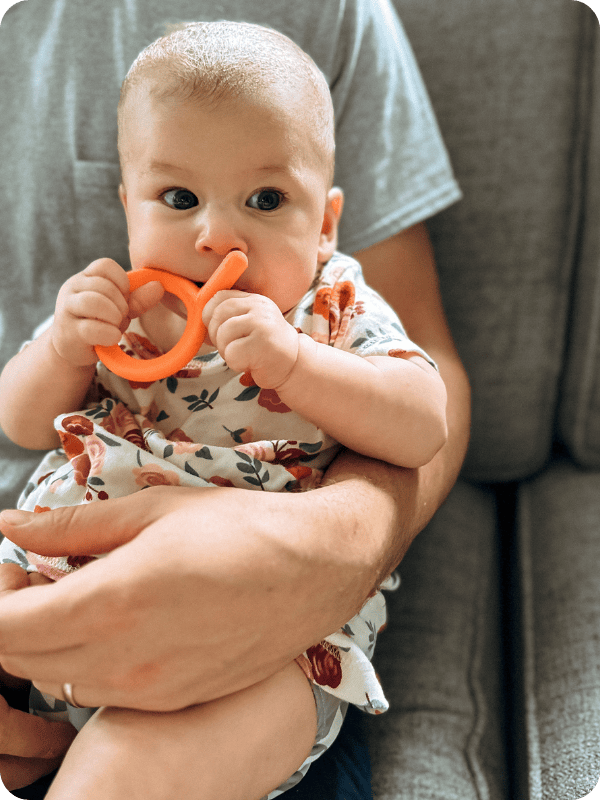
The finger-like stubs are great for your baby to chomp on. The stubs aren’t long enough to go too far back, so it’s safe and you avoid constant gagging!
I recommend introducing this teether around 4-5 months of age. Continue to offer it during play as your baby nears 1 year old.
03. Best “Tough” Teether for Babies
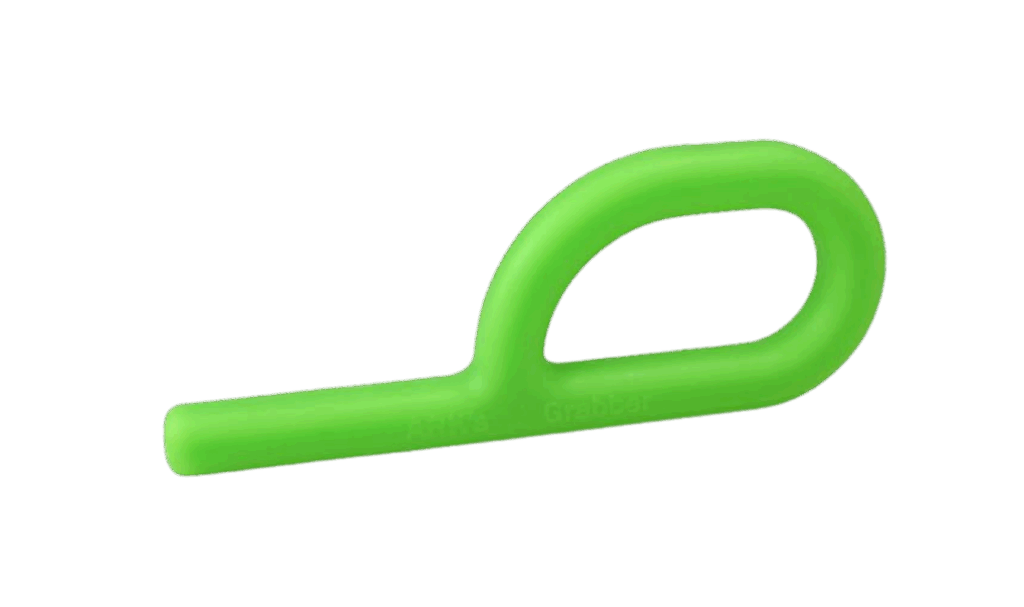
Ark Grabber
Price: $13.99
Material: silicone
Age Range: 6 months-3 years+
Best For: babies and toddlers, heavy chewers, back molar chewing, building jaw strength
This is a very tough teether. It’s great for babies who have recently started solids and are starting to chew more! The resistance helps strengthen your baby’s jaw.
Easy to hold, this long teether goes further back in your baby’s mouth to reach molars. This makes it great for practicing chewing in the back of the mouth and pushing the gag reflex back.
Because this is a tougher teether, it can be soothing to chew when those baby teeth are coming in! Introduce this teether around 6 months and use it through toddlerhood!
04. Best Teether to Get Baby Chewing
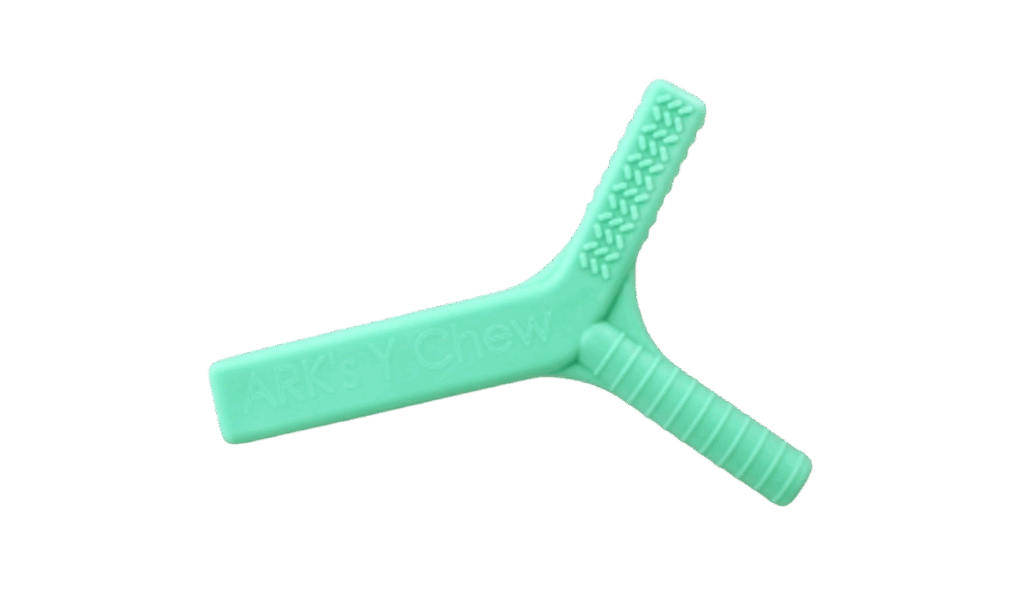
Ark Y-Chew Teether
Price: $12.99
Material: medical-grade, 3rd party tested materials
Age Range: 9 months-3 years+
Best For: babies and toddlers, heavy chewers, back molar teething, sensory input
This is also a tough teether and great for building jaw strength. All of Ark’s teethers are designed to promote oral motor development and support sensory needs.
The shorter ends of the teether are great for biting on both sides. Each end has a different texture for sensory input.
I recommend offering this baby teether around 9 months as chewing skills continue to build for harder foods. Keep offering it well into toddlerhood, especially if your little one likes to chew on things!
05. Most Affordable Baby Teether
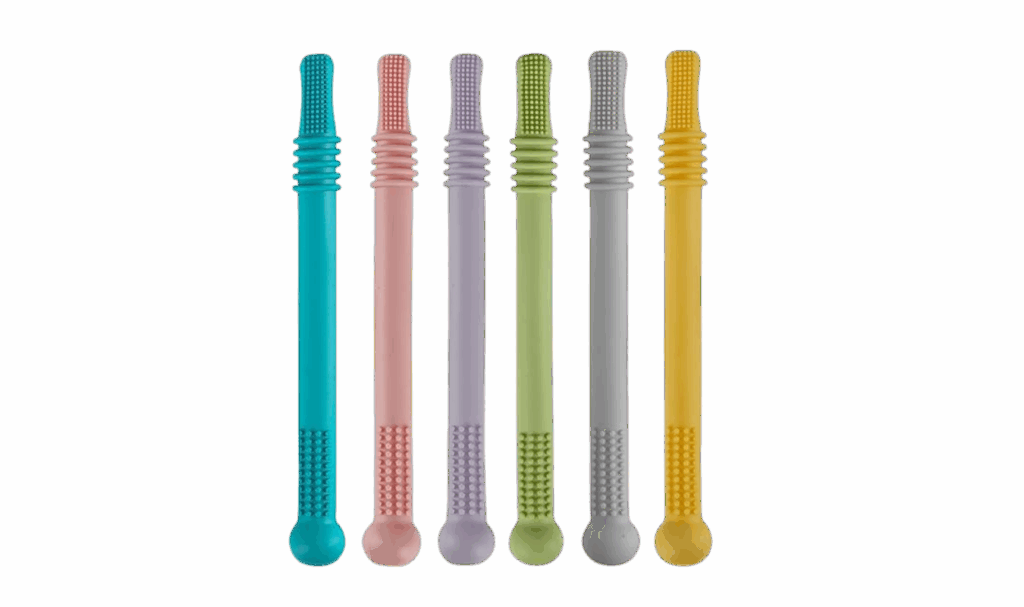
Hollow Infant Teethers
Price: 6 for $9.99
Material: silicone
Age Range: 4 months-toddlerhood
Best For: babies and toddlers, reaching molars, moving gag reflex back
These hollow straws make great teething toys for baby, especially when they start grasping. They’re affordable, too.
Despite their longer length, babies cannot choke themselves with these. Choking occurs at the windpipe level which is way farther than your baby can push back.
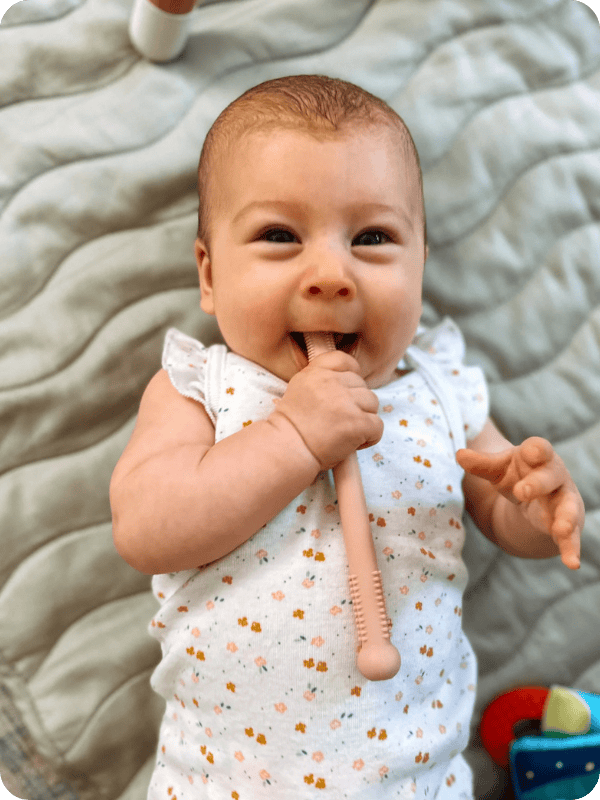
These teethers can trigger mild gagging, as the stick design allows them to reach farther back in the mouth. That said, gently engaging the gag reflex is part of the process of moving it back in the mouth.
Longer baby teethers come in handy as your baby wishes to bite further back in their mouth. They can provide teething relief all the way back to the molars.
Introduce these around 4-5 months of age. You can use them through toddlerhood as well!
06. Best Sensory Teether Toy
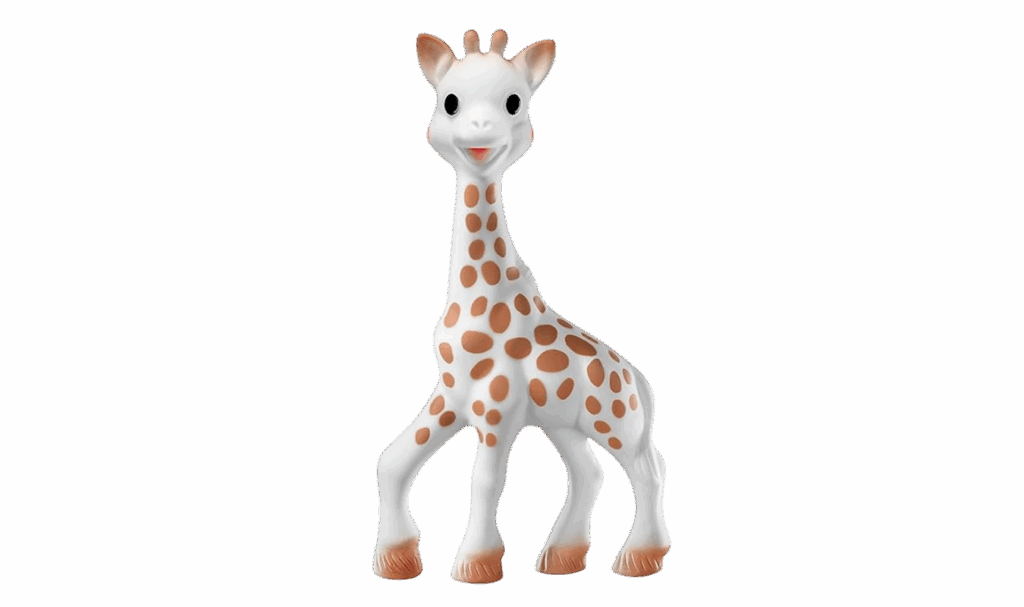
Sophie The Giraffe
Price: $31.28
Material: rubber
Age Range: 4-9 months
Best For: younger babies, opening wide to bite down
An iconic baby teether made from natural rubber! With her thicker head and body, Sophie helps babies open wide.
This is a great teether to have in play as your baby mouths other toys, too. It’s sensory-oriented because it squeaks when chewed and squeezed, teaching cause and effect.
I recommend introducing this teether around 4-5 months, when your baby can grasp toys well.
07. Baby’s First Toothbrush & Teether
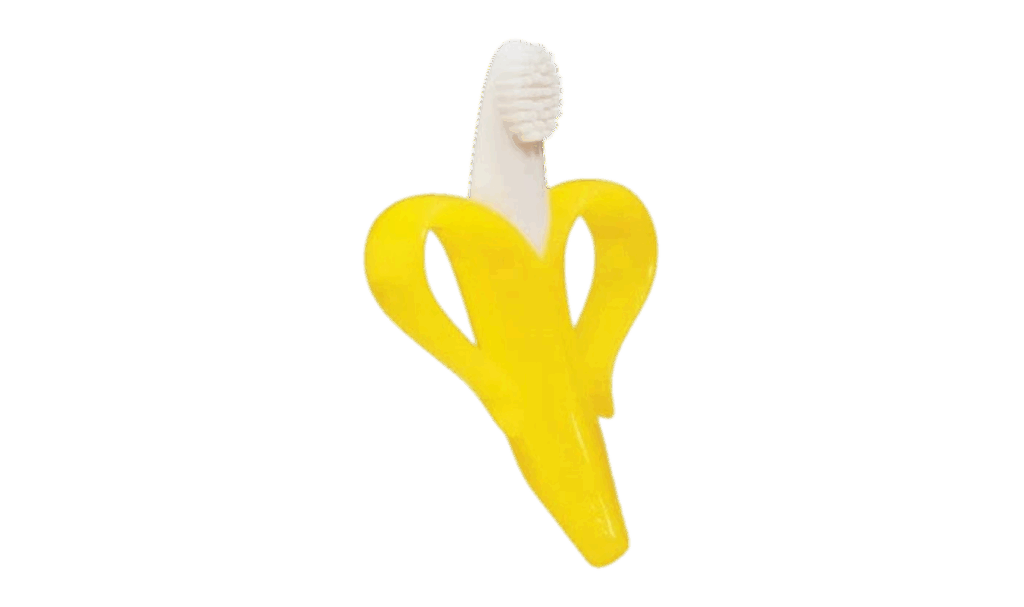
Baby Banana Toothbrush Teether
Price: $7.61
Material: silicone
Age Range: 3-12 months
Best For: infants, baby’s first toothbrush
This 2-in-1 baby teether lives up to the hype. It’s a great first toothbrush for your baby before their first tooth erupts.
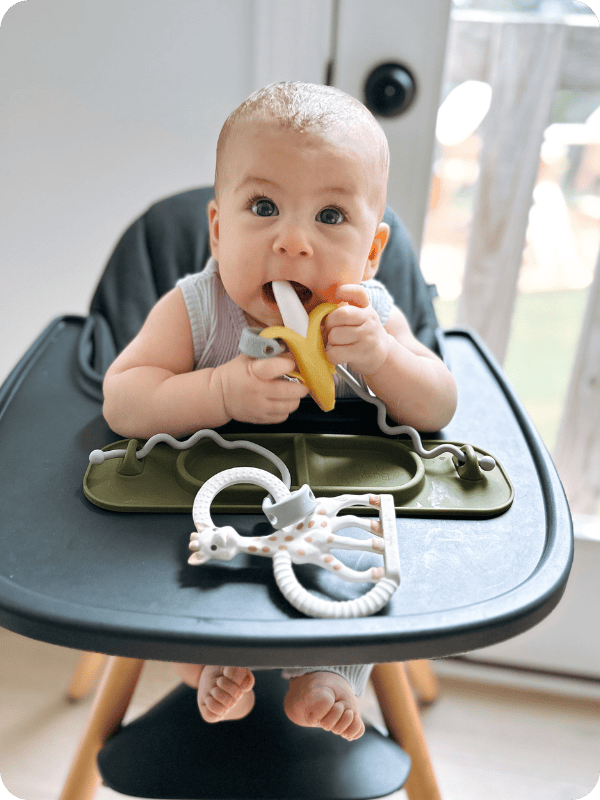
It’s easy to hold with its two little handles. The bristles provide a nice texture for baby’s oral sensory system.
I recommend introducing this teether between 3-6 months of age. Help your baby hold it at first, and then let them play and mouth it!
08. Best Baby Teething Mitten
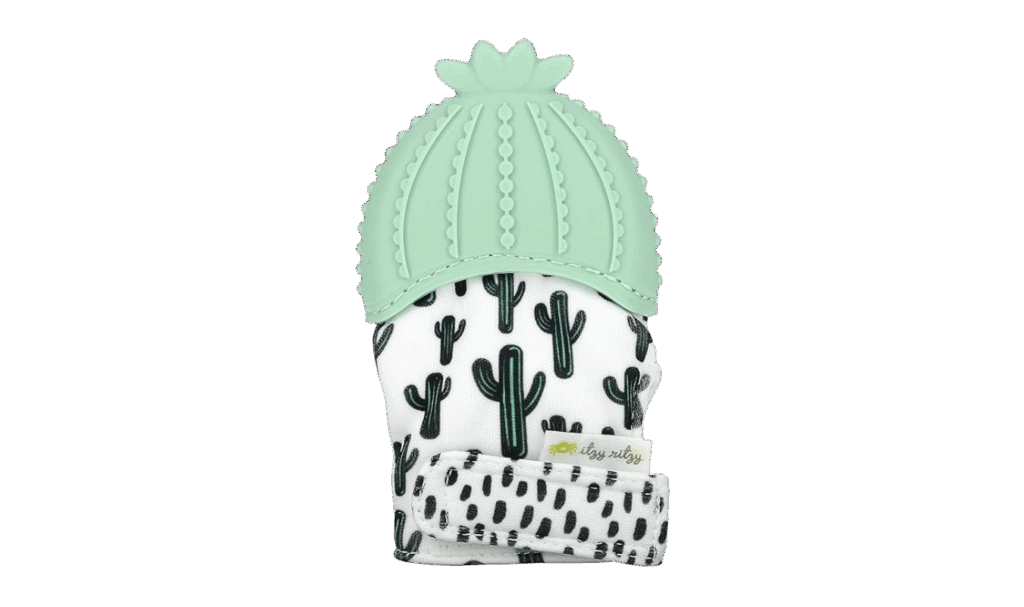
Itzy Ritzy Teething Mitt
Price: $9.00
Material: silicone teether, BPA-free, polyester in mitt
Age Range: 3-5 months
Best For: infants
A more unique teether! Some babies love having it on their hand to mouth it, others find it cumbersome and annoying.
If your baby doesn’t like it worn as a glove, they can hold it and mouth it instead. Both of my kids used it that way!
Its bumpy texture is beneficial for your baby’s oral sensory system. I recommend introducing it around 3-4 months of age.
09. Best Baby Teether/Spoon Combo
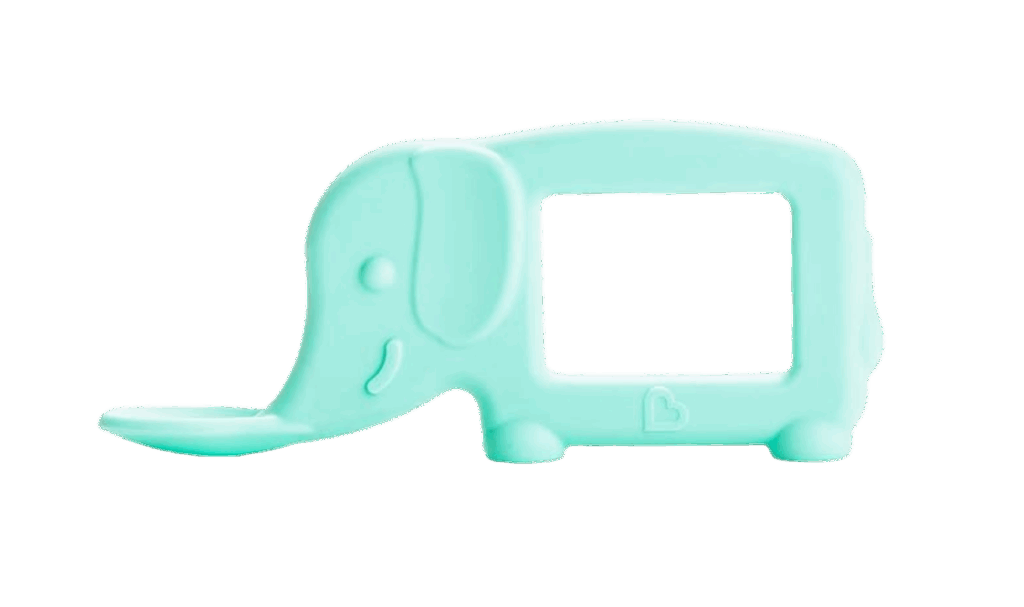
Baby Toon
Price: $6.44
Material: silicone
Age Range: 4-9 months+
Best For: introductory teether before starting solids
This 2-in-1 product is a spoon and a teether. The design is perfect for teething before starting solids.
You can bring it to restaurants and attach it to a busy mat, or use it during mealtimes. Let your baby teethe, and practice scooping at mealtimes! This will familiarize them with how to use a spoon.
Your baby can teethe on the square end or the spoon itself. Introduce this teether around 4-5 months during play, then bring to mealtimes!
10. Best Teether for Starting Solids
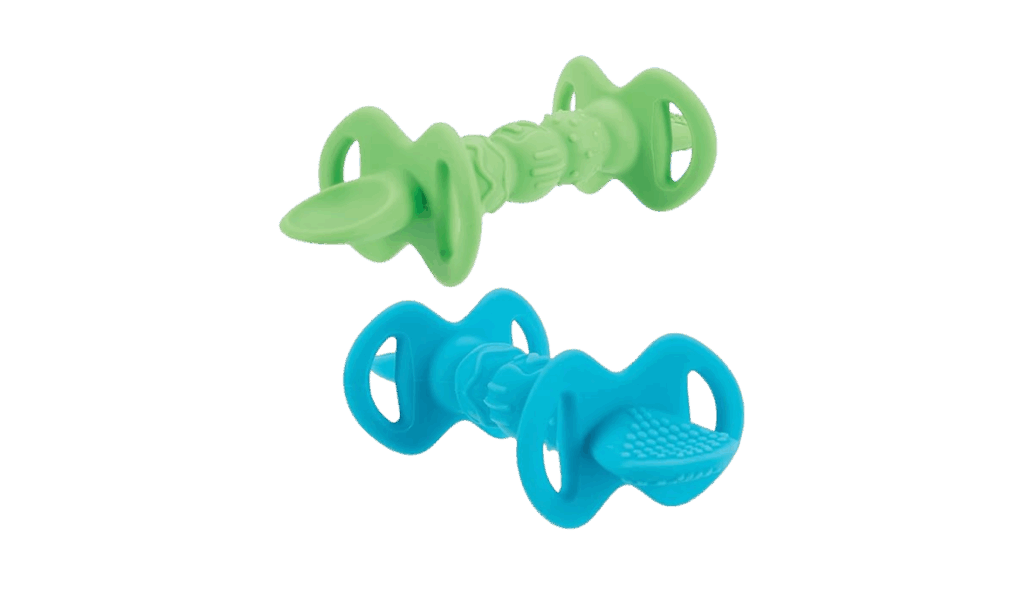
Nuby Dipeez Silicone Spoons
Price: 2 for $5.74
Material: silicone
Age Range: 4-12 months
Best For: use before starting solids, getting baby acquainted with spoons
These two-sided baby spoons are one of the best products for starting solids. But they also make some of the best teething toys for your baby.
Use as baby teethers first, then for self-feeding. The spoons have two textured ends and a lip block so your baby can’t push it too far back!
Put these into your baby’s play rotation around 4 months. Encourage them to bring the spoon/teether to their mouth. Practice that motor plan of self-feeding early!
Teethers Can be Used for Pain Relief
Baby teeth can start coming in around 6-12 months of age. The Cleveland Clinic has a baby teeth chart which shows when baby teeth start to come in.
Teething can cause pain and discomfort with swollen and tender gums. You can provide teething relief for your baby by gently rubbing their gums and offering infant teething toys for them to chew on!
Learn more about when and why babies should use teethers on the blog!
What Teethers to Avoid
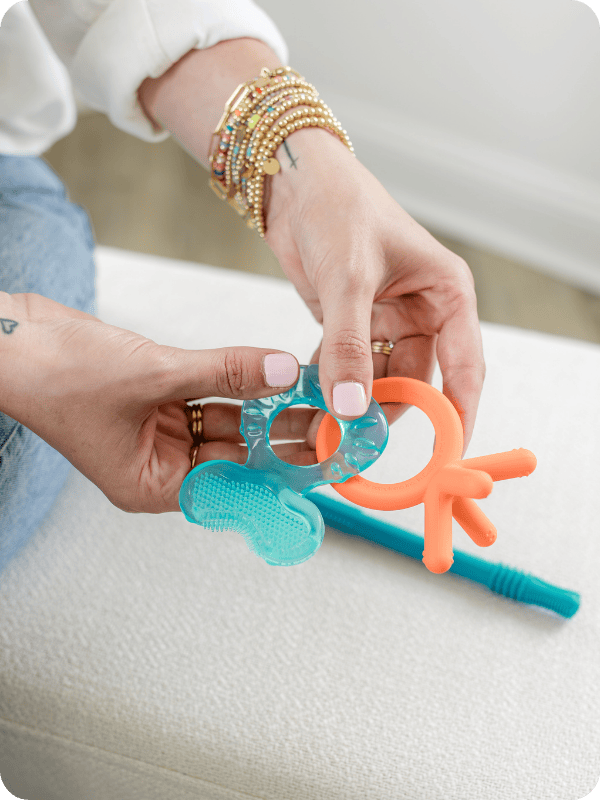
Try to avoid plastic baby teethers whenever possible, as some plastics may contain BPA or other chemicals that can leach out over time. Since teethers are designed for babies to mouth and chew on, it’s important to choose options made from safer materials.
We recommend selecting teethers made from non-toxic materials such as food-grade silicone, natural rubber, or untreated beechwood. These materials are generally considered safe for babies and are easy to clean.
It’s also best to avoid teethers filled with liquid or gel, as they can potentially break if punctured. Always choose teethers with a one-piece construction to reduce the risk of parts coming loose and creating a choking hazard.
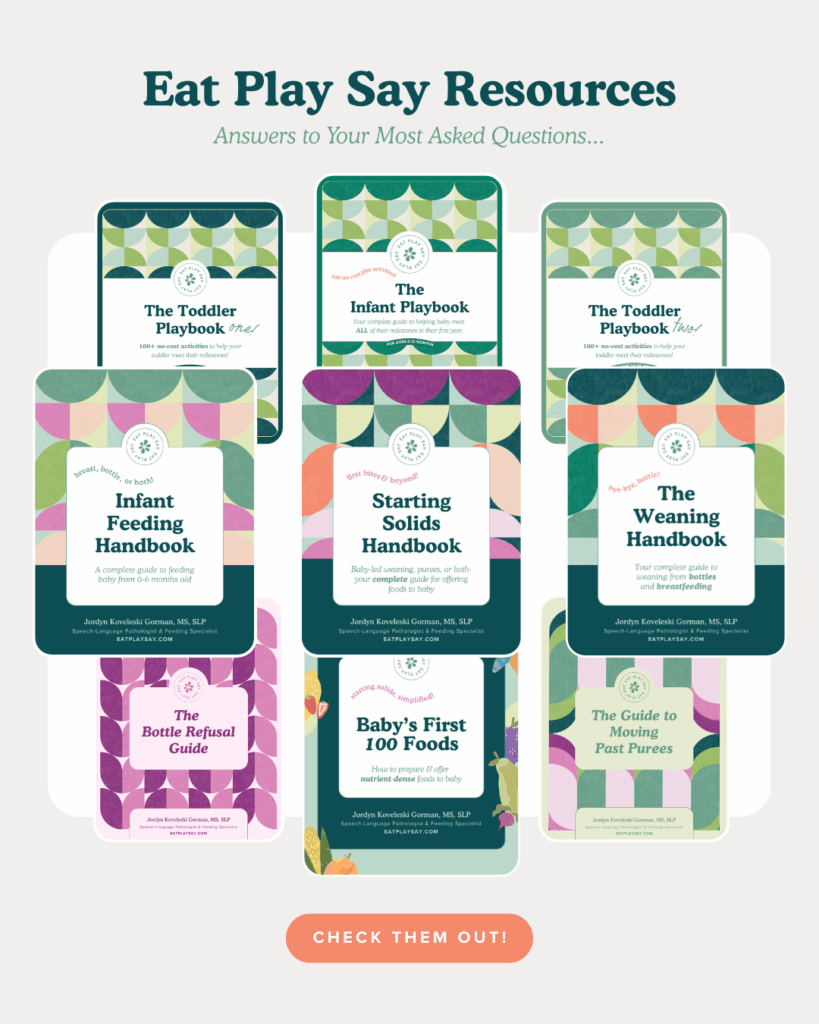
Looking for more? Let our best-selling resources help!
Leave a Reply
OTHER POSTS YOU MAY LIKE:



MS, SLP
Founder of Eat Play Say, Speech-Language Pathologist, Feeding Specialist, Play Expert, Mom of 3
Jordyn Koveleski Gorman
SPECIALIZES IN: Infant and toddler speech-language, play, and feeding development, and curating a team that provides expert help that feels like a reassuring text from that one mom friend
EDUCATION: Jordyn received her BS in Speech-Language Pathology from Bloomsburg University and her MS in Speech-Language Pathology from Towson University
FAVE PARENTING FIRST: “The first true smile, it’s the sweetest!”

MS, CCC-SLP, CBS, IBCLC
Speech-Language Pathologist & Feeding Specialist, Certified Breastfeeding Specialist, International Board Certified Lactation Consultant
Jessica Nicholson Cocca
SPECIALIZES IN: Breast and bottle feeding, tongue ties, oral motor dysfunction, starting solids, infant and toddler speech, treating oral motor disorders
EDUCATION: Jessica received her BS in Communication Sciences and Disorders from Pennsylvania State University in 2015 and her MS in Speech-Language Pathology from Towson University in 2017
FAVE PARENTING FIRST: “Baby’s first wave! What a fun first communication gesture!”

MA, CCC-SLP, CLC
Speech-Language Pathologist, Certified Lactation Counselor
Jennifer McFarlin
SPECIALIZES IN: Breast and bottle feeding, tongue ties, starting solids, infant and toddler speech development
EDUCATION: She received her BS in Speech-Language Pathology from Ball State in 2014 and a MA in Speech-Language Pathology from Ball State in 2016.
FAVE PARENTING FIRST: “My favorite baby’s first is their first true smile that just warms your soul knowing they are smiling at you. My other favorite is their first word. I love watching their language explode!”

MS, CCC-SLP
Bilingual Speech-Language Pathologist
Nicole La Petina Kelly
SPECIALIZES IN: Bilingual development (Spanish-English), supporting multilingual families, infant and toddler speech
EDUCATION: She received her BA in Communication Sciences and Disorders and in Spanish from the University of Wisconsin-Madison in 2014 and her MS in Speech-Language Pathology with an English-Spanish Specialization from Marquette University in 2016.
FAVE PARENTING FIRST: “It’s the first slobbery kisses for me!”

RDN, LD
Licensed Registered Dietitian
Kimberly Vede
SPECIALIZES IN: Infant and pediatric nutrition including breastfeeding, formula feeding, and starting solids. She also specializes in prenatal and postpartum nutrition.
EDUCATION: She received her BSc in Biology in 2014 from Life University, and her BSc in Dietetics from Life University in 2019.
FAVE PARENTING FIRST: ”The first time they say ‘mama!’”


This checklist was created with input from a Speech-Language Pathologist, Occupational Therapist and Physical Therapist and has been downloaded over 20,000 times by parents worldwide. Learn the important milestones to pay attention to, and keep it in your digital back pocket during the baby + toddler years!
Comprehensive Milestone Checklist for gross motor, fine motor, and speech-language milestones for 0-36 months,
DOWNLOAD FOR FREE


