


The Best Coloring Supplies for Toddler Arts and Crafts
December 8, 2025
Jordyn Koveleski Gorman

Last Updated on February 9, 2026 by Jordyn Koveleski Gorman
This page contains affiliate links. We will receive a commission on qualifying purchases using these links.
It’s always exciting when you can start doing arts and crafts with your toddler. Little ones love exploring new materials and expressing their creativity.
As a first-time mom, I used to shy away from coloring and crafts. It felt a bit messy and overwhelming to begin. But over time, I learned how beneficial these activities really are for toddlers. Simple things like drawing and coloring help build fine motor skills, spark creativity, and encourage imagination.
Once I started leaning into crafting with my toddlers, everything changed. Now, Eat Play Say is known for its fun, simple craft ideas for toddlers. We want to make creating with little ones feel easy and enjoyable!
Why should I color with my toddler?
There are so many important pre-writing milestones that help toddlers build the foundation for future writing skills. Many of these milestones can be practiced simply by coloring with toddler crayons, markers, and even paint sticks! Coloring encourages toddlers to strengthen their fine motor skills, develop hand strength, and gain better control of their movements—all through fun, creative play.
What art supplies are best for my toddler?
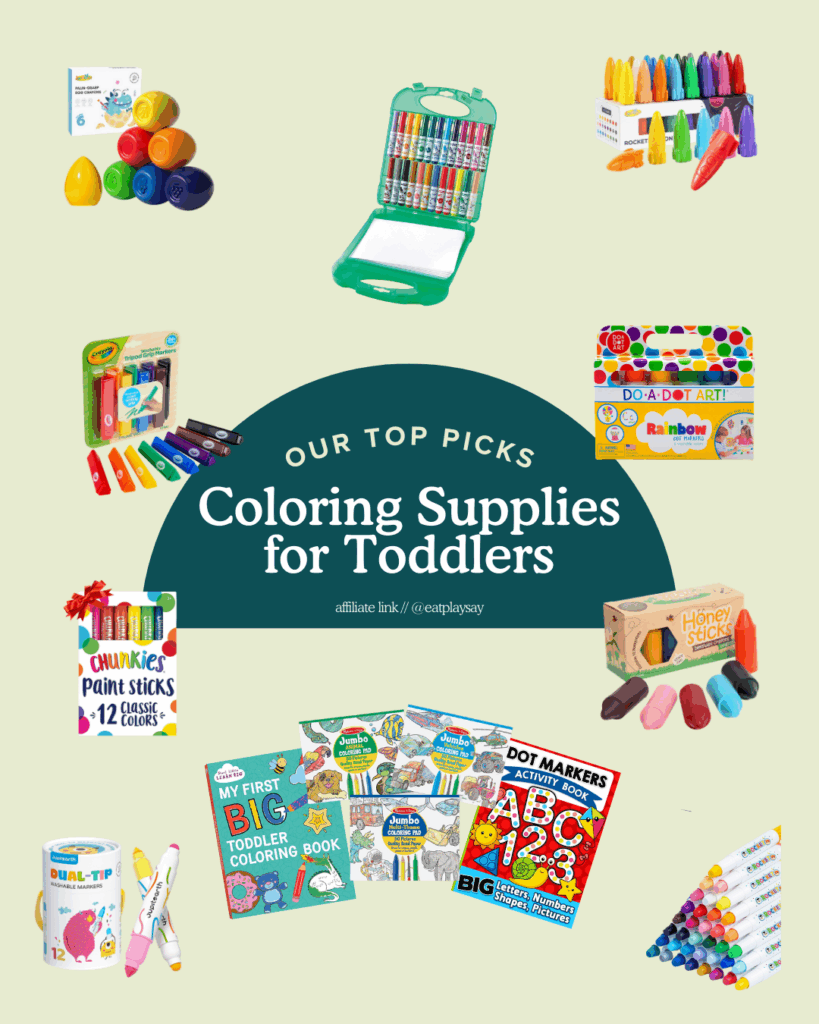
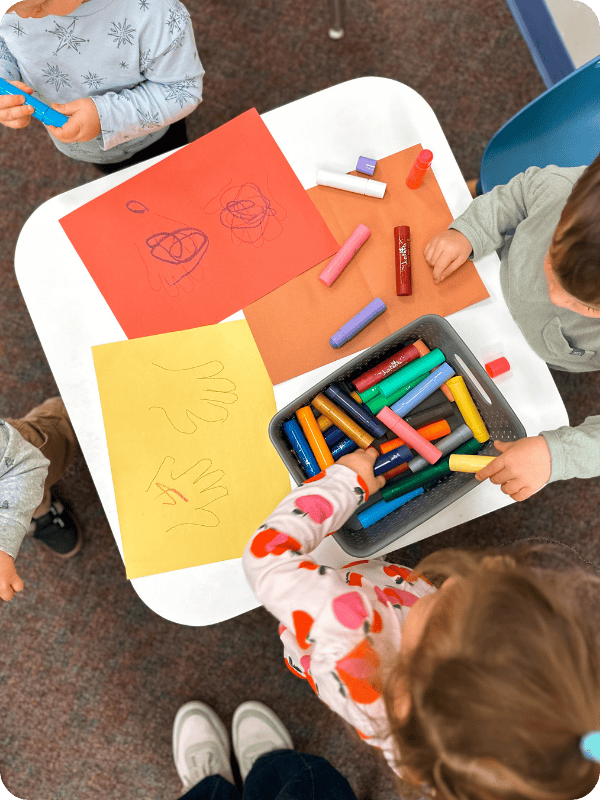
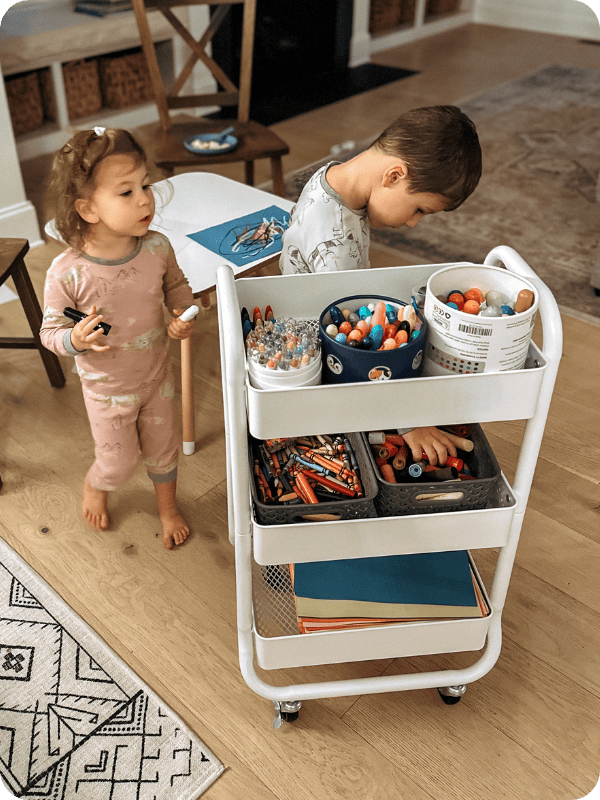
We’ve tried so many toddler crayons, washable toddler markers, and other toddler art supplies with our own children. After lots of testing, these have become our top picks for toddler coloring supplies—including crayons, markers, and paint sticks.
We chose these products because they’re developmentally appropriate, high-quality, and low mess, making them perfect for parents who want creativity without the chaos.
Toddler Crayons
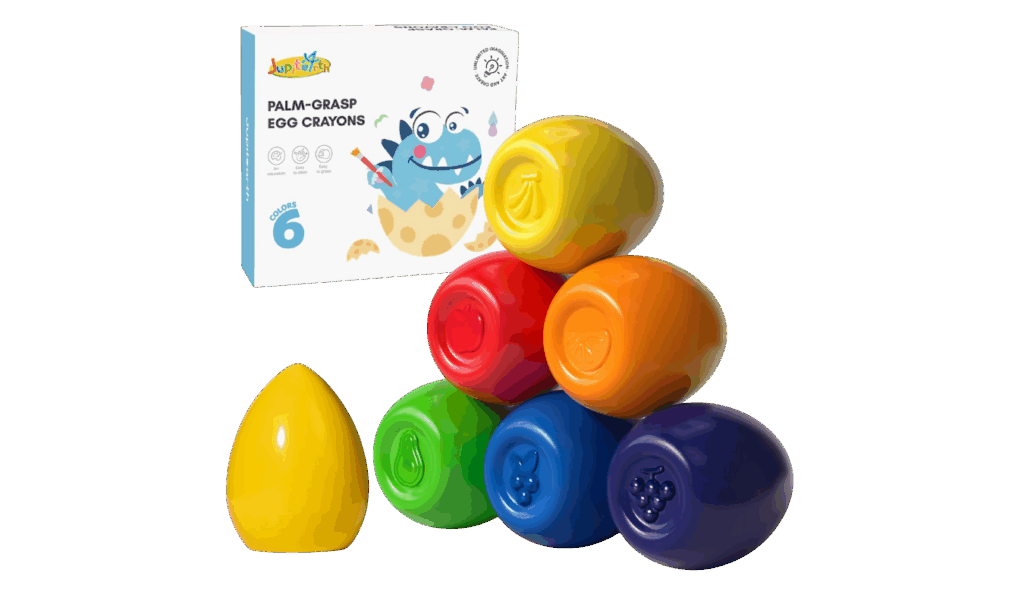
Jupitearth Egg Crayons for Toddlers
Their egg shape makes them the perfect fit for a toddler’s first crayon!
These toddler crayons are perfectly shaped for the palmar grasp, making them ideal for 12–18 month olds. They’re solid, durable crayons with bright colors making them great for early scribbling and exploration. This is one of the very first toddler art supplies you can offer your little one!
Age recommendation: 12 months +
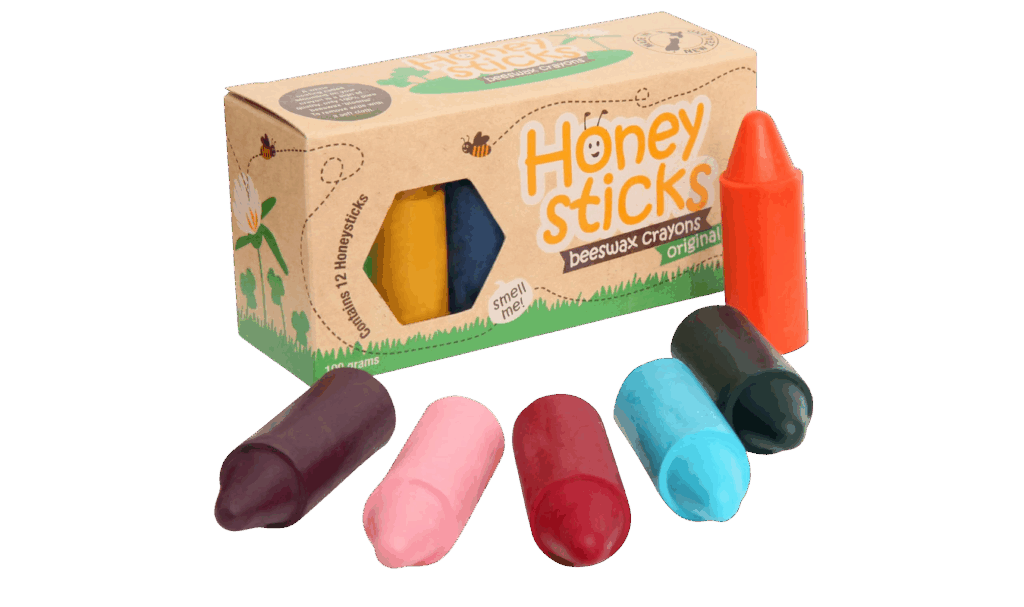
Honeysticks Beeswax Crayons
Chunky toddler crayons that are made with 100% beeswax and safe to mouth.
These toddler crayons are best for 12-24 month olds because they’re small and chunky for little hands. Made from 100% beeswax, Honeysticks crayons are safe if mouthed, making them a great option for toddlers who are still exploring with their mouths.
Age recommendation: 12 months +
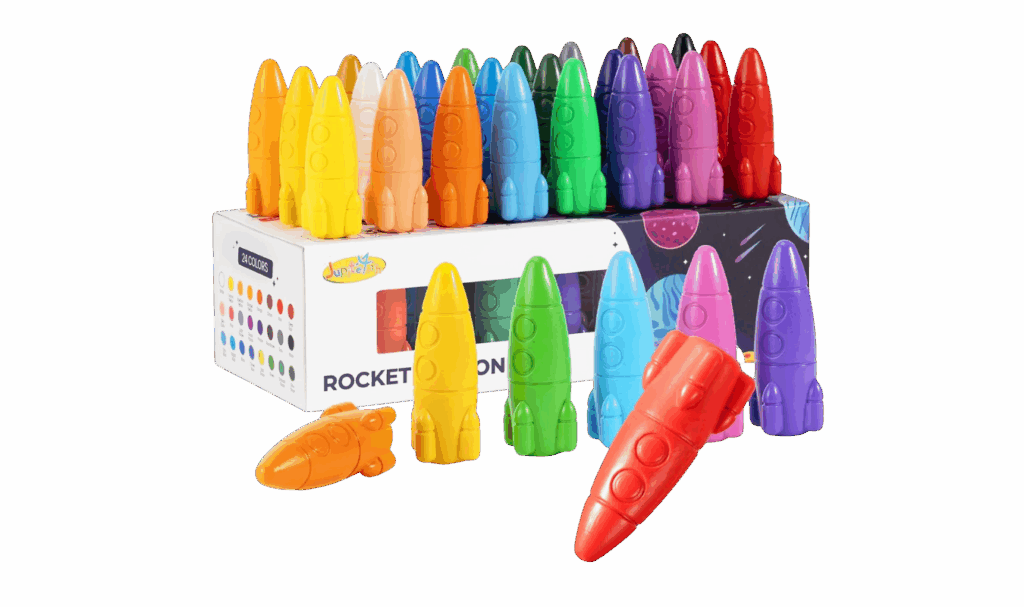
Jupitearth Rocket Crayons
A toddler crayon that feels more like a toy!
We love the Jupitearth brand for toddler art supplies. Their rocket-shaped crayons make coloring feel like play, encouraging toddlers to draw and explore creatively!
Age recommendation: 2 years +
Washable Markers for Toddlers
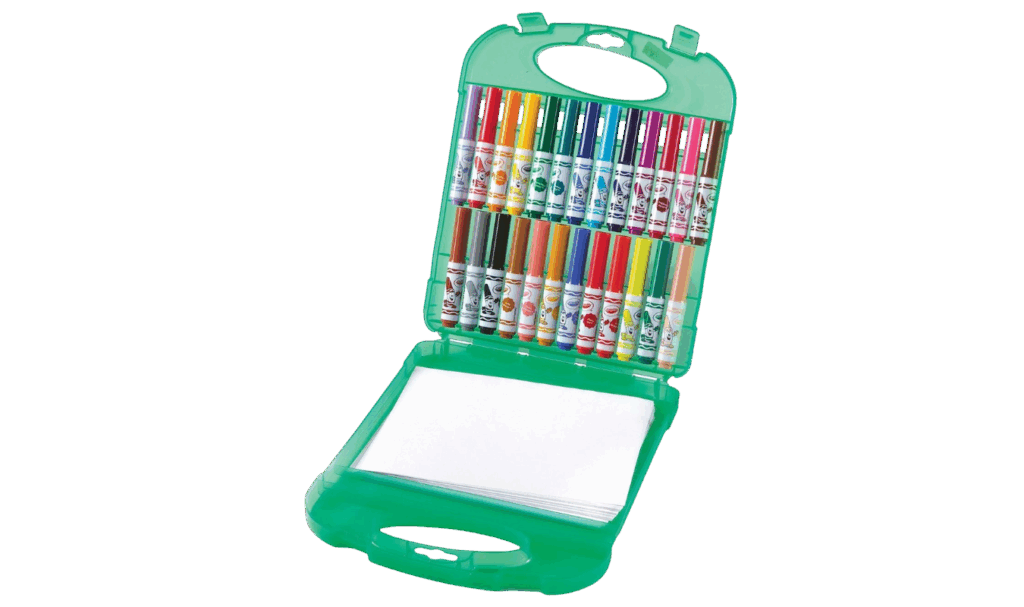
Crayola Pipsqueak Washable Markers
Their short, chunky design makes them a perfect first set of markers for toddlers.
This was the first set of toddler markers we tried, and it’s a favorite. Their short, chunky design makes them perfect for toddlers starting around 18 months and up. This affordable set includes 25 washable markers, paper, and a handy case to keep everything organized.
Age recommendation: 18 months +
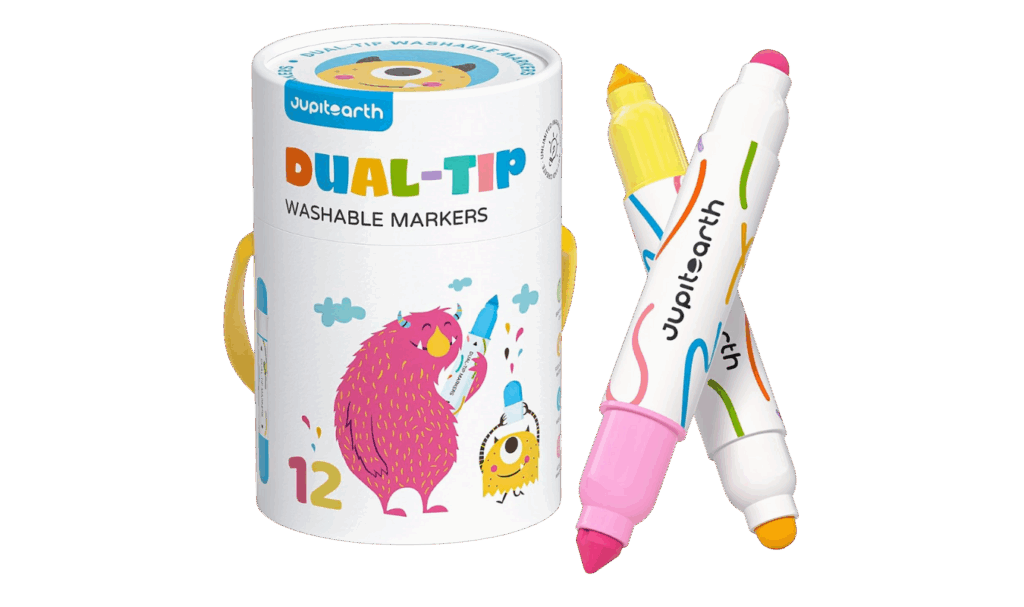
Jupitearth Dual-Tip Washable Markers
Washable and easy to use, these dual-tip markers are perfect for older toddlers ready for more creative options.
These washable toddler markers feature a dual-tip design: one rounded tip for broad strokes and a more chiseled tip for detailed work. While they can be used earlier, we recommend them for 3-year-olds and up. I like this set of markers because they can be used through preschool when drawings become more elaborate.
Age recommendation: 3 years +
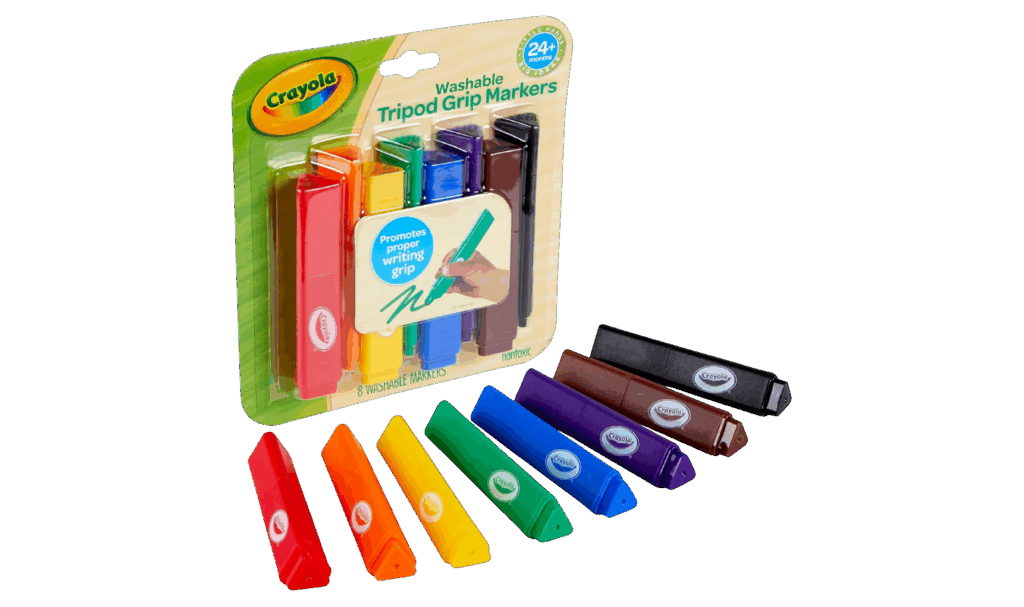
Crayola Tripod Grip Washable Markers
These markers promote a dynamic tripod grasp and never roll away from you!
If you have an older toddler between the ages of 3 and 4 years olds, these triangular markers are a great choice. The dynamic tripod grasp starts to emerge at this time, which is what these markers promote. This grasp allows for more controlled movements in coloring and lay the foundation for early letter formation.
Age recommendation: 3-4 years +
Toddler Paint & Paint Sticks
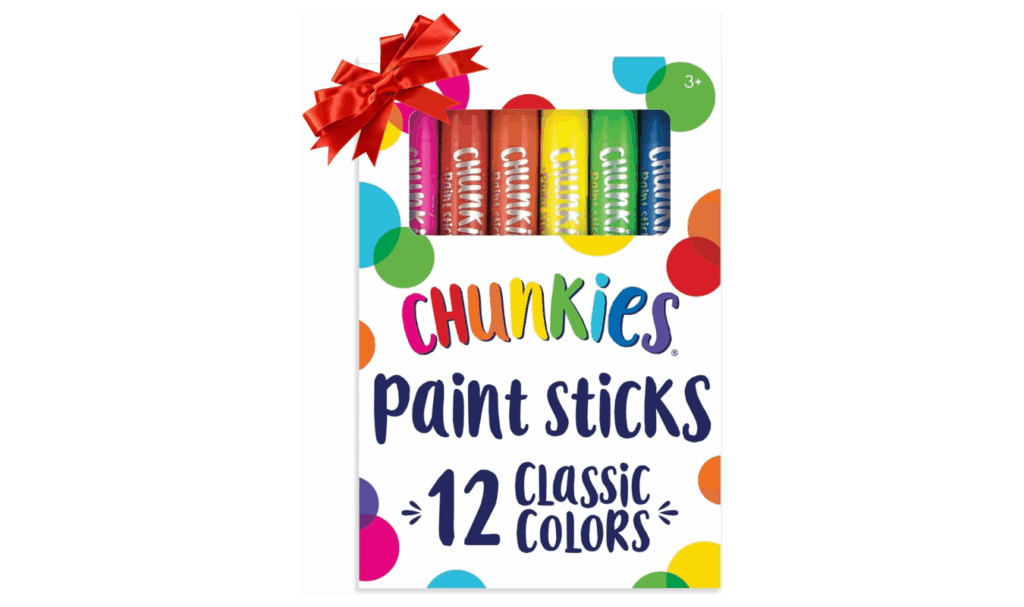
Ooly Chunkies Paint Sticks
A minimal-mess, easy to grasp paint stick perfect for young toddlers.
We love this chunky paint stick set at home! Paint sticks offer a fun alternative to crayons and markers, giving the look and feel of paint but with minimal mess! Designed for toddler hands, they’re easy to grip and perfect for little ones starting around 18 months old. This set includes 12 bright, vibrant colors, making it a fun and engaging way for toddlers to explore coloring and early pre-writing skills.
Age recommendation: 18 months +
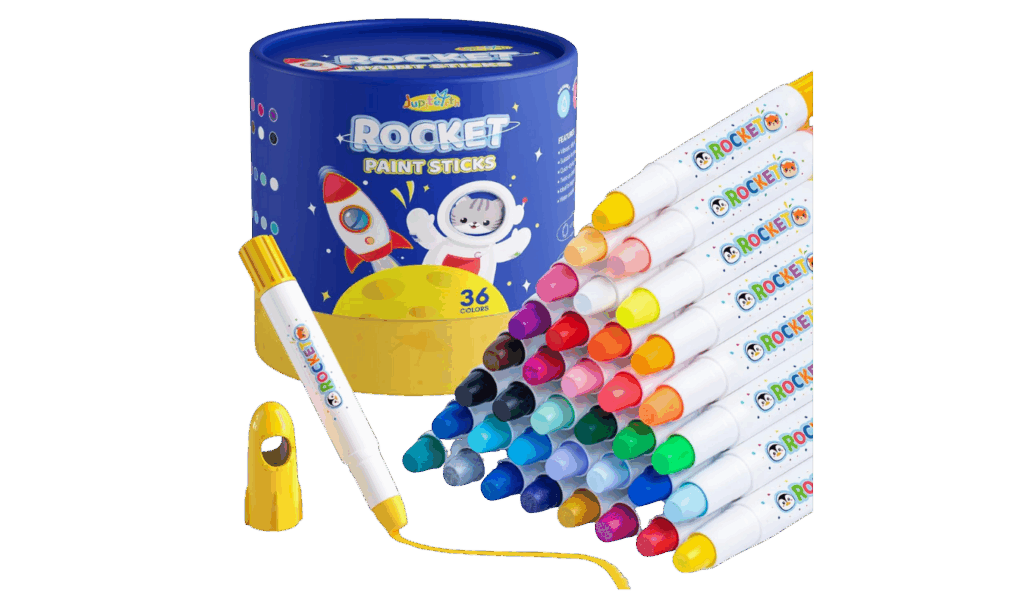
Jupitearth Rocket Paint Sticks
For older toddlers, the vibrant colors glide on smooth (like butter!), and they’re easy to wipe clean
This set of tempera paint sticks is also from Jupitearth, but they’re longer and slimmer—making them a great choice for 3-year-olds and up who are developing more refined hand control. They’re easy to twist, glide smoothly, and come in 36 vibrant colors, giving kids tons of creative options.
One of my favorite features is how easily they wipe clean from little hands and tabletops. These paint sticks are an absolute must-have for toddler arts and crafts and a great step up from chunkier beginner options.
Age recommendation: 3 years +
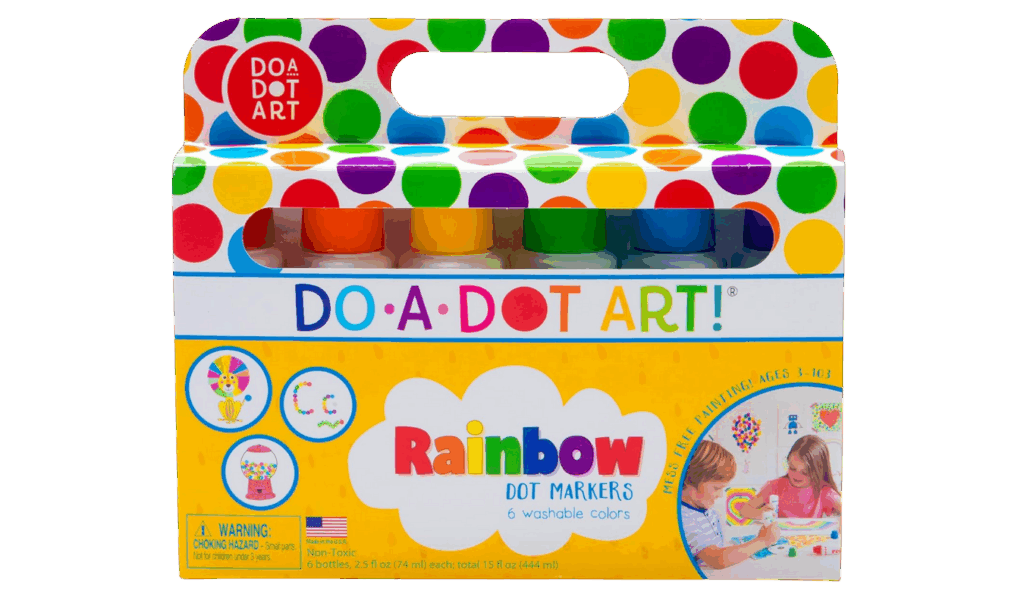
Do a Dot Paint Markers
With lots of creative potential, these paint markers are great for toddlerhood and beyond.
Reminiscent of bingo dabbers, these paint markers are great for dabbing dots, or you can use them just like markers. You get the look of paint, but don’t need any water or brushes.
I love paint markers because they’re low mess, but lots of fun. I recommend introducing them around 18 months and letting your little one simply dab and watch the colors appear on the paper. As they get older, they’ll start using them in new and creative ways!
Age recommendation: 18 months + (always supervise)
Toddler Coloring Books
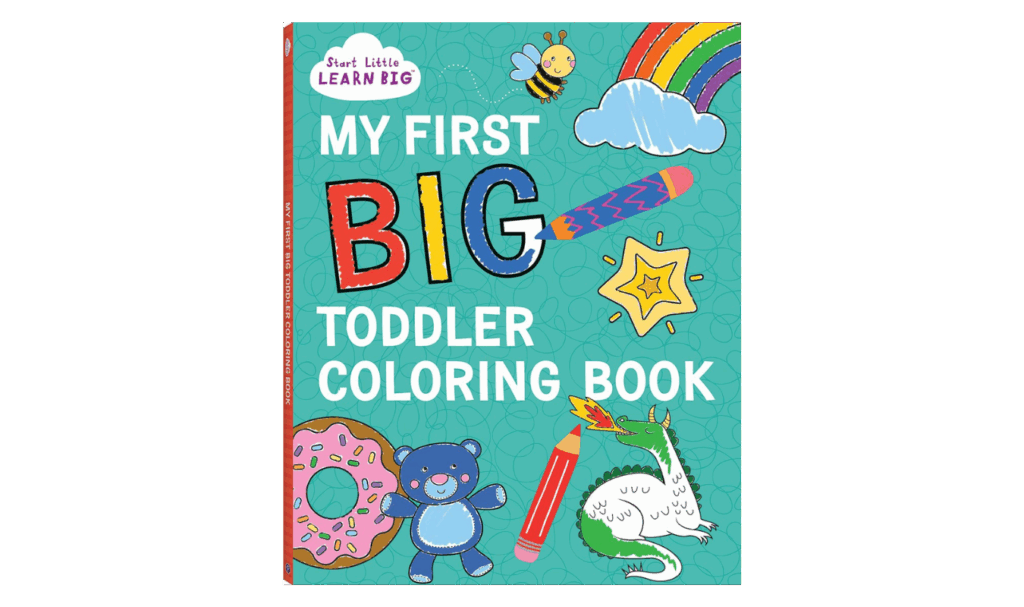
My First Big Toddler Coloring Book
An affordable coloring book for toddlers with easy tear-out pages.
With perforated edges, thick pages, and simple illustrations, this makes a perfect first coloring book for toddlers. You get 128 pages for $6!
Age recommendation: 18 months +
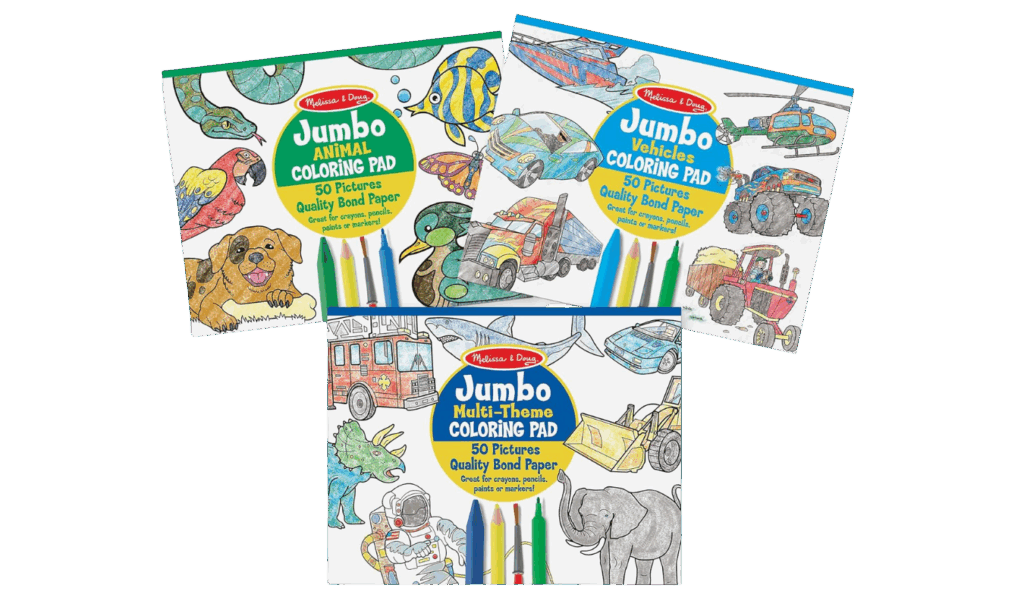
Melissa & Doug Jumbo Coloring Pads
Quality coloring books with popular themes and a place to write the little artist’s name on every creation!
We love these coloring books from Melissa & Doug! The pages are oversized and sturdy, so your toddler can use crayons, markers, or paint. They come in a variety of themes to suit your little one’s interests.
Age recommendation: 2 years +
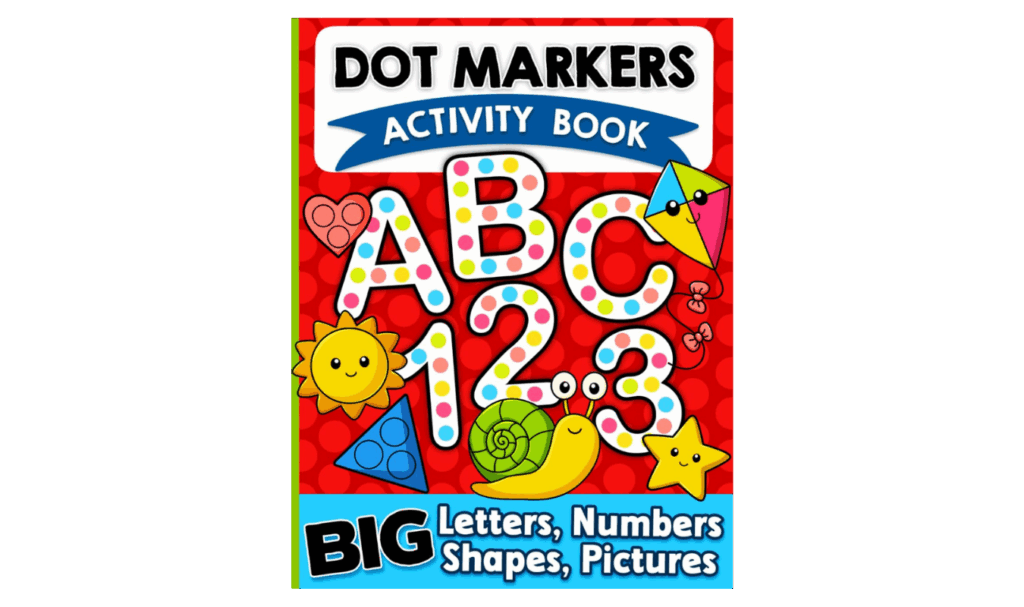
Dot Markers Activity Book
A fun twist on traditional coloring books, giving toddlers a guided way to use their dot markers while building early learning skills.
If you have an older toddler, these pages work just like coloring sheets for Do-A-Dot paint markers. They’re great for coloring and learning at the same time. You can practice letter and number recognition, shapes, and more. They also support fine motor development and hand-eye coordination!
Age recommendation: 3-4 years +
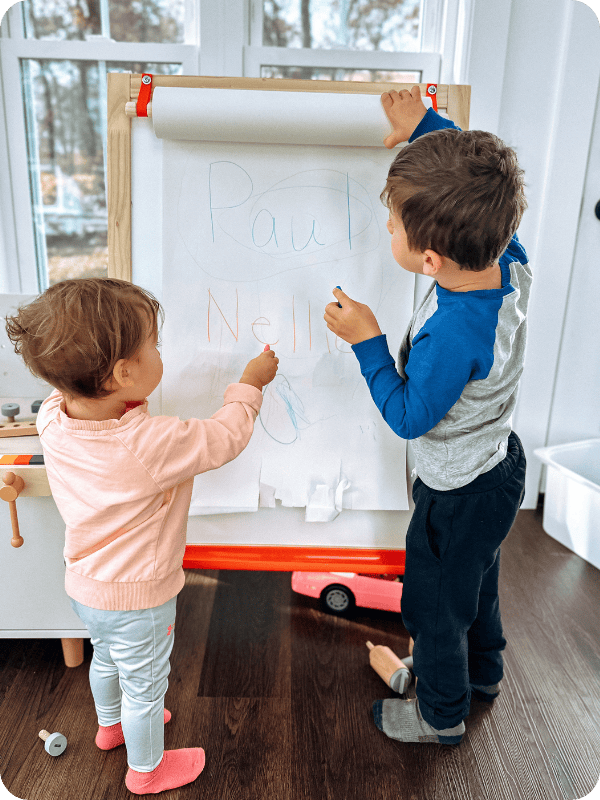
Pre-Writing Milestones
12-18 Month Olds
Around 12–18 months, early scribbling begins. Toddlers start showing interest in making marks on paper and typically hold writing tools with a fist, called a palmar grasp. At this age, most of their marks are uncontrolled scribbles, which is completely normal.
You may also notice your toddler banging toddler crayons, tapping markers, or experimenting with how the tools feel and sound. This is all developmentally appropriate—they’re exploring and learning through sensory play.
18-24 Month Olds
Between 18–24 months, scribbling becomes a bit more controlled. Toddlers begin to make more intentional marks during coloring, often drawing vertical lines or downward strokes.
Try drawing a simple line or stroke on the page and ask your toddler to imitate it. This supports early pre-writing skills and helps develop hand-eye coordination.
2-3 Year Olds
Toddler coloring starts getting a little more exciting at this age! Toddlers are gaining better fine motor control and using their art supplies with more purpose. They’re starting to draw more horizontal lines and things like zigzags, curving lines, and circles.
Grasp development improves during this stage as well. Instead of gripping toddler crayons with their whole fist, they start to pinch the writing tool, moving toward a more refined grasp. By age 3, many toddlers use a four-finger grasp or even a tripod grasp, which are both important pre-writing milestones.
4 Year Olds
At this age, your preschooler is using a more refined grasp. They’re utilizing bilateral coordination, using two hands at once, as they hold the paper with one hand and color with the other.
Four-year-olds can copy and trace more complex shapes, such as squares and triangles, which are important foundations for early letter formation. They also show stronger visual-motor integration by coloring more intentionally within the lines of a coloring book and beginning to plan what they want to draw before putting crayon to paper.
You may even start to recognize more of the details in their independent drawings!
Looking for more?
Branching out from coloring? Find our top picks for arts and crafts with toddlers.
Find developmentally appropriate, simple crafts for toddlers on our website!
Leave a Reply
OTHER POSTS YOU MAY LIKE:




MS, SLP
Founder of Eat Play Say, Speech-Language Pathologist, Feeding Specialist, Play Expert, Mom of 2
Jordyn Koveleski Gorman
SPECIALIZES IN: Infant and toddler speech-language, play, and feeding development, and curating a team that provides expert help that feels like a reassuring text from that one mom friend
EDUCATION: Jordyn received her BS in Speech-Language Pathology from Bloomsburg University and her MS in Speech-Language Pathology from Towson University
FAVE PARENTING FIRST: “The first true smile, it’s the sweetest!”

MS, CCC-SLP, CBS, IBCLC
Speech-Language Pathologist & Feeding Specialist, Certified Breastfeeding Specialist, International Board Certified Lactation Consultant
Jessica Nicholson Cocca
SPECIALIZES IN: Breast and bottle feeding, tongue ties, oral motor dysfunction, starting solids, infant and toddler speech, treating oral motor disorders
EDUCATION: Jessica received her BS in Communication Sciences and Disorders from Pennsylvania State University in 2015 and her MS in Speech-Language Pathology from Towson University in 2017
FAVE PARENTING FIRST: “Baby’s first wave! What a fun first communication gesture!”

MA, CCC-SLP, CLC
Speech-Language Pathologist, Certified Lactation Counselor
Jennifer McFarlin
SPECIALIZES IN: Breast and bottle feeding, tongue ties, starting solids, infant and toddler speech development
EDUCATION: She received her BS in Speech-Language Pathology from Ball State in 2014 and a MA in Speech-Language Pathology from Ball State in 2016.
FAVE PARENTING FIRST: “My favorite baby’s first is their first true smile that just warms your soul knowing they are smiling at you. My other favorite is their first word. I love watching their language explode!”

MS, CCC-SLP
Bilingual Speech-Language Pathologist
Nicole La Petina Kelly
SPECIALIZES IN: Bilingual development (Spanish-English), supporting multilingual families, infant and toddler speech
EDUCATION: She received her BA in Communication Sciences and Disorders and in Spanish from the University of Wisconsin-Madison in 2014 and her MS in Speech-Language Pathology with an English-Spanish Specialization from Marquette University in 2016.
FAVE PARENTING FIRST: “It’s the first slobbery kisses for me!”

RDN, LD
Licensed Registered Dietitian
Kimberly Vede
SPECIALIZES IN: Infant and pediatric nutrition including breastfeeding, formula feeding, and starting solids. She also specializes in prenatal and postpartum nutrition.
EDUCATION: She received her BSc in Biology in 2014 from Life University, and her BSc in Dietetics from Life University in 2019.
FAVE PARENTING FIRST: ”The first time they say ‘mama!’”


This checklist was created with input from a Speech-Language Pathologist, Occupational Therapist and Physical Therapist and has been downloaded over 20,000 times by parents worldwide. Learn the important milestones to pay attention to, and keep it in your digital back pocket during the baby + toddler years!
Comprehensive Milestone Checklist for gross motor, fine motor, and speech-language milestones for 0-36 months,
DOWNLOAD FOR FREE


