


Best Toddler Booster Seat for Table
February 25, 2026
Jordyn Koveleski Gorman

Last Updated on February 25, 2026 by Jordyn Koveleski Gorman
This page contains affiliate links. We will receive a commission on qualifying purchases using these links.
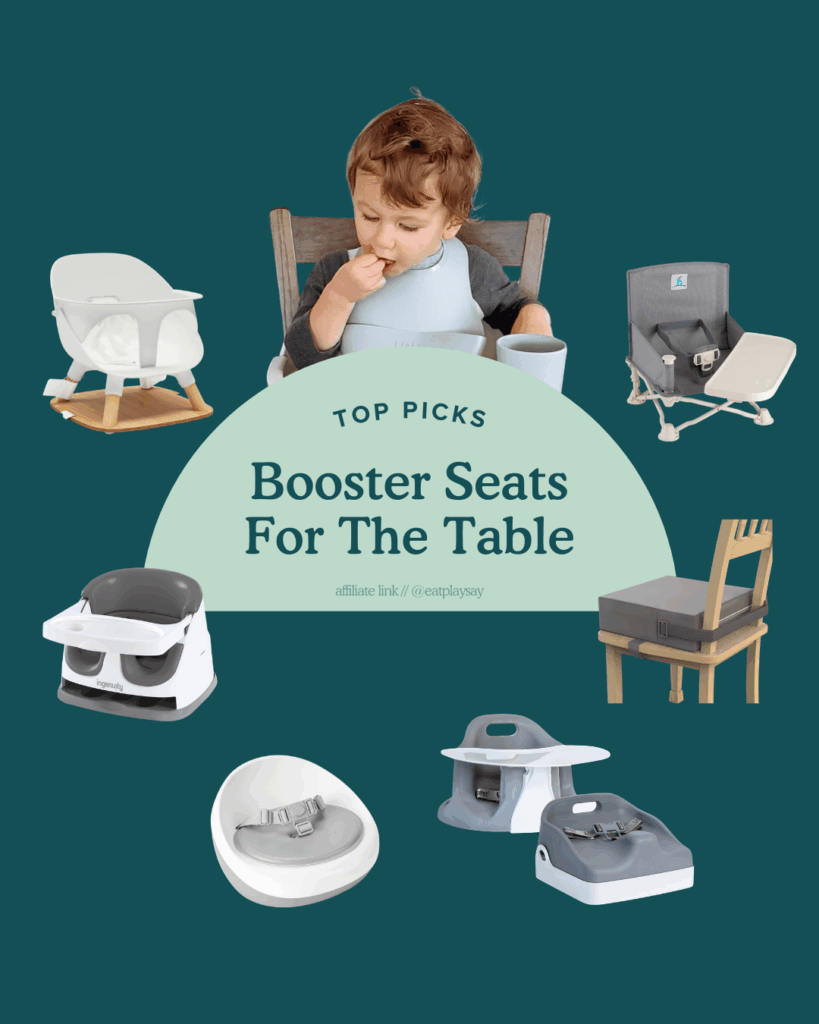
One day you’re anxious about starting solids and researching high chairs. The next moment you blink and you’re in search of a booster seat for the table. They’re not kidding with the saying “babies don’t keep.”
The transition from high chair to booster seat for feeding doesn’t need to be complicated. Don’t overthink it! Here’s what you need to know in order to navigate the transition with confidence and ease.
When to Transition from High Chair to Toddler Booster Seat
The age range can vary. Most little ones are ready to transition to a booster seat for feeding in early toddlerhood, around 15-18 months. However, the most important thing to pay attention to is your little one’s skills and development as a whole. Before moving to a booster seat, your toddler should be able to sit upright without support.
Around 18 months of age, toddlers tend to get antsy in the high chair. They show more interest in sitting at the table with everyone else. That might be your cue that it’s time for a change.
Why should I use a booster seat at the table?
Using a toddler booster seat for feeding bridges the gap between a high chair and dining chair. Booster seats allow toddlers to sit in a secure and supported position at the dining table. This allows them to eat safely.
Using a booster seat helps toddlers join the table and feel more engaged at mealtimes. Socially, booster seats allow toddlers to eat with everyone else. It fosters a sense of independence and allows them to practice self-feeding skills at the table. They feel more involved in meals when they get a special seat at the table like everyone else!
Our Overall Pick: Best Toddler Booster Seat
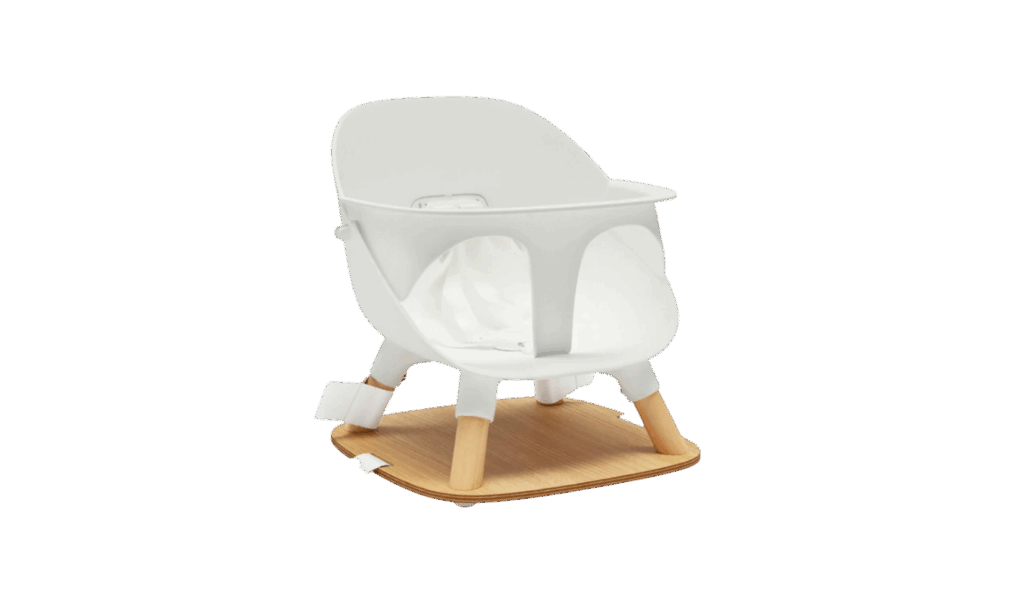
Lalo Booster Seat
Price: $115
Item Weight: 8 bs.
Recommended Weight Limit: 50 lbs.
The Lalo Booster Seat is our favorite booster seat for the table. We’ve used it for both my littles and I plan to use it for our third! It’s heavy duty to stand up to toddler messes and made with non-toxic materials.
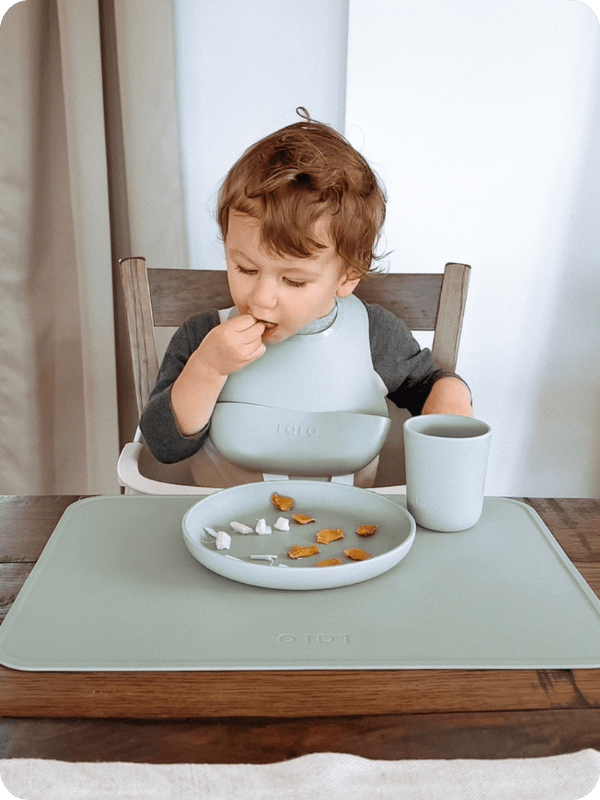
This booster seat for the table is designed with longevity in mind. If you’re using the Lalo high chair, the seat can be transitioned into the booster. Once you’re done using the booster seat, it can transition into a play chair. So, this one seat can be used for several years.
The booster set comes with a flat wooden base, legs, seat and belly bar, and a 5-piece harness. With young toddlers using the belly bar, the booster does not push fully under the table. Once your toddler is old enough to sit at the table without needing that belly bar support, this booster seat scoots right up under the table.
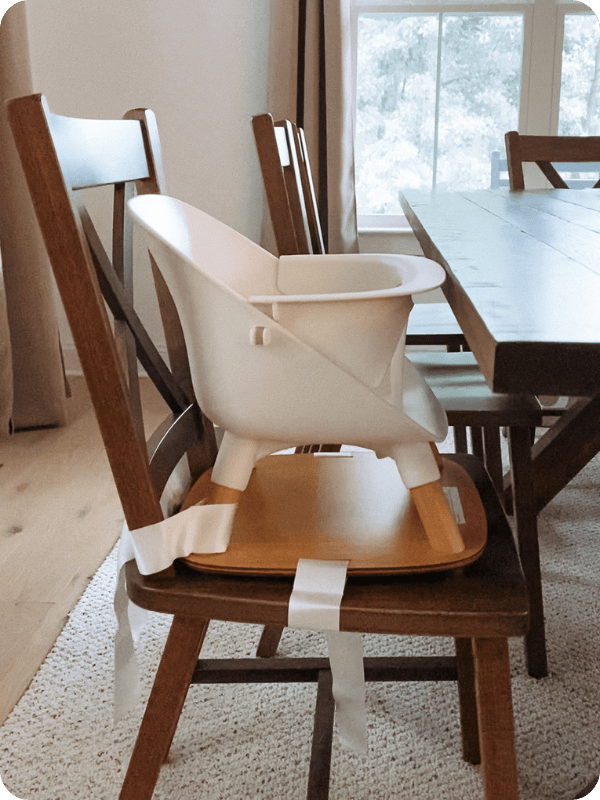
As a mom, I love it because it’s sturdy and so easy to clean! I know my little ones can sit securely and join us at the table for a meal. When the meal is over, I just wipe the seat clean with mild soap and water.
Pros:
- Durable and easy to clean
- Most aesthetic toddler booster seat
- Available in 5 colors
- Higher upper weight limit than others
- Designed to grow with your child
- Can transition from high chair, to booster, to play chair
Other Considerations:
- More expensive than other booster seats (but has more functionality)
- Bulkier and heavier than other boosters
Other Top Picks: Toddler Booster Seats for Table
While our family loves the Lalo booster seat, there are lots of other great options on the market. We’ve used quite a few of them in our own home, or while visiting friends.
Here are some other good options we recommend when making the transition to the table.
Most Popular Toddler Booster Seat
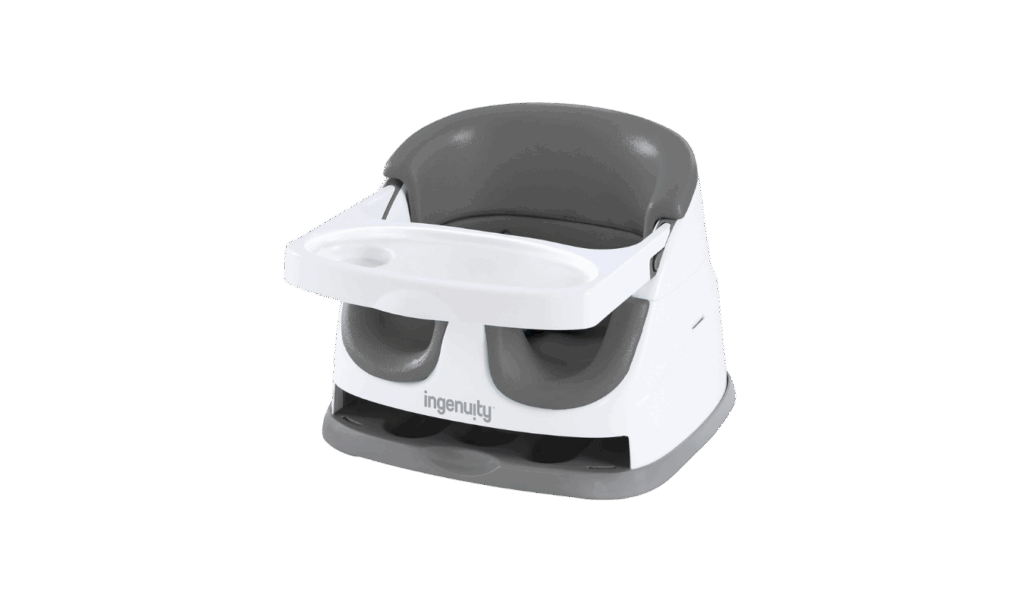
Ingenuity Booster Seat
Price: $40
Item Weight: 4.5 lbs.
Recommended Weight Limit: 33 lbs.
The Ingenuity Booster Seat is very popular and highly-rated. It’s unique because it can function as a floor seat or a booster seat and has a 3-point harness.
This booster is travel-friendly as a food tray is easily stored directly underneath the seat. Your baby can sit supported and eat right on top of the table, or they can sit on the booster and be pulled right up to the table.
The foam inserts provide a comfortable fit for little ones and they’re dishwasher safe for easy cleaning!
Pros:
- Two uses: floor seat and booster seat
- Travel-friendly with removable food tray
- Gives toddlers the boost they need to sit supported at the table
- Foam inserts come apart for easy cleaning and be cleaned in dishwasher
Other considerations:
- Design has small nooks and crannies where crumbs can get trapped during day to day use
- Only supports up to 33 lbs.
- Bulkier design than other options
Want a smaller option?
Ingenuity also makes the Ity Booster Seat which has a more compact, simplistic design.
It’s a great travel booster seat because it’s lightweight and has no frills. The one-piece design makes it super easy to clean, too!
Most Ergonomic Toddler Booster Seat: UpSeat
Upseat makes two different options in terms of ergonomically designed booster seats. Let’s break them down.
Upseat makes their products with an ergonomic design that focuses on hip-healthy development. Especially with babies and young toddlers, we want to pay close attention to their positioning.
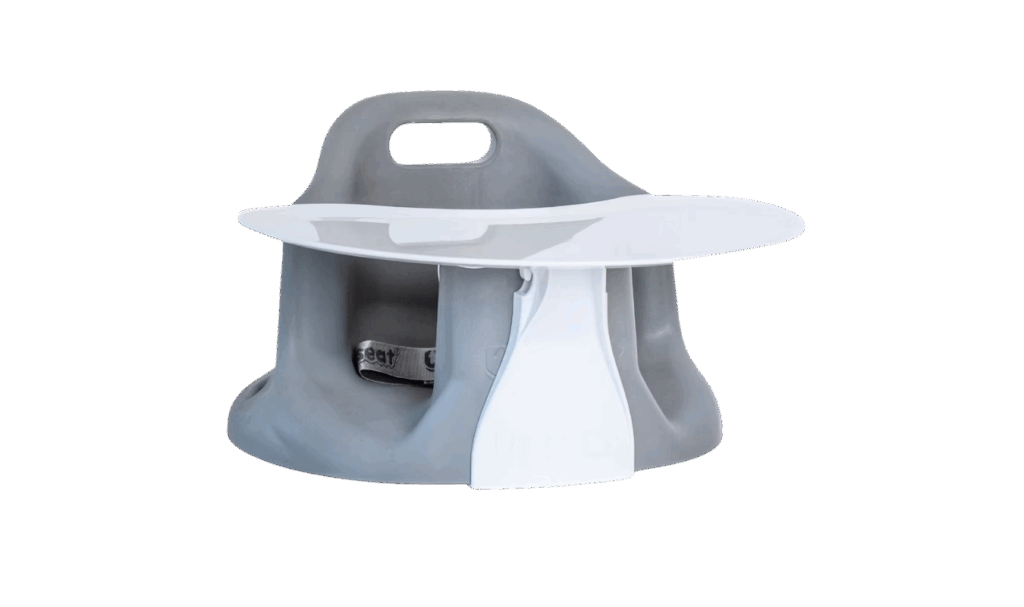
Upseat Baby Floor and Booster Seat with Tray
Price: $119.99
Item Weight: 5.4 lbs.
Recommended Weight Limit: 30 lbs.
The Upseat floor and booster seat allows hips to move more freely in comparison to some other booster alternatives. It gives parents a safe space for their baby to sit in an upright position.
This floor and booster seat is designed for babies as young as 4-5 months and can be used up to 24 months. It’s not a booster seat for the table, but it can sit on top of the table to involve your little one in family meals.
Pros:
- Promotes upright posture and hip-healthy development
- Use as a floor seat and a travel booster seat
- Extra-high back for support
- Soft, squishy material is comfortable for little ones
Other Considerations:
- Expensive
- If your baby has chunky thighs, you may want to get the Upseat Big Floor and Booster Seat as it was made 30% bigger for more comfort
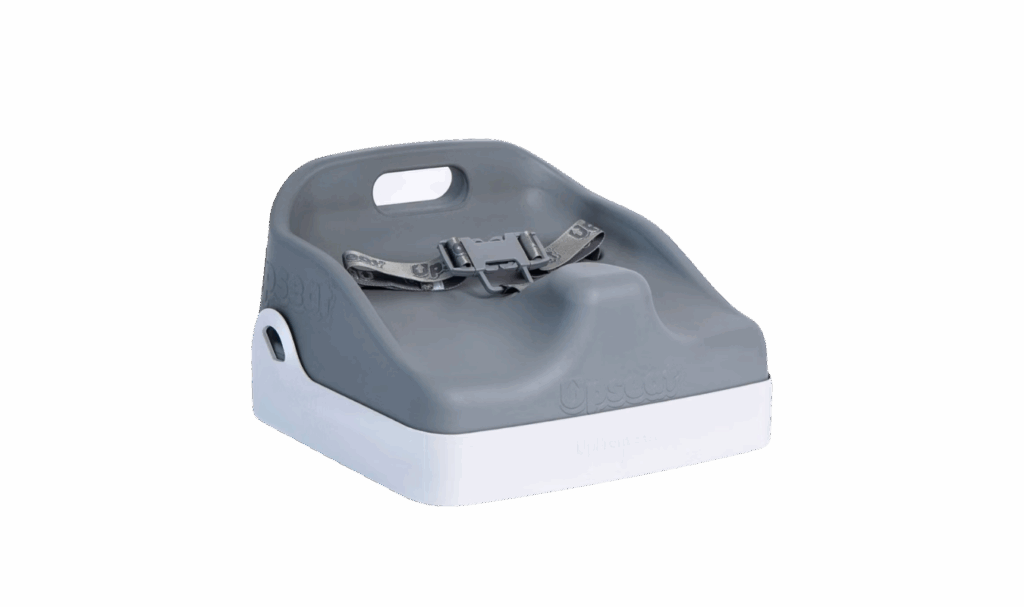
Upseat Toddler Booster Seat for Dining Table
Price: $69.99
Item Weight: 3.12 lbs.
Recommended Weight Limit: 50 lbs.
The Upseat toddler booster seat is for children who are ready to sit at the dining table. It comes with a detachable platform to adjust as your little one grows. When your toddler is younger, it can boost them up to 8 inches.
Like its floor seat counterpart, this booster seat is designed to help toddlers sit with a healthy, upright posture.
Pros:
- Easy to clean
- Provides 3-point harness
- Adjustable platform height
- Higher upper weight limit than others
- Designed for upright posture and hip health
- Travel-friendly size and handle for easy portability
Other Considerations:
- Expensive
- Some users say straps are hard to secure on different sized and style dining chairs
Minimalist Toddler Booster Seat
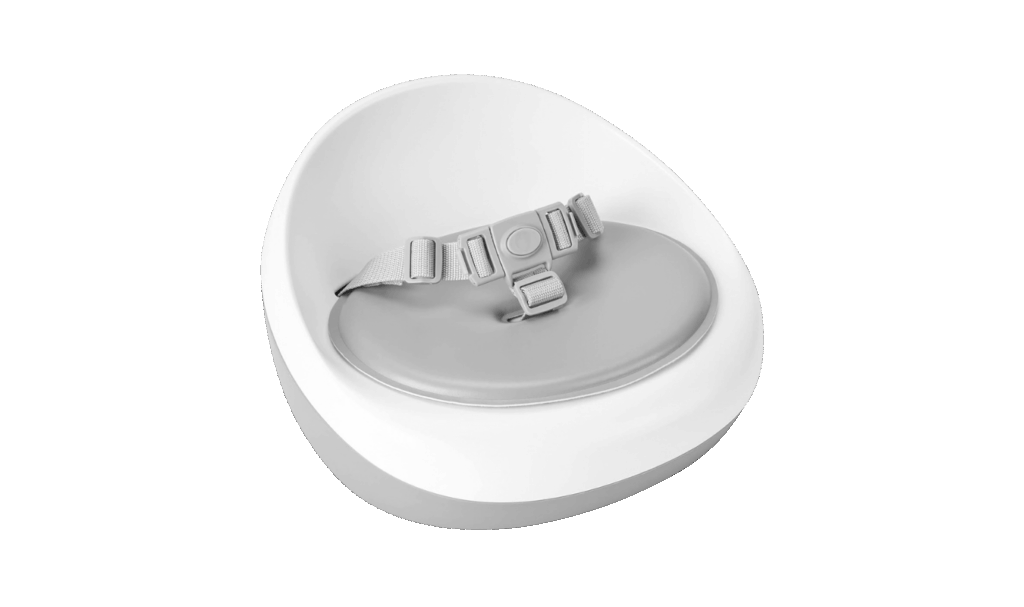
SkipHop Booster Seat
Price: $40
Item Weight: 1.8 lbs.
Recommended Weight Limit: 50 lbs.
SkipHop’s toddler booster seat is designed for growing toddlers. It has a 3-point harness for younger toddlers that can be removed as your toddler grows.
Overall it has a modern, minimalist design and fits most kitchen and dining chairs.
Pros:
- 2-stage design for growing toddlers
- Low-profile design
- Higher upper weight limit than others
- Velcro pad for comfort
- Compact design makes it travel-friendly
Other Considerations:
- Velcro pad is not fully attached so crumbs and food can sneak underneath
Best Travel Booster Seat
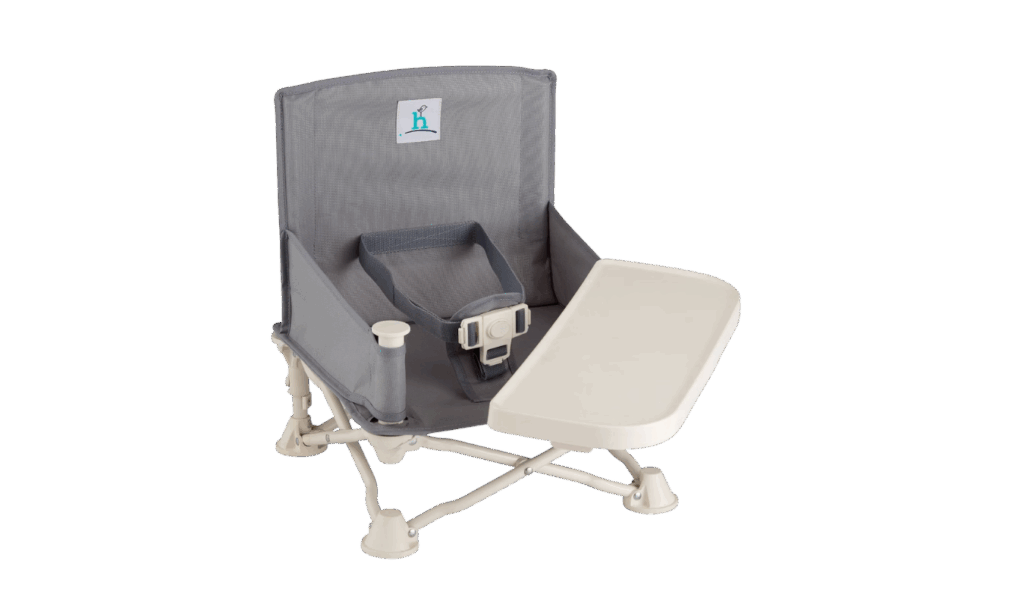
Hiccapop Travel Booster Seat
Price: $35.99
Item Weight: 4.19 lbs.
Recommended Weight Limit: 200 lbs., best for children 6 months- 3 years old
It’s no secret, I love the Hiccapop Travel Booster Seat. We’ve used it for years and it continues to be a convenience we reach for when traveling.
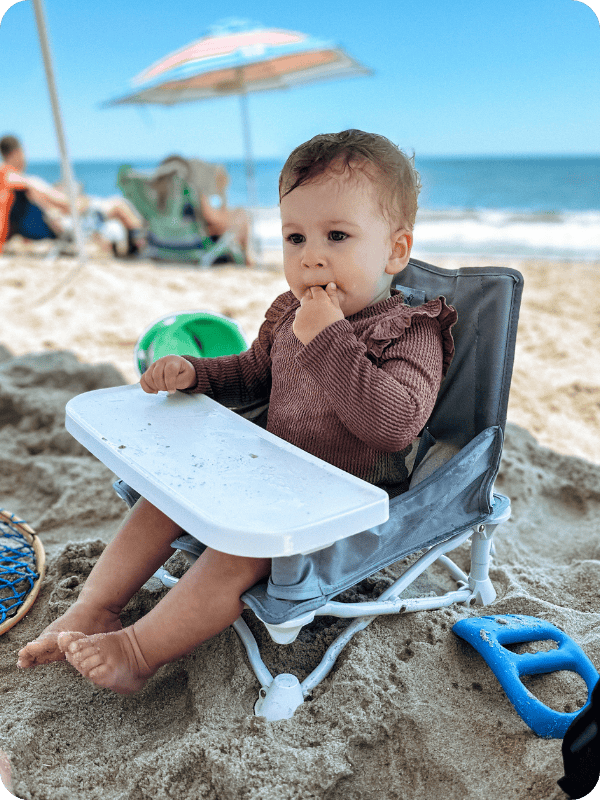
I love the removable tray and how you can secure it to almost any dining chair. We’ve taken it on vacation and to family members’ homes so our littles always have a safe place to eat.
Pros:
- Lightweight
- Machine washable fabric for easy cleaning
- Dishwasher safe tray
- Comes with travel bag
Other Considerations:
- Cloth fabric should be completely dry before storing away
- Only has a 3-point harness
- Fabric means its less sturdy than other brands, so best used with toddlers at least 12 months old
Safety Reminders for Using Booster Seats at the Table
Whenever babies and toddlers are eating, safety is always so important. When transitioning to a toddler booster seat for feeding, keep these things in mind:
- Make sure your child is in a supported position – their legs should not be dangling, and they should be in an upright position
- Secure the booster seat properly – make sure to read all instructions so you know the booster is secure on the chair
- Strap your toddler in
- Always supervise
Looking for more?
Along with a booster seat, make sure you have toddler utensils to support self-feeding skills!
If you’re still in the high chair phase, we wrote a detailed breakdown on the best high chairs on the market.
Leave a Reply
OTHER POSTS YOU MAY LIKE:



MS, SLP
Founder of Eat Play Say, Speech-Language Pathologist, Feeding Specialist, Play Expert, Mom of 2
Jordyn Koveleski Gorman
SPECIALIZES IN: Infant and toddler speech-language, play, and feeding development, and curating a team that provides expert help that feels like a reassuring text from that one mom friend
EDUCATION: Jordyn received her BS in Speech-Language Pathology from Bloomsburg University and her MS in Speech-Language Pathology from Towson University
FAVE PARENTING FIRST: “The first true smile, it’s the sweetest!”

MS, CCC-SLP, CBS, IBCLC
Speech-Language Pathologist & Feeding Specialist, Certified Breastfeeding Specialist, International Board Certified Lactation Consultant
Jessica Nicholson Cocca
SPECIALIZES IN: Breast and bottle feeding, tongue ties, oral motor dysfunction, starting solids, infant and toddler speech, treating oral motor disorders
EDUCATION: Jessica received her BS in Communication Sciences and Disorders from Pennsylvania State University in 2015 and her MS in Speech-Language Pathology from Towson University in 2017
FAVE PARENTING FIRST: “Baby’s first wave! What a fun first communication gesture!”

MA, CCC-SLP, CLC
Speech-Language Pathologist, Certified Lactation Counselor
Jennifer McFarlin
SPECIALIZES IN: Breast and bottle feeding, tongue ties, starting solids, infant and toddler speech development
EDUCATION: She received her BS in Speech-Language Pathology from Ball State in 2014 and a MA in Speech-Language Pathology from Ball State in 2016.
FAVE PARENTING FIRST: “My favorite baby’s first is their first true smile that just warms your soul knowing they are smiling at you. My other favorite is their first word. I love watching their language explode!”

MS, CCC-SLP
Bilingual Speech-Language Pathologist
Nicole La Petina Kelly
SPECIALIZES IN: Bilingual development (Spanish-English), supporting multilingual families, infant and toddler speech
EDUCATION: She received her BA in Communication Sciences and Disorders and in Spanish from the University of Wisconsin-Madison in 2014 and her MS in Speech-Language Pathology with an English-Spanish Specialization from Marquette University in 2016.
FAVE PARENTING FIRST: “It’s the first slobbery kisses for me!”

RDN, LD
Licensed Registered Dietitian
Kimberly Vede
SPECIALIZES IN: Infant and pediatric nutrition including breastfeeding, formula feeding, and starting solids. She also specializes in prenatal and postpartum nutrition.
EDUCATION: She received her BSc in Biology in 2014 from Life University, and her BSc in Dietetics from Life University in 2019.
FAVE PARENTING FIRST: ”The first time they say ‘mama!’”


This checklist was created with input from a Speech-Language Pathologist, Occupational Therapist and Physical Therapist and has been downloaded over 20,000 times by parents worldwide. Learn the important milestones to pay attention to, and keep it in your digital back pocket during the baby + toddler years!
Comprehensive Milestone Checklist for gross motor, fine motor, and speech-language milestones for 0-36 months,
DOWNLOAD FOR FREE


