


Top Choking Hazards for Toddlers
June 14, 2024
Jordyn Koveleski Gorman

Last Updated on March 3, 2026 by Jordyn Koveleski Gorman
This page contains affiliate links. We will receive a commission on qualifying purchases using these links.
As a Speech-Language Pathologist and Feeding Specialist, I hear from many parents who are afraid of their child choking. Whether your little one is just starting solids or is in the era of refusing to sit down to eat, know that I hear you. You are not alone.
Let’s be clear: choking is a serious and terrifying medical emergency. And even though we do our absolute best to prevent it, we can’t always do so. There are more than 10,000 pediatric ER visits attributed to choking annually in the US alone. (1)
There’s good news, though. Parents and caregivers can take several important steps to minimize the risks associated with common choking hazards. And it’s important to know what to do if someone is choking, especially an infant or toddler.
Some of the most common choking hazards are below, including how to best serve these items and more prevention techniques!

What are the top choking hazards for toddlers?
Consider the shape of a windpipe—it’s round, right? Round foods are the exact shape of your child’s windpipe, making these the highest risk for littles to choke on.
Hot dogs are a top contributor, causing up to 17% of food-related choking deaths according to the American Academy of Pediatrics. While often a staple food, especially in the summer, it’s important to use extreme caution when offering them. To better understand what happens when choking, let’s consider the mechanics of the esophagus and windpipe.
Hot dogs are the perfect circular shape of the windpipe. They are also usually soft on the inside with a tougher outer casing. This outer casing is very hard to break down. While your toddler is chewing the softer inside, they may attempt to swallow before the food is fully broken down.
This can result in gagging and maybe even panic. Paired with oral incoordination, this series of events leads to that piece of hot dog in the windpipe instead of the esophagus. It can happen in an instant.
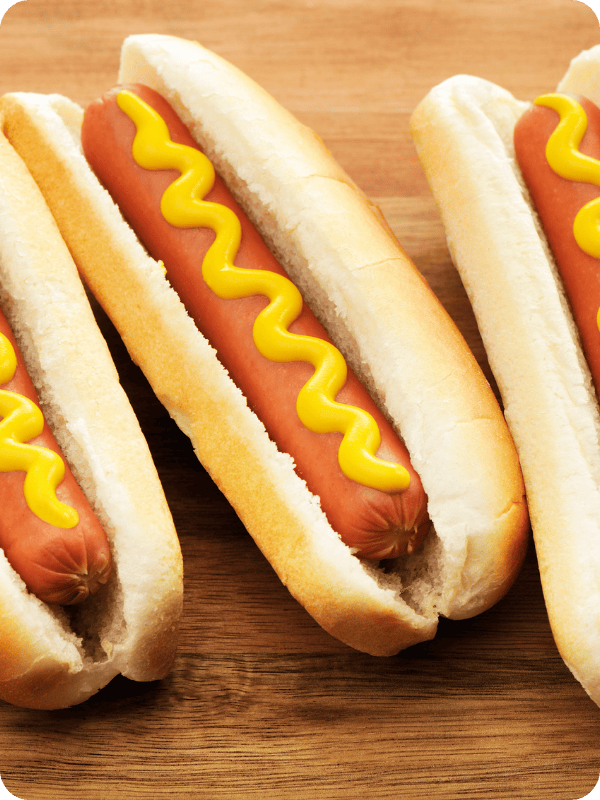
Top choking hazards for toddlers:
Any round food should be cut into quarters—at a minimum—for children under 5. And if you still don’t feel comfortable even at age 5, you can continue cutting foods into smaller pieces!
This includes, but isn’t limited to:
- Hot dogs
- Grapes
- Cherry tomatoes
- Cherries
- Beef sticks
Other common choking hazards that should be avoided completely or modified before offering include:
- Small blocks of cheese
- Circular cut raw vegetables like carrots
- Whole nuts and large seeds
- Globs of melted cheese
- Globs of nut butters
- Chips and pretzels
- Hard crackers
- Candy
- Popcorn
- Marshmallows
Serving the foods above cut into small pieces or in thin strips is best. For nut butters, make sure they are spread thinly on foods, as thick globs can get stuck in the airway.
For littles under the age of 1, softer foods with skin, like blueberries and black beans, should be smooshed down or mashed when serving.
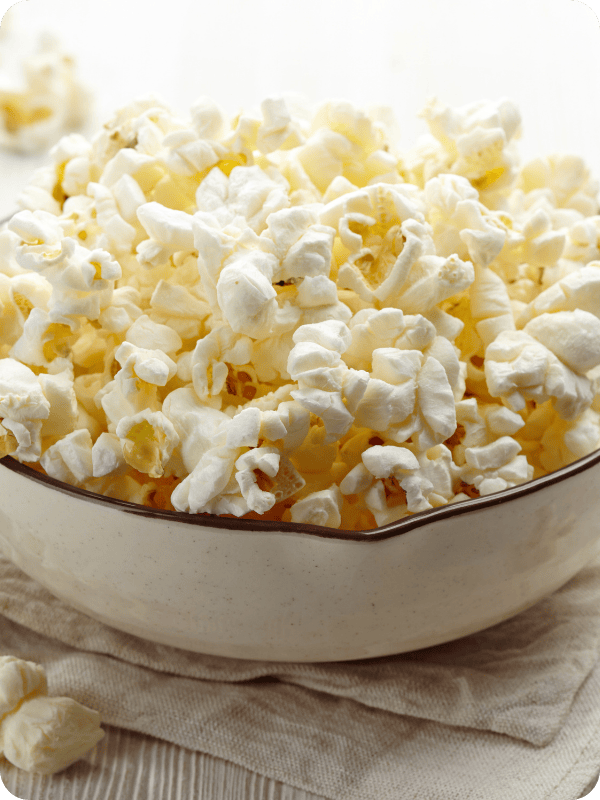
Can toddlers eat popcorn?
Popcorn is a high-risk food due to its light weight, which makes it easy to inhale, and its shape. It is safest to avoid this food for toddlers, who are still developing their chewing and swallowing skills. Even if your little one seems advanced, this food is too risky to chance, and the AAP agrees. (2)
Generally, by age 5, littles have developed enough skills to chew and swallow popcorn safely. Even then, though, it’s important to ensure children are not running or playing while eating popcorn (or any food!).
Cutting grapes for toddlers
If you don’t already have one of these grape cutter tools, be prepared to be obsessed. This tool makes quartering grapes a seconds-long process. It can also be used to cut cherry tomatoes or pitted cherries!
Whole grapes are generally less of a risk once your child turns 5, although it remains safest to cut them lengthwise in four slices even then. Similarly, it is safest to slice hot dogs and other round foods into halves or quarters even as your child enters kindergarten.
How to prevent choking
In addition to avoiding high-risk foods and modifying others, what can caregivers do to help prevent choking?
Don’t eat and run
I know it sounds obvious and is easier said than done. Keeping your toddler secure and seated, or at least standing in place, is the best choking preventative. Toddlers are more likely to choke if they are eating while standing, running, or moving around.
For eating at home, prioritize the high chair or a booster seat for all meals and snacks. If your child is restless in their seat and resisting meal time, change the scenery! Move their chair to the porch outside or a new room for a different view. Location is everything sometimes!
If your child refuses to sit entirely, the next safest option is to serve them food while they are contained in a toddler tower.
Stay nearby
Keeping eyes on your little one when around food is just as important as staying close while around water. Choking is often very quiet or silent for young kids. Monitoring while they eat can help you determine if foods need additional modification or if they are taking bites that are too large.
Additionally, toddlers exploring their newfound self-feeding independence are more likely to grab food from countertops or the table. They may be excited to try these new foods and not realize that they are a choking risk. This is common with foods like chips or hard pretzels that are usually in easy-to-access spots. Keeping these choking risks out of easy reach for little ones is a good habit to build now.
When in doubt, slice it out
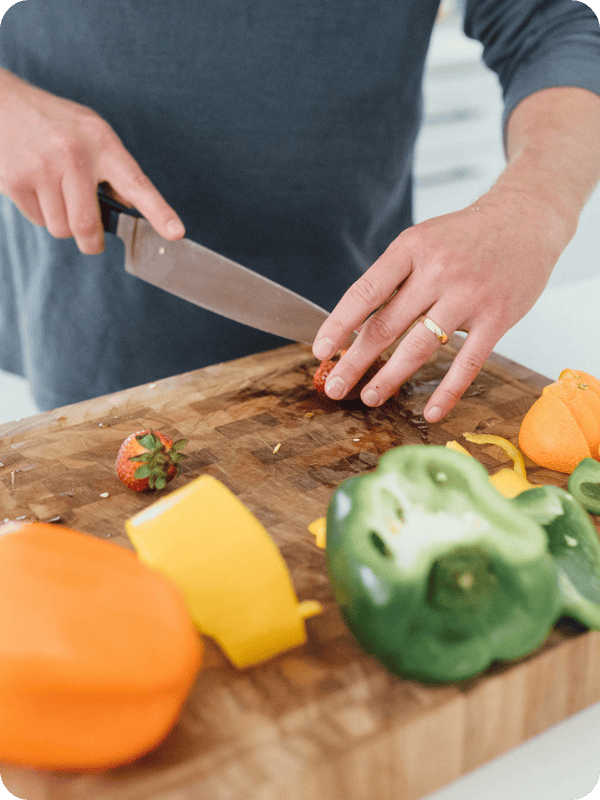
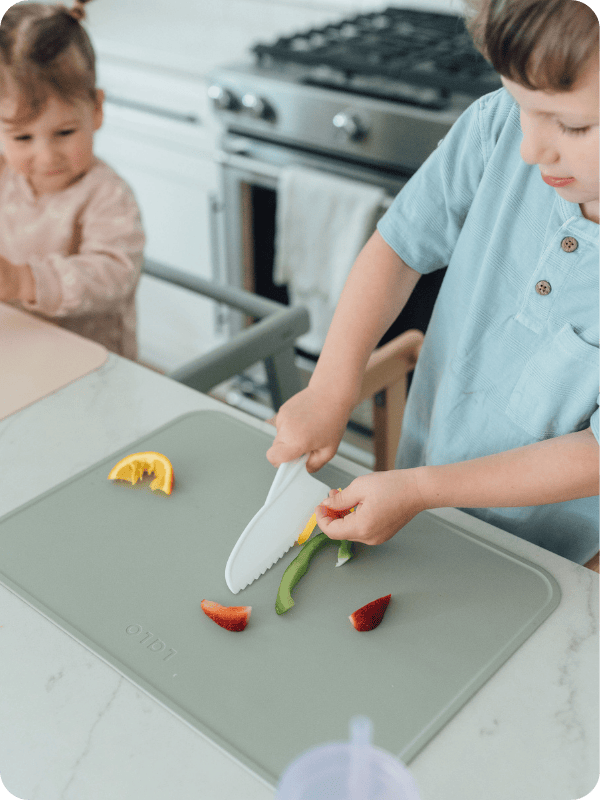
If your little one is interested in trying a new food that is harder in texture or you’re not sure how they will manage it, offer it in a very thin slice! We’re talking potato peeler thin. Start them off with thin slices, and move to thicker or bigger pieces once you know they can manage that new texture well. This is a great trick for harder fruits and vegetables like raw apples (no skin), carrots, and peppers.
More toddler feeding support
Whether you need ideas for quick meals or want the best travel snacks for your little one, Eat Play Say has the resources!
For more information on toddler dishes and utensils that make mealtimes smoother, check out our blog! Looking for a new water bottle/cup for your kiddo? We did the research on the best water bottles for you!
For more feeding support, check out our collection of feeding resources!
Sources
- Saccomanno S, Saran S, Coceani Paskay L, De Luca M, Tricerri A, Mafucci Orlandini S, Greco F, Messina G. Risk factors and prevention of choking. Eur J Transl Myol. 2023 Oct 27;33(4):11471. doi: 10.4081/ejtm.2023.11471. PMID: 37905785; PMCID: PMC10811631.
- Committee on Injury, Violence, and Poison Prevention; Prevention of Choking Among Children. Pediatrics March 2010; 125 (3): 601–607. 10.1542/peds.2009-2862
OTHER POSTS YOU MAY LIKE:



MS, SLP
Founder of Eat Play Say, Speech-Language Pathologist, Feeding Specialist, Play Expert, Mom of 2
Jordyn Koveleski Gorman
SPECIALIZES IN: Infant and toddler speech-language, play, and feeding development, and curating a team that provides expert help that feels like a reassuring text from that one mom friend
EDUCATION: Jordyn received her BS in Speech-Language Pathology from Bloomsburg University and her MS in Speech-Language Pathology from Towson University
FAVE PARENTING FIRST: “The first true smile, it’s the sweetest!”

MS, CCC-SLP, CBS, IBCLC
Speech-Language Pathologist & Feeding Specialist, Certified Breastfeeding Specialist, International Board Certified Lactation Consultant
Jessica Nicholson Cocca
SPECIALIZES IN: Breast and bottle feeding, tongue ties, oral motor dysfunction, starting solids, infant and toddler speech, treating oral motor disorders
EDUCATION: Jessica received her BS in Communication Sciences and Disorders from Pennsylvania State University in 2015 and her MS in Speech-Language Pathology from Towson University in 2017
FAVE PARENTING FIRST: “Baby’s first wave! What a fun first communication gesture!”

MA, CCC-SLP, CLC
Speech-Language Pathologist, Certified Lactation Counselor
Jennifer McFarlin
SPECIALIZES IN: Breast and bottle feeding, tongue ties, starting solids, infant and toddler speech development
EDUCATION: She received her BS in Speech-Language Pathology from Ball State in 2014 and a MA in Speech-Language Pathology from Ball State in 2016.
FAVE PARENTING FIRST: “My favorite baby’s first is their first true smile that just warms your soul knowing they are smiling at you. My other favorite is their first word. I love watching their language explode!”

MS, CCC-SLP
Bilingual Speech-Language Pathologist
Nicole La Petina Kelly
SPECIALIZES IN: Bilingual development (Spanish-English), supporting multilingual families, infant and toddler speech
EDUCATION: She received her BA in Communication Sciences and Disorders and in Spanish from the University of Wisconsin-Madison in 2014 and her MS in Speech-Language Pathology with an English-Spanish Specialization from Marquette University in 2016.
FAVE PARENTING FIRST: “It’s the first slobbery kisses for me!”

RDN, LD
Licensed Registered Dietitian
Kimberly Vede
SPECIALIZES IN: Infant and pediatric nutrition including breastfeeding, formula feeding, and starting solids. She also specializes in prenatal and postpartum nutrition.
EDUCATION: She received her BSc in Biology in 2014 from Life University, and her BSc in Dietetics from Life University in 2019.
FAVE PARENTING FIRST: ”The first time they say ‘mama!’”


This checklist was created with input from a Speech-Language Pathologist, Occupational Therapist and Physical Therapist and has been downloaded over 20,000 times by parents worldwide. Learn the important milestones to pay attention to, and keep it in your digital back pocket during the baby + toddler years!
Comprehensive Milestone Checklist for gross motor, fine motor, and speech-language milestones for 0-36 months,
DOWNLOAD FOR FREE


