


Best Pacifiers for Newborns & Infants
December 26, 2025
Jordyn Koveleski Gorman

Last Updated on January 1, 2026 by Jordyn Koveleski Gorman
This page contains affiliate links. We will receive a commission on qualifying purchases using these links.
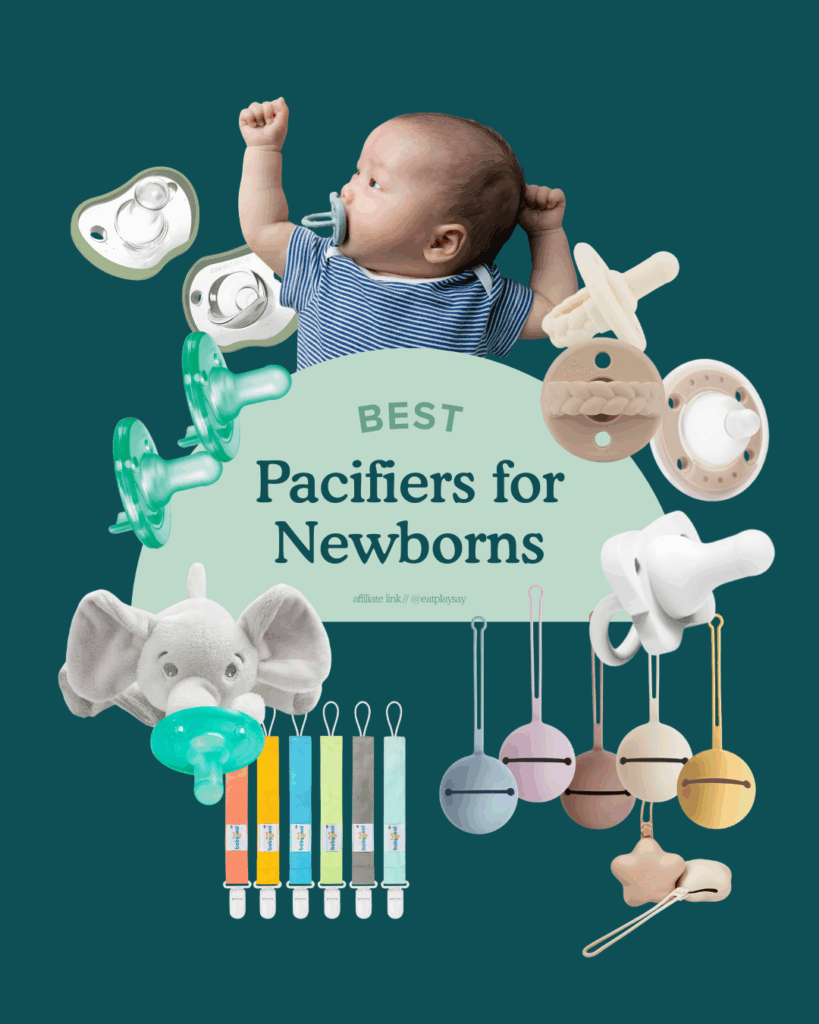
When you walk down the baby aisle, chances are you’ll see a wide variety of pacifier brands. Pacifiers come in different colors, materials, and shapes—but how do you know which pacifiers are best for newborns?
When it comes down to it, shape is the most important factor to consider when choosing a pacifier. For optimal oral development, look for a long, cylindrical nipple that closely mimics the breast during breastfeeding.
As a feeding specialist, these are the best pacifiers for newborns. Be sure to read the full post to learn the purpose of pacifiers, when to introduce them, and why they matter when it comes to oral development.
The 5 Best Pacifiers for Newborns

01. Itzy Ritzy Soother Pacifier
Price: 2 for $10
Age: 6-18 months
This pacifier is one of the best pacifiers for nursing newborns because its long, cylindrical shape closely mimics the breast. The symmetrical nipple encourages tongue cupping, which is the natural tongue position babies use when nursing. Despite the age range listed on the packaging, this pacifier is suitable for newborn use.
Pros:
- Made from 100% food-grade silicone
- Cylindrical shape
- Easy to clean
- 2 large air holes for safety
- Offered in a variety of colors
- Cute designs on the handles
Cons:
- Can be easily confused with Itzy Ritzy’s other pacifier shapes, which don’t support optimal oral development
- The pacifier’s age range extends beyond the recommended age for weaning from pacifier use.

02. Philips Avent Soothie Baby Pacifier
Price: 4 for $12
Age: 0-3 months
We think Avent is one of the best pacifier brands, especially for their Soothie pacifier! Its long, cylindrical shape supports healthy oral development. It’s made from 100% medical-grade silicone and offered at an affordable price.
The design also allows a caregiver’s finger to fit into the nipple, helping the baby keep the pacifier in while suckling, which can strengthen bonding.
Pros:
- Made from 100% medical grade silicone
- Fingerheld design allows additional bonding with baby
- Affordable, $3 a pacifier
- One piece, easy to clean
Cons:
- The silicone is more firm, so it can be tough for newborns to keep this pacifier in their mouth
Worth Mentioning:
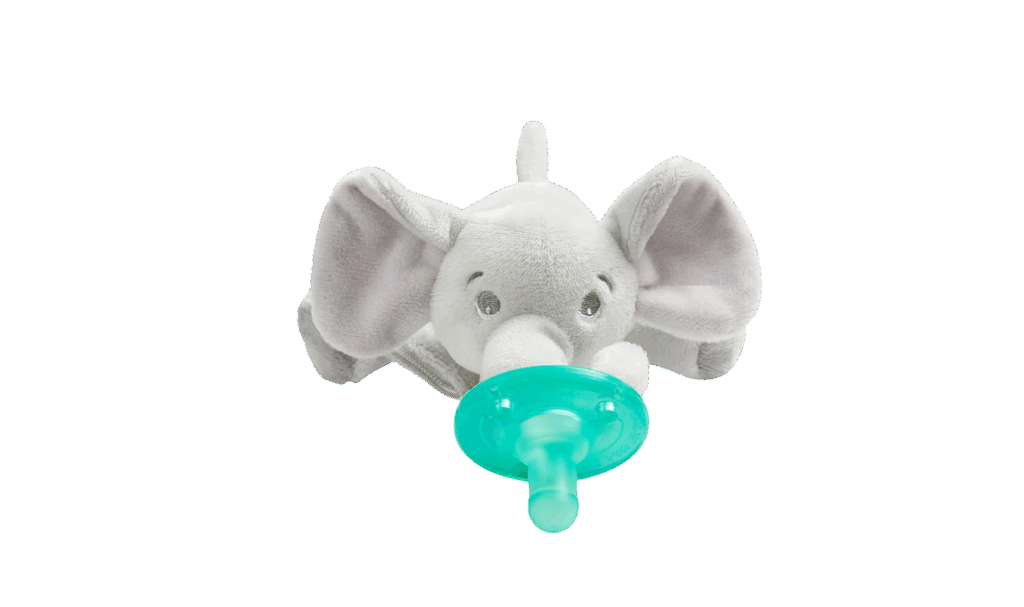
Avent Soothie Snuggler Pacifier Holder
The Avent Soothie Baby Pacifier is also available in a single pack that includes an attachable snuggle animal. This is the same Soothie pacifier we recommend, with the added comfort of a small stuffed animal attached.
We caution against using the pacifier with the stuffed animal attached once baby can sit up. This is because the weight of the animal pulls the pacifier forward in the mouth and can impact the developing mouth shape.
If using this attachment, we recommend discontinuing use after the newborn period. Additionally, always supervise your baby when the snuggle animal is attached!
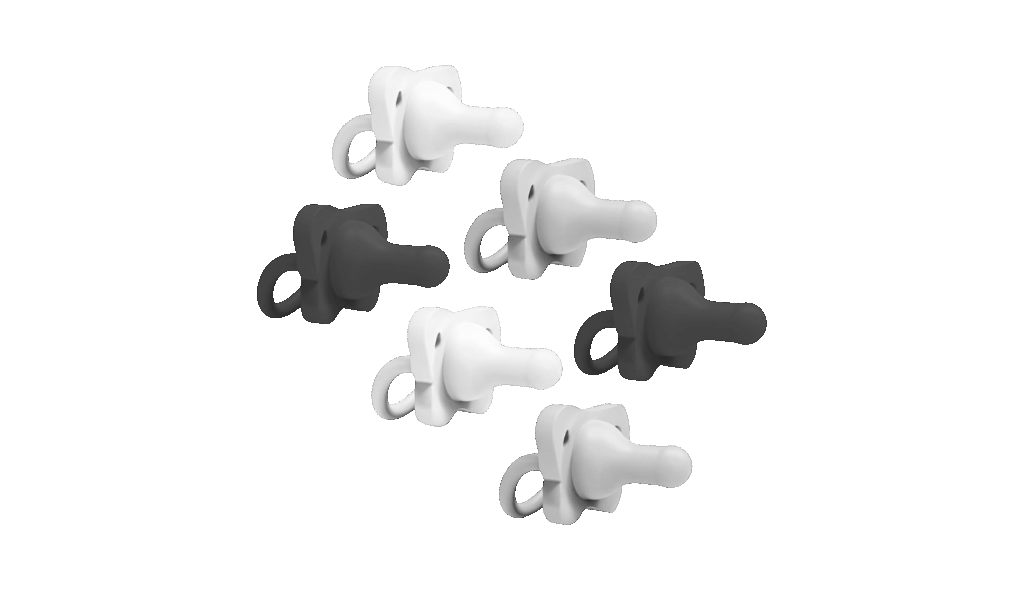
03. Dr. Brown’s HappyPaci Baby Pacifier
Price: 6 for $12
Age: 0-6 Months
Dr. Brown’s is another top pacifier brand. Their infant pacifiers, along with their narrow bottle nipples, are feeding specialist–approved thanks to their sloped, cylindrical shape. This pacifier is especially great if your baby is already using Dr. Brown’s bottles, as the nipple shape is identical.
Pros:
- Feeding specialist-approved nipple shape
- Transitions seamlessly with Dr. Brown’s narrow bottle nipples
- Made with safe materials
- Dishwasher safe (top rack)
- Affordable
Cons:
- Silicone material can attract dust and hair
- Other Dr. Brown’s pacifiers designed for older babies have shapes that are not ideal for oral development
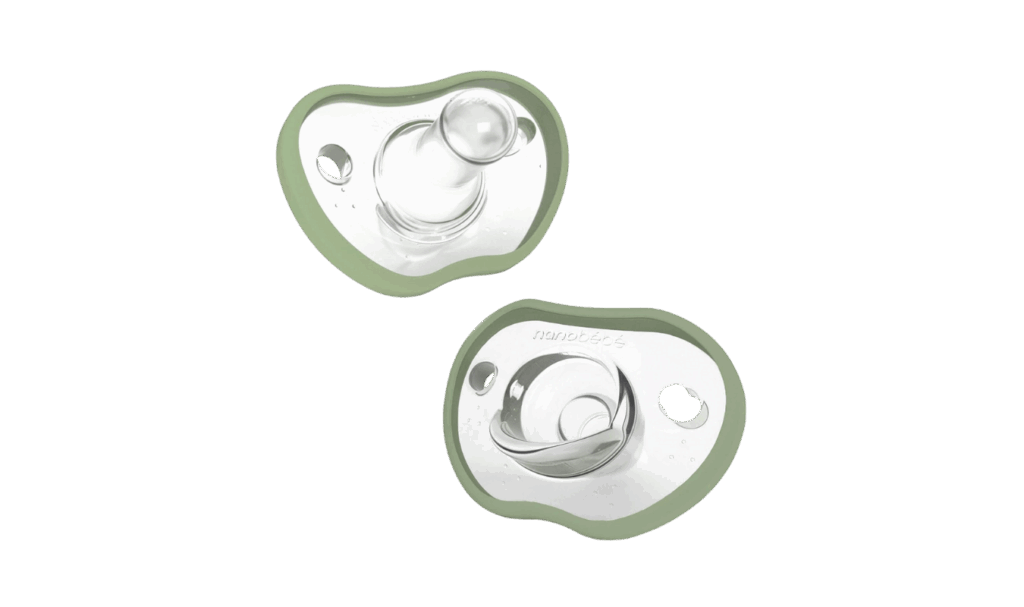
04. Nanobebe Baby Pacifier
Price: 2 for $5.49
Age: 0-3 months
This is another great pacifier for breastfed babies because it closely mimics the breast. Made from 100% silicone, it contours to your baby’s face for a more comfortable fit.
Pros:
- Flexible silicone helps it stay in baby’s mouth
- Contoured design fits baby’s mouth, cheeks, nose, and chin
- Caregivers note the pacifier’s size is great for smaller/petite babies
- Dishwasher safe
Cons:
- Don’t confuse this infant pacifier with the Nanobebe Stage 2 pacifier, as the latter is not shaped to support proper oral development
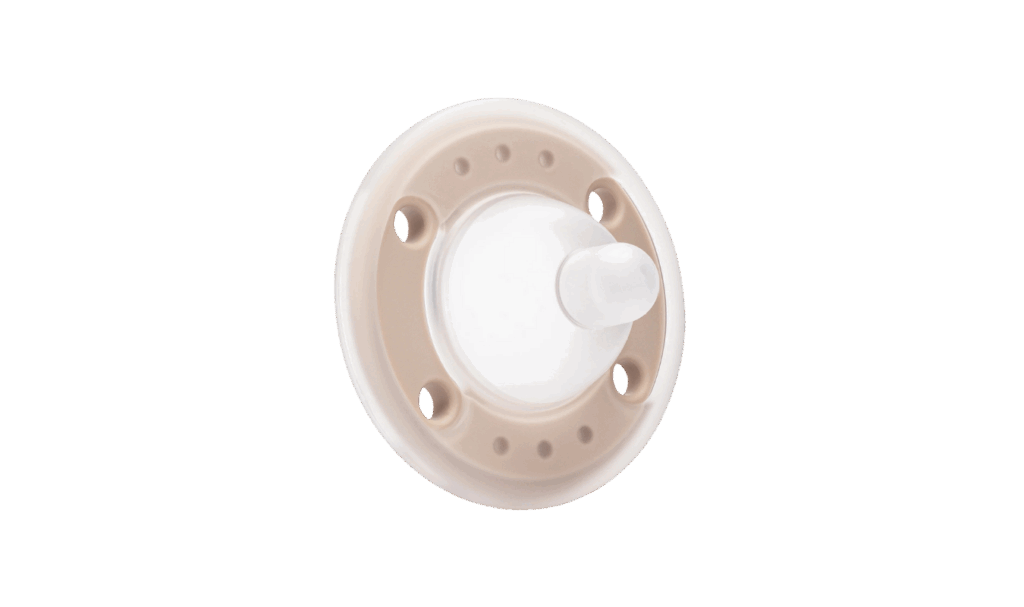
05. Ninni Pacifier
Price: $13.99
Age: 0-24 Months
The Ninni is a great pacifier for newborns because its design helps reinforce a proper breastfeeding latch. Made with 100% medical grade silicone, it’s BPA-free. It’s a pacifier that was created with your baby’s oral development in mind. Use code EATPLAYSAY for 10% off.
Pros:
- Breast-like nipple
- Facilitates natural latching and sucking
- Safe design with 4 air holes
- Comes in various colors
Cons:
- More expensive than other pacifier options
- The pacifier’s age range extends beyond the recommended age for weaning from pacifier use
Pacifier Clips
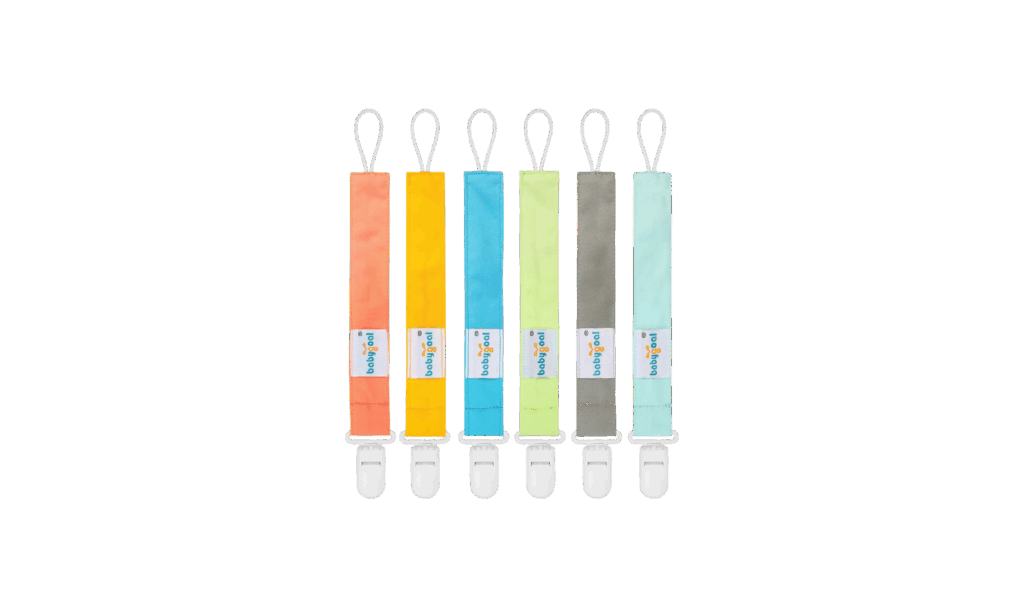
BabyGoal Pacifier Clips
Price: $6 for 6
Amazon Rating: 4.7 out of 5
These are my favorite pacifier clips! They’re made with machine-washable fabric and durable plastic clips. The brand offers a wide variety of color combinations and patterns at an affordable price.
Once your baby outgrows pacifiers, these clips can be reused to keep favorite teethers close by.
Take Note:
- Always supervise your baby when using pacifier clips
- Never use a pacifier clip when babies are napping or sleeping
- Always inspect the clip before each use
Non-Toxic Pacifier Cases
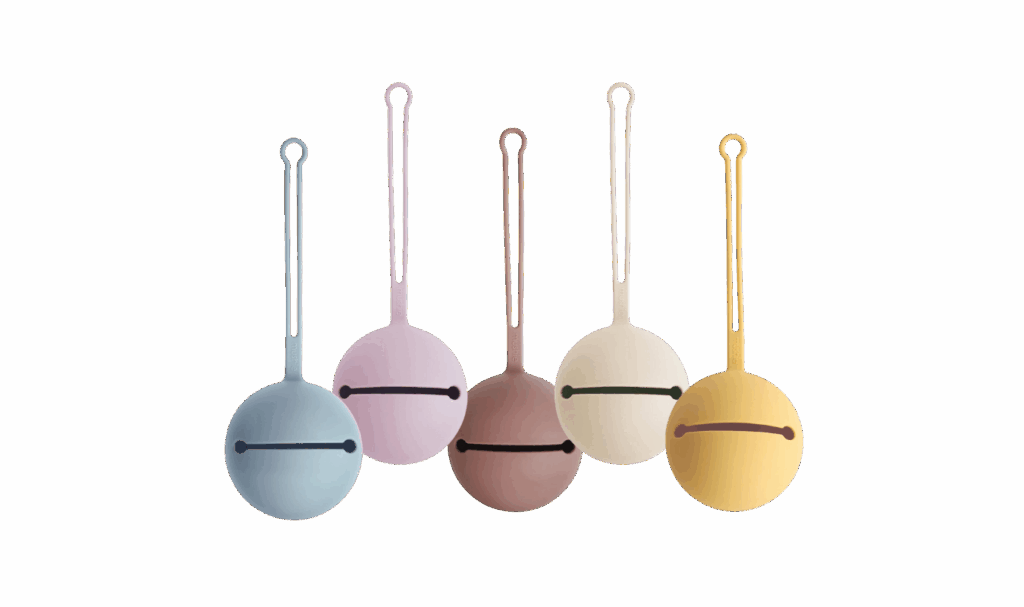
Mushie Silicone Pacifier Holder Case
Price: $15
Amazon Review: 4.6 out of 5
This bell-shaped pacifier case fits two to three pacifiers, making it the perfect solution for storing pacifiers on the go. Made from safe, food-grade silicone, it’s BPA-free. The front slot allows for airflow, and the case easily attaches to any bag or stroller. Mushie offers these in a variety of muted colors to complement any style.
Cleaning:
- Spot clean: wash with soap and rinse
- Dishwasher safe (top rack)
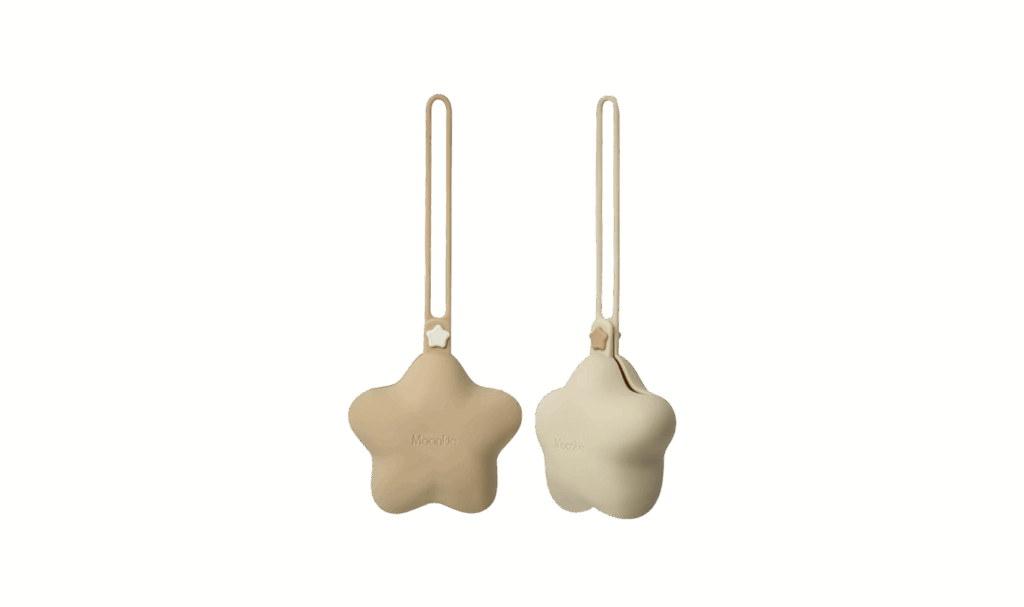
Moonkie 2-Pack Pacifier Case
Price: $16 for 2
Amazon Rating: 4.8 out of 5
These come in a pack of two and can be fastened to any diaper bag, stroller, or handbag. They’re large enough to store two to three pacifiers and are made from 100% food-grade silicone. The top fastener is secure enough to keep pacifiers safely inside while still allowing airflow to help prevent moisture buildup and mildew.
They keep pacifiers protected from dirt, dust, and other germs while on the go. Once your baby no longer needs a pacifier, the case can be reused to carry other essentials for mom or baby.
Cleaning:
- Spot clean: rinse and wipe clean
- Dishwasher safe (top rack), boil safe
What is the purpose of a pacifier for newborns?
Pacifiers serve a simple purpose: to soothe. Newborns naturally find sucking very comforting. Many babies even suck their thumbs in the womb. The sucking reflex is completely normal, and natural.
Some infants have especially strong sucking needs. Even after breastfeeding or bottle-feeding, they may still want to suck without actually being hungry. Within the first few weeks of life, most parents begin to recognize the difference between hunger cues and a baby’s desire to suck on a pacifier for comfort.
When should I introduce a pacifier?
The best time to start offering a pacifier can vary, but it’s usually within the first 2–6 weeks of life. If you plan to breastfeed, most pediatricians and lactation consultants recommend waiting until breastfeeding is well established before introducing a pacifier.
A pacifier uses a different sucking pattern than breastfeeding, so it’s important for babies to learn the difference between sucking for comfort and sucking for nourishment.
What are the best pacifiers for oral development?
When choosing a pacifier for healthy oral development, the shape is the most important factor.
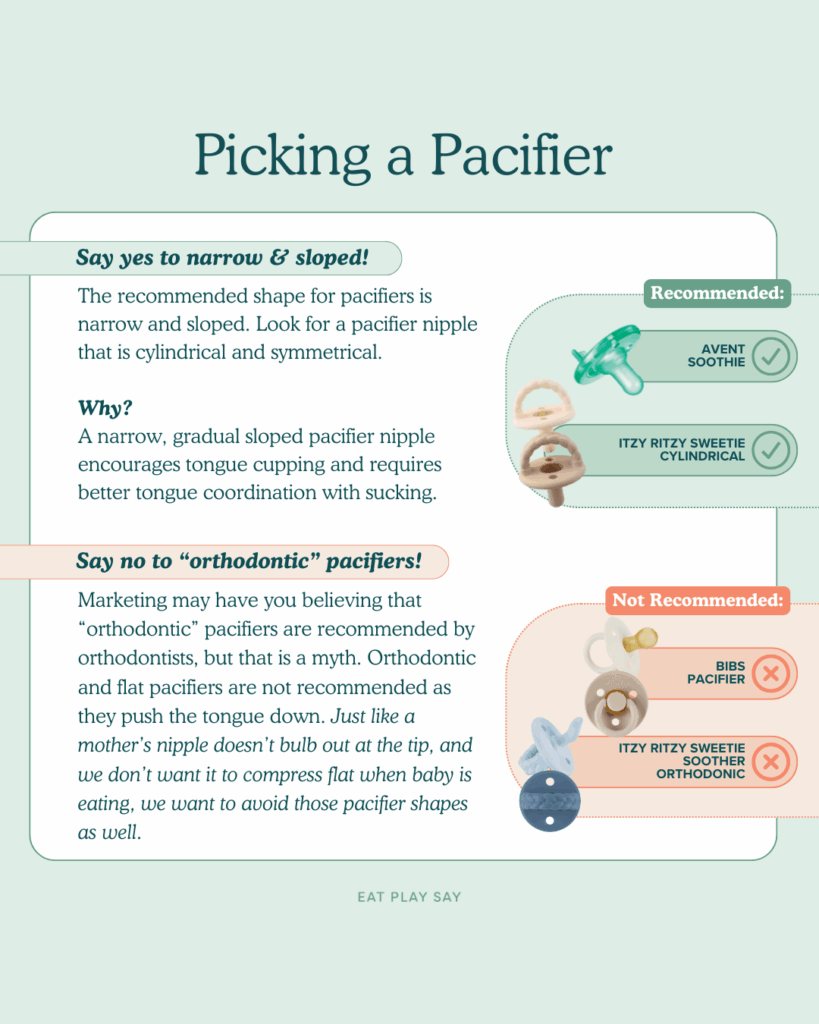
Long, sloped nipples are preferred because they mimic the shape of a mother’s breast during active breastfeeding. Look for pacifiers with a long, cylindrical shape, which encourages proper tongue positioning and oral muscle development.
In contrast, orthodontic or bulb-shaped nipples are less ideal for oral development. These designs create a “shelf” for the baby’s teeth to rest on, which keeps the pacifier in place without requiring proper sucking. They also push the tongue down and do not promote tongue cupping, which is important for breastfeeding. For these reasons, long, sloped pacifiers are generally considered the best choice for supporting healthy oral development.
When should I wean my baby from the pacifier?
As an oral motor therapist, I recommend beginning to wean babies from the pacifier as early as 3–6 months of age. Aim to have your baby fully weaned between 6 months and 1 year of age to support optimal oral development and encourage proper sucking patterns.
Tips for weaning from the pacifier
If you are interested in trying to decrease pacifier use, try the following:
- Try to replace the pacifier with another soothing toy
- Offer teethers if your little one will take them
- Offer crunchy snacks before bedtime/naptime to provide input to the mouth
Don’t be too hard on yourself! If your little one is developing well, and you don’t have concerns about their oral motor skills or tongue position, take it slow during this transition.
Looking for more?
Help your baby wean from the pacifier with some of our favorite teethers!
Find all of our favorite baby products on our baby registry guide.
Leave a Reply
OTHER POSTS YOU MAY LIKE:


MS, SLP
Founder of Eat Play Say, Speech-Language Pathologist, Feeding Specialist, Play Expert, Mom of 3
Jordyn Koveleski Gorman
SPECIALIZES IN: Infant and toddler speech-language, play, and feeding development, and curating a team that provides expert help that feels like a reassuring text from that one mom friend
EDUCATION: Jordyn received her BS in Speech-Language Pathology from Bloomsburg University and her MS in Speech-Language Pathology from Towson University
FAVE PARENTING FIRST: “The first true smile, it’s the sweetest!”

MS, CCC-SLP, CBS, IBCLC
Speech-Language Pathologist & Feeding Specialist, Certified Breastfeeding Specialist, International Board Certified Lactation Consultant
Jessica Nicholson Cocca
SPECIALIZES IN: Breast and bottle feeding, tongue ties, oral motor dysfunction, starting solids, infant and toddler speech, treating oral motor disorders
EDUCATION: Jessica received her BS in Communication Sciences and Disorders from Pennsylvania State University in 2015 and her MS in Speech-Language Pathology from Towson University in 2017
FAVE PARENTING FIRST: “Baby’s first wave! What a fun first communication gesture!”

MA, CCC-SLP, CLC
Speech-Language Pathologist, Certified Lactation Counselor
Jennifer McFarlin
SPECIALIZES IN: Breast and bottle feeding, tongue ties, starting solids, infant and toddler speech development
EDUCATION: She received her BS in Speech-Language Pathology from Ball State in 2014 and a MA in Speech-Language Pathology from Ball State in 2016.
FAVE PARENTING FIRST: “My favorite baby’s first is their first true smile that just warms your soul knowing they are smiling at you. My other favorite is their first word. I love watching their language explode!”

MS, CCC-SLP
Bilingual Speech-Language Pathologist
Nicole La Petina Kelly
SPECIALIZES IN: Bilingual development (Spanish-English), supporting multilingual families, infant and toddler speech
EDUCATION: She received her BA in Communication Sciences and Disorders and in Spanish from the University of Wisconsin-Madison in 2014 and her MS in Speech-Language Pathology with an English-Spanish Specialization from Marquette University in 2016.
FAVE PARENTING FIRST: “It’s the first slobbery kisses for me!”

RDN, LD
Licensed Registered Dietitian
Kimberly Vede
SPECIALIZES IN: Infant and pediatric nutrition including breastfeeding, formula feeding, and starting solids. She also specializes in prenatal and postpartum nutrition.
EDUCATION: She received her BSc in Biology in 2014 from Life University, and her BSc in Dietetics from Life University in 2019.
FAVE PARENTING FIRST: ”The first time they say ‘mama!’”


This checklist was created with input from a Speech-Language Pathologist, Occupational Therapist and Physical Therapist and has been downloaded over 20,000 times by parents worldwide. Learn the important milestones to pay attention to, and keep it in your digital back pocket during the baby + toddler years!
Comprehensive Milestone Checklist for gross motor, fine motor, and speech-language milestones for 0-36 months,
DOWNLOAD FOR FREE


